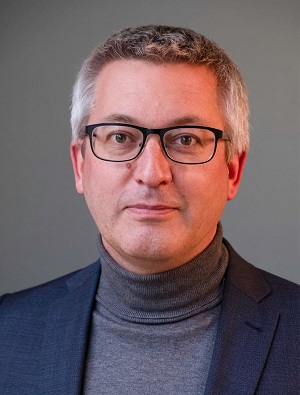
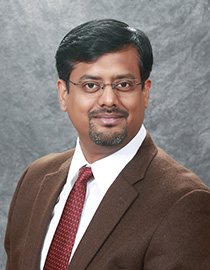
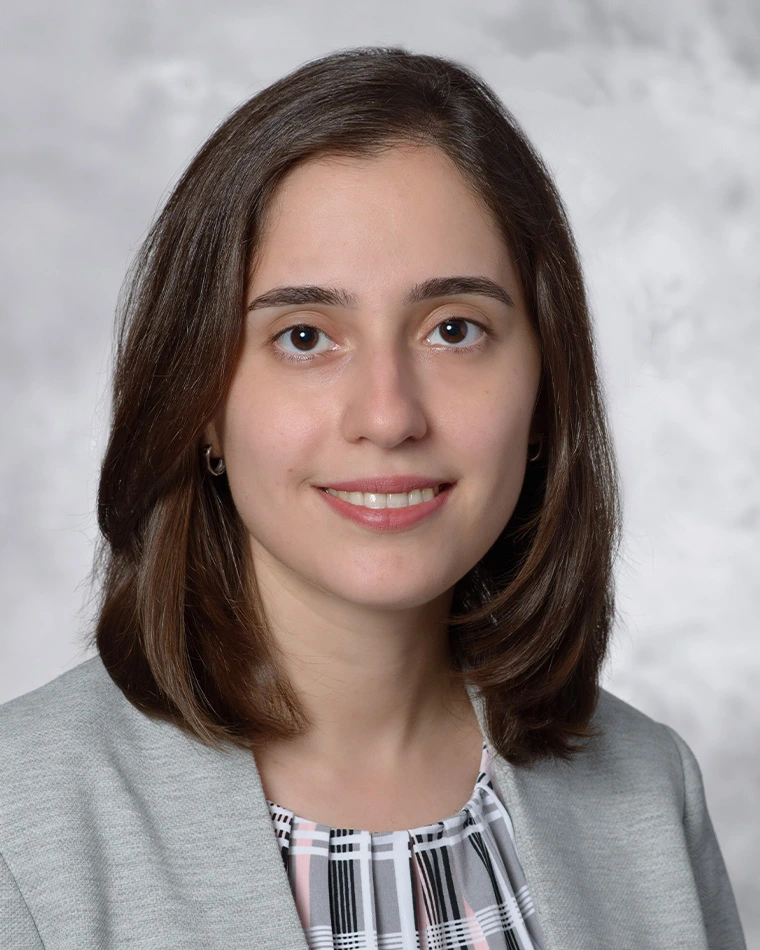
Rene Bañares-Alcántara is a Professor at the University of Oxford 's Department of Engineering Science and a Fellow of New College since 2003. His academic journey began with a BSc in Chemical Engineering from UNAM, followed by MSc and PhD from Carnegie Mellon University. Research Focus: Process Systems Engineering, specializing in long-term renewable energy storage and green ammonia production since 2014. Key Contributions: Development of techno-economic models for green ammonia, integrating tidal/wind/solar variability, offshore production, and international trade dynamics as lead of the OXGATE research group . Teaching Roles: Tutors first/second-year engineering students in Thermodynamics, Fluids, Mathematics, and Engineering & Society; teaches Risk & Safety, Reactor Design, and coordinates third-year design projects. Recent Publications: Focus on tidal stream energy phasing for green ammonia production, decarbonization strategies for India, and ammonia's role in shipping and UK energy storage. These studies highlight his expertise in combining tidal energy predictability with chemical process design. Collaborations: Works with institutions like EMEC and FORWARD2030, leveraging tidal hotspots in the Irish Sea and Orkney. His work addresses grid constraints, equipment sizing, and environmental impacts of large-scale tidal energy deployment.
Young Lee is a Senior Lecturer in Computing at Macquarie University, affiliated with the School of Computing and three research centers: Data Horizons Research Centre, Future Communications Research Centre, and Smart Green Cities Research Centre. His research focuses on edge computing, blockchain technology, fog computing, and resource scheduling in distributed systems, with a strong emphasis on applications in IoT, healthcare, and sustainability. He has led or contributed to over 150 research outputs since 2005, including influential works on edge-based video analytics, blockchain frameworks, and cloud-edge resource optimization. Dr. Lee's projects include 'Extreme-Scale Computing for Big Data Analytics' (2016–present) and 'Synergising the Power of the Cloud with the Power of the Crowd' (2016–present), demonstrating expertise in scalable computing and cloud-crowd integration. His work bridges theoretical advancements in scheduling algorithms with practical implementations in energy-efficient data centers and mobile edge environments. Research interests span edge computing architectures, blockchain oracles, and fog caching strategies, with recent contributions to carbon-conscious travel systems and malware detection frameworks. His interdisciplinary approach addresses challenges in resource allocation, network security, and distributed system efficiency.
Prof. Dr. Norbert Trautmann is a Full Professor of Quantitative Methods in Business Administration at the University of Bern, leading the Group for Business Analytics, Operations Research, and Quantitative Methods. He holds a PhD from the University of Karlsruhe (2000) and a Habilitation degree in Operations Research from the University of Karlsruhe (2004). His research focuses on Combinatorial Optimization , Project Management , Production Planning , and Portfolio Optimization . Prof. Trautmann has extensive professional experience, including roles as Head of the Department of Business Administration (2010–2012), and leadership in academic societies like the Swiss Operations Research Society (President since 2017). He has authored over 100 peer-reviewed publications and supervised numerous PhD students, including Philipp Baumann, Adrian Zimmermann, and Tom Rihm. His research has led to awards such as the 2010 IEEE Honourable Mention Award and the 2001 German Society of Operations Research Doctoral Thesis Award. Key projects include scheduling optimization for assessment centers, production planning in process industries, and portfolio tracking models for small investors.
Cristian Rojas is a Professor of Automatic Control at KTH Royal Institute of Technology, specializing in system identification. His research bridges control theory, statistics, and machine learning to develop data-driven methods for analyzing and controlling dynamical systems. He holds an MS in Electronics Engineering from Universidad Técnica Federico Santa María (Chile) and a PhD in Electrical Engineering from the University of Newcastle (Australia). Research focuses on efficient utilization of data for self-learning systems, including topics like continuous-time system identification, robust control, and statistical estimation. Notable contributions include work on subspace identification, input design for sparse systems, and algorithms for H-infinity norm estimation. His methodologies emphasize practical applications in industrial automation, smart infrastructure, and autonomous systems. Recent publications highlight advancements in inverse filtering, decentralized learning systems, and the theoretical underpinnings of data-driven control. He collaborates widely on projects involving Bayesian methods, adversarial systems, and privacy-protected decision-making frameworks. Rojas' work often addresses challenges such as undersampling effects, model consistency, and computational efficiency in real-world control scenarios. His academic contributions include organizing academic ceremonies at KTH and mentoring researchers in the Department of Automatic Control. Current research explores intersections between machine learning interpretability and control theory, with applications to explainable AI in engineering systems.
Jona Ballé is an Associate Professor in the Department of Electrical and Computer Engineering at New York University Tandon School of Engineering. His research focuses on visual media compression, leveraging machine learning and end-to-end optimization to advance compression techniques for traditional and emerging modalities (e.g., AR, plenoptic imaging). He holds a PhD in signal processing from RWTH Aachen University (2012), followed by postdoctoral work at NYU’s Center for Neural Science and a Research Scientist role at Google (2017–2024). His contributions include foundational work on JPEG AI and leadership in conferences such as CLIC and DCC. Education: PhD in Signal Processing, RWTH Aachen University (2012) Master’s in Signal Processing, RWTH Aachen University (2007) Research: Ballé bridges machine learning and perceptual science to improve compression efficiency. Key areas include perceptual metrics, end-to-end optimization, and distributed coding. His work on Wasserstein distortion and Fourier basis models reflects cutting-edge advancements in compression theory. Impact: As co-organizer of the Challenge on Learned Image Compression (CLIC) and program committee member of the Data Compression Conference (DCC), he drives community progress. His industry collaborations and leadership in the JPEG AI standard highlight his translational research.
Raktim Bhattacharya is a Professor in the Department of Aerospace Engineering at Texas A&M University, serving as Director of the Graduate Studies Program. He holds a Ph.D. in Aerospace Engineering from the University of Minnesota (2003) and a B.Tech from IIT Kharagpur (1996). His research focuses on uncertainty quantification, robust control, and nonlinear systems, with applications in aerospace systems design and control. Dr. Bhattacharya leads the Intelligent Systems Research Laboratory (ISRL), advancing algorithms for next-generation aerospace systems operating in uncertain environments. His work integrates optimal control, stochastic modeling, and data-driven methods to enhance system reliability and performance. Notable contributions include probabilistic robustness analysis, model validation frameworks, and sparse sensing architectures. Recent research trends emphasize optimal transport theory for state estimation, privacy-aware machine learning, and sensor-actuator co-design for resource-constrained systems. His publications span topics like UAV configuration optimization, LPV control frameworks, and invariant set estimation using physics-informed neural networks. Dr. Bhattacharya’s lab collaborates on projects involving tensegrity structures, cyber-physical systems, and space situational awareness. His work addresses challenges in hypersonic flight dynamics, celestial navigation, and resilient control under actuator degradation.
Jin Zhu is a Researcher in the Department of Statistics at the London School of Economics and Political Science (LSE), working with Prof. Chengchun Shi on reinforcement learning and machine learning. His research focuses on developing algorithms with statistical and computational guarantees, alongside statistical software design to enhance algorithmic applications. Prior to LSE, he earned his PhD in Statistics at Sun Yat-Sen University under Dr. Xueqin Wang and Dr. Na You. Key expertise includes reinforcement learning, machine learning, and computational statistics. His work addresses challenges in off-policy evaluation, robustness in RL, and sparsity-constrained optimization. He has contributed to open-source tools like skscope and abess for efficient statistical computation. Research interests also span causal inference, high-dimensional data analysis, and algorithmic design for complex systems. Notable contributions include methodologies for genetic factor identification, spatial experimental design, and nonparametric statistical inference. Jin’s research bridges theoretical advancements with practical software implementations to address real-world computational and statistical challenges.
Professor Tony Roberts is the Head of School in the School of Mathematical Sciences at Queensland University of Technology (QUT). He holds a PhD from the Australian National University and is a Fellow of the Australian Mathematics Society. His research focuses on the interplay between material microstructure and macroscopic properties, with emphasis on topology optimization, random structure modeling (e.g., Gaussian fields, percolation models), and material property analysis such as conductivity, diffusion, and fluid flow. He develops computational methods for analyzing experimental techniques like 3D statistical reconstruction and small-angle scattering. His recent work includes optimizing piezoelectric materials for robotics, studying diffusion dynamics in fractal networks, and modeling material failure mechanisms. Key contributions span multi-functional piezoelectric components, anisotropic elastic properties of additively manufactured alloys, and fracture mechanics in perforated materials. Awards include his fellowship in the Australian Mathematics Society. Supervision interests include structural optimization, diffusion in random media, and porous material failure modeling. Education: PhD (Australian National University) Affiliations: Faculty of Science, School of Mathematical Sciences Research Themes: Material science, computational modeling, fracture mechanics, stochastic systems
Afrooz Jalilzadeh is an Assistant Professor in the Department of Systems and Industrial Engineering at the University of Arizona, part of the College of Engineering. She is also a member of the Applied Mathematics and Statistics Graduate Interdisciplinary Programs (GIDP), highlighting her strong cross-disciplinary research profile. She leads the Optimization and Mathematical Analysis (OPTIMA) Lab, which focuses on algorithmic innovation for stochastic optimization and variational problems. PhD in Industrial Engineering and Operations Research, The Pennsylvania State University BS in Mathematics, University of Tehran, Iran Her research lies at the intersection of stochastic optimization , variational inequalities , and machine learning , with applications in game theory, healthcare, and power systems. She develops and analyzes algorithms such as stochastic approximation, primal-dual methods, and variance-reduced schemes to solve complex minimax and equilibrium problems. Her work emphasizes theoretical convergence guarantees and computational efficiency. The recent publications show a strong trend in nonconvex-concave saddle-point problems , stochastic Nash games , and projection-free optimization . These are central to modern machine learning and adversarial training. Keywords across her work include stochastic approximation, accelerated methods, risk aversion, and distributed computing, indicating a deep engagement with both theoretical and applied aspects of optimization. Her scientific recognition includes: Teacher of the Year, College of Engineering, University of Arizona (Spring 2022) Gerald J. Swanson Prize for Teaching Excellence NSF Grant: Generalized Stochastic Nash Equilibrium Framework James E. Marley Graduate Fellowship Max and Joan Schlienger Graduate Scholarship Third Place in INFORMS Poster Competition (2018) University Graduate Fellowship, Penn State (2015) H. Marcus Dean’s Chair Scholarship, Penn State (2015) She actively advises students and researchers in her OPTIMA Lab, with multiple publications co-authored with graduate students. She has secured competitive grants, including an NSF award, supporting her research group. Her lab seeks students with strong mathematical and coding skills (MATLAB/Python) for PhD-level research in optimization and mathematical analysis. The OPTIMA Lab conducts cutting-edge research in algorithm design for stochastic variational inequalities , Nash equilibrium computation , and minimax optimization . The lab emphasizes theoretical rigor and practical implementation, with applications spanning machine learning, healthcare, and energy systems. It has published in top venues such as NeurIPS, ACM TOMACS, and Mathematical Programming.
Elena Celledoni is a Professor of Mathematics at the Department of Mathematical Sciences, Norwegian University of Science and Technology (NTNU), where she has been employed since 2004. She leads the research group on differential equations and numerical analysis. Her academic background includes a Master’s degree (1993) and Ph.D. (1997) in mathematics from the Universities of Trieste and Padua, Italy, respectively. She has held postdoctoral positions at the University of Cambridge (UK), the Mathematical Sciences Research Institute (MSRI, Berkeley, CA), and NTNU. Her research focuses on numerical analysis, particularly structure-preserving algorithms for differential equations and geometric numerical integration. Recent work includes applications of neural networks in computational mechanics and data-driven modeling. She has co-authored over 100 peer-reviewed articles in journals such as Journal of Computational Physics , SIAM Journal on Scientific Computing , and Physica D . Her research interests span computational methods for dynamical systems, machine learning integration with numerical analysis, and geometric algorithms for shape analysis. She actively collaborates with international researchers, including contributions to conferences like NeurIPS and workshops on theoretical aspects of computational dynamics. Elena is a member of the editorial boards of Journal of Computational Dynamics and has organized workshops on structure-preserving integrators. Her work emphasizes preserving geometric properties in numerical methods, with applications in fluid dynamics, mechanical systems, and image processing.
Francesco Regazzoni is a Senior Researcher at the Faculty of Informatics, Università della Svizzera italiana (USI), and affiliated with the Dalle Molle Institute for Artificial Intelligence (IDSIA USI-SUPSI). His work bridges embedded systems, cybersecurity, and artificial intelligence, with a focus on securing hardware and cyber-physical systems. Research Interests: His expertise spans embedded and cyber-physical systems security, side-channel attacks, post-quantum cryptography, hardware trojans, random number generators, and the security of AI and approximate computing. He also contributes to hardware/software co-design and operating systems security. The analysis of his recent publications reveals a consistent focus on hardware and system-level security , particularly in resource-constrained environments like IoT and embedded devices. His work integrates machine learning for attack detection and applies formal methods to ensure trust in hardware. A growing emphasis is placed on securing AI systems from physical and adversarial threats. Scientific Contributions: Over 100 peer-reviewed publications One book and one patent Extensive international collaboration (Belgium, Netherlands, USA, Switzerland, Singapore) Advising and Grants: While specific advisees and grants are not listed, his leadership in funded research projects and involvement with ALaRI and IDSIA suggest active mentorship and project coordination. His work has been supported by industry (e.g., ST Microelectronics, HP), the Swiss National Foundation, and the European Union. Labs and Teams: He is part of the Graph Machine Learning Group (GMLG) at IDSIA, which evolved from the Advanced Learning and Research Institute (ALaRI). This group focuses on graph machine learning, reinforcement learning, and dynamical systems, particularly in non-stationary environments.
Dr. Xiaoyu Xia is a Lecturer (equivalent to Assistant Professor in North America) in Cybersecurity & Software Systems at RMIT University's School of Computing Technologies. He received his PhD with the prestigious Alfred Deakin Medal from Deakin University, Australia, and has established himself as a leading researcher in distributed systems and cybersecurity with over 50 peer-reviewed publications in top-tier venues including IEEE S&P, ACM WWW, and IEEE Transactions. Dr. Xia's research spans critical areas at the intersection of computing and security: System Privacy and Security Distributed Systems and Edge Computing AI Privacy and Machine Learning Systems Sustainable Computing Cybersecurity and Privacy-Preserving Technologies His recent work demonstrates a clear trajectory toward developing practical privacy-preserving frameworks for emerging technologies, particularly in edge computing environments and large language models. Dr. Xia has made significant contributions to machine unlearning, secure data management in distributed systems, and energy-efficient edge computing solutions that balance performance with sustainability concerns. Dr. Xia has received notable recognition for his scholarly impact: World's Top 2% Scientists by Stanford University (2022-2024) Alfred Deakin Medal for PhD research excellence (2021) Teaching Excellence Award from Swinburne University of Technology (2021) As an active researcher, Dr. Xia currently leads multiple funded projects including an ARC Discovery Project grant worth over $500,000 for developing privacy-aware intelligent digital twins for secure critical infrastructures. He is open to supervising motivated PhD students with interests in system security and privacy, and distributed ML systems. Dr. Xia serves the academic community through editorial roles as Associate Editor for IEEE Transactions on Dependable and Secure Computing and as a Review Board Member for IEEE Transactions on Parallel and Distributed Systems, and regularly participates in program committees for major conferences including ACM WWW and IEEE ICDCS.
Pau Batlle Franch is a Research Fellow in the Computing and Mathematical Sciences Department at California Institute of Technology (Caltech), working with Professor Houman Owhadi. He holds a PhD from Caltech (June 2025) and was a research affiliate at NASA Jet Propulsion Laboratory (JPL). His research focuses on the intersection of statistics and applied mathematics, including frequentist confidence intervals in inverse problems, game-theoretical uncertainty quantification, and Gaussian processes. He has applied his work to domains like remote sensing, biology, earthquake prediction, and telecommunications engineering. Education : PhD in Computing and Mathematical Sciences (Caltech, 2025); Double undergraduate degree in Mathematics and Engineering Physics from Universitat Politècnica de Catalunya (CFIS program); Research visitor at NYU's Center for Data Science. His research interests include optimization-based statistical methods, Gaussian process frameworks for scientific computing, and uncertainty quantification in physical systems. Notable contributions include resolving the Burrus conjecture and developing computational hypergraph discovery techniques applied to NASA JPL projects. His work bridges theory and application, addressing challenges in ill-posed inverse problems and robust statistical inference. Recent activities include presenting at SIAM conferences and workshops on inverse problems in Earth science. His Gaussian process methods have been published in journals like PNAS and SIMODS, with applications ranging from PDE solving to RNA classification. Collaborations include JPL and the Groningen seismic study. Grants & Collaborations : Ongoing work with NASA JPL on lunar rover control and computational graph discovery; Seismic modeling in the Groningen gas field with epistemic/aleatoric uncertainty frameworks. He maintains an active GitHub profile showcasing projects in machine learning and scientific computing, including repositories like DarwinProjectAnalytics and emb4class .
Dr. Shengquan Wang is an Associate Professor in the Department of Computer and Information Science at the University of Michigan-Dearborn , affiliated with the College of Engineering and Computer Science . His career spans over a decade, with prior academic experience at Texas A&M University as a Research/Teaching Assistant. He received his Ph.D. in Computer Science from Texas A&M University in 2006, preceded by M.S. degrees in Mathematics (Texas A&M, 2000) and Applied Mathematics (Shanghai Jiao Tong University, 1998), and a B.S. in Mathematics (Anhui Normal University, 1995). Research Interests Real-Time Systems Sustainable Computing (Power/Energy/Thermal Management) Networks and Distributed Systems Security and Privacy Optimization and Machine Learning Publication Trends His work focuses on real-time systems under thermal constraints , secure overlay architectures , and energy-efficient server farms . Recent research explores statistical delay guarantees in wireless networks and nonmonotone optimization techniques . Collaborations span institutions like Texas A&M University and Karlsruhe Institute of Technology. Awards and Grants NSF CAREER Award (CNS 0746906) Rackham Faculty Research Grant Best Paper Award at ECRTS 2006 Advising and Leadership Dr. Wang advises Ph.D. and Master's students like Jun Liu and Nan Wang, fostering innovation in sustainable systems. He leads the Research Laboratory for Sustainable Systems (RLSS) , focusing on thermally constrained real-time systems and secure computing.
Tao Lin is a Tenure-Track Assistant Professor and Principal Investigator of LINs Lab at Westlake University, School of Engineering. He leads cutting-edge research in deep learning optimization, generalization, and robustness, particularly in distributed and federated settings. Prior to this, he was a Ph.D. student at École Polytechnique Fédérale de Lausanne (EPFL), Switzerland, under the supervision of Prof. Martin Jaggi and Prof. Babak Falsafi. Doctor of Science, School of Computer and Communication Sciences, EPFL, Switzerland (2017–2022) Master of Science, School of Computer and Communication Sciences, EPFL, Switzerland (2014–2017) Bachelor of Engineering (with honors), College of Electrical Engineering, Zhejiang University, China (2010–2014) His research focuses on the intersection of optimization and generalization in deep learning, leveraging theoretical and empirical insights into loss landscapes and training dynamics to design efficient and robust learning and inference methods. This includes work on decentralized and federated learning under noisy, heterogeneous, and hardware-constrained environments. His work spans algorithmic innovation, theoretical analysis, and practical system integration. The recent publications from his lab demonstrate a strong trend in advancing federated learning, efficient inference for large language models, multimodal foundation models in pathology, and robust training under distribution shifts. Key themes include communication efficiency, model personalization, gradient tracking, and hardware-aware learning. His group has published at top venues including NeurIPS, ICML, ICLR, CVPR, and ECCV, with several papers receiving oral or spotlight presentations. ECCV Best Paper Candidate, 2024 Top 2% Scientists Worldwide 2024 (Stanford University) Doctoral Program Thesis Distinction Award, EPFL, 2022 Outstanding Performance Bonus, EPFL, 2021–2022 Top Reviewer: NeurIPS, ICML, AISTATS He advises multiple Ph.D. and master’s students, including Yongxin Guo, Futing Wang, Peng Sun, and Yuxuan Sun, whose work has been accepted at premier conferences. He has secured competitive grants as PI and participant, including the National Natural Science Foundation of China for Excellent Young Scientists Fund (Overseas) and the Science and Technology Innovation 2030 – Major Project. He also contributes to the community through service as an area chair (NeurIPS, ICML), reviewer for top journals and conferences, and organizer of workshops and academic events. His open-source contributions, such as Post-local SGD, have been integrated into PyTorch. Tao Lin teaches graduate courses such as Research Methodology of Computer Science and Technology and Deep Learning at Westlake University. He is actively involved in academic governance, serving on committees for student seminars, academic exchange, doctoral studies, and teaching leadership. The LINs Lab runs a regular research seminar on Deep Learning and Optimization, fostering a collaborative and dynamic research environment.