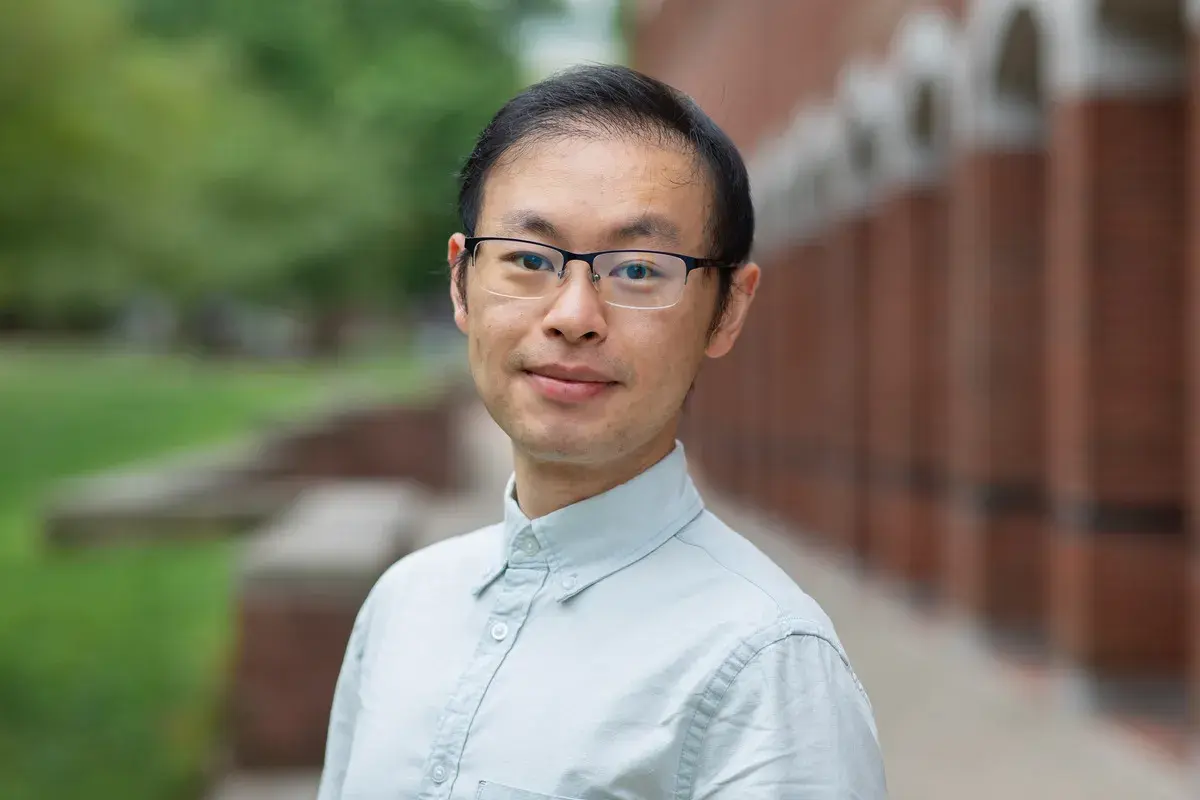
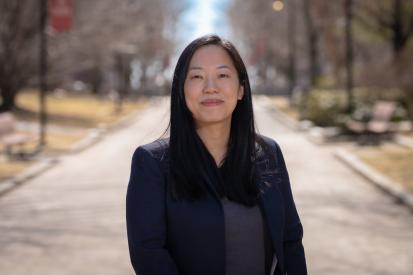
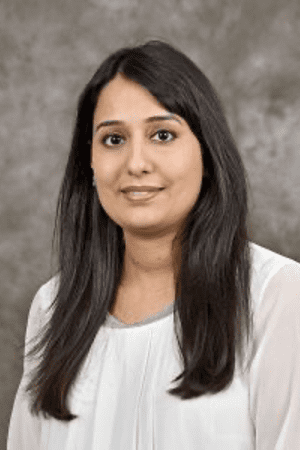
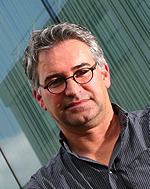
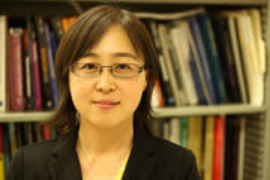
Tianyi Li is a Tenure Track Assistant Professor at the Department of Computer Science, Aalborg University, affiliated with The Technical Faculty of IT and Design and the Daisy - Center for Data-intensive Systems. His research focuses on data engineering, spatiotemporal systems, and digital twins, with applications in energy, transportation, and vehicular networks. Key areas include trajectory data management, graph neural networks, compression techniques, and federated learning. He has contributed to over 37 publications, including works on digital twin frameworks for autonomous driving and smart grids, trajectory prediction systems, and efficient time series compression. His research integrates machine learning, distributed systems, and cybersecurity to address challenges in data-intensive environments. Key Projects: Digital twin-enabled voltage control, federated vehicular networks, trajectory simplification frameworks. Labs: Involved with the Daisy Center, focusing on data-centric systems and scalable solutions. Technical Expertise: Blockchain systems, energy systems optimization, and real-time data processing.
Jialin Liu is an Assistant Professor in the Department of Statistics and Data Science at the University of Central Florida (UCF) and a member of the UCF AI Initiative. His academic background includes a B.S. in Automation from Tsinghua University (2015) and a Ph.D. in Applied Mathematics from UCLA (2020). Education: B.S. in Automation, Tsinghua University (2015) Ph.D. in Applied Mathematics, University of California, Los Angeles (2020) Liu's research bridges AI, data science, and mathematics. He focuses on developing AI/data-driven methodologies to address computational mathematical problems such as optimization, differential equations, and numerical linear algebra. His work emphasizes the need for stable, safe, and explainable data-driven methods while establishing rigorous theoretical foundations for integrating AI into mathematics and science. The 15 most recent publications highlight interdisciplinary advancements in areas like matrix completion, graph neural networks for optimization, sparse coding for phase restoration, and theoretical frameworks for learning-to-optimize. These works span algorithm design, mathematical foundations of AI, and applications in computational mathematics.
Kasthuri Jayarajah is an Assistant Professor in the Department of Computer Science at New Jersey Institute of Technology (NJIT). Her research focuses on mobile and ubiquitous sensing, deep learning for IoT/edge computing, mobility-driven urban analytics, and predictive cyber-physical systems. She holds a Ph.D. in Information Systems from Singapore Management University (2019), a Master of Computing from National University of Singapore (2013), and a B.S. in Electronic and Telecommunication Engineering from the University of Moratuwa (2010). Her work integrates wearable sensing technologies, machine learning, and collaborative systems to solve challenges in urban environments and human-technology interactions. Key research areas include cognitive load assessment via multimodal features, gaze-based AR systems, and lightweight collaborative intelligence frameworks for autonomous systems. She has developed frameworks like CALM for cognitive load measurement and GazeLight for AR-mediated human-robot systems. Dr. Jayarajah's research spans theoretical advancements (e.g., β-Decode for temporal artifact correction) and practical applications (e.g., AirDrop for air-ground teaming in navigation). Her contributions address edge computing constraints, adversarial IoT environments, and urban mobility analytics for smart cities. She teaches courses in mobile computing and sensor networks, bridging academic research with hands-on technical training. Leveraging interdisciplinary approaches, her work bridges computer science with urban planning, robotics, and human factors. Her lab explores innovations in wearable-assisted human-robot teams (TagTeam), lightweight vision models (ComAI), and mobility-driven predictive systems for urban operations.
Yang Xiao is an Assistant Professor in the Department of Computer Science at the University of Kentucky, part of the Stanley and Karen Pigman College of Engineering, where he has been serving since 2022. His research focuses on security and privacy in distributed and cyber-physical systems, with a particular emphasis on practical applications in blockchain, IoT, and mobile networks. Dr. Xiao holds the following academic degrees: Ph.D. in Computer Engineering, Virginia Polytechnic Institute and State University, 2017–2022 M.S. in Electrical Engineering-Systems, University of Michigan, 2015–2017 B.S.E. in Information Engineering, Shanghai Jiao Tong University, 2010–2014 His research interests are centered around securing modern computing infrastructures. Key areas include: Distributed System Security Blockchain and Decentralized Systems Trusted and Privacy-preserving Computing Mobile Communications and Network Security Cyber-Physical Security Dr. Xiao's work addresses critical challenges in ensuring trust and privacy in emerging technologies, particularly in the context of decentralized applications and resource-constrained devices. Analysis of his recent publications (2022-2025) reveals a consistent focus on blockchain security, privacy-enhancing technologies, and machine learning security. He has made significant contributions to decentralized data markets, verifiable credentials for authentication, and robust defenses against backdoor attacks in federated learning. Additionally, his research extends to spectrum sharing, automotive network security, and real-time system integrity. Scientific Awards: No scientific awards were mentioned in the provided information. Regarding advising and grants, the available information does not specify any current advisees or funded research projects.
Tian Guo is an Associate Professor in the Computer Science Department at Worcester Polytechnic Institute (WPI), where he leads research in systems for machine learning and augmented reality. He joined WPI after completing his PhD at the University of Massachusetts Amherst in 2016. His educational background includes: Bachelor of Engineering from Nanjing University (2010) Master of Arts from University of Massachusetts Amherst (2013) PhD from University of Massachusetts Amherst (2016) Professor Guo's research focuses on designing systems mechanisms and policies to handle trade-offs in cost, performance, and efficiency for emerging applications, particularly in the areas of: Cloud/edge resource management for machine learning workloads Deep learning inference optimization for mobile applications Augmented reality systems with focus on lighting estimation Distributed training frameworks for deep learning models His recent publications demonstrate a strong trend toward improving system support for deep learning applications, with particular emphasis on mobile and edge computing environments. His work bridges the gap between theoretical machine learning advances and practical system implementations. Professor Guo has received significant recognition for his research: National Science Foundation CAREER AWARD (2023) National Science Foundation CRII AWARD (2018) Outstanding Achievement by a Young Alum, Manning College of Information & Computer Sciences, UMass Amherst (2022) Best Paper Award, ACM Multimedia Systems Conference (2020) He actively mentors graduate students and has advised several PhD and Master's students to completion. His research is supported by major funding from the National Science Foundation, Google Cloud, and VMware Research. Professor Guo leads The Cake Lab at WPI, which focuses on creating efficient and effective systems for emerging applications, particularly those involving machine learning and augmented reality.
Xiangnan Kong is an Associate Professor in the Department of Computer Science at Worcester Polytechnic Institute (WPI), serving as the Graduate Coordinator of the Data Science Program. His academic journey includes a BS and MS from Nanjing University (2006, 2009) and a PhD from the University of Illinois at Chicago (2014). He maintains an active research program with significant contributions to data mining and machine learning. Dr. Kong's primary research interests focus on data mining and machine learning, with emphasis on addressing data science problems in biomedical and social applications. His work specifically targets data variety issues across multiple domains including neuroscience, biomedical informatics, social networks, and business intelligence. He has published extensively in top-tier conferences and journals such as KDD, ICDM, SDM, WWW, WSDM, CIKM, and TKDE. His recent publications demonstrate a strong trend toward interdisciplinary applications, with significant work in neuroimaging analysis, healthcare applications, urban traffic estimation, and efficient deep learning architectures. His research bridges theoretical advances in graph mining, heterogeneous information networks, and deep learning with practical applications in biomedical domains and social computing. Dr. Kong has successfully advised numerous PhD and Master's students, with former students now working at prominent organizations including Facebook Research, VISA Research, MIT CSAIL, and Amazon AI. His research is supported by multiple grants including NSF awards, Adobe Gift Grant, Huawei Research Grant, and WPI TRIAD Grant.
Dr. Hassan Aqeel Khan is a Senior Lecturer in Applied AI & Robotics at Aston University's School of Computer Science and Digital Technologies. His research focuses on AI/ML applications in healthcare, particularly medical imaging, neuroscience, and resource-constrained settings. He holds a Ph.D. from Michigan State University and is a Fellow of the Higher Education Academy (FHEA). Research Focus: Key innovations include: Eye-tracking systems for histopathology annotation Open-source EEG analysis tools (e.g., NeuroAssist) AI diagnostics for low-resource healthcare environments Publication Trends: Recent works (2021-2024) emphasize accessible AI tools for neurological monitoring and cancer diagnosis, with 60% focusing on open-source medical datasets and algorithms. Teaching: Teaches Programming Languages, Enterprise Computing, and Machine Learning. Previously developed curricula at University of Jeddah and NUST Pakistan. Laboratory: Leads healthcare AI research in the Engineering for Health group and Aston Centre for AI Research.
Dr. Vimal Kumar Kumar serves as a Research Fellow at the University of Limerick's Department of Computer Science and Information Systems, affiliated with Lero – the Irish Software Research Centre. His academic career includes prior faculty positions as Assistant Professor at Jaypee University of Information Technology (2009-2022) and Lecturer at SRM Institute of Science and Technology (2007-2009), followed by a Postdoctoral Researcher role at University College Dublin (2022-2023). His educational background includes: PhD in A Novel sense based Hindi to Tamil machine translation system from Jaypee Institute of Information Technology (2019) Masters from Anna University Chennai (2005-2007) Bachelor from PSG College of Technology (2000-2004) Dr. Kumar's research centers on Natural Language Processing with specialized focus on machine translation for Indian languages (Hindi, Tamil), text summarization, and sentiment analysis. He extends this work into computer vision applications for medical imaging and activity recognition, plus deep learning implementations for IoT-based agricultural monitoring. His methodology frequently addresses challenges in low-resource language processing and develops optimized neural network architectures for mobile deployment. Analysis of his publication trends reveals consistent interdisciplinary innovation, particularly in healthcare applications (retinal disease detection), agricultural technology (crop yield prediction), and social media analytics. His work demonstrates strong emphasis on practical AI solutions for resource-constrained environments and underrepresented linguistic communities, often leveraging generative models and contextual embeddings. Dr. Kumar actively contributes to Lero's research initiatives, aligning his technical work with UN Sustainable Development Goals through software solutions addressing global challenges in health, food security, and digital inclusion.
Dr. Asanka Perera is a Lecturer in Mechatronic Engineering at the University of Southern Queensland (UniSQ) within the School of Engineering. He holds a PhD from the University of South Australia (UniSA), an MSc in Industrial Automation from the University of Moratuwa, and a BSc in Electrical and Electronic Engineering from the University of Peradeniya. His research focuses on robotics, autonomous systems, computer vision, and machine learning with applications in drones, adversarial attacks on 3D point clouds, and medical imaging. Notable projects include bio-inspired navigation systems, multi-robot collaboration, and non-contact vital signs monitoring. Dr. Perera has secured grants including AUD 17,546 from the US Department of Air Force for bio-inspired navigation research and AUD 68,645 for heterogeneous robot swarms. He actively supervises PhD students exploring topics like robust 3D object recognition and vision-based localization in low-light conditions. He has taught courses at UNSW Canberra and UniSA, including Robotics & AI labs, autonomous systems design, and control systems. His professional memberships include IEEE, Engineers Australia, and the Australian Computer Society. Dr. Perera is affiliated with UniSQ's Centre for Future Materials and Centre for Astrophysics. His work has been featured in media outlets such as Scientific American and ABC Australia.
Dr. Tooraj Nikoubin is a Professor of Instruction in the Department of Electrical and Computer Engineering at the University of Texas at Dallas (UT Dallas), affiliated with the Erik Jonsson School of Engineering and Computer Science. He holds a Ph.D. in Computer Engineering from Shahid Beheshti University (2009), and M.Sc./B.Sc. degrees in Electrical Engineering-Electronics from K.N.T. University of Technology (Iran). His research focuses on nano-electronics, approximate computing, reconfigurable systems, and wearable electronics, emphasizing device-circuit co-design in emerging technologies. With over 35 journal/conference publications and one book chapter over 13+ years in academia, Dr. Nikoubin teaches both graduate and undergraduate courses across computer and electrical engineering domains. Research interests include nano-scale device optimization, energy-efficient circuits, and hardware acceleration for edge computing applications. His work spans from biometric authentication systems using PPG signals to drone-based precision agriculture and molecular property prediction. Recent efforts prioritize low-power, area-efficient designs in cryptography (e.g., AES S-box optimization) and health monitoring wearables. Dr. Nikoubin has contributed to innovative hardware solutions such as fiber antennas for wireless body area networks and low-cost radar systems for structural health monitoring. His lab explores intersections between emerging technologies like CNTFETs and FinFETs with system-level power management. Current openings exist for students/researchers to contribute to this dynamic research environment.
Fareena Saqib is an Associate Professor in the Department of Electrical and Computer Engineering at the University of North Carolina at Charlotte (UNCC), serving as Director of the Hardware and Embedded Design and Security (HEADS) Lab. Her research focuses on hardware security, IoT security, and embedded systems security, with particular expertise in physical unclonable functions (PUF), FPGA-based security, and supply chain risk management. She leads efforts in developing secure boot frameworks, countermeasures against side-channel attacks, and authentication protocols for resource-constrained devices. Her work spans multiple domains including automotive networks (CAN-FD security), FPGA security through logic locking and dynamic reconfiguration, and embedded systems protection against DMA and other hardware-level attacks. Dr. Saqib has published extensively on topics like counterfeit IC detection using machine learning, secure communication frameworks for electronic control units, and hardware-assisted information flow tracking in RISC-V architectures. Her research has been supported by grants such as NSF Student Travel Grants for IEEE HOST conferences. Key contributions include novel authentication protocols based on PUF technology, delay-based machine learning models for attack mitigation, and secure design flows for reconfigurable systems. She actively promotes cybersecurity education through initiatives like the HACE Lab, an online platform for hardware security evaluation.
Olivier Sentieys is a Professor at the University of Rennes and a Senior Research Director at Inria (French National Institute for Research in Digital Science and Technology) since September 2023. He leads the Taran research team, a joint initiative between Inria and IRISA Laboratory, which comprises approximately 50 researchers including 8 faculty members, 25 PhD students, post-docs, and research engineers. Previously, he served as Inria Research Chair on Energy-Efficient Computing Architectures (2017-2023) and as Head of the Computer Architecture Department at IRISA (2010-2019). Professor Sentieys' research spans computer architectures, computer arithmetic, embedded systems, and signal processing, with particular emphasis on energy-efficient hardware accelerators (especially for machine learning), approximate computing, numerical accuracy analysis, and fault tolerance. His work bridges theoretical foundations with practical implementations, focusing on system-level design methodologies that optimize both performance and energy consumption. His research has evolved from early work on power management for energy harvesting sensor networks to current cutting-edge investigations in machine learning hardware acceleration and reliability of deep neural networks. Analysis of his recent publications reveals a strong trend toward hardware acceleration for machine learning applications, with increasing focus on fault tolerance mechanisms for deep neural networks and precision optimization techniques. His work demonstrates a consistent trajectory of addressing energy efficiency challenges across multiple computing domains, from traditional embedded systems to modern AI workloads. The interdisciplinary nature of his research connects computer architecture with machine learning, reliability engineering, and energy harvesting technologies. Scientific Excellence Award (PEDR, PES) recipient since 1998 without interruption Member of the IEEE/ACM DATE Executive Committee since 2022 Jury member for EDAA Outstanding Dissertations Award since 2016 Member of ANR Scientific Evaluation Committee CE25 Professor Sentieys has demonstrated extensive leadership in research funding and collaboration, having led a French ANR project, participated in multiple ANR projects, and contributed to three European FP7/H2020 projects. He has served as scientific leader for approximately 30 research contracts and funded collaborations. His advising responsibilities include overseeing numerous PhD students within the Taran team, which comprises 20 PhD students, 3 post-docs, and 5 research engineers. His leadership extends to committee service, including membership on the Evaluation Committee of INRIA since 2019 and participation in technical committees for major conferences like DATE, ICCAD, and FPL. The Taran research team (formerly Cairn), which Professor Sentieys leads, focuses on designing energy-efficient and fault-tolerant computing accelerators. The team operates within the IRISA laboratory, a joint research unit (UMR 6074) that brings together over 700 researchers from Inria, CNRS, University of Rennes, INSA Rennes, and ENS Rennes. The team's work bridges theoretical computer architecture research with practical implementations, maintaining strong industry connections and technology transfer pathways.
Lili Mou is an Assistant Professor in the Department of Computing Science at the University of Alberta, with joint appointments as an Alberta Machine Intelligence Institute (Amii) Fellow and Canada CIFAR AI (CCAI) Chair. His research mission focuses on building intelligent systems capable of understanding and interacting with humans through natural language, involving both text comprehension and generation. Research pillars include: Feature extraction in discrete input spaces Weakly supervised learning in discrete latent spaces Sentence synthesis in discrete output spaces His fundamental work in deep learning for NLP has been applied to information extraction, semantic parsing, syntactic parsing, and text generation. Dr. Mou completed his BS and PhD at Peking University, with postdoctoral training at the University of Waterloo.
Dr. Hongwei Zhang is a Chartered Engineer and Professor at Sheffield Hallam University, serving as Co-Director (Academic) of the Advanced Food Innovation Centre (AFIC). His academic leadership roles include Deputy Head and Interim Head of the Department of Engineering and Mathematics. He holds a BEng from Harbin Institute of Technology, MSc and PhD from Harbin Institute of Technology and University of Manchester. His research focuses on advanced control systems, condition monitoring, industrial automation, and AI-driven solutions for sustainable food processing. He leads AFIC to bridge academia and industry, driving innovations in food systems and sustainability. Key projects include Ohmic Heating technologies, Industry 4.0 integration, and smart process control funded by Innovate UK and Research England. Collaborations involve Premier Foods, Nestlé, and DEFRA. He is a Fellow of the Higher Education Academy and serves on editorial boards of journals like International Journal of Modelling, Identification and Control and Energies . Research interests span food engineering, process automation, robotics, and digital transformation. He has supervised 19 PhD students and currently oversees 9 ongoing projects. His work emphasizes Industry 4.0 applications, supply chain resilience, and energy-efficient manufacturing solutions.
Dr. Iris Xiaohong Quan is a Full Professor of entrepreneurship at the Lucas College and Graduate School of Business, San José State University. She holds a PhD in Regional Planning from the University of California - Berkeley and serves as Director for the Center for Global R&D and Innovation (GLORAD) Silicon Valley. Dr. Quan's research focuses on entrepreneurship, technology and innovation management, with particular expertise in global R&D strategies, business model innovation, and digital health. Her work examines how firms navigate innovation ecosystems across different cultural and regulatory contexts, with a special focus on Chinese companies and their internationalization strategies. Her recent publications demonstrate a strong trajectory in artificial intelligence business ecosystems, open innovation models, and healthcare technology innovation. She has contributed significantly to understanding how organizations leverage external knowledge sources and develop context-specific innovation approaches in global markets. Best Paper Publication Award from IEEE TEM in 2020 for "Cross-National Complementarity of Technology Push, Demand Pull, and Manufacturing Push Policies: The Case of Photovoltaics" Dr. Quan serves on the editorial boards of Technovation and IEEE Transactions on Engineering Management. She is actively involved with the Silicon Valley Center for Entrepreneurship as a steering committee member and has judged numerous business plan competitions. Additionally, she brings practical experience as a part-time investment partner at TSVC, an early-stage deep tech-focused venture capital firm. Her leadership extends to directing the Center for Global R&D and Innovation (GLORAD) Silicon Valley, which serves as a hub for research on global innovation practices and cross-border technology transfer.