Maria Eugenia Bartoloni is a Full Professor of European Union Law at Sapienza University of Rome, Department of Legal and Economic Studies. She is also a member of the doctoral program faculty for "Internationalization of Legal Systems and Fundamental Rights" at Università della Campania "L. Vanvitelli" and previously served as its Master's Degree Course President. She coordinates the journal Il Diritto dell’Unione europea and serves on editorial boards for multiple EU law publications. Education: PhD in International and EU Law from Macerata University (2004), Law Degree (1999) from Macerata University. Research Interests: Focus on EU constitutional law, international legal norms coordination, fundamental rights application, judicial protection limits, and EU foreign/security policy. Her recent work explores the EU's unique legal frameworks for maritime concessions, the Charter of Fundamental Rights' scope, and the evolving legal dimensions of EU international relations. She has participated in numerous national and international research projects. Scientific Awards Marie Curie Fellow (2015) Principal Investigator for SELECT Project – "StrEnghten Lay and honorary judges European CompeTencies" (JUST-AG-2020 / JUST-JTRA-EJTR-AG-2020)
Aglaia McClintock is an Associate Professor of Roman and Ancient Law (IUS/18) in the Department of Law, Economics, Management and Quantitative Methods at the University of Sannio. Her research examines Roman legal institutions through interdisciplinary lenses including anthropology, gender studies, and symbolic analysis. Research Focus: She specializes in archaic Roman criminal law, gender dynamics in legal systems, the evolution of punitive practices, and cross-cultural juridical symbolism. Her work frequently intersects with: Anthropological interpretations of legal concepts Historical analysis of women's rights and social weapons Ritual aspects of justice administration Comparative Indo-European legal traditions Publication Trends: Her recent articles (2016-2024) demonstrate concentrated scholarship on: 1) deconstruction of archaic penal systems and social control mechanisms, 2) gender-focused reexamination of Roman legal anthropology, and 3) symbolic analysis of justice iconography in classical civilizations. Methodologically, she employs textual analysis, linguistic etymology, and socio-legal contextualization. Awards & Recognition: No scientific awards or fellowships are documented in available sources. Academic Service: She has contributed to international conferences on Roman law and authored commemorative works for legal scholars like Francesco Salerno. No information regarding student advising, grants, or laboratory leadership is present.
Stéphanie Novak is a Full Professor at the Department of Comparative Linguistic and Cultural Studies, Ca' Foscari University of Venice. Her research focuses on European institutions, transparency, accountability, collective decision-making, and international negotiations. She has published extensively in journals like the Journal of Common Market Studies and Global Policy, and co-edited a volume with Jon Elster on majority decisions. Current Assignments: Member of the Steering Committee of the Ca' Foscari International College; Delegate for Internationalization Research Interests include: EU institutional transparency and accountability Collective decision-making and consensus Intergovernmental relations and crises Legislative process conflict-resolution International negotiation dynamics Democratic compromise in supranational contexts Her 2023-2024 publications analyze transparency dilemmas, consensus fragility, and digital policy interoperability. Earlier works (2005-2020) examine voting norms, institutional hypocrisy, and EU global representation. Scientific Awards: Dalloz-Bibliothèque de thèses prize (doctoral thesis) Editorial Involvement: Associate Editor, Journal of European Policies (since 2017) Editorial Board, La Fabrique du Politique (since 2018) Former Board Member, La Vie des Idées (2009-2021) Grants & Projects: POLiN Project (2023-2025): Interoperability in EU digital health policies Universalism and Right of Man Project (2023-2026): Late Enlightenment political conditions Observatoire des Institutions Européennes (2014-2021): EU institutions and transparency
Gianluca Passarelli is a Full Professor at the Department of Political Science, Sapienza University of Rome. His academic work focuses on Political Science and Comparative Politics , particularly Electoral Systems , Political Parties , and Presidentialization . University: Sapienza University of Rome Department: Department of Political Science Email: gianluca.passarelli@uniroma1.it His research explores preferential voting systems , electoral reform , party transformation , and executive institutional dynamics across Italy, Europe, and the Western Balkans. Recent works analyze the 2020 Italian constitutional referendum , Salvini's League evolution , and democratization processes in the Western Balkans . Key projects include Institutional Settings and Voting Behavior (INSET&VOTE) , Populism and Euroscepticism , and DeDec (Democracy in Decline) . His publications span books like Preferential Voting Systems (Palgrave, 2019) and chapters in major handbooks.
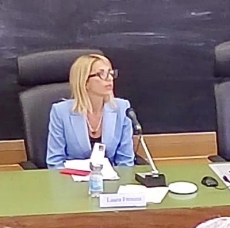
Laura Frosina is an Associate Professor of Comparative Public Law (IUS/21) at the Department of Political Science, Sapienza University of Rome. She teaches courses such as States, Autonomies and Separatisms in the Master's program in International Relations and Comparative Public Law in the undergraduate program in International Cooperation and Development. She is a member of the Doctoral Faculty in Public, Comparative, and International Law and actively participates in national and international research projects. PhD in Theory of the State and Comparative Political Institutions, Sapienza University of Rome (2005) Laurea in Political Science (with honors), Sapienza University of Rome (2000) Postgraduate Course in Assembly Consultants, Sapienza University of Rome (2001) Her research centers on comparative constitutional law, with a strong focus on Spain, Italy, and Latin America. Key themes include multilevel governance, European Union institutions, separatism, autonomy, federalism, parliamentary systems, and constitutional reforms. She analyzes political-constitutional crises, emergency powers, and the evolution of democratic institutions in pluralistic societies. Her work frequently examines the interplay between law, politics, and institutions in contexts of territorial tension. The most recent articles highlight a sustained scholarly engagement with Spanish constitutional dynamics, particularly around the Catalan independence movement, coalition governments under Sánchez, judicial-political conflicts, and broader EU institutional challenges. Trends include the analysis of secession referendums, emergency governance during the pandemic, urban constitutionalism, and the transformation of party systems. Her publications appear in specialized journals such as Nomos , Federalismi.it , and Revista de Derecho Constitucional Europeo , as well as in edited volumes from major academic publishers. Member, Editorial Board of Nomos (since 2001) Responsible, Critical Reviews Section, Nomos (since 2014) Member, Editorial Board, Federalismi.it (2006–2010) Member, Editorial Board, Focus America Latina , Federalismi.it (since 2009) Member, Editorial Board, Quaderni di Nomos (since 2012) Member, Editorial Board, Rivista di Diritto pubblico comparato ed europeo (since 2022) Principal Investigator, Cities and Models of Governance in the 21st Century (Sapienza SEED PNR Project, 2022–2025) Member, Large Ateneo Research Project Following Constitutional Law No. 1/2020, which Parliament? (Sapienza, 2022) Laura Frosina has been involved in numerous research projects funded by the Italian Ministry of Education, Universities and Research (MIUR), CNR, Sapienza University, and the European Committee of the Regions. She has served as a research fellow and principal investigator on topics including intergovernmental cooperation, EU multilevel governance, democratization in South Asia, and urban governance. She has collaborated with the Center of Excellence Integración Europea y Globalización at the University of Granada and participated in international training programs for parliaments in the Balkans. Her academic work bridges doctrinal legal analysis with political science perspectives, contributing to both theoretical and policy-oriented debates. She is affiliated with the Association of Comparative and European Public Law and has coordinated academic events and seminars, including tributes to her mentor Fulco Lanchester. Her institutional page lists regular office hours and remote availability via Google Meet, indicating active engagement with students and the academic community.
Pasquale De Sena is a Full Professor in the Department of Jurisprudence at the University of Palermo , specializing in international law, human rights, and European integration. His academic activity includes teaching courses on International Law and International Protection of Human Rights , with office hours available via Teams and in-person during exam sessions. Research Interests : International Law Norms Human Rights Enforcement European Constitutional Dynamics Migration and Maritime Law Modern Slavery and Dignity Technological Governance Publication Trends : His recent works analyze the interplay between international law and domestic systems, focusing on human dignity, pandemic governance, hate speech regulation, and European monetary policy. Articles explore both theoretical foundations and practical applications of international norms. Contact : pasquale.desena@unipa.it | Phone: +39 09123892009
Celso Fernandes Campilongo é Professor Titular na Faculdade de Direito da Universidade de São Paulo (USP) e Diretor eleito (2022/2026). Possui graduação, mestrado e doutorado pela USP, além de livre-docência pela PUC-SP. Atua nas áreas de Teoria do Direito, Filosofia do Direito e Sociologia Jurídica, com ênfase em temas como direito econômico, antitruste, direito notarial e arbitragem. Sua carreira inclui cargos como Vice-Diretor da FDUSP (2018-2022) e Coordenador do Núcleo de Teoria e Filosofia do Direito na PUC-SP. É membro de instituições como a Academia Brasileira de Direito Notarial e Registral, Conselho Superior de Assuntos Jurídicos da FIESP, e membro fundador do Centro de Estudos e Pesquisas de Direito Sanitário da USP (CEPEDISA-USP). Seus projetos incluem o Núcleo de Estudos em Concorrência e Sociedade (NECSO) e a organização da Enciclopédia Jurídica da PUC-SP. Suas publicações abrangem temas como direito na sociedade complexa, globalização jurídica e interação entre direito e economia. Formação: Graduação, Mestrado e Doutorado pela USP (1980, 1987, 1991) Livre-docência: PUC-SP (1999) Titularidade: FDUSP (2011) Seus prêmios incluem o título de Associado Honorário do CONPEDI e reconhecimento por contribuições ao direito notarial e regulatório. Campilongo coordena grupos de extensão como o Serviço de Assessoria Jurídica Universitária (SAJU-USP) e atua em projetos de pesquisa interdisciplinares, integrando direito, economia e ciências sociais.
Elisa Olivito is a Full Professor of Constitutional Law at the Department of Legal and Economic Studies, Faculty of Law, Sapienza University of Rome. Her research focuses on constitutional theory, fundamental rights guarantees, European constitutional law, immigration law, and gender studies. She is actively involved in teaching courses on Constitutional Law and Public Migration Law. University: Sapienza University of Rome Department: Department of Legal and Economic Studies Research Areas: Constitutional Justice, Multiculturalism, Gender Rights, Migration Policy Recent Publications (2025–2022) analyze: Religious freedom for migrants in multilevel legal systems Constitutional implications of smart city development on social peripheries Tacit amendments in constitutional orders and their existential impact Governability debates through Serio Galeotti’s political philosophy Asylum rights during the Ukraine war Generational shifts in fundamental rights and female subjectivity Office Hours: Tuesdays at the Sezione di Diritto Pubblico, by appointment requested before Sunday. For exams, students must adhere to in-person formats as mandated by the university.
Francesca Poggi is a Full Professor of Philosophy of Law at the Cesare Beccaria Department of Legal Sciences, University of Milan. She serves as the university's gender equality liaison and oversees the Gender Equality and Violence Against Women project at Human Hall. Her academic work bridges legal theory with moral philosophy, focusing on analytic philosophy and general legal theory. She is a member of the scientific committee for Italian legal journals and actively contributes to interdisciplinary initiatives like the Inter-University Center ‘Cultures of Gender’. Her research spans gender equality, legal interpretation methodologies, bioethics, and social sustainability. Notable projects include analyzing gender-based violence frameworks, exploring constitutional legal systems' communicative theories, and addressing linguistic inclusivity in policy-making. She critiques moral biases in legal reasoning and examines the intersection of law with human rights, migration, and multiculturalism. Her scholarship engages with contemporary debates on autonomy in healthcare decisions, xenotransplantation ethics, and the application of Robert Alexy’s correctness claims in legal contexts. She also participates in EU-funded initiatives like the MUSA project, aiming to build innovation ecosystems through territorial R&D leadership.
Alessandra Amore is a permanent faculty member at the University of Palermo's Department of Law , holding the academic rank of Researcher (GIUR-06/A). Her research focuses on public contract law, administrative liability, constitutional principles, and anti-mafia legislation. She maintains regular office hours and can be contacted via email at alessandra.amore@unipa.it. Research Interests Amore's work explores the intersection of administrative law with contemporary governance challenges, including: Public contract law anomalies and jurisdictional review Administrative liability for lawful acts Anti-mafia interdiction legal frameworks PNRR implementation in socio-health sectors Privacy vs. transparency in judicial proceedings Human dignity in vaccination-related liability Publications Trends Her publications (2017–2024) reflect deep engagement with Italian administrative law, particularly: Evolution of public procurement regulations Balancing constitutional principles in anti-mafia enforcement State responsibility in health policy Interplay between administrative discretion and judicial review Human rights protection in migration governance Procedural autonomy in EU contexts
Oskar Peterlini is a Lecturer at the Faculty of Economics and Business Administration of the Free University of Bozen-Bolzano. His research focuses on constitutional law, autonomy models, electoral systems, minority protection, and federalism. He has authored over 50 publications analyzing South Tyrol's autonomy, Italian constitutional reforms, and comparative governance frameworks. His work often bridges legal analysis with historical and political context, emphasizing the role of institutional design in resolving ethnic and regional conflicts. Key research areas include the evolution of South Tyrol's autonomy statute, the impact of electoral systems on minority representation, and cross-border comparisons of autonomy models (e.g., Åland Islands, Hong Kong, Belgium). He frequently addresses challenges in maintaining democratic participation and safeguarding minority rights within evolving constitutional frameworks. His recent studies explore tensions between centralized governance and regional autonomy in Italy. Publications highlight both theoretical contributions and applied policy analysis, often leveraging historical case studies to inform contemporary debates. While no awards are explicitly listed, his extensive output indicates significant scholarly influence in constitutional and regional studies.
Bohdan Bernatskyi is a Research Associate at the Florence School of Transnational Governance , European University Institute. He contributes to EU Commission projects on sanctions harmonization and coherence, leveraging data-driven approaches to analyze international restrictions. His research examines party prohibition mechanisms, sanctions effectiveness, and emerging informal governance structures. Bernatskyi's core interests include: Evolution of global sanctions regimes Democratic resilience against political extremism Quantitative analysis of transnational policies Comparative party regulation frameworks He founded 'Sanctions Finder'—a pioneering platform tracking personal/trade restrictions worldwide to support compliance and academic research. His recent publications demonstrate consistent focus on democratic safeguards, with methodological emphasis on data unpacking (e.g., sanction metrics) and historical case studies (e.g., Australian communist party bans). Works frequently intersect political theory, legal frameworks, and empirical policy analysis. Bernatskyi leads no formal labs but established the open-access Sanctions Finder initiative, facilitating data transparency for researchers and policymakers analyzing restrictive measures.
Paola Torretta is Full Professor of Constitutional Law (SSD IUS 08) at the Department of Law, Political and International Studies, University of Parma, since 2018. She teaches Constitutional Protection of Rights , Regionalism and Rights , and Public Law for Welfare , with prior teaching in Regional Law and Social Legislation. She serves as President of Unified Degree Courses in Social Services (2020-2023) and chairs the Department's Scientific Research Commission. Full Professor (2018-present) Associate Professor (2014-2018) Researcher (2005-2014) Research Fellow (2004-2005) Her research focuses on constitutional principles in European integration, intergenerational responsibility , social rights protection , and legal transplants in federal systems. She has participated in 7 major research projects including: MURST 1999-2001: Comparative constitutional law between EU and member states MIUR 2002-2004: Constitutional Treaty in European integration PRIN 2005-2007: Social rights and regional policies FIRB 2006: Biotecnological innovations' impact on human rights PRIN 2010-2011: Water resource governance She contributes to academic discourse through editorial roles at Biolaw Journal and review activities for Osservatorio costituzionale and Consulta online . Her teaching spans multiple disciplines including Law, Social Work, and Cultural Heritage Legislation.
Laura Lorello is a Full Professor in Jurisprudence at the University of Palermo (UNIPA), affiliated with the Department of Law. She actively teaches Constitutional Law and Public Law courses across multiple campuses, including Trapani and Agrigento. Her office hours are held weekly at the Department of Law, where she engages with students and scholars. Academic Rank: Professor Department: Department of Law Primary Campus: Trapani campus Lorello specializes in Constitutional Law, with a focus on political participation, gender equality, legislative processes, and regional governance. Her research explores the intersection of constitutional principles, judicial review, and social rights, including equal opportunities and the role of legislative committees. Recent publications highlight trends in regional legislative frameworks, gender equality jurisprudence, and normative quality assessments. Lorello has contributed extensively to debates on same-sex unions, labor rights, and the constitutional implications of public health policies. As of 2025, no scientific awards or student advisement records were explicitly documented in the provided texts. Her work remains central to Italian constitutional discourse.
Professor Marcello Mazzuca is an Associate Professor of Private Law at the Department of Law, Economics and Sociology (DiGES) of the University of Magna Graecia Catanzaro. He has taught courses such as Private Law and Applied Analysis of Civil Law and Procedure since at least 2018, with active office hours for student consultations and remote meetings via email. His research focuses on Private Law, Civil Law, and Sports Law, with notable work on familial relationships, contractual obligations, and the interplay of constitutional values with legal frameworks. Recent publications explore AI liability, consumer rights, and cultural property regulations, highlighting his interest in contemporary legal challenges and societal implications. Over the past decade, Mazzuca's work spans family law, inheritance, property rights, and insurance law. His 2022 monograph and articles address spousal rights, AI accountability, and class action reforms, reflecting a blend of traditional and modern legal analysis. Mazzuca is affiliated with the Laboratory of History of Law and Economics, contributing to research on civic uses and historical legal structures. His contact email is m.mazzuca@unicz.it , and he maintains active teaching and research responsibilities.