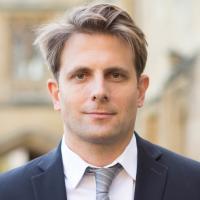
Lucas Kello is Associate Professor of International Relations at the University of Oxford's Department of Politics and International Relations, where he directs the Academic Centre of Excellence in Cyber Security Research (ACE-CSR). This university-wide initiative is sponsored by the UK National Cyber Security Centre and the Engineering and Physical Sciences Research Council. His research examines technology's impact on global affairs, focusing on: Cybersecurity strategy and cyber conflict resolution Artificial intelligence governance and geopolitical implications Space security and orbital governance frameworks Public-private sector collaboration in disruptive technologies Kello's publications demonstrate sustained focus on cyber conflict theory, space governance, and democratic resilience against digital threats. His 2022 book Striking Back was named among the year's best by the Financial Times and Nature . He advises eight doctoral and master's students including Haydn Belfield and Aaron Xavier Jerome. As Director of ACE-CSR, he leads interdisciplinary cybersecurity research initiatives across Oxford University.
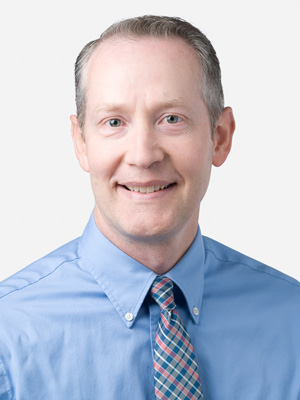
Professor Trina Myers serves as the Head of School for the School of Information Technology at Deakin University's Faculty of Science Engineering and Built Environment. With extensive experience in academia and research leadership, she plays a pivotal role in shaping IT education and research directions at Deakin. She is also an active member of the Australian Council of Deans of ICT (ACDICT), having served as its immediate past President. Her educational background includes: Doctor of Philosophy in Computer Science from James Cook University Master of Business Administration from James Cook University Master of Information Technology from James Cook University Professor Myers' research focuses on semantic technologies, ontology engineering, Internet of Things, knowledge management, natural language processing, and human-computer interaction . Her work emphasizes interdisciplinary collaboration, bridging technology with fields such as healthcare, marine science, environmental conservation, and business. She has pioneered approaches in academagogy (academic gamification) to enhance online learning engagement, particularly for adult learners. Her IoT research has significant applications in healthcare space optimization, environmental monitoring, and resource management. Her recent publications demonstrate a strong trajectory in applying AI and IoT technologies to solve real-world problems, particularly in healthcare, education, and resource optimization. There's a clear pattern of interdisciplinary work connecting computer science with healthcare, education, and environmental science. Her research increasingly focuses on human-centered technology design, especially for vulnerable populations like adolescents with autism spectrum disorder. Her notable achievements include: Fellow of the Australian Computer Society (2023) Australian Awards for University Teaching (AAUT) Teaching Award (2020) Women in IT Professional Leadership Award Finalist (2020) Asia-Pacific International Triple E Entrepreneurial Educator of the Year Award (1st runner-up, 2020) Australian Computer Society, National Digital Disruptor ICT Educator of the Year (2019) Professor Myers actively supervises doctoral students across diverse research areas including gamification in language learning, brain tumor analysis using deep learning, AI in higher education, AI for refugee resilience, data integrity in edge environments, and quantum-driven satellite networking. She has secured significant research funding, including a recent grant for "Indiginizing ICT Curriculum: A Starter Framework for the Community of Practice" through the Australian Council of Deans of ICT. Her teaching philosophy emphasizes active learning methodologies, Process Oriented Guided Inquiry Learning (POGIL), blended learning, and collective intelligence approaches.
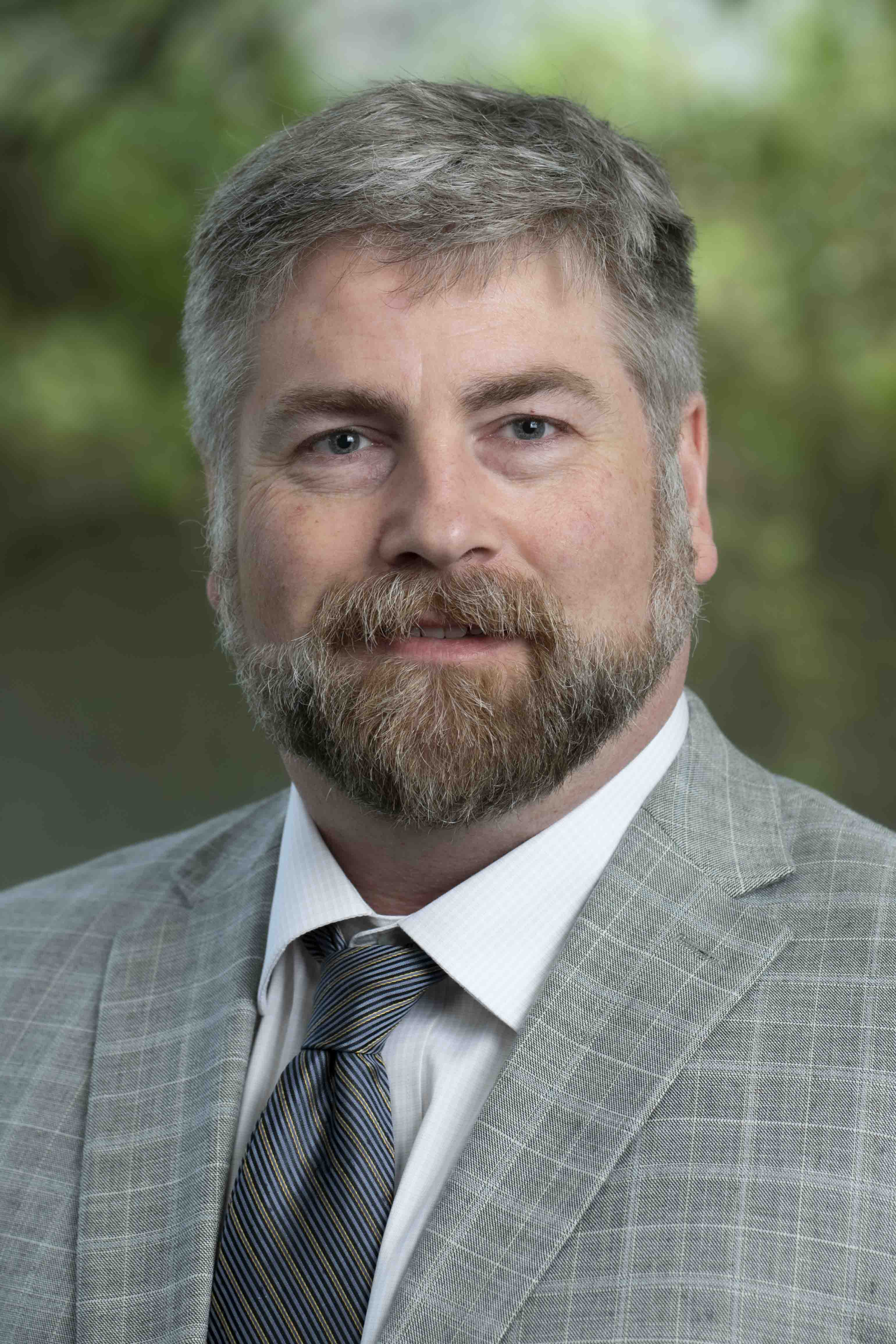
David Schramm serves as Associate Professor and Family Life Extension Specialist in the Department of Human Development and Family Studies at Utah State University, integrating academic research with community-focused programming to strengthen family relationships across diverse populations. His educational foundation includes: PhD in Human Development and Family Studies, Auburn University (2007) MS in Family, Consumer, and Human Development, Utah State University (2003) BS in Marriage, Family, and Human Development, Brigham Young University (2001) Research centers on evidence-based relationship and parenting education, with recent expansion into personal flourishing and well-being frameworks. His work emphasizes practical application through resources promoting gratitude practices, positive interactions, and resilience-building in marital and family contexts, while addressing unique challenges in stepfamilies, divorce transitions, and incarcerated populations. Publication analysis reveals consistent focus on divorce education effectiveness, co-parenting interventions, and family enrichment activities. The "Hidden Gems" series demonstrates innovative translation of research into accessible home-based resources, while peer-reviewed articles examine systemic factors including socioeconomic context, racial disparities, and pandemic impacts on family dynamics. Notable recognition includes: Western Region Extension Excellence Award (2019) Provost Award for Creative Extension Programming (2012) Early Career Achievement Award (2010) Multiple team awards for diversity initiatives and marketing excellence He actively mentors graduate students in Human Development and Family Studies while leading high-impact extension programs including Divorce Education, Strong Parents Stable Children, and the Road to Happiness initiative. Current projects address relationship education for incarcerated women and culturally responsive outreach to African American communities, demonstrating commitment to bridging research-practice gaps.
Cameron Ainsworth is a Professor at the University of South Florida’s College of Marine Science , specializing in biological oceanography and fisheries ecosystem modeling . His research focuses on how human activities and climate change affect marine ecosystems, with an emphasis on developing tools for ecosystem-based management. He leads the Fisheries and Ecosystem Ecology Lab , where he and his students use advanced modeling techniques to assess marine food webs, population dynamics, and environmental policy outcomes. Education: Ph.D. in Oceanography, University of British Columbia (2006) Research Interests: Dr. Ainsworth’s work integrates ecosystem modeling , fisheries management , and climate impact assessment . His lab uses statistical and numerical models to simulate marine ecosystems, evaluate the effects of oil spills, and inform marine protected area design. A major focus is the Gulf of Mexico , where he collaborates with NOAA and regional agencies to support Integrated Ecosystem Assessments . Scientific Awards: Sloan Research Fellowship (2013) – awarded for outstanding early-career contributions to marine science Lab and Team: Dr. Ainsworth leads the Fisheries and Ecosystem Ecology Lab at USF, which includes graduate students and postdocs working on projects related to oil spill recovery, marine restoration, and fisheries management. The lab is actively involved in NOAA-funded initiatives and Gulf-wide ecosystem assessments.
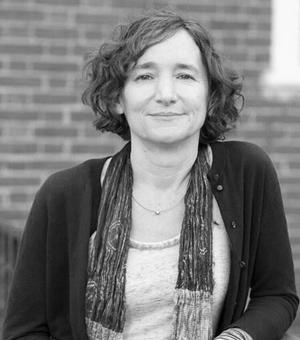
Lisa McGirr serves as the Harmsworth Visiting Professor of American History in the Department of History at Harvard University's Faculty of Arts and Sciences. Her scholarly work centers on 20th century U.S. history, bridging social and political history with emphasis on collective action, state building, reform movements, and politics. McGirr's research investigates grassroots political mobilization and institutional development, notably through her award-winning book Suburban Warriors: The Origins of the New American Right which analyzes post-WWII conservative movements, and The War on Alcohol: Prohibition and the Rise of the American State (2016) which reveals Prohibition's role in federal state expansion. She is currently researching rightwing politics and social movements across 20th century America, demonstrating consistent focus on power dynamics between citizen activism and governmental institutions. Her scholarly impact includes receiving unspecified awards for Suburban Warriors and co-authoring the influential textbook Give Me Liberty: An American History with Eric Foner and Kathleen DuVal, widely adopted in undergraduate curricula.
Jason Hackworth is a Professor in the Department of Geography and Planning at the University of Toronto. His work centers on urban political economy, with a focus on North American cities, racial discrimination, and neoliberalism. He has authored two influential books— The Neoliberal City (2007) and Faith-Based (2012)—and numerous journal articles. Research Interests: Urban political economy frameworks Racial capitalism and systemic inequality Neoliberal urban policy critiques Land abandonment and population shrinkage in Rust Belt cities Intersection of religion and economic development Recent Publications (2021–2025): His work explores racialized dimensions of urban decline, gentrification in low-demand environments, and critiques of conservative economic rhetoric. Articles like "Racial Capitalism in Urban Studies" (2025) and "W.E.B. Du Bois and the Urban Political Economy Tradition" (2021) highlight his focus on systemic racism and historical urban analysis.
Prof. Dr. Kirsten Jung is a faculty member at the Department of Microbiology , Faculty of Biology , Ludwig Maximilian University of Munich . Her research focuses on bacterial signal transduction, stress response mechanisms, and systems biology approaches to understand microbial regulatory networks. Key research areas include stress-dependent gene expression in bacterial populations Structural and functional analysis of membrane-integrated receptors Metabolism-based chemical communication in bacteria Integration of experimental and computational systems biology Recent publications highlight her lab's work on Escherichia coli epitranscriptomic modifications under heat stress, m 5 C rRNA dynamics, and the role of RNA methylation in host-pathogen interactions. Collaborative studies address bacterial acid stress responses and their implications for antibiotic tolerance. Her interdisciplinary work bridges microbiology with ecological studies, as evidenced by research on biodiversity conservation in forest and urban ecosystems. Publications also demonstrate expertise in advanced imaging techniques (e.g., arterial spin labeling for glioma analysis) and bioinformatics approaches. Current advisees include Gloria Gessinger and Tania P. Gonzalez-Terrazas . She can be contacted at jung@lmu.de .
Jaimejuan Mar Cabeza is a Senior University Lecturer at the University of Helsinki, affiliated with the Faculty of Biological and Environmental Sciences, Organismal and Evolutionary Biology Research Programme, and the Helsinki Institute of Sustainability Science (HELSUS). She leads the Global Change and Conservation Lab and serves as a supervisor for the Doctoral Programme in Interdisciplinary Environmental Sciences and the Doctoral Programme in Wildlife Biology. University of Helsinki: Senior University Lecturer Faculty of Biological and Environmental Sciences Organismal and Evolutionary Biology Research Programme Helsinki Institute of Sustainability Science (HELSUS) Global Change and Conservation Lab (Principal Investigator) Dr. Cabeza's research focuses on ecology, evolutionary biology, and conservation science with particular emphasis on human-wildlife conflicts, climate change impacts on biodiversity, and sustainable pastoral systems. Her work spans multiple continents with significant field research in Madagascar and Kenya. She employs interdisciplinary approaches that integrate ecological, social, and cultural dimensions of conservation. Her recent publications reveal strong trends in bat ecology and pest suppression services, human-carnivore coexistence, and the role of traditional ecological knowledge in conservation. The research demonstrates increasing integration of social science perspectives with ecological studies, particularly examining how cultural practices and governance systems affect conservation outcomes. Best International Teacher (2010) Commendation for good thesis supervision (2009, 2011) Best Talk, Student Conference on Conservation Science (2000) Dr. Cabeza actively supervises 4 PhD students and 3 MSc students, with a strong commitment to education at multiple levels from school children to advanced doctoral candidates. She coordinates the RESPECT field course in Madagascar and has developed novel pedagogical approaches for conservation education. Her research is supported by multiple active projects including 'Thinking like an elephant' (2025-2028), 'Conservation trade-offs' (2024-present), and 'Pastoralism as a global herbivory socio-ecosystem' (2023-2026). She leads the Global Change and Conservation Lab, which brings together researchers from diverse disciplines to address complex conservation challenges at the intersection of ecology, social science, and policy. The lab maintains strong international collaborations, particularly with institutions in Africa where much of their field research takes place.
Sergey Anatolyevich Merzlyakov is an Associate Professor at the Department of Theoretical Economics , Faculty of Economic Sciences , National Research University Higher School of Economics (HSE) . He has been affiliated with HSE since 2006 and holds leadership roles as First Deputy Dean and Deputy Head of the International Laboratory of Macroeconomic Analysis . PhD in Economics (2010, HSE) Master's in Economics (2007, HSE) Bachelor's in Economics (2005, HSE) His research focuses on fiscal and monetary policy interaction in export-oriented economies , including central bank-government dynamics , optimal macroeconomic policy , and liquidity trap solutions . He has published extensively on monetary policy communication , cross-border policy transmission , and regional debt interdependencies . Recent studies emphasize anchored inflation expectations , hybrid inflation targeting , and verbal interventions by central banks. His work appears in journals like Panoeconomicus , Russian Journal of Economics , and Journal of Central Banking Theory and Practice . Awarded HSE Honorary Diplomas (2022), Medal 'Recognition - 10 Years of Successful Work' (2024), and Best Teacher (2017–2018). Supervised K. Anikeev 's dissertation on banking system heterogeneity. He coordinates network educational programs and inter-university research collaborations , including joint double-degree programs with Far Eastern Federal University and other regional institutions. His roles include faculty development, organizational restructuring, and academic partnership management.
Pascal Scherrer is Associate Dean (Research) and Professor within the Faculty of Business, Law and Arts at Southern Cross University . Based in Lismore, Australia, he combines an administrative leadership role with active research in sustainability, regional development, tourism and visitor management. His work bridges academia, industry and government, having jointly secured over AUD $2 million in competitive funding and delivered high-impact projects for clients such as the NSW National Parks & Wildlife Service and the Australian Meat Processor Corporation. Education BSc – Griffith University BSc (Hons) – Griffith University Graduate Certificate TESOL – Bond University PhD – Griffith University Research Interests Dr Scherrer’s scholarship centres on sustainability science applied to tourism and regional development. His current flagship project is a circular-economy partnership with the Australian Meat Processor Corporation aiming to reduce plastic packaging waste across red-meat supply chains. Earlier work includes sustainable-visitor-capacity assessments on Rottnest Island , alternatives to summiting Wollumbin-Mt Warning that informed a AUD $7.4 million NSW government trail investment, and longitudinal monitoring of visitor experiences at Point Fraser artificial wetland in Perth. Cross-cutting themes include visitor risk perception in remote alpine and coastal settings, community engagement in protected-area governance, Indigenous tourism business models , and the intersection of digital culture (e.g., selfie-taking) with tourism safety. Scientific Awards 2023 – Southern Cross University Research Award 2014 – Southern Cross University Vice-Chancellor’s Award for Excellence in Community Engagement Grants & Advising Scherrer has jointly attracted over AUD $2 million in research and consultancy funding from state and federal agencies, industry bodies and NGOs. He currently supervises Honours and PhD candidates across topics in sustainable tourism, regional development and visitor management, and teaches undergraduate and postgraduate units covering sustainable tourism, visitor-economy management, and planning & policy. Professional Affiliations & Service Member, IUCN World Commission on Protected Areas Member, North Coast Regional Advisory Committee, NSW National Parks & Wildlife Service External facilitator for community and local-government projects
NAKAJIMA, Tatsuo serves as a Professor at Waseda University's School of Fundamental Science and Engineering, Department of Computer Network Engineering. Holding a Doctor of Engineering from Keio University, he has been affiliated with Waseda since 1999 after positions at Japan Advanced Institute of Science and Technology (1993-1999), Cambridge University, and Carnegie Mellon University. His academic profile shows substantial research output with 433 papers and 3,338 citations on Scopus, and 7,604 citations with an h-index of 42 on Google Scholar. Dr. Nakajima's research focuses on Distributed Systems, Embedded Systems, and Ubiquitous Computing, with particular emphasis on virtualization architectures for embedded environments. His work bridges theoretical computer science with practical applications in information appliances, operating systems, and persuasive computing technologies. He has developed innovative systems including SPUMONE (a composition kernel for multi-OS environments), SIGMA System, and SPLiT (a performance optimization library for multicore processors). Analysis of his 15 most recent publications reveals a consistent research trajectory centered on enhancing reliability, security, and performance of embedded and pervasive computing systems. His work shows increasing integration of human factors, particularly in sustainable behavior applications through persuasive technology. The research spans from low-level system architecture to user-centered applications, demonstrating both technical depth and practical relevance. Nokia Research Center, Visiting Research Fellow (2005.04) Dr. Nakajima's research has produced numerous practical frameworks including SPUMONE for multi-OS environments, SPLiT for performance optimization, and persuasive applications like EcoIsland for sustainable behavior. His work on kernel monitoring, anomaly detection, and self-healing systems demonstrates strong focus on system dependability. Current research appears directed toward integrating human factors with embedded systems, particularly in environmental sustainability applications. His laboratory work centers around the SPUMONE project, a virtualization layer for multi-core embedded systems that enables multiple operating systems to coexist with minimal engineering cost. This research environment supports exploration of resource management, security monitoring, and performance optimization in embedded contexts. The work has practical applications in information appliances, smart homes, and pervasive computing environments.
Chiharu Tokoro is a Professor and currently serves as the Dean of the School of Creative Science and Engineering at Waseda University. She also holds positions as an External Director at Toppan Photomasks Inc. and JX Metals Corporation, and is a Specially Appointed Professor at The University of Tokyo's Graduate School of Engineering. With a Dr. Engineering degree from The University of Tokyo (2003), she has established herself as a leading researcher in resource recycling and environmental engineering, with over 184 papers and an h-index of 27 (Scopus) or 30 (Google Scholar). Dean of School of Creative Science and Engineering, Waseda University (2024.09-present) External Director, Toppan Photomasks Inc. (2023.11-present) External Director, JX Metals Corporation (2021.04-present) Specially Appointed Professor, The University of Tokyo, Institute of Industrial Science (2016.11-present) She received her Dr. Engineering degree from The University of Tokyo in March 2003 after completing her undergraduate studies at Waseda University's School of Science and Engineering (1994-1998). Professor Tokoro's research spans transport phenomena, metals production, earth resource engineering, energy sciences, and environmental materials recycling. She specializes in solid-liquid and solid-solid separation processes, powder simulation and processing, and environmental treatment technologies. Her work focuses on innovative recycling methods for lithium-ion batteries, photovoltaic panels, and other electronic waste, with particular emphasis on pulsed discharge techniques for material separation. She has pioneered novel electrical pulse methods that enable high-precision separation of battery components while minimizing environmental impact. Her recent publications demonstrate a strong focus on advanced recycling technologies, particularly for lithium-ion batteries and electronic waste. She has developed groundbreaking pulsed discharge methods for separating battery components with high precision, achieving over 95% material recovery rates. Her research also extends to water treatment technologies, heavy metal removal, and sustainable materials development. The interdisciplinary nature of her work bridges chemical engineering, materials science, and environmental engineering to address critical resource circulation challenges in the context of circular economy principles. Jubilee Global Diversity Award from The American Ceramic Society (2024) 令和4年度リサイクル技術開発本多賞 (2022) 5th APT Outstanding International Contribution Award (2022) Falling Walls Science Breakthroughs of the Year 2021 finalist in Engineering and Technology 平成31年度文部科学大臣表彰 科学技術賞 (2019) Professor Tokoro serves on numerous national and international committees related to resource recycling, environmental policy, and scientific research evaluation. She is an active editorial board member for several prestigious journals including Scientific Reports and Minerals. Her research is supported by various grants from government agencies and industry partnerships focused on sustainable resource management and circular economy development. She has been instrumental in developing policy recommendations for electronic waste recycling and resource conservation in Japan. As Dean of the School of Creative Science and Engineering at Waseda University, she leads one of Japan's premier institutions for engineering education and research. Her laboratory focuses on developing innovative recycling technologies, particularly for lithium-ion batteries and photovoltaic panels. She collaborates extensively with industry partners and government agencies to translate research findings into practical applications that address real-world resource circulation challenges.
Paolo Riva is a Full Professor of Structural Engineering at the Department of Design and Technologies of the Faculty of Engineering, University of Bergamo. He has served as Dean of the Faculty of Engineering (2009-2012) and Director of the Department of Engineering at the same university since 2012. His expertise lies in seismic engineering and structural analysis of reinforced concrete structures. Professor Riva graduated in Civil Engineering from Politecnico di Milano in 1984 and earned his Ph.D. in Civil Engineering from the University of Waterloo, Canada in 1987. He began his academic career as a researcher at the University of Brescia (1991-2001), became Associate Professor there in 2001, and joined the University of Bergamo as Full Professor in 2005. His primary research interests focus on the seismic behavior of reinforced concrete structures, particularly structural walls and prefabricated structures. He also specializes in seismic retrofitting of historic buildings, nonlinear analysis of reinforced concrete structures, and fire behavior of reinforced concrete structures. His work bridges theoretical analysis with practical applications for enhancing structural safety in earthquake-prone regions. Professor Riva's recent publications demonstrate a strong focus on seismic damage assessment, structural retrofitting solutions, and sustainability in structural engineering. His research often addresses practical challenges in post-earthquake scenarios, including damage identification through advanced monitoring techniques and development of innovative retrofit strategies for existing structures. A notable trend is his increasing emphasis on integrating sustainability principles into seismic retrofitting practices. Seismic Reliability of Structures (WP3 - Reluis), 2022, 24 months Structural vulnerability models for natural hazards and industrial cascading effects, 2024, 33 months Sustainable Approaches For Earthquake Resistant_REhabilitation solutions for the BUILT environment, 2024, 15 months Professor Riva has directed all these research projects as Scientific Director. His expertise has been recognized through appointments to post-seismic emergency commissions following major earthquakes in Italy, where he provided critical guidance on intervention methods for seismic repairs and improvements for public and monumental buildings.
Hermann Lotze-Campen is an agricultural economist and Head of Research Department 2 'Climate Resilience' at the Potsdam Institute for Climate Impact Research (PIK). He holds a professorship in Sustainable Land Use and Climate Change at Humboldt-Universität zu Berlin within the Faculty of Life Science, Department of Agricultural Economics. His work bridges climate science, agricultural economics, and food systems research with significant policy implications. Lotze-Campen's research focuses on the interplay between climate change, food systems, land use, and economic modeling. His expertise spans agricultural economics, climate change impacts, land use modeling, food systems transformation, sustainable development pathways, and bioeconomy transitions. He has developed global land use modeling frameworks for assessing climate impacts, food and bioenergy demand, agricultural land and water use, trade, and environmental consequences. His research investigates economic model inter-comparisons, lifestyle impacts on food systems, and monitoring land use change and biodiversity transitions. Analysis of his recent publications reveals a strong focus on food system transformations, dietary shifts, and their environmental and economic implications. His work increasingly examines China's food system, planetary boundaries, and the integration of climate mitigation with sustainable development goals. Lotze-Campen frequently employs economic modeling approaches including Applied General Equilibrium (AGE) modeling of agricultural policies and trade. His research demonstrates growing attention to equity considerations in bioeconomy transitions and the connections between food systems and climate targets. Lotze-Campen is actively involved in major international research initiatives including the Food System Economics Commission (FSEC), the FABLE initiative (Food, Agriculture, Biodiversity, Land-Use, and Energy), and the World in 2050 initiative. He has contributed to significant policy reports including 'The Economics of the Food System Transformation: Global Policy Report' and 'Transformations to Achieve the Sustainable Development Goals.' His work has substantial policy relevance for climate mitigation strategies, food security, and sustainable land management. At PIK, Lotze-Campen leads the Climate Resilience research department and has been instrumental in developing integrated assessment models that connect climate science with economic and social dimensions. His work frequently appears in high-impact journals including Nature Sustainability, Nature Communications, and The Lancet Planetary Health, reflecting the interdisciplinary nature and policy relevance of his research.
Gerard Francisco Sandoval is a Professor in the School of Planning, Public Policy and Management at the University of Oregon, where he also serves as Associate Director of the Center for Latino/a and Latin American Studies. He actively contributes to Oregon's public policy landscape as a Commissioner on the Land Conservation and Development Commission (term 2019-2023) and as a councilmember on the State's Housing Stability Council. Dr. Sandoval's educational background includes: PhD in City and Regional Planning, University of California, Berkeley (2007) MCP in City and Regional Planning, University of California, Berkeley (2002) BS in Community and Regional Development, University of California, Davis (2000) His scholarly research focuses on the intersection of city planning, immigration, and sustainable neighborhood revitalization. Sandoval employs detailed narrative case studies to explore ethnic identity, equity, and bioregionalism, with particular attention to how planning can achieve equitable outcomes through environmental ethics, affordable housing access, inclusive land-use policies, and transparent public participation mechanisms. His work often centers on immigrant communities, examining gentrification, displacement, infrastructure, and the socio-economic implications of development in marginalized neighborhoods. Born in Guatemala, Sandoval's personal connection to immigration issues stems from his family's experience leaving Guatemala during its civil war. Analysis of Sandoval's publications reveals a consistent focus on urban equity, with particular emphasis on how immigrant communities navigate and shape urban spaces. His research trajectory shows an evolution from studying transnational networks of undocumented workers to broader examinations of racial equity in planning, gentrification, and sustainable neighborhood revitalization. The geographic scope of his work spans from specific case studies in places like MacArthur Park in Los Angeles and Postville, Iowa, to theoretical explorations of planning ethics and practices across the Galápagos Islands and Oregon's forest communities. Dr. Sandoval's significant contributions to the field have been recognized with several prestigious awards: Chester Rapkin Award (2014) for best planning article Paul Davidoff Book Award honorable mention (2013) Barclay Gibbs Jones Award for best dissertation in planning (2009) Rev. Dr. Martin Luther King Jr. Award from the University of Oregon for promoting diversity, social justice, and equity As an academic leader, Sandoval serves as the Dean's Fellow for Diversity at the College of Design and leads the college's Diversity and Inclusion Committee. His public service extends beyond academia through his appointments to state commissions where he applies his expertise to address Oregon's housing and land use challenges. His research has attracted media attention, with coverage in Newsweek, Los Angeles Times, and Oregon Quarterly. Sandoval's work bridges academic research with practical planning applications, particularly in the context of immigrant integration and sustainable community development. Dr. Sandoval maintains active research connections with communities in Oregon, Guatemala, and the Galápagos Islands, where he studies bioregional revitalization. His current research examines equitable planning outcomes achieved through integrating environmental ethics, providing access to affordable housing, supporting inclusive land-use policies, recognizing generative economic development, and designing transparent public participation mechanisms to revitalize urban cities and rural towns.