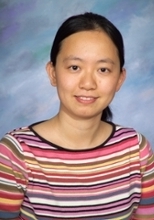
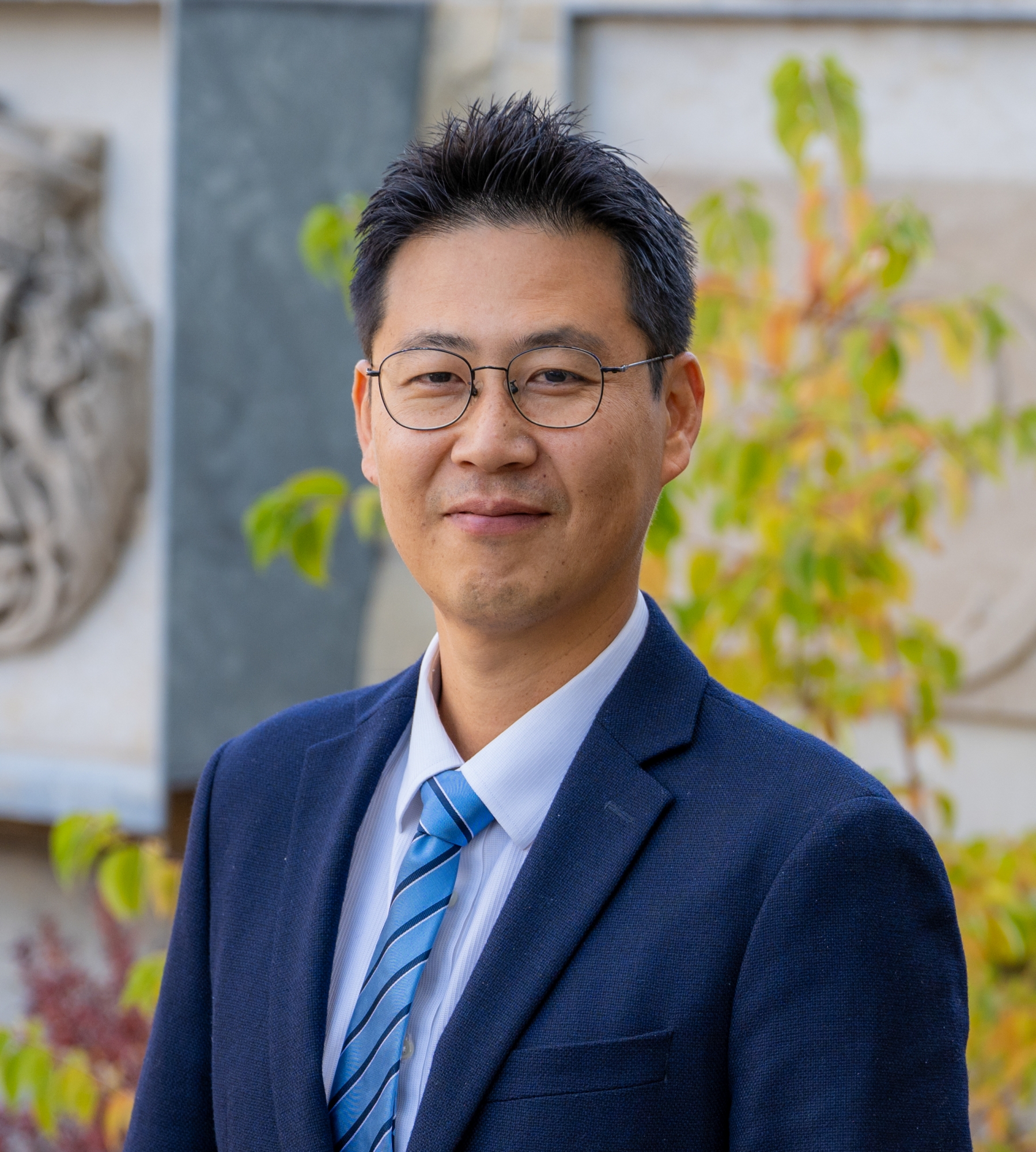
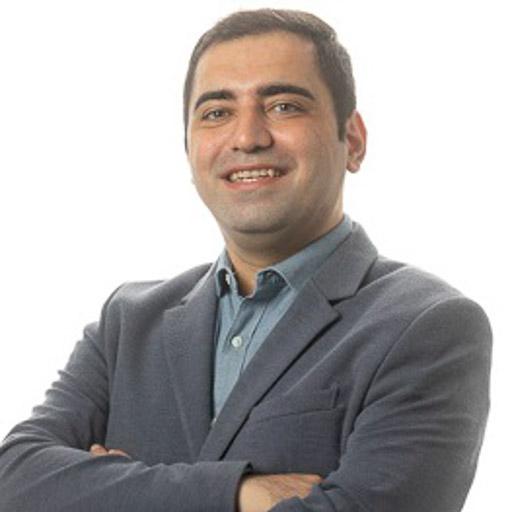
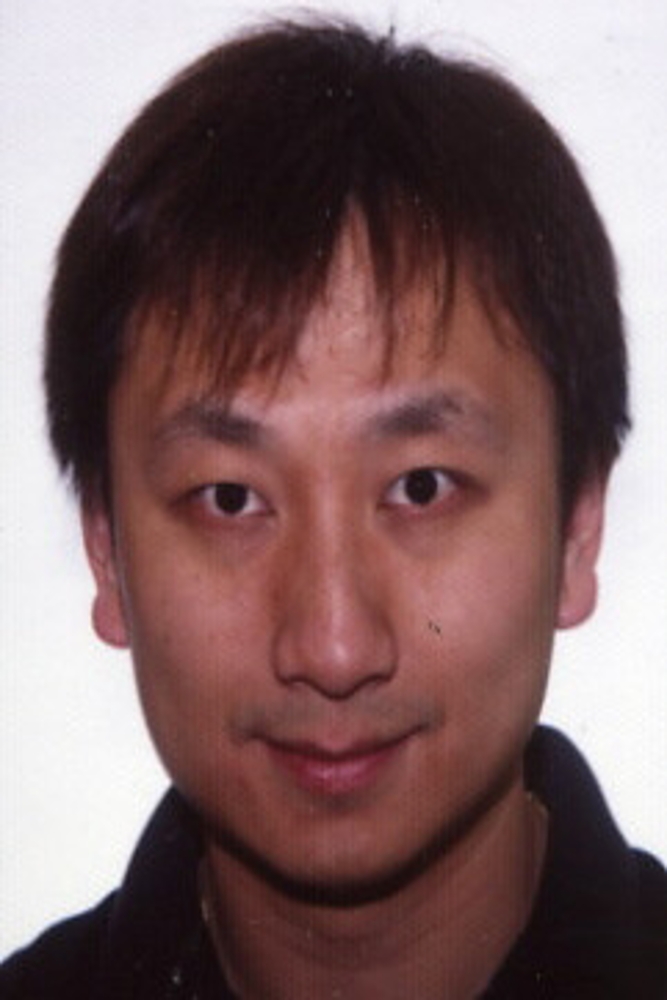
Ikjot Saini is a Professor at the University of Windsor’s Faculty of Engineering, co-leading the SHIELD Automotive Cybersecurity Centre of Excellence, Canada’s first organization addressing threats in connected transportation. Her research focuses on automotive cybersecurity, vehicular networks, and privacy-preserving technologies. She has supervised doctoral students Shiva Nejati and Kunj Dhonde, and contributed to courses in the University’s Continuing Education program, specializing in cybersecurity education for professionals. Her work includes pioneering studies on blockchain-based security for connected autonomous vehicles (CAVs), machine learning-driven intrusion detection systems, and privacy-enhancing mechanisms like pseudonym-changing strategies. She has been recognized with the K.W. Michael Siu Award from the APMA Institute for Automotive Cybersecurity (2020). Saini’s research bridges theoretical advancements with real-world applications, ensuring vehicles and infrastructure remain secure against evolving cyber threats. Her contributions span academic publications, industry partnerships, and policy recommendations, positioning her as a leader in vehicular cybersecurity. Ongoing projects emphasize eco-efficiency in cybersecurity solutions and adversarial modeling for privacy evaluation.
Dr. Weihua Zhuang is a University Professor and University Research Chair in the Department of Electrical and Computer Engineering at the University of Waterloo. She holds prestigious fellowships from IEEE, Royal Society of Canada, and other organizations. Her research focuses on future communication networks, including 6G, network virtualization, autonomous vehicles, and smart grids. She has led groundbreaking work on MAC protocols like VeMAC for vehicular networks and has contributed extensively to AI-driven network management. Education : Doctorate in Electrical Engineering, University of New Brunswick, Canada (1993) M.Sc. and B.Sc. in Electrical Engineering, Dalian Maritime University, China Research Interests : Dr. Zhuang's work spans wireless networking, IoT, autonomous systems, and smart infrastructure. She explores solutions for network architecture evolution, machine learning applications in communication systems, and service customization for dynamic environments. Her recent projects include digital twin-driven networks, cross-modal transmission strategies, and AI-native slicing for 6G. Awards : Women's Distinguished Career Award (IEEE VTS, 2021) R.A. Fessenden Award (IEEE Canada, 2021) Fellowships from IEEE, RSC, CAE, EIC Grants & Professional Activities : She led the Tier I Canada Research Chair in Wireless Communication Networks (2010–2024) and has held roles such as IEEE VTS President (2023–2024). Her grants include the NSERC Discovery Accelerator Supplements and PREA awards. She edits journals like IEEE Transactions on Vehicular Technology and co-chairs major conferences. Labs & Teams : Her research group focuses on network architecture, AI-driven protocols, and vehicular communication. Collaborations include projects on 6G, satellite-terrestrial integration, and edge computing for autonomous systems.
Lin Cai is a Professor in the Department of Electrical & Computer Engineering at the University of Victoria, Canada. She holds prestigious fellowships including NSERC Steacie, IEEE, CAE, and Royal Society of Canada. Her research focuses on wireless communications, networking, and mobile computing, with emphasis on protocols for multimedia and IoT systems. She has led projects in vehicular networks, UAV-assisted systems, and federated learning for edge intelligence. Dr. Cai has advised over 20 students, many of whom have received awards and prominent roles in academia and industry. She has authored numerous high-impact papers, secured grants from NSERC, CFI, and industry partners, and serves in leadership roles at IEEE and educational institutions. Notable contributions include work on congestion control, network security, and autonomous systems. Education: BEng (Nanjing U. of Sci. & Tech.), MASc/PhD (University of Waterloo) Affiliations: IEEE Vehicular Technology Society Board of Governors, IEEE ComSoc Distinguished Lecturer Awards: 2020 IEEE N2Women 'Star in Networking', RSC Fellow 2024, Best Paper Awards (ICC 2008, WCNC 2011) Research Labs: Connected Autonomous Vehicles (CAV) Lab, AI-driven Networking Group Her work integrates networking, AI, and control theory to address challenges in 6G, IoT, and smart transportation. She actively promotes diversity through initiatives like the 'Riko-chan' STEM manga series.
Yong Hoon Kim is an Associate Professor in the Department of Civil and Environmental Engineering at the University of Windsor, Canada. He specializes in intelligent transportation systems with a focus on connected and autonomous vehicles (CAVs), traffic flow modeling, and cybersecurity in transportation networks. Education : BSc & MSc in Civil Engineering from University of Seoul, South Korea PhD in Civil Engineering from Purdue University, West Lafayette, IN, USA Research Interests : Connected and autonomous vehicles (CAVs) integration in urban environments Intelligent transportation systems (ITS) and traffic flow optimization Cybersecurity challenges in vehicle-to-vehicle communication networks Mobility data privacy and advanced traveler information systems Recent Publication Trends : His recent work (2023) explores vehicle malware modeling, collision-free traffic simulation, and mobility data analysis, while earlier studies focus on CAV infrastructure planning and V2V communication dynamics.
Sue Ann Campbell is a Professor and Core Member at the Centre for Theoretical Neuroscience, University of Waterloo. Her research focuses on theoretical neuroscience and mathematical modeling of neural systems, with expertise in dynamical systems, time-delay effects, and network synchronization. Her work spans neural mass models, coupled oscillators, stability analysis of delayed systems, and applications in epilepsy research and autonomous vehicle networks. She develops mathematical frameworks to understand how delays and coupling configurations influence collective behavior in biological and engineered networks. Her publications demonstrate a strong emphasis on bifurcation analysis, synchronization phenomena, and the role of time delays in neural and ecological systems. Recent work includes modeling spike-wave discharges in epilepsy, stability in vehicle platoons, and plankton dynamics with delayed nutrient recycling.
Dr. Hamid Taghavifar is an Assistant Professor in the Department of Mechanical, Industrial and Aerospace Engineering at Concordia University. His research focuses on Connected Autonomous Vehicles (CAVs), Robotics, Control Systems, Mechatronics, and Artificial Intelligence (AI), with a particular emphasis on Reinforcement Learning and Intelligent Transportation Systems. He teaches courses such as MECH 6681 (Dynamics and Control of Nonholonomic Systems), MECH373 (Instrumentation and Measurements), and MIAE 215 (Programming for Mechanical and Industrial Engineers). His work involves developing advanced control algorithms for autonomous systems, energy management in electric vehicles, and fault-tolerant robotics. He leads the Lab for Advanced Control and Intelligent Transportation Systems (LACITS), where research integrates AI with cyber-physical systems to enhance automated vehicle decision-making and safety. Recent publications address socially aware autonomous driving, reinforcement learning applications, and robust control methodologies for nonholonomic systems. Dr. Taghavifar supervises Mechanical Engineering (MASc and PhD) students, advising on projects related to autonomous systems, robotics, and control engineering. His research often involves experimental validation and collaboration with industry partners to advance practical applications of control theory and AI.
Dr. Patrick Hung is a Professor (on Research Leave) in the Department of Information Security at Ontario Tech University's Faculty of Business and Information Technology. His research focuses on smart toys, robotic computing, services computing, workflow security, and privacy. He holds U.S. patents and has authored Springer books on toy computing. He chairs academic minitracks at the Hawaii International Conference on System Sciences (HICSS) and collaborates globally, including with Zayed University (UAE), the University of São Paulo (Brazil), and National Technological University (Argentina). He has held visiting roles at institutions worldwide, including National Taipei University of Technology (Taiwan) and Shizuoka University (Japan). His editorial roles include Associate Editor of IEEE Transactions on Services Computing and Coordinating Editor of Springer's Information Systems Frontiers. Dr. Hung has received the IEEE TCSVC Outstanding Service Award (2018) and contributed to NSF panels. His education includes a PhD in Computer Science from Hong Kong University of Science and Technology. Education: PhD (Computer Science), Hong Kong University of Science and Technology Master of Philosophy Science (Computer Science), Hong Kong University of Science and Technology Master of Applied Science (Management Sciences), University of Waterloo Bachelor of Science (Computer Science), University of New South Wales Research Interests: Dr. Hung explores how technology enhances smart toys and companion robots, with recent work on in-vehicle companion robots in Connected and Autonomous Vehicles (CAV). He investigates cybersecurity, IoT privacy, and blockchain applications in smart cities. His work bridges robotics, AI, and ethical design, emphasizing inclusivity for visually impaired users and privacy protection for children's devices. Publications: His recent work spans smart toy security, edge computing optimization, and AI-driven healthcare solutions. Key topics include privacy-preserving frameworks for IoT, federated learning for incomplete data, and fall risk detection using computer vision. Awards & Recognition: IEEE TCSVC Outstanding Service Award (2018) Founding member of IEEE's Technical Committee on Services Computing Grants & Collaboration: Collaborates with Boeing Research & Technology, CSIRO (Australia), and Zayed University. His projects address aviation services, smart city infrastructure, and ethical AI deployment. He has secured funding for research on blockchain-based academic record verification and privacy-aware smart metering systems. Labs & Teams: Active in cybersecurity research labs at Ontario Tech and collaborates globally on interdisciplinary teams addressing IoT security, robotics ethics, and accessible technologies.
T. Aaron Gulliver is a Professor at the University of Victoria's Department of Electrical and Computer Engineering, holding the former Canada Research Chair in Advanced Wireless Communications (2007–2021). He earned his BSc and MSc from the University of New Brunswick and a PhD from the University of Victoria. His academic roles include membership in Engineers and Geoscientists BC and fellowships with the Engineering Institute of Canada (2002) and the Canadian Academy of Engineering (2012). His research spans wireless communications, information theory, cryptography, and signal processing, with a focus on error-correcting codes, cognitive radio, and IoT. Notable contributions include work on turbo codes, LDPC codes, and underwater acoustic systems. Gulliver has authored over 1,000 publications and actively contributes to conferences like the IEEE Pacific Rim Conference on Communications. His current teaching includes courses on Information Theory (ECE 515) and Error Control Coding (ECE 405/ECE 511). Awards include the British Columbia Advanced Systems Institute Research Fellowship (2000) and recognition for his work in green communications and network security. His research group explores cutting-edge topics like quantum field coding and AI-driven spectrum sensing.