Natasa Sesum is a Distinguished Professor in the Department of Mathematics at Rutgers University. Her research specializes in geometric flows and partial differential equations, with particular focus on Ricci flow, mean curvature flow, and their applications in geometric analysis. She maintains an active research program investigating singularity formation, ancient solutions, and asymptotic behavior in these flows. Her research explores fundamental aspects of geometric evolution equations, including: Classification of ancient solutions and singularity models Asymptotic behavior of flows on noncompact and singular surfaces Blow-up rates and curvature behavior at singular times Analytical aspects of Ricci and mean curvature flows Professor Sesum teaches across the mathematics curriculum, including undergraduate courses in Multivariable Calculus (Math 251), Linear Algebra (Math 350), Real Analysis (Math 311), and graduate courses on specialized topics in geometric analysis and PDEs (Math 510, Math 519). She has taught honors sections and maintains office hours by appointment.
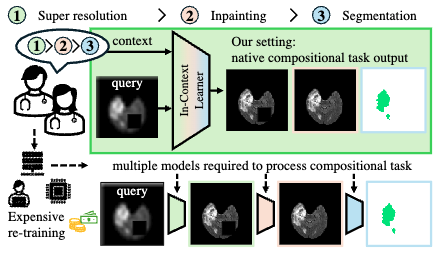
Prof. Dr. Erik Rodner is a faculty member at the University of Applied Sciences Berlin (HTW Berlin), where he serves as a Professor for Machine Learning and Data Science. He also contributes to the School of Engineering Sciences - Technology and Life. His research spans computer vision, machine learning, and biomedical applications, with a focus on learning with limited data, robust visual recognition models, and medical image analysis. He has developed innovative methods for medical diagnostics, industrial classification, and anomaly detection. Recent publications (2025-2016) highlight his expertise in visual in-context learning, semi-weakly segmentation, and active learning frameworks. He has collaborated with institutions such as ZEISS Group, Friedrich Schiller University Jena, and UC Berkeley. Scientific Awards: Award for Excellent Teaching (2023)
Professor Ralf Werner serves as Professor of Business Mathematics at the University of Augsburg, where he leads the Computational Statistics and Data Analysis working group within the Institute of Mathematics at the Faculty of Mathematics, Natural Sciences and Technology. His academic career spans both theoretical research and practical industry applications in quantitative finance. Werner's research interests encompass: Computational Statistics and Data Analysis Optimization under Uncertainty Financial Engineering and Risk Management Actuarial Science and Insurance Mathematics Portfolio Optimization and Asset Allocation His scholarly output demonstrates a consistent focus on robust mathematical methods applied to financial problems, particularly in replicating portfolios for insurance applications, credit risk modeling, and statistical approaches to financial risk management. Werner's publications appear in leading journals across operations research, mathematical finance, and actuarial science. Professional qualifications include his habilitation at the Karlsruhe Institute of Technology (2011) and doctorate from Friedrich-Alexander University Erlangen (2001). He maintains active industry connections through his role as Scientific Advisor for DEVnet since 2010. Werner serves as Internship Coordinator and DAV (German Actuarial Society) correspondent, supporting students pursuing actuarial careers. He is an active member of multiple professional organizations including the Society for Operations Research (GOR), German Mathematical Society (DMV), and German Society for Insurance and Financial Mathematics (DGVFM).
Lennart Binkowski is a doctoral candidate and scientific staff member at the Institute of Theoretical Physics , part of the Faculty of Mathematics and Physics at Leibniz University Hannover. His research focuses on quantum computing, particularly quantum algorithms and combinatorial optimization. University: Leibniz University Hannover School: Faculty of Mathematics and Physics Department: Institute of Theoretical Physics Email: lennart.binkowski@itp.uni-hannover.de Lennart's research interests span quantum algorithms, quantum walks, and optimization frameworks. His work explores quantum programming languages, Pauli transfer matrices, and hybrid quantum-classical systems. Recent publications highlight advancements in QAOA, quantum permutation generation, and tensor network applications. Lennart's 15 most recent articles focus on quantum computing trends, including algorithm design, constraint handling, and tensor structures. No scientific awards are mentioned in the provided data. Contact details: Schneiderberg 32, 30167 Hanover, Germany (Building 3702, Room 013).
Prof. Dr. Florian Jarre is affiliated with the Mathematical Institute at Heinrich-Heine-Universität Düsseldorf, specializing in mathematical optimization. His research spans conic optimization, interior point methods, semidefinite programming, and nonlinear optimization with applications in computational mathematics. Research interests focus on theoretical and applied aspects of optimization algorithms, including convergence analysis of iterative methods, complexity theory for convex problems, and development of efficient computational techniques for large-scale optimization challenges. Work extends to applications in machine learning and systems biology. Publications demonstrate consistent focus on optimization theory advancements, particularly in interior-point methods and convex programming. Recent work explores connections between optimization and machine learning, including SVM training methods and stochastic gradient descent variants.
Prof. Dr. Elmar Schrohe is a faculty member at the Institute for Analysis within the Faculty of Mathematics and Physics at Leibniz University Hannover . His academic career has been closely tied to the university, where he has contributed to research and graduate training programs. Email: elmar.schrohe@math.uni-hannover.de Location: Welfengarten 1, 30167 Hanover, Building 1101, Space F123 Research Interests : His work focuses on analysis on manifolds with conical singularities , partial differential equations , spectral theory , and operator algebras . He explores geometric and analytic aspects of differential operators, index theorems, and quantum field theory on singular spaces. Key keywords: Conical singularities, Elliptic operators, Spectral triples, Noncommutative residues, Boundary value problems, Fourier integral operators Collaborations : Schrohe is affiliated with the Riemann Center for Geometry and Physics and has participated in interdisciplinary research initiatives at Leibniz University.
Bruno F. Lourenço serves as Associate Professor at The Institute of Statistical Mathematics (ISM) and SOKENDAI (The Graduate University for Advanced Studies), holding dual appointments in the Department of Fundamental Statistical Mathematics and Department of Statistical Science. He concurrently holds a Visiting Associate Professor position at RIMS-Kyoto University through March 2026. His research centers on conic optimization theory, with specialized focus on conic linear programming (including regularization techniques and ill-posedness treatment), nonlinear conic programming (algorithm development and optimality conditions), and the geometric properties of convex sets. His work consistently addresses error bounds in optimization frameworks and extends into nonsmooth optimization methodologies, contributing to both theoretical foundations and computational applications in mathematical programming. Recent publications (2024-2025) reveal concentrated research on specialized cone structures including hyperbolic, copositive, and homogeneous cones. Key thematic trends encompass facial geometry analysis, duality gap resolution in semidefinite programming, constraint qualification-free error bounds, and projection methods for hyperbolicity cones. His work demonstrates strong integration of algebraic geometry with optimization theory, particularly through polynomial representations and symmetry properties of cones. Scientific Awards: No scientific awards were documented in the provided materials. Advising and Grants: The source documentation contains no explicit references to graduate students supervised, research grants administered, or external funding sources. His active publication record and leadership of the Statistical Decision-Making Group suggest ongoing research activity, but specific mentorship or grant details remain unreported in this context. Labs and Teams: Dr. Lourenço leads the Statistical Decision-Making Group at ISM, which focuses on developing optimization frameworks for statistical inference problems. The group's recent output indicates strong emphasis on conic programming applications to statistical modeling, with particular attention to computational tractability and theoretical guarantees in high-dimensional settings.
Mirjam Dür is a Full Professor (W3) at the Department of Discrete Mathematics, Optimization and Operations Research within the Faculty of Mathematics, Natural Sciences and Technology at the University of Augsburg (since 2017). Previously, she held Full Professor positions at the University of Trier (2011-2017) and other academic roles in Groningen, Darmstadt, and Vienna. Her research focuses on mathematical optimization, particularly copositive programming, quadratic optimization, matrix theory, and conic optimization. Born in Vienna, Austria M.Sc. in Mathematics (1996) and PhD in Applied Mathematics (1999) from University of Trier Positive Habilitation evaluation at TU Darmstadt (2005) Research Interests : Global optimization, quadratic and combinatorial optimization, conic optimization and matrix theory, copositive programming, and applications to graph theory and discrete problems. She has pioneered methods like factorization-based approaches for completely positive matrices and cutting plane techniques in copositive programming. Scientific Awards : 2013 Optimization Letters Best Paper Award 2010 VICI Grant (NWO) 2012 GIF Research Grant (German-Israeli Foundation) Key Contributions : Development of algorithms for copositive optimization, theoretical advances in matrix cones, and novel applications to problems like graph stability and discrete optimization. She serves as Senior Editor for Optimization Methods and Software and editorial board member for multiple optimization journals.