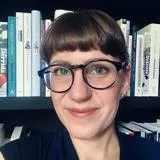
Professor Astrid Nordin holds the Lau Chair of Chinese International Relations at King's College London's Lau China Institute, within the School of Global Affairs. Previously, she was a Professor and Director at Lancaster University's China Centre. Her research bridges Chinese studies and critical international relations, focusing on relational theories and China's global role. Key areas include Chinese foreign policy, surveillance technologies, and decolonial approaches. Education: Peking University, Jilin University, City University Hong Kong, University of Warwick, University of Manchester Research Interests: Chinese world order concepts, relational approaches, critical social theory, and ontology of war. Her work emphasizes interdisciplinary collaboration, impacting policy, media, and cultural sectors. Notable projects include the 'Chinese Anger Diplomacy' study and the 'ESRC IAA: Community-led support for overseas Chinese' initiative. She co-edited the Routledge Handbook of Social Futures (2021) and contributes to public discourse on China's global influence. Awards: KingsCAT Tool Development (2024) alongside interdisciplinary team.
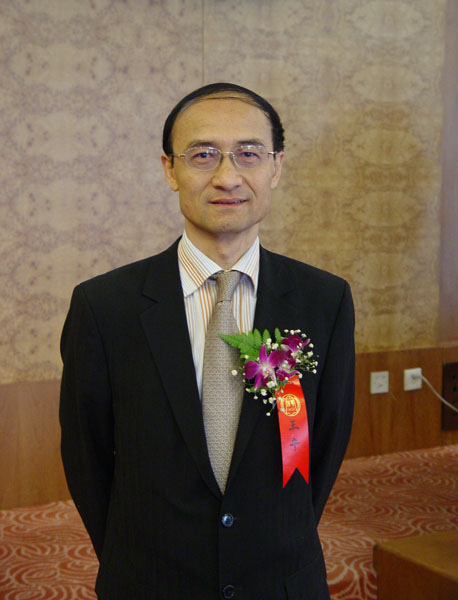
Wang Ning is a distinguished Professor of English and Comparative Literature with affiliations at Tsinghua University (part-time) and Shanghai Jiao Tong University. His career spans prestigious roles including Zhiyuan Chair Professor (2009–present) and Changjiang Distinguished Professor (2013–present). Born in 1955, he holds academic qualifications from institutions in China, Europe, and North America. Research interests focus on cosmopolitanism, translation studies, Northrop Frye's mythopoeia, cultural studies, and Chinese-Western comparative literature. He has secured over ten grants since 1991 aimed at introducing European theory to China and has conducted research across Europe, North America, and Australia as a visiting professor/research fellow. Key achievements include the Changjiang Scholars Award (2013), membership in Académé de la Latinité (2010), and fellowships at Cambridge and Gottingen Universities. He co-founded Chinese editions of New Literary History and Critical Inquiry , advancing transnational literary discourse. Wang has delivered keynote lectures globally and led initiatives to bridge Chinese and Western literary traditions. His work emphasizes global literary dynamics, translation’s role in cultural exchange, and reinterpreting modern Chinese literature within global contexts.
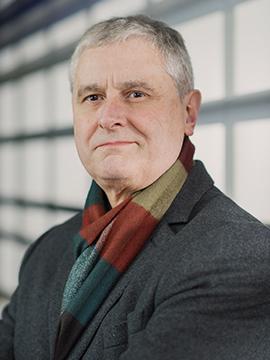
Timothy Cheek is a Professor at the University of British Columbia with dual appointments in the School of Public Policy and Global Affairs and the Department of History. He holds the prestigious Louis Cha Chair in Chinese Research and serves as Co-Director of the Centre for Chinese Research at the Institute of Asian Research (IAR). Having joined UBC in 2002, Professor Cheek is a leading scholar of modern Chinese history with expertise in Chinese intellectual history and the Chinese Communist Party. Professor Cheek's educational background includes: Ph.D. in History and East Asian Languages from Harvard University (1986) M.A. in History from The University of Virginia (1980) B.A. in Asian Studies (Honours) from Australian National University (1978) His research focuses on three interconnected areas of modern Chinese history: the history of the Chinese Communist Party within China's twentieth-century revolutionary context; contemporary Chinese thought and society, particularly the role of intellectuals in public life; and Mao Zedong studies. Professor Cheek leads the "Revisiting the Revolution" collaborative translation project, bringing Chinese scholarship on revolutionary history to English-speaking audiences. He is also working on a major project mapping Chinese statecraft from the Ming Dynasty to the present. Professor Cheek's scholarly output reveals consistent engagement with Chinese intellectual history and political development. His recent work shows increasing focus on contemporary China under Xi Jinping, examining ideological governance and the reassertion of party control. He maintains strong interest in the historical roots of current political developments, particularly through the lens of Mao-era political practices and their legacy. Among his notable recognitions: Fellow of the Royal Society of Canada (RSC) in the Academy of Arts and Humanities (2023) Professor Cheek actively supervises graduate students, co-mentoring MA and PhD candidates in modern Chinese history with Dr. Jeremy Brown of Simon Fraser University. His research has been supported by multiple SSHRC grants, including a major 2014-2019 project on "Reading and Writing the Chinese Dream" examining public intellectuals in contemporary China. As Co-Director of the Centre for Chinese Research at UBC's Institute of Asian Research, Professor Cheek leads one of Canada's premier institutions for China studies, facilitating research collaborations between Canadian and Chinese scholars and supporting the "Revisiting the Revolution" translation project that brings Chinese historical scholarship to international audiences.
Hiroto Yoshihara is a Professor at Waseda University's Faculty of Letters, Arts and Sciences, School of Culture, Media and Society, specializing in Japanese intellectual history, Buddhist studies, and Sino-Japanese comparative literature. With a Master of Arts from Waseda University, he has conducted extensive research on ancient and medieval Japanese literature, religious history, and cultural exchange between Japan and China. Yoshihara's research interests focus on Japanese intellectual history, ancient and medieval history, Japanese and Chinese literature, Buddhist studies, and Shinto studies. His work particularly examines the intersection of religious thought and literary expression in premodern Japan, with special attention to figures like Prince Shotoku and Sugawara no Michizane (deified as Tenjin). His comparative approach reveals the complex cultural flows between Japan and continental Asia. His scholarly output shows a consistent focus on religious narratives, particularly Buddhist traditions, and their literary expressions. A significant portion of his recent work analyzes the reception and adaptation of Chinese literary and religious traditions in Japan, especially during the Heian period. His research demonstrates how Japanese intellectuals engaged with continental models while developing distinctive local traditions. Yoshihara received the Kubota Utsuho Award in 1987 for his contributions to Japanese literary studies. His research has been supported by numerous grants from the Japan Society for the Promotion of Science, including projects on East Asian cultural exchange and religious thought during Japan's regency and Insei periods. He has directed significant research projects, including the Institute for Japanese Religions and Cultural History at Waseda University (2021-2025). His international collaborations, particularly with Chinese academic institutions, reflect his commitment to cross-cultural scholarship and the global dimensions of Japanese religious and literary history.
Takashi Miura is an Associate Professor at the University of Arizona specializing in Japanese religions from the early modern to modern periods. His work explores millenarian movements, Shinto practices, and Buddhist visual culture. He holds degrees from the University of Hawai'i at Mānoa (B.A./M.A.) and Princeton University (Ph.D.). Dr. Miura's research examines religious innovations like the rise of 'yonaoshi' renewal gods and deified peasants. His 2019 monograph Agents of World Renewal analyzes apocalyptic concepts in Japanese history. Current projects include a study on early modern peasant deification and its societal impacts. He teaches courses on Buddhism and Japanese religious practices, including EAS 160A1 and JPN 220. His publications span academic journals and edited volumes, addressing topics from Meiji-era polemics to post-war new religions. His work frequently bridges textual analysis with visual and material culture studies.
Michele Matteini serves as Associate Professor in the Department of Art History at New York University's College of Arts and Science, specializing in Late Imperial Chinese painting and material culture (ca. 1400-1800) with focus on Qing dynasty antiquarianism, collecting practices, and eighteenth-century transnational artistic exchanges. His academic credentials include: Ph.D. (2012) in History of Art from the Institute of Fine Arts M.A. (2004) in History of Art from New York University B.A. (2000) summa cum laude from the University of Venice, Ca’ Foscari Research interests encompass Late Imperial Chinese painting, antiquarianism, collecting culture, Qing history, urban culture, inter-Asian artistic exchanges, eighteenth-century globalism, craft traditions, embodied knowledge, and art historical methodology. His interdisciplinary approach bridges anthropology, religious studies, and art history to examine material culture across East Asia. Recent publications reveal consistent thematic focus on eighteenth-century material practices, analyzing antiquarian objects, historical figure cults, and cross-cultural artistic production. Works integrate art historical analysis with anthropological perspectives on topics like rock collecting, filial piety, and sacred materiality, demonstrating how objects functioned within social and global contexts. His scholarly recognition includes: The Andrew Mellon Foundation Fellowship for Assistant Professors, Institute for Advanced Study, Princeton (2013-2014) Ittleson Fellowship, Center for Advanced Study in the Visual Arts, National Gallery of Art (2007-2009) Panofsky Distinguished Fellowship, Institute of Fine Arts, New York University (2002-2007) Matteini's research has been supported by major fellowships from the Andrew W. Mellon Foundation and National Gallery of Art. While current advising activities and grant projects beyond these fellowships are not detailed in available sources, his extensive publication record indicates sustained scholarly productivity focused on East Asian material culture.
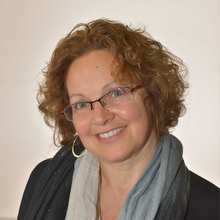
Dr. Adelyn Lim serves as a Senior Lecturer in the Department of Sociology and Anthropology at the National University of Singapore's Faculty of Arts and Social Sciences. She also holds the position of Research Associate at the Centre for Family and Population Research and serves on the editorial board of Women's Studies International Forum. Recent appointments include Assistant Dean (since July 2023) and Deputy Head of Sociology and Anthropology (effective January 2025). Her educational background includes a PhD in Anthropology from the Australian National University (2010) and a postdoctoral fellowship at the University of Hong Kong's School of Modern Languages and Cultures (2011-2012). Dr. Lim is an anthropologist and ethnographer specializing in gender and sexuality, with particular focus on cultures of fatherhood, reproductive health, and intersectional and transnational feminisms. Her research examines how gender dynamics intersect with state policies, cultural traditions, and social movements in Asian contexts, particularly Singapore and Hong Kong. She employs critical feminist frameworks to analyze how patriarchal structures persist despite apparent advances in gender equality. Her publication record shows a clear trajectory examining gender relations in Asian societies, with increasing focus on Confucian masculinity and state policies affecting gender roles. Recent work analyzes Singaporean parenting advice to fathers, police work gender dynamics, and 'Asian values' in gender politics, demonstrating how gender essentialism and heteronormativity persist despite progressive rhetoric. Earlier research focused on transnational feminist organizing in Hong Kong, particularly around domestic workers' and sex workers' rights. Dr. Lim teaches courses on Singapore Society, Gender Studies, Sexuality in Comparative Perspective, Social Movements and Collective Action, and co-teaches an interdisciplinary course on Nature and Nurture: Rethinking Sex and Gender with Professor Antonia Monteiro from the Department of Biological Sciences. Her teaching reflects her research interests in gender, sexuality, and social movements, with particular attention to Asian contexts.
William H. Nienhauser, Jr. is the Halls-Bascom Professor of Classical Chinese Literature in the Department of Asian Languages and Cultures at the University of Wisconsin–Madison, College of Letters and Science. He is a leading authority on early Chinese literature, historiography, and poetry, with a particular focus on Sima Qian’s Shiji and the poetry of Du Fu. He has held visiting and research positions in China, Japan, Germany, and Taiwan, and remains academically active, including a 2018 appointment as Visiting Professor at Nankai University. His research interests include early traditional Chinese fiction, historiography, chuanqi and zhiguai tales, and the application of modern Western critical theories to Chinese literary texts. He is deeply engaged in the translation and annotation of classical works, especially the Shiji , often in collaboration with graduate students. His scholarship bridges philology, literary theory, and historical contextualization, contributing significantly to the global understanding of pre-modern Chinese literature. Nienhauser’s publications reveal a sustained focus on textual analysis, narrative structure, and the interplay between history and literature. His work spans from early Shijing poetry to Tang dynasty fiction, with a strong emphasis on Sima Qian’s historiographical methods and legacy. He has also contributed foundational reference works and critical editions, shaping the field of Chinese literary studies. His scientific awards reflect the international recognition of his scholarship: Woodrow Wilson Fellowship ACLS Fellowship NEH Fellowship Fulbright-Hayes Fellowship Japan Foundation Fellowship German Research Foundation Fellowship Alexander von Humboldt Foundation Fellowship Humboldt Foundation Lifetime Achievement Award (2003) Nienhauser has advised numerous graduate students in collaborative research projects, particularly on the Shiji and Du Fu. He has secured major fellowships and grants from prestigious organizations including the NEH, ACLS, Fulbright-Hayes, and the Humboldt Foundation, enabling extended research and translation work. His editorial roles, especially as a founding editor of Chinese Literature: Essays, Articles, Reviews (CLEAR), have been instrumental in advancing the field. While no formal lab or research center is mentioned, Nienhauser leads a major international collaborative translation project on the Shiji , involving scholars and students across institutions. His seminars and graduate courses foster a close-knit research community focused on classical Chinese texts.
Prof. Tiziana Lippiello is a Full Professor and Rector at Ca' Foscari University of Venice, leading the Department of Asian and North African Studies. Her academic career focuses on Chinese literature, ancient civilizations, and Confucian thought. She oversees the university's strategic direction as Rector while maintaining active research in East Asian history, religious practices, and intercultural dialogue. Her work bridges classical Chinese texts with modern interpretations, emphasizing themes like divination, governance, and Jesuit influence in cross-cultural exchanges. Key publications include studies on Prospero Intorcetta’s Latin translations of Confucian texts and analyses of ancient longevity practices. She has edited volumes on Chinese literature and merchant culture, contributing significantly to scholarly discourse on Sinology and early modern history.
Mark Halperin is a Professor of Chinese and Department Chair of East Asian Languages and Cultures at the University of California, Davis. He holds a Ph.D. from the University of California, Berkeley (1997). His research focuses on Medieval Chinese literature, religion, and literati culture, with particular emphasis on Chinese conceptions of fatherhood and interreligious dynamics in pre-modern China. Education: Ph.D., University of California, Berkeley (1997). Research interests encompass: Medieval Chinese literature and its religious contexts Buddhist and Daoist traditions in literati culture Gender and religious practice in Song China Confucian and Daoist textual traditions His publications explore themes such as Buddhist hagiographies, Song Dynasty religious interactions, and Daoist movements. Recent work includes a translation of Lu Rong's Ming Confucian's World (2022) and articles on medieval Chinese religious narratives. No scientific awards listed. No advising/grant details provided. No labs or teams explicitly mentioned in the profile.
Anne Behnke Kinney is a Professor of Chinese at the University of Virginia, specializing in early Chinese literature, thought, and social history. Her work focuses on the history of childhood and women in premodern China, combining traditional texts with archaeological materials. Early Chinese literature History of childhood in China History of women in premodern China Her research explores cultural connotations of childhood and gender in Han Dynasty historical texts, linking them to cosmology, medicine, law, and statecraft. She has produced critical translations of foundational works like the Lienu Zhuan and Qianfulun , highlighting their societal and philosophical implications. Recent publications include Essays of a Recluse (2025) and Exemplary Women of Early China (2014). Her scholarship traces themes in Han-era narratives, emphasizing vulnerabilities of high-status children and parental authority.
Taisu Zhang is a Professor of Law and History at Yale University, holding dual appointments in Yale Law School and the Department of History. He is also a Global Faculty member at Peking University Law School and serves as President of the International Society for Chinese Law and History. His expertise spans comparative legal and economic history, private law theory, and contemporary Chinese law and politics. Dr. Zhang earned his Ph.D. in History (2014), J.D. (2008), and B.A. (2005) from Yale University. He has taught at Duke University School of Law, the University of Hong Kong, Brown University, and Tsinghua University School of Law. His research focuses on the intersection of legal systems, economic structures, and political power, particularly in Chinese and global contexts. Notable works include The Laws and Economics of Confucianism (Cambridge, 2017), which received major academic awards, and a forthcoming book on the Qing fiscal state. His articles explore topics like legal convergence, authoritarian legitimacy, and the evolution of Chinese legal institutions. Recent scholarship highlights trends in analyzing legal systems within authoritarian regimes, the role of information in state governance, and the historical foundations of modern Chinese legal frameworks. His work bridges historical analysis with contemporary policy debates, emphasizing cross-cultural comparisons. Zhang has been recognized for his contributions with prestigious awards, including the 2018 Presidents Award from the Social Science History Association and the 2018 Gaddis Smith Book Prize. He actively contributes to media discussions on Chinese law and politics, blending academic rigor with public engagement.
Dr. Kevin N. Cawley is Senior Lecturer in Korean Studies and Director of the Irish Institute of Korean Studies at University College Cork since 2011. He is a founding member of the 'Society for the Study of Pre-modern Asia' at the University of Oxford and serves as editor of Korean Philosophy for the Stanford Encyclopedia of Philosophy. Originally from County Armagh, Ireland, he completed his undergraduate degree at Trinity College Dublin in French and Irish, and earned his Masters and PhD in Korean Studies from the University of Sheffield. Dr. Cawley's research focuses on Korea's intellectual history, examining philosophical and religious traditions through contemporary critical theory. His work explores the interplay between Buddhism and Neo-Confucianism, Christianity and Neo-Confucianism in the late 18th/early 19th century, and the complexities of translating religious concepts across East Asian languages and cultures. He has developed a unique methodological approach adapting Jacques Derrida's 'de-construction' to address inter-cultural translational challenges. His research also extends to gender and sexuality, ethnicity and identity in Korean contexts. His publications demonstrate significant scholarly impact, particularly his 2019 book Religious and Philosophical Traditions of Korea which reached No. 5 on Amazon's 'hot new releases' in religion and spirituality. His recent work has focused on transnational East Asian studies, Catholicism in pre-modern Korea, and contemporary Korean soft power. The publications show consistent engagement with both historical Korean thought and its contemporary relevance across multiple disciplines including religious studies, philosophy, gender studies, and cultural studies. Scientific Awards and Recognition: Korea Foundation Award for Korean Studies Language Program 2022-2024 Academy of Korean Studies: SEED Program - $120,000.00 One Asia Foundation Lecture Series: $40,000.00 Korea Foundation Fellowship for Korean Studies 2015-2017 $90,000.00 Dr. Cawley has secured over €400,000 in research funding throughout his career and has served as editor for multiple academic journals including the Irish Journal of Asian Studies and Asian Ethnicity . He has organized numerous international conferences, including the North American Korean Philosophy Association Annual Conference at UCC. His media engagement includes regular interviews with RTE, BBC, and Korean media outlets on Korean affairs, demonstrating his role as a public intellectual bridging academic scholarship and public understanding of Korea.
Professor Imre Hamar, holding a Doctor of Science (DSc) degree, serves as Director of the Institute of East Asian Studies and Head of the Department of Chinese Studies at Eötvös Loránd University (ELTE). He earned his PhD in 1997, habilitated in 2004, and became a full professor in 2008. His academic leadership spans multiple institutions, including directing the ELTE Confucius Institute since 2006. Doctor of Science (DSc) - Institute of East Asian Studies Professor - Department of Chinese Studies Director - Confucius Institute (since 2006) A leading scholar in Chinese Buddhism with a specialization in Huayan philosophy, Hamar has dedicated decades to studying Tang Dynasty religious thought, Buddhist exegesis, and classical Chinese texts. His research traces the development of Buddhist doctrines in China and their cross-cultural transmission through Central Asia. He has taught Chinese religious history, classical Chinese texts, and Buddhist philosophy across undergraduate and postgraduate levels at ELTE. His academic publications focus on the Huayan tradition , Avatamsaka-sutra interpretations, and Yogacara-Huayan synthesis . Recent works examine syncretism in Chinese Buddhist commentaries and the cult of Mount Wutai, reflecting his ongoing engagement with Buddhist sacred geography. Scientific recognition includes: Pro Universitate Award (Gold Level, 2010) Excellent Confucius Institute Director Award (2011) Fulbright Fellowship (University of Virginia, 2008-2009) Numata Guest Professorship (Hamburg University, 2010) He has received multiple research grants from the Japan Foundation, DAAD, and Chiang Ching-kuo Foundation. His editorial work includes co-editing Reflecting Mirrors: Perspectives on Huayan Buddhism (2007) and several volumes in the ELTE Sinological Workshop series.
Professor Qing Cao is Professor, Director of Studies, and Director of the Centre for Comparative Modernities at Durham University's School of Modern Languages and Cultures. His research examines Chinese media, communication, and modern intellectual history through three interconnected strands: the role of media in China's modernization, the impact of media language on social perceptions, and mutual China-West representations shaping identity politics. His research interests encompass China's modern intellectual history, Chinese politics, mass media dynamics, Western reporting on China, Chinese linguistics, and translation studies. Current projects include a book on Chinese state media's construction of alternative modernity and editorial work for the Routledge Research Encyclopaedia on Chinese Studies. Previously funded by AHRC and British Academy, his work explores the discursive transformation of Chinese society. Professor Cao's publications demonstrate sustained focus on discursive constructions of modernity and identity across historical periods, with recent work examining late Qing intellectual transformations through linguistic analysis. His supervision includes PhD students researching Western media representations of China, diplomatic language, and gender discourses in Chinese newspapers.