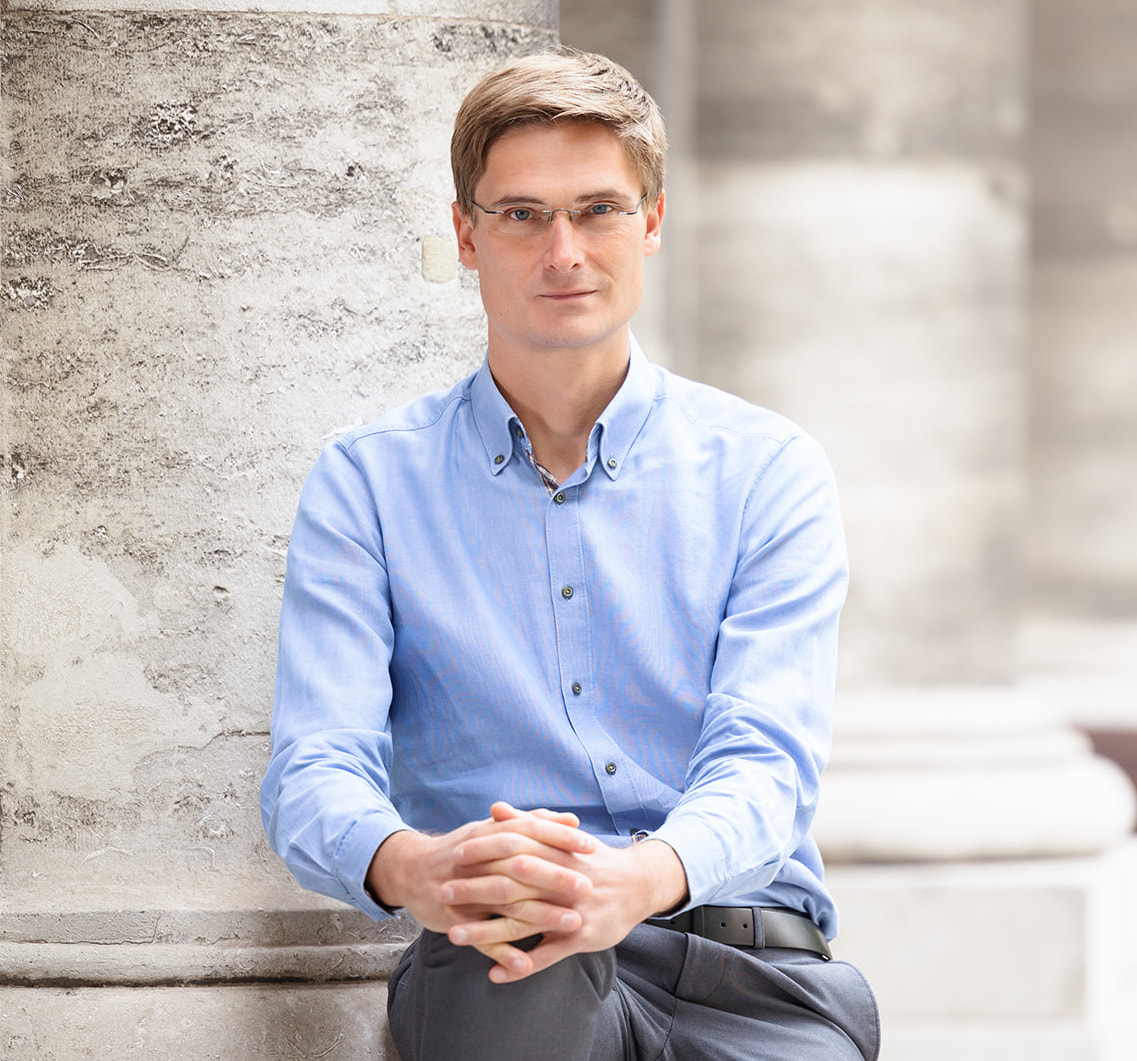
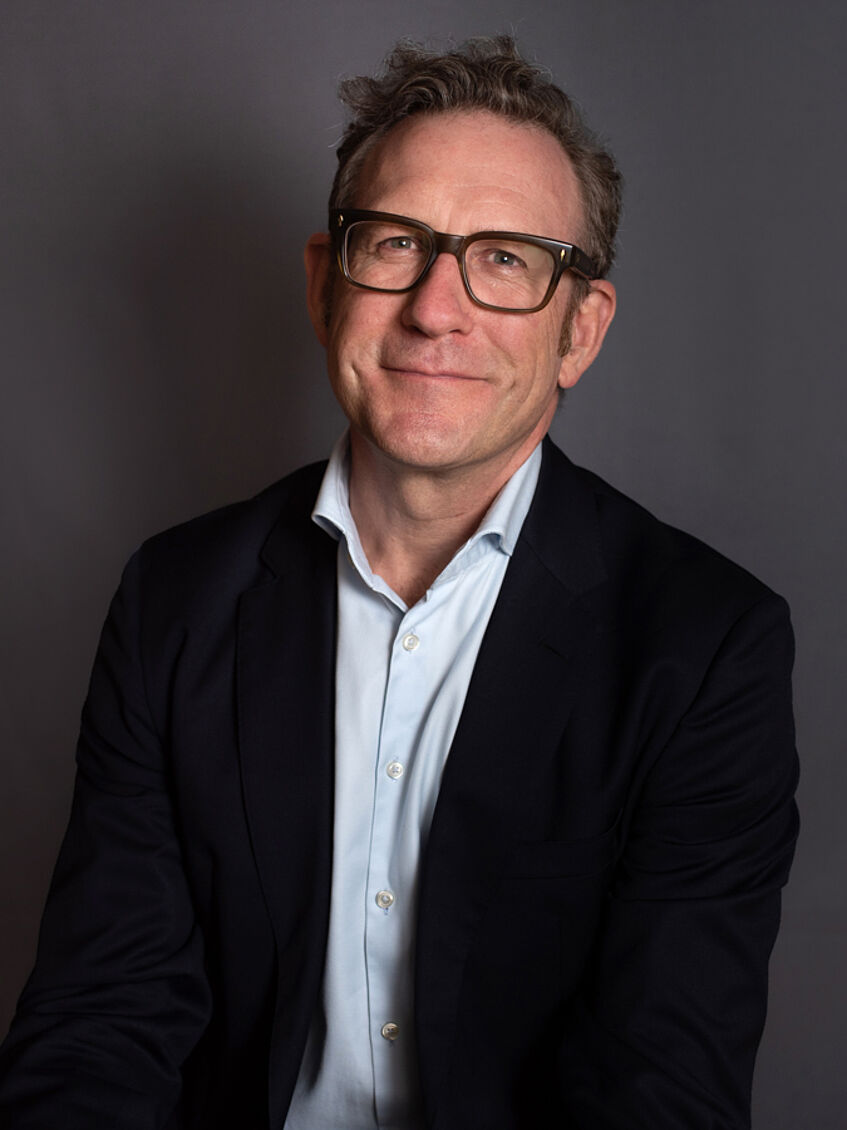
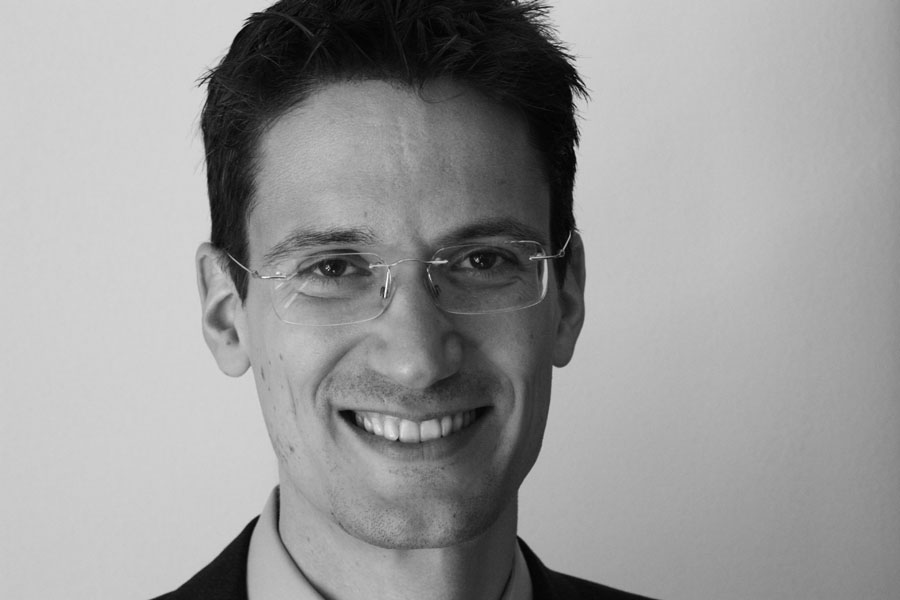
Thomas Jaeger is a Professor of European Law at the University of Vienna’s Faculty of Law, specializing in the Internal Market and Competition within European Commercial Law. He leads the Institute for European, International and Comparative Law and serves as President of the Austrian Society for European Law (ÖGER), a member of FIDE, advocating for Austrian perspectives in EU legal developments. His research spans European Commercial Law, State Aid Law, Media Regulation , and Intellectual Property , with notable publications addressing EU legal frameworks for transport, digital markets, and gambling concessions. Recent lectures focus on state aid challenges, constitutional identity conflicts , and merger control . Jaeger supervises dissertations requiring significant scientific contribution and has organized events like the European Law Roundtable with CJEU and State Aid Law Day . He has held visiting roles at Hannover and Munich universities and previously worked at the Max Planck Institute and UNHCHR .
University College of Teacher Education Lower AustriaAustria
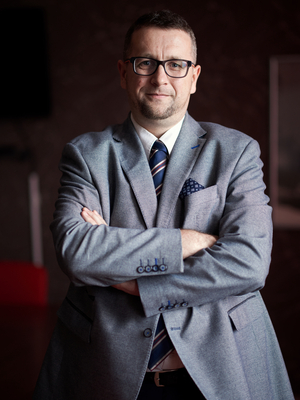
Senad Bećirović serves as a full Professor at the University of Education Lower Austria (Pädagogische Hochschule Niederösterreich), having progressed from assistant professor (2014) to associate professor (2017) before attaining his current rank in 2023. His academic career spans teaching research methodology, pedagogy, and advanced statistics across undergraduate, graduate, and doctoral programs at international institutions, delivered through both online and in-person formats. Bećirović's research focuses primarily on Artificial Intelligence and digital technologies in education , with significant contributions to intercultural education , gifted education , and foreign language pedagogy . His work demonstrates a consistent trajectory toward understanding how emerging technologies reshape educational practices and outcomes. Through four books published by Springer and Nova Science and over 60 articles in top-tier journals, he has established himself as a leading voice in digital educational transformation. His recent publications (2023-2025) reveal a pronounced emphasis on AI applications in education, with multiple studies examining AI literacy, policy frameworks, and implementation strategies across European higher education contexts. This research demonstrates both theoretical depth and practical relevance to current educational challenges. Bećirović actively contributes to the scholarly community as editor and reviewer for numerous Q1 journals including Smart Learning Environments (Springer), Education and Information Technologies (Springer), and TESOL Quarterly (Wiley). He participates in multiple European Commission-funded initiatives such as ENRICH (Enhancing Teaching and Research through Innovative Digital Technologies) and Erasmus+ projects focused on peace learning and English education. His professional activities extend to international collaboration through membership in the European Network Ethical Use of AI and the American Educational Research Association (AERA). He frequently delivers keynote addresses at international conferences, sharing expertise on AI in education, digital transformation, and intercultural competencies.
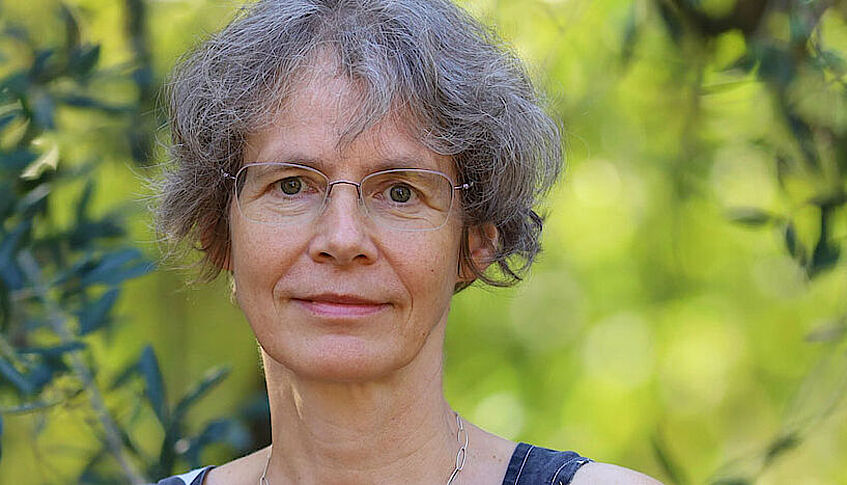
Univ.-Prof. Dr. Dorothee Bohle is a Professor of Comparative Politics focusing on Southeast and Eastern Europe at the University of Vienna's Department of Political Science. Previously, she held positions at the European University Institute (Florence) and the Central European University (Budapest). She specializes in comparative political economy, institutional political economy, and welfare state analysis, with a focus on capitalist diversity in Europe's periphery. Education includes studies at Hamburg, Paris, and Berlin, followed by a PhD from the Free University of Berlin (2001). Her career includes roles as Dean of Post-Graduate Studies at the European University Institute and leadership in the Max Weber Programme. Research interests encompass the political economy of crises (e.g., financial crisis, pandemic responses), East Central Europe's socio-economic dynamics, housing regimes, and FDI-led growth models. She critiques neoliberal policies and explores resilience in peripheral economies. Her work bridges theoretical frameworks (e.g., varieties of capitalism) with empirical studies of EU integration impacts. She contributes to debates on democratic erosion and authoritarian trends in post-socialist states.
Vienna University of Economics and BusinessAustria
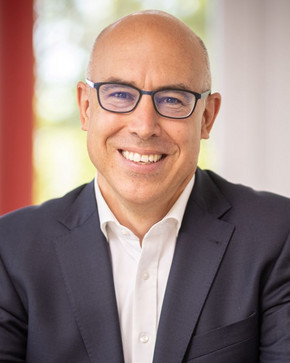
Gabriel Felbermayr is a Professor of Economics at Vienna University of Economics and Business (WU) and Director of the Austrian Institute of Economic Research (WIFO) since 2021. He holds a PhD in Economics and has held academic positions at the University of Munich (ifo Center for International Economics), Kiel University (Chair in Economics), and the University of Tübingen. University Professor: WU Vienna (2021–) Director: WIFO Vienna (2021–) President: Kiel Institute (2019–2021) Research Interests include international trade theory, labor markets in open economies, European integration, migration economics, and climate-trade intersections. His work combines theoretical models with empirical policy analysis, focusing on globalization challenges, supply chain disruptions, and economic sanctions. Current Projects Trump 2.0 Transatlantic Tariff Scenarios Scientific Awards include recognition for his research contributions, though specific award names are not detailed in the text. He has led major projects for institutions like the Austrian Economic Chamber and the Foundation for Family Businesses. Education includes studies at the University of Linz and University of Florence (PhD). His publications span journals like Journal of International Economics , Review of World Economics , and World Development .
Associate Professor Dr. Martin Gruber-Risak has been a core faculty member at the University of Vienna’s Institute for Labour and Social Law since 1996, serving as Associate Professor from 2012 onward and as Scientific Director of the LL.M. programme "Labour Law". Education & Career: 1989-1993 Law studies, University of Vienna 1993-1999 Doctoral studies in law, University of Vienna 2003 William Evans Visiting Fellow, University of Otago, NZ 2007 Habilitation in Labour & Social Law, University of Vienna 2010-2012 Marie Curie International Outgoing Fellow (University of Otago & Vienna) 2020 Visiting Professor, University of Salzburg Research Interests: Gruber-Risak’s scholarship covers Austrian and European labour law, working-time regulation, collective bargaining, dispute resolution & mediation, atypical employment, and the legal challenges of digital platform work. His recent projects analyse crowd-work, algorithmic management and EU initiatives for fair platform working conditions. Publications & Trends: Author of 19 monographs and more than 140 articles since 1999, he explores evolving employment forms, unilateral wage clauses, dismissal protection, and the transposition of EU directives into Austrian law, combining doctrinal analysis with socio-legal and comparative perspectives. Scientific Awards: Leopold Kunschak Science Prize 2009 Cardinal Innitzer Prize 2009 Projects & Grants: He currently leads the FWF project "Virtual Employees" investigating platform work and has participated in EU studies on digitalisation and labour law reform. Labs & Teams: He heads the "Labour Law" LL.M. programme team and is a key member of the Institute for Labour and Social Law research group focusing on digitalisation and European labour standards.
Michaela Pfadenhauer is a Professor of Sociology specializing in Knowledge and Culture at the Department of Sociology, Faculty of Social Sciences, University of Vienna. She serves as Vice Dean of the Faculty of Social Sciences for Research and Infrastructure since Fall 2020 and previously served as Head of the Institute of Sociology (2018-2020). Her academic career includes positions as University Professor for Sociology of Knowledge at Karlsruhe Institute of Technology (2007-2014) and various research roles at German universities. Dr. Pfadenhauer earned her doctorate summa cum laude from the University of Dortmund in 2002 and completed her Diploma in Political Science in 1994. She has held numerous guest professorships including at Keio University Tokyo, South Florida University, Exeter University, King's College London, and Boston University. Her research focuses on the sociology of knowledge, social constructivism, mediatization, and lifeworld analysis, with recent work examining science skepticism during the pandemic, social robotics, and knowledge cultures. She employs interpretive social research methods and has developed the LILI project examining lifeworlds of vaccine skeptics. Her work bridges theoretical sociology with contemporary societal challenges including digital transformation, climate change, and public health crises. Her recent publications demonstrate expertise across multiple domains including the social construction of sustainable reality, digital public spaces, choral communication, and institutional skepticism. Her work shows a consistent pattern of examining how knowledge is constructed, communicated, and contested across different social contexts and technological environments. Professor Pfadenhauer serves on the Permanent Commission of the Ombuds Office for Good Scientific Practice and evaluates for the European Commission's Marie-Skłodowska-Curie Individual Fellowships. She is also Chair of the Section on Sociology of Knowledge of the German Sociological Association and member of the core team of the Research Platform Mediatized Lifeworlds at the University of Vienna. She teaches courses on sociological theories, research practice with focus on communicative AI and artificial companionship, and realities of science. Her teaching emphasizes the connection between theoretical frameworks and contemporary social phenomena, particularly regarding digital transformation and knowledge production.
Axel Dreher is a Professor of International and Development Politics at Ruprecht-Karls-University Heidelberg, Germany, where he holds the Chair of International and Development Politics within the Faculty of Economics and Social Sciences. He has been a faculty member at Heidelberg University since 2011, previously serving as Head of Department from 2011-2014 and again from 2015-2017, with a term as Deputy Head from 2017-2018. Before joining Heidelberg, he was a Full Professor of Economics at Georg-August University Goettingen from 2008-2011. Professor Dreher's research spans several key areas of economics, with a particular focus on International economics , Political economy , Development economics , and Public economics . His interdisciplinary work on international organizations has established him as one of the leading experts on the International Monetary Fund and potential European Monetary Fund. His research investigates how political factors influence economic development, foreign aid effectiveness, and international financial institutions. Dreher's scholarly output reveals consistent themes across his publications, with a strong emphasis on the intersection of politics and economics in international contexts. His work frequently examines how political considerations affect the effectiveness of foreign aid, the operations of international financial institutions, and patterns of globalization. The methodological approaches in his research combine rigorous econometric analysis with deep theoretical understanding of political economy dynamics. Global Labor Organization (GLO) Fellow (2018) Research Fellow at CEPR (2013) Full Member, European Development Network (EUDN) (2013) Faculty Associate, AidData (2012) Affiliated Professor, Georg-August University Goettingen (2011) Member of the Research Committee on Economic Policy, German Economic Association (2011) Research Fellow at CESifo (2009) As Editor of the Review of International Organizations and chairman of the Research Group on Development Economics of the German Economic Association, Professor Dreher plays a significant role in shaping scholarly discourse in his fields. His extensive publication record, including over 100 articles with more than 14,000 citations, an h-index of 63, and an i10-index of 102, demonstrates the substantial impact of his research. He has supervised numerous graduate students and collaborated on various research projects examining the political economy of international development. Professor Dreher has led significant research initiatives, including serving as Managing Director of the Center for European, Governance and Development Research (cege) at Georg-August University Goettingen from 2009-2011 and as Principal Investigator for the Courant Research Center 'Poverty, Equity and Growth in Developing Countries.' His current research continues to explore the complex relationships between political institutions, economic policies, and development outcomes in the global context.
Vienna University of Economics and BusinessAustria
Reinhard Prügl is a Professor and Head of the Institute for Family Business at WU Wien (Vienna University of Economics and Business). He holds a doctorate from WU Wien and conducted postdoctoral research at MIT Sloan School of Management. Previously, he held a chaired professorship at Zeppelin University where he established the Friedrichshafen Institute for Family Entrepreneurship. His research focuses on the intersection of management, entrepreneurship, and strategy with emphasis on: Leadership and generational succession in family firms Family governance structures Innovation and marketing in family business contexts Identity and reputation management His publications demonstrate strong thematic consistency in family business dynamics while methodologically evolving from qualitative case studies (2000s) to experimental designs and cross-cultural comparisons (2020s). Research frequently addresses paradox resolution and crisis management in family enterprises. Awards & Honors: Best Paper Awards from IFERA, EURAM, AMA, and WU Wien Rudolf-Sallinger-Preis for doctoral dissertation Ehrenpreis for leadership in family business research Teaches courses on Family Business Management, Leadership, and Marketing at WU Wien. Leads research projects including comparative studies on family firm reputation across Germany, India, and the United States.
University of Natural Resources and Life Sciences ViennaAustria
Christine Stumpp is a Professor at the Institute of Soil Physics and Rural Water Management , affiliated with the University of Natural Resources and Life Sciences Vienna (BOKU) . Her work integrates hydrology , soil physics , and stable isotope analysis to address critical issues in groundwater recharge , climate change impacts on water systems , and microplastic transport in soils .
Erik Swyngedouw is a Professor of Geography at the University of Manchester (2006–present), with a distinguished academic career spanning institutions such as Oxford University (1988–2006) and the University of Leuven. His work focuses on urban governance, political ecology, environmental politics, and the intersection of geography with socio-economic dynamics. Education Ph.D. in Geography and Environmental Engineering, Johns Hopkins University (1991) M.A., Oxford University (1988) Master in Urban and Regional Planning, University of Leuven (1985) Agricultural Engineer, Catholic University of Leuven (1979) Swyngedouw’s research explores critical issues in urbanization, water resource management, and environmental conflict. Notable projects include the European Union-funded ENTITLE Program (€3.5 million), ESRC/DFID-funded studies on waste management impacts, and consultancy roles for the United Nations Development Programme. Scientific Awards Honorary Doctorates from Roskilde University (2018) and University of Malmö (2018) Flemish Science Foundation Medal (2013) James Blaut Memorial Award (2008) British Academy Leverhulme Trust Senior Research Fellowship (2011)
Christina Hainzl is the Head of the Platform for Sustainable Development (SDGs) and the Research Lab Democracy and Society in Transition at the University for Continuing Education Krems. She serves as an affiliated researcher at the University Ca' Foscari, Venice, and represents the university in the European Science Diplomacy Alliance. Her work focuses on contemporary challenges in democracy, sustainable development, cultural heritage, and science diplomacy. Dr. Hainzl holds a degree in contemporary history, art history, and political communication. She previously worked as a curator and research assistant at institutions like Lentos and Landesmuseum OÖ, alongside roles at the Institute for Art after 1945 in Linz. Her professional experience includes research stays in Florence, Rome, New York, and Washington DC, as well as internships at the Embassy of the Arab League and the American Anti-Discrimination Committee. Her research interests span socio-ecological transitions in urban contexts, democracy backsliding in Europe, material culture studies, and science diplomacy's role in cultural heritage protection. She actively contributes to interdisciplinary projects such as 'European Un/Orders,' examining Europe's global challenges, and has co-edited volumes on antisemitism post-1945 and pandemic-era healthcare policies. Christina Hainzl has received grants from the Rockefeller Foundation Archive Centre and the Emmanuel and Sophie Fohn Foundation for Visual Arts. Her work integrates academic research with practical applications, emphasizing societal transformations and evidence-based policy solutions. She collaborates across disciplines, leading initiatives on federalism and democratic resilience while maintaining a focus on art's role in societal discourse.
Didier Fassin is the James D. Wolfensohn Professor of Social Science at the Institute for Advanced Study (Princeton) and holds a permanent chair in Moral Questions and Social Issues at the Collège de France. His roles include Director of Studies at the École des Hautes Études en Sciences Sociales (EHESS) in Paris since 1999. He previously served as Visiting Professor at Princeton University and the University of Hong Kong, and held the Annual Chair in Public Health at the Collège de France (2019–2020). Education includes a Doctorate in Medicine (1982), Master in Public Health (1986), PhD in Social Science (1988), and accreditations in Public Health and Social Sciences. His research focuses on political anthropology, public health, humanitarianism, migration, and the intersection of ethics with social institutions. Key research programs include studies on undocumented immigrants, AIDS in South Africa, and the biopolitics of crises. He coordinates global inquiries like the Nomis Foundation’s Crisis project (2018–2023). His awards include the Nomis Distinguished Scientist Award (2018), Gold Medal in Anthropology (2016), and Victor Turner Prize (2019). He frequently engages in public discourse through media and institutions, advocating for the social sciences’ role in addressing contemporary societal challenges. Advising and grants highlight his leadership in interdisciplinary projects, including the ERC-funded ‘Critical Moral Anthropology’ (2009–2012) and Mellon-funded asylum studies in South Africa. His work spans academic and applied spheres, influencing policy and public understanding of inequality, justice, and human rights.
Liviu Matei is a Professor of Higher Education and Public Policy and Head of the School of Education, Communication and Society at King’s College London. His career spans leadership roles at Central European University (CEU), including Provost and Director of the Yehuda Elkana Center for Higher Education, and founding the Global Observatory on Academic Freedom. He contributes to global policy debates as a key figure in the Open Society University Network (OSUN) and CIVICA European University. Education: Studied philosophy, history, and psychology at Babeș-Bolyai University, sociology of higher education at Bucharest University, and earned a PhD in Romania. His research focuses on academic freedom, university governance, funding mechanisms, and the internationalisation of higher education. Recent work explores the interplay between education and democratic resilience, especially in authoritarian contexts. He has led initiatives on quality assurance and science diplomacy in conflict zones. His publications from 2023-2025 emphasize academic freedom codification, transnational policy tools, and the European Higher Education Area’s evolving challenges. Articles from 2015-2022 analyze the Bologna Process’s impact in Central/Eastern Europe and pandemic-related educational crises. Scientific Awards: Chair of University of Yangon Revitalisation Committee (2018-2019) Chair of European Award for Excellence in Teaching Selection Committee (2021-present) Fellowships at The New School, Maison des Sciences de l’Homme Paris, and Salzburg Seminar Elected to Academia Europaea (2022) Liviu Matei supervises PhD students on topics like higher education geopolitics, adult learners’ equity, and science diplomacy. His affiliations include editorial boards for Internationalisation of Higher Education Journal and European Journal of Higher Education . He leads projects protecting higher education values across Europe and collaborates with Council of Europe initiatives.
Vienna University of Economics and BusinessAustria
Univ.Prof. Dr. Eva Eberhartinger is a full professor of Business Taxation and Chair of the Institute of Accounting and Auditing at WU Vienna University of Economics and Business . She previously served as Vice-Rector of Financial Affairs (2006-2011) and was a full professor at the University of Münster. She holds visiting positions at institutions including University of Exeter, HEC Paris, and McGill University.
Claudia Theune is a full professor of historical archaeology at the University of Vienna's Institute of Prehistory and Historical Archaeology. She specializes in conflict archaeology, particularly Nazi concentration camps and extermination sites, medieval archaeology, and contemporary archaeology. Her work integrates material culture analysis with historical and ethical dimensions, focusing on memory studies and site interpretation. Education: PhD in 1988 from Philipps University of Marburg. Prior roles include positions at Humboldt University of Berlin (1994–2006). She has led projects in Germany, Austria, and Poland, examining sites like Mauthausen, Hartheim, and Sobibor. Research interests include 20th-century conflict sites, marginal landscapes, and the intersection of archaeology with ethics and memory. She co-edits journals like Historical Archaeology and Archaeologia Austriaca , and serves on editorial boards and academic societies. Her recent work analyzes objects from Nazi victim sites, contextualizes extermination centers, and explores interdisciplinary approaches to historical conflict zones. She is also recognized for her role in establishing the Archaeology of Modernity as a field.