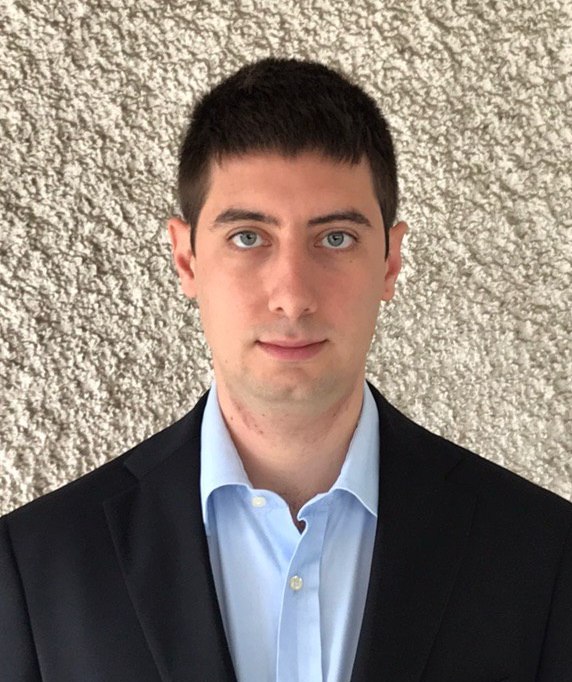
Marco Pirola is a Full Professor at the Department of Electronics and Telecommunications (DET) of the Polytechnic University of Turin, Italy. He is a member of the Interdepartmental Center 'CleanWaterCenter@PoliTo' and actively contributes to research in high-frequency electronics and microwave engineering. His work focuses on power amplifiers, device characterization, and advanced microwave circuit design. Research Interests: Microwave power devices, GaN technology, 5G/mm-Wave applications, space communications, and smart pipeline monitoring systems. Awards: IEEE Fellow (since 2019), IEEE Senior Member. Recent Publications address topics like Ka-band MMIC amplifiers for SAR systems, broadband Doherty amplifiers using GaN, and harmonic analysis of current-mode power stages. His projects include STARGATE (European GaAs power architectures) and Millimetre-Wave GaN Radar for UAV detection. Teaching: He leads courses on 'Radio Frequency Integrated Circuits' and 'Advanced Devices for High Frequency Applications' at the Polytechnic University of Turin. Supervised PhD students include Wenjun Zhang and Abbas Nasri, who worked on III-V HEMT circuits and GaN power amplifiers.
Roberto Pagaria is an Associate Professor in Algebraic Topology at the University of Bologna. He is a member of the EMS Young Academy and has supervised three PhD students. His research focuses on Abelian arrangements, configuration spaces, matroids, representation theory, spectral sequences, and quiver varieties. Education: PhD in Mathematics (2019), thesis: 'Cohomology and Combinatorics of Toric Arrangements', advised by Filippo Callegaro Master's thesis: 'Geometry of Quiver Varieties', advised by Andrea Maffei Bachelor's thesis: 'The Brauer Group of a Local Field', advised by Angelo Vistoli and Ilaria Del Corso Research Interests: Pagaria's work bridges algebraic topology, combinatorics, and geometry. He explores cohomological structures of toric arrangements, elliptic arrangements, and configuration spaces. His studies include Hodge theory for polymatroids, combinatorial decomposition theorems, and applications of spectral sequences in representation theory. Academic Engagement: He co-organized the 2023 Summer School on 'Quiver Representations, Quiver Varieties, and Combinatorics' and delivered invited talks at leading institutions such as MIT, University of Strasbourg, and the Göran Gustafsson Symposium. His software tools like 'arithmat' (for arithmetic matroids) and 'Characteristic OT' enhance computational research in combinatorial algebraic geometry. Grants and Awards: While no specific grants are detailed, his active conference participation and software contributions highlight sustained academic engagement. His work has been published in top journals like the Journal of the London Mathematical Society and the International Mathematics Research Notices.
Jorge Raul Cordovez Manriquez serves as an External Lecturer and Teaching Assistant at the Department of Mathematical Sciences 'GL Lagrange' (DISMA) at Polytechnic University of Turin. He holds invited membership in both the College of Biomedical Engineering and College of Chemical and Materials Engineering. His primary teaching responsibilities span multiple engineering programs including Aerospace Engineering, Computer Science Engineering, and Management Engineering, as well as Architecture programs. His research focuses on advanced topics in algebraic geometry, particularly Schubert calculus, Fano varieties, and complete intersections. His work explores combinatorial structures in algebraic varieties, geometric configurations of lines and conics, and binomial formulas in intersection theory. The mathematical techniques developed in his publications have applications in enumerative geometry and theoretical physics. Over the past decade, Cordovez Manriquez has maintained consistent publication activity in specialized mathematics journals, with his most recent work (2009) extending binomial formulas to Schubert calculus contexts. His research demonstrates deep connections between combinatorial algebra and geometric structures in projective spaces. As an educator, he has taught foundational mathematics courses including Mathematical Analysis I, Linear Algebra and Geometry, and Mathematical Principles across multiple academic years (2019/20-2025/26). His teaching portfolio shows particular emphasis on engineering mathematics for Aerospace Engineering programs, where he has served as both Course Lecturer and Course Collaborator for core mathematical subjects.
Luca D'Acci is an Associate Professor in Sustainable Urban Forms and Evaluations at the Polytechnic of Turin, affiliated with the Interuniversity Department of Territorial Sciences, Planning and Policies (DIST). He holds additional affiliations as a Senior Research Fellow at the University of Portsmouth and as a member of research networks at the University of Birmingham and Erasmus University Rotterdam. His academic journey includes international roles such as Head of Urban Environment at Erasmus University Rotterdam and visiting researcher positions at the University of Oxford, University of Cambridge, and ETH Zurich. Education: MSc in Architecture-Science of Cities, Polytechnic of Turin (2003, cum laude) PhD in Economic Assessments, Polytechnic of Turin (2007) BSc in Mathematics, University of Turin (2007) BSc in Construction Engineering, Polytechnic of Turin (2009, cum laude) Post-PhD in Urbanism, University of Campinas (2010) Anthropology, University of Oxford (2020, 20 credits) Luca D'Acci’s research focuses on urban morphology, urban allometry, isobenefit urbanism, and the socio-economic-environmental impacts of urban form. His work bridges humanistic and quantitative approaches, integrating engineering, architecture, economics, and anthropology. He investigates how urbanicity, urban form, and spatial configuration influence well-being, sustainability, and resilience. His recent publications (2023–2025) reveal a strong trend toward computational modeling and simulation of urban growth, particularly through the lens of isobenefit urbanism —a concept he has pioneered. These works combine cellular automata, agent-based modeling, and morphogenetic frameworks to simulate sustainable urban futures. He also explores fractal patterns in housing markets, the psychology of urban living, and the mental costs of urbanicity. His research spans disciplines including urban science, environmental psychology, urban economics, and complex systems. Scientific Awards and Honors: Fellow, Erasmus Happiness Economics Research Organisation (EHERO), Erasmus University Rotterdam (2022–) Senior Research Fellow, University of Portsmouth (2017–) Fellow, Cluster for Sustainable Cities, University of Portsmouth (2017–2020) Fellow, Urban Morphology Research Group, University of Birmingham (2016–2021) Member, Cambridge Networks Network, University of Cambridge (2016–) Honorary Fellow, University of Birmingham (2016–) Luca D'Acci actively advises PhD students as a member of the Doctoral Collegium for Urban and Regional Development at Politecnico di Torino (2020–2024). He has secured and contributed to significant research grants, including projects funded by the World Bank, Asian Development Bank, European Commission, EPSRC, Lincoln Institute of Land Policy, and University College London (Future Urban Growth Lab). His editorial roles include membership on the boards of PLOS ONE , PLOS Mental Health , and Humanities & Social Sciences Communications . Labs and Research Networks: Future Urban Growth Lab (UCL, 2019–) LEUr Urban Ecology Lab (UFSC, 2022–) URban Evolution Morphology (UReM, 2024–) Erasmus Universiteit Rotterdam (EHERO, 2022–2024) Spatial Intelligence Unit (SPIN Unit), Estonia (2013–) International Society of Biourbanism (2013–)
Valeria Minucciani is an Associate Professor in the Department of Architecture and Design (DAD) at the Polytechnic University of Turin, where she has been a faculty member since 2001. She is a member of the Master's and Continuing Education School and serves as the Coordinator of the Level I Master's Program in Interior, Exhibit & Retail Design. Her academic and professional roles include leadership in research, teaching, and institutional governance, such as being an elected member of the Academic Senate and the Council of the Master's School. University: Polytechnic University of Turin School: School of Architecture Department: Department of Architecture and Design Position: Associate Professor Research Focus: Interior Architecture, Exhibition Design, Museography, Well-being in Interiors Her research interests revolve around the interplay between architecture and human experience, particularly in cultural and interior spaces. She investigates how museography can enhance cultural inclusion and how interior design impacts well-being. A significant focus is on the disciplinary contamination between architecture and neuroscience, especially in museum environments, examining emotional responses and spatial cognition. She also explores the musealization of religious and archaeological heritage and accessibility in cultural heritage. The recent publications reflect a strong trend toward integrating neuroscience and technology into architectural and museological practice. There is a clear emphasis on emotional engagement, inclusivity, and accessibility in museum and heritage settings, often using neuroaesthetic and human factors approaches. Her work increasingly employs digital tools like virtual reality and neuropsychological detection to study visitor behavior and design more inclusive spaces. Scientific Awards and Recognition: President of the Scientific Committee, APM National Association of Small Museums Scientific Director, APM (2022–present) European Commission Reviewer for Horizon 2020 and 7th Framework Program Member, Scientific Committee for the new Diocesan Museum of Fossano (2019) Coordinator, Master in Interior, Exhibit & Retail Design (2019–present) She actively mentors PhD students, including Daniel John Mangano and Gianluca D'Agostino, and leads major research projects such as META-MUSEUM and NEURO-MUSEUM, which are funded by competitive EU and national grants. Her collaborative work spans institutions and disciplines, reflecting a strong commitment to interdisciplinary research. She is involved in numerous research agreements with museums and municipalities, demonstrating applied impact. Her leadership in the Interuniversity Research Center on Heterotopia in Architecture (RHeA) underscores her role in fostering academic collaboration. Labs and Research Teams: Lead researcher in projects involving neuroaesthetics and spatial cognition Member of research groups focused on accessibility and inclusion in museums Scientific Director for collaborative agreements with the National Etruscan Museum of Villa Giulia and the Municipality of Chiomonte Coordinator of the RHeA - Centre of Research on Heterotopia and Architecture
Professor Silvio Franz is affiliated with the Department of Mathematics and Physics 'Ennio De Giorgi' at the University of Salento (Italy). His research career spans over 30 years with 110+ publications, focusing on the statistical mechanics of disordered systems and their interdisciplinary applications. Key contributions include the development of the Franz-Parisi potential for studying glass transitions and rigorous mathematical frameworks for spin glasses. PhD in Theoretical Physics Full Professor at University of Salento Research Interests center on spin glasses and glassy systems , with applications to: Theoretical Neuroscience Machine Learning Population Genetics Constraint Satisfaction Problems Random Matrix Theory Theoretical Computer Science His work connects statistical physics to: Information Theory Optimization Algorithms Neural Network Modeling Evolutionary Biology Complex Systems Theory Key Publications demonstrate: Landau theory for glasses Universality in jamming transitions Stochastic stability analysis Effective temperature formulations Replica symmetry breaking Applications to error-correcting codes
Roberto Valandro is an Associate Professor at the Department of Physics, University of Trieste, where he serves as a member of the Department's Board, President of the Joint Board of Studies, and Vice-Coordinator of the Doctoral Studies Boards for multiple physics doctoral programs (cycles XXXIV-XXXIX). He leads the String Compactifications research group within the Fields and Strings research strand of the Theoretical Physics division. Professor Valandro's research focuses on three main pillars: Strings on Singular Manifolds and Quantum Field Theories , where he uses geometric engineering to translate M-theory geometries into five-dimensional effective field theories; T-Branes , investigating bound states of D6-branes and their M-theory interpretation; and String Phenomenology , exploring connections between string theory and observable physics through both top-down and bottom-up approaches. Analysis of his recent publications reveals a strong concentration on 5-dimensional physics emerging from string compactifications, Calabi-Yau geometry, and the relationship between geometric structures and quantum field theories. His work frequently involves international collaborations, particularly with researchers from SISSA and other leading institutions in theoretical physics. As a dedicated mentor, Professor Valandro supervises PhD students including Chiara Crinò, Andrea Sangiovanni, and Davide Bason. His leadership extends to significant institutional roles, including serving as President of the Joint Board of Studies and Vice-Coordinator of multiple doctoral programs, demonstrating his commitment to academic governance and the development of future physicists. At the forefront of theoretical physics research, Professor Valandro continues to advance our understanding of string compactification and its implications for fundamental physics, contributing to Trieste's reputation as a global hub for theoretical physics research.
Paolo Salvatore is a Full Professor of Geometry at the Department of Mathematics, University of Rome Tor Vergata. His research focuses on algebraic topology, particularly operad theory, configuration spaces, and homotopy theory. He has contributed to foundational work on operadic structures, including studies on the Gravity and Hypercommutative operads, En-algebras, and the Fulton-MacPherson operad. Salvatore has also explored non-formality in characteristic two and geometric realizations of topological spaces. His teaching responsibilities include courses in linear algebra, geometry, and topology for engineering and mathematics students. He has developed extensive lecture materials and online resources for courses such as Linear Algebra and Geometry (Engineering Sciences) and Complementi di Topologia Algebrica . Examinations are conducted via written and oral evaluations with digital platforms. Salvatore has collaborated extensively with researchers like T. Rossi, M. Ching, and J. Giansiracusa on topics ranging from Koszul duality to moduli spaces. His work bridges algebraic topology with geometric and categorical methods, influencing both theoretical and applied mathematical domains.
Karim Abu Salem serves as a Fixed-term Assistant Professor in the Department of Mechanical and Aerospace Engineering (DIMEAS) at the Polytechnic University of Turin, affiliated with the College of Mechanical, Aerospace, and Automotive Engineering. He additionally holds invited membership in the College of Management and Production Engineering. His teaching portfolio includes Aerospace Vehicle Design, Space Flight Mechanics/Structures, Space Environment Operations, and Aeronautical Legislation courses for both bachelor's and master's programs in Aerospace Engineering. Dr. Abu Salem's research centers on sustainable aviation innovation, specializing in box-wing aircraft configurations, hybrid-electric and hydrogen propulsion systems, and advanced structural design methodologies. His work addresses critical challenges in emissions reduction, flight dynamics optimization, and climate impact mitigation through computational modeling, metamodeling techniques, and multidisciplinary design analysis. Key focus areas include unconventional aircraft architectures, power management systems, and metamaterial applications for next-generation aerospace vehicles. Analysis of his recent publications (2023-2025) reveals a concentrated research trajectory toward decarbonizing regional and medium-range aviation. His work demonstrates increasing emphasis on liquid hydrogen propulsion, box-wing aerodynamic efficiency, and holistic environmental impact assessment beyond CO 2 emissions. The publications exhibit strong collaboration patterns with researchers like G. Palaia and E. Carrera, primarily targeting high-impact journals in aerospace engineering and sustainability. As an active educator, Dr. Abu Salem contributes to curriculum development across multiple aerospace engineering programs, bridging theoretical concepts with emerging sustainable aviation technologies through his course collaborations and lectures.
Giuseppe Palaia is an Assistant Professor at the Department of Mechanical and Aerospace Engineering (DIMEAS) within Politecnico di Torino . He serves as a Course Collaborator for multiple programs, including Aerospace Vehicle Design and Space Environment, Access, and Operations across academic years 2024/25 and 2025/26. His research focuses on sustainable aerospace design , with emphasis on hybrid-electric propulsion , hydrogen-powered aircraft , and unconventional configurations like box-wing systems . Academic Affiliation: Politecnico di Torino Teaching Roles: Collaborator for courses in Aerospace Engineering and Engineering and Management Specializations: Aircraft performance analysis, satellite data applications, and sustainable aviation technologies Prioritized research themes span gust spectrum assessment via satellite data , liquid hydrogen propulsion , and hybrid-electric regional aircraft development . Publications highlight innovations in unconventional configurations and emission reduction strategies for next-generation aviation. His work integrates parametric modeling and benchmarking methodologies for aerospace systems.
Giuseppe Zappalà is an Associate Professor of Geometry at the Department of Mathematics and Computer Science (DMI) of the University of Catania, Italy. He has been with the university since 1996, initially as a Researcher and promoted to Associate Professor in 2021. His academic home is firmly rooted in the University of Catania, where he completed both his undergraduate studies and PhD. His research focuses primarily on Commutative Algebra and Algebraic Geometry . More specifically, he investigates Hilbert functions of 0-dimensional subschemes of curves, arithmetically Gorenstein schemes, fat points in projective spaces, reducibility of Hilbert schemes, and Lefschetz properties. His work often bridges theoretical concepts with concrete geometric constructions. His publication record shows a consistent focus on the intersection of algebraic structures and geometric properties, with particular attention to graded algebras, Betti numbers, and special configurations of algebraic varieties. Over the years, his research has evolved from foundational work on subschemes to more specialized investigations of Gorenstein properties and Lefschetz phenomena. As an academic service contributor, Zappalà has served as a referee for national and international journals and as a reviewer for Zentralblatt MATH. He has been actively involved with the Pragmatic research school for 15 editions (1997-2012), which has trained numerous algebraic geometers from around the world. He teaches Linear Algebra and Geometry courses for both Computer Engineering and Computer Science degree programs at the University of Catania. His office hours are held Tuesday and Thursday from 10:00 to 12:00 in Studio 46, III Blocco, DMI.
Paola Gregory is an Associate Professor in the Department of Architecture and Design at the Polytechnic University of Turin, with significant academic contributions to architectural theory, urban transformation, and the affective dimensions of space. She maintains dual academic affiliations, serving as a member of the Board of the PhD Program in 'Architecture. Theories and Design' at Sapienza University of Rome while continuing her primary appointment at Politecnico di Torino. Her research focuses on the intersection of architecture, human experience, and urban transformation, with particular emphasis on affective spaces, social content in architectural design, and the relationship between embodied cognition and built environments. Gregory examines how emotional and sensory experiences shape our interaction with urban spaces, especially in contexts of regeneration and transformation. Her work bridges architecture with neuroscience, exploring how the body perceives and attributes meaning to environments through embodied cognition. She has conducted significant research on Turin's urban transformations, particularly in the Le Vallette neighborhood and the Vallino railway yard area, examining how de-industrialized spaces transition from Fordist to post-Fordist urban landscapes. Gregory's extensive publication record reveals a consistent trajectory exploring the emotional and experiential dimensions of architecture. Her recent work increasingly integrates neuroscience perspectives with architectural design, examining how spatial configurations affect human cognition and emotion. She has pioneered approaches that consider atmosphere, empathy, and memory as central components in urban design processes, challenging traditional functionalist approaches to space. National Competition of Ideas for Projects for the Redevelopment of Areas for Neighborhood Green Spaces (1987) Publication of works and treatises by the National Research Council, Italy (1998) As an advisor, Gregory has supervised numerous theses exploring innovative intersections between architecture and other disciplines, including the relationship between architecture and neuroscience, and architecture's role in the metaverse. Her teaching spans both undergraduate and doctoral levels, with a consistent focus on integrating social content and human experience into architectural design education. She has coordinated experimental workshops that engage local communities in participatory design processes, such as the 'Qui Abito' project in Turin's Le Vallette neighborhood, which used play practices to reimagine public spaces.
Cristiano Bocci is a Full Professor at the Department of Information Engineering and Mathematical Sciences, University of Siena. His research focuses on Algebraic Geometry, Commutative Algebra, and their applications in sensor networks and statistics. He teaches courses like Computational Geometry and Analytical Geometry, and his work extends to interdisciplinary projects involving engineering and data science. Contact him at cristiano.bocci@unisi.it. Research Interests: Geometric constructions in projective spaces Hadamard products of varieties and ideals Applications of algebraic methods in sensor networks and granular material measurement Recent Trends in Publications: Over 2023-2024, Bocci has explored Hadamard products' algebraic properties, Gorenstein points in projective spaces, and sensor network designs. His work bridges pure mathematics with engineering solutions like LoRaWAN-based systems for granular material volume measurement. Grants & Advising: While specific grants aren't listed, his active publication record suggests ongoing research projects. No student advisees are explicitly mentioned. Labs/Teams: Collaborates on interdisciplinary teams applying algebraic geometry to sensor technology and data modeling.
Annalisa Marzuoli is a Full Professor at the Department of Mathematics, University of Pavia, specializing in Mathematical Physics. Her research focuses on geometric methods in quantum field theory, discrete models in gravity, quantum computing, and data science. She is affiliated with the Mathematical Physics group and has contributed to advancements in spin networks, quantum triangulations, and topological quantum computing. Her work bridges quantum mechanics and geometry, exploring topics like Ricci flow, non-linear sigma models, and topological invariants. Recent publications emphasize knotted optical fields, Ponzano-Regge models, and quantum angular momentum configurations. Her research also addresses geometric structures in quantum gravity and computational approaches to topological phases. Marzuoli's articles reveal a focus on interdisciplinary applications of geometric and combinatorial techniques to quantum systems. Key themes include spin network dynamics, topological quantum computing architectures, and geometric flows in theoretical physics. Her contributions to mathematical physics underscore the interplay between discrete models and continuous geometric frameworks. She has no listed scientific awards but maintains an active research profile with collaborations in quantum geometry and computational physics. No advising or grant details are provided in the text. Her group explores quantum geometry through projects like spin network quantum circuits and discrete gravity models, reflecting a commitment to advancing foundational theories in mathematical physics.
Domenico Rizzo is an Associate Professor of Contemporary History at the University of Naples "L'Orientale" in the Department of Human and Social Sciences, a position he has held since 2014 after serving as a Researcher from 2004 to 2014. He teaches Contemporary History and Gender History across multiple master's programs including Relations and Institutions of Asia and Africa, International Relations, and Linguistic and Intercultural Communication. His research centers on the history of social bodies and identity configurations from the modern to contemporary eras, with primary focus on gender history, the history of masculinity, family history, and historical morality frameworks. He examines intersections of law, social norms, and private life in 19th-20th century Italy, particularly analyzing how moral and legal discourses shaped gender relations and family structures in liberal Italy and Rome. Rizzo's publication record reveals consistent thematic engagement with gender dynamics, family law, and social control mechanisms. His work demonstrates interdisciplinary rigor through integration of legal history, social history, and gender studies methodologies, with recurring analysis of how institutional frameworks influenced individual behaviors and societal structures across historical periods.