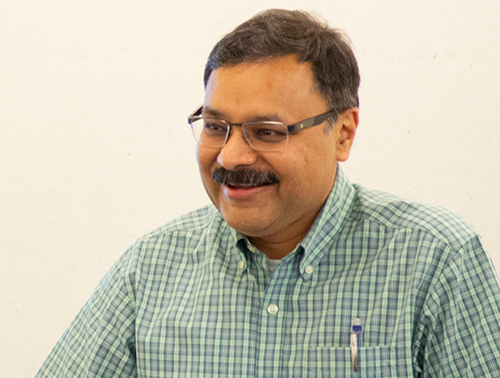
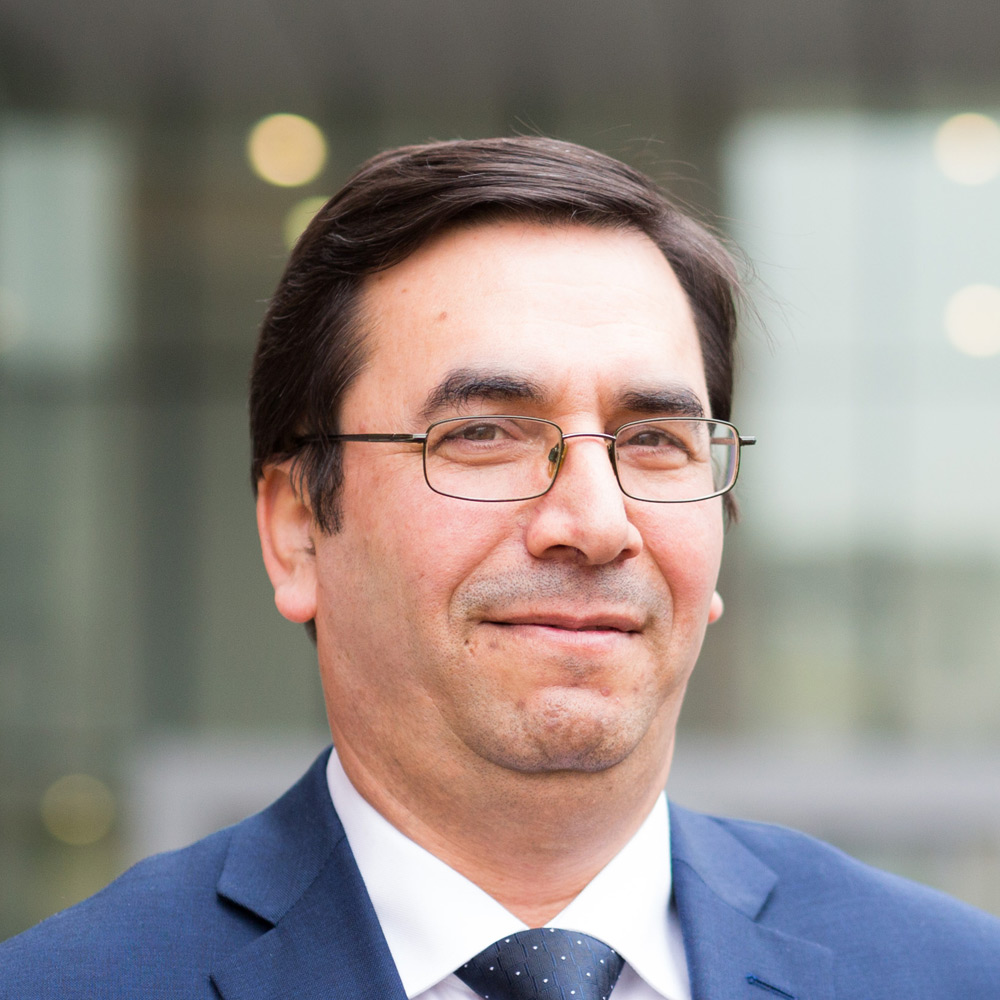
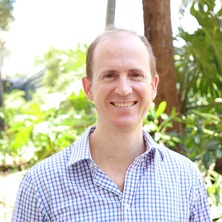
Herman Bruyninckx is a Part-Time Full Professor at Eindhoven University of Technology (TU/e) in the Mechanical Engineering department, specifically within the Control Systems Technology group and EAISI High Tech Systems initiative. He also serves as a professor (Hoogleraar) at KU Leuven in Belgium. Academic focus on robotics, control systems, and multi-agent coordination Active research in model predictive control , semantic mapping , and dynamic constraint algorithms Recent publications address industrial automation , agro-food robotics , and haptic technology Research Highlights : Developed hybrid decision-making frameworks for multi-agent navigation Innovated swing-free control methods for robotic pick-and-place operations Formulated constrained dynamics algorithms with LQR-Gauss principle integration Created ExoTen-Glove for haptic feedback in virtual environments Collaborative Projects : Coordinated with researchers like René van de Molengraft , Elena Torta , and Koen de Vos Contributed to NWO/TTW FlexCRAFT project for cognitive robotics in agro-food technology
Robert P. Anderson is a Professor of Biology in the Division of Science at City College of New York (CCNY), part of the City University of New York (CUNY) system. His research laboratory is located in Marshak Science Building (Room 810), with additional affiliation as a Research Associate at the American Museum of Natural History (AMNH) Mammalogy Department. As a Highly Cited Researcher (2019-2023) and AAAS Fellow (2023), he leads an interdisciplinary biogeography research program focused on modeling species niches and distributions. Dr. Anderson's research spans biodiversity modeling, biogeography, and ecology with specialization in mammals. His lab develops ecological modeling software widely applied in conservation biology, invasive species management, zoonotic disease studies, and climate change impact assessments. Key research themes include: Characterizing spatial configuration of environmental suitability for species Developing machine learning approaches (particularly Maxent) for species distribution modeling Studying climate change effects on biodiversity Conservation applications of biogeographic models Neotropical mammal systematics and ecology His work has resulted in significant software contributions including Wallace, ENMeval, and spThin, with recent publications emphasizing methodological improvements in species distribution modeling and conservation applications. The lab maintains active projects funded by NASA and the National Science Foundation, focusing on small mammals of North and South America. Scientific recognition includes: AAAS Fellow (2023) Web of Science Highly Cited Researcher (2019-2023) Blavatnik Science Scholar (New York Academy of Sciences) Most Downloaded Paper in Ecography (2023-2024) Most Cited Paper in Ecography (2023) Dr. Anderson mentors graduate students through the CUNY Graduate Center and CCNY Master's programs, with recent advisees receiving prestigious awards including the ASM Horner Award and NASA FINESST Fellowship. His lab trains students in environmental biology through interdisciplinary research combining fieldwork, morphology, climatology, remote sensing, physiology, and genetics. Current lab members include Andrew Gaier (NASA Fellow), Mariano Soley-Guardia, and Kass (lead author on highly cited Wallace v2 paper). The Anderson Lab operates from CCNY's Marshak Science Building as part of the university's biodiversity group studying ecology, evolution, and geography of life on Earth. The lab emphasizes software co-design between end-users and developers to enhance conservation utility, with recent work focusing on neighborhood approaches for range estimation and operationalizing expert knowledge in species assessments.
Dr. Conny H. Antoni serves as a Senior Research Professor in Work, Industrial, and Organizational Psychology at the Department of ABO Psychology, University of Trier. Their research focuses on digital collaboration, team dynamics, and psychosocial risk management in modern work environments.
Juan Alcacer is the James J. Hill Professor of Business Administration at Harvard Business School. He holds a PhD in International Business and Strategy from the University of Michigan, an M.A. in Economics, an MBA in Finance, and a Computer Engineering degree. His research focuses on international strategies, location decisions, and agglomeration economies. PhD - University of Michigan (Ross School of Business) MA - Economics, University of Michigan MBA - IESA Computer Engineering - Universidad Simon Bolivar Alcacer’s work examines how firms build competitive advantage through geographic choices, supply chain dynamics, and knowledge transfer. Recent projects analyze Brexit’s impact on investment and the role of internal/external agglomeration economies. His publications span top journals like Strategic Management Journal , Management Science , and Journal of International Business . Awards include the 2024 HBS Student Association Faculty Teaching Award and the 2016 Michigan Ross Distinguished PhD Alumni Award. 2024 HBS Student Association Faculty Teaching Award 2019 Greenhill Award for Field Global Immersion program 2016 Michigan Ross Distinguished PhD Alumni Award 2013 Meritorious Service Award from Management Science At HBS, he teaches required MBA strategy courses, Executive Education programs, and PhD seminars. His consulting spans global corporations on competitive advantage and location strategy.
Sonit Bafna is an Associate Professor and Director of the Ph.D. Program in Architecture at the Georgia Institute of Technology's College of Design. He holds a Ph.D. from Georgia Tech (2002), an SMArchS from MIT (1993), and a professional degree in Architecture fromCEPT University (1990). His research bridges empirical studies on space-human interaction and critical architectural theory, focusing on morphology, behavior, perception, and aesthetics. Key research areas include home layout's impact on mental health (e.g., reduced depression risk in living-area-centered apartments), workplace design's role in employee wellbeing, and the relationship between spatial configuration and cognitive abilities. His work is funded by organizations like the General Services Administration and Kaiser Permanente. Bafna supervises doctoral research in morphology, design theory, and cognitive studies. Current projects include a book on imaginative reasoning in architecture and studies on hospital corridor design and film spatial analysis. His courses cover architectural theory, design analysis, and research methods. Notable contributions include interdisciplinary studies on space syntax, the therapeutic potential of domestic environments, and the visual functioning of buildings. His research emphasizes the socio-cultural dimensions of architecture and its imaginative potential beyond functionalism.
Soteris Demetriou is a Senior Lecturer of Computer Systems Security at Imperial College London's Department of Computing, within the Faculty of Engineering. He leads the Applications, Platforms, and Systems Security (APSS) Research Lab and directs the Academic Centre of Excellence in Cyber Security Research (ACE-CSR). His research focuses on securing mobile, IoT, and cyber-physical systems through techniques like explainable AI, reverse engineering, and trusted computing. Notable contributions include tools for privacy preservation in machine learning models, detection of LiDAR spoofing attacks, and securing Android's middleware. Education: PhD and MSc in Computer Science (University of Illinois at Urbana-Champaign), Diploma in Electrical and Computer Engineering (University of Patras). Research Interests: Mobile/IoT security, AI security, trusted computing, and vulnerability analysis. Key areas include privacy in generative models, adversarial attacks on autonomous systems, and large-scale distributed systems. Publications: Over 50 peer-reviewed papers in top venues like NDSS, CCS, and SOSP. Recent work addresses privacy in speech generation, LiDAR security for autonomous vehicles, and hyperscale serverless architectures at Meta. Awards: Distinguished Paper Award at NDSS 2018, Best Paper at SafeThings 2024, and multiple travel grants. Served on technical committees for PETS, CCS, and AutoSec. Grants & Collaborations: SPRITE+ grant for Bio-IoT security, collaboration with Meta on distributed systems, and leadership in ACE-CSR. Labs: APSS Lab focuses on systems and AI security, with interdisciplinary projects in healthcare and autonomous systems.
Dr. Siqi Ma is a Senior Lecturer at the UNSW Institute for Cyber Security (IFCYBER) within the School of Systems & Computing at the University of New South Wales (UNSW). He previously served as a Lecturer at the University of Queensland's School of Information Technology and Electrical Engineering (ITEE). He holds a Ph.D. in Information Systems from Singapore Management University (2018) and was a Postdoctoral Research Fellow at Data61, CSIRO. He also visited Carnegie Mellon University (CMU) in 2015. Current Role: Senior Lecturer, UNSW Institute for Cyber Security Former Role: Lecturer, University of Queensland Education: Ph.D. (Singapore Management University), Postdoc (Data61, CSIRO) His research spans automated vulnerability detection, mobile security, IoT security, network authentication, and graph-based adversarial robustness. Recent work focuses on drone configuration bugs, Android malware analysis via GNNs, federated learning privacy, and credential leakage in open-source projects. Key trends in his 2024-2025 publications include automated security analysis for embedded systems, deepfake detection in multimedia, and privacy-preserving mechanisms for distributed networks. He collaborates with institutions like Purdue University, Singapore Management University, and CSIRO Data61.
Ziming Zhang is an Assistant Professor in the Department of Electrical and Computer Engineering at Worcester Polytechnic Institute (WPI) , with additional affiliations in Data Science and Robotics Engineering. He previously held research roles at Mitsubishi Electric Research Laboratories (MERL) and Boston University. PhD in Computing (2013) from Oxford Brookes University , UK MS in Computing Science (2010) from Simon Fraser University , CA BS in Computer Science and Technology (2005) from Northeastern University , China Research interests span computer vision , machine learning , and their applications in point cloud processing , medical imaging , autonomous driving , and IoT . He leads the Vision, Intelligence, and System Laboratory (VISLab) at WPI. Recent publications focus on 3D reconstruction , hyperbolic learning , and robust classifiers . Awards include the R&D100 Award 2018 and NSF funding for data-efficient deep learning. PhD Students: Yecheng Lyu (co-supervised), Guojun Wu (co-supervised), Hangrui Zhang, Xuechu Yu Master's Students: Yun Yue, Yuping Shao Visiting Scholars: Fangzhou Lin His lab partners with industry and academic institutions, focusing on autonomous systems , robotics , and scientific imaging projects.
Boris Buffoni is a Senior Lecturer at École Polytechnique Fédérale de Lausanne (EPFL) in the School of Basic Sciences, Institute of Mathematics, specifically within the Chair of Partial Differential Equations. He maintains his office at MA C2 605 (MA Building), Station 8, 1015 Lausanne, Switzerland, and can be contacted at boris.buffoni@epfl.ch or +41 21 693 49 87. His academic role spans both teaching responsibilities across multiple mathematics programs and active research in theoretical and applied mathematics. Dr. Buffoni's research program centers on the calculus of variations applied to Lagrangian and Hamiltonian systems, with significant contributions to optimal transportation in Lagrangian dynamics and hydrodynamics. His work explores semi-global minimization methods for quasi-linear elliptic variational problems and the variational approach to capillary-gravity water waves and their energetic stability. Additional research foci include local bifurcation and center-manifold theory for elliptic PDEs, the configurations of infinite elastic cylinders under compression or traction, and the analytic theory of global bifurcation with applications to gravity waves and their secondary bifurcations. The trajectory of his recent publications reveals a deepening focus on three-dimensional water wave phenomena, particularly steady rotational flows, gravity-capillary solitary waves, and advanced mathematical techniques for analyzing these complex systems. His 2025 publications demonstrate continued innovation in applying Kato's approach to locally coercive problems and developing the theoretical foundations of global bifurcation. The consistent application of variational methods and bifurcation theory across his work represents a unifying theme in addressing challenging problems in fluid dynamics and nonlinear partial differential equations. Dr. Buffoni has received research support including an EPSRC grant (GR/L41059) for work on 'Multibump localised solutions for spatially homogeneous partial differential equations,' reflecting the significance of his contributions to the field. His teaching portfolio at EPFL includes foundational courses such as Analysis II, Functional Analysis I, and Partial Differential Equations of Evolution, where he imparts knowledge of differential and integral calculus of real functions of several variables, linear functional analysis, and fundamental techniques for solving evolution equations.
Professor Mehmet Demirbag serves as Deputy Dean of Essex Business School and Professor of International Business at the University of Essex. Previously, he held significant leadership roles including Vice Dean (Internationalisation) and Head of Department of Strategy and Organisation at Strathclyde Business School, and Chair in International Business at the University of Sheffield Management School. His extensive academic career spans over a decade in UK higher education institutions with specialized expertise in international business strategy. Dr. Demirbag completed his Master's degree in Business Analysis at the University of Leicester and earned his PhD at the University of Bradford Management School. His educational background established the foundation for his research focus on international business phenomena, particularly regarding emerging economies and multinational enterprises. His research interests center around internationalisation of R&D activities, offshore R&D, FDI location choice, product and regional diversification strategies of MNEs, multinationals from emerging countries, international mergers and acquisitions, and reverse knowledge transfer by emerging country MNEs. These interconnected research streams examine how firms navigate global markets, particularly focusing on the strategic behavior of emerging market multinationals and their interactions with developed economies. Analysis of his recent publications reveals consistent thematic patterns across international business, strategic management, and human resource management domains. His work demonstrates particular emphasis on emerging market multinationals, cross-border knowledge transfer mechanisms, international strategic decision-making in uncertain environments, and the institutional contexts shaping multinational enterprise behavior. The interdisciplinary nature of his research bridges theoretical frameworks from international business, strategic management, and organizational studies. Professor Demirbag maintains active editorial roles as consulting editor of the Journal of International Management and advisory editor of Eurasian Business Review. He has co-guest edited special issues for numerous prestigious journals including British Journal of Management, Human Resource Management, Journal of World Business, and International Business Review, among others. His editorial contributions span research areas related to emerging market MNEs, MNEs in emerging markets, transitional periphery contexts, and human resource management in uncertain environments. As an educator, Professor Demirbag teaches International Business and International Strategic Management at undergraduate, postgraduate, and executive levels. His supervision portfolio includes doctoral candidates such as Selman Alisan Gemuhluoglu and previously guided Koushik Das Sarma to completion of their PhD in Business Administration. His research has received funding from various sources including the European Commission, and his work on FDI and SMEs has contributed to REF impact cases at both the University of Bradford and the University of Sheffield.
Andrew Burton-Jones is a Professor of Business Information Systems at The University of Queensland Business School, where he also serves as co-lead of the Future of Health Research Hub and Chair of the Education Steering Committee of the Queensland Digital Health Centre. He is affiliated with multiple research centers including the Centre for the Business and Economics of Health, Centre for Enterprise AI, and Queensland Digital Health Centre across different faculties at UQ. His educational background includes a Bachelor (Honours) of Commerce and Master of Commerce from The University of Queensland, followed by a PhD from Georgia State University. With extensive international experience, he previously served as a tenured Associate Professor at the University of British Columbia before returning to UQ in May 2012. Burton-Jones' research focuses on three interconnected areas: organizational effectiveness in IT use (particularly electronic health records in healthcare settings), methods for analyzing and designing IT systems, and theoretical development within the Information Systems discipline. His work bridges academic theory with practical healthcare applications, with strong emphasis on digital transformation in health services. His recent publications reveal a strong focus on digital health applications, electronic medical records, and digital transformation in healthcare contexts. There's also significant attention to theoretical development in information systems, platform generativity, and research methodology. The work shows increasing integration of healthcare contexts with information systems theory. Fellow of the Association for Information Systems Fellow of the Academy of Social Sciences of Australia Editor-in-Chief of MIS Quarterly (2021-2023) President of the Association for Information Systems (2024-2025) Representative for the Americas for the Association of Information Systems International Representative for the Academy of Management (OCIS/CTO Division) Burton-Jones has supervised numerous PhD students across various topics related to digital health, information systems, and organizational transformation. He has secured substantial research funding including the UQ-QH HDR Alliance Program (2021-2027), ARC Training Centre for Information Resilience (2021-2026), and multiple Digital Health CRC grants. His leadership extends to helping found UQ's Graduate Certificate in Clinical Informatics and Digital Health. He is actively involved in the Future of Health Research Hub, Queensland Digital Health Centre, and Centre for Enterprise AI, where his work focuses on addressing real-world healthcare challenges through information systems research and digital transformation initiatives.
Prof. Benedikt Stuchtey is a Professor of Modern History (19th and 20th century) at Philipps-Universität Marburg, where he also served as Dean of the Department of History and Cultural Studies (2015–2018). He leads Subproject C08 in the CRC/Transregio 138 'Dynamics of Security', focusing on 'Security and Empire' in colonial British spaces (1780–1920). His research interests span comparative imperialism, global history, historiography, knowledge transfer, and family history since the 19th century. Education: Studies in philosophy, history, and German language/literature at the Universities of Münster, Trinity College Dublin, and Freiburg. Research emphasizes transnational imperial dynamics and colonial governance structures. His recent work explores security mechanisms in colonial contexts and reconfigurations of imperialism theories. Awards & Fellowships: 2022 Philipps-Universität Marburg Award for excellent doctoral supervision 2019 Visiting Fellowship in Global History (LMU Munich) 2018 Visiting Fellowships at University of Cambridge and Forschungskolleg 'Human Sciences' Leadership & Memberships: Member of Senate and Academic Committees at Philipps-Universität Scientific Advisory Board member for ERC (SH6), Alexander von Humboldt Foundation, and Swiss National Science Foundation Board member of the Merian Centre for Advanced Studies in the Maghreb He co-founded research networks like Re-Configurations and holds editorial roles in journals such as European Review of History and Schweizerische Zeitschrift für Geschichte.
Helen Haugh is Associate Professor in Community Enterprise at Cambridge Judge Business School, University of Cambridge, and serves as Research Director for the Cambridge Centre for Social Innovation. Her work bridges organizational theory, social entrepreneurship, and community asset development, with significant impact on policy and practice. Her academic credentials include a BSc from UMIST, MA from Brunel University, and PhD from Aberdeen University. These foundations underpin her empirical approach to studying community-driven enterprise models. Professor Haugh's research centers on organizational theory , institutional dynamics , and community asset ownership , with pioneering work on necessity entrepreneurship in Africa and the reimagining of religious buildings as community hubs. She employs ethnographic methods to explore how place-based contexts shape social innovation, emphasizing ethics of care and resilience in marginalized communities. Her scholarship consistently challenges conventional entrepreneurship frameworks by centering community agency and hybrid organizational forms. Analysis of her recent publications reveals three dominant trajectories: (1) transformational hybridity for societal challenges (2025), (2) decolonizing entrepreneurship research through Global South perspectives (2023), and (3) place-based community asset strategies (2022-2023). Her work increasingly examines institutional voids in refugee contexts and the moral economies of fair trade. Helen has directed the MSt in Community Enterprise (2001-2008), Tata Social Internship Scheme (2008-2011), and Arianne de Rothschild Fellowship (2010-2016). Current projects include the REACH Ely initiative reimagining churches as community assets (featured in Sky News 2022-2023) and historical analyses of community enterprise evolution. Her research is funded through partnerships with the Diocese of Ely and international development agencies. As Research Director of the Cambridge Centre for Social Innovation, she leads a multidisciplinary team investigating social enterprise ecosystems, with recent focus on the generative potential of community embeddedness and strategies for sustaining community assets amid financial constraints.
Dr. Martin Lange is part of the Project Group Ecological Epidemiology within the Department of Ecological Modelling at the Helmholtz Centre for Environmental Research (UFZ). His research focuses on computational epidemiology, particularly in wildlife and livestock systems. Key areas include disease transmission dynamics, surveillance strategies, and the development of predictive models for infectious diseases like African Swine Fever (ASF) and Bovine Viral Diarrhea Virus (BVDV). Affiliations: UFZ, Department of Ecological Modelling; EcoEpi research group. Education: PhD in Veterinary Epidemiology (2013, TU Bergakademie Freiberg). Research interests span ecological epidemiology, wildlife disease control, and the application of agent-based and individual-based models to understand pathogen spread. Notable contributions include modeling ASF in wild boar populations and BVDV eradication strategies in Ireland. Awards: Received the 2018 UFZ-Wissenstransferpreis (shared with H.H. Thulke) and the Konrad-Bögel-Nachwuchsförderpreis for his doctoral work on eco-epidemiology of wild boar diseases. Also recognized at the DACh Epidemiologietagung 2011. Publications: Over 50 peer-reviewed articles since 2006, emphasizing interdisciplinary approaches to disease modeling and environmental systems. Recent work includes digital twin frameworks for biodiversity monitoring and Python-based model coupling tools like FINAM. Labs/Teams: Active in the EcoEpi group and contributes to projects like BioDT (Biodiversity Digital Twin) and CauSES (Causation in Social-Ecological Systems).
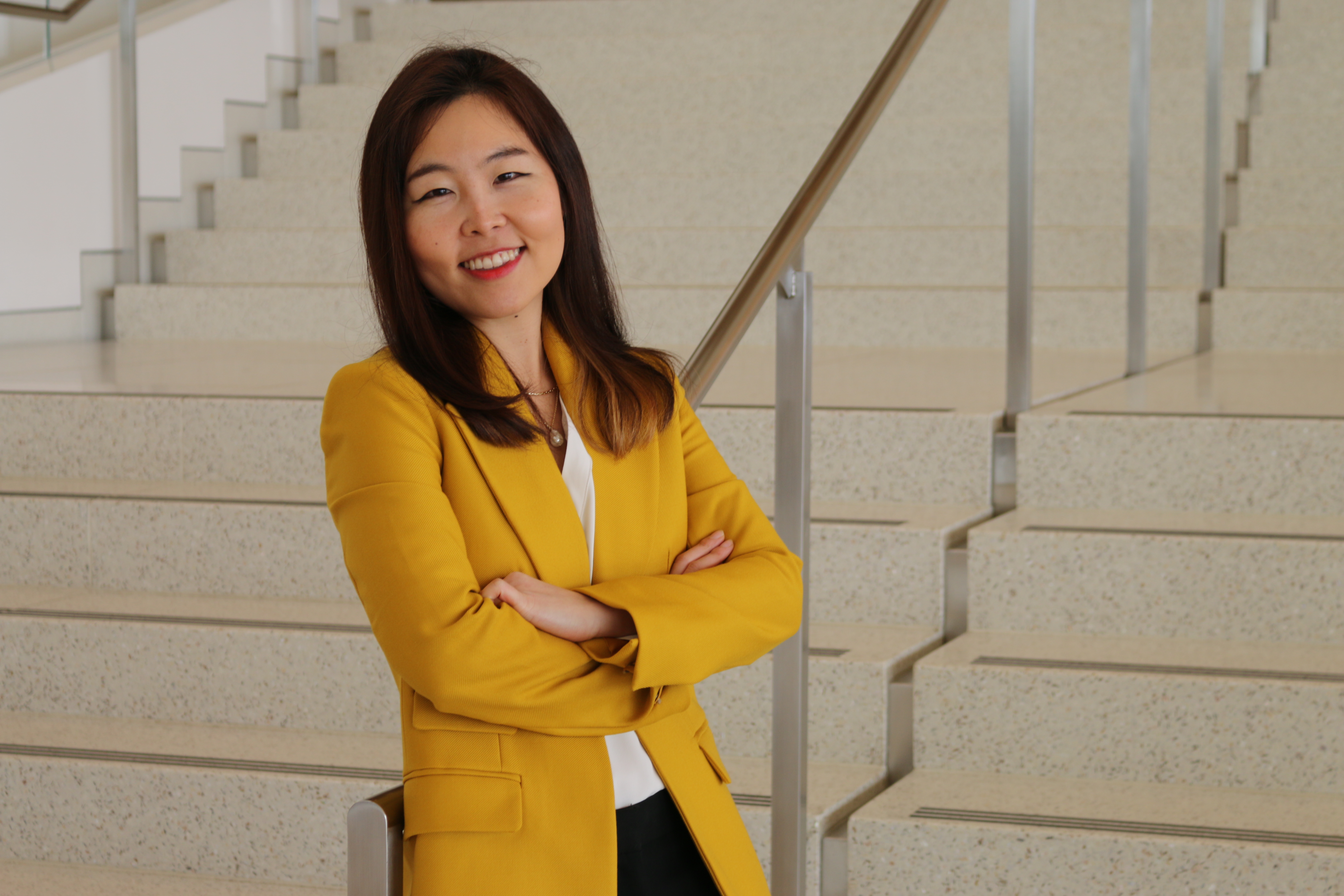
Semin Park is an Assistant Professor in the Management and Organization department at the Smeal College of Business, Pennsylvania State University. Her research focuses on relational dynamics within and between teams, employing a social network perspective to analyze longitudinal changes in work collectives across diverse contexts such as emergency response systems and organizational teams. Education: PhD in Management, University of Connecticut (2019) MSc in Management, Seoul National University (2013) BBA in Business Administration, Seoul National University (2011) Research Interests: Dr. Park investigates team dynamics using network analysis to explore conflict resolution, leadership transitions, and collective behavior. She emphasizes structural elements of multi-team systems, emergency response configurations, and the application of big data methods for organizational insights. Her work bridges theoretical frameworks with practical solutions for improving team performance and workplace safety. Publications Trends: Her most recent articles (2020–2024) emphasize network-based approaches to team conflict, leadership transitions in crises, and dynamic constructs in organizational settings. Earlier work (2012–2018) includes foundational studies on team creativity, peer evaluations, and historical evolution of work teams. Affiliations & Resources: She is affiliated with Penn State’s Smeal College and maintains an active Google Scholar profile. No grants or awards are explicitly listed in the provided texts.