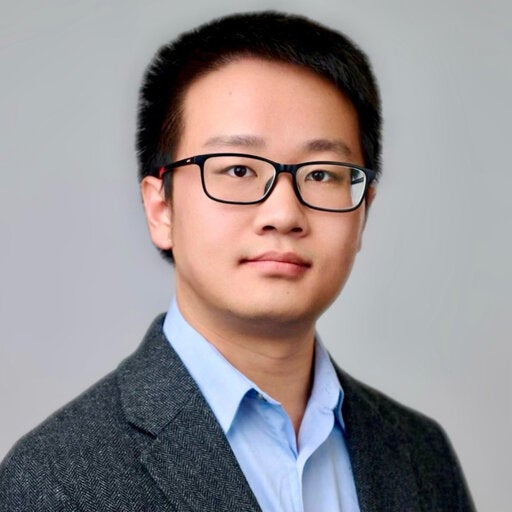
Dr. Peichen Zhong is an Assistant Professor in the Department of Materials Science and Engineering at the National University of Singapore (NUS). He leads the Applied Machine Learning and Materials Modeling (AM³) Group, focused on advancing computational methods for clean energy technologies. His research integrates machine learning with atomistic simulations to tackle challenges in battery materials, disordered materials, and sustainable energy systems. Education: B.S. in Physics from University of Science and Technology of China (2018); Ph.D. in Materials Science from UC Berkeley (2023, advised by Prof. Gerbrand Ceder); Postdoctoral training at Lawrence Berkeley National Lab and BIDMaP, co-advised by Persson, Cheng, and Krishnapriyan. Research Interests: Computational modeling of battery cathodes/electrolytes, AI-driven interatomic potentials, statistical mechanics in disordered materials, and generative models for scientific discovery. Key areas include Li/Na-ion batteries, solid-state reactions, and sustainable energy materials. Awards: BIDMaP Emerging Scholar Fellowship (UC Berkeley CDSS, 202?), 2023 Rising Stars in Materials Science (CMU/MIT/Stanford). Labs/Teams: The AM³ Group at NUS MSE focuses on interdisciplinary research combining theory, computation, and AI4Science. Current openings include PhD students and postdoctoral researchers.
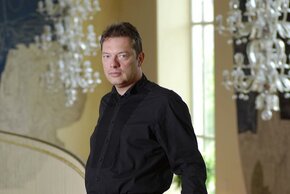
Professor Marcin Ciszewski is a distinguished faculty member at the Stanisław Moniuszko Academy of Music in Gdańsk, where he serves at the Faculty of Vocal and Acting. A graduate of the same institution with distinction in 1999, he has established himself as one of Poland's leading countertenors and vocal pedagogues. His educational background includes studies under Professor Piotr Kusiewicz and additional training with renowned instructors including Kinga Chełmińska, Ryszard Minkiewicz, Kai Wessel, Gerhard Kahry, and Dariusz Paradowski. Graduated with distinction from the Academy of Music in Gdańsk (1999) Habilitated doctor of musical arts (2019) Professor at the Faculty of Vocal and Acting Professor Ciszewski specializes in early music performance and is recognized as one of the first Polish countertenors who made significant contributions to the development of vocal art in the authenticity movement in Poland. His research focuses on the history and physiology of countertenor voices, and he regularly conducts lectures and voice training for professional and academic groups. His artistic output spans several hundred concerts across Poland and Europe, featuring collaborations with renowned ensembles, orchestras, and conductors. He has given over a dozen world premieres of both early and contemporary works, including compositions specifically written for him by modern composers. His recordings include extensive work for Polish Radio and Television, the French music television channel Mezzo, and Radio Classique. Notable Achievements Member of the European artists' association Spedidam based in Paris Nominated for the "Fryderyk" music award in the Early Music category Honored with international titles "Outstanding Teacher" and "Excellent Vocal Teacher" Since 2006, Professor Ciszewski has maintained a successful artistic partnership with organist Ewa Bąk, performing at over one hundred national and international organ festivals. Their collaborations have resulted in numerous CD, radio, and television recordings, including world premieres of works by Polish composers such as Marian Sawa and Jacek Urbaniak.
Andreas Stoehr is a renowned Austrian conductor and professor at the Music and Arts Private University of the City of Vienna, leading the conducting department and symphony orchestra since 2013. His career spans prestigious engagements including the Paris Opéra Comique, Deutsche Oper am Rhein, and St. Gallen Theatre, focusing on operatic repertoire from Monteverdi to modernism. He is celebrated for reviving neglected works like Meyerbeer’s Emma di Resburgo and Gluck’s Ezio , emphasizing historical performance practices. His research explores stylistic transitions in music history, blending baroque precision with modern innovation. Education: Trained at Vienna's former Conservatory (now University of Music and Performing Arts), studying piano under Alfred Kremela, conducting with Gennadij Rozhdestvenskij, and musicology at the University of Vienna. Key mentors included David Lutz (accompaniment) and Reinhard Schwarz (conducting). Research Interests: Explores interdisciplinary connections between diverse musical eras, such as Bach’s influence on Schoenberg, and advocates for vocal-orchestral balance in historical repertoires. Projects include CD recordings of Amanda Maier-Röntgen and Andrea Tarrodi’s works, nominated for Swedish Grammis. Awards: Grammy nomination (2016) for Amanda Maier-Röntgen’s Violin Concerto recording. Recognized for innovative stagings of operas like Berg’s Wozzeck and Debussy’s Pelléas et Mélisande . Teaching & Leadership: As professor and symphony orchestra director, Stoehr mentors young conductors. Notable collaborations include the Langenlois Castle Festival (2012–2019) and interdisciplinary projects like Heart and Mouth, and Deed and Life blending Bach with sociological texts. His teaching emphasizes 21st-century conductorship as collaborative architecture, prioritizing emotional engagement over technical authoritarianism. Labs/Ensembles: Leads the MUK Symphony Orchestra, collaborating with ensembles like the Aarhus Symphony Orchestra and Orchestre Philharmonique de Liège. His work bridges academic research with performance practice through projects like the Styriarte Festival’s Schubert revival.
Anu Sepp is a Senior Lecturer in Music Pedagogy at the Estonian Academy of Music and Theatre (part-time since 2019) and a University Lecturer in Music Education at the University of Eastern Finland (full-time since 2023). Her career includes roles as a post-doctoral researcher at the University of Helsinki, Associate Professor at EAMT, and extensive experience as a secondary school music/English teacher and choir conductor in Estonia and Finland. Education: PhD in Education, University of Helsinki (2008–2014) Master of Educational Sciences, Tallinn Pedagogical University (1999–2001) English Teacher Certification, Tallinn Pedagogical University (1992–1994) Music Teacher & Choir Conductor Diploma, Tallinn State Conservatoire (1981–1986) Her research explores music pedagogy, teacher training, curriculum innovation, and technology in education, with a strong focus on comparative studies between Estonia and Finland. She investigates interactive teaching methods, equity in music education, and the development of sustainable pedagogical frameworks. Her publications (2018–2023) predominantly analyze music teacher education, piano pedagogy, technology-enhanced learning, and curriculum design. Trends include longitudinal studies on student-teacher development, comparative education models, and integrating traditional pedagogical values with digital innovation. Scientific Awards: Riho Päts Foundation Laureate (2015) DKG International Scholarship (2013) Kristjan Jaagu Scholarship (2012) Ministry of Education Awards (2010, 2001) Teacher of the Year (1996) She has supervised 9 master’s theses and contributed to national curriculum reforms in Estonia. As a choir conductor, she led award-winning ensembles (1987–2023). She serves on committees for ISME, EAMT’s Scientific Board, and co-organizes international conferences like MISTEC.
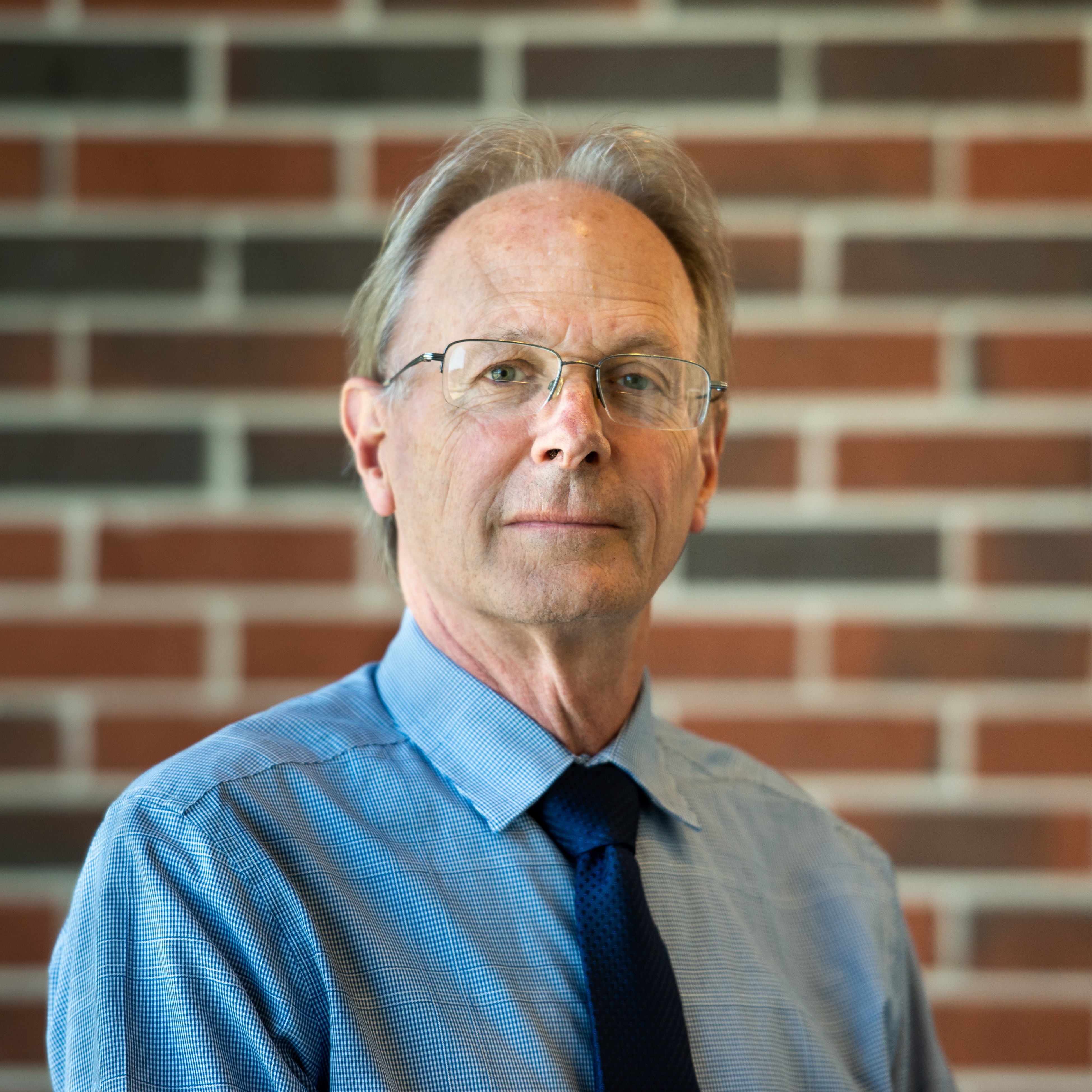
Dr. John Reynolds is a Professor of Chemistry and Biochemistry at the Georgia Institute of Technology with a 40-year legacy in polymer chemistry. He serves as founding Director of the Georgia Tech Polymer Network (GTPN) and a member of the Center for Organic Photonics and Electronics (COPE). Research spans conjugated polymers, electrochromism, organic LEDs, photovoltaics, and bioelectronics Expert in optoelectronic and redox properties of electroactive materials Co-editor of the Handbook of Conducting Polymers His group has published over 450 peer-reviewed papers and holds ~45 issued patents. Recent research focuses on: Advanced electrochromic materials for visible and infrared applications Next-generation organic solar cells with green processing techniques Supercapacitor and electrochemical transistor materials Space exploration polymer applications Scientific recognition includes: ACS Cope Scholar Award (2020) ACS Florida Award (2019) ACS Applied Polymer Science Award (2012) Fellowships from Royal Society of Chemistry, Materials Research Society, and PMSE (2013) His editorial contributions include serving on boards for multiple prestigious journals including ACS Central Science and Chemistry of Materials . The Reynolds Group actively trains PhD and postdoctoral researchers, with recent members advancing to positions at University of Michigan, ExxonMobil, Northwestern, and Intel.
Professor Antonio Griffo holds the position of Professor of Power Electronics and Electric Drives at the University of Sheffield's School of Electrical and Electronic Engineering. He leads the Electrical Machines and Drives Research Group and is involved in the High Reliability Drives Group. His academic journey includes a MSc (2003) and PhD (2007) in Electrical Engineering from the University of Naples, followed by research roles at Bristol and Sheffield Universities before becoming a Lecturer in 2013 and later a Professor. His research focuses on advanced control of electric drives, SiC-based power electronics for aerospace/renewables, fault detection in machines, and thermal management. Key projects include modeling hybrid AC/DC power systems for 'More Electric Aircraft', sensorless control techniques, and real-time simulation methodologies. He has pioneered work on SiC converter reliability, insulation monitoring, and condition-based maintenance systems. Publications (15+ in top journals like IEEE Transactions) emphasize innovative solutions for power electronics challenges, including voltage stress mitigation, thermal modeling, and fault tolerance. His work bridges theory and application, addressing critical issues in aerospace, renewable energy, and electric vehicle systems. Griffo also contributes to educational advancements through modular training platforms for power electronics education. Labs/Teams: Active in the Electrical Machines and Drives Research Group, focusing on high-reliability drive systems and sustainable energy technologies. Collaborates with industry on projects like the EPSRC Offshore Wind Prosperity Partnership.
Professor Ali Yapar is a faculty member at Istanbul Technical University in the Electronics and Communication Engineering department. His research focuses on Electromagnetics , Microwave Engineering , and Antenna Technologies , with a particular emphasis on inverse scattering problems and microwave imaging for biomedical applications. He has supervised numerous graduate students and led projects related to breast cancer treatment and rough surface imaging. PhD in Electronics and Communication Engineering from Istanbul Technical University (1997) MSc in Electronics and Communication Engineering (1995) His recent publications analyze advanced techniques for microwave hyperthermia systems, reverse time migration methods, and Newton-based solutions for electromagnetic inverse scattering. Key projects include TUBITAK-funded initiatives on microwave tomography and brain stroke imaging. He serves as a project investigator and executive for electromagnetic research programs. Research areas span Electromagnetic Wave Propagation , Green's Function Applications , and Dielectric Material Analysis . Collaborations include IEEE members and international researchers in computational electromagnetics.
Fangzhou Jin is an Assistant Professor at the School of Mathematical Sciences, Tongji University. His research focuses on advanced topics in Algebraic Geometry , particularly in Motivic Homotopy Theory , Algebraic K-theory , and Real Algebraic Geometry . He has extensive experience in collaborative mathematical research, having worked with prominent mathematicians such as Frédéric Déglise, Enlin Yang, and Marc Levine. Education : Ph.D. in Mathematics (2016, École Normale Supérieure de Lyon), M.Sc. in Pure Mathematics (2012, Université Paris-Diderot), Diploma of ENS (2013) His work bridges Algebraic Cycles with Étale Cohomology , exploring Weight Structures in mixed motives and Chern Classes in motivic contexts. Jin has contributed to the theory of Trace Maps and Local Terms in motivic homotopy, as well as the study of Flat Cohomology and Real Schemes . Key trends in his publications include: 2025: Cohomology of singular varieties via real cycle class maps 2024: Trace maps and local terms in motivic homotopy 2023: Moving lemmas in homotopy colevel theory 2022: Quadratic conductors, perverse homotopy, and pro-Chern classes 2021: Rational motivic homotopy and Künneth formulas 2020: Gersten complexes and real flat cohomology 2018: Algebraic G-theory in motivic categories 2016: Borel-Moore homology and weight structures Scientific Awards & Grants : Fundamental Research Funds for Central Universities (2021-2025) National Natural Science Foundation of China Grants 12101455 (2022-2024), 12471014 (2025-2028) National Key R&D Program of China 2021YFA1001400 (2022-2026) DFG Priority Programme SPP 1786 & ERC Project QUADAG (2018-2020) Advising & Teaching : Jin has supervised exercise classes and seminars at multiple institutions, including Universität Duisburg-Essen and Tongji University. His teaching spans Algebraic Topology , Étale Cohomology , and Algebraic Geometry . Labs & Collaborations : Active in international collaborations, he is a key member of the Algebraic Geometry and Ramification Seminar at Tongji University and has participated in DFG Research Training Group 2553 during his postdoctoral period.
Prof. Nicola Jürgensen is a distinguished German clarinetist and Professor of Clarinet at Faculty 1 of Folkwang University of the Arts in Essen, Germany. She also serves as Dean of Faculty 1 and is a Confidential Lecturer for the German Academic Scholarship Foundation. Her career seamlessly integrates performance, education, and artistic leadership. She is the Artistic Director of WDR 3 Campus Concerts and a board member of the Folkwang University Foundation. Professor of Clarinet, Folkwang University of the Arts (2018–present) Dean, Faculty 1 Artistic Director, WDR 3 Campus Concerts Board of Directors, Folkwang University Foundation Principal Clarinet (former), WDR Symphony Orchestra Cologne (2001–2018) Regular coach, German National Youth Orchestra (2020–present) Nicola Jürgensen's research and artistic interests center on clarinet performance, chamber music, and contemporary repertoire. She is deeply committed to historical performance practice, evidenced by her recordings on basset clarinet, and to expanding the global reach of classical music through international masterclasses and festivals. Her work bridges traditional European repertoire and modern experimental works, including performances in avant-garde operatic productions. She has collaborated with leading orchestras and ensembles worldwide, from Berlin and Leipzig to New York, Bangkok, and Auckland. Her recent artistic output reveals a strong focus on rediscovered works (e.g., Wilms' concerto), contemporary compositions (e.g., Kancheli, Zwilich), and cross-cultural collaborations (e.g., German Masters Music Festival in Thailand). She emphasizes pedagogical innovation and performance excellence, mentoring students who now hold principal roles in Germany’s top orchestras. Her recordings and performances consistently highlight expressive depth, technical mastery, and scholarly engagement with historical instruments and arrangements. Scientific and Artistic Awards: Mozart Prize, Wiesbaden Mozart Society German Music Competition Soloists' Prize (1999) Germany Radio Promotion Prize (2002) Nicola Jürgensen has been instrumental in guiding numerous students into prestigious orchestral positions and leads the ensemble 'Folkwang Clarinets' with her students. She holds multiple leadership roles in academic and artistic institutions and continues to perform as a guest principal clarinetist with major orchestras like the Mahler Chamber Orchestra and NDR Elbphilharmonie Orchestra. Her involvement in grants and funding appears indirect through institutional roles and festival organization. She is actively involved with several artistic initiatives, including the 'Spannungen' festival, WDR 3 Campus Concerts, and international masterclass programs. Her ensemble collaborations and educational outreach reflect a sustained commitment to excellence, innovation, and accessibility in classical music.
Arnaud Bertsch is a Lecturer at the École Polytechnique Fédérale de Lausanne (EPFL) within the School of Engineering (STI) and the Department of Microengineering (IEM). He is affiliated with the Microsystems Laboratory 1 (LMIS1) and has been actively involved in teaching advanced microfabrication techniques and MEMS sensor/actuator practicals. His research spans microfluidics, nanofluidics, biomedical devices, and 3D microfabrication, with a focus on neural probes, drug delivery systems, and cell manipulation technologies. Microfluidic hydrodynamic and dielectrophoretic systems Nanovolcano microelectrode arrays for electrophysiology Thermal control of ionic transport in nanochannels 3D lipid microrobots for drug delivery MEMS-based intraocular pressure sensors Arnaud Bertsch has supervised PhD students including Torres Vila Pol, Zhang Tao, and past advisees like Clémentine Lipp, Nicolas Maïno, and Joan Teixidor. His work bridges fundamental research in nanofluidics with applied biomedical solutions, contributing to fields such as neuroscience, cancer therapy, and implantable medical devices. The articles listed demonstrate expertise in microsystem design, electrochemical sensing, and biofabrication technologies.
Barbara Pazur is a Professor at the Department of Choral Studies and Vocal Education, Faculty of Arts, Maria Curie-Skłodowska University. She specializes in Edwin E. Gordon's Music Learning Theory, focusing on audiation, choral improvisation, and early childhood music education. She leads the "Teoria uczenia się muzyki E.E. Gordona" scientific circle and serves as treasurer of the Lublin Division of Polish Choral Conductors' Association. Completed music education at Wrocław Music Academy (1985) Postgraduate studies in Vocal Emission and Choral Conducting Habilitated in Music Arts (Choral Conducting) at Fryderyk Chopin University (2014) Her research focuses on musical creativity development through Gordon's methodology, autism-friendly music approaches, and Polish folk/popular song adaptation for choral education. She pioneered the "Lubelski Festiwal Chórów Parafialnych" and co-developed national choral programs. Key awards include the Srebrny Krzyż Zasługi (2018), multiple Rector's Awards, and the Pro Maris Medal (2016). She has published numerous books and articles on Gordon-based pedagogy and choral arrangements.
Boyu Zhang is an Assistant Professor in the Department of Computer Science at the University of Idaho, part of the College of Engineering. He holds a Ph.D. in Computer Science & Technology from Harbin Institute of Technology (2016), an M.S. from the same institution (2009), and a B.S. from Jilin University (2005). His research focuses on medical image analysis, deep learning, and AI applications in healthcare. Key areas include breast cancer detection via ultrasound imaging, explainable AI, graph neural networks for multi-omics data integration, and materials science predictions using machine learning. His work emphasizes interpretability in AI systems, such as the Bi-RADS-Net series for breast cancer diagnosis and the development of sharpness-aware optimizers for medical imaging tasks. He also explores multi-task learning frameworks and novel neural network architectures like SepNet for directional data analysis. His contributions span medical imaging benchmarks (e.g., BUSIS dataset) and computational methods for materials property prediction.
Dr. Steven K. Rothschild is Professor and Chair of the Department of Family & Preventive Medicine at Rush Medical College, Rush University, where he also holds the distinguished title of The Roger C. Bone, MD, Presidential Professor. As a practicing family physician at Rush Family Physicians in Chicago (1700 W Van Buren St, Suite 470), he provides comprehensive primary care with particular expertise in managing patients with multiple chronic conditions, especially older adults. His educational background includes: Medical Degree from University of Michigan Medical School Residency in Family Medicine at Cleveland Metropolitan General Hospital Dr. Rothschild describes his clinical approach as being 'the conductor of the orchestra' for complex patients, ensuring medication regimens don't conflict and diagnostic testing is coordinated efficiently. With patients he's seen for 20-25 years, he emphasizes the importance of long-term patient-physician relationships and continuity of care. His patient satisfaction ratings consistently average 4.9/5.0 across multiple dimensions including communication, empathy, and shared decision-making. Analysis of his 22 publications from 2003-2024 reveals three dominant research themes: community health worker interventions (particularly for diabetes management in Hispanic populations), integrated care models addressing both medical and social determinants of health, and mental health interventions within primary care settings. His recent work increasingly incorporates digital health technologies for depression, anxiety, and sleep interventions. As Department Chair, Dr. Rothschild oversees academic programs, faculty development, and research initiatives within Family & Preventive Medicine. His leadership focuses on training the next generation of family physicians while advancing innovative approaches to primary care delivery for complex patient populations.
Assoc. Prof. Dr. Serkan Arıkan is a faculty member at Boğaziçi University's Faculty of Education, Department of Mathematics Education. His research focuses on educational measurement, computerized adaptive testing, non-routine problem solving, and large-scale assessment frameworks like PISA and TIMSS. He has developed psychometric tools for STEM competency evaluation and conducted bias detection studies in international exams. Education : PhD in Secondary Science and Mathematics Education (METU, 2010), Postdoc (Tilburg University, 2015) Awards : Outstanding Achievement in Teaching Award (2021-2022) Research Trends : His recent work includes psychometric validation of self-compassion scales, extending the Community of Inquiry framework for technology integration, and adaptive test design using multiple matrix sampling. He investigates how socioeconomic factors, item bias, and emotional skills intersect with academic performance. Projects : Leads TÜBİTAK-funded AI-based test design and computerized adaptive mathematics test initiatives. Conductor of Boğaziçi University Adaptive Testing Laboratory.
Johan Sidén is a Lecturer and Associate Professor at Mid Sweden University , employed in the Department of Computer and Electrical Engineering (DET) . His work focuses on RFID technology , antenna design , and printed/flexible electronics , with a particular emphasis on industrial IoT and welfare technology applications. Research Keywords : Radio Frequency Identification, Antenna Design, Flexible Electronics, Wireless Sensor Networks, Microwave Engineering, Electronic Design Key Projects : DRIVEN (data-driven industrial transformation), SmartArea (functional surfaces), Pressure (ulcer monitoring), MakeSense! (welfare technology) Publications : 15+ recent works on wearable antennas, smart packaging, UWB antenna design, and RFID sensor integration Collaborations include partnerships with industrial and academic institutions, focusing on sustainable electronics, sensor systems, and smart infrastructure. His technical expertise spans antenna optimization , printed circuits , and edge computing for harsh environments.