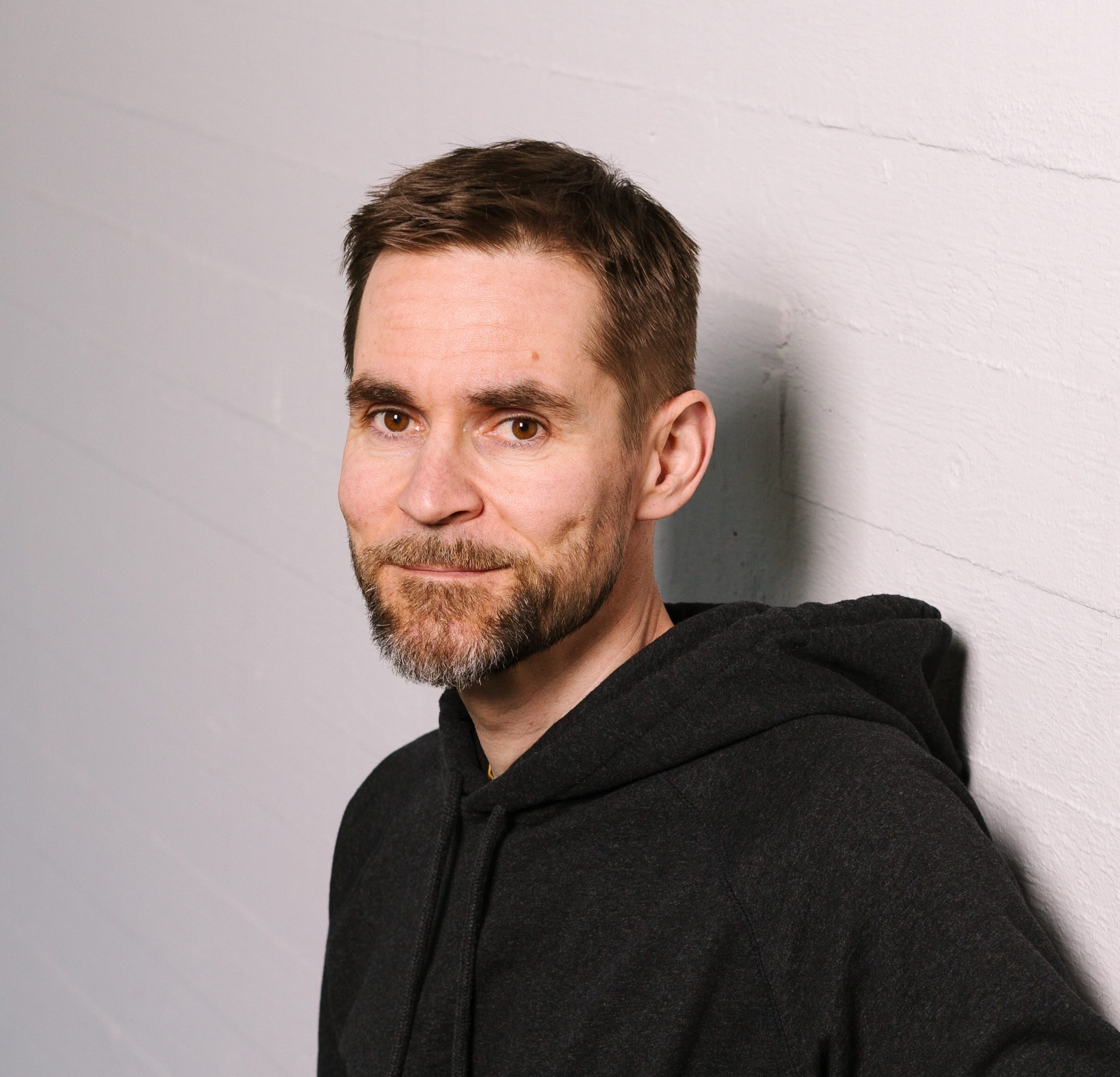
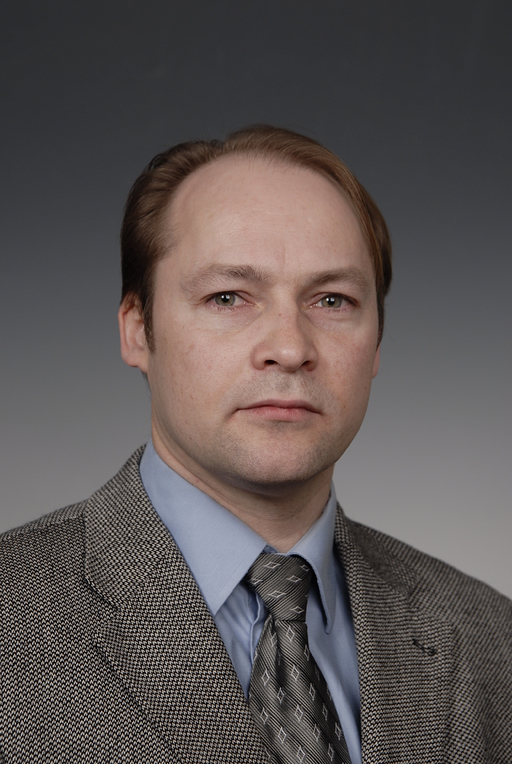
Harri Lähdesmäki is an Associate Professor (tenured) at the Department of Computer Science, Aalto University, where he leads the Computational Systems Biology research group. His work focuses on probabilistic machine learning and deep generative models with applications in biomedicine and molecular biology. Key Research Interests: Probabilistic machine learning, deep generative models, computational biology, bioinformatics, longitudinal data modeling Contact: harri.lahdesmaki@aalto.fi | Konemiehentie 2, 02150 Espoo, Finland His recent publications highlight advancements in: Gaussian process priors for scalable deep generative models Single-cell analysis of immune repertoires in leukemia and diabetes Probabilistic deconvolution methods for RNA-seq data Epigenetic analysis using hidden Markov and mixed models Transformer-based survival prediction and missing data handling Harri’s work integrates mechanistic modeling with Bayesian inference, particularly applied to immunology, cancer biology, and early disease prediction.
Jari Puttonen is a Professor of Structural Engineering at Aalto University's Department of Civil Engineering, School of Engineering. His research focuses on structural analysis, fire safety, materials science, and nuclear infrastructure safety. He has held roles as Principal Investigator in projects related to nuclear waste repository concrete modeling and aging management of NPP infrastructure. He has advised over 20 academic visitors and served in doctoral thesis committees. Education: Doctoral degree (1987), Licentiate (1984), and Master's degree (1979) in Engineering and Technology from Helsinki University of Technology (now part of Aalto University). Research Interests: Steel and composite materials behavior under extreme conditions Fire resistance of structural systems Long-term performance of concrete in nuclear facilities Non-destructive testing of construction materials Seismic resilience of critical infrastructure Awards: Recipient of the Knight, First Class of the Order of the White Rose of Finland (2020), PUUPalkinto 2010, and Schweighofer Prize 2011 for innovative energy facade research. Grants & Projects: Led 13 research projects including PERCO2_2023 (nuclear waste repository modeling) and CONAGE2022 (NPP concrete aging). Active in EU-funded initiatives and industry collaborations. Labs & Teams: Core member of Aalto's Structural Engineering Research Group, collaborating with Chalmers University and Technical University of Munich on advanced materials testing.
Jari Murto serves as Associate Professor at the Faculty of Law, University of Helsinki, where he specializes in Labour and Social Law. With over two decades of academic and practical experience, he contributes significantly to Finnish and European labour law discourse through publications, policy analysis, and academic leadership. His educational qualifications include a Doctor of Laws (LL.D), Master of Science in Economics and Business Administration, and Master of Laws (LL.M). Murto's doctoral dissertation Ryhmänormit yrityksessä (Group Norms in Companies, 2015) established foundational research on workplace norm systems. Murto's research examines labour law doctrines, norm systems, working conditions determination, and transition-phase labour market issues. He analyzes EU policy impacts on national frameworks, lifelong learning integration into labour law, and psychosocial workplace safety. Recent work addresses digital workplace challenges, parental employment policies, and just transitions in green/digital economies. His scholarship bridges theoretical legal frameworks with practical industrial relations through frequent commentary on Supreme Court decisions. As Doctoral Programme Supervisor, Murto mentors emerging legal scholars while maintaining active peer review roles. He serves on Finland's Board for Strengthening General Applicability of Collective Agreements and participates in European labour law networks including the Labour Law Research Network and Nordic Network of Labour Law Scholars. His conference activities span topics from social packages in income policy agreements to lifelong learning's role in modern labour law. Murto maintains strong engagement with practical legal applications through Supreme Court commentary series ( KKO:n ratkaisut kommentein ) and regular contributions to Lakimies journal. His research methodology combines doctrinal analysis with empirical studies of workplace practices and policy implementation.
Marjo Yliperttula is a Professor at the Department of Pharmaceutical Biosciences, Faculty of Pharmacy, University of Helsinki. She serves as a supervisor in the Doctoral Programmes in Biomedicine, Drug Research, and Materials Research and Nanosciences, with expertise in biomaterials and pharmaceutical technology. Her research focuses on nanofibrillated cellulose (NFC) hydrogels for wound healing and drug delivery, extracellular vesicle (EV) engineering for therapeutic applications, and freeze-drying technologies for biomaterial preservation. Key contributions include NFC-based wound dressings that enhance platelet-rich plasma release (2024), Raman spectroscopy methods for monitoring freeze-drying-induced mutarotation (2024), and tandem chromatography techniques for high-purity EV isolation (2023). Her work bridges pharmaceutical sciences with regenerative medicine, emphasizing translational applications in chronic wound treatment and targeted drug delivery. Recent publications (2022-2025) reveal three dominant trends: (1) Optimization of NFC hydrogels for controlled drug release and tissue regeneration, (2) Advanced characterization of EV phenotypes under hypoxic conditions for improved therapeutic efficacy, and (3) Development of analytical methods (Raman spectroscopy, chromatography) to address manufacturing challenges in biopharmaceuticals. These themes reflect her group's commitment to solving critical problems in biomaterial stability, EV-based delivery, and precision wound care. Professor Yliperttula has supervised 10 doctoral theses, including recent work on NFC for skin substitutes (Elle Koivunotko), freeze-drying of hydrogels (Arto Merivaara), and mesenchymal stromal cells for wound healing (Jasmi Snirvi). She currently leads the Academy of Finland-funded GeneCellNa project (2024-2026) on gene/cell/nanotherapy for chronic diseases and a Finnish Red Cross project (2023-2024) on NFC for blood products, with cumulative project funding spanning 18 initiatives since 2005. She heads the Biopharmaceuticals Group within the Drug Research Program, fostering collaborations across pharmaceutical biosciences, materials science, and clinical medicine to advance next-generation therapeutic platforms.
Kari Lappalainen is an Assistant Professor in the Department of Electrical Engineering at Tampere University, affiliated with the Faculty of Information Technology and Communication Sciences. His research focuses on photovoltaic power systems, energy storage technologies, and renewable energy integration. He leads studies on photovoltaic module aging, parameter identification, and energy storage system optimization for power smoothing and ramp rate control. Key research interests include: Photovoltaic module diagnostics and performance analysis Energy storage system design for hybrid renewable plants Impact of environmental factors (e.g., temperature, cloud cover) on PV efficiency Advanced modeling techniques for photovoltaic systems Recent work emphasizes real-time monitoring of PV degradation via current-voltage curve analysis and optimization of energy storage configurations to mitigate power fluctuations. Over 50 peer-reviewed publications demonstrate sustained contributions to renewable energy systems research. Notably absent are awards or formal advisee listings, though collaboration with institutions like EU PVSEC and frequent conference participation indicate active academic engagement.
Heikki Remes serves as Associate Professor in the Department of Energy and Mechanical Engineering at Aalto University's School of Engineering, where he investigates high-performance steel structures for marine environments with emphasis on lightweight ship designs using advanced materials and manufacturing techniques. His research integrates fundamental fatigue and fracture mechanics with practical structural challenges, spanning from crystal-level material behavior to continuum-scale modeling. Key focus areas include welded joint integrity, additive manufacturing defects, and computational analysis of marine structures under extreme conditions. Recent publications reveal strong trends in fatigue assessment methodologies for complex welded geometries, experimental validation of distortion effects, and AI-enhanced damage prediction systems, reflecting his commitment to bridging theoretical mechanics with shipbuilding applications. Scientific Awards: Aalto Education Impact Award (2018) for establishing Marine Technology study programs SNAME Honorable Mention for 2018 Vice Admiral E. L. Cochrane Award Teaching Award of Aalto School of Engineering (2012) for educational tools No specific student advising or grant information appears in available sources, though his active publication record indicates ongoing research leadership. He contributes significantly to the Marine and Arctic Technology research group, driving projects on structural integrity assessment and advanced manufacturing solutions for next-generation marine vessels.
Jukka Tuhkuri is a Professor at Aalto University's Department of Energy and Mechanical Engineering, specializing in ice mechanics and arctic marine technology . He serves as Editor-in-Chief of Cold Regions Science and Technology and became an Honorary Professor at University College London (Department of Earth Sciences) in 2023. His work spans numerical simulations using the Discrete Element Method (DEM) and experimental research in the Aalto Ice and Wave Tank, with fieldwork in both Arctic and Antarctic regions. Research Focus : Understanding ice fracture mechanics, sea ice ridge formation, and ice-structure interaction processes. He investigates how global warming alters ice conditions and affects loads on ships/marine structures, addressing risks from increased Arctic shipping activity. Scientific Awards 2023 POAC Founders Lifetime Achievement Award Teacher of the Year 2003 Espoo Ambassador 2012 1996 Best Dissertation Stipend from Helsinki University of Technology Collaborative Impact : His research directly informs offshore wind engineering and Arctic risk management frameworks through publications like Challenges with sea ice action on structures for Offshore wind (2023) and A comprehensive approach to scenario-based risk management for Arctic waters (2022).
Dubravko Kicic is a Ph.D. Visitor (Faculty) at the Department of Neuroscience and Biomedical Engineering at Aalto University, specializing in advanced brain stimulation techniques and neuroengineering. His work primarily focuses on transcranial magnetic stimulation systems and their clinical applications. Education: Doctoral degree in Engineering and Technology from Helsinki University of Technology (awarded October 20, 2009) Master's degree in Engineering and Technology from Helsinki University of Technology (awarded June 14, 2005) Kicic's research centers on non-invasive brain stimulation technologies, particularly transcranial magnetic stimulation (TMS). His work spans neuroscience, biomedical engineering, and clinical applications for treating neurological and psychiatric conditions. He investigates how to optimize brain stimulation targeting, develop multi-locus TMS systems, and create robotic platforms for precise stimulation delivery. His fingerprint includes expertise in Transcranial Magnetic Stimulation, Behavioral Addiction, Magnetoencephalography, Neuromodulation, Pulse Rate analysis, and Signal Space engineering. Recent publications demonstrate a clear trend toward developing more precise and effective brain stimulation systems. Kicic's work focuses on multi-locus TMS for simultaneous stimulation of multiple brain areas, robotic targeting systems for improved accuracy, and real-time identification of brain states to optimize stimulation timing. His research bridges engineering innovation with clinical neuroscience applications, particularly for depression and pain treatment. Kicic has supervised at least one thesis and has been involved in media coverage regarding how magnetic brain stimulation can help patients with depression and pain. His collaborative work shows extensive international connections in the neuroscience and biomedical engineering fields. His research contributes to UN Sustainable Development Goals related to good health and well-being through developing advanced neurotechnologies for clinical applications.
Andrea Santangeli serves as a Supervisor in the Doctoral Programme in Wildlife Biology and holds a Docentship in the Organismal and Evolutionary Biology Research Program at the University of Helsinki's Faculty of Biological and Environmental Sciences. He maintains an additional affiliation as an Honorary Fellow at the University of Cape Town's FitzPatrick Institute of African Ornithology under the National Research Foundation Centre of Excellence since August 2019. His research spans international collaborations across multiple continents, with particular focus on African and European conservation challenges. Dr. Santangeli completed his doctoral thesis titled 'Assessing the effectiveness of different approaches to species conservation' at the University of Helsinki in 2013. His educational background established the foundation for his current research program focused on evidence-based conservation strategies and effectiveness assessment. His research interests center on wildlife conservation biology, particularly avian ecology and species protection. Santangeli's work examines human-wildlife interactions, conservation prioritization, and the effectiveness of different conservation approaches. He investigates how climate change affects species distributions and community composition, with special attention to vulture conservation, bird-feeding practices, and the impacts of agricultural systems on biodiversity. His approach integrates ecological, social, and policy dimensions to develop comprehensive conservation solutions. Species conservation effectiveness Human-wildlife interactions Climate change impacts on biodiversity Vulture conservation Bird community dynamics Ecosystem services assessment Analysis of Santangeli's recent publications (2023-2025) reveals a strong focus on interdisciplinary conservation science addressing urgent global challenges. His work increasingly integrates One Health approaches, examining connections between wildlife health, ecosystem functioning, and human activities. Key themes include climate change adaptation strategies, human dimensions of conservation, and technological innovations for monitoring and protection. His research shows growing emphasis on policy-relevant science that directly informs conservation decision-making at multiple scales. His scientific recognition includes an Honorary Fellowship at the University of Cape Town's prestigious FitzPatrick Institute of African Ornithology, part of the DST NRF Centre of Excellence. This position acknowledges his significant contributions to African ornithology and conservation science, particularly his work on vulture conservation across the continent. As a doctoral supervisor, Santangeli guides the next generation of conservation scientists through the Wildlife Biology doctoral program. His research is supported by multiple projects, including the ongoing 'Understanding the drivers and species ecological traits underpinning the global trade in wild birds' (2019-2024), which examines wildlife trade dynamics and conservation implications. His work demonstrates strong international collaboration networks across Europe, Africa, and beyond. Santangeli's research activities involve extensive fieldwork, data analysis, and policy engagement. He participates in academic visits to institutions like the Center d'Études Biologiques de Chizé in France and contributes to scientific conferences and peer review for leading conservation journals. His work often involves citizen science approaches, as evidenced by the 'iratebirds' project on aesthetic attraction to birds.
Hamed Badihi is an Assistant Professor in Automation Technology and Dependable Systems at Tampere University , part of the Faculty of Engineering and Natural Sciences. He leads the Dependability and Automation Research in Cyber-Physical Systems (DARES) Group within the Dependable Systems Cyber Laboratories . His research focuses on critical aspects of condition monitoring, fault-tolerant control, and attack-resilient control to advance sustainable, dependable cyber-physical systems. Research Interests include: Cybersecurity for industrial control systems Fault-tolerant control mechanisms Resilient control strategies for renewable energy systems Condition monitoring of wind turbines and microgrids Recent Contributions emphasize hybrid approaches combining machine learning and control theory for cyber-attack detection and system resilience in wind farms and microgrids. His work addresses challenges like real-time fault diagnosis and adaptive control under adversarial or environmental perturbations. Awards & Roles : Senior Member of IEEE, editor for International Transactions on Electrical Energy Systems , Advances in Fuzzy Systems , and Processes journals. Active in EU projects like StreamSTEP . Labs & Teams : Directs the DARES Group, collaborating on initiatives like the Dependable Systems Cyber Laboratories to pioneer innovations in cyber-physical system dependability.
Jouni Punkki is a Professor of Practice at Aalto University's Department of Civil Engineering. His work bridges academia and industry, focusing on concrete material technology and its practical applications in construction. His research interests span concrete durability, sustainability in construction, digitalization in concrete production, and quality control systems. These areas reflect his commitment to advancing both theoretical understanding and industry practices through innovative technologies. Punkki's publications highlight interdisciplinary approaches to concrete engineering, including non-destructive testing, porosity analysis, and automation in material characterization. His work often intersects with structural integrity and environmental resilience.
Ti John is a Research Fellow at Aalto University's Department of Computer Science within the School of Science. He is affiliated with Professor Marttinen's research group and the Probabilistic Machine Learning group led by Professor Samuel Kaski. His work connects with the Finnish Center for Artificial Intelligence (FCAI) and the Helsinki Institute for Information Technology (HIIT). Dr. John's research focuses on machine learning, particularly Bayesian optimization, Gaussian processes, and point process models. His work spans theoretical developments in neural processes and practical applications in healthcare analytics and large language models. He has made significant contributions to equivariant neural processes, causal mediation analysis in healthcare, and interpretability of additive models. His publication record shows consistent output with 17 publications between 2021-2024, including multiple papers at top AI conferences like NeurIPS, ICML, and ICLR. His research demonstrates strong interdisciplinary connections between statistical modeling, artificial intelligence, and healthcare applications. Active reviewer for NeurIPS, ICLR, AISTATS Reviewer for Journal of Machine Learning Research Member of Finnish Center for Artificial Intelligence project Dr. John has been actively contributing to the machine learning community through peer review and conference participation, demonstrating expertise across multiple subfields of artificial intelligence and statistical modeling.
Pirjo Mäkelä is a Professor in the Department of Agricultural Sciences within the Faculty of Agriculture and Forestry at the University of Helsinki. She holds the Title of Docent in Faculty Common Matters and is affiliated with the Helsinki Institute of Sustainability Science (HELSUS) and the Plant Production Sciences Crop Science Research Group. Professor Mäkelä serves as Supervisor for the Doctoral Programme in Sustainable Use of Renewable Natural Resources and maintains an active research profile with significant contributions to agricultural science. Her research interests span a wide range of agricultural topics including Agronomy, Agricultural Biotechnology, Crop Science, and Plant Production Sciences. Professor Mäkelä's work focuses on sustainable agriculture practices, plant stress physiology, soil science, and climate-resilient crop systems. She has made significant contributions to understanding plant responses to environmental stresses and developing sustainable cropping systems for northern climates. Analysis of her recent publications reveals a strong emphasis on climate-smart agriculture, precision farming technologies, sustainable nutrient management, and crop stress tolerance mechanisms. Her research integrates field studies with advanced technologies like multispectral imaging to address challenges in food production under changing climatic conditions. Professor Mäkelä's work demonstrates a consistent commitment to developing practical solutions for sustainable agriculture in Nordic and global contexts. Peer review of manuscripts (59) Membership in review committees (38) Academic visits (13) Opponent of doctoral dissertations (8) Professor Mäkelä maintains active research collaborations across international boundaries, with documented academic visits to institutions including the University of Missouri-Columbia (2013), University of Delaware (2002), and CSIRO Plant Industry (1996-1997). Her research program includes significant projects focused on sustainable agriculture, food security, and climate adaptation strategies, particularly for boreal-nemoral regions.
Linnea Blåfield is a Postdoctoral Researcher in the Department of Geography and Geology at the University of Turku, Finland, specializing in high-latitude river systems and hydroclimatic impacts on fluvial processes. Her work bridges geomorphology, hydrology, and environmental engineering to address climate-driven river dynamics. Her research focuses on fluvial geomorphology in cold regions, examining sediment transport under ice-covered conditions, river migration mechanisms, and seasonal hydroclimatic variations. Key methodologies include particle image velocimetry, hydrological modeling, and geospatial analysis to study sediment connectivity, channel evolution, and river-ice interactions in boreal and subarctic environments. Recent publications (2021-2025) reveal consistent themes: digital twin development for river basin management, long-term morphodynamic responses to climate shifts, and sediment dynamics in ice-affected rivers. These works emphasize interdisciplinary collaboration across Nordic institutions and practical applications for river management and climate adaptation. No scientific awards were documented in the provided materials. Information regarding advised students or secured research grants was not present in the source text. Dr. Blåfield collaborates extensively with researchers from the University of Oulu (Petteri Alho, Elina Kasvi), Finnish Environment Institute, and Baltic Sea research teams, focusing on field data collection and modeling of Nordic river systems.
Ahmad BahooToroody is an Academy Research Fellow at Aalto University’s Department of Energy and Mechanical Engineering, specializing in Bayesian statistics, reliability engineering, and risk analysis for autonomous maritime systems. He is actively involved with the Marine and Arctic Technology research group and leads projects that integrate machine learning with safety-critical applications in the maritime and offshore sectors. Research Interests Bayesian statistical methods for reliability and risk modeling Machine learning and deep learning for anomaly detection in autonomous systems Safety assessment of offshore installations and maritime operations Prognostic health management of marine renewable energy systems Human factors and expert judgment in sociotechnical maritime systems His work often incorporates advanced techniques such as Gaussian processes, LSTM-based neural networks, and dynamic Bayesian networks to address uncertainties in complex engineering systems operating in harsh marine environments. Publication Trends Across 2022–2025, BahooToroody’s publications reveal a strong trajectory toward integrating data-driven models with physics-based simulations. Dominant themes include real-time risk monitoring of autonomous ships, failure prognosis for unattended machinery, and safety assessment frameworks for offshore structures. His collaborative outputs span high-impact journals such as Reliability Engineering & System Safety and Safety Science , underscoring his leadership in maritime safety analytics. Research Groups & Labs Marine and Arctic Technology Research Group, Aalto University Academy Research Fellow network within the Department of Energy and Mechanical Engineering Doctoral Supervision & Grants While specific grant details are not listed, his role as Doctoral Candidate Supervisor since 2020 indicates active mentorship of PhD researchers. He is also the Principal Investigator on projects funded under the Academy of Finland Fellowship scheme, supporting next-generation maritime risk analytics.