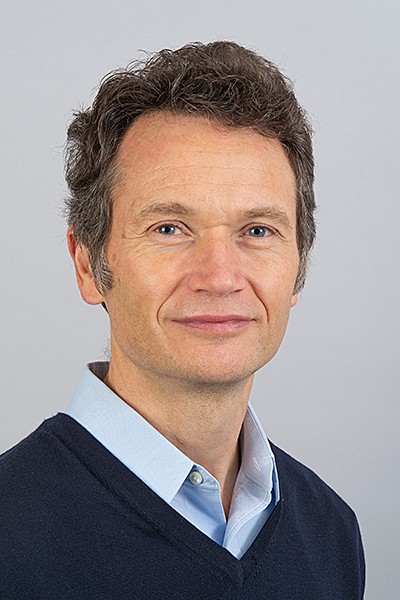
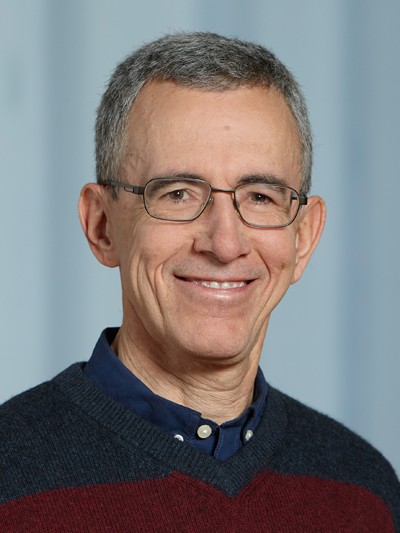
Thomas Michaels is an Assistant Professor at the Department of Biology, ETH Zürich, leading the Michaels Group . His research focuses on theoretical models of biomolecular condensates and protein aggregation in biological systems. Research Themes : Protein aggregation, liquid-liquid phase separation, membrane biophysics, and the role of condensates in neurodegenerative diseases like Alzheimer’s and Parkinson’s. Collaborative Approach : Integrates theoretical physics, control theory, and computational biology with experimental validation to design therapeutic strategies. Recent Publications highlight his work on amyloid formation mechanisms, lipid interactions, and phase-separated compartments as biochemical reactors. His group trains PhD students in systems biology and biocondensate physics.
Jörg F. Löffler is a Full Professor of Metal Physics and Technology at the Department of Materials, ETH Zürich , where he has been since 2003. He previously served as Chairman of the Department (2010–2013) and holds Adjunct Professor positions at Tohoku University (Japan) and a Visiting Faculty role at Caltech. His research focuses on bulk metallic glasses , metallic biomaterials , and magnetic materials , combining synthesis, characterization, and applications in biomedical and structural contexts. Educations : Studied Physics and Materials Science at Saarland University (Germany), earned his doctorate at ETH Zurich and Paul Scherrer Institute on magnetism and neutron scattering (1997). Research Trends : Recent work explores additive manufacturing (e.g., laser powder bed fusion), biodegradable magnesium alloys for implants, and magneto-structural coupling in metallic glasses. Collaborative efforts integrate in situ analysis with computational modeling. Scientific Awards : International Magnesium Science and Technology Award (2023) MRS Fellow (2021) DGM 'Breakthrough' Prize (2016) Masing Memorial Prize (2005) ETH Zurich Medal (1998) Alexander von Humboldt Fellowship (1998-2001) Löffler advises the Department of Materials Science and Engineering at UC Davis and serves on editorial boards. His group at ETH Zürich investigates advanced metallic materials using synchrotron radiation and neutron scattering facilities.
Swiss Federal Institute of Technology in LausanneSwitzerland
Jean-Philippe Brantut is an Associate Professor at École Polytechnique Fédérale de Lausanne (EPFL), affiliated with the School of Basic Sciences (SB), the Institute of Physics (IPHYS), and the School of Physics (SPH-ENS). He leads the Laboratory for Quantum Gases (LQG), a research group focused on quantum simulation with ultracold atomic systems. He also serves as a PhD program committee member for the Doctoral Program in Physics at EPFL. Research Interests: His work lies at the intersection of quantum optics, atomic physics, and condensed matter physics. He investigates strongly correlated fermionic systems, cavity quantum electrodynamics, mesoscopic physics, and quantum transport. His group pioneers the integration of Fermi gases with high-finesse optical cavities to simulate quantum devices and explore novel quantum matter. Recent Research Trends: His recent publications, appearing in Nature , Science , and Nature Physics , demonstrate a strong focus on engineering quantum many-body systems using photon-mediated interactions. Key themes include the realization of random spin models, observation of density-wave ordering, and the investigation of universal pair polaritons in strongly interacting Fermi gases. His earlier work laid foundations in quantum thermoelectricity and quantized transport in neutral matter. Scientific Awards: Latsis University Prize (2023) Physics Teaching Award at EPFL (2023) ERC Consolidator Grant (2022): Driven and Dissipative Quantum Simulators ERC Starting Grant (2016): Devices, engines and circuits: quantum engineering with cold atoms Fondation Sandoz Chair (2016) SNSF Ambizione Fellowship (2013) Advising and Grants: Brantut actively supervises multiple PhD students, including current students Gaia Bolognini, Tabea Bühler, Ekaterina Fedotova, Francesca Orsi, and Zeyang Xue, and has advised several successful graduates such as Victor Helson, Kevin Roux, Nick Sauerwein, and Timo Zwettler. His research is supported by major grants, most notably two European Research Council (ERC) grants, underscoring the significance and innovation of his work in quantum simulation and quantum engineering. Laboratories and Teams: He leads the Laboratory for Quantum Gases (LQG) at EPFL, which operates two main experimental setups: the Fermi gas experiment and the microscope experiment. The team includes post-doctoral researchers, PhD students, and visiting scientists, fostering a collaborative environment for advancing quantum science with ultracold atoms.
Prof. Raffaele Mezzenga is a Full Professor at ETH Zürich's Department of Health Sciences and Technology and Head of the Institute of Food, Nutrition, and Health. He earned his master's from Perugia University (Italy) and a PhD in Polymer Physics from EPFL, followed by postdoctoral work at UC Santa Barbara. His career includes roles at the Nestlé Research Center and the University of Fribourg before joining ETH in 2009. His research focuses on self-assembly processes in polymers, biopolymers, and colloidal systems, with applications in environmental remediation, bioplastics, and biomedical materials. Key contributions include pioneering protein-based materials and advancing understanding of amyloid fibrils. Education: Master's, Materials Science & Engineering, Perugia University PhD, Polymer Physics, EPFL Research Interests: Self-assembly, biopolymers, amyloid materials, sustainable technologies, food colloids, and soft condensed matter. Awards: 2011 AOCS Award, 2017 APS Fellowship, and 2013 Biomacromolecules Young Investigator Award. Visiting Roles: Held visiting professorships at Aalto University, RMIT, Monash University, Nanyang Technological University, and others. Labs/Teams: Leads the Institute of Food, Nutrition, and Health at ETH, focusing on interdisciplinary research in food science and biomaterials. His work bridges fundamental science and applied innovation, addressing global challenges in sustainability and health through materials science. Recent projects include creating bioplastics from food waste, developing amyloid-based water purification systems, and advancing targeted drug delivery via lipidic mesophases.
Swiss Federal Institute of Technology in LausanneSwitzerland
Andras Kis is a Full Professor at the École Polytechnique Fédérale de Lausanne (EPFL), affiliated with the School of Engineering (STI) across multiple institutes including the Institute of Electrical Engineering (IEL), Institute of Materials Science (IMX), and teaching programs in Electrical Engineering (SEL-ENS). He leads the Laboratory of Nanoscale Electronics and Structures (LANES) and serves on the PhD program committee for Microsystems and Microelectronics. PhD, EPFL (2003) MS, Physics, University of Zagreb (1999) Baccalaureate, MIOC High School Research Focus: Pioneering work on 2D materials for electronic and optoelectronic devices, particularly transition metal dichalcogenides like MoS2 and PtSe2. His research spans: Transistor design with atomically thin semiconductors Excitonic devices and valleytronics Nanofluidics and ionic logic Optical properties of 2D heterostructures Scalable fabrication of 2D materials Defect engineering and doping techniques Scientific Impact: Based on analysis of 15 most recent publications, his work focuses on advancing 2D materials for next-generation electronics through innovations in: Van der Waals heterostructures Thermoelectric and optoelectronic applications Nanofabrication techniques Spintronic and quantum transport phenomena Memristive and neuromorphic devices Characterization of electronic and optical properties Awards & Recognition: Fellow of the Institute of Electrical and Electronics Engineers (IEEE) Lotfi A. Zadeh Award for Emerging Technologies (2024) Highly Cited Researcher (Clarivate Analytics) Teaching & Academic Leadership: Currently teaching courses including Lab in Nanoelectronics , Physical Models for Micro and Nanosystems , and Semiconductor Devices II . He has supervised over 20 PhD students in his research group at EPFL. Laboratory & Collaborations: Directs the Laboratory of Nanoscale Electronics and Structures (LANES) which focuses on fundamental and applied research in 2D materials and nanoelectronic devices. His work bridges materials science, condensed matter physics, and microelectronics engineering.
Prof. Annalisa Manera is a Full Professor at ETH Zurich's Department of Mechanical and Process Engineering since July 2021, specializing in nuclear systems and multiphase flows. Previously, she held a professorship at the University of Michigan's Nuclear Engineering Department from 2011 to 2021. Her research focuses on advanced experimental techniques for single-phase and multiphase flows, high-resolution CFD validation, and computational tools for nuclear systems. She co-directs the Experimental and Computational Multiphase Flow (ECMF) Lab and the High Resolution Imaging Lab. Education: M.Sc. in Nuclear Engineering (University of Pisa, summa cum laude) and Ph.D. in Nuclear Engineering (Delft University of Technology). Awards include the ANS Bal-Raj Sehgal Memorial Award (2022) and the US DOE CASL Director’s Award (2016), alongside being an American Nuclear Society Fellow. Her work bridges nuclear safety, thermal-hydraulics, and computational modeling, with contributions to polaron physics, electron-phonon interactions, and material simulations. Courses taught include Nuclear Energy Conversion and Beyond-Design-Basis Safety.
Eugene Demler is a Full Professor at the Department of Physics, ETH Zurich. Previously, he held academic positions at Harvard University from 1998 to 2021, including Assistant Professor (2001-2004), Associate Professor (unspecified dates), and Full Professor (2005-2021). His work bridges theoretical condensed matter physics, atomic and molecular physics, quantum optics, and quantum simulations. Education: MSc in Physics, Moscow Institute of Physics and Technology (1993) Diploma work, Lebedev Physics Institute (1992-1993) PhD in Theoretical Physics, Stanford University (1998), supervised by S.C. Zhang Demler's research focuses on strongly correlated quantum systems, spintronics, quantum sensing, and photo-induced phase transitions. His recent publications explore topics such as quantum polarons, Josephson plasmons, magnon dynamics, and terahertz spectroscopy in superconductors. He has pioneered hybrid quantum-classical methods for electron-phonon systems and cavity-mediated quantum materials. His Google Scholar articles (2023-2025) span theoretical and experimental domains, with keywords including Quantum Physics , Condensed Matter Physics , and Quantum Optics . Subfields include Quantum Control , Superconductivity , Spin Waves , Quantum Sensing , Non-Equilibrium Dynamics , and Quantum Simulation . Scientific Awards: Hamburg Prize for Theoretical Physics (2021) Simons Investigator (2021) Moore Distinguished Scholar (2020) Hanna Visiting Scholar (2019) Highly Cited Researcher (2017-2020) Senior Fellow at ETH Zurich's Institute for Theoretical Studies (2015) Simons Fellowship (2015) Distinguished Scholar at Max Planck Institute of Quantum Optics (2015) Thomson Reuters Highly Cited Researcher (2014) Siemens Research Award (2006) Johannes Gutenberg Lecture Award (2006) NSF Career Award (2002) Sloan Fellowship (2002) Demler teaches courses such as Statistical Physics and Strongly Correlated Systems in Atomic and Condensed Matter Physics . His work integrates theoretical modeling with experimental collaborations, particularly in quantum optics and condensed matter systems.
Swiss Federal Institute of Technology in LausanneSwitzerland
Romain Fleury is an Associate Professor at the Laboratory of Wave Engineering (LWE) , part of the École Polytechnique Fédérale de Lausanne (EPFL) School of Engineering and Institute of Electrical and Micro Engineering (IEL) . He earned a Ph.D. in Electrical and Computer Engineering from the University of Texas at Austin in 2015 under Andrea Alù, followed by a Marie-Curie Postdoctoral Fellowship at ESPCI Paris-Tech and CNRS Langevin Institute (2016). His research explores wave physics and engineering , focusing on topological insulators , nonreciprocal wave propagation , and time-modulated metamaterials . He has co-authored over 70 peer-reviewed articles in journals like Science , Nature , and Physical Review series, with recent work on topological acoustics , active metamaterials , and wave-based analog computing . Dr. Fleury received the Eccellenza Grant (2021) from the Swiss National Science Foundation and an ERC Starting Grant (2022) . He co-founded Minwave , a startup selling miniaturized microwave devices patented by his lab, which has garnered awards such as ESA-BIC CH , FIT , and Venture Kick . He has served as Technical Program Committee Chair for Eucap 2019 and on the Editorial Board of the New Journal of Physics . Recognized for teaching excellence with the STI Polysphere Award (2019) and IEL Best Teacher Award , he teaches courses including Electromagnetics , Antennas , and Advanced Photonics . His work bridges fundamental wave physics with applied technologies , emphasizing topological effects , nonlinear systems , and metamaterials . Collaborations span institutions such as ESPCI Paris , University of Texas at Austin , and University of Vienna , with applications in acoustic imaging , 5G antennas , and optical signal processing . His recent publications highlight ultrafast anti-lasing , reconfigurable metasurfaces , and disorder-assisted photonic crystals , reflecting a career dedicated to advancing wave engineering through topological and nonreciprocal designs .
Professor Stefan Goedecker is a distinguished faculty member in the Department of Physics at the University of Basel, Faculty of Science. He holds the position of Professor of Computational Physics and leads an active research group focused on developing advanced computational methods for materials science and quantum physics. Dr. Goedecker received his physics education at the Technical University Munich and the College of William and Mary, followed by a Ph.D. from EPFL Lausanne. His postdoctoral training included positions at Cornell University and the Max-Planck Institute in Stuttgart. In 2003, he was appointed Professor of Computational Physics at the University of Basel, where he has established himself as a leading researcher in computational methods development. His research interests center on computational physics with emphasis on electronic structure calculations, atomistic simulations, and the development of novel algorithms for materials science applications. His work has strong interdisciplinary connections spanning physics, mathematics, material sciences, chemistry, and computer science. Current research directions include machine learning applications in catalysis, fourth-generation neural network potentials for molecular chemistry, and methods for quantifying material synthesizability. Analysis of his recent publications reveals a strong focus on advancing computational methods for electronic structure calculations, with particular emphasis on machine learning potentials, molecular dynamics optimization, and accurate modeling of material properties. His work bridges theoretical physics with practical applications in materials science and nanotechnology, with increasing integration of artificial intelligence techniques into traditional computational physics frameworks. Machine learning for Catalysis (Ongoing) Fourth-Generation Neural Network Potentials for Molecular Chemistry (Completed) Towards Quantifying the Synthesizability of Materials (Completed) Professor Goedecker's research group operates within the Department of Physics at the University of Basel, which is part of the NCCR SPIN initiative focused on silicon-based quantum computing development. The department hosts over 20 research groups with more than 180 teaching staff members, creating a vibrant research environment for computational physics and quantum technologies.
Swiss Federal Institute of Technology in LausanneSwitzerland
Alfredo Pasquarello is a Full Professor at the Chair of Atomic Scale Simulation within the Condensed Matter Theory Laboratory (CSEA) at the Ecole Polytechnique Fédérale de Lausanne (EPFL) . He teaches courses such as Computer Simulation of Physical Systems I and General Physics: Quanta . Education: Physics at Scuola Normale Superiore of Pisa (1986), University of Pisa (1986), PhD at EPFL (1991). Research: Focuses on atomic-scale simulations using density functional theory (DFT) and many-body perturbation to study defects in oxides , oxide-semiconductor interfaces , and energy materials like perovskites and photocatalysts. Recent Publications: 15 most recent articles (2022–2024) address band gaps, polarons, water splitting, and defect engineering in materials for photovoltaics and electrochemistry. Awards: Recipient of the EPFL Latsis Prize (1998) . Students: Supervised PhD/Master's students including Stefano Falletta, Thomas Bischoff, Patrick Gono, and Zhendong Guo. Labs: Leads the Chair of Atomic Scale Simulation at EPFL SB IPHYS CSEA.
Prof. Atac Imamoglu is a Full Professor at the Department of Physics and Deputy Head of the Institute for Quantum Electronics at ETH Zurich since 2002. His research focuses on quantum optics, condensed matter physics, and semiconductor systems, with notable contributions to exciton-polaritons, quantum Hall effects, and cavity quantum electrodynamics. He holds a Ph.D. from Stanford University (1991) and has been recognized with prestigious awards including Fellowships from the American Physical Society and Optical Society of America. Education: 1991 Ph.D., Stanford University 1987 M.S., Stanford University 1985 B.S., Middle East Technical University Research interests span quantum electronic systems, with emphasis on moiré heterostructures, excitonic interactions, and topological phenomena. Recent work explores Wigner crystals, Feshbach resonances in semiconductor bilayers, and optically tunable quantum confinement. Over 2300 citations highlight his impact in Physical Review Letters , Nature series journals, and specialized optics/physics journals. Awards: Member of Turkish National Academy of Sciences (2002) Wolfgang Paul Award (Alexander von Humboldt Foundation) TÜBİTAK Science Award (2001) Leadership roles include organizing workshops on quantum information and nonlinear optics, and editorial roles at Journal of Quantum Information and Optical Physics B . Active in theoretical/experimental collaborations, his lab develops novel quantum sensing techniques and explores cavity-enhanced phase transitions in 2D materials.
Swiss Federal Institute of Technology in LausanneSwitzerland
Arslan Mazitov is a Researcher and Doctoral Assistant at the École Polytechnique Fédérale de Lausanne (EPFL) , affiliated with the School of Engineering (STI) and the Institute of Materials (IMX) . He is part of the Computational Science and Modelling Laboratory (COSMO) , focusing on computational materials science with an emphasis on van der Waals materials, optical properties, and machine learning applications. His research explores novel materials for photonics, energy storage, and nanotechnology. Mazitov's work bridges theory and experiment, employing advanced modeling techniques to predict material behavior and design innovative solutions. Key research areas include van der Waals heterostructures , optical anisotropy engineering , and AI-driven materials discovery . He has contributed to studies on semiconductors, 2D materials, and interfacial phenomena. His computational methods address challenges in predicting material stability, optical properties, and surface behavior under various conditions. Active in collaborative projects, Mazitov's work has practical implications for photonic devices, energy storage systems, and nanoscale engineering. His research emphasizes interdisciplinary approaches, combining computational modeling with experimental validation to advance material innovation.
Dr. Fabian Schmid is a Researcher affiliated with the Institute for Quantum Electronics at ETH Zürich, working within the Professorship for Experimental Quantum Information . His research focuses on quantum control, precision spectroscopy, and optical frequency comb technologies. Key applications include molecular ion manipulation, laser cooling techniques, and advanced spectroscopic methods for atomic and molecular systems. His work bridges quantum physics and optics, with contributions to ultra-stable laser systems, low-repetition-rate frequency combs, and high-resolution spectroscopic measurements. Recent efforts target applications in trapped ion systems and new boson constraints via calcium isotope studies. Schmid's experimental setups often involve precision engineering of optical components and cavity-stabilized laser systems. Notable experimental achievements include demonstrating quantum control over single molecular ions (H₂⁺) and developing number-resolved detection methods for Coulomb crystals. His research also explores synergies between dual-species laser cooling and cavity-based technologies. While currently holding no listed academic awards, Schmid's contributions are evident through his prolific publishing record in top-tier physics journals. His lab work integrates cutting-edge quantum optics with atomic physics to advance fundamental understanding and precision measurement capabilities.
Konrad Viebahn is a Researcher at ETH Zurich's Department of Physics, working within the Professorship for Quantum Optics. Based at HPF D 23, Otto-Stern-Weg 1, Zurich, he contributes to experimental quantum simulation research with contact via viebahnk@ethz.ch and +41 44 633 23 45. His research centers on quantum many-body systems in optical lattices, specializing in topological phenomena and Floquet engineering. Key interests include Thouless pumping in driven systems, quantum control of ultracold atoms, and mitigating heating in Floquet-Hubbard lattices. His work bridges theoretical concepts like topological phase transitions with experimental implementations using laser-cooled atomic gases. Analysis of his 2021-2025 publications reveals a consistent focus on engineering topological quantum behavior through periodic driving techniques. His group pioneers two-tone driving methods to manipulate band structures, enabling protected quantum gates and precise charge pumping. This research directly addresses challenges in quantum simulation scalability and error mitigation for future quantum technologies. As part of ETH Zurich's Quantum Optics group, Dr. Viebahn utilizes advanced optical lattice platforms to study strongly correlated quantum matter. The team's experimental setup involves precision laser systems for creating dynamical potentials, with recent work emphasizing the interplay between interactions and topology in non-equilibrium systems.
Swiss Federal Institute of Technology in LausanneSwitzerland
Nicola Marzari is a Professor of Theory and Simulation of Materials at EPFL, where he also serves as Director of the National Centre for Computational Design and Discovery of Novel Materials (NCCD). He is Chairman of Psi-k, an international network for advanced materials' computational design. Previously, he held the Toyota Chair of Materials Engineering at MIT and leadership roles at the University of Oxford, including Director of the Materials Modeling Laboratory and a Statutory Chair in Materials Modeling. His education includes a Laurea in Physics (summa cum laude) from the University of Trieste, a PhD in Physics from the University of Cambridge under Prof. Michael C. Payne, and postdoctoral work at Rutgers University with Prof. David Vanderbilt. Marzari's research focuses on computational materials science, electronic structure theory, and high-throughput simulations. He develops methods for predicting material properties using first-principles approaches, machine learning, and quantum espresso software. Key areas include energy materials (batteries, thermoelectrics), magnetic materials, and optoelectronic systems. His work bridges fundamental physics and practical material design, emphasizing reproducible workflows and open-source tools like koopmans and AiiDA . His recent articles highlight advancements in machine learning for materials interfaces, dynamical Hubbard functionals, and thermal conductivity modeling. He actively contributes to EuroHPC initiatives for exascale materials design and OPTIMADE standards for materials data exchange. Marzari leads interdisciplinary teams at EPFL and collaborates globally on projects ranging from defect engineering in semiconductors to AI-driven materials discovery. His research aims to accelerate the development of sustainable energy and electronic technologies through computational innovation.