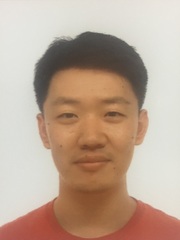
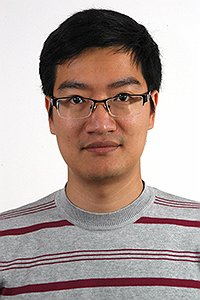
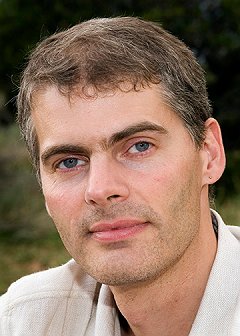
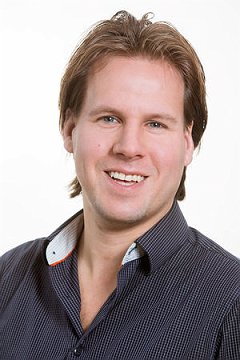
Fuyuan Zhang is a Postdoctoral Researcher at the Max Planck Institute for Software Systems, specializing in advanced software testing methodologies and formal verification techniques. His research focuses on improving the reliability and security of AI systems, quantum computing frameworks, and concurrent systems through innovative testing criteria, adversarial attacks, and compositional reasoning. Key areas of expertise include: Large Language Model (LLM) testing and validation Quantum program analysis and security Adversarial machine learning and neural network robustness Formal verification of concurrent and cyber-physical systems Automated bug detection in complex software systems His work bridges theoretical foundations with practical applications, addressing critical challenges in AI safety, quantum software reliability, and system-wide security certification.
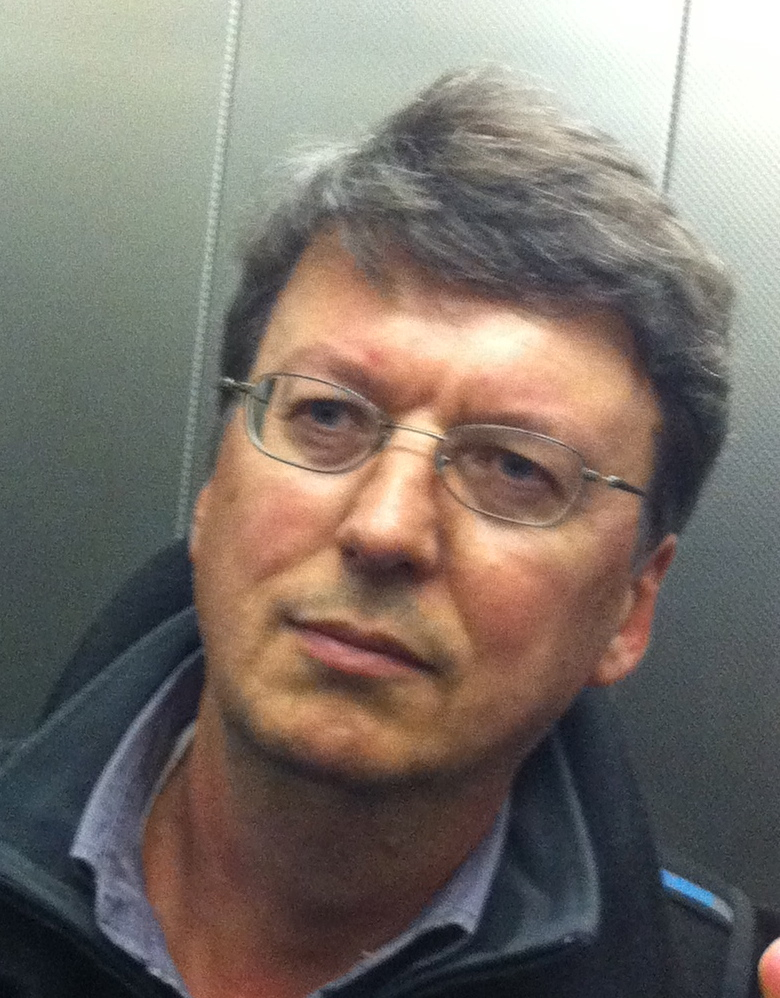
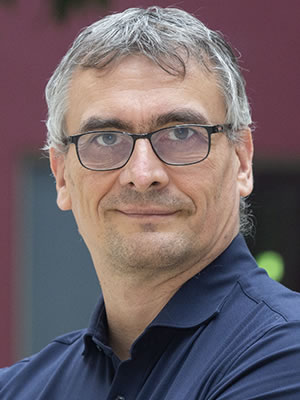
Jan Peleska is a Professor at the Department of Computer Science, Faculty of Mathematics and Computer Science, University of Bremen. He is a member of the Bremen Institute of Safe Systems (BISS) and co-editor of the BISS Monographs series. His research focuses on the application of formal methods and model-based testing to safety-critical embedded systems in domains such as avionics, railways, and automotive engineering. Affiliation: University of Bremen, TZI (Center for Computing Technology), BISS (Bremen Institute of Safe Systems) Academic Role: Professor of Computer Science Research Interests Peleska’s work emphasizes formal methods for dependable systems, particularly distributed and reactive real-time systems. Key areas include: Formal methods (safety, reliability, availability, security) Development of fault-tolerant systems Test automation for reactive systems Tools development for formal methods Integration with software development standards His research is applied to industrial projects involving safety-critical embedded systems, such as avionic systems and railway control systems. A comprehensive overview is provided in his Habilitation Thesis: Formal Methods and the Development of Dependable Systems . Publication Trends Peleska’s recent publications (2012–2022) focus on model-based testing (e.g., symbolic finite state machines, CSP refinement), standardisation of autonomous train control, and tools for automated testing. His work addresses challenges in railway interlocking systems, avionic software verification, and hybrid system validation, often combining formal methods with practical industrial applications. Scientific Awards Best Paper Award at FORMS/FORMAT 2014 Best Paper Award at QA+Test 2007 Other Responsibilities Peleska co-manages the Post Graduate Programme Embedded Systems GESy and serves as a shareholder/consultant for Verified Systems International GmbH. He has delivered invited lectures on industrial verification, model-based testing, and formal methods at institutions like the University of Tunghai (2016) and workshops including CyPhyAssure Spring School (2019).
Nathanaël Fijalkow is a Researcher at CNRS in LaBRI (Bordeaux) and a Research Fellow at The Alan Turing Institute in London. His primary research fields include games , machine learning , automata theory , and dynamical systems , with a focus on synthesizing programs from logical specifications and probabilistic models. Research Interests span program synthesis (programming by example), controller synthesis (temporal logic specifications), games on graphs (parity/mean payoff games), probabilistic automata (bounded ambiguity), and invariants for linear dynamical systems. He bridges formal methods with machine learning through projects like DeepSynth . Scientific Contributions include: Undecidability results for probabilistic automata Advances in parity game algorithms (quasi-polynomial lower bounds) Foundations of probabilistic modal logics Efficient synthesis techniques using SMT solvers and distributional learning Supervision involves guiding postdocs and PhD students such as Guillaume Lagarde, Antonio Casares, and Pierre Ohlmann. He has secured grants like the Momentum DeepSynth project (2019-2021) , aiming to merge formal methods with ML for program synthesis.
Christof Löding , currently an Adjunct Professor at the Lehrstuhl für Logik und Theorie diskreter Systeme (Informatik 7) department of RWTH Aachen University , is a leading researcher in Automata Theory , Formal Verification , and Logic in Computer Science . His work bridges theoretical foundations with practical applications in software verification, automata minimization, and game theory. Research Interests include automata theory, formal verification, logic, tree automata, game theory, and computational models. Publications span topics like Finite-valued Streaming String Transducers , Deterministic Parity Automata , and Stochastic Game Strategies . Collaborations with researchers like Emmanuel Filiot , Sarah Winter , and León Bohn highlight his contributions to automata and verification. Email : loeding@informatik.rwth-aachen.de He has actively published in venues such as ICALP , LICS , and STACS , focusing on deterministic automata, transducers, and logic-based computational systems. His work on Hyperlogic for Strategies in Stochastic Games (2025) and Minimal History-Deterministic Automata (2025) showcases his ongoing influence in formal methods and automata theory.
Andreea Costea is an Assistant Professor in the Programming Languages Group within the Faculty of Electrical Engineering, Mathematics & Computer Science (EEMCS) at Delft University of Technology. She joined TU Delft in October 2024 after completing her PhD at the School of Computing, National University of Singapore (NUS), where she worked in the Programming Languages and Software Engineering lab collaborating with the Automated Program Repair team, Trustworthy and Secure Software group, and VERSE lab. Her primary research focuses on programming languages design and implementation, with particular emphasis on software verification for critical code, program synthesis, and automated program repair. She maintains strong connections with industry while pursuing formal methods research, especially in the context of Rust programming language safety and interoperability. Dr. Costea's publication record demonstrates consistent contributions to software engineering and programming languages research, with recent work focusing on automated program repair techniques, Rust language safety mechanisms, and communication protocol verification. Her research shows a clear trajectory from theoretical foundations in session types and separation logic toward practical applications in memory safety and program repair. She actively serves the research community as Program Committee member for major conferences including ASE, ICSE, ICFP, and APLAS. Her service includes chairing publicity committees for SPLASH and artifact evaluation for ESOP. Regular Journal Reviewer: CACM, TOSEM, TSE Panel discussions: PLMW @ POPL'22, PLDI'21, PLMW @ PLDI'21, POPL'21 Extensive reviewing for top-tier conferences including POPL, OOPSLA, CAV, VMCAI Dr. Costea supervises multiple Master's students working on Rust-related safety projects and is actively recruiting PhD students to work on software interoperability, particularly focusing on how to restore Rust's safety guarantees when integrating with legacy C code and ensuring correct interaction between components written in different languages.
Gregor Snelting is a Professor and head of the Chair of Programming Paradigms at the Karlsruhe Institute of Technology (KIT), Faculty of Computer Science, Institute for Programming Languages and Compiler Construction. His research focuses on compiler construction, program analysis, software security, and verification. His primary research interests include programming languages, compiler design, program analysis, software security, information flow control, formal verification, object-oriented and concurrent programming, and software reengineering using concept analysis. His work aims to provide solid theoretical foundations and empirical validation. The research output, particularly the 15 most recent articles, shows a strong emphasis on software security and program analysis, with a focus on information flow control in Java using the JOANA tool. There is also a significant thread on invasive computing and resource-aware parallel programming. The work combines deep theoretical contributions, such as formal semantics and correctness proofs, with practical tool development and empirical validation. Faculty Teaching Award for the course 'Practice in Software Development' Snelting leads a research group that has developed several significant tools, including JOANA for security analysis, the Praktomat system for automated grading of programming assignments, and contributions to the libFirm compiler framework. His group is a key participant in major research initiatives like the DFG Collaborative Research Center InvasIC and the DFG Priority Program RS3. He advises students and supervises theses, fostering research in programming paradigms and software security. The group is involved in several key research projects: JOANA for information flow control in Java, InvasIC for invasive computing and dynamic parallelism, Quis-Custodiet for machine-checked correctness proofs of security analyses, and the development of the libFirm compiler framework.
Roopsha Samanta is an Assistant Professor in the Department of Computer Science at Purdue University, where she leads the Purdue Formal Methods (PurForM) research group and is a core member of the Purdue Programming Languages (PurPL) group. She completed her PhD at the University of Texas at Austin in 2013 under the supervision of E. Allen Emerson and Vijay K. Garg, followed by postdoctoral research at IST Austria (2014-2016) with Thomas A. Henzinger. Her research focuses on developing foundational techniques at the intersection of formal methods and programming languages, with primary interests in: Program synthesis and repair using semantic guidance Modular verification of distributed systems Concurrency and synchronization synthesis Robustness analysis of I/O systems Her publication record shows consistent contributions across programming languages and formal methods venues, with recent emphasis on explainable program synthesis, bounded verification of distributed systems, and semantics-guided approaches to enhance synthesis robustness. Her work frequently appears in premier conferences including PLDI, POPL, OOPSLA, and CAV. Notable scientific recognitions include: NSF CAREER Award (2019) Amazon Research Award (2021) She actively advises graduate and undergraduate researchers in the PurForM group, with current students including Nouraldin Jaber, Christopher Wagner, and Yongwei Yuan. Her research is supported by grants from NSF and Amazon. Beyond research, she teaches courses on program reasoning (CS560) and neurosymbolic program synthesis (CS592), and serves on steering committees for VMW@CAV and DARS. She also co-edits the ACM SIGPLAN Blog on PL Perspectives.
Manuel V. Hermenegildo is a Professor at the Universidad Politécnica de Madrid, Spain. He is a prominent researcher in the field of programming languages and static analysis, with significant contributions to logic programming, program verification, and formal methods. His work focuses on advancing static analysis techniques, compiler optimization, and energy-efficient computing. He has co-authored numerous papers and organized international conferences such as LOPSTR and SAS, demonstrating his leadership in academic and research communities. His research explores topics including abstract interpretation, runtime checking, and parallel logic programming systems. He is a key contributor to the Ciao Prolog system, emphasizing comprehensive tool integration and formal methods. His research interests span static analysis frameworks, program verification, resource usage analysis, and energy efficiency in computing. He has developed methodologies for optimizing program performance while ensuring correctness, with applications in both theoretical and applied domains. His work often bridges the gap between high-level program analysis and low-level hardware constraints, particularly in embedded systems. Recent trends in his publications include advancements in static cost analysis, dynamic inference of invariants, and tools for incremental assertion checking. His collaborations with institutions like the University of Copenhagen and the University of Kent reflect a global network in advancing computational logic and software engineering. He has been actively involved in academic service, including editorial roles for conference proceedings and journals. His contributions highlight a commitment to both foundational research and practical tools for the programming language community.
Tuan Phong Ngo is a Researcher in Computer Science at Uppsala University , Sweden, affiliated with the Department of Information Technology under the Disciplinary Domain of Science and Technology . He specializes in formal methods and software verification.
Jeff Huang is an Associate Professor in the Department of Computer Science and Engineering at Texas A&M University, specializing in programming languages and software engineering with a focus on concurrency and runtime verification. His research develops advanced program analysis techniques and tools to enhance software performance and reliability. Programming Languages Software Engineering Concurrency Runtime Verification His work has been recognized with prestigious awards including the ACM SIGSOFT Early Career Researcher Award, NSF CAREER Award, Google Faculty Research Award, and DARPA Young Faculty Award. Notably, his research has earned multiple SIGPLAN Research Highlights and PLDI Distinguished Paper Awards. ACM SIGSOFT Early Career Researcher Award NSF CAREER Award Google Faculty Research Award Mozilla Research Award Facebook Research Award DARPA Young Faculty Award ACM SIGSOFT Outstanding Dissertation Award ACM SIGPLAN PLDI Distinguished Paper Award SIGPLAN Research Highlights Jeff Huang actively contributes to academic communities as a committee member in venues like SPLASH, ICSE, ISSTA, and PLDI. He has authored influential papers on concurrency bug detection, pointer analysis, and language translation tools, spanning both theoretical foundations and practical implementations.
Professor Karsten Wolf holds the Chair of Theoretical Computer Science at the Institute of Computer Science, University of Rostock. He serves as Vice-Rector for Studies and Teaching and holds several key positions including Member of the Senate Commission for Studies, Teaching and Evaluation, and Spokesperson of the specialist group "Petri Nets and Related System Models" of the German Informatics Society. His research focuses on theoretical computer science, particularly in the areas of: Development of correct systems Computer-aided verification Algorithms for Web Services Petri Nets and related system models Professor Wolf's publication record demonstrates consistent expertise in formal verification methods, with recent work emphasizing modular state spaces, temporal logic verification, and approximation techniques. His involvement in the Model Checking Contest (2018-2024) shows his commitment to advancing verification methodologies through empirical evaluation and benchmarking. His professional service includes: Editorial board member of LNCS subseries ToPNOC (Theory of Petri nets and other models of concurrency) Editorial board member of Petri Net Newsletter Member of the German Computer Science Society (GI) Head of the Study Commission of the Faculty Day of Computer Science As Vice-Rector for Studies and Teaching, Professor Wolf plays a critical role in shaping educational policies and academic programs at the University of Rostock, bridging his theoretical expertise with practical educational leadership.
Hongjin Liang is an Associate Professor at the School of Computer Science , Nanjing University , China. He is an active researcher and educator in the fields of programming languages and formal verification, with a strong focus on concurrency theory, mechanized proofs, and memory models. Education: PhD in Computer Science (May 2014), dissertation titled Refinement Verification of Concurrent Programs and Its Applications . Research Interests: His research spans formal verification , concurrent programming , memory models , and mechanized reasoning . He is particularly known for his work on verifying concurrent data structures, program logics for concurrency, and certified compilation. He is a member of the PLaX research group . Publications and Impact: Liang has published extensively in top-tier venues such as POPL, PLDI, ESOP, TOPLAS, and CSL-LICS. His work often involves formalizing and verifying complex concurrent systems using interactive theorem provers like Rocq/Coq. Notable contributions include verifying compiler optimizations under weak memory models and developing program logics for randomized concurrent programs. Scientific Awards: Distinguished Paper Award , PLDI 2019 for "Towards Certified Separate Compilation for Concurrent Programs" Teaching and Advising: He teaches undergraduate and graduate courses including Formal Semantics of Programming Languages , Concurrency: Algorithms and Theories , and Compiler Design . He has supervised graduate students and served on numerous program committees for international conferences. Affiliations: He is affiliated with the PLaX research group at Nanjing University and has collaborated with researchers such as Xinyu Feng, Zhong Shao, and Jan Hoffmann.
Benjamin C. Pierce is the Henry Salvatori Professor of Computer and Information Science in the School of Engineering and Applied Science at the University of Pennsylvania. As a Fellow of the ACM, he has made significant contributions to programming language theory and formal methods. His academic leadership includes previous editorial roles as co-Editor in Chief of the Journal of Functional Programming and Managing Editor for Logical Methods in Computer Science. His research spans multiple interconnected domains in programming language theory, with particular emphasis on type systems and their applications to security and verification. Pierce's work bridges theoretical foundations with practical implementations, most notably through his development of the Unison file synchronization tool and contributions to the Clowdr virtual conference platform. His research interests form a cohesive trajectory from foundational type theory to applied security and verification techniques. Pierce's scholarly output shows consistent focus on property-based testing, type systems, and formal verification methods. His recent publications demonstrate evolving interests in differential privacy verification, synchronization technologies, and the practical challenges of implementing formal methods in real-world systems. The progression of his work reflects both theoretical depth and practical relevance to software development challenges. Fellow of the ACM Author of influential textbooks Types and Programming Languages and Software Foundations Lead designer of the Unison file synchronizer Co-developer of the Clowdr virtual conference platform Former editorial leadership for multiple prominent programming languages journals As an educator and mentor, Pierce has contributed to the Programming Languages Mentoring Workshop (PLMW) and has served on numerous conference program committees. His academic service extends to SIGPLAN leadership roles including SIGPLAN Vice Chair and Steering Committee membership. His textbook Software Foundations has become a standard resource for teaching formal methods and proof assistants.
Stephanie Balzer is an Assistant Professor in the Principles of Programming Group at Carnegie Mellon University's School of Computer Science. She received her PhD from ETH Zurich under Thomas R. Gross and focuses on developing rigorous type systems and verification logics to build failure-free, secure software through compositional and practical methods. Education: PhD (ETH Zurich), Master's (University of Zurich), Semester Thesis (University of Zurich) Her research spans session types , logical relations , and separation logic to ensure correctness and security in concurrent systems. Recent work includes verifying timed message-passing protocols and disentanglement in type systems. Key publication trends include session-typed concurrency , noninterference , and deadlock freedom across programming languages, formal methods, and security domains. She has authored multiple distinguished papers at ECOOP and POPL. Scientific Awards: NSF CAREER Award, ACM SIGPLAN Distinguished Paper, ECOOP Distinguished Paper She advises PhD students including Yue Yao, Yinsen Zhang, and Zak Kent, and has supervised former PhD students like Jules Jacobs (now at Cornell). Her grants include NSF funding for IoT verification , heterogeneous applications , and real-time protocols .
Robbert Krebbers is an associate professor at the Department of Software Science at Radboud University Nijmegen, Netherlands. He is a leading researcher in program verification, specializing in separation logic and the Coq proof assistant. Krebbers is a core contributor to the Iris framework, a higher-order concurrent separation logic framework implemented in Coq. His research spans theoretical foundations of programming languages and practical applications to real-world languages including C, Rust, and Scala. His research interests focus on scaling program verification techniques to challenging programming paradigms like concurrency, higher-order functions, and modules. Krebbers' work bridges formal methods with practical language implementation, particularly in verifying memory safety and concurrency properties. He has made significant contributions to Rust verification through the RustBelt project and has pioneered techniques for verifying concurrent data structures and message-passing systems. Krebbers' recent publications demonstrate a strong trend toward verifying complex concurrency patterns, developing automated proof techniques, and applying separation logic to practical programming language features. His work frequently appears in top-tier programming languages conferences including POPL, PLDI, and ICFP, with several papers receiving distinguished paper awards. The research spans from foundational logic development to practical verification tools for real-world programming languages. As a principal investigator in the Iris project, Krebbers has secured significant research funding including the ERC Consolidator Grant for the RustBelt project. His work has influenced both academic research and industrial practice, particularly in the Rust programming language ecosystem. The Iris framework he helped develop has been adopted by numerous verification projects worldwide. Krebbers has advised PhD students including Ike Mulder (focusing on proof automation for concurrent separation logic) and Jules Jacobs (working on guarantees by construction). He has been actively involved in the programming languages research community, serving on program committees for major conferences and organizing workshops on formal methods and verification. He leads research in the Department of Software Science at Radboud University, where his group focuses on developing foundational techniques for program verification. The group collaborates closely with the Logic and Semantics Group and Foundations of Programming Group across institutions, contributing to a vibrant research ecosystem around formal methods and programming languages.