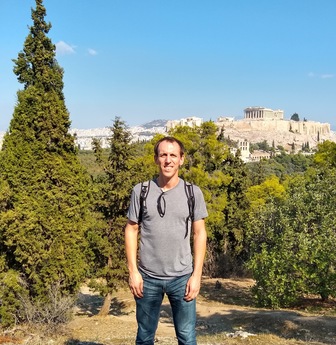
Loris D'Antoni is an Associate Professor at the University of California San Diego, affiliated with the Programming Systems Group and serving as a visiting academic at AWS . Previously, he co-founded a research group at UW-Madison. His research focuses on trustworthy software through Program synthesis (e.g., SemGuS toolkit) Formal verification of machine learning and network protocols Automata theory and symbolic constraints Trustworthy LLMs with grammar alignment Recent work explores semantics-guided synthesis and unrealizability logic , with applications to decision trees, LSTMs, and network routing. Publications span top venues like PLDI , OOPSLA , NeurIPS , and CAV . Notable scientific awards include Best Paper Award at ICDCN 23 Distinguished Paper Award at SBES 21 Oral Presentation at EMNLP 21 Nomination for EAPLS Award (part of ESOP 20 ) He teaches courses in programming languages ( CS-536 ) and synthesis/verification ( CS-703 ), and actively contributes to program committees at conferences like PLDI , CAV , and POPL .
Simon Oddershede Gregersen is a postdoctoral researcher at the Courant Institute of New York University, working with Joseph Tassarotti. He earned his PhD from Aarhus University in 2023 under Amin Timany and Lars Birkedal. His research focuses on programming languages and program verification, particularly for security properties, distributed systems, and randomized programs. Current Position: Postdoctoral Researcher, Courant Institute, New York University PhD: Aarhus University (2023) Future Role: Tenure-Track Faculty, CISPA (starting January 2026) Simon devises techniques like program logics and logical relations to enable formally verified software systems with machine-checked proofs. His work is supported by an Internationalization Fellowship from the Carlsberg Foundation (CF23-0791). He has presented his research at international conferences and workshops, including ICFP, POPL, and POST. Recent publications highlight his contributions to probabilistic programming verification, error bound reasoning, and logical relations for security. He received the ICFP 2024 Distinguished Paper Award for his work on error bound analysis. Simon invites collaboration with prospective interns and PhD students at CISPA starting 2026. Email: s.gregersen@nyu.edu
Patrice Reis serves as University Professor of Private Law at the Faculty of Law and Political Science, University of Côte d'Azur, where he leads research at GREDEG laboratory (UMR 7321 CNRS/UniCA). His academic trajectory spans over two decades at the institution, progressing from teaching assistant (1995) to Maître de Conférences (2001), and ultimately to full Professor (2021). He co-directs the Master 1 in Economic and Business Law and Master 1 in Economics and Management of Commerce and Distribution Industries, while co-heading the Nice School of Economic Law (EDEN). Reis holds a PhD in Private Law and Criminal Sciences from the Faculty of Law of Nice (1999), with doctoral research focused on La concurrence et les marchés publics (Competition and Public Markets). His scholarly development includes CNRS researcher qualification (2001) and progression to Hors Classe Maître de Conférences (2017). Specializing in Competition Law, Economic Law, and Sustainable Development, Reis examines regulatory challenges at the intersection of digital transformation, environmental governance, and labor rights. His work critically analyzes EU directives through comparative frameworks, particularly French-Portuguese-Brazilian contexts. Current research investigates corporate due diligence obligations, environmental whistleblower protections, and digital ecosystem legitimacy in urban governance. Recent publications reveal thematic concentration on sustainability compliance mechanisms and digital market regulation. His scholarship consistently bridges theoretical legal frameworks with practical regulatory implementation, emphasizing transnational enforcement challenges in environmental and competition law domains. As pedagogical director for Université Mundiapolis in Casablanca (since 2015), Reis oversees decentralized private law programs while maintaining active international engagement, including visiting professorships at Coimbra Law Faculty (2023) and prior appointments at Genoa University (2002-2005). He contributes to the Pole Norms, Competition and Regulation (PNCR) and EDEN research teams, focusing on competition law in digital markets and sustainable economic governance. His laboratory work at GREDEG integrates law, economics, and management perspectives to address contemporary regulatory dilemmas.
Dr. Rumyana Neykova is a Senior Lecturer in Computer Science at Brunel University London's College of Engineering, Design and Physical Sciences. She holds a PhD from Imperial College London and specializes in concurrency theory, distributed systems verification, and blockchain technologies. Her research employs formal methods, type systems, and model checking to enhance software reliability and prevent communication faults in distributed architectures. Research Focus: Her work spans distributed protocol verification, blockchain ecosystems (Ethereum, smart contracts), simulation validation, and software engineering education. Recent projects include developing fluid session types for end-to-end protocol verification and analyzing developer dynamics in blockchain communities. Teaching & Supervision: Dr. Neykova teaches undergraduate modules in Logic/Computation and Software Development, supervises final-year/MSc projects, and advises industry collaborations through Brunel Talent Marketplace. Grants: SEAVEA (EPSRC, 2021-2024): Software Environment for Actionable & VVUQ-evaluated Exascale Applications Fluid Session Types (UK Research Institute, 2019-2023): End-to-end verification of communication protocols Professional Activities: Regular peer reviewer for journals (e.g., Information and Software Technology ) and conferences (e.g., ACM SIGPLAN). Co-chaired workshops including PLACES and BlochArch.
Luca Spalazzi is an Associate Professor at the Department of Information Engineering , Università Politecnica delle Marche , Italy. His research spans multiple domains including cybersecurity , blockchain technology , machine learning , and telerehabilitation systems for Parkinson's disease. He applies formal methods to software verification and security analysis, with a focus on real-time systems and distributed architectures . Key research areas: Cybersecurity, Blockchain, Machine Learning, IoT, Formal Verification Recent work: Blockchain-based sustainable supply chains, Zero-Knowledge Proofs, Smartphone health monitoring His publications (2013-2025) demonstrate expertise in malware detection , smart contract verification , and AI-driven health solutions . Articles include BRAIN 2024 workshop organization and RAPIDO system for Parkinson's telerehabilitation.
Márk Asztalos is an Associate Professor at the Budapest University of Technology and Economics , affiliated with the Faculty of Electrical Engineering and Informatics and the Department of Automation and Applied Informatics . He leads research in the Visual Modeling Group, focusing on model-driven engineering, graph rewriting systems, and domain-specific languages. Research Interests: Model transformation verification, text-based modeling, graph pattern matching, and cloud/mobile system modeling. Contact: E-mail: Asztalos.Mark@aut.bme.hu , Office: Q.B226, Department of Automation and Applied Informatics, BME. His publications emphasize model transformation verification (2010-2015), graph rewriting techniques for pattern matching (2015-2017), and domain-specific language design (2014). Recent work (2020) analyzes model integration challenges in model-driven methodologies. Contact details: Address: Budapest 1117, Magyar tudósok krt. 2, Hungary Phone: +36 (1) 463-3702
Péter Gáspár serves as a full Professor at the Control and Transport Automation Department within the Faculty of Mechanical Engineering at Budapest University of Technology and Economics, and concurrently as a Research Advisor at the Systems and Control Laboratory (SCL), Computer and Automation Research Institute of the Hungarian Academy of Sciences (HAS). He has held senior research positions at SCL since 1990, becoming Research Advisor in 2007 while leading the Vehicle Dynamics and Control Research Group. His academic credentials include an MSc in Mechanical Engineering (1985), Ph.D. (1997), and D.Sc. in Control (2007), all from Budapest University of Technology and Economics. He maintains active roles in IFAC Technical Committees for Automotive Control and Transportation Systems, and serves on editorial boards for vehicle systems journals. Gáspár's research program centers on robust control methodologies applied to transportation systems, with emphasis on vehicle dynamics, linear/nonlinear systems, and multi-objective control frameworks. His work bridges theoretical control theory with practical implementations in automotive, railway, and air transportation domains, focusing on mechanical systems integration and vehicle control architecture. His project portfolio demonstrates sustained research leadership through initiatives including Distributed Driver Assistance Systems (2009), Electronic Vehicle Control (2004-2008), and Antiskid Braking Systems (2005-2007), alongside industrial collaborations spanning fleet management, brake system dependability, and nuclear power plant diagnostics. Recognition includes the prestigious Bolyai medal (2008), consecutive Bolyai János Research Scholarships, and multiple institute prizes from HAS. His scholarly contributions encompass 52 journal papers, 4 book chapters, 176 conference proceedings, and two co-authored control theory textbooks with over 465 citations. As department head and research group leader, he directs transportation automation research while teaching Control Theory and Vehicle Dynamics courses. His dual appointments bridge academic instruction at BME with advanced research at HAS, maintaining active industrial partnerships across critical transportation technology sectors.
Michael D. Bond is a Professor in the Department of Computer Science and Engineering at Ohio State University, where he leads the Programming Languages and Software Systems (PLaSS) Research Group. His work focuses on designing program analyses and software and hardware systems that enhance computing reliability, scalability, and security. As an active member of the programming languages and systems research community, he serves in leadership roles including General Chair for PLDI 2027 and ISMM 2024. Professor Bond's research interests span programming languages, systems, and security with a particular focus on information flow control, concurrency, memory management, and Rust programming language systems. His group has made significant contributions to data race detection, predictive analysis, information flow control in Rust, and memory-disaggregated systems. Recent work includes Carapace (static-dynamic information flow control in Rust), Cocoon (static information flow control in Rust), and IsoPredict (predictive analysis for weakly isolated data applications). His research group has secured substantial funding, including multiple NSF grants such as SaTC-2348754 (2024-2027) on information flow control in Rust, CyberCorps-2336531 (2024-2029), and CSR-2106117 (2021-2025). Professor Bond has advised numerous PhD and MS students, many of whom have gone on to prestigious positions at Google, Amazon, Huawei, and academic institutions. Scientific Awards: Outstanding Teaching Award, Department of Computer Science and Engineering, Ohio State University (2018) Lumley Research Award, College of Engineering, Ohio State University (2016) OOPSLA 2015 Distinguished Paper and Artifact Awards NSF CAREER Award ACM SIGPLAN Outstanding Doctoral Dissertation Award Professor Bond actively contributes to the research community through service as program committee member for top conferences including PLDI, ASPLOS, and OOPSLA. He is currently the General Chair for PLDI 2027 and served as General Chair for ISMM 2024. His group's open-source implementations accompany many publications, demonstrating commitment to reproducibility and practical impact.
Hazem Ali is a Senior Lecturer at Halmstad University's School of Information Technology. He holds a Ph.D. in Electrical and Computer Engineering from Faculdade de Engenharia da Universidade do Porto (FEUP) and an M.Sc. in Computer Science and Engineering from Halmstad University. His research focuses on embedded systems, real-time systems, and dataflow programming models. He has expertise in hardware/software co-design, parallel computing, and optimization of real-time applications. Education: Ph.D. in Electrical and Computer Engineering (FEUP, Portugal) M.Sc. in Computer Science and Engineering (Halmstad University, Sweden) Recent publications highlight his work in cybersecurity for autonomous vehicles, GPU acceleration of MIMO systems, and optimization of dataflow models. His projects include ELLIIT B02 (Beyond 5G Wireless) and CyberInfra (Cybersecure Traffic Infrastructure). Proficiency in tools includes MATLAB, C/C++, Java, VHDL, and dataflow languages like CAL and Sigma-C, with extensive international experience in Sweden, Portugal, and Egypt.
Darius Bufnea is an Associate Professor at the Department of Computer Science, Faculty of Mathematics and Computer Science, Babeş-Bolyai University in Cluj-Napoca, Romania. His academic address is at No. 1 Mihail Kogalniceanu Street, RO-400084 Cluj-Napoca. He teaches various courses including Web Programming, Security Protocols in Communications, Web Security and Internet, Web Traffic Control, and Operating Systems for Parallel and Distributed Architectures. Dr. Bufnea's research spans multiple domains within computer science, with a strong focus on parallel and distributed computing systems. His work explores innovative frameworks like PowerList-based programming models and their implementation in Java. He has made significant contributions to web security research, particularly in detecting and measuring scraper sites and clickbait content. His research bridges theoretical computer science with practical applications in web technologies and parallel programming paradigms. His publication record shows a consistent trajectory of research in parallel computing frameworks, with recent work expanding into web security and content analysis. The trend indicates a progression from foundational parallel programming models toward applied research in web technologies, security, and educational approaches for teaching complex computing concepts. His work on measuring "scrappiness level" of websites represents an innovative approach to quantifying web spam and content duplication issues. Dr. Bufnea actively engages with students through undergraduate and dissertation thesis supervision, with specific research topics available through university channels. His teaching philosophy emphasizes hands-on learning, as evidenced by detailed laboratory assignments covering web technologies from HTML/CSS to advanced JavaScript and server-side programming.
Steve Dunn serves as Distinguished Professor of Sustainable Enterprise and Director of the Center for Sustainable Enterprise at the University of Wisconsin Oshkosh's College of Business, Department of Finance and Business Law. He concurrently holds leadership roles as Campus Academic Director for both the MS Sustainability Management and MS Applied Biotechnology programs. Ph.D., The Pennsylvania State University, Smeal College (1992) MBA, Boise State University, Idaho (1981) BS, California State University Long Beach (1977) His research spans sustainable enterprise systems, supply chain management, and entrepreneurship education, with recent focus on mindfulness in business pedagogy and neuroprotective CPR applications. Current work integrates sustainability into biotechnology and logistics frameworks while developing entrepreneurial competencies through experiential learning. Publication analysis reveals an evolution from 1990s logistics research toward sustainability-focused entrepreneurship and education. His 2010s-2020s work emphasizes practical applications in crowdfunding education, athlete psychology, and sustainable supply chain integration, demonstrating interdisciplinary connections between business operations and social impact. Professional service includes active roles on the UWO Graduate Council, Provost committees, and as Director of UW Extended Campus. He also serves on boards for Take Heart America (since 2014) and Evergreen (since 2015), reflecting community engagement in health initiatives and sustainability. Leadership extends to the Center for Sustainable Enterprise (since 2013), where he develops curriculum and community partnerships, and to Take Heart America where he contributes expertise in resuscitation science through conference presentations on neuroprotective CPR.
Prasun Dewan is a Professor in the Department of Computer Science at the University of North Carolina at Chapel Hill. Before joining UNC-Chapel Hill, he was on the faculty of Purdue University. His academic journey began with a B.Tech. degree in Electrical Engineering from the Indian Institute of Technology of New Delhi, followed by a Ph.D. in Computer Science from University of Wisconsin at Madison in 1986. Dr. Dewan's research interests span multiple domains within computer science, with a strong focus on collaborative systems. His work encompasses user interfaces, distributed collaboration frameworks, software engineering environments, mobile computing, and access control mechanisms. He has made significant contributions to the development of frameworks for implementing both single-user and multi-user applications, collaborative software engineering tools, distributed and migratory object systems, and interoperability solutions. His publication record shows a consistent focus on solving fundamental problems in collaborative computing, with particular emphasis on user interface coupling, object merging, access control, and distributed systems architecture. The evolution of his work demonstrates a progression from foundational frameworks to more specialized solutions addressing real-time collaboration, mobile computing challenges, and complex interoperability requirements. As an academic leader, Dr. Dewan has served as an associate editor for prestigious journals including ACM Transactions on Computer Human Interaction, ACM Transactions on Information Systems, and Journal of Computer Supported Cooperative Work. His research has been supported by significant funding from the National Science Foundation and DARPA, particularly for projects like the Collaboration Bus and Flexible Shared Windows. Dr. Dewan actively mentors graduate students and has advised numerous PhD candidates including Jason Carter, Jacob Bartel, Goopeel Chung, Brian Ladd, John Menges, Eileen Kupstas, Jon Munson, Jaime Navon, and Honghai Shen. His laboratory, part of the UNC Colab group, focuses on developing next-generation collaboration technologies with applications ranging from educational tools to virtual environments.
David Stotts is a Professor in the Department of Computer Science at the University of North Carolina at Chapel Hill. With a Ph.D. from the University of Virginia (1985), he has held academic positions at UNC since 1992, previously serving at the University of Maryland (1985-1991) and the University of Florida (1991-1992). His affiliations include NASA Goddard Space Flight Center and NIST. Research Interests span collaborative distributed systems, formal methods in software engineering, hypermedia, and active learning pedagogy for programming education. He pioneered the Trellis hypermedia system and the Bricks teaching platform for introductory programming, focusing on concurrent computation models and educational technology. Publications emphasize interdisciplinary applications of software engineering in bioinformatics, environmental science, and assistive technologies, with a strong focus on collaborative interfaces and formal verification. His work includes over 50 refereed publications and book chapters. Honors include the i3@UNC Fellowship for instructional innovation, Best Paper Award at XP/Agile Universe 2004, and memberships in Tau Beta Pi and Phi Beta Kappa. He secured over $4.2 million in research grants from NSF, EPA, DARPA, IBM, and other agencies. Teaching highlights include leading team-based software development courses (COMP 523) and advanced programming seminars (COMP 590). He has supervised 24 graduate students across UNC, University of Maryland, and University of Florida, covering topics like collaborative hypermedia, software process modeling, and assistive technologies.
Ana Sokolova is a Full Professor in the Department of Computer Science at the University of Salzburg. Her research focuses on formal methods, concurrency theory, and coalgebra, with significant contributions to probabilistic systems and concurrent data structures. Department: Computational Systems Group, University of Salzburg Key Research Areas: Formal Methods, Concurrency Theory, Coalgebra, Probabilistic Systems Her work bridges theoretical and applied computer science, including memory management, real-time systems, and security. She has been actively involved in organizing international conferences and workshops, such as Dagstuhl Seminar 22492 , and served on program committees for venues like FoSSaCS, CAV, and CONCUR. Recent publications explore coalgebraic trace semantics, probabilistic anonymity, and concurrent data structures. She has supervised numerous PhD students, including Sebastian Arming and Clemens Brunner, and is recognized for her Elise Richter Fellowship.
Torsten Klie serves as Managing Director and Senior Research Associate ( Akademischer Oberrat ) at the FAU Research Center Embedded Systems Initiative (FAU ESI) at Friedrich-Alexander University Erlangen-Nuremberg. He is affiliated with the Department of Computer Science, specifically the Chair of Computer Science 12 (Hardware-Software Co-Design). Dr. Klie received his PhD in Computer Science (Dr.-Ing.) from Technical University of Braunschweig in December 2008 under Prof. Dr.-Ing. Lars Wolf (1st Reader) and Prof. Dr. Stefan Fischer (2nd Reader). His academic journey began with a Diploma in Business Informatics from the same institution in January 2003, preceded by research positions at the Institute of Operating Systems and Computer Networks (2005-2009) and the L3S Research Center in Hanover (2003-2005). His research focuses on cyber-physical systems, autonomic communication, and policy-based management, with increasing emphasis on industrial applications under Industry 4.0 frameworks. His work spans from foundational network management systems to current explorations of sustainable smart industry through the Industrial Internet of Things. Dr. Klie has developed a distinctive research trajectory examining how embedded systems can enable smarter industrial processes through advanced communication architectures and autonomous management approaches. Analysis of his publications from 2009-2025 reveals a clear evolution from theoretical network management frameworks toward practical industrial applications. His recent work increasingly addresses sustainability in industrial contexts, embedded AI implementations, and open-source hardware approaches to cyber-physical systems. The recurring theme across his career is the integration of hardware and software systems to create more autonomous, efficient, and responsive embedded solutions for industrial applications. Dr. Klie teaches courses on cyber-physical systems at FAU and previously taught computer networks, distributed systems, and operating systems at Technical University of Braunschweig. His teaching portfolio includes multiple specialized seminars on advanced networking topics, real-time sensor networks, and security in distributed systems. He leads the ESI Application Center focused on Sustainable Smart Industry – The Industrial Internet of Things as a Model for Sustainable Industrial Value Creation as part of the Emerging Fields Initiative. His current research direction emphasizes how embedded systems can drive sustainable industrial transformation through smarter connectivity and autonomous decision-making capabilities.