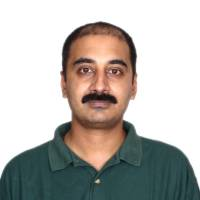
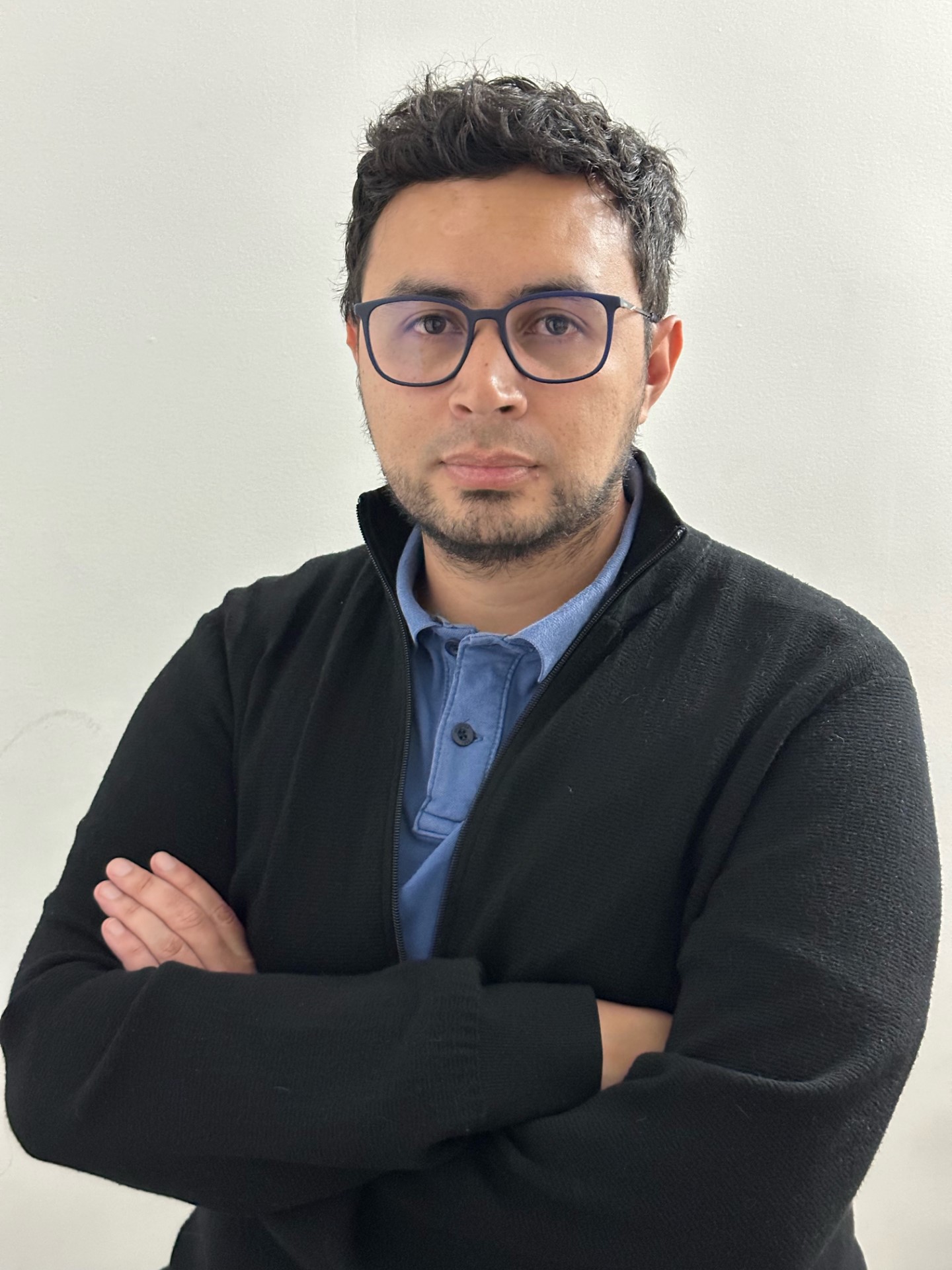
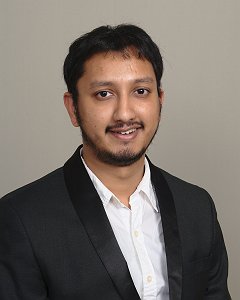
K Narayan Kumar is a full-time Professor of Computer Science at the Chennai Mathematical Institute (CMI) in Chennai, India. He has been affiliated with CMI since at least 2003, where he teaches courses ranging from programming fundamentals to advanced topics in automata theory and verification. His research focuses on automata models for distributed systems, logic, and verification methods. Research Interests: Automata models for distributed systems Logic and formal verification Theoretical computer science Professional Activities: Active in organizing and participating in international conferences (e.g., FSTTCS, CONCUR, ATVA) Co-Chair of 29th FSTTCS (2009) and 3rd AATS (2011) Member of scientific committees for Informatics Olympiads Teaching: Current courses: Introduction to Programming in Python, Algorithms Past courses: Haskell programming, Automata Theory, Verification, Networks, and more
Igor Walukiewicz is a Researcher at the Laboratoire Bordelais de Recherche en Informatique (LaBRI) , affiliated with Université de Bordeaux , France. His work focuses on Concurrency Theory , Model Checking , Timed Automata , Higher-Order Model Checking , and Automata Theory . His recent research explores parametric systems , timed automata , and higher-order concurrency . Articles highlight advancements in verification techniques , synthesis of distributed algorithms , and partial-order reduction methods . Key subfields include deadlock avoidance , active learning , and logical frameworks for timed systems . He has secured significant ANR grants such as FREDDA (FoRmal Methods for Distributed Algorithms) and Ticktac (Verification of Real-Time Systems). He contributes to tools like TChecker , a model-checking tool for real-timed systems developed at LaBRI. Walukiewicz participates in editorial and organizational roles, including the Fundamenta Informaticae editorial board and HIGHLIGHTS conference steering committee. He has presented at major venues like LICS , CONCUR , and ICALP .
Bryan Parno is a Professor at Carnegie Mellon University, holding the Kavčić-Moura Chair in Electrical and Computer Engineering and Computer Science. His work bridges theoretical and practical aspects of secure systems verification, focusing on formal methods to ensure rigorous security guarantees. Research Areas: Secure systems, formal verification, cryptography, concurrency, distributed systems Key Contributions: Development of Verus, Leaf, IronFleet, and FastVer2 for verified secure systems Awards: Jay Lepreau Best Paper (OSDI 2025), IEEE Cybersecurity Award for Practice (2024), Distinguished Artifact Award (SOSP 2024) His recent publications demonstrate a focus on scalable formal verification across diverse domains, including Rust programming, WebAssembly sandboxing, and cryptographic protocols. Tools like Verus and OwlC enable provably correct implementations with performance optimizations. Scientific recognition includes: ACM Doctoral Dissertation Award (2011) IEEE Golden Core Recognition (2023) Forbes 30-Under-30 (2011) Sloan Research Fellowship (2018) Multiple best paper awards at USENIX Security, CAV, and IEEE S&P Parno advises PhD students in secure systems and contributes to critical infrastructure projects like Project Everest. His lab develops open-source tools for verified cryptography and systems programming.
Eric Goubault is a Professor of Computer Science at École Polytechnique , where he leads the computer science department and the LIX laboratory (UMR 7161). His research centers on verification of numerical programs and systems , geometric methods for concurrency , and directed topology with applications in distributed and fault-tolerant computing. He oversees the Engineering of Complex Systems academic and research chair, sponsored by major industry partners like Thales and Naval Group, and manages the COMASIC master program. Current projects include: ACAT (Applied and Computational Algebraic Topology) COVERIF (Abstract interpretation for floating-point verification) MALTHY (Algebraic methods for timed systems) CAFEIN (Numerical invariants analysis) He has supervised multiple students, including: Current: Jérémy Ledent, Bibek Kabi, Nikolas Stott, Jérémy Dubut Past: Khalil Ghorbal
Sérgio Duarte is an Assistant Professor at the Department of Informatics, Faculty of Sciences and Technology, Universidade Nova de Lisboa (FCT/UNL). His research focuses on distributed systems, cloud computing, and database management, particularly in consistency models and replication mechanisms. Research Interests: Distributed Systems, Cloud Computing, Conflict-free Replicated Data Types (CRDTs), Consistency Models, Geo-replication, Event-based Systems. Key Contributions: Work on causal consistency, invariant preservation in databases, and client-side fault tolerance in geo-replicated environments. Email: smd@fct.unl.pt
S. Akshay is a Professor in the Department of Computer Science and Engineering at the Indian Institute of Technology Bombay . He is affiliated with the IITB Trust Lab , the Ashank Desai Centre for Policy Studies , and the Centre for Formal Design and Verification of Software Systems . His academic background includes a joint PhD from École Normale Supérieure de Cachan and Chennai Mathematical Institute (2010), postdoctoral work at IRISA/ENS Cachan Bretagne (2012) and National University of Singapore (2011), and earlier degrees from ÉNS-Cachan (2006) and Chennai Mathematical Institute (2004). Research interests focus on formal methods , particularly verification of timed, recursive, and distributed systems; automated functional synthesis; formal modeling of probabilistic and dynamical systems; and trust certification in AI models. Applications span systems biology , cyber-physical systems , and artificial intelligence . His recent publications emphasize verification techniques for Markov chains, timed automata, and Boolean functional synthesis, with algorithmic advancements in probabilistic inference, quantifier elimination, and robustness analysis. Professional activities include serving as Treasurer and Council Member of the Indian Association for Research in Computer Science (IARCS). He has co-chaired FSTTCS 2016 and ATVA 2024, and participated in program committees for major conferences like AAAI, CAV, and LICS. Teaching roles at IIT Bombay include courses on Discrete Structures , Formal Models of Concurrent Systems , and Quantitative Verification . Collaborative projects involve institutions such as University of Waterloo, IIT Delhi, and IRISA, Rennes.
Aiswarya Cyriac is an Associate Professor in the Theoretical Computer Science Group at Chennai Mathematical Institute (CMI), India, with active roles including program committee co-chair for FSTTCS 2025 and ICLA 2025. She is a member of ReLaX, an international research lab established by CNRS (France), fostering cross-border collaboration in foundational computer science. Her office is located at CMI's H1, SIPCOT IT Park campus in Siruseri, Chennai. Educational Background: Ph.D. from École normale supérieure de Cachan, France (2014) Her research specializes in automata theory and its applications to the verification of infinite state systems, concurrent models, and distributed algorithms. She develops formal mathematical frameworks for string constraints with subword ordering, finite state transducers, and treewidth-based verification techniques, addressing decidability and complexity challenges in system analysis. Current projects focus on verification of communicating Datalog programs and string constraint satisfiability. Publication trends (2020-2024) reveal a concentrated effort on verification methodologies for communicating systems, string constraint analysis, and transducer theory. These works consistently appear in premier venues like STACS, ICALP, LICS, and PODS, demonstrating her leadership in automata-theoretic approaches to system verification and formal language applications. Educational Leadership: Ph.D. advising: Soumodev Mal (ongoing, co-advised with Prakash Saivasan), Sahil Mhaskar (ongoing, co-advised with M. Praveen) Master's supervision: Kushal Prakash ("Unbounded Distributed Graph Automata", 2018), Adwitee Roy ("Graph Automata and Tree-Width", 2017) Short internships: Anupa Sunny (NFA learning, 2017), Rao Shrisha Shripathy (weighted automata learning, 2017), Nisarg Patel (finite state models, 2016) She maintains strong institutional ties through the Theoretical Computer Science Group at CMI and ReLaX (CNRS), driving collaborative research on formal verification and automata theory. Her work bridges theoretical foundations with practical applications in database-driven systems and distributed algorithms, supported by consistent conference participation and editorial service.
Byron Cook is a Professor of Computer Science at University College London (UCL) and Vice President & Distinguished Scientist at Amazon / AWS . His work bridges formal methods , automated reasoning , and program verification in domains spanning GenAI , distributed systems , hardware , operating systems , and biological systems . Academic Roles : UCL Professor (since 2014), Microsoft Researcher (2004-2014) Industry Leadership : Amazon (2018-present), Microsoft (1999-2014) Research Interests focus on theoretical computer science with applications in: Program Termination Proving (TERMINATOR/T2 tools) Memory Safety (SLAyer project) Biological Systems Modeling (Bio Model Analyzer) Cloud Security (AWS Access Analyzer, Tiros) Formal Verification of Windows device drivers (Static Driver Verifier) Scientific Contributions include groundbreaking work on automated termination proofs , shape analysis , and access policy verification . His 15 recent publications (2016-2023) demonstrate sustained impact in formal verification of AWS systems , biological modeling , and distributed SMT solving . PhD Students Advised : Alexey Gotsman, Eric Koskinen Current PhD Student : Kaustubh Nimkar Awards : Fellow of the Royal Academy of Engineering (FREng)
Sharon Shoham is a Professor at the School of Computer Science, Tel Aviv University, specializing in formal verification and program analysis. She leads research under a 5-year ERC grant on supervised verification of infinite-state systems and mentors PhD students, postdocs, and visiting scholars. Research Interests : Her work focuses on formal verification, program analysis, model checking, and verification of distributed systems. She explores inductive invariants, quantifier instantiation, and abstract interpretation. Recent Publications (2023-2025) highlight advancements in liveness properties , hyperproperty verification , quantifier elimination , and distributed protocol verification , often leveraging first-order logic and constraint-solving techniques. Scientific Awards : Distinguished paper awards at POPL 2025 and POPL 2024 Best paper and best student paper awards at DISC 2024, CAV 2019, and DISC 2018 Best paper awards at VMCAI 2016, ATVA 2009, SPIN'08, SAS'07, and FMCAD'07 Advising & Grants : Actively recruits strong PhD students and postdocs under an ERC grant. Collaborates with institutions like Technion and Tel Aviv University on verification frameworks and tools such as Ivy and mypyvy.
Dr. Camilo A. Riano-Rios is an Assistant Professor in the Department of Aerospace, Physics and Space Sciences at Florida Institute of Technology's College of Engineering and Science, where he leads the Space Vehicle Robotics (SVR) laboratory. His research focuses on developing robust Guidance, Navigation, and Control (GNC) algorithms for space applications using nonlinear adaptive control and machine learning techniques. His educational background includes a M.S./Ph.D. in Aerospace/Mechanical Engineering from the University of Florida, a M.S. in Project Management from Universidad EAN (Colombia), and a B.S./M.S. in Mechatronics Engineering from Universidad Militar Nueva Granada (Colombia). Dr. Riano-Rios's research integrates spacecraft dynamics, adaptive control theory, and robotics with applications in spacecraft formation flying, orbital debris removal, and CubeSat technologies. His work emphasizes hardware-in-the-loop validation using advanced testbeds including Florida Tech's Helmholtz cage and spherical air bearing systems. Analysis of his recent publications reveals strong focus on: adaptive control strategies for spacecraft attitude/orbital control, machine learning applications in multi-agent space systems, propellant-less maneuvering techniques, and robust algorithms for uncertain space environments. The research consistently bridges theoretical control frameworks with practical spacecraft implementation challenges. He currently advises one Ph.D. student (Morokot Sakal) and four undergraduate researchers (Ishaben Trada, Zuleyka Priscila Figueroa Pineda, Kian Jamal, Cole Schumacher). The SVR lab maintains active projects including post-capture attitude control of space debris, fault-tolerant actuator systems, and development of a 3-DOF attitude testbed for experimental validation of GNC algorithms.
Dr. Robert (Rob) G. Belleman is a Lecturer and researcher in the Computational Science Lab at the Informatics Institute, Faculty of Science, University of Amsterdam. He concurrently serves as Director of the university-wide College of Informatics (CoI), manager of the Visualisation Lab at Science Park, and head of the Education Group, consolidating teaching, research, and infrastructure leadership roles. Education details are not disclosed in the supplied text. His research integrates large-scale scientific computing with immersive visualisation. Core themes encompass GPU-accelerated simulations—from gravitational N-body dynamics to flood modelling—interactive visual analytics for criminal and biological networks, 3-D morphological analysis of marine organisms, sign-language lexicon technologies, and in-silico oncology platforms that fuse multiscale cancer models with clinical IT workflows. Recent articles (2022-2024) emphasise interdisciplinary visual analytics: uncovering cocaine-trafficking scenarios, discriminating coral species via 3-D quantification, and constructing 3-D sign-language lexicons. Earlier work advanced GPU computing for astrophysics and MD simulations, hybrid socio-genetic network modelling of HIV spread, and grid-enabled oncosimulation for nephroblastoma therapy planning. No scientific awards are listed in the provided source. Belleman leads educational innovation through the College of Informatics and the Education Group, while infrastructural oversight of the Visualisation Lab supports numerous UvA research teams. No explicit grant amounts or named PhD advisees appear in the text. He heads the Visualisation Lab facility at Science Park and coordinates the Education Group within the Computational Science Lab, fostering cross-disciplinary collaboration among computer scientists, life scientists, and physicists.
James Cheney is a Personal Chair of Programming Languages and Systems at the University of Edinburgh, working in the Laboratory for Foundations of Computer Science within the School of Informatics. He leads the Principles of Provenance research group and has been a Turing Fellow from 2018 to 2023. His educational background includes a PhD in Computer Science from Cornell University (2004), an MS in Mathematics from Carnegie Mellon University (1998), and a BS in Computer Science and Mathematics from Carnegie Mellon University (1998). Cheney's research focuses on the intersection of databases and programming languages, with particular emphasis on data provenance. His work spans several key areas: Databases and data provenance Programming languages and compilers Generic programming Logic and automated theorem proving Compression and information theory XML and related technologies His recent publications demonstrate a strong focus on language-integrated query systems, type systems for programming languages, and formal approaches to data provenance. These works often bridge theoretical foundations with practical applications in database systems and programming language design. Cheney has received several notable awards and recognitions: Royal Society University Research Fellowship (2008-2016) Turing Fellow (2018-2023) ERC Consolidator Grant for the Skye project (2016-2021) Google Research Award for Language-integrated provenance As an advisor, Cheney has supervised numerous PhD students and postdoctoral researchers who have gone on to positions at institutions including New York University, LSE, University of Southampton, Meta, and others. His research has been supported by various grants from DARPA, EPSRC, AFOSR, EU FP7, and industry partners including Google, Microsoft Research, and Huawei. Cheney leads the Principles of Provenance group, which conducts fundamental research on data provenance and its applications in security, data curation, and scientific computing. The group has worked on projects including Skye (a programming language for scientific data curation), ADAPT (a DARPA-funded project on advanced persistent threat prevention), and language-integrated provenance systems.
Michael Wooldridge is Professor of Computer Science at the University of Oxford and Senior Research Fellow at Hertford College, having served as Head of Department from 2014-2021. He leads research in artificial intelligence with over 450 publications in multi-agent systems, game theory, and machine learning. His research examines computational approaches to multi-agent coordination, strategic reasoning, and trustworthy AI. Current projects explore foundations of trustworthy AI through theoretical frameworks for rational verification and equilibrium analysis in complex interactive systems. Recent publications demonstrate increasing focus on large language models and their applications in multi-agent coordination, security challenges in generative AI, and computational social systems. Research integrates theoretical work with experimental validation in complex simulation environments. Honors include: Lovelace Medal (BCS, 2020) ACM Autonomous Agents Research Award (2006) AAAI/EAAI Outstanding Educator Award (2021) European Association for AI Distinguished Service Award (2023) He currently supervises doctoral students in multi-agent reinforcement learning and game-theoretic verification. Major grants include a Turing AI World Leading Researcher Fellowship (UKRI, 2021) and ERC Advanced Grant 'Reasoning About Computational Economies' (2011). As Editor-in-Chief of Artificial Intelligence Journal and former president of IJCAI, EurAI, and IFAAMAS, he maintains extensive professional service commitments while leading the Whiteson Research Lab.
James Riely is a Professor in the School of Computing at DePaul University , United States. His research focuses on Programming Languages , Concurrency , and Formal Methods , particularly in modeling Relaxed Memory and Security in distributed systems. He has contributed to leading conferences like POPL , SPLASH , and VMCAI , addressing topics such as Concurrent Programming , Event Structures , and Security Automata . Education : PhD in Computer Science from University of North Carolina at Chapel Hill (1999). Research Trends : His work spans Relaxed Memory Models , Software Verification , and Security Protocols , often integrating Formal Verification and Concurrency Theory . Key contributions include modeling Speculative Execution Attacks and designing Security Automata for enforceable policies. Conference Involvement : Active in program committees for POPL , VMCAI , and PPoPP , with session chair roles in tracks like Separation Logic and SLE .
Ankush Das is a tenure-track assistant professor in the Computer Science Department at Boston University. His research focuses on programming languages with applications in cryptographic protocols, distributed systems, and probabilistic and machine learning models. Prior to joining Boston University, he worked as an applied scientist at Amazon in the Automated Reasoning Group until December 2023. Dr. Das received his PhD from Carnegie Mellon University in 2021, where he was advised by Prof. Jan Hoffmann and worked closely with Prof. Frank Pfenning. He completed his undergraduate studies at IIT Bombay, India in 2015. His research interests span a wide range of topics within programming languages, with specific focus on resource analysis, session types, distributed protocols, and language design for smart contracts on the blockchain. He is particularly interested in developing type systems that can ensure safety and efficiency properties in concurrent and distributed systems. His work has led to the development of domain-specific languages like Nomos for implementing smart contracts and Rast for resource-aware session types with arithmetic refinements. Dr. Das's publication record demonstrates a consistent focus on advancing type theory and its applications to practical systems. His work frequently appears in top-tier programming languages conferences such as POPL, PLDI, and ICFP. A notable trend in his recent work is the extension of session types to handle probabilistic computations and resource-aware programming, reflecting the growing importance of these areas in modern distributed systems. His scientific achievements have been recognized with several prestigious awards: Distinguished paper award at POPL 2024 for "Parametric Subtyping for Structural Parametric Polymorphism" Best system description paper award by a junior researcher at FSCD 2020 for "Rast: Resource-Aware Session Types with Arithmetic Refinements" Dr. Das is actively mentoring PhD and undergraduate students at Boston University. His current advisees include Anthony DeRossi, Toby Ueno, Brendan Coyne, Qiancheng Fu, June Wunder, Sam Buxbaum, and Sakshi Sharma. He is looking for motivated PhD students to join his research group, with opportunities to work on cutting-edge problems in programming languages and their applications to distributed systems and security. At Boston University, Dr. Das leads research efforts in programming language theory and its applications. His work bridges theoretical foundations with practical implementations, particularly in the areas of smart contracts and distributed protocols. He has collaborated extensively with researchers from Carnegie Mellon University, including his former advisors Jan Hoffmann and Frank Pfenning.