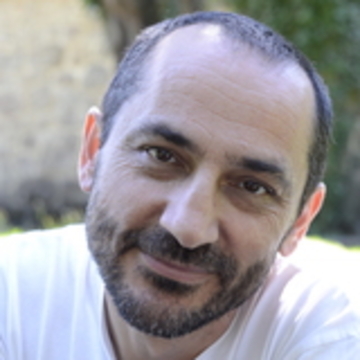
Prof. Dr. Norbert Henze is a distinguished statistician at the Institute of Stochastics , Karlsruhe Institute of Technology . His work spans theoretical and applied statistics, with a focus on goodness-of-fit testing , geometric extreme value theory , and multivariate statistical analysis . Research Interests: Statistical Goodness-of-Fit Tests Geometric Extreme Value Theory Multivariate Statistics Key Contributions: Developed novel tests for multivariate normality using Fourier methods and partial differential equations Analyzed limit laws for nearest neighbor distances in high-dimensional spaces Explored stochastic phenomena in Pólya's urn model and random point distributions Students & Collaborations: Supervised 4 PhD students and 22 diploma/master's theses Collaborated with international experts (B. Ebner, M.D. Jiménez-Gamero, S.G. Meintanis) Recent Publications: 2024: Spherical data testing in Statistical Papers 2023: Weibull distribution tests in Annals of Institute of Statistical Mathematics 2022: Complex symmetry tests in TEST Notable Methodological Innovations: Unified empirical process approaches, harmonic oscillator-based normality tests, and geometric extreme value characterizations.
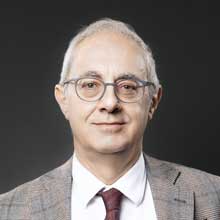
João Lourenço is an Associate Professor at the Computer Science Department of the NOVA School of Science and Technology at NOVA University Lisbon (NOVA FCT) and Co-Director of the Institute for the Development of New Technologies (UNINOVA). He received his Ph.D. from NOVA University Lisbon in 2004 with a thesis on debugging of distributed programs. His primary research focuses on advanced computing systems with emphasis on in-memory data management for parallel and large-scale environments, testing and debugging of concurrent programs, and edge/fog computing architectures. His work bridges theoretical computer science with practical implementations in distributed systems, contributing significantly to the field of parallel computing and system reliability. Professor Lourenço has co-authored over 50 scholarly publications with notable recognition including the Distinguished Paper Award at Euro-Par 2012 and Best Paper Award at HVC 2012, demonstrating consistent research excellence. Distinguished Paper Award in Euro-Par 2012 Best Paper Award in HVC 2012 He is a founding member of the NOVA Laboratory for Computer Science and Informatics (NOVA LINCS) and actively serves on advisory boards and steering committees of multiple international conferences and research networks, contributing to the global computer science community. Professor Lourenço has held visiting researcher positions at IBM Research Laboratory at Haifa (2011), University of São Paulo (2014), and University of Brno (2015), establishing international collaborations across three continents. Notably, he is a significant contributor to the LaTeX community as the creator of the widely adopted NOVAthesis template and other academic documentation tools, demonstrating his commitment to scholarly communication standards.
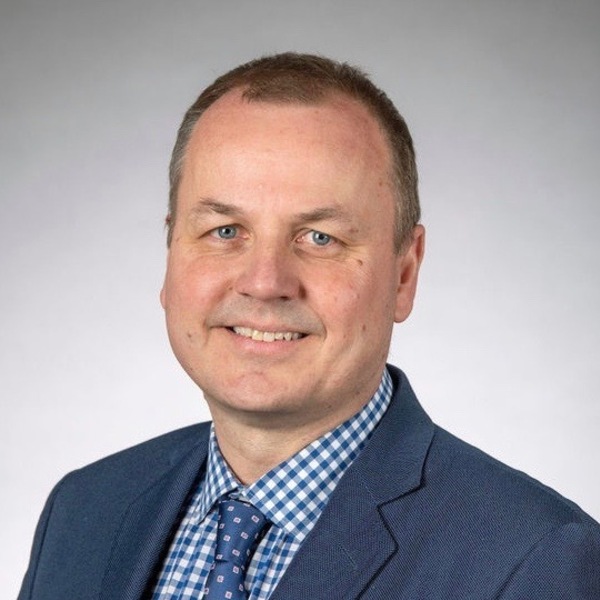
Rong Zhang is a Professor at East China Normal University's School of Computer Science and Software Engineering in Shanghai, China. With a PhD from Fudan University's Department of Computer Science and Engineering (2007), Dr. Zhang has established himself as a leading researcher in database systems, particularly in transaction processing, performance evaluation, and distributed database technologies. His extensive collaboration network includes prominent researchers like Aoying Zhou, Weining Qian, and Xiaofeng He. Dr. Zhang's research primarily focuses on database performance evaluation, transaction processing systems, workload generation, and isolation level verification. His work addresses critical challenges in modern database systems including generating realistic test databases, benchmarking transactional performance, verifying isolation levels in distributed environments, and optimizing query processing. His research has significant practical applications for database vendors and users who need reliable performance metrics and verification tools. Analysis of Dr. Zhang's recent publications (2022-2025) reveals a strong focus on database benchmarking and verification. His work on the Leopard test suite for isolation level verification represents a major contribution to ensuring database correctness. The Mirage and Touchstone projects demonstrate innovative approaches to generating enormous, query-aware databases for comprehensive performance evaluation. His research increasingly incorporates machine learning techniques, as seen in SPQO for query plan reuse and functionality-aware database tuning. Dr. Zhang has mentored numerous researchers who appear as co-authors on his papers, including Xiaotong Wang, Siyang Weng, Yuming Li, and Qingshuai Wang. His research has been supported by projects focused on database performance evaluation, transaction processing, and distributed systems. While specific grant details aren't provided in the source material, his extensive publication record across top database venues suggests sustained research funding. Dr. Zhang appears to lead or be a key member of a research group focused on database systems at East China Normal University. This group has developed several significant tools and frameworks including Leopard for isolation verification, Mirage for database generation, and Lauca for workload duplication. Their work bridges theoretical database concepts with practical system implementation, producing tools that have become influential in database research and development.
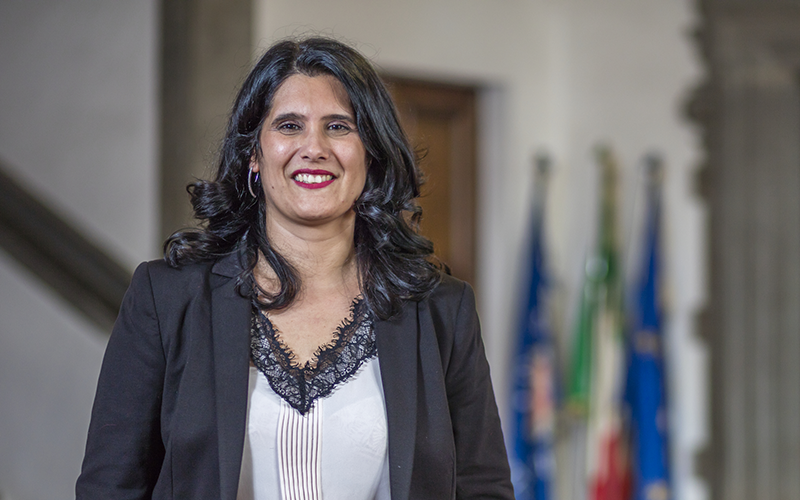
Gianluca Sicchiero is a Full Professor in the Department of Economics at Ca' Foscari University of Venice, specializing in Private Law (SSD: GIUR-01/A). He serves as the Department Delegate for Relations with Professional Orders, demonstrating his active role in bridging academic and professional legal communities. His office is located at the San Giobbe campus, and he maintains regular office hours on Wednesdays at 10:00 AM by appointment via email. Professor Sicchiero's research focuses on Private Law, Contract Law, Notarial Law, and IT Law, with significant contributions to Civil and Commercial Law. His scholarly work demonstrates deep engagement with both theoretical and practical aspects of legal systems, particularly in the areas of notarial practice, contractual interpretation, succession law, and European Union legal directives. His publications reveal a consistent scholarly output addressing contemporary legal challenges while maintaining connection to foundational legal principles. His recent publications (2023-2025) show a clear focus on notarial law, contractual interpretation, succession matters, and the implementation of EU directives. These works appear in prestigious Italian legal journals including Vita Notarile , Giurisprudenza Italiana , and the Quarterly Review of Economic Law . The research demonstrates both doctrinal depth and practical relevance to legal professionals, particularly notaries and civil law practitioners. Professor Sicchiero teaches IT Law for Computer Science students and Private Law for Economics and Commerce students at Ca' Foscari University. His teaching spans multiple academic years (2020-2025), indicating his established role in the university's curriculum. The division of Private Law into two parts (for surnames A-La) reflects the substantial nature of this course and the large number of students enrolled.
Prof. Dr. Paula Herber is a full Professor at the Institute of Computer Science, Department of Mathematics and Computer Science, University of Münster, Germany. She is actively engaged in research on formal methods, cyber-physical systems, and embedded systems verification. Her work bridges theoretical rigor with practical applications in safety-critical domains such as autonomous systems and real-time operating systems. Her research interests lie at the intersection of formal verification and system design, particularly focusing on deductive verification , automated reasoning , model transformation (e.g., SystemC to Timed Automata), and reusable abstractions for complex systems. She investigates how to make formal methods more scalable and applicable in industrial settings, especially for autonomous cyber-physical systems that incorporate learning components. The recent publications highlight a consistent trend in advancing formal verification techniques for embedded and cyber-physical systems, with a strong emphasis on automating proof processes , handling concurrency and timing , and integrating domain-specific knowledge to improve analysis efficiency and precision. Her work frequently appears in top-tier venues such as iFM, SEFM, and VMCAI, often in collaboration with leading researchers in formal methods. Scientific recognition includes contribution to work awarded the Ernst Denert Software Engineering Award 2022 , highlighting impact in bridging foundational research with practical software engineering. Contribution to Ernst Denert Software Engineering Award 2022 (as co-author of awarded work) Prof. Herber leads or contributes to significant research projects such as Safe Integration of Learning In Autonomous cyber-physical Systems and the SystemC to Timed Automata Transformation Engine (STATE) , which aims to provide formal semantics for SystemC through transformation into UPPAAL models. These projects emphasize reusability, correctness, and tool support for verification. While no explicit list of advisees is provided, her role as a professor and project leader implies mentorship of students and junior researchers. She has not mentioned part-time status, indicating a full-time academic commitment. Her laboratory or working group focuses on formal methods and algorithms , particularly in the context of embedded and distributed systems, as reflected in the research projects and publications. The team develops transformation engines and verification frameworks to support rigorous analysis of complex software-intensive systems.
Jesper Bengtson is a Lecturer in Theoretical Computer Science specializing in Programming Logic and Semantics at the IT University of Copenhagen. His research primarily focuses on formal methods for programming languages, with particular expertise in session types, separation logic, and proof assistants. Dr. Bengtson's research interests center around programming language theory and formal verification. His work explores how to mathematically verify software correctness through logical frameworks. He specializes in session types for communication protocols, separation logic for reasoning about concurrent programs, and developing tools for interactive theorem proving. His research bridges theoretical computer science with practical applications in software verification. His publication record shows consistent contributions to programming language theory over the past decade, with a clear trend toward applying formal methods to concurrent and distributed systems. Recent work demonstrates increasing focus on mechanized verification of session type systems and integration of session types with separation logic for concurrent program verification. Dr. Bengtson has been involved in several significant research projects including MECHANIST (MECHANIsation of Session typEs, 2021-2025), ToMeSo (Tools and Methods for Scalable Software Verifications, 2009-2013), and a general-purpose framework for software verification (2013-2017). These projects were funded by major Danish research foundations including Danmarks Frie Forskningsfond and Independent Research Foundation of Denmark. His work has been featured in media outlets, including a 2015 article titled 'Danish researcher wants to eradicate software errors' and a 2021 piece about 'Natural or woke? Big shooter introduces controversial soldier,' indicating public engagement with his research.
Ahmed Rezine is a Senior Lecturer and Associate Professor at the Department of Computer Science (IDA) , specifically within the Software and Systems (SAS) division at Linköping University . His research focuses on software verification , machine learning , and cybersecurity , particularly in the context of deep neural networks and embedded systems . Research Trends: His recent publications, such as VNN: Verification-Friendly Neural Networks (2024) and Trojans in Instruction Sets (2024), highlight his work at the intersection of AI robustness and hardware security . Earlier studies (2023-2017) emphasize formal verification of concurrent systems and GPU architectures , reflecting a consistent focus on parameterized systems and security analysis . Colleagues & Collaborations: Rezine collaborates with researchers in the Software and Systems group, part of the Wallenberg Autonomous Systems Program (WASP) . His work intersects with AI IDA and Embedded Systems (ESLAB) , focusing on autonomous systems and real-time processing .
Hao Li is a MSCA Postdoc Fellow and Visiting Scholar at LIP6 , affiliated with the University of Southern Denmark in the Department of Mechanical Engineering . His research focuses on advanced computational methods for topology optimization in thermal, fluid, and structural engineering systems. Education: Not explicitly stated in the provided text. Current Projects: Leading EU-funded research on heat exchanger design using multiscale models and machine learning. Dr. Li's work spans multiscale topology optimization, level-set methods, and fluid-structure interaction, with applications in microchannel cooling, compliant mechanisms, and biodegradable composites. His recent publications highlight advancements in 3D conjugate heat transfer, adaptive meshing, and eigenfrequency maximization. The trends in his research output (2017–2025) emphasize thermal-fluid systems , high-resolution structural optimization , and manufacturable composite designs . Notable subfields include triply periodic minimal surfaces for cooling channels, nonlinear buckling analysis, and phasor-based dehomogenization techniques. Teaching & Supervision: Currently supervising projects on topology optimization frameworks for heat sinks and high heat flux cooling. His past projects (2018–2023) include research on piezoelectric transducers and thermal-fluid system design. Labs & Collaborations: Collaborates with institutions in Japan and France, focusing on experimental validation and industrial applications. His network includes partnerships with researchers in structural mechanics, computational fluid dynamics, and additive manufacturing.
Jan-Niklas Koch serves as a Researcher at the Institute for Energy Research (iFE) of the OWL University of Applied Sciences and Arts (TH OWL), actively contributing to the DC-Schiene project on energy-efficient DC conductor systems for industrial applications including storage/retrieval machines, cranes, and monorail systems. He concurrently holds shareholder status at Innelekt GmbH since 2021. His academic credentials include: Bachelor of Electrical Engineering / Automation Technology (2013, TH OWL) Master of Electrical Engineering (2018, TH OWL) Research centers on Power Electronics and DC Networks , with specialized expertise in silicon carbide-based AC/DC and DC/DC converters, model-based component dimensioning, and switching technology. His work targets industrial energy efficiency through advanced DC power solutions, emphasizing reliability and performance optimization in real-world applications. Publications reveal consistent focus on power quality challenges: the 2022 study analyzes capacitor lifetime in open DC grids, while the 2014 work develops numerical methods for harmonic distortion in nonlinear loads. These contributions advance industrial DC system stability and efficiency, bridging theoretical modeling with practical implementation. Mr. Koch participates in multiple grant-funded projects including DC-Schiene (2023-2026), effiDCent (2019-2022), and Smart CHP (2013-2016), collaborating with industry partners under the Federal Ministry for Economic Affairs and Energy frameworks. His laboratory work operates within the Power Electronics and Electrical Drives working group at iFE's Lemgo campus (Building 55, Room 55.105).
Vincent Danjean is an associate professor at Grenoble Alpes University , specializing in parallel computing, high-performance computing, and bioinformatics. He earned his PhD in 2004 from École Normale Supérieure de Lyon under the supervision of Raymond Namyst. Research Interests: Vincent's work spans several critical areas in computational science: Parallel and Distributed Systems: Focus on task-based parallelism and hybrid cluster architectures. Performance Analysis: Development of visual frameworks for analyzing parallel applications. Bioinformatics: Application of computational methods to genetic and genomic data analysis. GPU Computing: Efficient scheduling and work stealing strategies for multi-GPU systems. Reproducible Research: Workflows using Git and Org-mode for scientific transparency. Publication Trends: His publications demonstrate a consistent focus on advancing parallel computing techniques, with significant contributions to GPU scheduling, cache-efficient algorithms, and visualization tools. Recent work includes interdisciplinary applications in genomics and cybersecurity protocols. Contact: vincent.danjean@imag.fr
Prof. Dr. Ahmet Aksen serves as a full-time Professor and Head of the Department of Electrical and Electronics Engineering at Işık University's Faculty of Engineering and Natural Sciences. With over two decades of academic service, he teaches core undergraduate courses including Circuit Theory, Electronics, Electromagnetic Fields, and Microwave Engineering while leading departmental operations and curriculum development. His academic credentials include a BSc (1976-1981) and MSc (1981-1984) in Electrical and Electronics Engineering from Middle East Technical University, followed by a PhD (1989-1994) in Electrical Engineering from Ruhr-Universitaet Bochum. This strong theoretical foundation supports his specialized expertise in circuit design and microwave systems. Prof. Aksen's research centers on Microwave Engineering and Circuit Theory , with pioneering contributions to filter design and matching networks using real frequency techniques. His work addresses critical challenges in stopband suppression , transformer-free implementations , and multiband circuit synthesis for wireless communications. He has developed innovative methodologies for circuits combining lumped and distributed elements, significantly advancing RF design for modern communication systems. Analysis of his recent publications (2017-2021) reveals consistent focus on multiband/dual-band filter and matching network design, with increasing emphasis on numerical methods and computer-aided design tools. Approximately 70% of his work targets transformer-less implementations and lumped-resonator solutions for GSM and emerging wireless standards, demonstrating practical engineering impact. Scientific Awards: No specific awards or fellowships were documented in the provided materials. Prof. Aksen has supervised four graduate students: Master's candidates Hayrî Şimşek and Ömer Sümer (2012), and PhD candidates Metin Şengül (2012) and Serkan Yıldız (2020). His research has been supported through participation in the NEWCOM collaborative project, focusing on communications engineering advancements.
Sunil Easaw Simon serves as an Associate Professor in the Department of Computer Science and Engineering at the Indian Institute of Technology Kanpur. His academic home is within one of India's premier technical institutions, where he contributes to both teaching and research in theoretical computer science. Education: PhD, Institute of Mathematical Sciences (2010) MSc, Chennai Mathematical Institute (2003) Dr. Simon's research focuses on the theoretical foundations of computer science, with particular emphasis on Game Theory, Distributed Systems, Temporal Logics, and Verification . His work bridges mathematical theory with computational applications, exploring how strategic interactions can be modeled and analyzed within computational frameworks. His research interests span both foundational theoretical questions and practical applications in multi-agent systems. Analysis of his publication record from 2009-2013 reveals a consistent research trajectory centered on game-theoretic approaches to computational problems. His work appears in high-quality venues including the Journal of Logic and Computation and major theoretical computer science conferences such as CONCUR and FSTTCS. The publications demonstrate expertise across multiple subdomains including social network games, weakly acyclic games, communication protocols under imperfect information, and verification frameworks. Dr. Simon maintains an active research profile with publications spanning multiple theoretical computer science subdisciplines. His office is located in CS 206 at IIT Kanpur, where he continues to contribute to the academic mission of the institution through teaching and scholarly work in theoretical computer science.
Jaroslaw Nabrzyski serves as the founding Director of the Center for Research Computing (CRC) at the University of Notre Dame and holds a Concurrent Professorship in the Department of Computer Science and Engineering. Under his leadership, the CRC has grown into a 55-member team of experts in cyberinfrastructure development, software engineering, data lifecycle management, and embedded systems, providing critical support to researchers across astrophysics, polar and environmental sciences, physics, biomedical sciences, engineering, social sciences, and the humanities. His research program centers on cutting-edge technologies including distributed ledger systems (blockchain), decentralized identifiers, verifiable credentials, and multimodal artificial intelligence, with applications spanning healthcare and societal challenges. As co-director of the CRC's Blockchain Research Lab, he actively bridges theoretical innovation with real-world implementation, fostering interdisciplinary collaborations that address complex societal problems through technological solutions. With an extensive track record, Professor Nabrzyski has served as Principal Investigator for over 75 national and international research projects, including the NSF EarthCube Polar-Cyberinfrastructure Research Coordination Network. His leadership extends to building high-performance teams and managing large-scale collaborations between academic institutions and industry partners to advance cyberinfrastructure capabilities for scientific discovery and enterprise applications.
Roman Aleksandrovich Nesterov is an Associate Professor at the Department of Software Engineering, Faculty of Computer Science, National Research University Higher School of Economics (HSE). He has been with HSE since 2015 and heads the Research and Educational Laboratory of Process-Oriented Information Systems (POIS). His educational background includes a PhD (2022) and Master's degree (2017) from HSE, both in Computer Science and Software Engineering. His research focuses on: Formal methods for distributed system modeling Petri nets and concurrency theory Process mining and event log analysis Multi-agent systems and business process modeling Compositional approaches to system verification His publications demonstrate consistent focus on process discovery algorithms, model verification techniques, and applications of Petri nets in distributed systems. Recent works emphasize hierarchical modeling and architecture-aware solutions for multi-agent environments. Awards and Honors: Golden HSE Prize 2019 (Silver Chick nomination) Multiple 'Best Teacher' awards (2020-2025) Research publication bonuses HSE Faculty of Computer Science Gratitude (2023) He leads the POIS laboratory where he conducts research on automated synthesis of multi-agent system models. His teaching includes undergraduate algorithms courses and graduate-level formal methods in software engineering.
Anna Monreale is an Associate Professor of Computer Science at the University of Pisa and serves as the Delegate for Masters and Continuing Education. She concurrently holds an Adjunct Professor position at Dalhousie University's Faculty of Computer Science. Her institutional leadership includes vice-coordinating the National Doctorate in Artificial Intelligence for Society and chairing the Internships Committee for the Master's in Data Science & Business Informatics. She earned her Bachelor's and Master's degrees with honors in Computer Science from the University of Pisa in 2007 and completed her PhD there in 2011. Prior to her faculty appointment, she conducted research on European projects from 2011-2014 and has been affiliated with the CNR's Institute of Information Science and Technologies since 2008. Professor Monreale's research centers on ethical AI development, with core expertise in data mining, explainable AI, and privacy-by-design methodologies. Her work bridges technical innovation with societal impact, particularly in healthcare applications, mobility data analysis, and social media systems. She emphasizes transparency and legal compliance in algorithmic decision-making. Her recent publications (2023-2025) reveal a concentrated focus on trustworthy AI frameworks, with significant contributions to federated learning privacy, trajectory data protection, and real-time explainability systems. She actively addresses emerging challenges in content moderation regulation and healthcare AI deployment. As an educator, she teaches Data Mining and Data Science Lab courses while directing major academic initiatives. She leads a PNRR-funded national project and a European research project, with over 90 publications and 3,200+ citations reflecting her scholarly impact. She is a key member of the University of Pisa's KDD Lab and maintains strong ties with CNR research units.