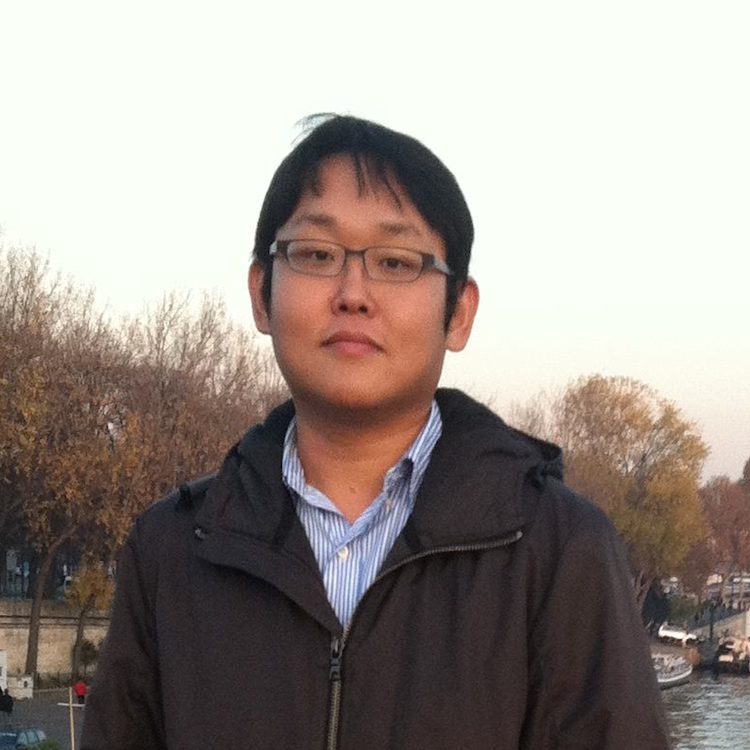
Kyungmin BaeView profile
Associate Professor
Kyungmin Bae is an Associate Professor in the Department of Computer Science and Engineering at Pohang University of Science and Technology (POSTECH), where he leads the Software Verification Laboratory. His research focuses on developing formal methods to ensure the safety, reliability, and security of software, cyber-physical, and AI-based systems. His research interests include formal methods, software verification, model checking, automated reasoning, computational logic, hybrid and cyber-physical systems, and secure software development. He develops scalable and precise automatic analysis techniques using model checking, SMT solving, and rewriting logic. The analysis of his recent publications reveals a strong focus on formal verification of hybrid and cyber-physical systems using Signal Temporal Logic (STL), Maude, and SMT solvers. His work emphasizes robust model checking, parameter synthesis, and formal modeling in AADL, particularly for safety-critical applications such as UAVs and industrial control systems. He frequently contributes to top-tier venues like CAV, POPL, FM, and ASE. Scientific Awards: Best Paper Award, FACS, 2017 Feng Chen Memorial Award, UIUC, 2013 Chirag Foundation Fellowship, UIUC, 2007–2008 Doctoral Study Scholarship, Korea Foundation for Advanced Studies, 2007 He has served as a program committee chair for WRLA 2022, FormaliSE 2020, and FACS 2018, and as a committee member for major conferences including CAV, FSCD, ATVA, ICTAC, SPIN, APSEC, SEKE, APLAS, ICSE-SEIP, TASE, SEFM, WRLA, FTSCS, and TTCS. He has also been an invited speaker at FTSCS 2023 and ISR 2018. He teaches courses such as Theory of Computation, Software Design Methods, Software Verification, and Logic in Computer Science. He leads the Software Verification Laboratory, which focuses on developing formal tools like stlMC, Maude-SE, and HybridSynchAADL for analyzing hybrid and distributed systems. The lab actively contributes to both theoretical foundations and practical applications of formal methods in real-world systems.