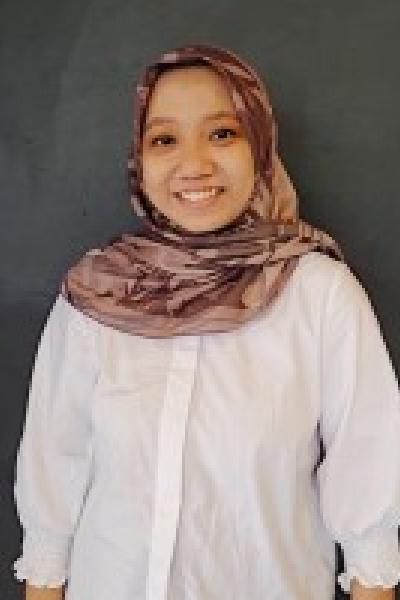
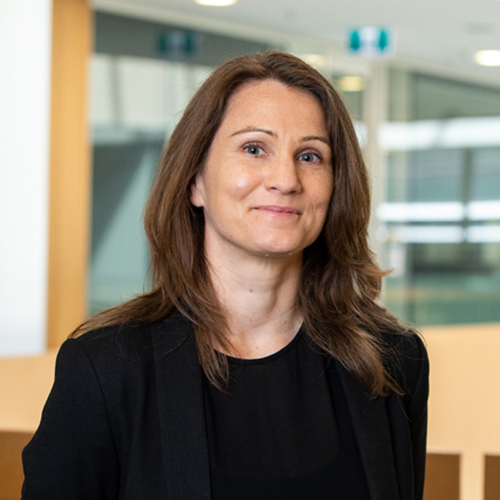
Ariska Nur Fajar Rini serves as an Economics Lecturer at Diponegoro University, Indonesia, teaching core courses including macroeconomics, econometrics, labour economics, economic history, health economics, and population studies. Concurrently, she pursues doctoral research as a PhD Scholar at the Crawford School of Public Policy, Australian National University. Her research integrates microeconomic frameworks with policy-oriented methodologies, emphasizing: Experimental economics through randomized controlled trials Rigorous impact evaluation for development programs Evidence synthesis in health and labour policy design Historical analysis of economic systems Demographic-economic interactions in population studies This interdisciplinary approach bridges theoretical economics with actionable policy insights, particularly in Southeast Asian contexts where micro-level economic behaviors drive macro outcomes.
David Lam serves as a Tutor and Director of the Flinders South Australia Regional Training Hub at Flinders University, concurrently holding the position of Year 4 MD Rural Stream Topic Coordinator (MMED9450) and Volunteer tutor for Aboriginal medical students. A Rural Generalist Anaesthetist with MBBS, FRACGP-RG, FACCRM, and RGA qualifications, his work focuses on rural healthcare delivery across South Australia from the Murray Bridge base (PO Box 723, Victor Harbor). His professional expertise centers on Rural and Remote Health systems, General Practice with procedural specialization in Anaesthetics, and Rural Medicine education. As a designated media expert for Flinders University, he actively shapes discourse in these fields while addressing workforce challenges in underserved communities through hands-on teaching and program leadership. Scientific Recognition Professor Derek Frewin AO Clinical Teaching Citation, University of Adelaide (2013) Best Rural Teacher Award, University of Adelaide (2018) RACGP National General Practitioner of the Year (2019) InDaily 40Under40 (2020) General Practitioner Procedural Training Support Program (Anaesthesia) (2022) University of Adelaide Distinguished Alumni Award (2023) Qantas Regional Grant (2024) Lam's educational impact spans formal coordination of Year 4 medical curriculum and targeted support for Aboriginal students, amplified by the 2024 Qantas Regional Grant enabling expanded rural training infrastructure. His GAICD credential further demonstrates strategic leadership in healthcare governance beyond clinical instruction.
Michael Yan Li serves as an Adjunct Academic in Flinders University's College of Science and Engineering while concurrently leading R&D initiatives as Project Manager at the Australian Sustainable Seaweed Association (ASSA) and Aumika EcoTech Pty Ltd. His career spans international industry-oriented projects across Norway, China, and Australia. Education: PhD in Marine Biology, Flinders University (2008) MSc in Marine Biology, Dalian Ocean University, China (2003) Research Focus: Dr. Li's work pioneers three interconnected domains: developing green technologies for bioeconomy and circular economy advancement; optimizing environmental health through bioresource management; and implementing climate-resilient sustainable development solutions. His expertise in algae collection, industrial-scale cultivation, and bioproduct innovation drives commercial applications across aquaculture, fisheries, and environmental sectors. Professional Impact: Previously establishing the algae research program at Norway's NIVA, he now leverages his global network to expand Australia's seaweed industry research portfolio through ASSA. His work directly advances United Nations Sustainable Development Goals in environmental sustainability and economic growth. Academic Engagement: Actively supervising postgraduate researchers in algae and aquaculture, Dr. Li bridges academic inquiry with industry implementation through new R&D project development and cross-sector collaboration.
Margaret Hibbs is an Associate Professor in the Department of Immunology within the School of Translational Medicine at Monash University, and serves as Group Leader of the Leukocyte Signalling Laboratory. She is based at the Alfred Hospital and maintains an active research profile in immunological signaling, with a focus on immune development, autoimmunity, haematopoiesis, and chronic inflammatory lung diseases. Education: PhD in Medicine, University of Melbourne (1984–1988): Biochemical and molecular biological analysis of mouse and human Fc receptors BSc(Hons) in Pathology, University of Melbourne (1983): The cell surface phenotype of mouse neutrophils BSc in Biochemistry and Pathology, University of Melbourne (1979–1982) Her research centers on understanding the signaling pathways that regulate immune system development and function, particularly how dysregulation leads to autoimmune and inflammatory diseases. She also investigates haematopoiesis and its implications in blood cancers, and has a strong focus on chronic inflammatory lung conditions such as COPD and bronchopulmonary dysplasia. Her work spans molecular immunology, translational models, and therapeutic target identification. The recent publications (including 2025 articles) reflect a consistent trajectory in mucosal immunology, with emphasis on T cell subsets, eosinophils, γδ T cells, and kinase signaling (e.g., Lyn, HCK) in lung and systemic inflammation. The work integrates mouse models, cellular signaling, and cytokine networks, often in collaboration with clinical and translational researchers. Scientific Awards: No specific awards listed in the text. Dr. Hibbs actively supervises and mentors junior researchers and students, many of whom appear as co-authors on her publications. She has led and contributed to multiple funded research projects from NHMRC and international bodies like the Lupus Research Alliance. Her lab collaborates widely across immunology, respiratory medicine, and cancer immunotherapy fields. She leads the Leukocyte Signalling Laboratory, which is central to her research program and fosters interdisciplinary investigation into immune signaling mechanisms.
Dr. Julian Dermoudy is an Associate Professor and Associate Head (Learning and Teaching) in the School of Information and Communication Technology at the University of Tasmania. With over 25 years of teaching experience, he has received national and institutional recognition for his pedagogical contributions. His roles have included Head of School, Associate Dean, and Course Coordinator, reflecting his leadership in academic administration. His teaching spans the Bachelor of ICT and Master of ITS programs. Research Interests: Learning and Teaching Innovations Computing Education and Curriculum Design Serious Games and Gamification for Behavior Change Multimodal Analysis and Verification Parallelism and Software Engineering Funded Projects: UTAS Internal Funding: Embedding Indigenous Knowledge in Curriculum (2021-2021) Advising: Supervised 11 doctoral candidates across domains like biometric authentication, ICT curriculum design, and mobile technology impact. Recent students include Simon Stanton (Cooperative Intent) and Shahan Chowdhury (Collaborative In-Store Shopping). Labs/Teams: Active in curriculum redesign initiatives and educational technology innovation, particularly in VR and gamification applications.
Professor Cheryl Kickett-Tucker AM is a Wadjuk Noongar Traditional Owner, social scientist, and community development practitioner. She holds a Professorship in Indigenous Research Leadership at Curtin University's School of Education (Faculty of Humanities) and concurrently serves as Adjunct Professor at Notre Dame University and the University of Western Australia. Her work focuses on Aboriginal children's identity, self-esteem, and cultural security, emphasizing strengths-based approaches that bridge academic research with community-driven solutions. Education: Extensive academic background including postgraduate scholarships and mentorship programs, with a focus on Indigenous education and community development. Research Interests: Development of culturally appropriate tools for measuring racial identity and self-esteem, particularly in urban Aboriginal youth. She has pioneered programs like Moombaki Cultural Learnings , Too Solid Aboriginal Parenting , and Kaat Koort Hopes to Horizons , which integrate cultural security and social-emotional wellbeing. Her work emphasizes co-design processes with Aboriginal communities to ensure relevance and impact. Awards: Over 25 awards including Order of Australia (2020), Australian Council of Deans of Education Excellence Award (2023), and National NAIDOC Scholar of the Year (2001). Recognized for her contributions to education, community development, and Indigenous health equity. Advising & Grants: Extensive collaborations with government bodies (e.g., Australian Government's National Co-design Group), non-profits (e.g., Health InfoNet), and academic institutes. Leads research teams focused on translating evidence into actionable community programs. Labs/Teams: Central to the Centre for Aboriginal Studies at Curtin University, and collaborates with the Telethon Kids Institute and the Australian Institute of Aboriginal and Torres Strait Islander Studies. Her work often involves cross-disciplinary teams integrating education, health, and cultural studies.
Richard KEEGAN is a Professor at the UC Research Institute for Sport & Exercise, University of Canberra. He holds a concurrent Visiting Fellow position at the University of Lincoln (2017–2020). His academic background includes a PhD and MSc from Loughborough University and a Psychology degree from the University of Bristol. KEEGAN specializes in four core research areas: motivational processes in sport/exercise, physical literacy, applied sport psychology practice, and psychological resilience. He has authored over 60 peer-reviewed articles, 2 books, and 20 book chapters, with notable contributions to government reports on physical activity policies. KEEGAN’s teaching philosophy emphasizes co-creation of knowledge through innovative platforms like YouTube and blogging, focusing on critical thinking and employability skills. He teaches modules including Sport and Exercise Psychology, Resilience and Decision Making, and Research Methods. His practical experience spans working with athletes from grassroots to elite levels across sports like athletics, motorsport, and officiating. KEEGAN leads research initiatives such as the Physical Literacy Measurement project (Sport Australia) and the Measurement It! physical activity trial. He chairs the HDR programs for the Faculty of Health and UC-RISE, overseeing research seminars and committees. His work integrates real-world applications through collaborations with the Australian Institute of Sport and service providers. Notable achievements include the Higher Education Academy Fellowship and pioneering tools like the Physical Literacy in Adults Scale (PLAS). His research addresses athlete attrition factors, mental health guidelines for community sports, and injury management strategies in high-performance pathways.
Stephanie Marhoff-Beard serves as a Lecturer in the Department of Chiropractic at Macquarie University, conducting interdisciplinary research bridging forensic science, anatomy education, and climate-based death investigation. Her work focuses on validating post-mortem interval estimation methods for temperate Australian environments and evaluating educational strategies in anatomical sciences, with strong institutional affiliation to Macquarie's chiropractic program. Her primary research interests encompass forensic entomology, decomposition analysis in soil-climate systems, and anatomy pedagogy. She investigates how faculty-organized revision sessions impact student assessment outcomes while developing climate-specific methodologies for time-since-death estimation, emphasizing validation of universal forensic approaches within Australia's unique environmental conditions. This dual focus creates significant cross-disciplinary connections between medical education and forensic pathology. Analysis of her 2016-2022 publications reveals consistent emphasis on adapting forensic methodologies to Australian temperate zones, with notable attention to experimental validation using swine models and soil analysis. Concurrently, her anatomy education research demonstrates evidence-based approaches to curriculum development in health professions training, particularly within chiropractic contexts. No scientific awards were documented in the available sources. Information regarding student supervision or research grant funding was not provided in the current dataset. Specific laboratory facilities, research teams, or collaborative networks were not explicitly detailed in the extracted text.
Dr Karl Bowles serves as an Adjunct Associate Professor at the Queensland Alliance for Environmental Health Sciences (QAEHS), The University of Queensland, and holds a concurrent position as Senior Principal Environmental Scientist at Jacobs Australia. In this dual role, he acts as Strategic Lead for Technical Policy in the PFAS Investigation and Management Branch for the Australian Department of Defence, leveraging 30 years of cross-sector experience spanning research, consultancy, academia, and government. His research centers on chemical contaminant dynamics, with intensive focus on PFAS (Per- and Polyfluoroalkyl Substances) over the past decade. Expertise includes environmental fate/transport modeling, emerging contaminant impacts, and analytical methodologies for metals and organometallics. He has shaped national policy through contributions to the PFAS National Environmental Management Plan and drives research addressing critical gaps in environmental risk assessment frameworks. Bowles currently serves as Principal Investigator in a QAEHS project developing passive samplers for PFAS monitoring in collaboration with Dr Sarit Kaserzon, funded by the Strategic Environmental Research and Development Program (SERDP). His industry insights ensure research tools meet real-world contaminated land management needs. Previous collaborative work includes PFAS studies in aquatic wildlife and seafood, demonstrating applied environmental health science translation.
Marianne Kate Martinello is a Senior Research Fellow at the Kirby Institute, University of New South Wales (UNSW Sydney), where she leads critical research within the Viral Hepatitis Clinical Research Program and Therapeutic and Vaccine Research Program. She concurrently serves as an Infectious Diseases Staff Specialist at Prince of Wales Hospital Sydney and holds an NHMRC Emerging Leadership Fellowship (EL2), positioning her at the forefront of clinical and translational research in viral hepatitis elimination. Her academic credentials include: MBBS (Bachelor of Medicine, Bachelor of Surgery) PhD (Doctor of Philosophy) FRACP (Fellow of the Royal Australasian College of Physicians) Dr. Martinello's internationally recognized work focuses on optimizing diagnosis, management, and prevention of blood-borne viruses—particularly hepatitis C—among key populations. Her research bridges infectious diseases, gastroenterology and hepatology, and clinical sciences through a translational lens, directly influencing global health policy and clinical practice. She employs multidisciplinary approaches to address epidemiological, therapeutic, and implementation challenges in real-world settings, with emphasis on equity for marginalized communities including people who inject drugs and incarcerated populations. Her extensive publication record (123+ journal articles, 7 book chapters) demonstrates consistent contributions to hepatitis C elimination strategies, though specific recent articles aren't detailed in source materials. Dr. Martinello's excellence is recognized through prestigious awards: NHMRC Investigator Grant EL2 (2025) NHMRC Early Career Fellowship (2019) Kirby Institute Emerging Investigator Award (2018) Kirby Institute Postgraduate Student Prize (2017) As a clinician-researcher, she actively supervises graduate students in viral hepatitis and infectious diseases while leveraging NHMRC grant funding for clinical trials and cohort studies. Her leadership in the Viral Hepatitis Clinical Research Program drives collaborative initiatives with clinicians, epidemiologists, and public health experts across the Randwick Health & Innovation Precinct, focusing on therapeutic development and elimination program implementation.
Litao Yu is a Part-Time Lecturer and Visiting Scholar at the Faculty of Engineering and Information Technology, University of Technology Sydney. Concurrently, he serves as a Senior Data Analyst at Australia's Department of Agriculture, Fishery and Forestry. His academic appointments include Research Fellow at UTS (2019-2024) and post-doctoral positions at Griffith University and Queensland University of Technology. Education: PhD from The University of Queensland (2013-2016) MPhil from Dalian University of Technology (2009-2012) BSc from Dalian Maritime University (2003-2007) Dr. Yu's research focuses on computer vision and machine learning with applications in agriculture, multimedia systems, and multimodal learning. His work spans few-shot learning, semantic segmentation, fine-grained recognition, and multimodal fusion techniques. Key application domains include animal welfare monitoring, aquaculture quality control, and travel information enhancement. His publications demonstrate strong thematic convergence around efficient visual recognition systems , with recurring focus on few-shot learning paradigms and attention mechanisms. Recent work shows increasing emphasis on agricultural applications of computer vision, including poultry monitoring, fish processing automation, and sheep tracking. Blockchain integration for supply chain transparency represents another emerging theme. No scientific awards are mentioned in available records. Teaching responsibilities at UTS include courses on Real-time Operating Systems and Shell Programming . No information is available regarding research grants, supervised students, or laboratory affiliations.
Adjunct Professor Ian L Gray serves at Victoria Law School, Victoria University, while concurrently holding judicial office as County Court Judge and State Coroner for Victoria since November 2012. His academic role builds on 35+ years of legal practice, including tenure as Chief Magistrate of Victoria (2001–2012) and judicial appointments in the Northern Territory. Education: Bachelor of Arts (BA), Monash University Bachelor of Laws (LLB), Monash University Professional Focus: Professor Gray specializes in criminal law, administrative law, and employment law, with recent expertise in coronial procedures. His teaching integrates courtroom experience into undergraduate/postgraduate curricula through specialist lectures, course development, and Continuing Legal Education programs. He actively bridges legal academia and practice by fostering judiciary-law school collaborations. Professional Engagement: Beyond Victoria University, he chairs RMIT's Juris Doctor Advisory Board, supports community legal services as Patron of the Eastern Community Legal Centre, and advocates for social justice through the Australian Intercultural Society and White Ribbon Australia.
Associate Professor Belinda Moloney serves as Program Director at Torrens University with over two decades of concurrent expertise in technology and academia. Her profile integrates active research supervision, external governance roles including Board Director positions at Geelong Regional Library Corporation and Motorcycling Victoria, and service as Elected Local Councillor for the City of Greater Geelong. Her academic credentials feature: Graduate Diploma of Counselling (expected 2026) Graduate Certificate in Learning and Teaching in Higher Education, Charles Sturt University (2014) PhD in Information Technology, Deakin University (2008) Bachelor of Information Technology (First Class Honours), Deakin University (2004) Moloney's research centers on information systems' real-world value creation through qualitative investigations of music technology ecosystems, serious games design, and organizational technology adoption. She pioneers phenomenological approaches to understanding perceived value in digital environments, with recent expansion into mental health counselling applications and government sector digital transformation. Her methodology blends grounded theory with practical case studies to address complex socio-technical challenges. Analysis of her 7 research outputs (2004-2025) reveals evolving focus from foundational music information systems (2008-2010) toward contemporary applications in SME digital markets (2025), government HRM transformation (2025), and educational gamification (2023). The work consistently bridges information systems theory with sector-specific implementation challenges across creative industries, public administration, and education. Scientific recognition includes: h-index of 8 based on Scopus citations 200+ cumulative citations across research outputs Peer-reviewed publications in International Small Business Journal, Asia Pacific Journal of Human Resources, and Springer Nature handbooks Moloney actively supervises PhD and MPhil candidates exploring organizational culture impacts on customer experience, disruptive technology adoption, and cross-border e-market utilization. Her research program demonstrates sustained funding through ongoing publication output and student supervision, with recent projects addressing 4IR technology impacts on Australian local government and health sector data literacy gaps. External governance roles provide unique industry access for applied research contexts. Though no formal research lab is documented, her collaborative network spans international co-authorship and institutional partnerships. Current projects indicate strong momentum in digital transformation research across business, government, and education sectors through her 2025 submissions.
Siobhán Wills serves as Senior Lecturer in the School of Mathematics, Statistics, Chemistry and Physics at Murdoch University since 2024, concurrently holding an Adjunct Senior Lecturer position at the University of New South Wales. Her career bridges chemical research and evidence-based STEM pedagogy in higher education contexts. Her academic qualifications include: BSc International (Hons) in Chemistry and French from the University of Western Australia PhD in Carbohydrate Chemistry under A/Prof. Keith Stubbs at the University of Western Australia Master of Education (Higher Education with Excellence) from the University of New South Wales Dr. Wills maintains dual research trajectories: advancing chemistry education methodologies for tertiary STEM instruction and conducting organic synthesis focused on carbohydrate structures and small molecules. Her pedagogical work examines curriculum design and teaching effectiveness in university science programs, while her chemical research develops synthetic pathways for biologically relevant compounds. Scientific awards: No honors or fellowships were documented in source materials. Student supervision and research funding details remain unspecified in available records. Similarly, laboratory facilities, collaborative teams, and future research initiatives were not referenced in the provided documentation.
Ilse Blignault is an Adjunct Associate Professor at Western Sydney University's Translational Health Research Institute (THRI), with concurrent fellowship roles at THRI (since 2015) and UNSW Sydney's School of Public Health and Community Medicine (since 2002). She holds advanced degrees including a PhD from the University of Western Australia, Master of International Health from Curtin University, Master of Clinical Psychology from ANU, and BSc (Hons) in Psychology from UNSW. Her research examines: Social and cultural determinants of health disparities Transcultural mental health service delivery Community-based interventions for migrant and refugee populations Social-emotional wellbeing in Aboriginal communities Health equity through participatory methodologies Her 170+ publications demonstrate consistent focus on mindfulness interventions, stigma reduction, and Indigenous health systems strengthening. Recent works (2020-2025) predominantly investigate: Culturally adapted mental health programs Help-seeking behaviors in CALD communities Service integration for Indigenous youth Community co-design frameworks She maintains professional memberships in the Australian Psychological Society and Australian Evaluation Society, though no specific scientific awards are documented. No information is available regarding student supervision, research grants, or laboratory leadership. Her work operates through institutional partnerships and community networks rather than dedicated lab infrastructure.