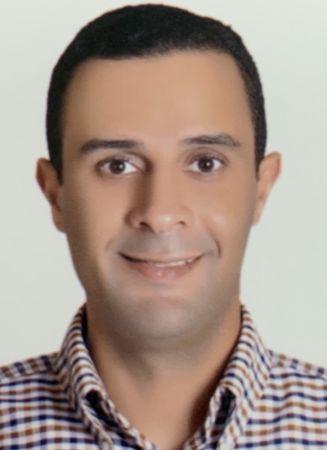
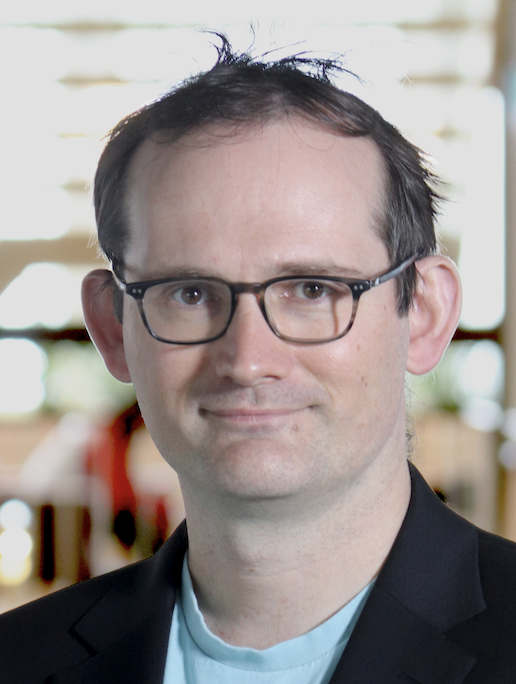
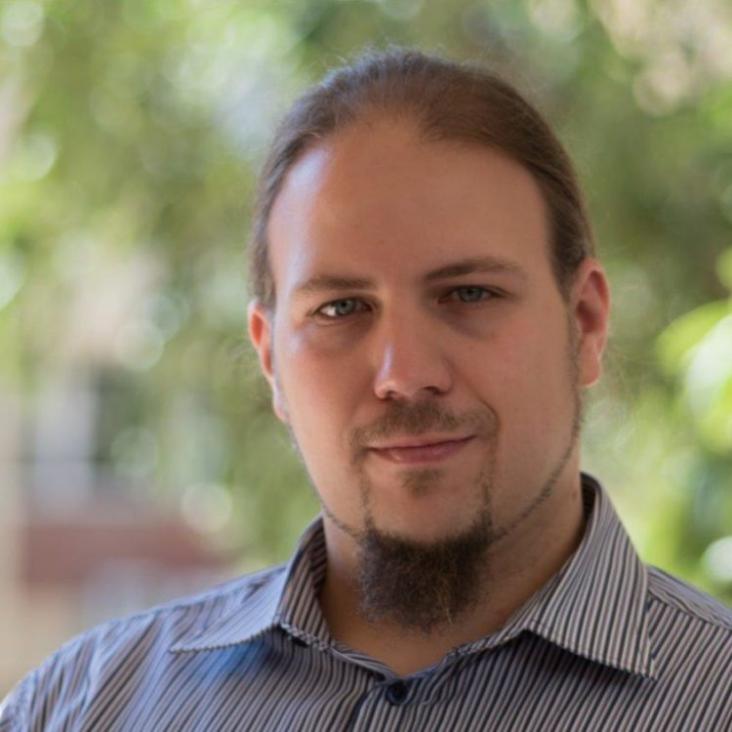
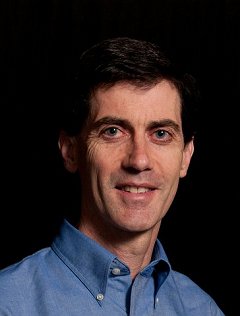
Prof. dr. Wim H. Hesselink is an Associate Professor at the University of Groningen's Faculty of Science and Engineering, affiliated with the Fundamental Computing Science department within the Bernoulli Institute. His research focuses on concurrency, program correctness, theorem proving, and formal methods in computer science and mathematics. He holds an office at Nijenborgh 9, room 5161.0374, and can be reached at w.h.hesselink@rug.nl. Key research contributions include lock algorithms (e.g., MCSH, Triangle), formal verification of distributed systems, and theoretical work on automata (Büchi) and algebraic structures (Lie algebras). His publications span journals like Formal Aspects of Computing and ACM Transactions on Parallel Computing . Education : Not explicitly detailed in text, but his work indicates expertise in advanced computer science and mathematics. Awards : None listed in the provided text. Grants : No specific grants mentioned. His recent work emphasizes high-performance concurrency solutions and algorithm verification, with applications in distributed systems and lock-free computing.
Dr. Ahmed Hassan is an Assistant Professor in the Department of Computer Science and Engineering at Lehigh University, part of the P.C. Rossin College of Engineering and Applied Science. He is a core member of the Scalable Systems Software (SSS) research group. Previously, he held an Assistant Professor position at Alexandria University and a Postdoctoral Research Associate role at Virginia Tech. His research focuses on distributed computing, concurrent and transactional data structures, multiprocessor programming, and NUMA-aware software design. He teaches courses including Analysis and Design of Algorithms, Advanced Programming Techniques, and Distributed Systems. Education: Ph.D., Computer Engineering, Virginia Tech, 2015 M.S., Computer Engineering, Alexandria University, Egypt, 2011 B.S., Computer Science, Alexandria University, Egypt, 2006 Research Interests: Hassan’s work spans distributed systems, transactional memory, and high-performance computing. He explores synchronization protocols, concurrent data structures, and optimizing software for multi-core architectures. His projects often address challenges in scalability, consistency, and efficiency in modern computing environments. Advising & Grants: While specific student advisees or grant details are not listed, his involvement with the SSS group suggests active participation in collaborative research projects. His work has been disseminated through top-tier conferences and technical reports, reflecting a strong focus on applied and theoretical systems research. Labs/Teams: Member of the Scalable Systems Software (SSS) research group at Lehigh University, focused on advancing scalable systems software and distributed computing solutions.
Antonio Filieri is a Senior Applied Scientist at Amazon Web Services (AWS), focusing on automated reasoning for static analysis, security, and test generation. He also holds a Visiting Associate Professor position at the Department of Computing, Imperial College London. His research interests revolve around formal methods, probabilistic program analysis, and control theory applied to software engineering. He has taught courses on data structures, concurrency, and probabilistic model checking, and has advised three PhD students. His work is funded by EPSRC, The Royal Society, NCSC, and Imperial College London. Notable awards include the ACM Distinguished Paper Award (2023) and the Best Paper Award (2022). Key contributions include advancements in probabilistic symbolic execution, control-theoretic approaches for self-adaptive systems, and runtime verification techniques. Filieri collaborates with leading institutions and researchers, such as Corina S. Pasareanu (NASA Ames) and Matt Dwyer (University of Virginia). His research bridges theoretical foundations with practical applications, addressing challenges in software reliability, security, and scalability.
Roles & Affiliations: Associate Professor at the Australian National University (ANU), School of Computing. Previously held positions at Victoria University of Wellington (2006–2013), Carnegie Mellon University (visiting scholar), and Kyoto University (sabbatical). Served as editor for multiple journals and conference proceedings, including OOPSLA and APSEC. Education: PhD in Programming Languages (Victoria University of Wellington, 2006) BSc(Hons) in Mathematics (Victoria University of Wellington) Research Interests: Focuses on foundational aspects of programming languages, including ownership, immutability, and capabilities. Designs secure languages like Wyvern (collaboration with CMU) and contributes to Rust's lifetime parameters. Explores module systems, effects, and verified software. Recent work addresses reproducibility debt in scientific software and quantum computing models. Article Trends: Recent publications emphasize reproducibility challenges, reactive system verification, and deductive program synthesis. Highlights include systematic reviews on reproducibility debt and formal methods for secure reactive systems. Awards & Recognition: ECOOP 2024 Distinguished Artifact Award FORTE 2022 Best Paper Award ESEC/FSE 2007 Distinguished Paper Award Advising & Grants: Supervises 15+ current students across PhD, Masters, and Honours. Co-leads projects on secure module systems and verified traits. Collaborates with industry (e.g., Alibaba's CUE language) and academia (CMU, KIT). Labs & Teams: Active in the Wyvern project, secure language design initiatives, and international collaborations on formal verification and programming language semantics.
Martin Rinard is a Professor at the Massachusetts Institute of Technology (MIT), affiliated with the Computer Science and Artificial Intelligence Laboratory (CSAIL). He leads the Vertical AI Community of Research and the Systems Community of Research, focusing on advancing artificial intelligence, programming languages, security, and large-scale software systems. His work emphasizes approximate computing, program repair, and deployable machine learning through initiatives like the MIT Center for Deployable Machine Learning (CDML), which ensures robust AI systems for real-world applications. Rinard’s research spans programming languages, software engineering, and systems, with notable contributions to probabilistic programming, security protocols, and neural network verification. He has pioneered techniques for error detection, mitigation, and automated program synthesis. His recent award-winning work includes foundational advancements in program repair and approximate computing methodologies. Research Highlights: Program Repair, Approximate Computing, Probabilistic Programming, Cybersecurity, Machine Learning Safety, and AI-driven Systems. Leadership Roles: Director of MIT CDML, Leader of Vertical AI and Systems Communities at CSAIL. Rinard’s publications reflect a focus on bridging theory and practice, with contributions to compiler optimization, secure software design, and healthcare AI applications like cancer risk prediction models. His team actively develops tools for program analysis, including KumQuat for parallel Unix pipelines and AEDAM for adaptive error detection. Awards: 2025 SIGSOFT Outstanding Research Award for pioneering program repair and approximate computing. Labs/Teams: Core member of CSAIL, CDML, and the Computation Structures Group.
Prof. Michael Backes is an Associate Professor and Head of Astrophysics Research at the University of Namibia (UNAM), leading the Namibian H.E.S.S. group and founding director of the Virtual Institute for Scientific Computing and Artificial Intelligence. He holds concurrent roles as Extraordinary Associate Professor at North-West University (South Africa) and Academic Visitor at the University of Oxford (UK). His research focuses on gamma-ray astronomy of Active Galactic Nuclei (AGN), data analysis methodologies, and next-generation telescope projects like the Cherenkov Telescope Array (CTA) and Africa Millimetre Telescope (AMT). Education : MSc (Dipl.-Phys.) in Physics (2008, TU Dortmund University) PhD (Dr. rer. nat.) in Astroparticle Physics (2012, TU Dortmund University) Research Interests : Gamma-ray astronomy of AGN, multi-wavelength observations, advanced data mining techniques, and instrumentation development. He pioneered semiconductor-based camera technology for gamma-ray telescopes and contributed to major collaborations like FACT and MAGIC. Key Projects : Co-PI of AMT, Namibian-PI of H.E.S.S. observatory projects, and Co-Investigator on the ERC Synergy grant 'Blackholistic'. Active in steering committees for H.E.S.S. and IAU's Southern African Regional Office of Astronomy for Development. Recognition : Annie Maunder Medal 2024 (Royal Astronomical Society), UNAM Meritorious Award 2017, GYA membership (2018–2023), and plenary speaker at World Science Forum 2022. He also chairs the Namibia Scientific Society and drives astronomy outreach initiatives. Labs/Teams : Leads the Namibian H.E.S.S. group and collaborates internationally on major observatories. Founded the Virtual Institute for Scientific Computing and AI to integrate advanced analytics into astrophysical research.
Stefan Rieger is an academic affiliated with the Department of Computer Science II at RWTH Aachen University. His primary research focuses on formal verification of pointer programs, graph grammars for heap abstraction, and concurrent programming analysis. He holds a PhD from RWTH Aachen University (2009) and a Diplom (Master's equivalent) in Computer Science from the same institution (2005). His work emphasizes automated analysis techniques for complex data structures and dynamic memory management in software systems, with notable contributions to model checking and program verification methodologies. Key areas include thread safety in pointer-manipulating programs and optimization of linear code through transformation composition. Rieger's publications span venues such as the International Conference on Graph Transformations (ICGT) and the International Symposium on Formal Methods (FM). His research has addressed challenges in verifying unbounded heap structures and developing formal methods for multi-threaded systems. Contact: rieger@informatik.rwth-aachen.de | Office: Room 4206, Ahornstr. 55, Aachen
Daniel Kopta is an Assistant Professor and Lecturer in the School of Computing at the University of Utah. His research focuses on computer graphics, GPU architecture, energy-efficient computing, and parallel processing, with a strong emphasis on hardware-accelerated ray tracing and memory subsystem optimization. Prior to his academic role, he worked as a Senior OptiX Engineer at NVIDIA, contributing to advanced graphics and computing technologies. He earned his PhD in Computer Science from the University of Utah under Dr. Erik Brunvand, specializing in ray-traced computer graphics and GPU architecture. His work bridges theoretical computer science with practical hardware design, addressing challenges in rendering performance, energy consumption, and scalable computing systems. Key research themes include optimizing memory hierarchies for graphics pipelines, analyzing DRAM behavior in rendering contexts, and developing energy-efficient architectures for real-time applications. His publications span topics like dual-split trees, motion blur algorithms, and multi-core systems simulation (SimTRaX). No scientific awards are explicitly mentioned in the provided information. His advising and grant activities remain unspecified, though his academic role suggests active mentorship in computer graphics and architecture research.
Erez Petrank is a Professor at the Department of Computer Science , Technion - Israel Institute of Technology , where he holds the Andrew and Erna Viterbi Chair. His research focuses on concurrent computing , programming languages , and systems with an emphasis on memory management . Additional interests include parallelism , cryptography , data structures , approximation algorithms , and distributed computing . Research Trends Recent publications highlight his work on safe memory reclamation (ERA Theorem, VBR), lock-free data structures (queues, stacks, B+ Trees), and persistent memory algorithms (NVTraverse, Mirror). These works span concurrent computing , distributed systems , and memory efficiency in multi-threaded environments. Scientific Awards Distinguished Paper Award at Euro-Par 2015 Contact Information Email: erez@cs.technion.ac.il Office: Taub 528, Technion Phone: +972-73-378-4942
Thomas Reps is a Professor at the University of Wisconsin-Madison 's Computer Sciences Department. He has held the J. Barkley Rosser Professor and Rajiv and Ritu Batra Chair since joining in 1982. His research spans program analysis , model checking , abstract interpretation , computer security , and quantum computing . Ph.D. in Computer Science from Cornell University (1982), ACM Doctoral Dissertation Award winner Co-founder of GrammaTech, Inc. (1988) Held visiting positions at INRIA (France), University of Copenhagen (Denmark), CNR (Italy), and University Paris Diderot (France) Research Interests include program slicing, interprocedural dataflow analysis, pointer analysis, software model checking, and code instrumentation. His recent work focuses on quantum circuit verification , CFLOBDDs , and unrealizability logic . His scientific awards include: ACM Fellow (2005) Foreign Member, Academia Europaea (2013) ACM SIGPLAN Achievement Award (2017) He has advised Ph.D. students like Akash Lal (SIGPLAN Dissertation Award) and Gogul Balakrishnan (ETAPS Best Paper Award). His work has produced influential papers such as the 1988 PLDI paper on interprocedural slicing (50 most influential PLDI paper, 2004) and the 2003 TOPLAS paper on parametric shape analysis.
Joseph William Abbott serves as a Doctoral Assistant at École Polytechnique Fédérale de Lausanne (EPFL) within the Laboratory of Computational Science and Modelling (COSMO) under the Institute of Materials in the School of Engineering. He joined EPFL in October 2022 and is concurrently enrolled in the Doctoral Program in Chemistry and Chemical Engineering. Abbott earned his MSci Master's degree in Chemistry from the University of Bristol (2016-2020), including a study-abroad year at the University of Washington where he researched noble gas-doped nanodiamonds under Xiaosong Li. His undergraduate work also included a summer position at STFC neutron facilities near Oxford developing scientific software for neutron scattering data analysis, followed by a Master's thesis on quantum dynamics of photosynthetic energy transfer with Fred Manby at Bristol. His research focuses on machine learning applications for electron density modeling using physics-inspired molecular representations, spanning quantum chemistry, electronic structure theory, molecular dynamics, and battery simulation. Abbott emphasizes open-source scientific software development, with industrial experience from a year-long algorithm development role at BIOVIA (Dassault Systèmes) in Cambridge focused on solid electrolyte interphase growth modeling for lithium-ion batteries. As part of COSMO laboratory operations, Abbott contributes to computational science infrastructure while advancing his doctoral work at the intersection of quantum mechanics and machine learning. His technical profile includes active presence on GitHub, ORCID, and Google Scholar, with research outputs centered on atomistic modeling methodologies.
Walter Guttmann is an Associate Professor in the Computer Science and Software Engineering department at the University of Canterbury . He specializes in the Algebra of Computing , focusing on software correctness, formal verification, and semantic models for programming languages. Research Grants include JSPS Fellowships (2019, 2015) and DAAD Postdoc Fellowship (2010-2011) Conference Involvement spans RAMiCS (2026 co-chair), UTP (2019), and MPC (2015) His work bridges theoretical computer science with practical formal verification, particularly using Isabelle/HOL to mechanize proofs for graph algorithms like Prim's , Kruskal's , and Borůvka's . Recent publications formalize Stone relation algebras for weighted graph reasoning and develop modal algebras for concurrent dynamic logic. Scientific awards include: JSPS Invitation Fellowship (2019, 2015) DAAD Postdoc Fellowship (2010-2011) He has coordinated courses like COSC261 , COSC432 , and COSC470 , contributing to both undergraduate and postgraduate computer science education.
Sam Westrick is an Assistant Professor in the Courant Institute of Mathematical Sciences at New York University . Previously, he was a postdoctoral researcher at Carnegie Mellon University , where he also earned his PhD in 2022 . Research Focus : Provably efficient implementations of high-level parallel programming languages, with key contributions in parallel garbage collection , automatic granularity control , and functional language design Teaching : Currently teaching CSCI-GA.3033-121: Programming Parallel Algorithms at NYU; was a TA for CMU courses 15-210 and 15-122 His work includes the development of MaPLe (MPL) , an open-source parallel functional language with performance comparable to C/C++. Notable awards include the SIGPLAN Reynolds Doctoral Dissertation Award (2023) and best/distinguished paper recognitions at QCE'24, POPL'24, and others. Selected Publications explore topics like quantum circuit simulation , cache coherence specialization , and separation logic for disentanglement . Active in conference service as ML Family Workshop chair and PLDI/SPAA committee member. Mentoring : Advises PhD students, master's and undergraduate researchers at NYU and CMU Collaborators : Umut Acar, Guy Blelloch, Stephanie Balzer, and 20+ others
Denis Ribeaud serves as Senior Research Associate and Co-Project Director of the Zurich Project on the Social Development from Childhood to Adulthood (z-proso) at the University of Zurich's Faculty of Arts and Social Sciences. Since 2006, he has directed the Zurich Youth Surveys (ZYS), which track youth violence trends in Zurich canton using representative student samples. The z-proso project, ongoing since 2003 with over 1,300 participants, examines longitudinal development of violence and problem behaviors through repeated surveys. His educational background includes: Sociology and Social Psychology studies at the University of Zurich PhD in Criminology from the University of Lausanne, where he worked at the Criminological Institute for several years Ribeaud's research focuses on criminology and developmental psychology, specifically investigating how peer victimization, parenting behaviors, socio-emotional skills, and harsh environments influence violence perpetration, mental health, and substance use across adolescence. His work integrates biological measures (e.g., hair cortisol analysis), ecological momentary assessment, and advanced statistical modeling to map causal pathways in youth development. Key specialties include longitudinal cohort design, transdiagnostic mental health analysis, and validation of behavioral instruments. Recent publications reveal heavy emphasis on multi-method approaches combining biological data with psychological assessments. He explores gene expression changes from victimization, hormonal correlates of aggression, and machine learning applications in EMA data, while consistently addressing Zurich-specific youth cohorts. His articles highlight Switzerland-focused violence research, substance use patterns in immigrant vs. native adolescents, and pandemic impacts on young adult coping mechanisms. No scientific awards were documented in the provided materials. Ribeaud's project leadership implies grant management and student supervision, though specific advisees or funding details are absent. His z-proso role involves coordinating cross-disciplinary teams across 13+ years of data collection, suggesting substantial advisory responsibilities in research design and execution. He directs the z-proso project and Zurich Youth Surveys (ZYS), major longitudinal initiatives based at the University of Zurich. These projects maintain archives of data collections from 2004-2022 and employ interdisciplinary teams for analyzing youth violence, mental health, and social decision-making through combined survey and biomarker approaches.
Magnus Olofsson is an active Researcher in the Department of History at Lund University, concurrently serving as a Visiting Research Fellow at the Department of Economic History and a Profile Area Member for Human Rights. His work bridges historical scholarship with contemporary societal issues through Lund's interdisciplinary frameworks. Specializing in Economic History and Swedish Political Development , Olofsson's research examines democratization processes, contentious politics, and labor movements across Sweden's long 19th century (1789-1921). His current focus includes conflict repertoires, urban demonstrations, and welfare sector protests through projects like De stridbara svenskarna (DSS) and HALF: Historisk arbetslivsforskning . Methodologically, he integrates digital humanities approaches with traditional historical analysis. His publication trends reveal sustained engagement with political conflict (68% of recent works), democratization processes (52%), and Swedish social history (47%), with increasing digital methodology application since 2020. Key thematic clusters include labor movement evolution, republican political traditions, and provincial-national cultural dynamics. Nils Karlebys stiftelse för Skånsk kultur och historia (2010) Idéns Minnesfond (2009) Martin Weibulls Minnesfond (2009) Napoleonic Series Writing Contest, Best military paper (2008) As Principal Investigator for the DSS project (2024-2028) and coordinator for welfare sector strike research (2023-2025), Olofsson manages substantial research funding while contributing to the HALF collaborative research group. His academic service includes extensive peer review and conference organization within European historical networks. Olofsson contributes to Lund's Human Rights Profile Area through historical perspectives on political conflict and democratization, while his ContentiousGatherings.se platform demonstrates commitment to digital scholarly communication and public history engagement.