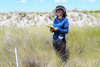
Natasha WoodsView profile
Assistant Professor
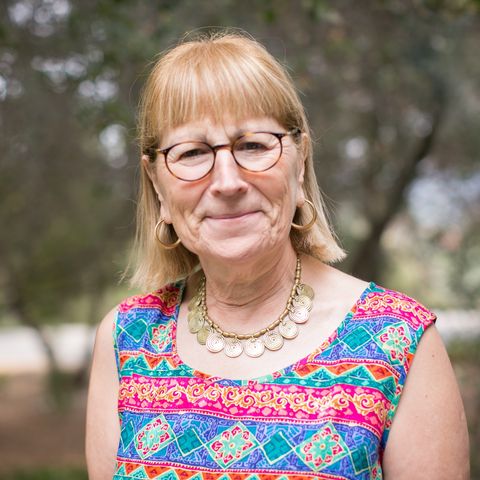
Natasha Woods serves as Assistant Professor of Biology at Moravian University since Fall 2019, maintaining active research affiliations with Virginia Commonwealth University and the Virginia Coast Reserve Long-Term Ecological Research site. Her work bridges field ecology with science education reform and diversity initiatives in environmental science. Educational background includes: B.S. in Biology, Jacksonville State University M.S. in Biology, Jacksonville State University Ph.D. in Evolution, Ecology, and Organismal Biology, The Ohio State University Dr. Woods' research integrates plant community ecology with science education innovation . Her field studies examine shrub encroachment in coastal dunes, seedling establishment under disturbance regimes, and soil salinity impacts on maritime forests. Concurrently, she pioneers 4DEE Framework implementation in ecology education and leads diversity initiatives through UNIDE (Undergraduate Network for Increasing Diversity of Ecologists). Her work uniquely connects ecosystem dynamics with pedagogical reform and representation in STEM. Analysis of her 15 most recent publications reveals three converging research trajectories: (1) Coastal ecosystem dynamics under climate stressors (dune elevation effects, salinity impacts), (2) Science education reform through 4DEE Framework adoption, and (3) Systemic barriers to diversity in ecology using narrative analysis. These strands intersect in her NSF-funded DURSiE project examining storm disturbance impacts while creating research opportunities for underrepresented students. Key recognitions include: NSF Building Research Capacity grant (BRC-BIO-DURSiE) Ford Foundation Postdoctoral Fellowship Virginia Coast Reserve Fellowship Biodiversity Faculty Mentoring Network selection Dr. Woods directs the DURSiE project providing field research opportunities for underrepresented students on Hog Island, Virginia. She serves on UNIDE's steering committee developing national strategies for diversity in ecology while mentoring through the Biodiversity Faculty Mentoring Network. Her grant portfolio emphasizes community-engaged research that links ecological fieldwork with institutional change. Her laboratory in Collier Hall of Science 321 supports coastal ecology research through partnerships with the Virginia Coast Reserve LTER site. Current projects examine accelerated storm disturbance effects on shrub-grass dynamics while developing data-focused teaching modules aligned with ESA's 4DEE Framework.