Scott Morris is a Professor and Nambury S. Raju Endowed Chair in Psychology at Illinois Institute of Technology (IIT), leading the Industrial/Organizational Psychology Program within the Lewis College of Science and Letters. He holds a Ph.D. from the University of Akron (1994) and a B.A. from the University of Northern Iowa (1987). A Fellow of the Society for Industrial and Organizational Psychology and the American Psychological Association, Morris is also an associate editor for the Journal of Applied Psychology . His research focuses on advanced statistical methods in personnel selection systems, including meta-analysis, adverse impact analysis, and computer adaptive testing. He explores bias in subjective hiring practices and develops psychometric models to ensure fairness in employment decisions. Morris’s work bridges quantitative methodology with real-world applications, emphasizing ethical and equitable employment practices. Key research areas include adverse impact measurement, meta-analytic techniques, differential item functioning, and the design of efficient testing systems. He co-authored Adverse Impact Analysis: Understanding Data, Statistics and Risk (2017), a foundational text in the field. Morris’s lab, the Personnel Selection & Analytics Lab , investigates topics like multidimensional adaptive testing and statistical methodologies for EEO compliance. Awards: Fellowships from SIOP and APA, recognition for contributions to organizational psychology and statistical rigor. Media Expertise: Regularly consulted on psychology, data science, and ethics in employment. Labs/Teams: Leads the IIT Personnel Selection & Analytics Lab, focusing on quantitative methods in HR and equity analysis.
Prof. Dr. Marcus Hasselhorn is Acting Director at DIPF | Leibniz Institute for Educational Research and Information and serves as a professor in the Department of Educational Psychology at Goethe University Frankfurt's Department 05 Psychology & Sports Science . His career spans over 25 years of leadership roles in educational research, including geschäftsführender Direktor (2012-2019) at DIPF and speaker of the Hessian LOEWE Center IDeA (2008-2019). Professor of Psychology (2007-present) at DIPF Former Director roles (2012-2019) and ongoing Scientific Board membership Leadership in Leibniz Research Network Bildungspotenziale (2013-2025) Research focuses on the ontogenesis of learning prerequisites , learning disorders , and educational diagnostics , particularly examining individual development and adaptive education for at-risk children. His recent work includes computerized learning assessment systems ( LONDI , iLearn ), language acquisition interventions ( BiSS-Transfer ), and inclusive education frameworks ( INCLASS ). Scientific engagement includes: President of German Psychological Society (2006-2008) Editorial leadership in Zeitschrift für Erziehungswissenschaft (2017-2024) Scientific Board member at IDeA Center (2008-present) Advisory roles in Mercator Institute (2013-present) and Kassel University Council (2010-present) Active in developing diagnostic tools like the Frostig Developmental Test of Visual Perception-3 and leading the BRISE initiative for early childhood education. Current projects address neurobehavioral development ( ReAL ), mental health in schools ( Mentale Gesundheit ), and language acquisition ( TRIO ).
Jinming Zhang is a Professor at the University of Illinois at Urbana-Champaign , affiliated with the College of Education and the Educational Psychology department. He also holds appointments in Statistics and the Center for East Asian and Pacific Studies . His research focuses on advanced statistical methodologies for educational and psychological measurement. Research Interests: Dr. Zhang specializes in multidimensional item response theory (MIRT) , dimensionality assessment , large-scale assessments , generalizability theory , and test security . His work addresses critical challenges in psychometric modeling, including bias correction, item compromise detection, and standards alignment for English Language Learners (ELL). Notable Contributions: He developed the DETECT procedure for dimensionality analysis and pioneered real-time item monitoring systems for computerized adaptive testing (CAT) security. His empirical studies span applications to the National Assessment of Educational Progress (NAEP) and Law School Admission Test (LSAT) analysis.
Patricia Martinkova is an Associate Professor at the Faculty of Education, Charles University , a Senior Researcher leading the Department of Statistical Modelling at the Institute of Computer Science, Czech Academy of Sciences , and an Affiliate Associate Professor at the University of Washington (Statistics and Social Sciences). She is also the founder of the Computational Psychometrics Group and the Center for Educational Measurement and Psychometrics at Charles University. Her research focuses on advanced psychometric models and estimators for granular insights in education, psychology, and health, with emphasis on inter-rater reliability , differential item functioning (DIF) , and reproducible research via tools like ShinyItemAnalysis . She has developed software packages ( difNLR , SIAmodules , SIAtools ) and authored the book Computational Aspects of Psychometric Methods. With R (2023). Recent projects include the 2025–2027 EduCoDe (Czech Science Foundation) and 2024–2028 Digital Technologies and Wellbeing (EU-funded). She has received recognition as a Fulbright Alumna (2013–2015) and organized the IMPS 2024 conference (570+ participants). Teaching includes courses on Statistical Methods in Psychometrics and Item Response Theory , incorporating active learning and R-based tools.
Vinkle Srivastav is a Research Scientist (Chargé de recherche R&D) at the CAMMA group, a collaborative research team between IHU Strasbourg and the University of Strasbourg, where he focuses on advancing surgical data science through novel computer vision and machine learning approaches. His work bridges the gap between clinical practice and artificial intelligence, developing methods for surgical video analysis, 3D medical imaging, and surgical workflow understanding. Education PhD in Computer Science (2018-2021) from University of Strasbourg, France. Thesis: "Unsupervised Domain Adaptation Approaches for Person Localization in the Operating Rooms." Master of Science in Computer Science (2014-2017) from Indian Institute of Technology, Delhi, India. Thesis: "Computerized evaluation of neurosurgery skills using image processing and computer vision techniques." Bachelor of Technology in Electronics and Communication (2007-2011) from Punjab Technical University, Jalandhar, India. Research Interests Vinkle's research spans surgical data science, with particular focus on multi-modal learning approaches for surgical computer vision. His work addresses fundamental challenges in medical AI including domain adaptation, self-supervised learning, and privacy preservation in clinical environments. He develops methods for 3D medical image analysis, multi-view human pose estimation in operating rooms, and surgical activity recognition. His recent work emphasizes multi-modal pretraining frameworks that leverage both visual and textual information to improve surgical workflow understanding. He also investigates scientific simulation techniques, particularly for therapeutic ultrasound applications, where physics-aware deep learning models can accelerate computational processes while maintaining accuracy. Publication Trends Vinkle's recent publications demonstrate a strong trajectory toward multi-modal surgical AI systems that integrate vision, language, and physics-based modeling. His work increasingly focuses on few-shot and zero-shot adaptation techniques to address the data scarcity problem in surgical AI. The publications reveal a progression from basic pose estimation to holistic surgical scene understanding, incorporating team communication analysis and surgical safety protocols. Scientific Awards IPCAI 2024 Best paper award (co-author) IPCAI 2019 Runner-up award in the bench-to-bedside category (co-author) Joint winner for the best paper award in the machine learning for CAI track, IPCAI 2025 Advising and Grants Vinkle actively mentors multiple PhD students and research interns at various levels, supervising thesis work on topics including large-scale multi-modality learning, holistic surgical scene analysis, and self-supervised video representation learning. He serves as Co-PI on two ITI-HealthTech projects: one focused on multi-modality learning for 3D medical imaging (2023), and another on physics-aware deep-learning approaches for therapeutic ultrasound simulation (2024). Laboratories and Teams Vinkle is a key member of the CAMMA research group at IHU Strasbourg, a collaborative team focused on computer-assisted medical modeling and analytics. He co-organizes the Surgical Data Science Summer School, an interdisciplinary program that brings together clinicians and computer scientists to develop AI-driven solutions with clinical impact. His work involves close collaboration with surgical teams at University Hospitals of Strasbourg and international partners including Johns Hopkins University and Technical University of Munich.
Håkan Fischer is a Professor of Human Biological Psychology at Stockholm University, where he has served as Head of the Department of Psychobiology and Epidemiology since 2011. He also holds an associate professor position at Karolinska Institutet, is affiliated with the Aging Research Center and Stockholm University Brain Imaging Centre, and is a faculty member at Digital Futures at the Royal Institute of Technology. Since September 2025, he has additionally served as a visiting professor at Linköping University. Fischer has established himself as a leading researcher in emotional and cognitive processing, with particular expertise in socio-emotional aspects across the lifespan. Fischer earned his PhD in psychology from Uppsala University in 1998, followed by postdoctoral research at Harvard Medical School (1999-2001). He then worked at the Aging Research Center at Karolinska Institutet before joining Stockholm University in 2011. His academic journey includes a sabbatical year (2021-2022) at the University of Florida's Department of Psychology. Fischer is actively involved in university governance as a member of the Swedish Research Council's Subject Council for Humanities and Social Sciences (2023-present) and represents Stockholm University in multiple international collaborations. Håkan Fischer's research primarily focuses on investigating intra- and interindividual differences in affective, cognitive, social and perceptual processing, with special emphasis on age-related differences in adults. His laboratory employs advanced neuroimaging techniques including fMRI, PET, and fNIRS to examine brain function, while also utilizing structural imaging methods like T1-weighted imaging, DTI, and perfusion imaging to study brain structure. Fischer advocates for single-subject small-N designs to better understand emotional and cognitive mechanisms. His current research lines include socio-emotional perception and recognition, oxytocin effects on socio-emotional processing across the lifespan, and AI development for interpersonal communication analysis. Analysis of Fischer's recent publications reveals a strong focus on emotion recognition across populations, neurobiological mechanisms of socio-emotional processing, and methodological innovations. His work consistently integrates behavioral testing, neuroimaging, and genetic analysis to provide comprehensive insights. The increasing incorporation of AI approaches demonstrates his adaptation to emerging technological advances in psychological research. Fischer has published 136 peer-reviewed articles with over 12,200 citations and a Google Scholar h-index of 53. Fischer has received consistent funding since 2002 from prestigious sources including the Swedish Research Council, Wallenberg Foundation, STINT, Riksbankens Jubileumsfond, and Konung Gustav V och Drottning Victorias stiftelse. He currently leads nine funded research projects (two as principal investigator totaling 6.9 million SEK, seven as co-applicant totaling 24.8 million SEK) spanning multiple international collaborations in Sweden, Germany, and the USA. As an educator, Fischer leads the basic course in Cognitive Neuroscience and the master's course in Emotion Psychology and Affective Neuroscience. He regularly teaches at both undergraduate and advanced levels, primarily in biological psychology, cognitive neuroscience, and emotion psychology. Fischer currently supervises six doctoral students (one as main supervisor, four as assistant supervisor) and has mentored graduate students since 2002. Håkan Fischer leads a dynamic research laboratory that investigates emotional, social, perceptual, and cognitive processing. The lab examines how intraindividual variations across stimuli and time, as well as interindividual differences in age, gender, genetics, personality, and sleep deprivation affect these processes. His lab maintains active national and international collaborations with researchers at Stockholm University, Uppsala University, Karolinska Institutet, University of Florida, and University of Gothenburg, creating a robust interdisciplinary research environment focused on translating basic neuroscience into practical applications.
James Wollack is a Professor in the Department of Educational Psychology at the University of Wisconsin-Madison, specializing in Quantitative Methods. He serves as Director of Testing & Evaluation Services and the UW System Center for Placement Testing. His research focuses on test security, including detection of cheating, item compromise, and secure test administration. He leads the Council on Test Security (COTS) and co-edited major handbooks on test security and quantitative cheating detection methods. Education: PhD in Educational Psychology (UW-Madison, 1996); MS in Educational Psychology (UW-Madison, 1993); BS in Psychology (UC Davis, 1991). Research emphasizes statistical methods for detecting group/individual cheating, test fraud prevention, and policy development. Key areas include preknowledge detection, collusion analysis, and compromised-item identification. His work bridges academia and industry, influencing testing program policies globally. Notable awards include the Vilas Associates Award (2019–2021) and recognition from the National College Testing Association. His publications span methodological advancements in cheating detection and foundational test security principles.
April L. Zenisky is a Research Professor and Director of Computer-Based Testing Initiatives at the Center for Educational Assessment, University of Massachusetts Amherst. She specializes in psychometrics, large-scale assessment, and computer-based testing. Her work focuses on improving test designs, score reporting, and innovative item types for credentialing and educational programs. She leads projects like the Massachusetts Adult Proficiency Tests (MAPT-CCR) and has contributed to NAEP evaluations. Currently, she is the Associate Editor of the International Journal of Testing. Education: B.A. in English and Psychology from Amherst College (1997) Ed.D. in Educational Research from University of Massachusetts Amherst (2004) Research Interests: Dr. Zenisky’s work emphasizes practical applications of psychometric principles to real-world testing challenges, including adaptive testing paradigms, cross-cultural assessment, and actionable score reporting. She advocates for user-centric design in score reports and has pioneered methods for integrating technology into testing environments. Lab/Team: She directs the Center for Educational Assessment, collaborating with institutions globally on large-scale assessment projects. Her team develops tools for validating test designs and improving stakeholder communication of assessment outcomes.
Dr. Chia-Wen Chen is a Psychometrician at the Psychometrics Centre within the Cambridge Judge Business School , specializing in Executive Education. Originally from Taiwan, he holds a PhD in Psychometrics from the Education University of Hong Kong (2018), preceded by a master's degree in Psychology from National Chung Cheng University (2012). His career spans institutions in Taiwan, Hong Kong, Norway, and the UK, including postdoctoral research at the University of Oslo's Centre for Educational Measurement (2019-2023). PhD in Psychometrics (2018), Education University of Hong Kong MSc in Psychology (2012), National Chung Cheng University Postdoctoral Researcher (2019-2023), University of Oslo Chia-Wen's research focuses on Item Response Theory (IRT) models for forced-choice and compositional items , with applications in computerized adaptive testing (CAT) , differential item functioning (DIF) , and multilevel modeling . His work includes developing novel IRT methods for ranking items and Most-Least formats, addressing reliability/validity in educational scales like the Principal Instructional Management Rating Scale (PIMRS), and analyzing large-scale datasets (PISA) for cross-national educational insights. Recent publications demonstrate expertise in ipsative testing , online parameter estimation , and factor mixture modeling for educational diagnostics. He has also contributed to methodologies for CAT algorithms in educational evaluation and fault line analysis in school leadership teams.
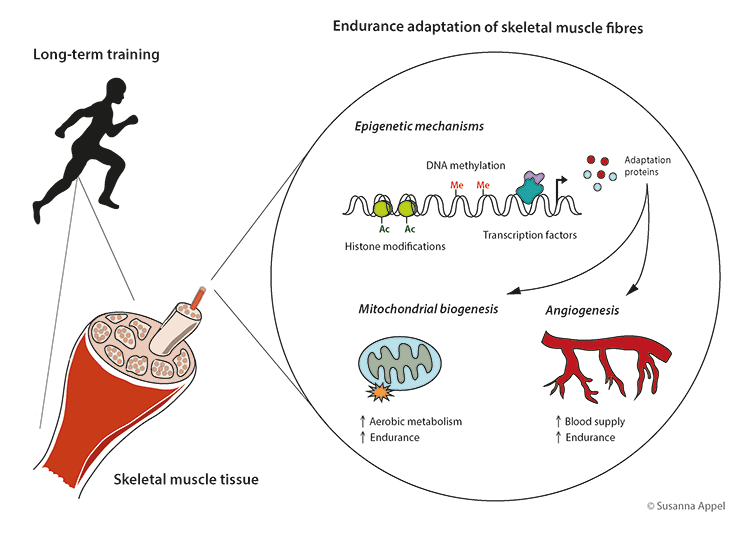
Carl Johan Sundberg is a Professor at the Karolinska Institutet , affiliated with the Department of Physiology and Pharmacology and the Department of Learning, Informatics, Management and Ethics (2025-2027). He serves as Dean for KI Nord and is a licensed physician. Current research focuses on molecular exercise physiology , including mitochondrial biogenesis , epigenetic regulation , and cardiometabolic disease . Key research areas: Medical Genetics and Genomics , Physiology and Anatomy , Public Health . His work bridges molecular mechanisms in skeletal muscle with clinical applications for diabetes, cancer, and post-stroke rehabilitation. Notable awards include the EMBO Certificate of Commendation and European Commission’s Descartes Communication Prize (2005). Recent publications highlight epigenetic differences between trained/untrained individuals, exercise-induced immune mobilization , and digital health tools for cardiac risk stratification. Grants include funding from the Swedish Research Council and Swedish Heart-Lung Foundation .
Dario Cecilio-Fernandes is an Assistant Professor at the Institute of Medical Education Research Rotterdam, Erasmus MC. His work focuses on cognitive processes in medical student learning and assessment, with expertise in skill training, educational assessment, and technology integration in healthcare education. He holds a PhD from the University of Groningen (2018), a Master’s in Psychological Assessment from Universidade São Francisco (2012), and a Bachelor’s in Psychology (2010). Research Interests: Skill Training : Optimizing spaced practice for long-term skill retention and self-regulated learning feedback systems. Educational Assessment : Innovations like computerized adaptive testing and eye-tracking for evaluating cognitive processes. Innovation : Leveraging technology (e.g., AI, physiological measurements) to enhance medical education engagement and outcomes. Key Contributions: His studies show spaced practice improves skill retention, and SRL feedback enhances clinical performance. He collaborates internationally and contributes to journals like Medical Teacher . Awards: Poster Prize – 1st place (2023) Sao Paulo Research Foundation Grants (2020, 2019) Medical Education Choice Critics Awards (2018) Activities: Involved in invited talks (e.g., AI in Med Ed, Transfer of Learning) and editorial work for Medical Teacher .
Boyan Paskalev Bontchev is a Professor in the Department of Software Technologies at Sofia University's Faculty of Informatics. With a PhD in Computer Science from the Center of Informatics and Computer Technology - Bulgarian Academy of Sciences, he has established himself as a prominent academic in software engineering and educational technology fields. His academic career includes teaching Java Server/Side Programming and OOAD-UML courses at Sofia University and New Bulgarian University since 2000. Professor Bontchev's research focuses on e-learning systems, adaptive hypermedia, and software architecture. His work centers around developing self-adaptive educational platforms, with significant contributions to the ARCADE e-learning platform that complies with IEEE LTSA standards. He has published extensively on topics including courseware composition, learning content interoperability, and assessment frameworks, demonstrating a consistent research trajectory in educational technology systems. His publications reveal a strong emphasis on practical applications of educational technology, particularly in self-adaptive hypermedia navigation, e-learning courseware delivery, and assessment interoperability. The research shows progression from foundational work on software architecture to increasingly sophisticated adaptive learning systems that incorporate learner modeling and personalized educational experiences. Professor Bontchev maintains active industry connections, having worked as a software engineer and project manager at companies including Rila Solutions, ESDI Ltd., and OBLOG Software Ltd. His international experience includes research stays at the University of Vienna and Technical University of Aachen, contributing to his broad perspective on educational technology development. With proficiency in multiple programming languages and environments including Java, JSP, Oracle, and web technologies, he bridges theoretical computer science with practical educational applications. His multilingual capabilities (English, Portuguese, German, Russian, Spanish) further enhance his international research collaborations and academic contributions.
Professor Stuart Johnstone is a prominent researcher and educator in the School of Psychology at the University of Wollongong. He has held academic positions at UOW since 1999, progressing from Lecturer to his current role as Professor since 2018. He previously served as Deputy Head of School (Teaching and Learning) from 2020-2023 and Acting Head of School in 2024. He also maintains a Visiting Professor position at Zhejiang Normal University's Faculty of Special Education since 2018. His educational background includes a PhD and Bachelor of Science (Honours Class I) from the University of Wollongong, followed by post-doctoral work at the University of Sydney's Department of Psychological Medicine. He is a Registered Psychologist with the Australian Health Practitioner Regulation Agency (2001-2022). Johnstone's research focuses on neurophysiological approaches to understanding and treating ADHD, particularly using brain electrical activity measures to improve assessment and diagnosis. His work spans biological psychology, psychophysiology, and developmental psychology, with emphasis on neurocognitive training interventions for children with ADHD. He has developed innovative approaches to ADHD assessment that incorporate EEG measurements alongside traditional clinical evaluations. His publication record demonstrates consistent focus on ADHD neurophysiology, with recent work expanding into cross-cultural applications, portable EEG technology for educational settings, and animal-assisted interventions. His research shows growing emphasis on practical applications of neurocognitive assessment and training, with increasing attention to remote delivery methods and cross-cultural validity of interventions. UOW Vice-Chancellors Award for Outstanding Achievement in Research Commercialisation (2013) UOW Vice-Chancellors Award for Global Strategy (2018) Johnstone actively supervises numerous PhD students, with current projects examining sleep patterns in ADHD, human-dog interactions for wellbeing, and test anxiety in school children. His research is supported by multiple grants including external funding from the Prevention Research Support Program and internal University of Wollongong grants focused on neurocognitive assessment and training. His work has strong international collaboration, particularly with Chinese institutions. He coordinates courses in Biological Psychology and Psychophysiology and has developed international educational programs in Singapore. His research group focuses on translating neurophysiological findings into practical assessment tools and interventions for ADHD, with recent work emphasizing portable technology and cross-cultural applications.
Kylie Gorney is an Assistant Professor of Measurement and Quantitative Methods in the Department of Counseling, Educational Psychology and Special Education at Michigan State University (MSU). She holds a Ph.D. in Educational Psychology (Quantitative Methods) from the University of Wisconsin-Madison and served as the 2022–23 Harold Gulliksen Psychometric Research Fellow at Educational Testing Service. Her research focuses on test security, item response theory, and computerized adaptive testing (CAT), with publications in leading journals such as British Journal of Mathematical and Statistical Psychology and Psychometrika . Dr. Gorney’s work addresses challenges in maintaining testing integrity, including detecting cheating through methods like answer similarity analysis and response time analysis. She has developed an R package called aberrance for automated detection of aberrant test-taker behavior. Her contributions span both theoretical advancements in psychometrics and practical applications in secure testing environments. Her recent publications (2022–2025) emphasize innovations in CAT algorithms, person-fit statistics, and the integration of response-time data into security frameworks. These studies highlight advancements in detecting item compromise, preknowledge, and test speededness while improving subscore interpretation for polytomous items. Dr. Gorney is affiliated with MSU’s College of Education and maintains an active research agenda bridging statistical theory with real-world testing scenarios. She is accessible via email at kgorney@msu.edu .
Mariana Silva is a Teaching Associate Professor at the Siebel School of Computing and Data Science , University of Illinois Urbana-Champaign, and CEO of PrairieLearn Inc. She holds a Ph.D. in Theoretical and Applied Mechanics from UIUC (2009). Her research focuses on leveraging educational technologies, such as Large Language Models (LLMs), to enhance computer-based assessments and scalable teaching practices. Silva has taught over 11 courses to 9,000+ students, emphasizing innovations in STEM education. She has pioneered adaptive testing tools and randomized question generators to improve equity and accessibility in large-scale courses. Education : Ph.D., Theoretical and Applied Mechanics, UIUC (2009) M.S., Mechanical Engineering, Federal University of Rio de Janeiro (2003) B.S., Mechanical Engineering, Federal University of Rio de Janeiro (2001) Research Interests : Silva’s work centers on technology-driven education , including automated grading using LLMs, design of adaptive assessment systems, and fostering collaborative learning. She has developed tools like PrairieLearn to streamline teaching workflows while maintaining educational rigor. Awards & Recognition : Scott H. Fisher Computer Science Teaching Award (2022) Rose Award for Teaching Excellence (2022) Multiple “List of Teachers Ranked as Excellent” (2009–2017) Engineering Council Outstanding Advising Award (2014–2019) Labs & Teams : Co-founder of PrairieLearn Inc., which provides open-source platforms for STEM education. She collaborates with interdisciplinary teams to advance educational technologies and testing infrastructure.