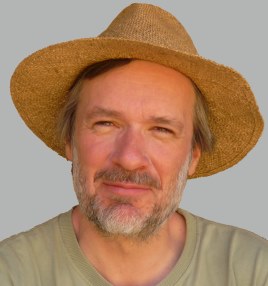
Prof. Andrea Crivellini is an Associate Professor at the Department of Industrial Engineering and Mathematical Sciences (DIISM) within the College of Engineering at Marche Polytechnic University . His research focuses on Computational Fluid Dynamics (CFD) , Turbulence Modeling , and High-Order Numerical Methods , particularly Discontinuous Galerkin (DG) solvers for fluid dynamics and turbulence simulation. Recent publications highlight his expertise in entropy-aware DG schemes, hybrid RANS/LES models, and implicit time integration for turbulent flows. He contributes to advancing CFD applications in aerospace, mechanical systems, and marine engineering. His work emphasizes numerical stability , mesh adaptivity , and high-performance computing .
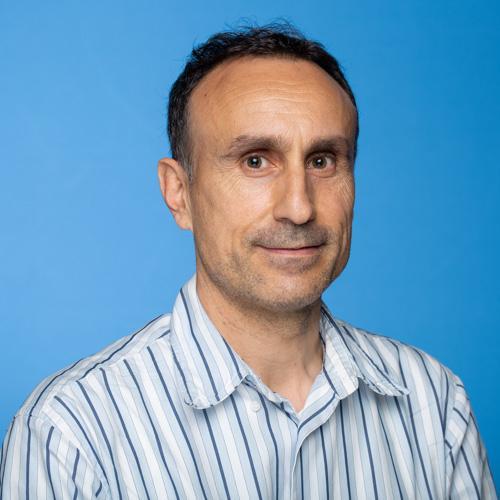
Professor LUCA PIERANTONI serves as a Full Professor at the Department of Information Engineering within the Faculty of Engineering at Università Politecnica delle Marche (UNIVPM). His scientific specialization lies in IINF-02/A - Electromagnetic Fields, with his office located at Via Brecce Bianche. He maintains regular office hours on Wednesdays and Fridays from 10:00-12:00 at the Engineering Faculty's Department of Information Engineering. Professor Pierantoni's research spans the cutting edge of nanoscale electronics and electromagnetic phenomena . His expertise encompasses ferroelectric materials at the nanoscale , quantum transport in 2D materials , and high-frequency device applications . His work bridges theoretical modeling with experimental validation, particularly in graphene-based geometric diodes, transition metal dichalcogenides, and hafnium-based ferroelectric systems. Notably, he has pioneered research on asymmetric transport phenomena in nanoscale structures and their applications for energy harvesting across microwave to terahertz frequencies. Analysis of Professor Pierantoni's recent publications reveals a cohesive research trajectory focused on multiscale modeling of nanoscale electronic devices. His work demonstrates exceptional integration of ab initio calculations, quantum transport modeling, and experimental device characterization. A significant trend involves the development of graphene-based geometric diodes for terahertz rectification, with applications in energy harvesting and sensing. His research on ferroelectric hafnium oxide systems shows promise for next-generation memory and RF applications, while his investigations into transition metal dichalcogenides reveal novel optical and electronic properties for optoelectronic applications. Professor Pierantoni appears actively engaged in academic mentorship, as evidenced by his involvement in the Nano Student Design Competition initiative. His research program likely involves collaboration with European partners given the international scope of projects in nanoelectronics and the presence of Horizon Europe framework references in the institutional context. His technical expertise spans from fundamental quantum phenomena to practical device implementation, positioning him at the forefront of nanoscale electromagnetic research.
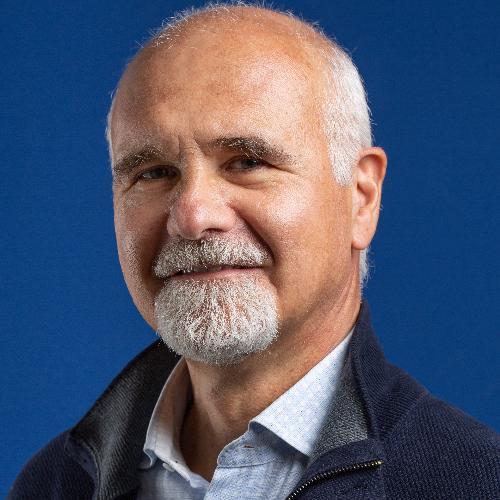
Prof. Michele Serpilli is an Associate Professor at the Department of Civil, Building and Architectural Engineering within the College of Engineering at Università Politecnica delle Marche (UNIVPM). His research focuses on structural mechanics and composite materials, particularly imperfections in interfaces, strain gradient elasticity, and multiphysics modeling. University: Università Politecnica delle Marche (UNIVPM) Department: Department of Civil, Building and Architectural Engineering Academic Rank: Associate Professor Research Contact Email: m.serpilli@univpm.it Research Interests: Michele Serpilli specializes in the mechanics of composite materials, developing advanced models for imperfect interfaces in multiphysics systems. His work bridges classical elasticity, micropolar theory, and strain gradient approaches to analyze micro- and macro-scale structural behaviors. He also explores sustainable engineering solutions, such as hybrid glass-wood bracing systems and thermal-performance masonry. Publication Trends: Over the past five years, Serpilli has published extensively on imperfect interface modeling (12 articles), strain gradient elasticity (5 articles), piezoelectric composites (6 articles), and thermoelasticity (3 articles). His methodologies emphasize asymptotic analysis, homogenization, and finite element validation, addressing both theoretical and applied challenges in materials science.
Leonardo Zappelli is a Researcher in the Department of Information Engineering at the Faculty of Engineering, Marche Polytechnic University (Università Politecnica delle Marche) in Ancona, Italy. His scientific sector is IINF-02/A - Campi elettromagnetici (Electromagnetic Fields). He maintains regular office hours Monday through Friday from 10:00-13:00 at the Engineering Faculty (Office q. 170). Dr. Zappelli's research spans electromagnetic field theory with particular expertise in waveguide technology, metamaterials, and equivalent circuit modeling. His work bridges theoretical electromagnetic principles with practical microwave engineering applications, focusing on the development of efficient models for complex electromagnetic structures. His research has evolved from fundamental waveguide analysis in the 1990s to advanced metamaterial and nanocomposite applications in recent years. His publication record shows a clear trajectory from foundational electromagnetic theory to cutting-edge applications. The most recent publications (2023-2024) demonstrate continued innovation in electric-LC resonators, microwave filters, and nanocomposite materials for structural health monitoring. His work consistently combines numerical analysis with experimental validation, reflecting a strong commitment to both theoretical rigor and practical applicability in electromagnetic engineering. Dr. Zappelli has contributed significantly to the development of equivalent circuit approaches for complex electromagnetic structures, with applications spanning from fundamental waveguide components to advanced metamaterial systems. His research group has maintained a consistent output of high-quality publications over multiple decades, indicating sustained research productivity and relevance in the field of electromagnetic engineering.
Prof. Massimo Solzi is a Full Professor in Experimental Physics of Matter at the Department of Mathematical, Physical and Computer Sciences (SMFI) of the University of Parma. He coordinates the Physics Unit within SMFI and co-leads the Parma Research on Magnetism Laboratory (PaRMA). His research spans magnetic materials, multiferroics, and magnetocaloric effects, with a focus on energy conversion applications. Education: 1988: Diploma in Science and Technology of Materials (University of Parma, Thesis: "Coercivity mechanisms in NdFeB-type permanent magnets") 1984: Laurea in Physics (Solid State Physics, University of Parma, Thesis: "Energy transfer between dopants in alkali halogen matrices") Research Trends: Magnetocaloric materials for magnetic refrigeration Exchange-coupled hard/soft magnetic multilayers Multiferroic perovskite oxides Micromagnetic modeling of nanostructures High-pressure synthesis techniques Development of magnetic calorimeters Project Leadership: MISE "SPEED PARMA PoC - Strengthen Parma Patents" (2023-2025) POR-FESR 2014-2020 Project on Magnetic refrigeration Laboratory Involvement: Director of the PaRMA laboratory, contributing to the IMEM-CNR Institute's research programs.
Aba LOSI is an Associate Professor in Biophysics at the University of Parma's Department of Mathematical, Physical and Computer Sciences, teaching Physics, Photobiophysics, and Applied Physics across Biology, Physics, and Veterinary Medicine programs. With over 25 years of academic service since her 1997 PhD, she directs research on bacterial photoreceptor mechanisms and applications. Bachelor's Degree in Biology, University of Parma (1992) Professional Qualification in Biology (1993) PhD in Biophysics, University of Parma (1997) Her research investigates visible-light photoreceptors in bacteria, focusing on structure-function relationships, energy landscapes, and physiological roles using time-resolved photoacoustics and UV-Vis spectroscopy. Current work explores optogenetic applications, protein engineering for imaging, and evolutionary aspects of photosensing systems. Recent publications (2020-2024) reveal three dominant trends: (1) Advanced biophysical characterization of channelrhodopsins and cyanobacteriochromes for photoacoustic imaging; (2) Molecular dynamics studies of LOV domain mutations affecting oxygen diffusion and photocycle kinetics; (3) Interdisciplinary work bridging photobiology with science education, gender equity in STEM, and public engagement through initiatives like the European Researchers' Night. Photocite-B award (2014) for most cited review on Photochemistry and Photobiology (2010-2013) Professor LOSI has supervised 3 PhD theses and 15 bachelor/master theses while securing competitive funding including DFG Forschergruppe FOR 526 (2004-2010) as Guest Scientist, Vigoni Programme coordination (2012-2013), and PRIN 2010-2011 participation. She serves as referee for H2020, ANVUR, and French National Research Agency. Her laboratory maintains active international collaborations with Max Planck Institutes (Germany), Forschungszentrum Jülich, Istituto Italiano di Tecnologia, and universities in Argentina, China, and Denmark, focusing on advanced spectroscopic techniques to decode photoreceptor mechanisms and develop novel biotechnological tools.
BELLINGERI MICHELE is a fixed-term researcher at the Department of Mathematical, Physical and Computer Sciences, University of Parma. His academic career focuses on interdisciplinary applications of network science, bridging ecology, epidemiology, and materials physics. He teaches "Physics applied to Gastronomy" in the Gastronomic Science program for multiple academic years. Interdisciplinary network analysis Biodiversity conservation in agricultural ecosystems Epidemiological modeling in social systems Machine learning applications in complex networks Material science under network theory His research spans complex systems theory, with recent work analyzing: (1) biodiversity loss in agricultural food webs using energetic criteria, (2) disease spreading dynamics in social systems through compartmental models, (3) network robustness in weighted systems, and (4) material properties in nanocrystalline films. Publications increasingly incorporate AI and machine learning techniques for ecological and epidemiological predictions.
GIULIA DI CREDICO is a fixed-term researcher at the Department of Mathematical, Physical and Computer Sciences, University of Parma. She specializes in applied mathematics, computational mechanics, and numerical analysis, with a focus on boundary element methods (BEM) for wave equations and elastodynamics. Her work spans theoretical developments and biomedical applications, including PK-PD modeling for anesthesia control. Teaching: Courses in basic mathematics for animal sciences, laboratory of statics, and numerical analysis for mathematics and engineering programs. Research: Advanced BEM algorithms for dynamic frictional contact problems, time-domain simulations, and biomedical modeling. Publications: 15 recent works highlight her expertise in BEM, elastodynamics, wave propagation, and optimization algorithms.
Olivier MARTI is a Researcher at the Laboratoire des Sciences du Climat et de l'Environnement (LSCE) under Commissariat à l'énergie atomique et aux énergies alternatives (CEA), and co-head of the MERMAID team since 2020. He teaches at Université Paris Diderot in the Master 2 Science et Génie de l'Environnement program. His career includes roles as head of the CalculS team (2003–2012) and researcher in the CLIM team (1992–2003) at CEA. Education: PhD in Oceanography, Université Paris VI (1992) Engineering Diploma (Environment Marin), ENSTA (1988) Research interests focus on iterative methods for ocean-atmosphere coupling and modeling recent climate variability (Holocene, glacial cycles). He leads projects like TipESM (2024–2027), TRACCS (2023–2031), and ESM2 (2022–2023). His publications emphasize climate model development, paleoclimate dynamics, and numerical methods for Earth system models. Articles (2019–2022) predominantly analyze Holocene climate, ocean-atmosphere interactions, and model validation. Trends include refining coupling algorithms (e.g., Schwarz iterative methods), assessing dust/aerosol impacts, and validating models against paleoclimate proxies. Scientific awards: None listed. Advising/Grants: Actively leads ANR/EU projects (COCOA, HEAT, PACMEDY) and contributes to PMIP4. No student advisees mentioned. Labs/Teams: Heads MERMAID team at LSCE; member of IPSL modeling governance, Geoscientific Model Development editorial board, and high-performance computing committees (GENCI/TGCC/CCRT).
Francesco Muniz Miranda is an Associate Professor in the Department of Chemical and Geological Sciences at the University of Modena and Reggio Emilia (UNIMORE), Italy. He specializes in physical chemistry and computational spectroscopy , with a robust portfolio in density functional theory (DFT) , surface-enhanced Raman scattering (SERS) , and molecular dynamics simulations . His teaching includes courses on Chemical-physical methods for the characterization of materials and Physical Chemistry and Molecular Spectroscopy for both undergraduate and master's students. Research Interests His research spans a diverse range of fields, including: Computational modeling of molecular interactions and spectroscopic properties Enzyme catalysis and plastic degradation mechanisms (e.g., PETase) Nanomaterials and plasmonic systems for sensing and catalysis Metal-organic frameworks (MOFs) and their stability under extreme conditions Coordination chemistry and spin crossover phenomena Surface science and spectroscopy of nanostructured materials His work often integrates experimental validation with high-level computational modeling , bridging theory and application in materials science and catalysis. Publications and Research Output From 2025 to 2018, he has consistently published in high-impact journals. His recent work includes mechanistic studies on PETase-catalyzed plastic hydrolysis, DFT-based SERS analyses, and MOF stability studies. These articles reflect a strong focus on sustainability, advanced spectroscopy, and computational benchmarking. Teaching and Mentorship He teaches both undergraduate and master's level courses, emphasizing spectroscopic techniques, quantum chemistry, and materials characterization. His courses include practical components such as laboratory exercises and computational modeling, often using software for spectral simulation and analysis. Laboratory and Collaborations He is affiliated with the Department of Chemical and Geological Sciences at UNIMORE and has access to advanced instrumentation. He collaborates with national and international institutions, including universities in Florence and Belgium, and participates in interdisciplinary projects combining chemistry, physics, and materials science.
Alessio De Angelis is a researcher affiliated with the University of Perugia, focusing on advanced measurement systems, battery technology, and localization techniques. His work spans disciplines such as electrical engineering, machine learning, and IoT applications. University: University of Perugia Email: alessio.deangelis@unipg.it His research interests include: Battery management and state-of-charge estimation Uncertainty quantification in AI-based systems Ultra-wideband (UWB) and magnetic localization Wireless sensor networks for environmental monitoring Signal processing for quantized and constrained data IoT applications in structural and health monitoring Recent publications highlight his expertise in battery diagnostics, localization algorithms, and AI-driven measurement systems. Key trends involve integrating machine learning with electrochemical impedance spectroscopy (EIS) and optimizing low-complexity sensor architectures.
Francesco Bellotti is an Associate Professor at the University of Genoa's Department of Naval, Electrical, Electronic and Telecommunications Engineering (DITEN). He teaches advanced courses including Computational Intelligence, Cyber Physical Systems, and Machine Learning for Automated Driving across master's programs in Electronic Engineering and Engineering Technology for Strategy and Security. His institutional role includes membership in the steering committee of the Italian Excellence Center for Logistics, Transport, and Infrastructure (CIELI). Bellotti's research focuses on artificial intelligence and embedded systems , with applications in automotive technology, edge computing, and TinyML. Key areas include real-time driver distraction detection, deep reinforcement learning for autonomous parking, neural architecture optimization for microcontrollers, and cross-domain activity recognition. His work bridges theoretical machine learning with resource-constrained hardware implementations. Recent publications (2024-2025) demonstrate a strong emphasis on optimizing deep learning models for edge deployment, particularly in automotive and IoT contexts. Dominant themes include real-time neural network inference on microcontrollers, adversarial training for robust autonomous agents, video preprocessing for driving scenarios, and benchmarking lightweight vision models. The research consistently targets efficiency-critical applications, reflecting Bellotti's focus on scalable embedded AI solutions.
Raffaele Bolla is a Full Professor at the Department of Naval, Electrical, Electronic and Telecommunication Engineering (DITEN) within the University of Genova, School of Engineering. He specializes in telecommunications, with research focusing on energy efficiency, 5G/6G networks, network virtualization, and green technologies. He coordinates the Master's Degree program in Telecommunications Engineering and teaches courses including Cyber Security , Internet and Multimedia Engineering , and Wireless Networks (5G) and Cloud/Edge Computing . Research Interests: Energy-efficient network design 5G/6G network virtualization Machine learning for network optimization Sustainable telecommunications Human-machine interaction in industrial networks Smart grid technologies His recent publications address container scaling, network observability, and power consumption in next-generation networks. He leads projects like RESTART and contributes to standards in energy-efficient networking.
Sonia Cambiaso is a Research Fellow at the University of Genoa, affiliated with the Department of Physics (DIFI) and supporting teaching activities in the Department of Naval, Electrical, Electronic, and Telecommunications Engineering (DITEN). Her work focuses on computational modeling of nanomaterials and fluid dynamics at molecular interfaces. Research Interests: Cambiaso specializes in coarse-grained modeling of multi-component nanomaterials, water intrusion/extrusion in nanopores, and development of transferable simulation models for polymers and metal oxides. Her research bridges materials science, biophysics, and computational chemistry. Recent Publications: Her studies in 2025-2022 explore Martini 3 force field applications, including chitosan acetylation dynamics, silica-water interfaces, polydimethylsiloxane modeling, and surface tension in water mixtures. These works highlight her expertise in simulating nanoscale transport and interfacial phenomena.
Micaela Caserza Magro serves as a Lecturer at the University of Genoa with cross-departmental appointments spanning the Department of Internal Medicine and Medical Specialties (DIMI), the Department of Informatics, Bioengineering, Robotics and Systems Engineering (DIBRIS), and the Department of Naval, Electrical, Electronic and Telecommunications Engineering (DITEN). She teaches Industrial Measurements for Electrical Engineering and Cardiovascular Technology programs, Electrical and Electronic Measurements for Electrical and Computer Engineering curricula, and Technologies for Industrial Automation for Master's students in Computer Engineering. Her research integrates power systems engineering with industrial automation and condition-based maintenance methodologies, focusing on real-time safety protocols for electrical infrastructure and data-driven maintenance solutions for railway systems. Key investigations include IEC 61850 GOOSE messaging applications, microgrid simulation frameworks, and diagnostic algorithm development for railway vehicle fleets using comprehensive data acquisition and analysis pipelines. Publication analysis (2016-2019) reveals concentrated expertise in applying industrial communication standards to power system safety and developing condition monitoring frameworks for railway assets. Her work demonstrates consistent methodological focus on data acquisition, transmission protocols, and algorithmic development for critical infrastructure maintenance, bridging electrical engineering principles with mechanical system diagnostics. Scientific Awards: No scientific awards mentioned in available information Advising and Grants: No student advisement details or research grant information provided in source materials. Office hours are conducted by appointment via email correspondence. Labs and Teams: Source documentation contains no references to dedicated laboratories, research teams, or collaborative research groups associated with her work.