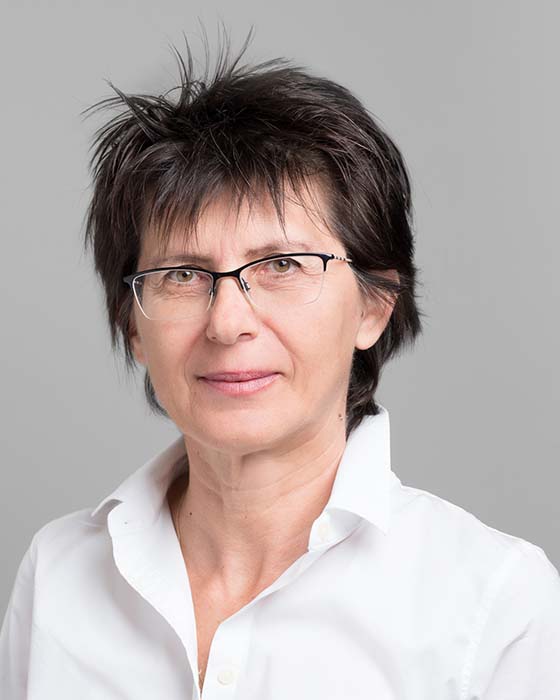
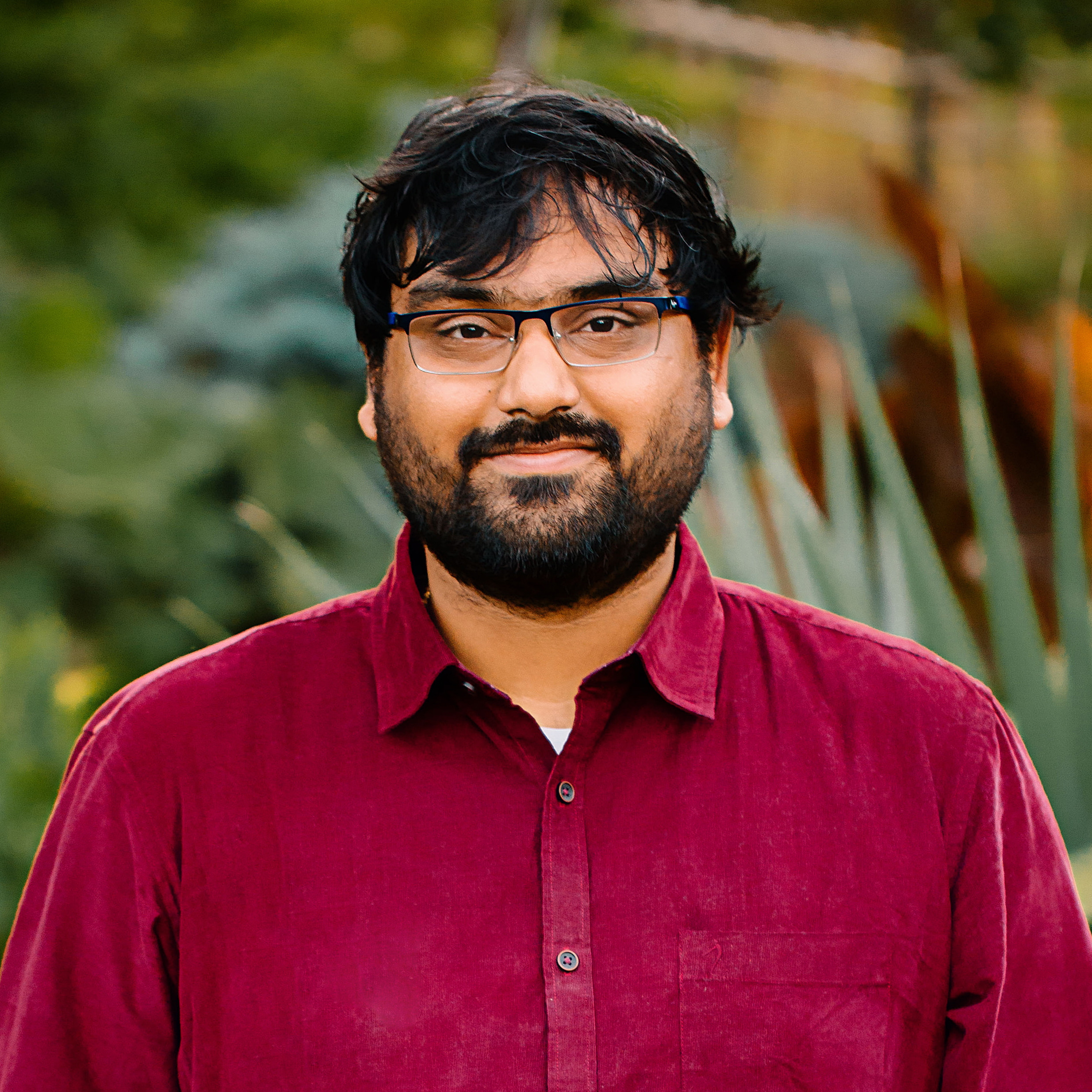
Bernhard Jenny is an Associate Professor at Monash University's Faculty of Information Technology, specializing in immersive visualization and geospatial data. He holds a PhD in Cartography from ETH Zurich and has held previous roles at Oregon State University and RMIT University. His research focuses on virtual reality (VR), augmented reality (AR), and cartographic innovations for geospatial data representation. Education: Doctor of Sciences in Cartography, ETH Zurich (2010) Postgraduate Certificate in Computer Science, ETH Zurich (2005) Master of Science in Surveying, EPFL (2000) Research Interests: Combines cartography, computer graphics, and human-computer interaction to explore VR/AR applications for geospatial data. Current work includes immersive analytics, terrain visualization, adaptive map projections, and storytelling with geospatial data. Recent Articles: Focus on ambient occlusion for terrain shading, grammars for immersive visualization transitions, and AR/VR interfaces for spatial data. Awards: Henry Johns Award (2007, 2011, 2012) ETH Medal (2010) Best Paper Honorable Mentions (ACM CHI, DIS) Grants & Projects: Leads initiatives like the 'Immersive Analytics' extension and 'National Geographic Relief Shading' project. Collaborates on neural networks for cartographic relief shading and sustainable development goals (SDGs). Labs & Teams: Heads the Embodied Visualisation Lab at Monash, focusing on immersive analytics and geovisualization tools.
Professor Melanie Swalwell is a leading scholar in digital media heritage at Swinburne University of Technology, affiliated with the School of Social Sciences, Media, Film and Education. She leads the Digital Heritage Lab and is Principal Investigator on multiple Australian Research Council (ARC) projects focused on preserving digital games and media art. Her work bridges academia, cultural institutions (such as ACMI and RMIT), and the public through exhibitions, policy reports, and media engagement. Her research interests include digital preservation, media archaeology, videogame history, and the cultural significance of obsolete computing technologies. She explores how complex digital artifacts—like 1980s and 1990s Australian videogames and interactive media artworks—can be conserved, accessed, and studied using emulation and digital infrastructure. Her work emphasizes community, national identity, and vernacular digital practices. Her recent publications reflect a strong trajectory in digital heritage, focusing on emulation (EaaSi), archival methodologies, and the cultural history of home computing. Themes include the democratization of digital creation, the fragility of born-digital works, and collaborative preservation across GLAM sectors. She has published with MIT Press, Palgrave, and Routledge, and her book Homebrew Gaming and the Beginnings of Vernacular Digitality is a foundational text in the field. ARC Future Fellow (2014–2018) Lead on multiple ARC Linkage and LIEF projects including 'Play It Again' and 'Archiving Australian Media Arts' Chair of SIGCIS (Special Interest Group for Computers, Information and Society) She supervises doctoral and master’s students in areas such as media art conservation, hardware hacking, and cross-cultural computing history. Her grants involve partnerships with national institutions to build emulation infrastructure and train heritage professionals. She also manages the Digital Heritage Lab, which houses vintage computing systems for research and preservation.
Tanja Blascheck is a PostDoc Researcher and Margarete von Wrangell Fellow at the Institute for Visualization and Interactive Systems (VIS) at the University of Stuttgart. Her work focuses on visual analytics , eye tracking , and microvisualizations for smartwatches and other wearable devices.
Rebecca Ross is Programme Director of Graphic Communication Design at Central Saint Martins, University of the Arts London. She holds a PhD in History & Theory of Architecture and Urbanism from Harvard, an MSc from UCL, and an MFA from Yale. Her academic appointments include positions at Harvard, NYU, and Yale. Research interests span: Graphic/communication design and urban media Interaction of images/media/data with urban environments Addressing systems and location-based media Graphic design as knowledge practice Alternative academic publishing formats Publications focus on urban media, spatial representation, and design research methodologies, with recurring themes of public engagement, digital mediation of urban experience, and critical analysis of technology corporations. Awards include: Honorary Senior Research Associate at UCL (2016-2019, 2024-2027) Supervision includes 5+ PhD students researching urban communication, spatial bureaucracy, and design practices. Developed the MA 'Communicating Complexity' program. Professional activities include grant assessment for AHRC and promotion reviews for international institutions. Co-founded Urban Pamphleteer publication with UCL Urban Lab and created the public installation London is Changing .
Lacra Pavel is a Professor in the Edward S. Rogers Sr. Department of Electrical and Computer Engineering at the University of Toronto, Faculty of Applied Science and Engineering. She joined the department in August 2002 after industry experience at Nortel Networks and Solinet Systems, and remains active in the System Control Group and Photonics Group. Her educational background includes: Diploma of Engineering (with distinction) in Automatic Control, Technical University Gh. Asachi of Iasi, Romania (1989) PhD in Electrical and Computer Engineering, Queen's University at Kingston (1996) Research focuses on integrating game theory, control theory, and optimization within networked systems. She pioneered applications in noncooperative/evolutionary game theory for network control, nonlinear/robust control frameworks, and energy-efficient optical/transportation networks. Current work develops mathematical foundations for learning in games via control-theoretic approaches to enable autonomous multi-agent network optimization. Recent publications (2019-2013) reveal dominant trends: distributed Nash equilibrium seeking using passivity-based and operator-splitting methods, stability analysis for optical network power control with time-delays, and extensions to transportation systems like railway timetabling. Key subfields include graphical games, ADMM algorithms, and Lyapunov-based boundary control for distributed parameter systems. Scientific recognition includes: Fellow of the IEEE (2025) for contributions to game theory, control, and optimization for network systems Connaught New Staff Award, University of Toronto (2003) New Opportunities Infrastructure Award, CFI/OIT (2003) Award for Innovation, Solinet Systems (2001, 2002) Inventor Recognition Award, Nortel Networks (2000) She has advised over 20 graduate students including current PhD candidates and former students now at MIT, Princeton, Amazon, and Ciena. Major grants include the CFI/OIT New Opportunities Infrastructure Award (2003). Her research bridges theoretical game control with practical implementations in optical and transportation networks. As co-director of the System Control Group and member of the Photonics Group, she leads teams developing algorithms for autonomous network optimization. Current projects focus on stochastic approximation methods for multi-agent learning and energy-efficient network design.
Erik Quaeghebeur is an Assistant Professor at Eindhoven University of Technology's School of Mathematics and Computer Science, focusing on uncertainty modeling in artificial intelligence. His work spans probabilistic circuits, imprecise probability theory, and wind energy applications. PhD in Applied Mathematics (Ghent University, 2002-2009) Master's in Applied Mathematics (Université catholique de Louvain, 2001-2002) Master's in Physics Engineering (Ghent University, 1998-2001) Research interests include probabilistic modeling under uncertainty, with applications in AI and wind energy systems. His recent work explores tensor factorizations, equivariant graph neural networks, and scalable probabilistic circuits. Scientific contributions include 60 research outputs and 2 datasets . Awards encompass the ERCIM Alain Bensoussan Fellowship (2013), BOF Postdoc (2010), and B.A.E.F. Francqui Fellowship (2009). He serves on committees for the Society for Imprecise Probability and acts as editorial board member for related conferences. Foundations of Artificial Intelligence course (since 2020) Uncertainty Representations and Reasoning course (since 2021)
Dr. Bo Li serves as an Associate Professor at the University of Southern Mississippi, where he teaches core computer science courses including Artificial Intelligence, Computer Graphics, and Database Management Systems. His academic foundation spans institutions across three countries, reflecting a globally oriented research perspective in visual computing and machine learning. His educational background includes: PhD in Computer Science from Nanyang Technological University (2012) MS in Computer Science from Texas State University (2015) MS in Computer Science from Xi'an Jiaotong University (2005) BS in Computer Science from Xi'an Jiaotong University (2005) Dr. Li's research centers on 3D shape retrieval systems, where he pioneers methods for sketch-based and image-based 3D model search. His work bridges computer vision, graphics, and machine learning through innovative approaches to 3D scene analysis, semantic modeling, and cross-modal translation. Recent investigations extend into social media analysis and speech emotion recognition, demonstrating methodological versatility within artificial intelligence. Analysis of his 15 most recent publications reveals a sustained focus on 3D shape retrieval benchmarking through SHREC competitions, evolving from traditional descriptor methods to deep learning frameworks. Key trends include multimodal query processing, large-scale dataset handling, and applications in real-world image denoising. His research consistently addresses challenges in partial/non-rigid model matching and semantic scene understanding. Dr. Li has not been documented with scientific awards in the provided information. Regarding academic mentorship and funding, no details about student supervision, research grants, or sponsored projects are available in the source material. Similarly, information about laboratory facilities, research teams, or collaborative groups is not provided in the current documentation.
François Goulette is a Professor and Deputy Director of the Computer Science and Systems Engineering Unit (U2IS) at ENSTA Paris, part of Institut Polytechnique de Paris. His research focuses on 3D point cloud processing, LiDAR perception, and autonomous systems within the Robotics Center (CAOR). His primary research interests lie in 3D point cloud processing , LiDAR perception , and autonomous systems . His work spans fundamental algorithm development to practical applications in autonomous driving, cultural heritage digitization, and robotics. He has made significant contributions to domain generalization of LiDAR perception, semantic segmentation of 3D point clouds, and point cloud registration techniques. The analysis of his recent publications reveals a strong focus on domain generalization for LiDAR perception systems, with multiple papers addressing challenges in 3D semantic segmentation across different environments. His work combines multi-scale architectures , unsupervised learning , and dataset creation to advance the state-of-the-art in autonomous systems perception. The research spans both theoretical algorithm development and practical applications in urban environments. François Goulette leads research activities within the Robotics Center (CAOR) at ENSTA Paris. His team develops advanced techniques for 3D environment understanding, with applications in autonomous vehicles, cultural heritage preservation, and industrial robotics. The research combines computer vision, machine learning, and robotics to solve challenging problems in 3D perception and scene understanding.
Professor Jan Černocký serves as Head of Department at the Department of Computer Graphics and Multimedia (DCGM) within the Faculty of Information Technology at Brno University of Technology (FIT VUT). With a professional email cernocky@fit.vut.cz and office L221.2, he maintains an active research profile with numerous publications spanning over 20 years in the field of speech processing and recognition. His work is well-documented through multiple research identifiers including ORCID iD 0000-0002-8800-0210, Scopus Author ID 6604040821, and Researcher ID M-7494-2019. Professor Černocký's research interests focus primarily on advanced speech processing technologies, with particular emphasis on speech recognition, speaker verification, language identification, and multimodal systems. His work demonstrates a strong trajectory from traditional speech processing techniques toward modern deep learning approaches, especially in self-supervised learning for speech applications. Recent publications show his leadership in developing benchmarks like TS-SUPERB for target speech processing and innovative methods for speaker verification using transformer models. His research group at BUT has made significant contributions to multi-channel speech processing, target speech extraction, and speaker diarization systems. The analysis of Professor Černocký's recent publications (2023-2025) reveals several key trends in his research direction. There's a clear shift toward self-supervised learning approaches for speech processing, with numerous papers exploring how pre-trained models can be adapted for speaker verification, target speech extraction, and multi-channel processing. His work increasingly incorporates transformer architectures and attention mechanisms, reflecting the broader trends in speech processing research. The 2024 publications particularly highlight work on multimodal analysis (BESST dataset for stress detection) and practical applications of speech technology for social inclusion. Throughout his career, Professor Černocký has maintained strong collaborative relationships with researchers across Europe and internationally, evidenced by his extensive publication record with co-authors from multiple institutions. His leadership role as Head of Department at DCGM places him at the center of speech processing research at Brno University of Technology, where his team continues to produce cutting-edge research in speech technology.
Pavel Smrž is an Associate Professor at the Department of Computer Graphics and Multimedia within the Faculty of Information Technology at Brno University of Technology. Based in office L223, he can be contacted via email smrz@fit.vut.cz or phone +420 54114 1282. His research spans visual computing disciplines, with core expertise in: Computer Graphics and Rendering Image and Video Processing Computer Vision Systems Virtual and Augmented Reality Interactive Multimedia Applications Human-Computer Interaction Design Professional identifiers include ResearcherID A-4763-2016, ORCID 0000-0002-5638-1362, and Scopus Author ID 55884759300.
Sathyanarayanan N. Aakur is an Assistant Professor in the Department of Computer Science and Software Engineering at Auburn University's College of Engineering. Previously, he was an Assistant Professor in the Department of Computer Science at Oklahoma State University. He is an IEEE Senior Member and has received the prestigious NSF CAREER award for his research on multi-modal event understanding. Dr. Aakur received his PhD from the University of South Florida, where he worked with Dr. Sudeep Sarkar in the Computer Vision and Pattern Recognition Group. He also holds a Master's degree in Management Information Systems from the Muma College of Business at the University of South Florida and an undergraduate degree in Electronics and Communication Engineering from Velammal Engineering College, Anna University, India. His research focuses on the intersection of computer vision, natural language processing, and psychology, with the goal of building intelligent agents that understand the visual world beyond simple recognition or captioning. His work encompasses self-supervised predictive learning for video event segmentation, commonsense reasoning to ground perception and prior knowledge, and generative modeling for building knowledge systems. Much of his group's current work focuses on analyzing, modeling, and synthesizing complex video scenes, with applications in agriculture and animal diagnostics. His recent publications demonstrate a strong focus on open-world visual understanding, neurosymbolic reasoning, and multimodal learning. His work spans from fundamental computer vision problems like egocentric action recognition and scene graph generation to applied research in agricultural technology and biomedical informatics. He has successfully published at top-tier conferences including CVPR, ICCV, ECCV, and WACV, as well as in high-impact journals like IEEE TPAMI. NSF CAREER Award (2022) IEEE Senior Member (2024) Dr. Aakur serves as Area Chair for major conferences including CVPR, WACV, ICML, and NeurIPS, and as Associate Editor for Pattern Recognition journal. He has successfully mentored numerous students who have published at top venues in computer vision and machine learning. His research group has received funding from sources including the NSF and USDA for projects related to multimodal time series classification and stress detection in precision agriculture. The lab maintains active collaborations with institutions including the University of South Florida and Florida State University.
Leila De Floriani is a Professor at the University of Maryland, with appointments in the Department of Geographical Sciences and the University of Maryland Institute for Advanced Computer Studies (UMIACS). She previously served as a professor at the University of Genova (Italy) since 1990, where she developed Italy's first undergraduate and graduate curricula in computer graphics and directed the Ph.D. program in Computer Science for eight years. Her professional activities include serving as the 2020 President of the IEEE Computer Society and currently as IEEE Division VIII Director for 2023-24. Professor De Floriani's research spans geometric modeling, data visualization, spatial data representation and processing, computer graphics, shape analysis, and topological data analysis. Her work focuses on developing mathematical models and algorithms for representing, analyzing, and visualizing complex spatial data, particularly through hierarchical models, mesh-based representations, and topology-based approaches. Her research group, the GeoVis group, investigates applications in terrain modeling, environmental data analysis, and forest structure mapping using LiDAR technology. Analysis of her recent publications reveals a strong focus on terrain representation and processing, with increasing emphasis on topological data analysis, machine learning integration, and efficient algorithms for large-scale spatial data. Her work bridges theoretical foundations in computational topology with practical applications in geospatial sciences, demonstrating consistent innovation in data structures and visualization techniques. Scientific Awards & Recognitions Fellow of IEEE (2016) for contributions to geometric modeling and scientific visualization Fellow of International Association for Pattern Recognition (IAPR) (1998) for contributions to geometric modeling and image analysis Fellow of Eurographics Association (2020) for outstanding contributions to computer graphics and visualization Pioneer of Solid Modeling Association (2017) for seminal work in solid and feature-based modeling Inducted Member of IEEE Visualization Academy (2020) IEEE Computer Society Golden Medal Award (2018) Inducted Member of IEEE Honor Society Eta Kappa Nu (2019) Multiple best paper awards at major conferences including Shape Modeling International (2015), IEEE/EG Symposium on Volume and Point-Based Graphics (2008), and ACM SIGSPATIAL (2008) Professor De Floriani has successfully advised numerous PhD students including Xin Xu, Yunting Song, and Noel Dyer, whose recent dissertations focused on topology-based individual tree mapping, efficient terrain analysis, and bathymetric data visualization respectively. Her research has been funded by prestigious agencies including the National Science Foundation, NASA, and the European Commission. As the leader of the UMD GeoVis group, she oversees a research program that develops open-source tools for spatial data analysis available on GitHub, with current projects focusing on forest point cloud processing and topology-based geospatial data visualization. The GeoVis group, affiliated with the Department of Geographical Sciences, UMIACS, and the Center for Geospatial Information Sciences, maintains a strong collaborative environment with ongoing projects in geometric modeling, spatial data structures, topology-based machine learning, and mesh-based terrain modeling. The group has received recent funding from NASA's HPOSS program for developing an open-source library for forest point cloud processing based on topological data analysis.
Emily Oh Navarro is a Continuing Lecturer in the Department of Informatics at the Donald Bren School of Information and Computer Sciences, University of California, Irvine. She has been actively involved in software engineering education, focusing on innovative teaching methods and simulation-based learning environments. Dr. Navarro earned her Ph.D. in Information and Computer Sciences from UC Irvine in 2006, with her dissertation titled "SimSE: A Software Engineering Simulation Environment for Software Process Education." She also holds an M.S. in Information and Computer Sciences and a B.S. in Biological Sciences, both from UC Irvine. Dr. Navarro's research primarily focuses on software engineering education, particularly using simulation and game-based approaches to teach software processes. Her work centers around SimSE, an educational software engineering simulation environment designed to help students learn and practice software engineering processes in an interactive, graphical setting. She has extensively explored how learning theories can be applied to improve software engineering education, investigating various educational approaches and their effectiveness. Her research demonstrates how simulation environments can overcome the limitations of traditional lectures and small-scale class projects by allowing students to experience complex software engineering processes that would be infeasible to practice in real-world academic settings. Dr. Navarro's publications reveal a consistent focus on simulation-based learning tools for software engineering education. Her work spans from theoretical explorations of learning theories to practical implementations of educational tools like SimSE and Problems and Programmers. She has conducted multi-site evaluations of her educational tools, demonstrating their effectiveness across different institutions and student populations. Her research shows progression from conceptual frameworks to practical implementations and rigorous evaluations, establishing her as a significant contributor to the field of software engineering education. Dr. Navarro teaches numerous courses in software engineering and design, including: Informatics 43: Introduction to Software Engineering Informatics 113: Requirements Analysis and Engineering Informatics 117: Project in Software System Design Informatics 121: Software Design I Informatics 122: Software Design II Informatics 191: Senior Design Project ICS 45J: Programming in Java ICS 139W: Critical Writing on Information Technology SWE 241P: Applied Data Structures and Algorithms SWE 245P: GUI Programming SWE 246P: Mobile Programming SWE 272P: Project Management Her teaching methodology reflects her research interests, emphasizing practical experience with software engineering processes through simulation-based learning. While specific information about her advising and grants is limited in available materials, her extensive research on educational methods suggests involvement in educational research projects and likely mentorship of students in software engineering projects. Dr. Navarro's primary research contribution is the SimSE project, which has evolved through multiple iterations and evaluations. This simulation environment represents a significant innovation in software engineering education, addressing the critical gap between theoretical knowledge and practical application in software process management. Her work continues to influence how software engineering is taught at UC Irvine and potentially at other institutions through her multi-site evaluations.
Kirill Serkh is an Assistant Professor in the Department of Mathematics at the University of Toronto, with a cross-appointment to the Department of Computer Science. His research focuses on advanced numerical methods for solving complex mathematical problems. Key Research Areas: Numerical analysis, Scientific computing, Partial differential equations, Numerical linear algebra, Quadrature and approximation theory, Special functions His recent work explores high-order numerical schemes for PDEs on non-smooth domains, adaptive methods for oscillatory integrals, and efficient evaluation of Newtonian potentials. He has contributed to the development of hybrid boundary integral methods and spectral techniques for challenging computational problems. While no specific scientific awards are mentioned in the provided text, his publications demonstrate expertise in computational mathematics and interdisciplinary applications in fluid dynamics, wave propagation, and machine learning. His methodological innovations span both theoretical and applied domains.
Dr. Colin Palmer is a Visiting Fellow in the School of Psychology at the University of New South Wales (UNSW), where he conducts research on visual perception with a focus on social features of our sensory environment. His work examines how the brain processes elements like eyes, faces, and behaviors of people around us using visual psychophysics, computational modeling, and 3D graphical rendering. Dr. Palmer completed his Ph.D. in 2016 and Bachelor of Behavioural Neuroscience (Honours) in 2009, both at Monash University. His doctoral research explored how neurocognitive models of sensory processing relate to differences in sensory integration and social cognition in autism. His primary research interests center on understanding the perceptual and neural mechanisms underlying our sensitivity to dynamic social cues, particularly eye and head movements. Dr. Palmer investigates how the visual system extracts basic environmental elements (color, shape, motion) and develops a mechanistic understanding of how our experience of the social world arises from nervous system activity. His work has clinical applications for understanding sensory and social difficulties in conditions like autism and schizophrenia. Dr. Palmer's recent publications reveal a consistent focus on social vision, particularly gaze perception, face processing, and animacy detection. His research increasingly incorporates computational modeling approaches to understand visual perception mechanisms. There's a strong emphasis on how lighting and shading affect face and gaze perception, with growing attention to clinical applications for neurodevelopmental conditions. Dr. Palmer has received recognition for his work through several awards: Emerging Investigator Award, Australasian Cognitive Neuroscience Society, 2017 Postdoctoral presentation award, Australasian Cognitive Neuroscience Society, 2016 Dr. Palmer is actively involved in research supervision and teaching. He teaches PSYC 3221 Vision and Brain and is available to supervise research students. His research is supported by significant funding: ARC Discovery Project (2020-2022): "Extracting meaning from motion" ($492,000) ARC Discovery Early Career Researcher Award (2019-2021): "Human sensitivity to the dynamics of other people's eye movements" ($356,000) Experimental Psychology Society Study Visit Grant (2017): "Testing computational theories of autism spectrum disorder in the social domain" (£2,580) Dr. Palmer collaborates extensively with Professor Colin Clifford at UNSW and maintains international collaborations with researchers in the UK and Australia, particularly on projects related to autism spectrum disorders and social cognition.