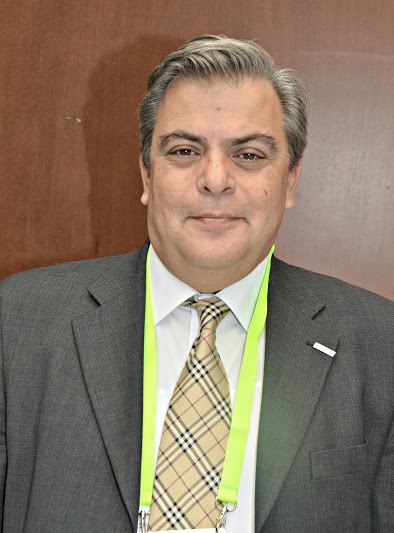
Professor John-Paris Pantouvakis is affiliated with the School of Civil Engineering at the National Technical University of Athens (NTUA), where he serves in the Department of Structural Engineering. His expertise spans construction management, project scheduling, and productivity optimization. Email: jpp@central.ntua.gr Research interests include: Risk analysis in structural engineering Digitalization and automation in construction Evolutionary algorithm applications Disaster risk reduction frameworks Interdisciplinary education models Cost-benefit analysis under uncertainty Recent publications highlight trends in: 3D printing for emergency shelters Learning curve modeling Corporate responsibility metrics Optimized resource allocation Construction process simulation International project management standards
Christos Kotselidis is an Associate Professor at the University of Manchester's School of Computer Science and serves as Chief Engineer at Pierer Innovation (previously mentioned as KTM Innovation). He leads the TornadoVM project, a groundbreaking Java Virtual Machine for heterogeneous hardware acceleration. His work bridges academia and industry, focusing on hardware/software co-design for virtual machines and embedded systems. His research spans chip design, micro-architecture, compilers, virtual machines, and garbage collection. Dr. Kotselidis has pioneered work in heterogeneous computing, particularly in accelerating Java applications on GPUs, FPGAs, and RISC-V architectures. His team's recent development of GPULlama3.java demonstrates the practical application of his research in bringing LLM inference to pure Java with GPU acceleration. His publications show a consistent focus on bridging hardware capabilities with managed runtime systems. The research trajectory reveals increasing sophistication in handling memory hierarchies, parallelism, and cross-architecture execution. His work has significant implications for high-performance computing, AI acceleration, and sustainable computing practices. Dr. Kotselidis actively contributes to the academic community as a program committee member for conferences like ISMM and as an organizer for workshops including VMIL and MoreVMs. He's also involved in EU-funded projects like AERO and DARE, which focus on European processor initiatives and software ecosystems. As project lead for TornadoVM, he mentors a research team at Manchester including Michalis Papadimitriou, Mary Xekalaki, and Thanos Stratikopoulos. His lab (Beehive Lab) develops open-source tools that are widely used in both academic and industrial settings for heterogeneous computing.
Aikaterini Mania is a Professor at the Technical University of Crete (TUC), Greece, affiliated with the School of Electrical and Computer Engineering (Computer Science Division). She coordinates the research team SURREAL (http://surreal.tuc.gr) and leads the Distributed Multimedia Information Systems and Applications Laboratory. Her expertise spans 3D Graphics, Virtual Reality, and Human-Computer Interaction. Education: Ph.D. in Computer Science (University of Bristol, UK, 2001), funded by Hewlett Packard Laboratories M.Sc. in Advanced Computing (Global Computing and Multimedia, University of Bristol, UK, 1996) B.Sc. in Mathematics (University of Crete, Greece, 1994) Research Interests: Perception-based Computer Graphics Human factors in Virtual Environments and HCI 3D Spatial Cognition and User Interfaces Haptics and Data Visualization Usability Engineering and Psychophysics Display Technologies and Gaze-contingent systems Professional Activities: Associate Editor for ACM Transactions on Applied Perception and Presence: Teleoperators and Virtual Environments Previously held roles at NASA Ames Research Center (2003), Sussex University (Assistant/tenured Professor), and HP Laboratories (Researcher/Consultant) Contributed to conferences like ACM Siggraph and IEEE Virtual Reality through tutorials and program roles Current Roles: Teaches courses: Introduction to Computer Programming and Computer Graphics Labs: Distributed Multimedia Information Systems and Applications Laboratory
Professor Georgios Kouroupetroglou is a leading academic at the National and Kapodistrian University of Athens (NKUA), serving as Professor in the Department of Informatics and Telecommunications. He holds significant roles including President of the Association for the Advancement of Assistive Technology in Europe (AAATE) and membership in the European Academy of Sciences and Arts. His research focuses on digital accessibility, voice processing, assistive technologies for disabilities, and music computing. He has pioneered initiatives such as the 'Accessibility Unit' and the Speech and Accessibility Research Laboratory at NKUA. Education: B.Sc. in Physics and Ph.D. in Communications and Signal Processing. He has held administrative roles including Chairman of the Department of Informatics and Telecommunications, Director of Postgraduate Studies, and Director of the M.Sc. Programme in 'Language Technology'. Research interests span: Computer Accessibility & Voice User Interfaces Accessibility of Documents and Mathematics Music Computing and Ancient Instruments Gesture-Based UIs and Haptics Inclusive Education Technologies Publications highlight innovations in: Assistive tech for mobility and motor disabilities Audio-tactile interfaces for blind users Accessibility in higher education Acoustic modeling of historical instruments He has authored over 180 papers and books, reviewed numerous EU projects, and teaches courses on accessibility, signal processing, and assistive tech. His work bridges clinical science and technology, emphasizing sustainability and global inclusivity.
Nikolaos Sapidis is a Professor at the Department of Mechanical Engineering, University of Western Macedonia, Greece, leading the 'Division of Constructions and Materials'. His career spans over three decades with previous roles at the University of the Aegean and multiple academic/research institutions including the National Technical University of Athens and Technical University of Catalonia. He earned a Ph.D. in Mechanical and Aerospace Sciences from the University of Rochester, USA, and holds degrees in Applied Mathematics (University of Utah) and Naval Architecture (National Technical University of Athens). His research focuses on Computational Design and Analysis , including CAD/CAE integration, geometric modeling of curves/surfaces, virtual engineering, and finite-element methodologies. Notable areas include solid modeling, point-cloud-based CAD, reverse engineering, and virtual reality applications in mechanical systems. He has authored over 80 publications and actively contributes to editorial boards of journals like Computer-Aided Design and Computer-Aided Design and Applications . His work emphasizes practical industrial applications, with research implemented in systems by companies like General Motors and Mercedes-Benz. Key contributions include algorithms for shape preservation in curves/surfaces, automated assembly design frameworks, and finite-element model optimization for large-scale systems. He directs the Laboratory of Mechanical Systems , advancing interdisciplinary research in mechanical design and virtual engineering.
Aggelos Pikrakis is an Associate Professor in the Department of Informatics at the University of Piraeus, with research focus on Signal Processing with emphasis on Sound and Voice . He serves as an affiliate member of the Institute for Language and Speech Processing (ILSP). Specializes in machine learning algorithms for audio analysis Expertise in Hidden Markov Models and Bayesian architectures Supervises doctoral research in audio processing and machine learning His work spans music information retrieval, voice pathology classification, and mobility pattern analysis. With over 50 publications and 1150 citations (h-index=16), he has received best paper awards and first place in algorithm competitions . He has participated in research programs funded by GGET and European Union as part of research teams. Scientific Awards Best Paper Award First Place in Algorithm Competition Active on editorial boards (EURASIP Journal on Advances in Signal Processing since 2008) and conference committees, he contributes to advancing audio processing methodologies.
Ioannis Xydas is an Assistant Professor at the Department of Computer Engineering and Information Technology , part of the School of Engineering at the University of West Attica . He holds a PhD in Computer Science from the University of Limoges (France), with prior degrees from the University of Geneva (Switzerland) and the University of Athens (Greece). His career spans academic roles, government service, and industry, including work at CERN and leadership in network design and implementation. Education: BSc in Mathematics (University of Athens, 1974) Advanced studies in Computer Science (University of Geneva, 1976–1980; MSc and BSc with distinction) PhD in Computer Science (University of Limoges, 2007; focused on Network Security and Visual Analytics) Research Interests: Network security, intelligent graphics, visual analytics, and evolutionary neural networks. His work emphasizes practical applications in intrusion detection systems, knowledge extraction from network data, and 3D visualization for decision-making. Professional Contributions: Led projects at GRNET (Greek Research Network), managed campus networks, and advised over 20 academic theses. Active in committees for IT procurement, network security standards, and international conferences. Technical expertise includes Cisco systems, network protocols (IPv6, MPLS), and telecommunication infrastructure. Awards & Affiliations: Swiss Government scholarship (1976), member of the Greek Society of Computer Scientists (E.P.Y), and DECUS user group. No personal accolades explicitly listed. Teaching & Mentorship: Taught courses in network security, advanced networking, and visual analytics. Supervised numerous BSc and Master’s theses on topics like wireless network hacking, firewall implementation, and network visualization. Labs & Projects: Developed lab materials for courses on networks, programming, and security. Collaborated with the University of Limoges on the ISICG/TIM Master’s program, focusing on integrated informatics and computer graphics.
Ioannis Fudos is Professor and former Chair (2014-2018) of the Computer Science and Engineering Department at the University of Ioannina. He holds a Diploma in Computer Engineering from University of Patras, and MS/PhD degrees in Computer Science from Purdue University. His research spans computer graphics, CAD systems, geometric modeling, animation, and image retrieval. He directs the Computer Graphics Research Group and has secured substantial funding (€2M+) from European and national sources for 17+ projects. His scholarly contributions include publications in top venues (SIGGRAPH, Eurographics, IEEE TVCG) covering rendering techniques, 3D printing quality control, assistive technologies, and cultural heritage digitization. Recent work explores neural rendering transparency methods, wheelchair navigation interfaces, and pedestrian routing algorithms. His laboratory maintains a repository of 3D models for research use.
George Miaoulis serves as Professor at University of West Attica (formerly Technical Institute of Athens) and Associate Professor at University of Limoges, France, maintaining active academic roles since 1987 across Greek and French institutions with continuous appointments through present day. His academic credentials include: Graduate Surveyor Engineer from Aristotle University of Thessaloniki Postgraduate Studies in Paris (Quantitative Techniques at EHESS and Organization & Informatics at CNAM) PhD from University of Crete PhD from University of Limoges Habilitation in Informatics from University of Limoges Professor Miaoulis' research integrates intelligent information systems with practical applications across societal domains. His work on interactive multimedia systems and business modeling demonstrates strong interdisciplinary connections between computer graphics, visualization techniques, and decision support frameworks. The consistent focus on real-world implementation in education, public administration, healthcare, and engineering contexts reveals his commitment to applied informatics solutions addressing complex institutional challenges. His distinguished service has been recognized internationally: Order of the Academic Palms awarded by French Republic (2012) With supervision of ten doctoral theses and participation in numerous research projects as scientific manager, Professor Miaoulis maintains robust academic mentorship. His leadership extends through directorship of the joint Master ISICG program (2006-2016), ongoing management committee membership, and roles including Department Head (1995-1998), Sivitanidios Foundation Board membership (2013-present), and National Center for Public Administration research (1994-1997). These positions demonstrate sustained institutional engagement across Greek governmental, educational, and research sectors.
Dr. Mania Aikaterini is a Professor at the School of Electrical and Computer Engineering (ECE) of the Technical University of Crete. She specializes in Perception-based Computer Graphics, Virtual Reality, and Human-Computer Interaction. Her research focuses on 3D graphics, simulation engineering, and human factors in virtual environments. Education: B.Sc. in Mathematics, University of Crete (1994) M.Sc. in Advanced Computing (Global Computing and Multimedia), University of Bristol (1996) Ph.D. in Computer Science, University of Bristol (2001) Her career includes tenure as an Assistant Professor at the University of Sussex (UK) and research roles at Hewlett Packard Laboratories and NASA Ames Research Centre. She leads the SURREAL research team (http://surreal.tuc.gr) and contributes to the Distributed Multimedia Information Systems and Applications Laboratory. She has served as an Associate Editor for ACM Transactions on Applied Perception and Presence: Teleoperators and Virtual Environments. Teaching responsibilities include courses on Introduction to Computer Programming and Computer Graphics.
George Ioannou is a Professor of Production Management and Business Processes at the Athens University of Economics and Business, where he leads the MBA International Postgraduate Program and the Center for Business Processes and ERP Systems at the Laboratory of Management Science. Previously, he served as Assistant Professor at Virginia Tech's Department of Production and Systems Engineering. His academic journey includes a B.Sc. in Mechanical Engineering from National Technical University of Athens, an M.Sc./DIC in Industrial Robotics/Production Automation from Imperial College London, and a Ph.D. in Mechanical Engineering from the University of Maryland. Current Academic Roles: Professor, Director of MBA Program, Head of ERP Systems Center Prior Academic Roles: Assistant Professor at Virginia Tech Education: B.Sc., M.Sc./DIC, Ph.D. His research focuses on integrating web-based technologies with operational research to optimize production systems, business processes, and supply chains. This spans applications in plant spatial planning, ERP systems, and cultural heritage digitization. He has secured research funding from global organizations including NSF, European Commission, and private sector leaders like Microsoft. Scientific awards include Microsoft's Excellence in Education Award and multiple teaching excellence recognitions for MBA programs. Ioannou serves on the Technical Chamber of Greece (TEE) and the editorial board of Production Planning & Control , with extensive consulting experience for public and private sector entities.
Christophoros Nikou is a Professor in the Department of Computer Science and Engineering at the University of Ioannina, Greece. He holds a Ph.D. in Image Processing and Computer Vision from Université Louis Pasteur - Strasbourg I, France (1999), a DEA in Photonics and Image Processing from the same institution (1995), and a Diploma in Electrical Engineering from Aristotle University of Thessaloniki, Greece (1994). His research interests include: Image Processing Computer Vision Pattern Recognition Biomedical Image Analysis Medical Imaging Machine Learning His recent publications (2022–2024) reflect a strong trend toward deep learning, generative models, and multimodal analysis, particularly in document image analysis, super-resolution, and biomedical applications. He has made significant contributions to visual tracking, segmentation, and image registration, with recent work extending into virtual reality, hypercomplex neural networks, and model compression. Scientific awards include: Best paper award, IAPR/IEEE International Conference on Biometrics (ICB’16), 2016 Best paper award, Bayesian and Graphical Models for Biomedical Imaging (BAMBI’16), 2016 He has supervised numerous students, many of whom have co-authored publications with him, and his research has been supported by collaborations across multiple institutions. He has also co-edited a book on biomedical image processing and contributed to several book chapters. His work spans both theoretical and applied domains, with consistent publication in top-tier IEEE and Springer venues.
Evangelos Kalogerakis serves as Associate Professor at the School of Electrical and Computer Engineering, Technical University of Crete, leading a dedicated research group in graphics and vision since 2025. Previously, he held a tenured Associate Professor position at the University of Massachusetts Amherst (2012-2024) after joining as Assistant Professor, following a Stanford University postdoc (2010-2012). His educational journey culminated in a PhD from the University of Toronto (2010), where his thesis pioneered machine learning applications in geometry processing. Kalogerakis develops AI-powered algorithms for creating and processing 3D visual representations, specializing in object/scene modeling, animation generation, and intelligent analysis of geometric data, scans, and image collections. His research bridges computer graphics, vision, and machine learning to advance 3D content creation. Key research support includes an ERC Consolidator Grant and multiple National Science Foundation awards. Scientific recognition: 100 most cited computer graphics scholars worldwide (2010-2020) He actively shapes the field through leadership roles as Area Chair for CVPR, ICCV, ECCV, and NeurIPS, plus technical committee service for SIGGRAPH and Eurographics. As Associate Editor for IEEE TPAMI and TVCG, and Eurographics 2024 co-chair, he drives scholarly discourse in visual computing. At Technical University of Crete, his research group pioneers AI-driven 3D scene understanding, mentoring graduate students while pursuing innovations in neural rendering and geometric deep learning through international collaborations.
Georgios Papaioannou Georgios Papaioannou is an Assistant Professor at the Department of Informatics, Athens University of Economics and Business (AUEB). He holds a BSc and PhD in Informatics/Computer Science from the National and Kapodistrian University of Athens. His research focuses on real-time computer graphics, virtual reality, photorealistic rendering, and 3D pattern recognition with applications in cultural heritage digitization and interactive environments. Education BSc in Informatics, National and Kapodistrian University of Athens PhD in Computer Science, National and Kapodistrian University of Athens Research Interests His work spans real-time rendering techniques, virtual reality systems, 3D object reconstruction, and cultural heritage preservation. Notable projects include the PRESIOUS EU project for predictive digitization of cultural objects and the Virtual Archaeologist system for fractured artifact reassembly. Key Contributions Dr. Papaioannou has authored influential papers on global illumination algorithms, volume-based ambient occlusion, and real-time graphics optimization. His work integrates computer vision and machine learning to solve challenges in interactive visualization and archaeological reconstruction. Professional Activities A member of Eurographics, ACM, and SIGGRAPH, he actively reviews for top computer graphics conferences. His lab focuses on advancing real-time rendering technologies for immersive applications, including VR systems for cultural heritage education and historical reenactment.
Christos-Nikolaos Anagnostopoulos is a Professor at the Department of Cultural Technology and Communication, University of the Aegean. He serves as Head of the Department and Director of the Intelligent Systems Lab. His expertise spans artificial intelligence, computer graphics, cultural informatics, and energy systems. Anagnostopoulos holds a Mechanical Engineering Diploma (1998) and Ph.D. in Electrical and Computer Engineering (2002) from the National Technical University of Athens (NTUA). Research focuses on AI applications in cultural heritage preservation, medical imaging, smart cities, and IoT systems. Over 180 publications in journals/conferences highlight contributions to 3D modeling, mixed reality, energy-efficient buildings, and surgical simulation. His work integrates technologies like UAVs, digital twins, and deep learning to address challenges in heritage preservation, healthcare, and sustainable urban systems. Key projects include ARM4CH (autonomous reality modeling for heritage sites), PLUG-N-HARVEST (smart building management), and ARCHAEORAMA (multimodal archaeological documentation). He explores ethical implications of AI/ChatGPT in education and healthcare while advancing geospatial integration for archaeological excavations. Active in interdisciplinary collaborations, his research bridges cultural, technical, and environmental domains.