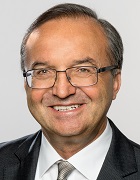
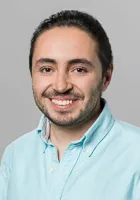
Nils FleischhackerView profile
Assistant Professor
Nils Fleischhacker is an Assistant Professor for Cryptography at Ruhr University Bochum, where he leads the Theoretical Cryptography group within the Faculty of Computer Science. His research focuses on foundational aspects of cryptography with particular emphasis on zero-knowledge proofs, digital signatures, and secure computation. Prior to joining Ruhr University, he held postdoctoral positions at Johns Hopkins University and Carnegie Mellon University. Dr. Fleischhacker received his PhD in Computer Science from Saarland University in February 2017, advised by Dominique Schröder. During his doctoral studies, he was a research intern at Microsoft Research with Chris Brzuska and a research visitor at the University of Maryland, College Park with Jonathan Katz and Dana Dachman-Soled. His research spans theoretical cryptography with significant contributions to zero-knowledge proofs, multi-signature schemes, property-preserving hash functions, and security proofs for cryptographic primitives. Fleischhacker's work often addresses fundamental questions about the limits and possibilities of cryptographic constructions, with particular attention to black-box separations and lower bounds. His recent publications demonstrate a strong focus on lattice-based cryptography and post-quantum secure protocols. Fleischhacker's publications over the past five years reveal a consistent research trajectory focused on improving the efficiency and security of cryptographic primitives, with particular emphasis on signature schemes, zero-knowledge protocols, and secure computation frameworks. His work frequently appears in top-tier cryptography venues including CRYPTO, EUROCRYPT, and CCS. Dr. Fleischhacker actively mentors PhD students, with numerous successful graduations spanning from 2010 to 2024. His former PhD students include Önder Askin (2024), Floyd Zweydinger (2023), and Lars Schlieper (2022), among others. His research is supported through various academic channels and collaborations. He is affiliated with several prominent research organizations including the Horst Görtz Institute (HGI) for Information Security, the DFG Excellence Cluster CASA, the EU Marie Curie Network QSI, and the International Association for Cryptologic Research (IACR). These affiliations provide a strong institutional framework for his theoretical cryptography research.