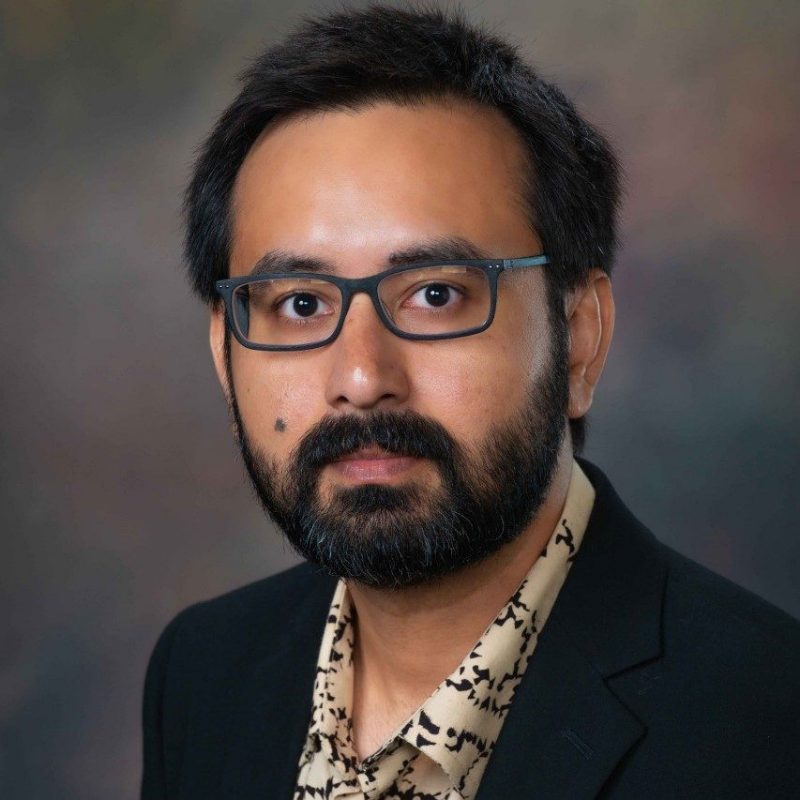
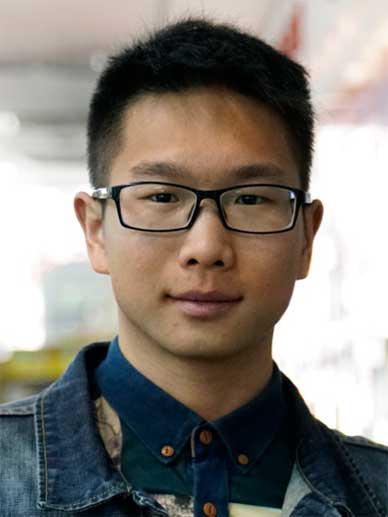
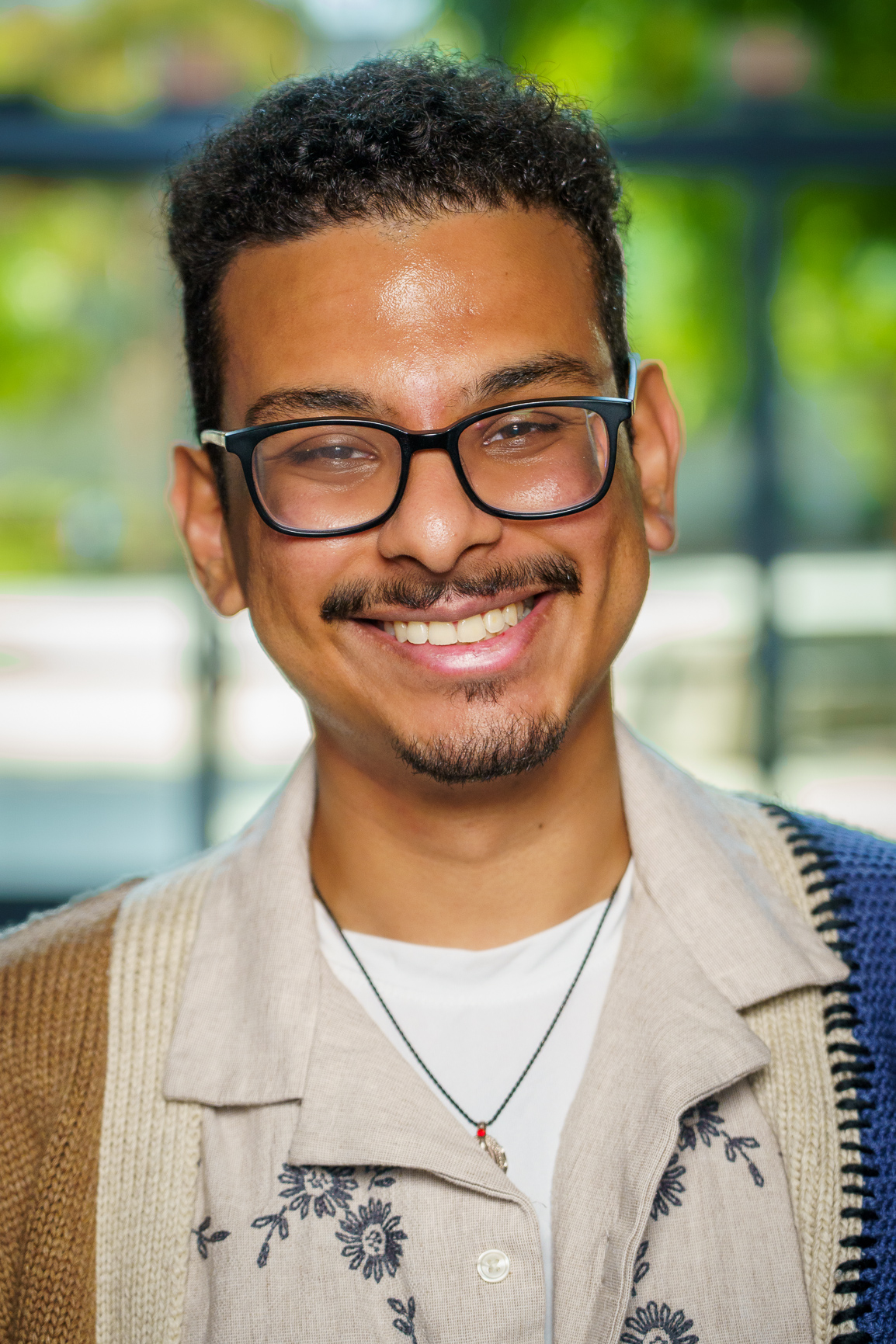
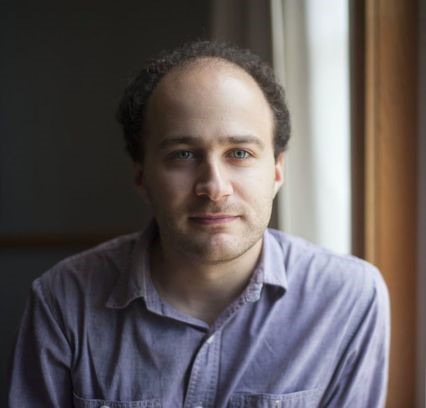
Dr. Yen-Ying Lai is a Lecturer in the School of Languages and Cultures at The University of Queensland , specializing in the Department of Chinese. Her research bridges interdisciplinary fields such as cultural studies, psychoanalysis, and translation pedagogy. Education: PhD in Ethics of Love and Heroism in Martial Arts Fiction (2017), The University of Queensland. Her work focuses on Lacanian psychoanalysis , Žižek studies , and digital pedagogy in translation education. Recent publications analyze online course redesign and ideological critiques in BDSM erotica. Key trends in her research include: Psychoanalytic readings of gender and ethics in literature Innovative pedagogical approaches in language education Intercultural interpretations of Chinese martial arts narratives
Ayah Zirikly is an Assistant Research Scientist at the Center for Language and Speech Processing (CLSP) at Johns Hopkins University, specializing in Natural Language Processing applications for mental health and clinical informatics. Her work bridges computational linguistics with real-world healthcare challenges, particularly in suicide risk assessment and bias detection in medical documentation. Research Focus: Dr. Zirikly pioneers NLP solutions for mental health informatics, with landmark contributions including the UMD Reddit Suicidality Dataset for suicide risk assessment and NLP tools for Social Security Administration disability eligibility processes. Her expertise spans Arabic NLP (co-developer of MADAMIRA toolkit), transfer learning for low-resource settings, and analysis of stigmatizing language in clinical records. Recent work investigates social determinants of health through electronic health record analysis and develops frameworks for detecting AI dataset bias. Publication Trends: 2023-2025 publications reveal three dominant threads: (1) Suicide prevention via social media analysis and data warehouse modeling, (2) Linguistic bias detection in medical records with focus on race/gender disparities, and (3) Synthetic data generation for clinical communication. Her leadership in CLPsych workshops establishes her as a key contributor to clinical NLP benchmarking. Professional Background: Holds a PhD in Computer Science from George Washington University (Mona Diab's NLP lab) and completed postdoctoral training at the National Institutes of Health. Current research extends her NIH work on mobility/mental health status extraction for disability determination while addressing critical gaps in health equity through computational methods.
Assoc. Prof. Dr. Ali Şükrü Özbay currently serves as an Associate Professor at Karadeniz Technical University's Faculty of Arts, Department of English Language and Literature. He earned his PhD and MA in Applied Linguistics from Karadeniz Technical University and holds a BA in English Language and Literature from Ankara University. Education : PhD (2015) and MA (2004) from Karadeniz Technical University; BA (1996) from Ankara University Dr. Özbay's research focuses on Corpus Linguistics , Learner Corpora , Academic Writing , Translation Studies , and Language Pedagogy . His work investigates lexical bundles, support verb constructions, and pragmatic markers through computational corpus analysis. Recent publications analyze four-word recurrent expressions in educational technology contexts, collocational priming in Turkish EFL learners' mental lexicon, and semantic prosody of intensifiers in academic corpora. He supervises theses on data-driven learning applications and corpus-based teaching materials. Dr. Özbay has held managerial roles including Deputy Head of Department (2019–present) and Assistant Coordinator for Erasmus+ programs (2017–2021). He actively participates in international conferences and has published in journals like Turkish Studies , Australian Journal of Applied Linguistics , and Hacettepe Eğitim Dergisi .
Debswapna Bhattacharya is an Associate Professor in the Department of Computer Science at Virginia Tech. Her research focuses on computational biology, bioinformatics, and machine learning with applications in structural biology. She holds a Ph.D. from the University of Missouri-Columbia (2016) and previously served as an Assistant Professor at Auburn University (2017–2021). Her work develops AI-driven methods for biomolecular modeling, including RNA and protein structure prediction, quality assessment, and refinement. Notable contributions include software tools like lociPARSE, RNAbpFlow, and EquiPNAS. She has received prestigious awards such as the NSF CAREER Award (2020) and NIH MIRA Award (2020). Teaching includes courses on machine learning and AI in molecular modeling. Her lab collaborates on NIH-funded projects (R35GM138146) and NSF initiatives (DBI2208679). Recent work emphasizes equivariant neural networks and transformer-based models for biomolecular analysis.
Haibo Yang is an Assistant Professor in the Department of Computing and Information Sciences at Rochester Institute of Technology's Golisano College of Computing and Information Sciences. He earned his Ph.D. in Electrical and Computer Engineering from The Ohio State University under the supervision of Prof. Jia (Kevin) Liu. Rochester Institute of Technology , Golisano College of Computing and Information Sciences Ohio State University , Ph.D. in Electrical and Computer Engineering His research focuses on distributed and federated learning systems, examining how statistical and system variability affect algorithm performance under constraints like privacy and communication limitations. Key areas include optimization algorithms, communication-efficient frameworks, Byzantine robustness, and multi-modal adversarial attacks. He is actively involved in developing theoretically grounded solutions for scalable and intelligent distributed learning. Recent publications highlight advancements in multi-objective reinforcement learning, zeroth-order federated optimization, and robustness against heterogeneous client participation. His work has appeared in top venues like UAI, IJCAI, ICLR, AAAI, NDSS, ACM CCS-LAMPS, and ACM MobiHoc, with notable acceptance rates (e.g., 19.3% for IJCAI 2025). Current projects investigate exact convergence mechanisms and adaptive weighting strategies. Dr. Yang received the RIT AI Seed Funding and GWBC Award in February 2024. He supervises funded Ph.D. students and teaches advanced machine learning topics, including CSCI-635: Introduction to Machine Learning.
Guoquan Huang is an Assistant Professor in the Department of Mechanical Engineering at the University of Delaware. He holds a B.Eng. in Automation from the University of Science and Technology, Beijing (2002), and M.Sc. and Ph.D. degrees in Robotics from the University of Minnesota (2009 and 2012). Prior to his current role, he was a Postdoctoral Associate at MIT's Computer Science and Artificial Intelligence Laboratory (CSAIL). His research focuses on robotics, computer vision, and autonomous systems, emphasizing probabilistic perception, estimation, and control for ground, aerial, and underwater vehicles. He leads the development of the OpenVINS platform for visual-inertial estimation and has contributed to advancements in SLAM (Simultaneous Localization and Mapping), sensor fusion, and multi-robot coordination. Education: B.Eng in Automation (Electrical Engineering), University of Science and Technology, Beijing, 2002 M.Sc. in Robotics, University of Minnesota, Twin Cities, 2009 Ph.D. in Robotics, University of Minnesota, Twin Cities, 2012 His research interests span robotics, computer vision, and autonomous systems , with a focus on: Visual-inertial navigation and SLAM Sensor fusion (LiDAR, IMU, camera) Autonomous vehicle control and safety Multi-robot cooperative localization His recent publications (2023–2025) emphasize robust algorithms for navigation in GPS-denied environments, real-time sensor calibration, and dataset development for aerial visual localization. He has pioneered techniques like decoupled error-state estimation and consistent parallel frameworks for SLAM. Labs/Teams: Leads the development of the OpenVINS research platform, focusing on visual-inertial state estimation. Collaborates on projects involving human-swarm interactions and resilient ground vehicle navigation.
Dr. Siyuan Ji is a Reader in Model-based Systems Engineering (MBSE) at Loughborough University, serving as Deputy Head of the Manufacturing, Systems & Management Academic Community and Deputy Director of the Doctoral Training Centre in MBSE. He previously held a Senior Lecturer position in Systems Engineering at the University of York, where he led the MSc Programme in Safety-Critical Systems Engineering. His academic journey includes a PhD and MSc in Physics from the University of Nottingham, followed by research roles in model-based systems engineering at Loughborough University. His research focuses on advancing model-based techniques for systems engineering, particularly in safety-critical systems, formal methods, and complex system design. He has contributed to areas such as hazard management (e.g., BSafeML framework), response time analysis in real-time systems, and model synchronization for requirements engineering. His work bridges theoretical foundations with practical applications in automotive systems, embedded software, and educational technology. Dr. Ji holds the title of Fellow of the Higher Education Academy and has published extensively on topics ranging from quantum technology reporting to conversational tutoring systems. His research emphasizes interdisciplinary collaboration, evident in projects like the EPSRC-funded analysis of vehicles as complex systems. He actively contributes to both academic and industrial advancements in systems engineering methodologies and education innovation. His professional roles include managing doctoral training programs, overseeing academic communities, and advancing systems engineering education. Collaborations span industry partnerships and international academic networks, reflecting his commitment to impactful research and training the next generation of systems engineers.
Thomas Yeh is an Assistant Professor of Teaching in the Department of Computer Science at the University of California, Irvine. His academic background includes a Ph.D. in Computer Science from UCLA and a BS in Electrical Engineering and Computer Science from UC Berkeley. Prior to academia, he gained industry experience across research, architecture, design, verification, marketing, and management roles. His educational credentials: Ph.D. in Computer Science, UCLA BS in Electrical Engineering and Computer Science, UC Berkeley Dr. Yeh's research spans computer architecture, accelerated machine learning, and computer science education. In architecture, he pioneers error-tolerant physics simulation and heterogeneous computing. His ML work focuses on adaptive precision techniques for energy-efficient acceleration. In education, he develops interactive tools for novice programmers and experiential learning frameworks for computer architecture. His cross-disciplinary approach bridges hardware-software co-design with pedagogical innovation. Publication trends reveal consistent focus on computational efficiency across physics simulation, ML acceleration, and educational technology. His work connects real-time systems optimization with emerging AI applications, particularly in interactive environments and physics-based animation. No scientific awards are documented in the provided materials. While advising details and grant funding specifics are absent from available information, his industry-academia transition informs practical research directions. Teaching responsibilities include core courses like Introduction to CS, Data Structures, and Efficient ML Computing. Research infrastructure details remain unspecified, though his publications suggest collaborations in physics simulation and heterogeneous computing environments.
Prithviraj Ammanabrolu is an Assistant Professor at the University of California, San Diego (UCSD) , affiliated with the Department of Computer Science and Engineering . He leads the PEARLS Lab (Pragmatically Exploring Agents with Reinforced LanguageS) and collaborates with Nvidia as a Research Scientist. Research Focus: Bridging Machine Learning (particularly Reinforcement Learning ) with Natural Language Processing to create trustworthy and responsible language-based AI agents . Key Themes: Contextual language understanding, neurosymbolic world modeling, human preference alignment via feedback, and AI in grounded environments . Before joining UCSD in 2024, he worked on the Mosaic team at the Allen Institute for AI and as a Research Scientist at MosaicML (acquired by Databricks) . His work intersects Cognitive Science and AI scalability . Education: PhD in Computer Science from the Georgia Institute of Technology , advised by Professor Mark Riedl at the Entertainment Intelligence Lab . Projects: RL4LMs, ScienceWorld, Q-BERT, WorldGeneration, and LLMFoundry for Databricks foundation models.
Saqib Javed is a doctoral researcher and Researcher at the Computer Vision Laboratory (CVLab) at EPFL, supervised by Prof. Pascal Fua and Dr. Mathieu Salzmann. His research focuses on energy-efficient deep networks, 3D reconstruction, quantization-aware training, and domain generalization. He holds a master’s degree from TU Munich and ETH Zurich. He is affiliated with the School of Computer and Communication Sciences (IC) and the Department of Computer Science at EPFL. His current projects include compressed Gaussian splatting for dynamic scenes, quantized diffusion models, and reducing inference time for vision-language models. He has been awarded the EPFL IC Distinguished Service Award and is a Global Leaders PhD Fellow. His work spans theoretical research and practical applications in low-power device optimization. Teaching roles include serving as a Teaching Assistant for courses like Introduction to Machine Learning (CS-233) and Probability and Statistics (MATH-232). He has supervised multiple students, including Chengkun Li and Ahmad Jarrar Khan, on projects related to quantization and 3D pose estimation. His research also involves collaborations with industry partners like BMW, Siemens, and Intel, focusing on hardware-friendly neural networks. Awards include the EPFL IC Distinguished Service Award (2024) and recognition for his contributions to efficient deep learning. His recent publications address domain generalization, Gaussian splatting, and modular quantization techniques, reflecting his interdisciplinary approach to advancing machine learning efficiency and applicability.
J. Elliott Casal serves as an Assistant Professor in the Department of English at the University of Memphis, where his research centers on applied linguistics with emphases in corpus linguistics, discipline-specific writing, and genre-based language pedagogy. His work bridges theoretical frameworks with practical applications for language teaching and academic literacy development across diverse disciplinary contexts. His academic credentials include: Ph.D. (2016-2020) from Pennsylvania State University M.A. (2012-2014) from Ohio University B.A. (2004-2008) from Ohio University Casal's research investigates functional linguistic conventions in professional communication, development of discipline-specific literacies, and corpus tool integration in language education. His scholarship critically examines syntactic complexity, phraseological patterns, and academic literacy across disciplines through both quantitative corpus analysis and qualitative assessments of learner agency, creativity, and intentionality in writing development. Analysis of his 15 most recent publications (2019-2024) reveals consistent focus on corpus-driven methodologies applied to academic writing across STEM and humanities disciplines. Key trends include syntactic complexity development in L2 legal writing, AI-writing detection ethics, frame-based formulaic features in academic genres, and cross-disciplinary variation in research article structures, demonstrating evolving applications of corpus linguistics to contemporary language education challenges.
Shuangquan (Peter) Wang is an Assistant Professor of Computer Science at Salisbury University. He holds a PhD in Computer Science from the College of William & Mary (2020) and a PhD in Pattern Recognition and Intelligent Systems from Shanghai Jiao Tong University (2008), along with earlier degrees from Wuhan University of Technology and Wuhan Institute of Technology. His research focuses on mobile/wearable computing, activity recognition, smart health, and machine learning. He has over 10 years of experience in academia and industry, including roles at Philips Research East Asia and Nokia Research Center (Beijing). His work emphasizes wearable sensor-based health monitoring, such as fall detection, mastication analysis, and Parkinson’s disease monitoring. He leads the WISH Research Lab and serves as an Associate Editor for Elsevier's Smart Health Journal. Recent contributions include papers on salinity anomaly detection (2024), LLM-based user requirement analysis (2024), and socially acceptable food recognition (2022). His research trends emphasize interdisciplinary applications of machine learning in healthcare and sensor-driven human activity analysis. Professional service roles include coordinating Salisbury University’s Center for Applied Mathematics and Science (2021–2024) and chairing ACM/IEEE CHASE conferences. He has delivered invited talks on artificial intelligence and its societal impacts to diverse audiences, including the Institute of Retired Persons at Salisbury University. His lab, WISH Research Lab, explores innovative solutions in smart health and mobile computing, integrating wearable technologies with machine learning for real-world health applications.
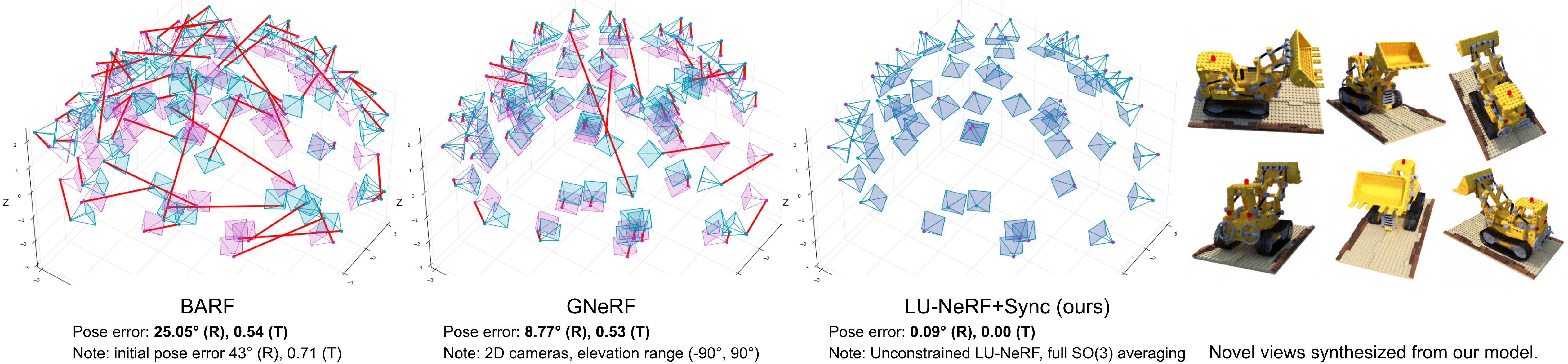
Zezhou Cheng is an Assistant Professor of Computer Science at the University of Virginia, leading the Computer Vision Lab. He holds a Ph.D. from UMass Amherst (2023), a postdoctoral position at Caltech, and a Bachelor's degree from Sichuan University (2015). His research focuses on computer vision, machine learning, and their applications in ecology, materials science, and autonomous systems. Key areas include 3D understanding, self-supervised learning, and AI-driven ecological monitoring. He has received awards such as the Best Synthesis Award (2020) and Outstanding Reviewer (CVPR 2021). His work spans publications in top venues like CVPR, ICCV, and ECCV, addressing challenges in 3D reconstruction, generative models, and ecological data analysis. Education: Ph.D. in Computer Science, UMass Amherst (2023) Bachelor's Degree, Sichuan University (2015) Postdoctoral Researcher, Caltech (advised by Georgia Gkioxari) Research Highlights: Developed LU-NeRF for unposed scene reconstruction and camera pose estimation Contributed to AI for ecology via bird roost detection using weather radar data Advanced 3D representation learning through procedural programs and self-supervised techniques Awards & Recognition: Outstanding Reviewer, CVPR 2021 Best Poster Award, New England Computer Vision Workshop 2019 National Scholarship (China, 2014 and 2016) His lab explores cutting-edge topics in computer vision, with a focus on interdisciplinary applications. Teaching roles include leading Caltech's AI Bootcamp and serving as a Teaching Assistant at UMass Amherst. Industry collaborations include internships at Google Research, Snap, and Amazon.
Jean-Baptiste Alayrac is a Researcher at DeepMind, focusing on structured learning from video and natural language. His academic background includes a PhD from the Sierra and Willow groups at Ecole Normale Supérieure and Telecom ParisTech, where he explored machine learning and computer vision. He has held teaching roles as a Teaching Assistant at Ecole Normale Supérieure and other universities, contributing to courses in statistical machine learning and mathematics. His research interests span multimodal learning, vision-language models, self-supervised learning, and efficient retrieval systems. Notable projects include the Flamingo model for few-shot learning and the Perceiver IO architecture for structured data processing. He has also contributed to foundational works like HowTo100M, leveraging large-scale video-text embeddings. Alayrac's publications emphasize cross-modal interactions, with key contributions in adversarial robustness, layered video representations, and weakly supervised learning. His work often bridges computer vision and natural language processing, with applications in instructional video analysis and cross-lingual translation.
Alex Kale is an Assistant Professor of Computer Science at the University of Chicago and a core member of the Data Science Institute. His research focuses on data visualization and human-computer interaction, emphasizing tools that explicitly represent users' cognitive processes during data analysis. He leads the Data Cognition Lab, exploring software for uncertainty visualization, causal inference, and decision-making support. Kale holds a PhD in Information Science from the University of Washington (2022), an MSc from UW (2020), and a BSc in Psychology with minors in Music and Philosophy (2015). Affiliations: University of Chicago, Data Science Institute, Data Cognition Lab Education: PhD, UW (2022); MSc, UW (2020); BSc, UW (2015) Research interests include human-computer interaction, statistical reasoning interfaces, and systems for managing large-scale data. He has developed tools like MetaExplorer for meta-analysis and EVM for exploratory visual modeling. Key awards include the Best Paper Honorable Mention at CHI 2023 and VIS 2021, and the Best Paper Award at VIS 2020. His work bridges visualization design, decision theory, and cognitive science, with applications in participatory budgeting, causal inference, and reproducible research. Courses taught include Visualization for Data Science and Statistical Rethinking.