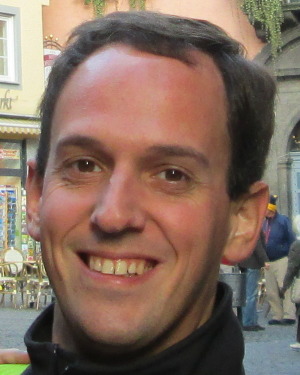
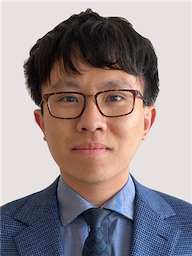
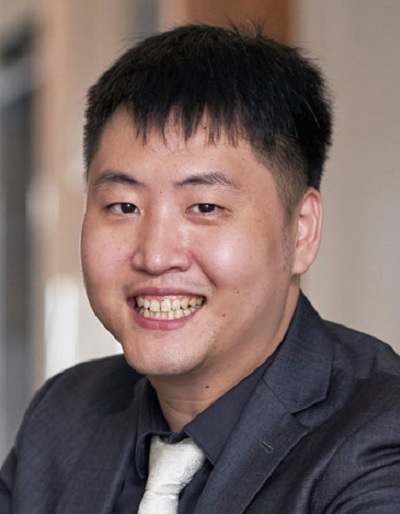
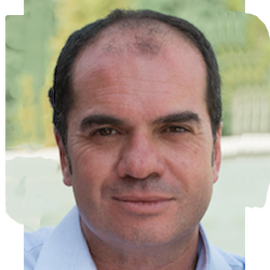
Gabriella Casalino is an Assistant Professor at the University of Bari Aldo Moro, Department of Computer Science, and a key researcher at CILAB - Computational Intelligence Lab. Her work focuses on Computational Intelligence methods for interpretable data analysis, particularly in eHealth, Data Stream Mining, and eXplainable Artificial Intelligence (XAI) within medical and educational domains. She has contributed to innovative approaches in smartphone-based health monitoring, fuzzy logic applications, and remote vital sign detection via photoplethysmography. Education : Ph.D. in Computer Science, with advanced training at institutions like Universitat de Girona and Université de Mons. Research Trends : Recent publications highlight applications of evolving granular computing, neuro-fuzzy systems, and explainable AI in hypertension prediction, bipolar disorder monitoring, and educational data analysis. Key subfields include remote health monitoring, medical data streams, and hybrid AI models. Grants : Research funded by AIRC (Italian Cancer Research Foundation), focusing on computational methods for healthcare challenges. Labs & Collaborations : Active in CILAB, collaborating on projects involving mHealth solutions, cardiovascular risk assessment, and intelligent educational systems.
Yang Liu is an incoming Assistant Professor at Florida State University (Fall 2025) and currently a Senior Research Associate and Affiliated Lecturer in the Department of Computer Science and Technology at the University of Cambridge. She holds a B.E. in Software Engineering from Xi’an Jiaotong University (2016) and a Ph.D. in Computer Science from City University of Hong Kong (2020), advised by Prof. Zhenjiang Li. Her research focuses on intelligent mobile/wearable sensing technologies, combining AI and signal processing to advance applications in human-computer interaction (HCI), smart health, and IoT. She has received notable awards such as the 2024 N2Women Rising Star Award and the 2021 ACM SIGBED Doctoral Thesis Award. Research interests span mobile systems, AI-driven wearable sensing, privacy in human interactions, and healthcare monitoring. Key projects include RespEar (earable-based respiratory monitoring), SmarTeeth (toothbrushing tracking), and WearIoT (privacy-aware wearable systems). She mentors students in areas like biomedical signal processing and secure wearable systems. Teaching includes Mobile/Wearable Systems courses at Cambridge and previously at City University of Hong Kong. Education: B.E. Software Engineering, Xi’an Jiaotong University (2016) Ph.D. Computer Science, City University of Hong Kong (2020) Grants & Services: Organizing roles in ACM SIGCOMM, IEEE ICPADS, and multiple conference TPCs. Invited talks at Columbia University, Purdue University, and others. Her work bridges mobile computing with health applications, addressing both technological innovation and societal impacts through over 30 peer-reviewed publications and industry collaborations.
Jonathan Ragan-Kelley is the Esther and Harold E. Edgerton Assistant Professor of Electrical Engineering & Computer Science at MIT and an Assistant Professor of EECS at UC Berkeley. He leads the Visual Computing group at CSAIL, focusing on high-efficiency visual computing, compilers, and architectures for image processing, machine learning, and 3D rendering. His research bridges systems, compilers, and hardware design, emphasizing scalable solutions for computational challenges. Education: PhD in Computer Science from MIT (2014), postdoc at Stanford University, and visiting researcher at Google. He co-created the Halide language and has developed multiple domain-specific languages (DSLs) and compiler systems. Research interests include compiler optimization, scheduling languages (e.g., Exo), and efficient computing frameworks. He has received awards such as the NSF CAREER Award and ACM SIGGRAPH’s Significant New Researcher Award. Awards: ACM SIGGRAPH Award, NSF CAREER, Intel Outstanding Researcher Award Key Contributions: Halide compiler framework, Exo scheduling language, machine learning acceleration techniques Labs/Teams: Visual Computing at MIT CSAIL
Ian Pitt is a Lecturer in Usability Engineering and Interactive Media at University College Cork (UCC). He leads the Interaction Design, E-Learning and Speech (IDEAS) Research Group, focusing on multimodal human-computer interaction, auditory interfaces, and accessibility solutions for visually impaired users. Pitt holds a D.Phil from the University of York, followed by research fellowships at Otto-von-Guericke University in Germany before joining UCC in 1997. His research interests include speech-based interfaces, e-learning systems, and accessibility technologies for blind users. Key projects include the EU-funded ENABLE Network (2011–2014) and prototype development for UniWink. He has secured significant grants, including €72,009 from IRCSET for voice analysis research and €19,478 from the EU for ICT-supported learning initiatives. Pitt has advised numerous PhD students, including Flaithri Neff (2011), Emma-Kate Crowley (2014), and current candidates Aine Kearns and Patrick Egan. His publications span journals like International Journal of Game-Based Learning and conferences such as ICCHP and ACM SIGACCESS. He has contributed to committees for conferences like CHI and the Irish HCI conference. Teaching modules include Usability Engineering, Human-Computer Interaction, and Digital Media Development. His work emphasizes inclusive design principles, with projects addressing navigation systems for blind students and adaptive e-learning frameworks. Recent research trends focus on ICT-delivered aphasia rehabilitation, emotional BCI interfaces, and multimodal learning systems. Collaborations include international partners through EU grants, reflecting his global impact in accessibility and educational technology.
Andrea Passerini is a Full Professor in the Department of Information Engineering and Computer Science at the University of Trento, Italy, where he also serves as Coordinator of the PhD programme in Information Engineering and Computer Science (Ministerial Decree 45/2013). His academic footprint spans multiple departments including Mathematics, Sociology, Cellular Biology, and Industrial Engineering, reflecting deep interdisciplinary engagement across computational sciences and life sciences. His research centers on Machine Learning and Data Mining with specialized expertise in Neuro-Symbolic AI , Probabilistic Reasoning , and Statistical Relational Learning . He pioneers methods for graph-based learning, medical AI applications, and explainable systems, with significant contributions to bioinformatics (particularly RNA-protein interactions) and healthcare diagnostics. His work bridges theoretical rigor with practical implementations in critical domains. Analysis of his 2025 publications reveals dominant trends in neuro-symbolic integration for graph data, human-AI collaboration in medical decision-making, and robust recommender systems. His research increasingly focuses on interpretable AI for high-stakes applications like surgical planning and physician support, while advancing foundational techniques in graph neural networks and concept-based modeling. As PhD programme Coordinator, Professor Passerini mentors doctoral candidates across AI and computer science disciplines. His collaborative network extends to medical researchers at CIBIO (Cellular, Computational and Integrative Biology department) and industrial partners, though specific lab structures aren't documented in available materials. Current projects emphasize medical AI validation, temporal network modeling, and LLM integration with structured reasoning frameworks.
Dr. Chen Wang is an Assistant Professor in the Department of Computer Science and Engineering at the University at Buffalo. He holds a PhD from Nanyang Technological University and a B.Eng from the Beijing Institute of Technology. His research focuses on robotic perception, vision, and learning, emphasizing algorithm development for autonomous systems. He is affiliated with the Spatial AI and Robotics Lab (SAIR Lab) and serves as an Associate Editor for The International Journal of Robotics Research (IJRR) and IEEE Robotics and Automation Letters (RA-L) . His work spans neuro-symbolic AI, SLAM systems, and reinforcement learning for robotics. Dr. Wang's research interests include creating efficient algorithms with theoretical guarantees, open-source distribution, and real-world validation. He has contributed to areas like visual navigation, few-shot detection, and robot autonomy frameworks. His educational background in electrical engineering and robotics underscores his expertise in bridging theory and practical applications. Notable contributions include the iWalker framework for humanoid robots, AirSLAM for visual SLAM, and SuperPC for 3D point cloud processing. His editorial roles and conference service (e.g., CVPR Area Chair) reflect his leadership in the field. The SAIR Lab under his direction advances spatial AI, robotics, and autonomous systems through interdisciplinary collaboration.
Wout Joseph is a Professor in the domain of Experimental Characterization of wireless communication systems at Ghent University (Belgium), where he has been working since October 2009. He is also an IMEC Principal Investigator since 2017. His research is conducted within the wireless, acoustics, environment & expert systems (WAVES) research unit at the Department of Information Technology (INTEC). Dr. Joseph was born in Ostend, Belgium on October 21, 1977. He received his M.Sc. degree in electrical engineering from Ghent University in July 2000. From September 2000 to March 2005 he was a research assistant at the Department of Information Technology (INTEC), where his scientific work focused on electromagnetic exposure assessment around base stations for mobile communications related to health effects. This work led to his Ph.D. degree in March 2005. Professor Joseph's research expertise spans multiple domains within wireless communications and bioelectromagnetics. His primary research interests include electromagnetic field exposure assessment, in-body electromagnetic field modeling, electromagnetic medical applications, propagation for wireless communication systems, IoT, antennas and calibration. He also specializes in wireless performance analysis, industry 4.0 applications, wireless localization, and Quality of Experience metrics. His work is particularly notable for its focus on dosimetric studies in the radiofrequency range, where his research is ranked first in number of peer-reviewed studies. His research has practical applications in wireless network planning, occupational safety, and public health policy related to electromagnetic fields. His extensive publication record (over 886 publications with an h-index of 45 in ISI Web of Science and 66 in Google Scholar) demonstrates a clear trajectory from fundamental electromagnetic field measurements to applied research in industrial wireless networks and bioelectromagnetic applications. Recent work shows a strong emphasis on 5G exposure assessment across multiple European countries, millimeter-wave channel modeling, and the application of machine learning techniques to exposure assessment and wireless localization. EBEA council board member (2015-2018) EBEA board member at large (2019) Bioelectromagnetics Society board member (2022) Bioelectromagnetics Society board member (2024) 24 research awards Professor Joseph leads significant research efforts in electromagnetic field exposure assessment, with particular emphasis on developing measurement methodologies and computational models for real-world exposure scenarios. His work bridges theoretical electromagnetic modeling with practical applications in wireless communications and bioelectromagnetics. His research group within the WAVES unit is highly active in both theoretical and experimental aspects of wireless communications and bioelectromagnetics, with current projects focusing on 5G exposure assessment across Europe, millimeter-wave channel modeling for data centers and industrial environments, and the development of novel exposure assessment methodologies using advanced signal processing and machine learning techniques.
Han Zhao is an Assistant Professor in the Department of Computer Science at the University of Illinois Urbana-Champaign (UIUC), affiliated with the Department of Electrical and Computer Engineering. He is also an Amazon Scholar at Amazon AI and Search Science. Prior to UIUC, he was a machine learning researcher at D.E. Shaw & Co. Zhao holds a Ph.D. from Carnegie Mellon University's Machine Learning Department, an MMath from the University of Waterloo, and a BEng from Tsinghua University's Computer Science Department. His research focuses on trustworthy machine learning, emphasizing transfer learning (domain adaptation, generalization, multitask/meta-learning), algorithmic fairness, and probabilistic circuits. Applications span natural language processing, signal processing, and quantitative finance. He aims to develop robust, fair, and interpretable ML systems. Recent work includes advancements in domain adaptation theory, multi-task learning optimization, and fair classification post-processing. He advises numerous PhD and master’s students across CS and ECE, co-advising some with colleagues like Hari Sundaram and Ilan Shomorony. Courses taught include CS 442 (Trustworthy ML) and CS 446 (Machine Learning). Key contributions include the MDAN framework for multi-source domain adaptation and theoretical analyses of invariant representation learning. His work balances foundational theory with practical applications, addressing challenges like hyperparameter sensitivity and scalable influence functions.
**FENG Mengling** is an Associate Professor at the National University of Singapore (NUS) and holds primary affiliation with the Saw Swee Hock School of Public Health. She serves as the Domain Leader for the Biostatistics, Modelling, AI and Data Analytics (B.MAD) Domain and Director of the AI for Public Health (AI4PH) Program. Her academic credentials include a Senior Post-doc from Harvard-MIT Health Science Technology Division, a PhD from Nanyang Technological University (2009), and a Bachelor's degree (2003) from NTU. Research & Teaching: Her research focuses on causal inference for evidence-based medicine, generative models for medical time-series analysis, and healthcare data analytics. She teaches courses on big data technologies for healthcare problems and healthcare data analytics. Professional Roles & Awards: She has led the Biomedical and Healthcare Analytics Lab at the Institute for Infocomm Research (2014–2015) and currently serves as an Affiliate Scientist at Harvard-MIT. Notable accolades include the MIT Teaching & Learning Laboratory Kaufman Teaching Certificate and recognition as a finalist in MIT’s 2013 Innovation Showcase. Her work has been featured in prominent media outlets like The Straits Times and Channel NewsAsia, highlighting breakthroughs such as AI nurses and Singlish-speaking healthcare assistants. Publications & Impact: Over 50 peer-reviewed publications span AI-driven clinical decision support, medical imaging analysis, and predictive modeling in critical care. Key contributions include frameworks like MedDreamer (reinforcement learning for EHR analysis) and DivScore (LLM-generated text detection). Her research bridges causal inference, generative AI, and scalable healthcare solutions. Labs & Initiatives: As a leader in NUS’s Public Health AI Innovation Center (launching early 2025), she drives initiatives like FxMammo (AI for breast cancer screening) and the Biomedical and Healthcare Analytics Lab. Her work emphasizes ethical AI deployment and cross-disciplinary collaboration in healthcare.
Kevin Vinsen is a Senior Research Fellow at the University of Western Australia, working in the Data Intensive Astronomy (DIA) Program of the International Centre for Radio Astronomy Research (ICRAR) since 2009. He is also affiliated with the UWA Defence and Security Institute and holds an ORCID ID of 0000-0001-5332-3784. His work focuses on translating ICRAR software capabilities into practical industry applications across diverse domains. His research interests include: Peta-scale systems High-performance Computing Machine Learning applications in multiple fields Wave and weather forecasting Digital Assistive Technologies Agricultural applications of ML Large language models Vinsen heads the Translation and Impact work of the DIA team and leads the development of Machine Learning systems. His current projects include ML for wave forecasting on the NW shelf, wind and temperature forecasting, honey traceability and provenance, and digital assistive technology for people with disabilities. His work contributes to UN Sustainable Development Goals related to industry, oceans, agriculture, food, disability, and defense. His research output demonstrates a strong trend toward applying machine learning techniques to solve real-world problems across astronomy, environmental science, agriculture, and disability support. This interdisciplinary approach showcases the versatility of his computational expertise across scientific and social domains. Vinsen has an h-index of 11 with 621 citations across 33 research outputs. As the ICRAR/UWA Summer Studentship Co-ordinator, he mentors emerging researchers and contributes to building research capacity. His collaborative network spans multiple institutions and research areas, reflecting his ability to bridge academic research with practical applications.
Gustav Henter is an Assistant Professor in Intelligent Systems at KTH Royal Institute of Technology, specializing in Machine Learning. He is affiliated with the Division of Speech, Music and Hearing (TMH) within the School of Electrical Engineering and Computer Science. His research focuses on deep generative models for applications like speech synthesis, 3D character animation, and human-computer interaction. He holds a Docent degree from KTH and has held post-doctoral positions at the University of Edinburgh and the National Institute of Informatics in Tokyo. Education: PhD in Electrical Engineering (KTH, 2013), MSc in Engineering Physics (KTH, 2007). He supervises doctoral students in areas like gesture synthesis and multimodal interaction. His work is supported by grants from the Wallenberg AI, Autonomous Systems, and Software Program (WASP) and South Korea's MOTIE. He co-founded Motorica AB to commercialize motion synthesis research. Awards include Best Paper Awards at ICMI 2020 and IVA 2020, and recognition for student theses. His research spans generative AI, perceptual evaluation, and robust statistical models. He organizes the GENEA Challenge and Workshop series for gesture generation benchmarking.
Rafał Biedrzycki is an Assistant Professor at The Institute of Computer Science within Warsaw University of Technology's Faculty of Electronics and Information Technology. His research focuses on optimization algorithms, evolutionary computation, and machine learning applications. He holds a PhD in Information Science (2009) and a D.Sc. (2024). Key research interests include evolutionary algorithms (e.g., Differential Evolution, CMA-ES), optimization techniques for real-world problems (e.g., compressor scheduling, optical networks), and algorithm benchmarking. He has contributed to improving constraint-handling methods and hybrid algorithm designs. Received team awards for scientific achievements from Warsaw University of Technology (2019, 2023) and teaching excellence (2021, 2024). Active in interdisciplinary projects, including the DAFNE initiative for data fusion systems (2010-2011). Supervises research in optimization, machine learning, and computational electromagnetics. His work bridges theoretical algorithm development with practical applications in engineering and data analysis. Recent efforts include analysis of CEC competition algorithms and parameter-tuning methodologies.
Srinivas Narayana is an Assistant Professor in the Department of Computer Science at Rutgers University, specializing in programmable networking, formal verification, and systems research. He holds a PhD from Princeton University and a B.Tech from IIT Madras, with postdoctoral work at MIT. His research focuses on building safe, high-performance networks through optimizing compilers, verified programming, and distributed system monitoring. He has received NSF grants, the CGO 2022 Distinguished Paper Award, and the 2017 SIGCOMM Best Paper Award. Education: PhD and MA in Computer Science, Princeton University (2016) B.Tech in Computer Science, IIT Madras (2010) Postdoctoral Research, MIT (2018) Research Interests: His work bridges networking and systems with a focus on compilers, formal methods, and programmable hardware. Notable projects include K2 compiler for eBPF, the eBPF verifier soundness work, and congestion control mechanisms like CCP. He explores parallel packet processing, privacy-preserving analytics, and load balancing strategies. Grants & Awards: NSF Awards #2422076, #1910796, #2019302 eBPF Foundation Grant Facebook Networking Research Award Network Programming Initiative (NPI) Funding Lab & Teams: Leads the NetSys group at Rutgers, collaborating with teams on projects like the eBPF verifier, verified packet processing, and network monitoring tools like Marple. His lab emphasizes open-source contributions and industry collaboration.
Chris Thomas is an Assistant Professor in the Department of Computer Science at Virginia Tech’s College of Engineering. His research focuses on computer vision, cross-modal retrieval, and multimodal knowledge representation, with applications in information extraction, fake news detection, and AI safety. He leads the Sanghani Center for Artificial Intelligence and Data Analytics and has received grants from the Commonwealth Cyber Initiative and a Google Research Scholar award. Education: Ph.D. (2020) and B.S. (2013) in Computer Science, University of Pittsburgh. Research Interests: Developing robust cross-modal systems that bridge vision and language. Key areas include fine-grained visual entailment, multimodal inconsistency detection, and defending AI models against adversarial attacks. His work emphasizes practical applications like fact-checking and cybersecurity. Recent Contributions: Led the development of JourneyBench (a vision-language benchmark) and the Semantic Shield defense framework. Recent grants include cybersecurity for embodied agents and safer multimodal web agents. Awards: Google Research Scholar Award (2025), multiple Commonwealth Cyber Initiative grants (2024–2025). Advising & Grants: Advises students like Hani Alomari (ACL 2025) and collaborates with institutions like Columbia University and UCLA. His work integrates multimodal data to address real-world challenges in AI safety and information integrity. Labs/Teams: Active in Virginia Tech’s AI initiatives, focusing on interdisciplinary research at the intersection of vision, language, and security.
Fernando Sánchez-Figueroa is a Full Professor at the University of Extremadura's Department of Computer Systems Engineering and Telematics. He is a co-founder of Homeria Open Solutions, a spin-off engaged in R&D projects under EU frameworks. His research focuses on Software Engineering, Machine Learning, Data Visualization, and Ambient Intelligence. He has authored over 50 scientific articles and led numerous R&D contracts with public and private entities. Key roles include: Academic: Full Professor at University of Extremadura Entrepreneur: Co-founder of Homeria Open Solutions Research: Participation in EU-funded projects and development of AI-driven solutions for healthcare, smart cities, and education Research Interests: Machine Learning applications in healthcare, predictive analytics for education, and sustainable smart city technologies. His work bridges theoretical advancements with practical implementations, such as medical image segmentation using SAM models and cost-efficient UAV systems. Publications: Recent works include decision support systems for employability analysis, zero-shot learning in medical imaging, and recommender systems for education. He emphasizes data-driven approaches and model-driven engineering in software development. Impact: Developed tools like CompareML for preliminary data analysis and LiveSankey for advanced web visualization. His contributions span academia and industry, addressing challenges in healthcare, urban sustainability, and educational technology.