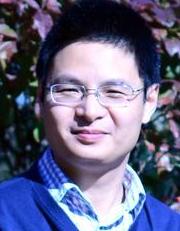
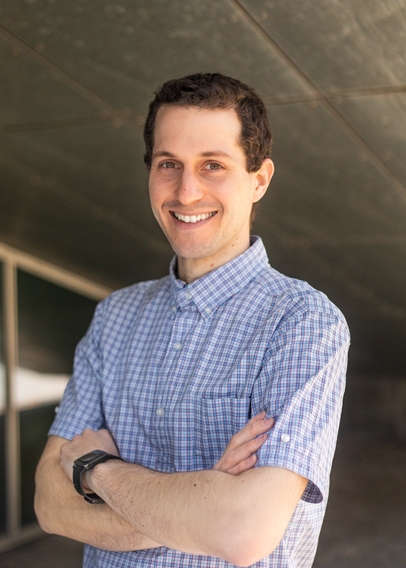
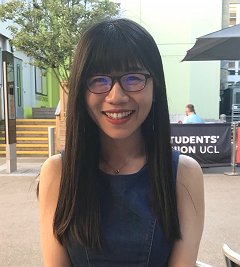
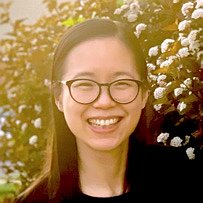
Bo An is a President's Chair Professor and Head of the Division of Artificial Intelligence at the College of Computing and Data Science , Nanyang Technological University, Singapore . He also holds a courtesy appointment as Professor at the School of Physical & Mathematical Sciences and serves as Director of the Centre of AI-for-X. Previously, he was a Nanyang Assistant Professor (2014-2018), Associate Professor at the Chinese Academy of Sciences (2012-2013), and Postdoctoral Researcher at the University of Southern California (2010-2012). His academic journey began with B.Sc. and M.Sc. degrees from Chongqing University, followed by a Ph.D. in Computer Science from the University of Massachusetts, Amherst (advised by Victor Lesser). Research Interests : Artificial Intelligence Multiagent Systems Computational Game Theory Reinforcement Learning Automated Negotiation Optimization Research Impact : Applications in infrastructure security (deployed by US Coast Guard and Federal Air Marshals), e-commerce, sensor networks, and financial technology. Over 150 publications in top venues like AAMAS, IJCAI, AAAI, ICML, NeurIPS, KDD, and ACM/IEEE Transactions. Scientific Recognition : 2010 IFAAMAS Victor Lesser Distinguished Dissertation Award 2012 INFORMS Wagner Prize 2018 & 2022 Nanyang Research Awards 2017 Microsoft Collaborative AI Challenge IEEE Intelligent Systems 'AI's 10 to Watch' (2018) Leadership Roles : Editor-in-Chief of IEEE Intelligent Systems, Associate Editor for AIJ, JAAMAS, and ACM Transactions. Served as General Co-Chair for AAMAS'23 and Program Chair for IJCAI'27.
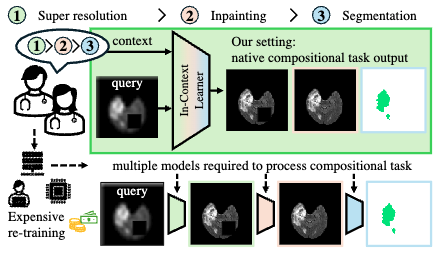
Prof. Dr. Erik Rodner is a faculty member at the University of Applied Sciences Berlin (HTW Berlin), where he serves as a Professor for Machine Learning and Data Science. He also contributes to the School of Engineering Sciences - Technology and Life. His research spans computer vision, machine learning, and biomedical applications, with a focus on learning with limited data, robust visual recognition models, and medical image analysis. He has developed innovative methods for medical diagnostics, industrial classification, and anomaly detection. Recent publications (2025-2016) highlight his expertise in visual in-context learning, semi-weakly segmentation, and active learning frameworks. He has collaborated with institutions such as ZEISS Group, Friedrich Schiller University Jena, and UC Berkeley. Scientific Awards: Award for Excellent Teaching (2023)
Hao Yang is an Assistant Professor in the Department of Civil and Systems Engineering at Johns Hopkins University, with dual affiliations at the Johns Hopkins Data Science and AI Institute and the Johns Hopkins Institute for Assured Autonomy. His research develops Trustworthy Machine Learning methods to enhance urban mobility systems, focusing on traffic safety, equity, and sustainability through ethical AI and human-machine cooperative systems. Yang earned dual bachelor's degrees in Electrical and Computer Engineering from Beijing University of Posts and Telecommunications and the University of London, followed by a Ph.D. in Civil Engineering (Transportation) from the University of Washington. His educational background bridges telecommunications, electrical engineering, and transportation systems. His research integrates spatio-temporal modeling, assured autonomous systems, and multimodal representation learning to address transportation equity and safety. Key projects include edge-AI-powered traffic surveillance, real-time crash identification, and cooperative signal assistance for vulnerable road users. His work emphasizes ethical AI deployment in cyber-physical infrastructure to create sustainable urban mobility solutions. Recent publications reveal a strategic shift toward large language models and multimodal AI for transportation challenges, with strong emphasis on explainability, reliability, and equity in traffic crash prediction, flow forecasting, and autonomous driving systems. This evolution demonstrates his commitment to adapting cutting-edge AI for real-world transportation problems. Yang's scientific contributions have earned significant recognition: Michael Kyte Outstanding Student of the Year Award (2022) High-Value Research Award from AASHTO (2022) Best Paper Award from TRB Information Systems Committee (2023) Best and Outstanding Dissertation Awards (2024) IEEE DTPI Outstanding Paper Award (2022) TRANSFOR22 Data Competition 2nd place (2022) ASCE Bridges Photo Contest First Place (2021) He actively mentors graduate researchers and seeks 2-3 PhD students for Fall 2025 to advance trustworthy AI in transportation. His research is supported by NSF, USDOT, and AASHTO grants including the Real-Time Truck Parking Information System project that received the High-Value Research Award. Current work focuses on edge-AI for traffic safety and multimodal data integration. Yang leads research within Johns Hopkins' Data Science and AI Institute and Institute for Assured Autonomy, collaborating with Transportation Research Board committees. His lab develops real-time perception systems using edge computing and representation learning, with active projects on non-motorized user safety and equitable traffic management for people with disabilities.
Bernhard Aichernig is an Associate Professor at the Institute of Software Engineering and Artificial Intelligence. His work bridges formal methods, model-based testing, and artificial intelligence, with a focus on automata learning, digital twins, and AI-assisted programming. Institution: Institute of Software Engineering and Artificial Intelligence Key Research Areas: Model-Based Testing, Automata Learning, AI-Driven Verification His research explores the integration of machine learning into formal verification, enabling scalable testing of complex systems like IoT devices and reinforcement learning agents. Recent projects include AI-Augmented DevOps frameworks (AIDOaRT) and digital twin validation (LearnTwins). Notable scientific awards include multiple best paper recognitions at SEFM (2020, 2021) and the TAYSIR Competition first place (2023). His publications emphasize hybrid approaches combining genetic programming, SMT solving, and neural networks for system modeling. 2025 : AI-assisted programming, timed automata via domain knowledge 2024 : Stochastic environment modeling, Git system learning 2023 : Reinforcement learning under partial observability, digital twins for VPN servers He actively contributes to testing frameworks like AALpy and investigates explainable AI for fault diagnosis in cyber-physical systems.
Tyler Simko is an Assistant Professor of Political Science at the University of Michigan, specializing in US state and local politics, political geography, and computational social science. His research focuses on understanding and addressing inequality in American public policy through innovative methodological approaches. Education: Ph.D. in Government, Harvard University (2024) A.B. in Politics, Princeton University Simko's research examines state and local politics in the United States with particular focus on political geography and subnational policymaking. His active research agendas include legislative redistricting ("gerrymandering"), local public meetings, school segregation, affordable housing, and data privacy. Methodologically, he develops new techniques in computational social science and machine learning to evaluate subnational inequality and how it can be reduced. His work regularly involves partnerships with federal, state, and local officials to improve the design of public policy. His recent publications demonstrate a strong focus on applying computational methods to address real-world policy challenges, particularly in school desegregation, redistricting, and local government transparency. His research often leverages large-scale data collection efforts, such as LocalView (the largest database of local government meetings in the US), to analyze patterns of political behavior and policy outcomes across different jurisdictions. Awards and Recognition: APSA 2024-25 Best Paper in Education Politics and Policy Award APSA 2024-25 Best Paper in Urban and Local Politics, Honorable Mention MPSA 2024 Robert H. Durr Award for "the best paper applying quantitative methods to a substantive problem" Derek C. Bok Award for Excellence in Graduate Student Teaching of Undergraduates (2023) Simko teaches graduate and undergraduate courses in American Politics and Political Methodology at the University of Michigan. His teaching experience spans multiple institutions, including Harvard University and Princeton University. He has designed innovative courses on US Local Policymaking, data science, and computational social science. As a Data Scientist at the Office of Evaluation Sciences, he partners with federal, state, and local officials to improve program design and reduce administrative burdens. He is a co-PI of the Algorithm-Assisted Redistricting Methodology (ALARM) Project and co-creator of LocalView, the largest audio, video, and text database of local government meetings in the United States. These projects represent significant contributions to the field of computational social science and provide valuable resources for researchers studying local governance and policy-making.
Minh Hoai Nguyen is an Assistant Professor in the Department of Computer Science at Stony Brook University. He received his PhD in Robotics from Carnegie Mellon University and a Bachelor of Engineering from the University of New South Wales. Prior to Stony Brook, he was a post-doctoral research fellow at Oxford University and a Kurti Junior Research Fellow at Brasenose College. Education: PhD in Robotics, Carnegie Mellon University Bachelor of Engineering, University of New South Wales His research focuses on computer vision , machine learning , and time series analysis , particularly in developing algorithms for human action recognition , gesture detection , and expression analysis in video data. Applications include video surveillance , human-computer interaction , and medical diagnosis of behavioral disorders . His work integrates computer vision for video processing, time series analysis for modeling human behavior, and machine learning for training complex algorithms. Notable awards include: CVPR 2012 best student paper award Winner of PASCAL VOC 2012 Challenge for Human Action Recognition He teaches courses such as Video Analysis (CSE 594) and Introduction to Robotics (CSE 525) .
Tetsuya Sakai is a Professor at the School of Fundamental Science and Engineering within Waseda University's Faculty of Science and Engineering. His work focuses on information access, retrieval, and natural language processing, with a particular emphasis on evaluation frameworks for search systems. Affiliations: Waseda University (Faculty of Science and Engineering, School of Fundamental Science and Engineering) Academic Rank: Professor Research Interests : Dr. Sakai's research spans four key areas: (1) Information Access —designing systems for direct and immediate information delivery, (2) Search Evaluation —developing metrics like Height-Biased Gain and hierarchical intent-based diversity measures, (3) Fairness in IR —pioneering frameworks for group fairness in conversational search, and (4) Statistical Reform —advocating Bayesian methods and robust experimental design. His work also addresses privacy inconsistencies in mobile apps and cognitive biases in LLMs. Scientific Awards : Notable recognitions include induction into the SIGIR Academy (2023) , ACM Distinguished Member (2018) , ACM Senior Member (2016) , and multiple DEIM/FIT/CSS Best Paper Awards . He has received teaching honors like the Waseda Presidential Teaching Award (2016) and WASEDA e-Teaching Award (2018) . Article Trends : Recent publications highlight: Advancements in LLM-assisted relevance assessments and hallucination diagnostics for tool-augmented models Conversational search fairness through multi-level evaluation frameworks and group diversity metrics Innovations in 3D medical reconstruction from clinical data and multimodal uncertainty modeling Statistical rigor via randomization tests , credible intervals , and topic set design Privacy analysis in mobile app descriptions and cognitive bias studies in search interaction
Laurence Anthony is a Professor at Waseda University's School of Creative Science and Engineering, specifically affiliated with the Center for English Language Education in Science and Engineering (CELESE). He has held this position since 2009, having previously served as an Associate Professor at the same institution from 2004-2009. His academic journey began with a BSc from The University of Manchester (1991), followed by an MA (1997) and PhD (2002) from The University of Birmingham. Anthony's research centers on corpus linguistics, educational technology, and natural language processing applications in foreign language teaching. He is renowned for developing AntConc, a widely used freeware corpus analysis toolkit, along with numerous other educational software tools including AntWordProfiler, FireAnt, and ProtAnt. His work bridges linguistic theory with practical classroom applications, particularly in data-driven learning approaches for English as a Foreign Language contexts. His publication record is extensive with over 50 papers, 12,115 Google Scholar citations, and an h-index of 45. His recent work increasingly explores the intersection of corpus linguistics and artificial intelligence, examining how language models can enhance language teaching and analysis. Anthony's research has evolved from foundational corpus tool development to sophisticated applications in vocabulary profiling, writing analysis, and AI-assisted language learning. Among his notable recognitions are the Waseda University 6th e-Teaching Award (2018), the National Prize of the Japan Association of English Corpus Studies (2012), and the L'Oreal Art and Science of Color Gold Prize (2005). He serves on multiple editorial boards including for Studies in Corpus Linguistics, Journal of Asia TEFL, and Corpus Linguistics Research Journal. Anthony actively contributes to the academic community through numerous presentations at international conferences, recent ones including talks on AI integration with corpus methods at Corpus Linguistics 2025 and the LSP-Num Conference. His professional activities demonstrate ongoing engagement with both theoretical developments and practical applications in language education technology.
Todd Millstein is a Professor in the Computer Science Department at the University of California, Los Angeles (UCLA). He served as the Computer Science Department Chair from 2022-2025 and is also an Amazon Scholar. His research focuses on making software systems more reliable through programming languages techniques, with significant contributions to network verification and probabilistic programming. Millstein received his Ph.D. from the University of Washington Department of Computer Science, where he was a member of the Cecil group led by Craig Chambers. Prior to that, he completed his undergraduate studies at Brown University under the guidance of Paris Kanellakis and Pascal Van Hentenryck. Millstein's research spans several areas of programming languages and systems with a focus on reliability. He has made significant contributions to network verification, developing the Batfish network configuration analyzer which is now managed by Amazon Web Services and forms the basis of Oracle Cloud's Network Path Analyzer. His work has been recognized with the ACM SIGCOMM Networking Systems Award in 2025. He also works on interactive program verification through lemma synthesis and scalable reasoning methods for probabilistic programming languages. His research bridges programming languages theory with practical systems challenges, as highlighted in his SPLASH/OOPSLA 2024 keynote "Everything is a Program (even if it's not)". Millstein's recent publications demonstrate a consistent focus on verification and reliability across multiple domains. His work shows a progression from foundational programming language techniques to practical applications in networking and probabilistic systems. Key themes include data-driven approaches to program analysis, synthesis of verification artifacts, and applying programming languages techniques to non-traditional domains like network configuration. Millstein's scientific achievements have been recognized with numerous prestigious awards including an NSF CAREER Award, an ACM SIGPLAN Most Influential PLDI Paper Award, an ACM SIGCOMM Networking Systems Award, IEEE Micro Top Picks selection, best-paper awards from PLDI, OOPSLA, and SIGCOMM, a Microsoft Research Outstanding Collaborator Award, an Okawa Foundation Research Grant, an IBM Faculty Award, and a Facebook Research Award. He has also received both the Northrop Grumman Excellence in Teaching Award (for junior faculty) and the Eon Instrumentation Inc. Excellence in Teaching Award (for senior faculty) from UCLA Engineering. Millstein advises several Ph.D. students including Ana Brendel, Poorva Garg (co-advised with Guy Van den Broeck), Rajdeep Mondal (co-advised with George Varghese), and Rathin Singha (co-advised with George Varghese). His research has been supported by various grants including an NSF CAREER Award, Okawa Foundation Research Grant, IBM Faculty Award, and Facebook Research Award. He has also been a Co-Founder and Chief Scientist of Intentionet, which was later acquired by Amazon Web Services. Millstein is actively involved in the Batfish project, an open-source network configuration analyzer that has had significant practical impact. Batfish is now managed by AWS, powers Oracle Cloud's Network Path Analyzer, and is used by dozens of companies. His research group continues to work on network reliability, developing techniques for scalable BGP policy verification and behavioral testing of protocol implementations.
Haiyang Ai is an Associate Professor in the Literacy and Second Language Studies program at the University of Cincinnati's School of Education. His research applies corpus linguistics and natural language processing to investigate second language acquisition, writing complexity, and bilingual language processing. His educational background includes a Ph.D. in Applied Linguistics from The Pennsylvania State University (2015), an M.A. in Linguistics & Applied Linguistics from the University of Chinese Academy of Sciences (2006), and a B.A. in English from Shaanxi Normal University (2003). Dr. Ai's research spans corpus linguistics, natural language processing, second language acquisition, and computer-assisted language learning. He specializes in compiling and analyzing native and learner corpora to develop intelligent language learning systems and investigate lexical/syntactic complexity in L2 writing. His methodological approach integrates computational tools with theoretical linguistics to address practical language teaching challenges. His recent publications (2019-2023) demonstrate consistent focus on lexical bundles in professional communication, automating complexity measurement in Chinese, speech perception mechanisms in bilinguals, and grammatical puzzles in English learning. These works bridge corpus-based analysis with psycholinguistic experimentation across diverse subfields including morphosyntax, pragmatic competence, and cognitive processing in L2 acquisition. Dr. Ai has secured multiple University of Cincinnati grants including three CECH Faculty Development Grants ($2500 in 2017-2018 for verb-noun collocation research, $2000 in 2016-2017 for corrective feedback tools) and the NCFDD Faculty Success Program ($3250 in 2017), all supporting his development of computational language learning resources.
Daniel Hershcovich is a Tenure-Track Assistant Professor at the Natural Language Processing section of the Department of Computer Science, University of Copenhagen. His research focuses on cross-cultural adaptation of language models, integrating human values into AI systems, and evaluating AI's real-world impact in domains like law, literature, and food culture. Research Themes Cultural value alignment in LLMs Multimodal models for accessibility Cross-cultural recipe and food knowledge Historical Scandinavian text analysis Ethical AI and bias mitigation Scientific Recognition SAC Highlight Award (ACL 2025) Outstanding Paper Award (ACL 2017) Advising & Grants : Mentions collaborations on multiple EMNLP/ACL/CoNLL papers. Leads Independent Research Fund Denmark project ALIKE (2025-2027) and contributes to Innovation Fund Denmark's XHAILe (2025-2028). Co-organized SemEval 2019 and CoNLL 2019/2020 shared tasks. Labs & Teams : Leads the CoAStaL research group. Collaborates with teams at IBM Research Haifa, University of Manchester, and Wuhan University of Science and Technology.
Bihuan Chen is an Associate Professor at the College of Computer Science and Artificial Intelligence, Fudan University, specializing in software engineering with focus on software supply chain security and trustworthy AI systems. His research spans multiple programming languages including JavaScript, Python, Java, and C/C++ across application and AI domains. Dr. Chen earned his B.Sc. and Ph.D. in Computer Science from Fudan University in 2009 and 2014 respectively, followed by postdoctoral research at Nanyang Technological University (2014-2017). His research interests include software supply chain risk assessment, trustworthy AI systems, and program analysis. His recent publications demonstrate strong focus on malicious package detection in NPM/PyPI ecosystems, vulnerability patch porting using LLMs, and safety verification for autonomous driving systems. The work shows increasing integration of machine learning techniques with traditional program analysis approaches, particularly evident in the 2024-2025 publications that leverage LLMs for vulnerability detection and code refinement. ACM SIGSOFT Distinguished Paper Award (FSE 2016, ASE 2018, ASE 2022, FSE 2025) IEEE TCSE Distinguished Paper Award (ICSME 2020, SANER 2023) CCF Prototype Competition Awards (2nd and 3rd Prizes) Dr. Chen has advised over 50 students including current PhD candidates and notable alumni now at Huawei, ByteDance, and other leading tech firms. His fuxi platform assesses security, legal, and maintenance risks across the software engineering lifecycle. He serves on program committees for major conferences including ICSE, FSE, ASE, and ISSTA, and as Associate Editor for the Journal of Software: Evolution and Process.
Jie M. Zhang is an Assistant Professor in the Department of Informatics at King's College London, specializing in the intersection of software engineering and artificial intelligence. Her research focuses on two main directions: AI for Software Engineering (leveraging AI technologies to automate software tasks) and Software Engineering for AI (applying SE principles to enhance AI system trustworthiness). Her educational background includes a PhD in Computer Science from Peking University, where she was supervised by Professors Lu Zhang and Dan Hao. Prior to joining King's College London, she was a Research Fellow at University College London working with Professor Mark Harman and Professor Federica Sarro. Dr. Zhang's research interests center on software testing, machine learning trustworthiness, fairness testing, bias mitigation in AI systems, and program analysis. Her work particularly examines how large language models can be utilized for code generation, test case creation, and program repair, while also developing techniques to detect and fix issues within AI models. Her recent publications demonstrate strong trends in evaluating and enhancing the trustworthiness of AI-generated code, with specific emphasis on fairness testing across various domains including autonomous driving systems, machine translation, and decision-making software. Her research increasingly focuses on the efficiency of generated code and detecting hallucinations in large language models. 2025 ACM Sigsoft Early Career Researcher Award for pioneering contributions to software engineering for AI IEEE TSE 2024 Best Paper Award for 'Stealthy Backdoor Attack for Code Models' FSE 2025 Distinguished Paper Award Royal Society International Exchange Grant recipient NMES Enterprise & Engagement Partnerships Fund recipient Dr. Zhang has served in numerous leadership roles across major software engineering conferences including as General Chair for AIware 2025, Area Chair for ASE 2025, and Steering Committee Member for ICST. She has advised multiple PhD students and received significant research funding for her work on LLMs and software engineering. Her research group collaborates with industry partners including Huawei and Facebook, and she leads projects such as ITEA GENIUS and ITEA GreenCode. She is actively involved with King's College London research hubs including the Trusted Autonomous Systems Hub, Security Hub, and Software Systems group, where her work contributes to developing trustworthy AI systems across multiple domains.
Allison Sullivan is an Assistant Professor of Computer Science at the University of Texas at Arlington (UTA), where she also serves as the Undergraduate Software Engineering Program Director. She is a member of the Software Engineering Research Center (SERC) at UTA and serves as faculty advisor for UTA's Society of Women Engineers (SWE) club. Dr. Sullivan received her PhD in Software Verification, Validation and Testing (SVVAT) from the University of Texas at Austin in 2017 under Sarfraz Khurshid. Her educational background includes: PhD in Software Verification, Validation and Testing, University of Texas at Austin (2017) M.S. in Software Engineering, University of Texas at Austin (2014) B.S. in Software Engineering, University of Texas at Dallas (2012) Dr. Sullivan's research focuses on two primary areas: Automated Software Engineering : Test/Oracle Generation, Automated Bug Localization and Repair, Mutation Testing, and Regression Testing Formal Methods and Programming Languages : Abstractions, Finite Model Finders, Program Synthesis, and SAT/SMT Solvers She leads the SCOPE lab which focuses on 'showing the correctness of all program executions' and has published extensively on Alloy modeling language applications. Her recent publications demonstrate a strong focus on applying formal methods to software engineering problems, with a growing emphasis on the intersection of large language models and software development practices. Her work spans theoretical foundations, tool development, and empirical studies of how developers use modeling languages. Her scientific achievements have been recognized with: NSF CAREER Award (2024) UTA CSE department Rising Star Research Award (2024) UTA College of Engineering Outstanding Early Career Faculty Award (2025) NSF grant for building an educational tool for software modeling ($400k) Dr. Sullivan has successfully advised two PhD students to completion: Dr. Ana Jovanovic (defended November 2024) and Dr. Anahita Samadi (defended February 2025). She actively mentors undergraduate researchers and has secured significant research funding including the NSF CAREER grant. Her service includes committee roles for major conferences including ASE, ISSRE, and FormaliSE. She leads the SCOPE lab at UTA, which brings together graduate and undergraduate researchers to develop techniques for improving software verification and validation, with particular emphasis on making formal methods more accessible to practitioners.
Juan Zhai is an Assistant Professor in the Manning College of Information & Computer Sciences (CICS) at University of Massachusetts Amherst, where she co-directs the Laboratory for Advanced Software Engineering Research (LASER) and participates in the UMass NLP group. Her academic career spans over 7 years of active service including program committee roles at top-tier conferences like ICSE, FSE, and ASE. Her research focuses on Software-AI Synergy with core areas including: Formal Specification Synthesis for precise software behavior definition Comment Generation and Maintenance using LLMs Trustworthy AI through bias detection and framework testing Deep Learning Infrastructure Reliability Recent work demonstrates strong emphasis on practical tools for AI safety and software dependability. Her publication trends show consistent output in top software engineering venues (ASE, ICSE, FSE) with increasing focus on AI/ML conferences (ACL, CVPR, ICLR). Key themes include metamorphic testing for deep learning frameworks, bias analysis in LLMs, and formal methods for specification synthesis. She actively serves the community through: Program committees for 13 major conferences Reviewing for 5 top journals including TOSEM and TSE 40+ total reviews across SE and AI venues Juan mentors PhD students including Gehao Zhang (research focus: Software Engineering, AI Safety) and teaches graduate courses like CS520 (Theory and Practice of Software Engineering) and CS692P (Hot Topics in SE Research). She leads the LASER lab which develops tools like C2S, CPC, and DevMuT for software reasoning and AI infrastructure testing.