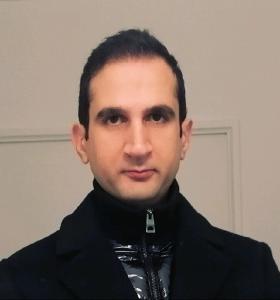
Devid Maniglio is an Associate Professor at the Department of Industrial Engineering, University of Trento. His research focuses on bioengineering, biomaterials, and tissue engineering, with a particular emphasis on bioprinting, surface modification, and functional materials. He has contributed to advancements in silk fibroin and hydrogel-based systems for medical applications. Research Interests Bioengineering for personalized medicine Biomaterials and surface engineering 3D bioprinting and tissue regeneration Molecular imprinting and biosensors Drug delivery and cell encapsulation Teaching Diagnostic and therapeutic technologies for personalized medicine Engineered materials for precision medicine Fundamentals of biomedical technologies Functional surfaces laboratory Labs & Collaborations Devid Maniglio is affiliated with the Functional Surfaces Laboratory at the University of Trento, collaborating with researchers such as Stefano Rossi and Flavio Deflorian. His work integrates interdisciplinary approaches in biomedical engineering and sustainable medical technologies.
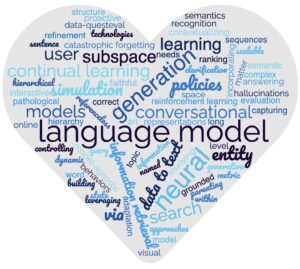
Laure Soulier is a HDR (Habilitation à Diriger des Recherches) Lecturer at Sorbonne University within the MLIA team at the ISIR (Institute for Intelligent Systems and Robotics) laboratory. Her research focuses on the design of language models for Information Retrieval (IR) and Natural Language Processing (NLP) applications, including data-to-text generation , search-oriented conversational systems , language models for robotics , and continual learning with domain adaptation . Recent publications highlight her work on cross-encoders, co-speech gesture generation, and latent space metrics. She supervises an ANR-funded postdoctoral researcher position (SCAI/BnF program) and collaborates on projects involving multimodal techniques, user interaction analysis, and document vectorization. Her scientific contributions include best paper awards at CORIA 2021, SCAI@EMNLP 2019, CORIA 2015, and AIRS 2013. Laure Soulier’s work spans collaborative information retrieval models, entity ranking in heterogeneous networks, and neural approaches for knowledge-based IR. She has contributed to evaluation frameworks for LLMs in IR and co-speech gesture generation, with applications in e-commerce search, medical information retrieval, and social media-based collaboration. Her research integrates user roles, document representations, and reinforcement learning techniques.
Riccardo Zaccone is a Ph.D. candidate in Computer and Systems Engineering at Politecnico di Torino’s Department of Control and Computer Science (DAUIN), specializing in machine learning and computer vision. He also serves as an external lecturer and teaching assistant, contributing to courses in Machine Learning, Deep Learning, and Algorithms and Data Structures for Computer Science Engineering. Education : Ph.D. in Computer and Systems Engineering (2022–2025), Politecnico di Torino. His research focuses on Federated Learning and Visual Place Recognition, addressing challenges in communication efficiency, distributed training, and cross-domain adaptation. Recent work includes Communication-efficient Federated Learning with Heavy-Ball Momentum (2025) MeshVPR for 3D-based Urban Navigation (2025) Distributed CosPlace Training for Large-Scale Localization (2024) He collaborates with the VANDAL laboratory on multimodal learning applications and has co-authored publications in top-tier venues like ECCV, Frontiers in Robotics and AI, and ICPR.
Michael D. Bond is a Professor in the Department of Computer Science & Engineering at Ohio State University's College of Engineering. He leads the Programming Languages and Software Systems (PLaSS) Research Group, which focuses on designing program analyses and software and hardware systems that enhance computing reliability, scalability, and security. His academic service includes general chair for PLDI 2027, program committee membership for multiple top conferences, and committee roles in SIGPLAN Research Highlights (2024-2027). Professor Bond's research spans programming languages, systems, and security, with particular expertise in memory management, concurrency, hardware transactional memory, information flow control, and predictive race detection. His work bridges theoretical foundations with practical implementations, as evidenced by numerous open-source projects accompanying his publications. The PLaSS group has made significant contributions to understanding and improving memory models, developing efficient garbage collection techniques for modern architectures, and creating novel approaches to secure programming in languages like Rust. Analysis of his recent publications reveals a clear trajectory toward addressing security and reliability challenges in modern computing systems, particularly through language-based approaches. His work increasingly focuses on Rust programming language security mechanisms, memory disaggregation for datacenters, and advanced techniques for detecting and preventing concurrency bugs. The research demonstrates strong continuity in exploring memory models and concurrency while adapting to emerging hardware trends and security challenges. Outstanding Teaching Award, Department of Computer Science and Engineering, Ohio State University (2018) Lumley Research Award, College of Engineering, Ohio State University (2016) OOPSLA 2015 Distinguished Paper and Artifact Awards NSF CAREER Award ACM SIGPLAN Outstanding Doctoral Dissertation Award Intel PhD Fellowship Professor Bond actively mentors several PhD students including Chujun Geng, Vincent Beardsley, Chris Xiong, Victor Chen, and Noah Charlton, with external co-advisee Zixian Cai at Australian National University. His research is currently supported by multiple NSF grants including SaTC-2348754 (2024-2027), CyberCorps-2336531 (2024-2029), and CSR-2106117 (2021-2025), reflecting sustained funding for his work in information flow control, security, and systems research. The PLaSS Research Group maintains a strong presence in both academic and industrial communities, with graduated PhD students securing positions at major technology companies like Google, Amazon Web Services, and Huawei, as well as academic positions at institutions like UIUC and IIT Kanpur. The group's work combines theoretical rigor with practical implementation, consistently producing open-source artifacts that enable reproducibility and further research in the systems and programming languages community.
Andy D. Pimentel is a Full Professor at the University of Amsterdam, where he chairs the Parallel Computing Systems (PCS) group within the Systems and Networking Lab at the Informatics Institute. His work focuses on the design, programming, and run-time management of multi-core and multi-processor computer systems, with particular attention to performance, power/energy consumption, system dependability, and design productivity. His academic background includes: PhD in Computer Science, 1998, University of Amsterdam MSc in Computer Science, 1993, University of Amsterdam Professor Pimentel's research spans multiple critical areas in modern computing systems. His primary interests include multi-core embedded systems, system-level design and simulation, design space exploration, performance and power analysis, system dependability, hardware/software co-design, run-time resource management, and Edge AI. His work addresses the growing challenges of making computer systems faster, more sustainable, energy efficient, reliable, and secure in an era of increasing computational demands and climate concerns. The PCS group he leads performs research on the modeling, analysis and optimization of extra-functional aspects of computing systems, which play a pivotal role in their work. An analysis of Professor Pimentel's recent publications reveals a strong focus on edge computing, distributed AI, and energy-efficient system design. His work bridges theoretical computer architecture with practical implementation challenges, particularly in the context of resource-constrained environments. Key trends include the adaptation of AI models for edge devices, thermal management in advanced architectures, and optimization of multi-core systems for both performance and energy efficiency. His research increasingly addresses sustainability concerns in computing, reflecting broader industry and academic priorities. His notable scientific achievements include: IEEE CEDA Outstanding Service Recognition Award DATE Fellow Award Professor Pimentel has served in numerous leadership roles in the academic community, including as General Chair of Design Automation and Test in Europe (DATE) 2024, Vice General Chair of IEEE/ACM Embedded Systems Week 2025, and General Chair of IEEE/ACM Embedded Systems Week 2026. He has secured significant research funding for projects related to sustainable computing, edge AI, and multi-core system design. His professional service includes board membership with the ICT Research Platform Nederland (IPN) since 2020 and leadership roles in major conferences such as DATE, Embedded Systems Week, and SAMOS. The Parallel Computing Systems group he chairs is a vibrant research team within the Systems and Networking Lab at the Informatics Institute. The PCS group focuses on the challenges of modern computing systems, particularly addressing the extra-functional aspects like performance, power consumption, and system dependability. Their work is highly relevant to current technological challenges in edge computing, sustainable systems design, and the integration of AI into resource-constrained environments.
Prof. Dr. Uwe Schlink is a leading Professor at the Institute of Meteorology, University of Leipzig, and Senior Researcher at the Department of Urban & Environmental Sociology, Helmholtz Centre for Environmental Research - UFZ. His work focuses on urban climate research , thermal comfort , urban air quality , and statistical modelling with Bayesian inference. He leads the working group on urban climate and personal exposure, bridging environmental science with societal resilience. Affiliation: University of Leipzig (since 2009) and UFZ (since 2013) Research Themes: Urban heat islands, personal exposure to environmental stressors, statistical climate models, and health impacts of air pollution His research spans environmental health , urban climatology , and resilient city planning , with significant contributions to understanding thermodynamic interactions between urban structures and climate. He has pioneered methods for high-resolution land surface temperature analysis and green infrastructure performance in mitigating heat stress. Recent publications (2023-2025) highlight his work on PM2.5-bound PAH exposure , anthropogenic heat impacts in Beijing, and Asian plateau climate dynamics . Collaborative projects address urban heat stress , green roofs , and health-focused urban planning .
Julien FAVIER is a Professor at Aix-Marseille Université, where he directs the M2P2 laboratory and coordinates the H2020 FALCON project on fluid-structure interaction in aeronautics. He also serves as an associate editor for Computers and Fluids . Research Focus: Fluid-structure interaction (FSI), Lattice Boltzmann Method (LBM), Immersed Boundary Method (IBM), turbulent and compressible flows Applications: Biomedical (aortic valves, mucus transport), aerospace (hypersonic flows), and mechanical systems (rupture/fragmentation) Scientific Contributions include: Developing stable explicit FSI solvers for LBM-IBM coupling Modeling metachronal wave dynamics in cilia arrays Advancing compressible LBM with rotating overset grids Studying drag reduction via flexible filament coatings Pioneering non-Newtonian fluid transport simulations Technical Expertise spans: Multi-grid and dual-time stepping techniques GPU acceleration for heterogeneous architectures Viscoelastic and Herschel-Bulkley flow modeling Validation of immersed boundary methods for turbulent flows
Dr. Torsten Stuehn serves as IT Group Leader at the Max Planck Institute for Polymer Research (MPI-P) in Mainz, Germany, leading scientific software development and HPC infrastructure since joining in 2003. He oversees the ESPResSo++ simulation package and collaborates with the University of Mainz and Max Planck Compute and Data Facility (MPCDF). Education: Diploma in Physics, University of Mainz, 1999 Doctorate in Physics, University of Mainz, 2005 His research focuses on scientific software engineering for exascale computing, developing neural network-based force fields, adaptive resolution methods, and load balancing algorithms to advance molecular simulation capabilities. This work addresses critical challenges in maintaining computational leadership for soft matter physics. Recent publications reveal a clear evolution in ESPResSo++ toward exascale readiness, integrating machine learning with multiscale modeling and parallel computing innovations. The software's progression reflects broader trends in computational physics where AI-driven methods and heterogeneous architecture optimization are becoming indispensable. Stuehn directs MPI-P's computational infrastructure team and contributes to major initiatives including Transregio SFB 146 and the European E-CAM project, driving open-source scientific software development for the global research community.
Reka Howard is an Associate Professor in the Department of Statistics at the University of Nebraska-Lincoln's Institute of Agriculture and Natural Resources (IANR), where she bridges advanced statistical methodology with agricultural innovation through genomic prediction research and graduate education. Education: PhD in Statistics and Plant Breeding, Iowa State University (2016) Research Focus: Dr. Howard pioneers statistical methods for genomic prediction in plant breeding, with emphasis on optimizing prediction accuracy and modeling genotype by environment interactions. Her work integrates environmental data with genomic information to develop robust models for crop improvement across soybean, wheat, and sorghum systems, directly addressing challenges in climate-resilient agriculture through computational innovation and field application. Publication Trends: Recent publications (2023-2025) reveal three dominant themes: (1) Methodological advances in genomic prediction including lambda optimization for ridge regression and sparse testing protocols; (2) Integration of environmental features with genomic data for transferable prediction models; and (3) Physiological investigations into nitrogen dynamics and canopy architecture in soybean production systems. Her work increasingly employs artificial intelligence techniques while maintaining rigorous statistical foundations. Teaching & Service: Dr. Howard instructs graduate statistical methods courses for agronomy, animal science, and engineering students, developing curriculum that translates complex methodologies into practical research tools for the next generation of agricultural scientists.
Sara Solla is a Professor in the Department of Physics and Astronomy at Northwestern University, with a joint appointment in Physiology. She holds a PhD from the University of Washington (1982). Her research focuses on applying statistical mechanics to complex systems, particularly neural networks, exploring topics like associative memory, supervised learning, and neural dynamics. Solla's work bridges theoretical physics and neuroscience, with contributions to computational models of neural computation and brain-machine interfaces. Research Interests : Solla investigates neural networks through the lens of statistical mechanics, examining how systems like spin-glass models can describe associative memory and generalization in adaptive systems. She has contributed to understanding neural network dynamics, spiking neuron behavior, and the role of heterogeneity in network computations. Her recent work explores low-dimensional neural manifolds for motor control, brain-computer interface development, and neuro-inspired artificial intelligence. Key Contributions : Her research spans theoretical frameworks for neural learning algorithms, applications in motor control decoding, and interdisciplinary approaches combining neuroscience with robotics. She has advanced methods for analyzing multi-electrode neural recordings and contributed to understanding tactile perception and somatosensory processing. Labs & Affiliations : Solla is affiliated with Northwestern's interdisciplinary centers, including the Center for Interdisciplinary Research and Exploration in Astrophysics (CIERA), the Center for Network Dynamics (CND), and the Center for Applied Physics and Superconducting Technologies (CAPST). These collaborations highlight her role in fostering cross-disciplinary research in physics, neuroscience, and engineering.
Professor John Morrison is the founder and director of the Centre for Unified Computing and co-founder of the Boole Centre for Research in Informatics at University College Cork. With qualifications including BSc, MSc, PhD, and DipTLHE, his research focuses on parallel distributed computing, grid technologies, and cloud architectures. His primary research explores: Self-organizing cloud management systems Heterogeneous computing environments Energy-efficient cloud infrastructure Grid computing middleware Professor Morrison's publications demonstrate strong focus on cloud computing optimization, distributed systems, and virtual reality applications in healthcare and education. Recent work emphasizes scalable resource management and trust systems in cloud environments. Honors include: Senior Member of ACM Senior Member of IEEE He has secured significant research funding including: €883,226 from Horizon 2020 for CloudLightning Project €379,111 from Enterprise Ireland for Cloud Computing Centre €646,604 from Higher Education Authority for Biophotonics Platform He leads the MAVRIC Research Lab focusing on immersive computing technologies and serves on editorial boards for multiple journals including Journal of SuperComputing.
Associate Professor Fatemeh Vafaee is a leading researcher at the University of New South Wales (UNSW) , holding appointments as Associate Professor in the School of Biotechnology and Biomolecular Sciences (BABS) and Deputy Director (Science) of the UNSW AI Institute . She previously served as Deputy Director of the UNSW Data Science Hub (uDASH) and has held academic positions at the University of Toronto and the University of Sydney. PhD in Artificial Intelligence from University of Illinois at Chicago Postdoctoral Fellowships at University of Toronto and University of Sydney Founded the AI-Enhanced Biomedicine Laboratory in 2017 Her research focuses on deploying advanced AI techniques to address biomedical challenges through: Biomarker Discovery for cancer and neurodegenerative diseases Single-Cell Multi-Omics data integration and analysis Computational Drug Repositioning and network pharmacology Multi-Omics Data Fusion and temporal network modeling Recent publications demonstrate expertise in liquid biopsy development , single-cell imaging , and AI-driven cancer diagnostics . Her methodological contributions include novel deep learning architectures for omics data analysis and graph neural networks for drug synergy prediction. Scientific accolades include: Winner, Women in AI Asia-Pacific Health Award (2023) Runner-Up, WAI-APAC Innovator of the Year (2023) Top 10 Women in AI in Asia-Pacific (2023) Australian Bioinformatics and Computational Biology Society Research Excellence Award (2023) She supervises PhD candidates across computational biomedicine and AI in healthcare , with significant grant achievements exceeding $17M in competitive funding, including schemes from ARC Discovery , NHMRC , and Medical Research Future Fund .
Graham Riley is a Lecturer in the School of Computer Science at the University of Manchester and holds a part-time position in the Scientific Computing Department (SCD) at STFC, Daresbury. His research focuses on high performance computing (HPC), software engineering for scientific computing, and performance modeling for parallel machines. Key areas include techniques for developing HPC applications, software architectures for coupled modeling, and performance control in distributed systems. His work emphasizes collaboration with computational scientists in domains such as Earth System Modelling (e.g., UK Met Office), computational chemistry, and biology. He has contributed to projects like the EuroExa architecture for exascale computing and the LFRic weather/climate model porting to FPGAs. Riley's research also explores energy efficiency in HPC systems and FPGA acceleration strategies for scientific workloads. Notable contributions include studies on parallelization strategies, FPGA-based acceleration of climate models, and optimizing OpenCL for heterogeneous architectures. His work aligns with UN Sustainable Development Goals, particularly through contributions to climate modeling and sustainable computing practices. Riley collaborates with institutions like the Met Office and the ESM community in Europe/US. His academic profile reflects a balance between theoretical research and practical application, with a strong focus on bridging computational science and engineering challenges.
David H. Albonesi is a Professor in the Computer Systems Laboratory at Cornell University's School of Electrical and Computer Engineering. His research focuses on power-efficient computer architectures, including reconfigurable systems, accelerator design for deep learning, smart buildings, and silicon nanophotonics interconnects. He has held leadership roles in major conferences like ISCA and MICRO, and serves on editorial boards for IEEE Computer and IEEE Micro. Research interests span adaptive architectures for dynamic power management, sparse matrix/tensor accelerators, and energy-efficient smart building systems. His work bridges hardware-software co-design, emphasizing phase-aware resource allocation and energy minimization. Awards include the IEEE Fellow distinction, NSF CAREER Award, and multiple teaching accolades from Cornell. Over 30 years of industry-academic collaboration has led to innovations in GALS microarchitectures, clustered multi-threaded processors, and thermal-aware scheduling. Key contributions include the CuttleSys reconfigurable multicore framework, MatRaptor sparse matrix accelerator, and foundational work in silicon photonics for on-chip interconnects. Patents cover dynamic core power management and adaptive microprocessor designs.
Mohamad Mroue is affiliated with the Laboratory at the Electrical and Electronic Engineering of Paris, focusing on cutting-edge research in Embedded Systems, FPGA, Electronics, IoT, and Wireless Communications. His work emphasizes FPGA-based solutions for power optimization, reconfigurable wireless systems, and low-power wide-area networks (LPWANs). He has contributed to advancements in partial reconfiguration techniques, machine learning integration for hardware monitoring, and secure mobility management protocols for IoT devices. His research spans multiple domains including UWB transceiver design, PAPR reduction in DVB-T2 systems, and innovative sensor networks. Collaborations with colleagues like Jean-Christophe Prevotet and Fabienne Nouvel highlight his interdisciplinary approach to solving complex engineering challenges. Mroue’s publications reflect a strong emphasis on practical implementations and real-world applications of embedded and wireless technologies. Key technical contributions include an ARM-FPGA platform for adaptive wireless communication, automated data generation systems, and energy-efficient solutions for IoT mobility. His work bridges theoretical research with hands-on prototyping, often leveraging FPGA capabilities for high-performance and flexible systems.