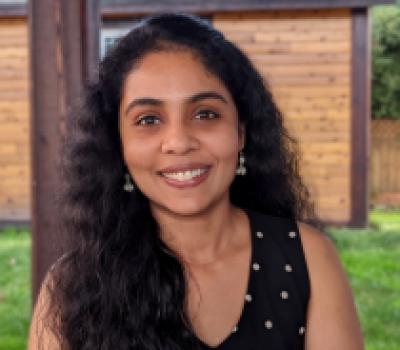
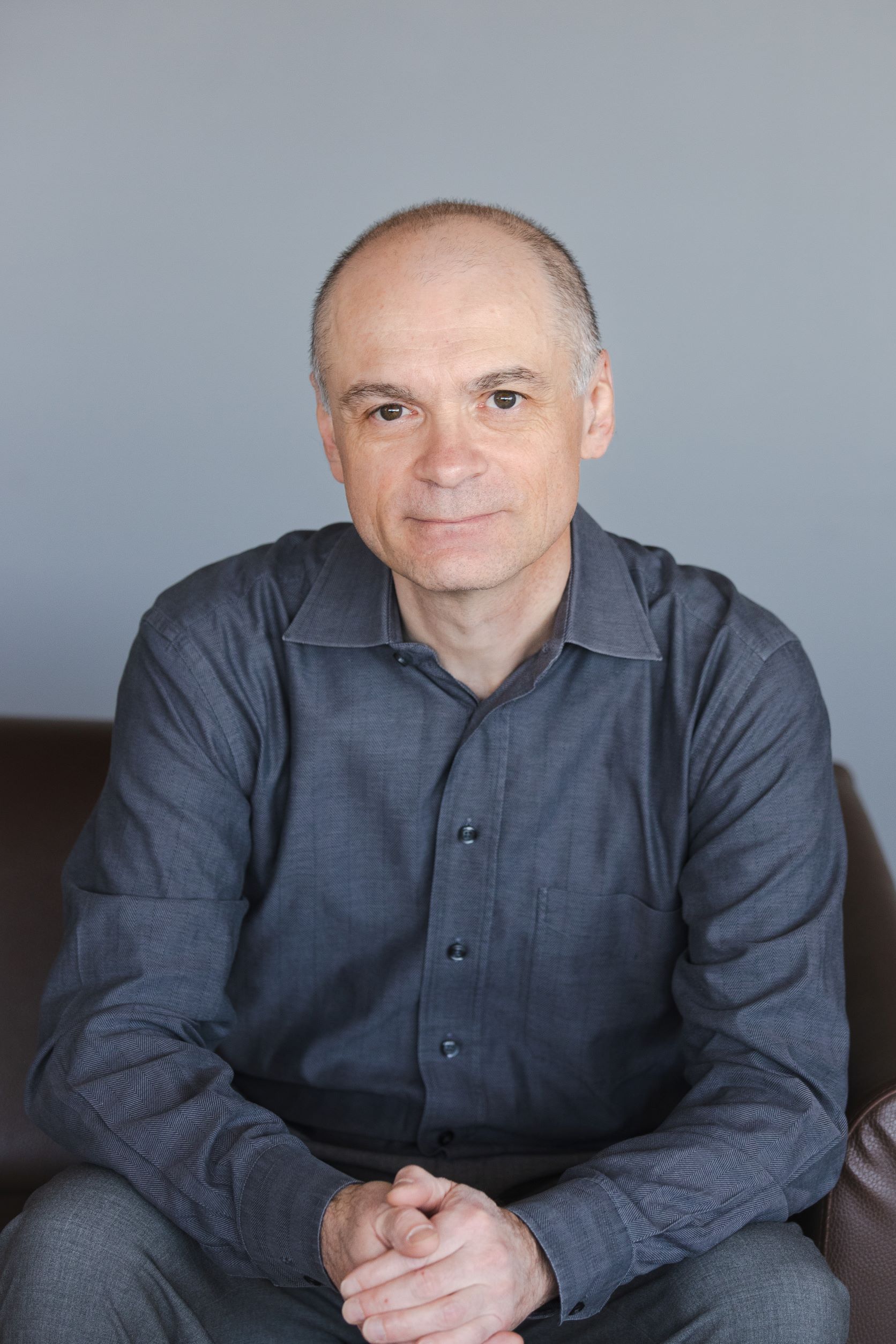
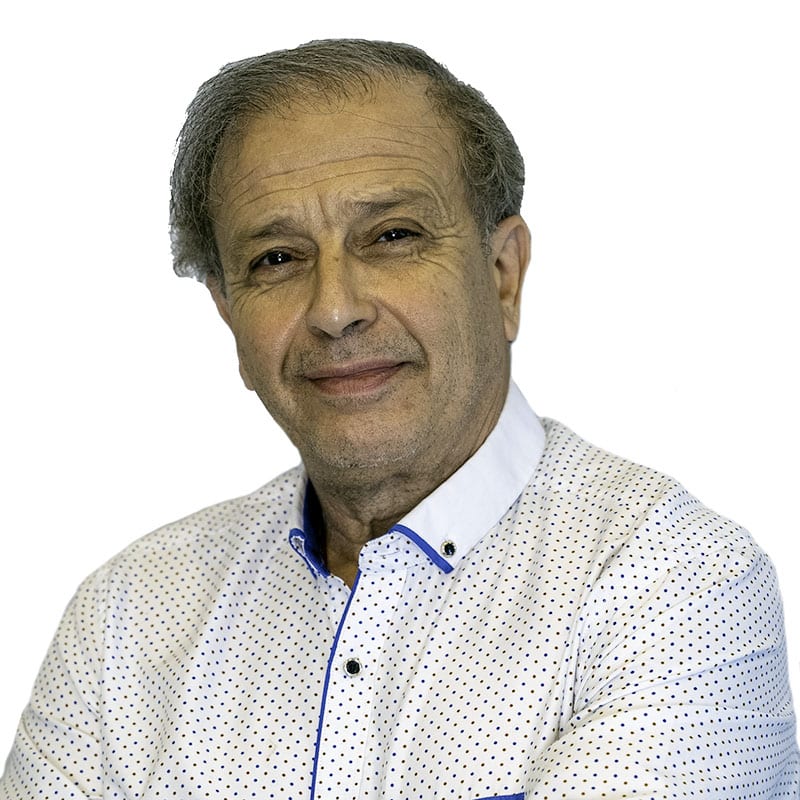
Dr. Karthika Mohan is an Assistant Professor of Computer Science in the College of Engineering at Oregon State University, affiliated with the School of Electrical Engineering and Computer Science. Her research bridges artificial intelligence and causal inference, focusing on graphical models, missing data, and non-IID data challenges. Her work has been recognized with the Google Outstanding Graduate Research Award. She serves as an associate editor for the Journal of Causal Inference and has secured NSF funding for research on incomplete data. Dr. Mohan mentors students in causal inference methods and maintains collaborations with institutions like UC Berkeley and UCLA. Her laboratory develops innovative approaches for causal reasoning in AI systems.
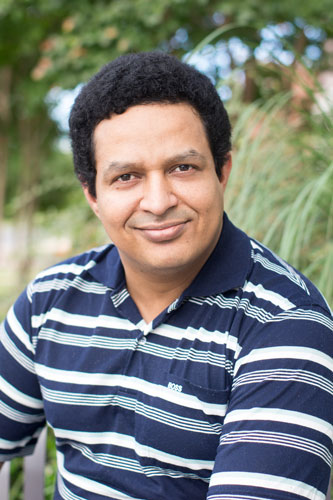
Ragib Hasan is a Professor in the Department of Computer Science at the University of Alabama at Birmingham (UAB), affiliated with the College of Arts and Sciences. His research focuses on cybersecurity, with specialties in cloud security, IoT systems, digital forensics, and biomedical device security. He leads the Secure and Trustworthy Computing Lab (SECRETLab) and contributes to the UAB Center for Cyber Security and NIST Cloud Forensics Working Group. Education: M.S. and Ph.D. in Computer Science from the University of Illinois at Urbana-Champaign, followed by a postdoctoral fellowship at Johns Hopkins University. Affiliations: NIST Cloud Forensics Working Group, UAB Center for Cyber Security. His research addresses threats in smart cities, autonomous vehicles, and healthcare technologies. Key interests include securing IoT networks, mitigating cyberattacks on critical infrastructure, and advancing forensic methodologies in cloud environments. Recent work emphasizes threat modeling for connected vehicles, medical devices, and AI-driven systems. Dr. Hasan’s funding comes from the Department of Homeland Security, NSF, ONR, and industry partners like Facebook, Google, and Amazon. His awards include the NSF CAREER Award (2014), Google RISE Award (2013), and Deutsche-Welle Best of Blogs (2014) for his BanglaBraille initiative. Grants & Projects: Supported by DHS, NSF, and corporate collaborations. Outreach: Founded Wikimedia Bangladesh, Shikkhok.com (STEM education platform), and contributed to Bangla and English Wikipedia. His lab develops frameworks like StreetBit for pedestrian safety and InSight for emergency alert systems, integrating Bluetooth beacon technology to enhance urban security and sustainability.
Dr. Anitha Chinnaswamy is a Senior Lecturer in Cyber Security Management at Aston Business School, Aston University, where she serves as Deputy Director of the Cyber Security Innovation (CSI) Research Centre. She leads the MSc Cyber Security Management program and directs multiple research initiatives focusing on cyber security risk management, cryptocurrency regulation, AI applications in cybersecurity, and gender diversity in the field. Her educational background includes a PhD in Computing, an MSc in Informatics, and a PG Cert in Higher Education, all from Coventry University. As a CRISC certified professional and APMG Certified Cyber Security Instructor, she brings both academic rigor and industry relevance to her work. Dr. Chinnaswamy's research spans critical cybersecurity areas including cyber security risk management, cryptocurrency and illicit money flows, cloud-based artificial intelligence applications, and addressing the gender gap in cybersecurity. Her work bridges technical cybersecurity solutions with organizational behavior, risk management, and awareness strategies, creating holistic approaches to security challenges. She has developed award-winning curricula that empower future leaders in the rapidly evolving cybersecurity landscape. Her publications reveal a strong focus on applying AI to cybersecurity challenges, particularly in banking and financial crime detection, while also addressing regulatory frameworks for cryptocurrencies and the social dimensions of cybersecurity through work on gender diversity and inclusion. Tech for Good Award, Midlands Women in Tech Awards, 2023 Academic Award, Midlands Women in Tech Awards, 2024 Finalist - Cyber University of the Year, National Cyber Awards, 2024 As Programme Director for the MSc Cyber Security Management, Dr. Chinnaswamy has secured substantial research funding from Horizon Europe, Innovate UK, DSIT, and WMCA. Her current projects include CyVAWG: Cyber Violence Against Women and Girls (£75,000), CyberKali 2024 (£42,000), and a KTP with BlueScreen IT (£202,024). She actively collaborates with LEAs, regional cybercrime units, corporate partners, government agencies, and academic institutions across multiple projects. Dr. Chinnaswamy leads the Cyber Security Innovation Centre research team and serves as Chapter Leader for ISACA Central UK. As a founding member of the Ethnic Minorities in Cyber (EMiC) Network supported by DSIT, she champions diversity and inclusion in cybersecurity, while also serving as a STEM Ambassador in the West Midlands to inspire the next generation of cybersecurity professionals.
Rajesh Karki is a Professor in the Department of Electrical and Computer Engineering at the University of Saskatchewan’s College of Engineering. He holds a B.E., M.Sc., and Ph.D. in related fields. His research focuses on power system reliability, renewable energy integration, and microgrid resilience, with particular emphasis on addressing challenges posed by extreme weather, cyber threats, and decarbonization targets. Dr. Karki’s work spans theoretical modeling, probabilistic analysis, and practical implementation strategies for smart grids, energy storage systems, and distributed generation. His educational background includes advanced degrees in electrical engineering, complemented by professional engineering licensure (P.Eng.). His research has explored diverse topics such as wind energy curtailment mitigation, energy storage optimization, and demand response mechanisms in developing economies like Nepal. He has authored numerous peer-reviewed publications on grid resilience, reliability economics, and cyber-physical system security. Key themes in his work include: (1) quantifying the reliability value of energy storage in active distribution systems, (2) modeling cyber-physical threats to microgrids, and (3) developing frameworks for extreme weather-resilient infrastructure. Despite the volume of his publications (over 50 articles), no specific awards or grants are explicitly listed in the provided materials. His research often intersects technical, economic, and policy dimensions of sustainable energy systems.
Dr Andrea Greve is a Lecturer in the Department of Psychology at the University of Cambridge . Her research focuses on cognitive processes related to memory, prediction error, and learning mechanisms. Key areas of interest include declarative memory formation, semantic predictions, and the influence of novelty on memory retention. She has explored topics such as word learning in variable-choice paradigms, the role of hippocampal lesions in memory binding, and predictive coding in neuroimaging contexts. Her work integrates experimental psychology with neuroscience methodologies, particularly leveraging neuroimaging techniques to investigate memory systems. Notable contributions include studies on false memory effects, the nonmonotonic relationship between object-location memory and expectedness, and the impact of prior knowledge on memory encoding. Dr. Greve has also contributed to methodological advancements, such as improved MRI anonymization for MEG coregistration. While her research spans multiple decades, recent efforts (2023–2025) emphasize predictive frameworks and their applications in understanding cognitive phenomena like semantic surprise and episodic memory formation. Her findings challenge traditional assumptions about fast mapping in adults and highlight the importance of integrating computational models with empirical data. Dr. Greve collaborates extensively with neuroimaging and cognitive science teams, contributing to interdisciplinary projects that bridge theoretical and applied research in memory systems. Her work maintains a strong focus on methodological rigor, particularly in experimental design and data interpretation.
Khalid M. Mosalam is the Taisei Professor of Civil Engineering and Director of the Pacific Earthquake Engineering Research (PEER) Center at the University of California, Berkeley, where he has served in the Department of Civil and Environmental Engineering since 1997. He also chairs the Al Falah Program in Science and Engineering, facilitating academic exchange between UC Berkeley and Middle Eastern/OIC institutions. His educational background includes: Ph.D. in Civil Engineering from Cornell University (1996) M.S. in Structural Engineering from Cairo University (1991) B.S. (Honors) in Civil Engineering from Cairo University (1988) Mosalam's research centers on structural health monitoring using vibration-based and vision-based techniques, with expertise in experimental methods including hybrid simulations. His work spans earthquake engineering, bridge engineering, and the assessment/rehabilitation of critical infrastructure like bridges and electrical substations. He investigates structural behavior of concrete, masonry, steel, and wood systems under extreme events (earthquakes, blasts, wind), integrating machine learning tools for predictive modeling and developing solutions for energy efficiency and sustainable infrastructure resilience. Current projects include Building Efficiency and Sustainability in the Tropics (BEST) and AI applications in vision-based structural health monitoring. His scientific achievements include: ASCE Huber civil engineering research prize (2006) UC-Berkeley chancellor award for public services (2013) EERI outstanding paper award (2015) Mosalam has secured continuous research funding for 26+ years from NSF, Caltrans, FEMA, Intel, US-DOE, NRF-Singapore, and private industries, leading major initiatives like the $5.075M BRACE2 bridge research program (2025). He advises graduate students and directs multiple research entities including the STAIRlab, PEER Center, StEER Network, and SinBerBEST program. His leadership encompasses the PEER Center's large-scale structural testing facilities, the StEER Network for post-disaster response, and international collaborations through SinBerBEST, focusing on experimental validation, computational modeling, and practical implementation of resilient infrastructure systems.
Antonello Monti is a Professor and Director of the Institute for Automation of Complex Power Systems at RWTH Aachen University. His research focuses on modern power systems, including smart grid technologies, hybrid AC-DC grids, and quantum computing applications in energy systems. Recent publications demonstrate innovations in grid resilience, EV charging optimization, quantum-assisted power system planning, and advanced simulation techniques. His team develops open-source tools like JuliaGrid for power system analysis and validates concepts through real-time testing platforms. Research addresses energy transition challenges including renewable integration, grid modernization, cyber-physical security, and next-generation optimization methods combining quantum computing with traditional power engineering approaches.
Amy C. Foster is an Associate Professor in the Department of Electrical and Computer Engineering at Johns Hopkins University, affiliated with the Whiting School of Engineering. She leads the Integrated Photonics Laboratory, focusing on nanoscale design of silicon-based photonic devices for optical communication systems and security applications. Her work emphasizes CMOS-compatible fabrication techniques for integrated photonic devices with applications in sensing, imaging, and high-speed processing. Education: BS (Electrical Engineering, University at Buffalo, 2003); MS & PhD (Electrical and Computer Engineering, Cornell University, 2007 & 2009) Postdoctoral Research: Cornell University (2009–2010) Professional Roles: Associate Editor of Optics Express (OSA), Chair of OSA Frontiers in Optics Committee, IEEE Photonics Conference Committee Member Her research interests center on silicon photonics, nonlinear optics, and photonic physical unclonable functions (PUFs). Key areas include developing secure authentication systems using chaotic microcavities, optimizing high-index materials like NbTiOx for visible light photonics, and advancing integrated photonic interconnects for multi-layer systems. Recent work explores machine learning-resistant PUFs and parametric nonlinear effects in sputtered metal oxides. Foster's publications highlight advancements in optical frequency combs, autofluorescence analysis of waveguides, and GHz-rate optical parametric amplifiers. Her lab’s innovations address challenges in quantum photonics, secure communications, and ultra-low-power signal processing. Awards: 2016 Johns Hopkins Catalyst Award, 2012 DARPA Young Faculty Award Grants: IARPA, NSF, APL, DARPA Her lab develops cutting-edge photonic devices for applications in space communications, neural stimulation, and security. Current projects aim to enhance multi-layer photonic integration and leverage nonlinear effects for novel signal processing architectures.
Professor Guy-Vincent Jourdan is affiliated with the School of Electrical Engineering and Computer Science at the University of Ottawa. He holds a Ph.D. from Université de Rennes/INRIA (France, 1995) focusing on distributed systems analysis. Prior to academia, he served as CTO and CEO of Decision Academic Graphics, an Ottawa-based firm. His research interests span software security, cybersecurity (including cybercrime prevention), distributed systems modeling, formal methods, mobile applications, and rich internet applications. Specific technical emphases include phishing detection systems, blockchain fraud analysis, and adversarial machine learning. Professor Jourdan has pioneered tools like D-ForenRIA for reconstructing user interactions in Rich Internet Applications and contributed to cybersecurity frameworks such as HEART for log anomaly detection. His work integrates machine learning techniques with domain-specific challenges in network security and software verification. His publications (2023-2025) reflect advancements in AI-driven vulnerability analysis, blockchain fraud detection, and automated phishing detection systems. Notable projects include SV-TrustEval-C for source code vulnerability analysis and Intellitweet for social media threat detection. While no scientific awards are explicitly listed, his prolific publication record and industry-academia transition highlight sustained contributions to computer science and cybersecurity domains.
Hamid Krim is a Professor in the Department of Electrical and Computer Engineering at North Carolina State University. He leads the Vision, Information and Statistical Signal Theories and Applications (VISSTA) group, focusing on statistical signal/image analysis, data science, and machine learning. His prior roles include Research Scientist at MIT’s Laboratory for Information and Decision Systems and Member of Technical Staff at AT&T Bell Labs. He holds a Ph.D. in Electrical Engineering from Northeastern University, and degrees from the University of Washington and University of Southern California. Education: Ph.D., Electrical Engineering, Northeastern University (MA), 1990s Master's, Electrical Engineering, University of Washington Bachelor's, Electrical Engineering, University of Southern California and University of Washington Research Interests: Machine Learning, AI, Signal Processing, Communications, and Control Systems . His work bridges formal mathematical frameworks with applied problems, emphasizing generative AI, adversarial robustness, and subspace-driven data analysis. Recent innovations include Volterra neural networks and expansive synthesis techniques for data generation. Awards & Recognition: 2000 NSF CAREER Award 2008 IEEE Fellow 2019 IEEE SPS Sustained Impact Paper Award Multiple extended research invitations at top institutions globally Grants & Advising: Leads the VISSTA Lab, collaborating on projects like medical algorithm development (e.g., lung wheeze analysis) and hurricane activity prediction. His work spans interdisciplinary applications in healthcare, robotics, and defense systems. Labs & Teams: Director of the VISSTA Lab, fostering research in signal theory and machine intelligence. Collaborates with academia and industry on cutting-edge AI and sensor fusion technologies.
Prof Raphaël Phan is a Professor and Deputy Head of the School of IT at Monash University Malaysia. His expertise spans security, cryptography, malicious AI, emotion recognition, motion analysis, and generative AI. He has published over 220 papers and led significant projects including privacy-preserving data mining funded by UK MoD and Malaysian government grants exceeding RM4 million. He co-designed the BLAKE hash function (SHA-3 finalist) and has an h-index of 50. Education: PhD in Cryptography (Multimedia University, 2005), MEngSci (2001), BEng (Hons) Computer Engineering (1999). Research focuses on adversarial AI, brain networks, and secure systems. Current projects include Æmbience: emotion-aware virtual assistants using motion magnification. Supervised 15 PhD graduates and 19 current students. Professional affiliations: Chartered Engineer (IET, UK), HEA Fellow, Board of Engineers Malaysia. Recent work emphasizes causal bias detection in micro-expressions, brain tumor detection via advanced YOLOv8, and generative adversarial networks for medical imaging. His work bridges cybersecurity with neuroscience applications.
Jonathan Hauenstein is the Robert and Sara Lumpkins Collegiate Professor in the Department of Applied and Computational Mathematics and Statistics at the University of Notre Dame, serving as Department Chair. He holds a Ph.D. from Notre Dame (2009) and M.S. from Miami University (2005). His research focuses on numerical algebraic geometry and computational methods for solving nonlinear equations, implemented in the Bertini software package. Applications span engineering, ecology, sports science, and machine learning. Education: Ph.D., Applied and Computational Mathematics, University of Notre Dame (2009) M.S., Mathematics, Miami University (2005) Research Interests: Development of numerical algorithms for polynomial systems, real algebraic geometry, and scientific computing. Key areas include homotopy continuation methods, parameter space decomposition, and applications in mechanism design, ecological modeling, and sports biomechanics. His work bridges theoretical mathematics with practical computational tools. Awards: Sloan Research Fellowship DARPA Young Faculty Award Army Research Office Young Investigator Award Office of Naval Research Young Investigator Award College of Science Research Award Advising & Grants: Advised numerous undergraduates, graduate students, and postdoctoral researchers. Active in securing grants for computational mathematics projects, including NSF-funded initiatives. His work emphasizes interdisciplinary collaboration between mathematics and engineering. Labs/Teams: Leads computational algebraic geometry research groups at Notre Dame, focusing on software development (e.g., Bertini) and numerical methods innovation.
Carlisle-Martin is an Associate Department Head and Professor of Practice in the Department of Computer Science & Engineering at Texas A&M University. They also serve as Director of the United States Air Force Academy Center for Cyberspace Research. Their research focuses on computer security, programming languages, and innovative computer science education techniques. Education: Ph.D., Computer Science, Princeton University (1996) B.S., Mathematics and Computer Science, University of Delaware (1991) Research Interests: Malware analysis and detection Cybersecurity frameworks for DNS and network protocols Visual programming tools like RAPTOR for education Ada language modernization and integration Cybersecurity education through CTF competitions Awards: 2016: Meritorious Civilian Service Award (USAF) 2014: SANS Institute Security Award 2009: ACM Distinguished Educator 2008: Colorado Professor of the Year 2007: Arthur S. Flemming Award Advising & Grants: Known for mentoring through cybersecurity initiatives and leading the USAF Academy's cyberspace research programs. No specific grant details listed, but their work aligns with defense and education funding priorities. Labs/Teams: Directs the USAF Academy's Center for Cyberspace Research, focusing on applied cybersecurity solutions and educational outreach.
Dr. Hyung Jin Chang is an Associate Professor at the School of Computer Science, University of Birmingham, and a Turing Fellow at the Alan Turing Institute. He holds a Ph.D. and B.S. from Seoul National University. His research focuses on human-centered visual learning, particularly in human-robot interaction, with expertise in computer vision, machine learning, and deep learning. He has been involved in organizing conferences like ECCV and ICCV workshops (e.g., VOTS Challenge, HANDS Workshop) and serves on program committees including AAAI and CVPR. His work spans areas like gaze estimation, domain adaptation, 3D pose estimation, and robotic perception for assistive technologies. Key achievements include receiving the Royal Society Research Grant (2019–2020) and Wellcome Trust funding. Notable contributions include frameworks for unsupervised domain adaptation, gaze estimation models (e.g., RT-Gene), and collaborative learning methods for hand-object reconstruction. He has led projects in medical robotics, personalized dressing assistance, and safety-critical systems like driver attention prediction. His 15 most recent articles (2024–2025) emphasize advancements in diffusion models, domain adaptation, 3D reconstruction, gaze-controllable systems, and generative AI for motion and interaction modeling. These reflect a trend toward integrating multimodal data (vision + language) and bridging theoretical foundations with applied robotics. Awards: Royal Society Grant, Wellcome Trust, Turing Fellowship Grants: Active in securing funding for robotics, vision, and healthcare applications He leads the Personal Robotics Lab and collaborates on projects like the VOTS Challenge for visual object tracking. His research bridges academia and real-world applications in healthcare robotics and human-technology interaction.
Caroline Trippel is an Assistant Professor in the Departments of Computer Science and Electrical Engineering at Stanford University. Her research focuses on ensuring correctness and security in computer systems through formal methods, with particular emphasis on hardware verification, memory consistency models, and mitigating vulnerabilities like Spectre/Meltdown. She previously worked at Facebook’s FAIR SysML group before joining Stanford. Education: PhD in Computer Science, Princeton University BS in Computer Engineering, Purdue University Her work has influenced the RISC-V ISA memory consistency model and produced tools like CheckMate, which automatically synthesizes hardware exploits for security verification. She explores privacy-preserving ML, ML-driven hardware optimizations (e.g., neural recommendation), and datacenter reliability. Her research has earned awards including the 2020 ACM SIGARCH Dissertation Award and NVIDIA Fellowship. Key contributions include: Formal analysis of RISC-V memory models Exploitation synthesis frameworks (CheckMate) Hardware-software contracts for security Defenses against microarchitectural side-channel attacks Current projects include: VeriCoder: LLM-enhanced RTL code verification Multi-μPATH synthesis for security validation Near-data processing (RecSSD) for recommendation systems