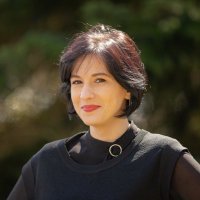
Holger Voos is Full Professor in Engineering Science at the University of Luxembourg's Interdisciplinary Centre for Security, Reliability and Trust (SnT), where he leads the Automatic Control Laboratory. His research focuses on distributed networked control, autonomous robotic systems, safety-critical applications, and mechatronic system design. His recent publications demonstrate strong research emphasis on: Advanced SLAM algorithms integrating visual, inertial and wireless technologies Optimal control strategies for spacecraft formations and aerial robots Neuromorphic vision systems and sensor fusion techniques Reinforcement learning approaches for robotic manipulation Constraint-based optimization methods for robotic perception and control
Djamila Aouada is an Assistant Professor and Senior Research Scientist at the University of Luxembourg's Interdisciplinary Centre for Security, Reliability and Trust (SnT), where she heads the Computer Vision, Imaging, and Machine Intelligence (CVI2) research group. She earned her State Engineering degree from École Nationale Polytechnique, Algeria, and PhD from North Carolina State University. Her research spans computer vision, signal processing, pattern recognition, and data modeling. Dr. Aouada leads several national and European projects including FNR FAVE, 3D-Act, and H2020 STARR, focusing on AI-driven solutions for industrial and security applications. She has received four IEEE Best Paper Awards for her contributions. Dr. Aouada has supervised 5 completed PhD theses and currently mentors 5 PhD candidates, while maintaining collaborations with Los Alamos National Laboratory and Mitsubishi Electric Research Labs. She serves as Senior IEEE Member and previously chaired IEEE Benelux Women in Engineering.
Fabrizio PASTORE is a Professor and Chief Scientist 2 in Software Engineering at the Interdisciplinary Centre for Security, Reliability and Trust (SnT) , University of Luxembourg. He leads the Software Verification and Validation (V&V) Lab under Prof. Lionel Briand. His research focuses on advancing software testing methodologies, particularly in cyber-physical systems (CPS), deep neural networks (DNN) safety analysis, and program analysis. He holds a PhD from the University of Milano-Bicocca (2010) and has held roles including Assistant Professor at the same institution and Post-Doctoral Researcher at the University of Lugano (Switzerland). Key research interests include: Mutation testing and fuzzing techniques Automated tool development (e.g., MOTIF, SAFE, DaMAT) Safety analysis of DNNs using clustering and GAN-enhanced simulations Testing of edge frameworks and SDN configurations Model-driven testing and system evolution analysis His work bridges academic research with industrial applications, emphasizing practical tools for software reliability and security. He has contributed to over 100 publications since 2004, with a focus on testing methodologies for complex systems. Notable achievements include: Development of the AVA , RADAR , and MASS tools for regression and safety analysis Pioneering studies on metamorphic testing and explainable AI for safety-critical systems Leadership in the V&V Lab, fostering interdisciplinary collaboration in software engineering His research addresses challenges in CPS, autonomous systems, and AI safety, with a strong emphasis on tool-supported validation and verification methodologies.
Anis KACEM is a Researcher at the Interdisciplinary Centre for Security, Reliability and Trust (SnT) within the University of Luxembourg, part of the Signal Processing and Satellite Communications (SIGCOM) research group. His work focuses on Computer Vision and Pattern Recognition, particularly in Human Behavior Understanding from visual data. He received his PhD in Computer Science from the University of Lille (France) in 2018. Research interests include advanced topics such as Earth Observation via multi-modal autoencoders, domain adaptation for image classification, vulnerability-aware deepfake detection, and CAD system reverse engineering. His contributions span neural network pruning, 3D shape analysis, and generative models for medical imaging. Publications highlight innovations in spatio-temporal learning for deepfake detection, hybrid attention mechanisms for pedestrian detection, and tool-augmented CAD task solvers. His work bridges theoretical advances with practical applications in autonomous systems and space technology. Notably, he has contributed to challenges like the SHARP 2023 Challenge on CAD history recovery and developed frameworks like Picasso for CAD sketch inference using self-supervised learning.
Arunkumar RATHINAM is a Postdoctoral researcher at the University of Luxembourg's Interdisciplinary Centre for Security, Reliability and Trust (SnT), specifically within the CVI2 department. His research focuses on autonomous systems, spacecraft navigation, and machine learning applications in space exploration. He has contributed to the development of datasets like SPARK and Zero-G Lab, which advance space operations emulation and computer vision techniques. Affiliations: SnT-CVI2, University of Luxembourg Key Research Areas: spacecraft pose estimation, thermal anomaly detection, autonomous navigation, and robotics for space missions His work bridges machine learning with practical space systems, addressing challenges in thermal monitoring (e.g., Li-ion battery cells) and vision-based navigation for spacecraft proximity operations. He has pioneered experimental facilities like the Zero-G Lab to simulate microgravity environments and test space robotics systems. Notable contributions include datasets such as SPARK and AKM, which provide critical data for training models in spacecraft trajectory estimation and textureless target detection. His publications emphasize real-world applications of AI in space systems, including RGB-T pedestrian detection and hybrid attention mechanisms for robust vision systems.