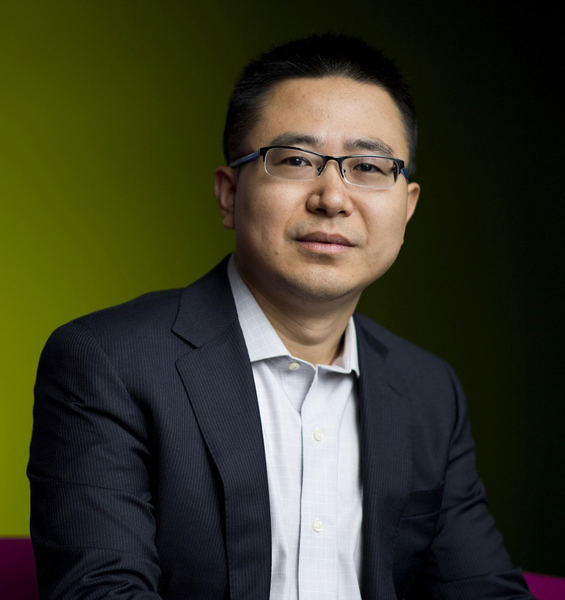
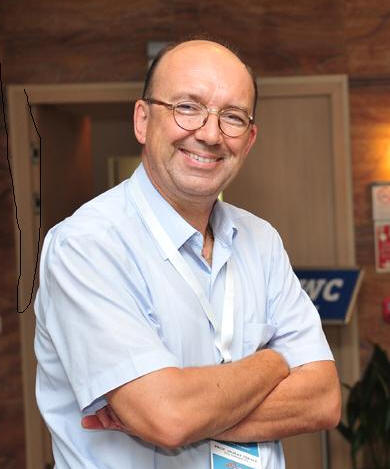
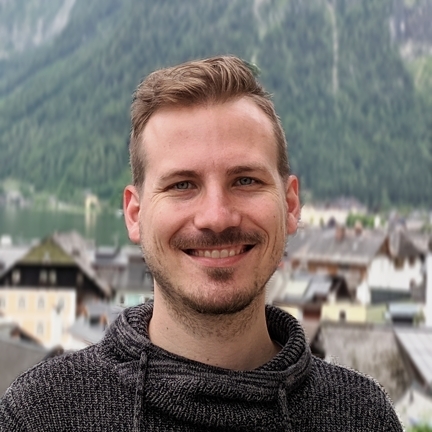
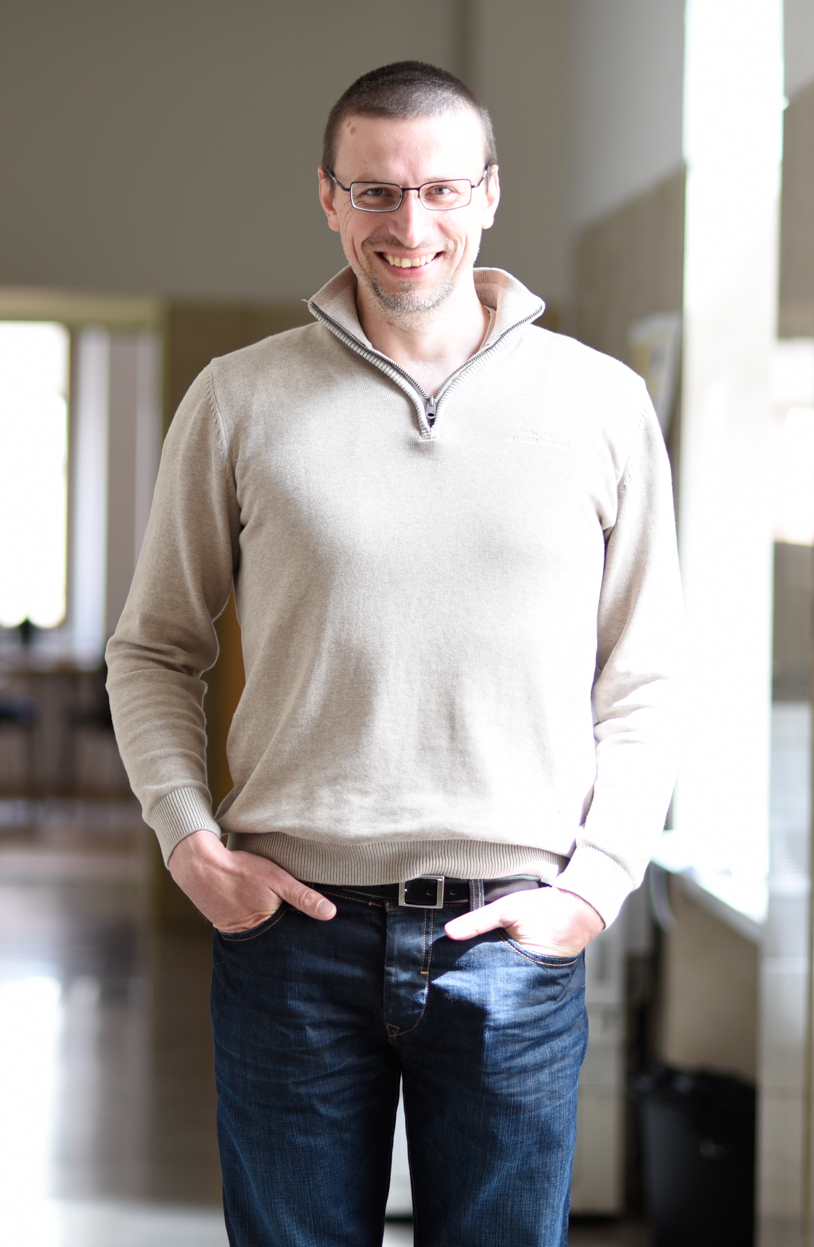
Prof. Wilfried Kubinger serves as the Head of the Department of Electronic Engineering at the University of Applied Sciences Technikum Wien, Austria. He holds a PhD in Technical Sciences from the Technical University of Vienna (1999) and has extensive experience in research and industry. His academic roles include leading the 'Automation & Sensor Technology' competence field and managing the 'Automation & Robotics' research area. **Research Focus:** His work centers on embedded systems, machine vision, autonomous robotics, and real-time control systems. Notable projects include obstacle detection for autonomous vehicles, stereo vision algorithms, and agricultural robotics applications. He actively contributes to IEEE and OVE engineering associations. **Professional Journey:** Prior to academia, he worked at Siemens Austria (2000–2003) as a software developer and project manager, and at AIT Austrian Institute of Technology (2003–2010) managing research projects in autonomous systems. He participated in DARPA Grand Challenge/Urban Challenge as a principal scientist for vision-based obstacle detection. **Publications:** His research spans embedded vision systems, FPGA implementations, and autonomous vehicle technologies. Recent work emphasizes agricultural robotics and Industry 4.0 applications. He also leads R&D project acquisition and implementation for Technikum Wien.
Bernhard Rinner is a Professor at the Institute of Networked and Embedded Systems within the Faculty of Technical Sciences at Alpen-Adria-Universität Klagenfurt. He is a member of the university Senate and serves as Prodekan (Deputy Dean). His research spans robotics, embedded systems, sensor networks, and privacy-aware computing , with a focus on resource-efficient designs for drones, autonomous systems, and IoT applications. Email: Bernhard.Rinner@aau.at Phone: +43 463 2700 3671 Office: B02.1.62, Lakesidepark Haus B02, Klagenfurt, Austria Research Interests include: Self-aware autonomous systems for adaptive mission planning and anomaly detection Resource-efficient embedded AI for drones and camera networks Secure IoT applications with privacy-preserving visual data processing Multi-agent coordination in confined environments and 3D navigation Dynamic sensor calibration for low-cost wireless networks Publications reflect trends in drone networks, self-aware computing, and privacy-aware sensing , emphasizing lightweight architectures, distributed coordination, and energy-efficient designs. Many recent works focus on binary neural networks, decentralized re-identification, and adaptive sensor reconfiguration .
Radu Grosu is a Professor at Technische Universität Wien (TU Wien), leading the Forschungsbereich Cyber-Physical Systems . His research focuses on Cyber-Physical Systems (CPS), Machine Learning, and autonomous robotics, with notable contributions to neural network architectures like Liquid Time-Constant Networks (LTC) and their applications in robotics and medical imaging. He is affiliated with the Network Lab and has supervised numerous PhD and Master's students, including Sebastian Michael Bittner, Daniel Scheuchenstuhl, and Sophie Neubauer. His work spans topics such as reinforcement learning, autonomous driving, and IoT ecosystems. Recent projects include developing robust AI systems for healthcare and robotics, such as tumor delineation using PET imaging and neuromorphic IoT architectures for smart villages. Grosu has published extensively on CPS, with over 146 contributions across peer-reviewed journals and conferences. His research emphasizes bridging theory and practice, addressing challenges in safety, scalability, and real-time control in autonomous systems. Key research interests include robotic perception, neural network robustness, and CPS/IoT integration. He has pioneered methods like DeepSTL for translating temporal logic requirements into neural network training objectives and developed frameworks like NimbleAI for neuromorphic sensing-processing systems. His team also explores distributed control algorithms for multi-agent systems, such as flocking drones and formation control using relative distance measurements. Recent work examines the generalization properties of deep filters in CNNs and quantum-classical reinforcement learning models for game AI. Grosu has advised over 20 students on topics ranging from deep learning in wafer defect analysis to bio-inspired neural circuits for auditable autonomy. His lab collaborates on interdisciplinary projects, such as applying AI to battery health estimation and prostate cancer diagnostics. He actively contributes to academic communities, editing special issues on AI in healthcare and CPS resilience, and has organized summer schools on CPS and IoT systems.
Prof. Dongheui Lee is a Full Professor at TU Wien's Institute of Computer Technology, Faculty of Electrical Engineering and Information Technology, and leads the Human-centered Assistive Robotics Group at the German Aerospace Center (DLR). She holds a PhD from the University of Tokyo (2007) and has held academic roles at Technical University of Munich (TUM), the University of Tokyo, and KIST. Her research focuses on human-robot interaction, assistive robotics, and machine learning applications in robotics. Education: PhD, Information Science and Technology, University of Tokyo, 2007 MS, Kyung Hee University, 2003 Research Interests: Her work spans human motion understanding, assistive robotics, human-robot collaboration, and control systems. Key areas include robotic balance assistance, motion imitation, and safety-aware robotics. She has pioneered methods for light touch support in human-robot interaction and developed frameworks for dynamic task execution. Recent Trends in Publications: Recent work emphasizes variable stiffness control, motion retargeting, and multimodal anomaly detection. Publications highlight advancements in assistive robotics, human motion prediction, and reinforcement learning for locomotion. Articles often integrate robotics with machine learning to improve safety and adaptability in human-robot systems. Awards: Carl von Linde Fellowship (TUM Institute for Advanced Study, 2011) Helmholtz professorship prize (2015) Best Intelligence Paper Award (2024) Projects & Grants: Leads projects like LunarAssembly (robotic assembly on the Moon) and INVERSE (interactive robots through reasoning). Funded initiatives include EU Horizon, BMBF, and industry collaborations. Coordinates teams for projects like PERSEO (service-oriented robotics) and SOLAR (body representation studies). Labs/Teams: Directs the Human-centered Assistive Robotics Group at DLR and collaborates with TU Wien's Autonomous Systems unit. Her teams focus on real-world applications in healthcare, manufacturing, and human-centered robotics.
Günter Klambauer is a Professor at the Institute for Machine Learning , Johannes Kepler University Linz, and leads the LIT Artificial Intelligence Lab in Austria. His research bridges artificial intelligence with life sciences , focusing on deep learning applications in retinal imaging , drug discovery , and hydrological modeling . Affiliation: JKU Institute for Machine Learning & LIT Artificial Intelligence Lab Key Research Areas: Medical Imaging AI, Biological Sequence Modeling, Generative Models for Molecules, Time-Series Forecasting His recent publications highlight extended LSTM architectures (xLSTM) for biological sequence modeling, contrastive learning in retinal imaging, and in-context learning for low-data drug discovery. He has pioneered frameworks like TiRex for zero-shot forecasting and LaM-SLidE for spatial dynamical systems. Scientific Awards: Austrian Life Science Award (2012) Award of Excellence (2014) ELLIS Society Scholar (2020) Director, ELLIS Machine Learning for Molecules Discovery Program (2023) Professor Klambauer collaborates extensively on AI-driven biomedical projects , including retinal image analysis and antibody design, while advancing foundational neural network architectures for diverse domains from healthcare to climate modeling.
Mario Braun is an Associate Professor in the Department of Psychology within the Faculty of Social Sciences at the University of Salzburg. He has held this position since 2016, following his role as Assistant Professor at the same institution from 2011-2016. His research is conducted through the Neurocognition Lab, where he investigates the neural mechanisms underlying language and emotion processing. Dr. Braun's educational background includes a PhD in Psychology from Freie Universität Berlin (2006-2009) and a Psychology diploma from Philipps Universität Marburg (1993-1998). Prior to his current position, he served as Scientific and Managing Director of the Dahlem Institute for Neuroimaging of Emotion at Freie Universität Berlin (2009-2011), and held leadership roles in neurocognitive laboratories at both Freie Universität Berlin and Catholic University Eichstätt-Ingolstadt. His primary research interests focus on the processing of written language, particularly how phonology is processed in reading and how emotional content from printed words is extracted and represented by the brain. To investigate these questions, he employs various neurocognitive techniques including eye tracking, EEG, fNIRS, fMRI, TMS, and TES to identify brain regions involved in language and emotion processing as well as their temporal dynamics. His work bridges cognitive psychology, neurolinguistics, and affective neuroscience. Dr. Braun's recent publications demonstrate a strong focus on the intersection of language processing, emotion, and neurological conditions, particularly examining how these processes are affected in juvenile myoclonic epilepsy. His research combines theoretical models with empirical neuroimaging evidence to advance our understanding of cognitive and affective neuroscience across both typical and clinical populations. His scientific contributions include numerous publications in cognitive neuroscience and psychology journals, with recent work exploring structural gray matter predictors of literacy development, impaired semantic categorization during brain stimulation, and emotion processing in neurological conditions. His research often incorporates machine learning approaches and advanced neuroimaging techniques to uncover complex brain-behavior relationships. Dr. Braun leads the Neurocognition Lab at the University of Salzburg, where he continues to investigate the complex relationships between language, emotion, and brain function using cutting-edge neuroimaging and stimulation techniques while mentoring students and collaborating with international researchers in the field.
Stephan Schlögl is a Full Professor at MCI - The Entrepreneurial School in Austria, leading research and teaching in Human-Computer Interaction (HCI), Artificial Intelligence (AI), and Information Systems. He holds editorial roles at journals like the Springer Discover Artificial Intelligence Journal and MDPI Multimodal Technologies and Interaction Journal. His work spans over two decades, with key roles including Postdoctoral Research Fellow at Télécom ParisTech (2012–2013) and PhD Researcher at Trinity College Dublin (2008–2012). Schlögl’s research focuses on HCI, AI-driven conversational systems, and assistive technologies for aging populations. Education includes a PhD in Computer Science from Trinity College Dublin, an MSc in Human-Computer Interaction from University College London, and a Mag.(FH) in Applied Informatics & Management from MCI. His teaching spans Software Engineering, Business Intelligence, and Research Methods. Research interests emphasize natural language interfaces, AI ethics, and technology’s societal impact. Notable projects include the EU-funded EMPATHIC initiative (2017–2021), developing an empathic virtual coach for elderly care, and the CRYSTAL project (2024–present) on conversational systems for emotional support. Schlögl has supervised numerous theses on AI applications, chatbots, and UX design. He co-organized major conferences like CUI (Conversational User Interfaces) and received awards for best papers in AI-HCI and CHIRA. His work bridges academia and industry, addressing challenges in AI adoption, digital well-being, and ethical technology design.
Stefan Nastic is an Assistant Professor at the Technische Universität Wien (TU Wien), affiliated with the Faculty of Informatics and the Distributed Systems department. He serves as Curriculum Coordinator for the Master’s program in Distributed and Next Generation Computing, and is a Substitute Member of the Curriculum Commission for Informatics. His research focuses on distributed systems, edge computing, serverless computing, IoT, and smart cities. He holds a PhD in IoT cloud systems (2016) and a BSc (not explicitly stated). Key research contributions include frameworks for serverless edge-cloud continuum (e.g., HyperDrive, GoldFish), federated learning applications (e.g., adaptive human activity recognition), and IoT infrastructure governance (e.g., Polaris Scheduler). He leads projects like RapidREC (2023–2025) on supply chain optimization and participates in initiatives like TEADAL (2022–2025) for edge-cloud workflows. Publications span 30+ peer-reviewed articles in top venues like IEEE IoT, ACM, and IEEE Cloud. He supervises graduate students on stateful serverless functions, federated learning, and edge-cloud scheduling. His work addresses challenges in resource management, latency reduction, and scalable distributed systems.
Markus Bader is a PostDoc Researcher at the Technische Universität Wien's Faculty of Informatics, Department of Automation Systems. He holds roles as Curriculum Coordinator for Master's programs in Automation Systems and Mobile Robotics, and serves on multiple academic committees including the Faculty Council and Curriculum Commissions for Informatics and Computer Engineering. He earned his Diplom-Ingenieur (2006) and Doctor Technica (Dr.techn.) from TU Wien. His research focuses on autonomous systems, mobile robotics, and control systems, with notable work on multi-robot coordination, path planning algorithms, and real-time navigation in human environments. Key projects include TransportBuddy (2018), exploring navigation in human spaces, and the Formula Student Driverless race car design (2017). Bader has led or contributed to funded projects such as the Austrian Research Promotion Agency (FFG)-supported Green Facade Digital Twin (2025–2027), Independent Wheel Offset Steering (2016–2017), and MPCv1 (2015–2017), emphasizing model predictive control and sensor integration. Research Highlights : Prioritized multi-robot route planning (MRRP), human motion prediction for autonomous navigation, and sensor fusion for vehicle localization. Grants : FFG-funded projects totaling over €2.5M, including autonomous vehicle coordination and mobile robotics tool development. He advises students on topics like ROS2-based route planning and independent steering systems, with 7+ supervised theses documented. Bader's work bridges theoretical robotics research with practical applications in industrial automation and autonomous vehicle systems.
Yun Fu is a tenured Professor in the Department of Electrical and Computer Engineering at Northeastern University, with a joint appointment in the Khoury College of Computer Science. He has established himself as a leading researcher in Artificial Intelligence, with over 500 publications in top-tier venues including IEEE/ACM transactions and major AI conferences. His work spans both theoretical foundations and practical applications, with significant impact in computer vision and machine learning. Professor Fu earned his Ph.D. in Electrical and Computer Engineering from the University of Illinois at Urbana-Champaign. His academic career progressed from Assistant Professor at SUNY Buffalo to his current position as tenured Professor at Northeastern University, where he has held appointments since 2012. His educational background includes a Beckman Graduate Fellowship at UIUC (2007-2008). His research focuses on advancing Artificial Intelligence with particular emphasis on Computer Vision, Pattern Recognition, and Machine Learning. His seminal work includes the "Residual Dense Network for Image Super-Resolution" presented at CVPR 2018, which was ranked among the Top 10 Most Influential CVPR papers. His research interests span image processing, anomaly detection, multimodal learning, and trajectory prediction, with applications ranging from healthcare to consumer technology. Analysis of his recent publications reveals a strong trend toward developing efficient and robust AI systems that bridge computer vision with language understanding. His work increasingly focuses on multimodal learning, trajectory prediction for multi-agent systems, anomaly detection in complex environments, and model validation techniques for black-box systems, while maintaining practical applications in real-world scenarios. Professor Fu's extensive recognition includes: Fellow of IEEE (2018), OSA (2019), SPIE (2018), IAPR (2016), AAIA (2021), and AAAI (2025) Member of Academia Europaea (2022) and European Academy of Sciences and Arts (2023) Fellow of National Academy of Inventors (2023) Multiple Young Investigator Awards from NAE, ONR, ARO, IEEE, ACM, and INNS 12 Best Paper Awards from major conferences Industrial Research Awards from Google, Amazon, Samsung, JPMorgan, and others Professor Fu has successfully mentored numerous Ph.D. students who now hold prominent positions in academia and industry at institutions including Amazon, Microsoft, Meta, Adobe, and major universities. His entrepreneurial ventures include founding Giaran (acquired by Shiseido in 2017) and co-founding TVision Insights, demonstrating his commitment to translating research into real-world impact. He has secured significant research funding from both government agencies and industry partners. As the PI and Founding Director of the SmiLe Lab at Northeastern University, Professor Fu leads a dynamic research group focused on advancing the state-of-the-art in AI and Computer Vision. The lab fosters interdisciplinary collaboration across computer science, electrical engineering, and applied mathematics, with ongoing projects in efficient deep learning, multimodal understanding, and practical AI applications.
Ahmet M. Tekalp is a Professor of Electrical and Computer Engineering at Koc University , Istanbul, Turkey, since 2001. Previously, he held a full-time professorship at the University of Rochester (1986-2005) and part-time roles such as Chair of the Electronics and Informatics Group at TUBITAK, Turkey. His work bridges academic and industrial research, with affiliations to institutions like Eastman Kodak Company and Rensselaer Polytechnic Institute. Education: BS (1980), Electrical Engineering & Mathematics (High Honors), Bogaziçi University MS (1982) & PhD (1984), Electrical, Computer, and Systems Engineering, Rensselaer Polytechnic Institute (RPI) Research Interests: Digital image and video processing Video compression and streaming Motion-compensated video filtering for high-resolution Video segmentation and object tracking Content-based video analysis and summarization Multi-camera surveillance video processing Digital content protection Scientific Awards: Member, Turkish Academy of Sciences (TUBA) Fellow, IEEE Fulbright Senior Scholarship (1999) TUBITAK Science Award (2004), Turkey's highest science award Grants and Contracts: FP6 Network of Excellence, SIMILAR (2003-2007), Euro 6 Million FP6 Network of Excellence, 3DTV (2004-2008), Euro 6 Million FP7 STREP projects (DIOMEDES, SARACEN) with Euro 3 Million budgets NSF grants spanning wireless sensor networks, visual databases, and MRI motion artifact suppression Industry partnerships with Eastman Kodak, Xerox, Siemens Corporate Research Professional Activities: Editor-in-Chief, Signal Processing: Image Communication (Elsevier) Member, ERC-Advanced Panel on Informatics Editorial roles in IEEE journals and other publications Active in ISO/IEC and ANSI standards committees
Beng Chin Ooi is a Lee Kong Chian Centennial Professor at the National University of Singapore (NUS), School of Computing. He has been with NUS since 1991, progressing through the ranks from Lecturer to his current distinguished position. He previously served as Dean of the School of Computing from 2007 to 2013 and as Director of the Smart Systems Institute from 2011 to 2021. His educational background includes: 1985: B.Sc. (1st Class Honors) from Monash University, Melbourne, Australia 1989: Ph.D. in Computer Science from Monash University, Melbourne, Australia Beng Chin Ooi's research focuses on database systems, large scale analytics, and distributed systems. His work has been instrumental in advancing the field of data management technology, particularly in the context of "big data" in large-scale parallel and distributed systems. He has made significant contributions to spatio-temporal and distributed data management, as well as pioneering research in distributed database management and peer-to-peer based enterprise quality management. His recent publications demonstrate a strong focus on blockchain technology, machine learning systems, and healthcare informatics. There's a clear progression from foundational database research to applications in emerging technologies like blockchain and AI. His work bridges theoretical advances with practical system implementations, as evidenced by multiple open-source projects associated with his publications. His notable awards include: 2021: NUS Research Recognition Award 2020: ACM SIGMOD E.F. Codd Innovations Award 2020: ACM SIGMOD Research Highlight Award 2019: VLDB Best Paper Award 2016: Fellow of Singapore National Academy of Science 2016: China Computer Federation Overseas Outstanding Contributions Award 2014: VLDB Best Paper Award 2014: IEEE TCDE CSEE Impact Award 2013: Singapore National Day's Public Administration Medal (Silver) 2013: NUS Outstanding Researcher Award 2012: IEEE Computer Society Kanai Award 2011: ACM Fellow 2011: Singapore President's Science Award 2009: IEEE Fellow 2009: ACM SIGMOD Contributions Award Throughout his career, Professor Ooi has demonstrated exceptional leadership in the database community, promoting high standards of database research at both international and regional levels. His BLOCKBENCH framework became the world's first benchmarking tool for private blockchains, and his work on data provenance on blockchain systems earned both the VLDB Best Paper Award and the ACM Research Highlight Award. He has led several major research initiatives, including the Smart Systems Institute at NUS. Professor Ooi has established multiple open-source projects including FabricSharp for blockchain data provenance and Cool for cohort online analytical processing. His research group has consistently produced high-impact work that bridges theoretical advances with practical system implementations.
Georg Sperl is a research scientist at CLO Virtual Fashion . He holds a PhD in physics-based simulation from the Institute of Science and Technology Austria (IST Austria) , where he was supervised by Chris Wojtan . His research focuses on physics-based animation of natural phenomena like cloth, yarns, granular media, and fluids, emphasizing multi-scale simulation techniques. Education: BSc and MSc in Visual Computing from the Technical University of Vienna , followed by a PhD at IST Austria. His work bridges computational mechanics and visual detail through methods like numerical homogenization. Notable achievements include the SIGGRAPH Outstanding Doctoral Dissertation Award (Honorable Mention) and the Eurographics PhD Award . His research has advanced yarn-level cloth simulation, thin-shell mechanics, and inverse modeling of fabric properties. Prior to his current role, he contributed to projects like iCaRL in computer vision.
Marko Tkalčič is a Full Professor at the Faculty of Mathematics, Natural Sciences and Information Technologies (FAMNIT) at the University of Primorska in Koper, Slovenia. He is affiliated with the Department of Information Sciences and Technologies and leads research in psychologically-informed recommender systems through the HICUP lab. His academic journey includes prior roles as Associate Professor and Assistant Professor at the Free University of Bozen-Bolzano, and postdoctoral work at Johannes Kepler University and the University of Ljubljana. Research interests include computational psychology, user modeling, personality and emotion modeling, affective computing, and bias mitigation in AI. His work integrates machine learning, data mining, and user studies to enhance personalization systems by incorporating cognitive and emotional models. He focuses on music and film domains, with applications in social media, automotive interfaces, and multimedia. The recent publications demonstrate a strong trend toward human-centric AI , exploring eudaimonic and hedonic user experiences, cognitive load in driver assistance, music relistening behavior, privacy in group recommendations, and emotion-based video and music prediction. His research increasingly blends cognitive science theories (e.g., ACT-R) with practical recommender system design. University of Primorska Golden Plaque Award (2024) Stanford List of Top Scientists Cited Worldwide Best Reviewer Award at ISMIR 2020 Italian National Habilitation for Full Professor (2020) Italian National Habilitation for Associate Professor (2017) He actively supervises PhD students, including Elham Motamedi, and has secured teaching and research roles within his team. He is a member of the editorial board for UMUAI and Frontiers in Psychology, and has co-edited books and special issues on group recommender systems and human-centered AI. He leads the HICUP lab, fostering interdisciplinary research at the intersection of psychology and computer science.
Patrick Hirsch is an Associate Professor at the Institute of Production and Logistics , part of the Department of Economics and Social Sciences at the University of Natural Resources and Life Sciences, Vienna . He serves as Head of the Institute of Production and Logistics since 2025 and has coordinated doctoral programs in Social and Economic Sciences since 2017. His research focuses on Sustainable Logistics, Operations Research, and Disaster Management , with specializations in Health Care Logistics Humanitarian Supply Chains Urban Mobility Food Security Cybersecurity in Logistics Green Logistics Recent publications highlight his work in 2025-2023 on: Cloud Resource Optimization Disaster Response Logistics Container Terminal Storage Cyberattack Resilience Home Health Care Scheduling His team also explores deep learning for cargo inspection and hybrid simulation modeling for pandemic and climate-related disruptions. Scientific awards include: BOKU Best Paper Award (2024) ITOR runner-up Best Paper (2023) Raiffeisen Science Award (2014) Multiple Early-Career Prizes Dr. Hirsch leads 13 active research projects funded by the Austrian Research Promotion Agency and Oesterreichische Nationalbank , including initiatives on food supply resilience , internet outage cascading effects , and blockchain in logistics security . He supervises collaborative theses and contributes to policy development through institutions like the ITA - Institut für Technikfolgen-Abschätzung .