Thomas Eiter is a Professor at TU Wien's Institute of Logic and Computation. His research focuses on declarative programming paradigms, knowledge representation, and artificial intelligence. He leads projects in neurosymbolic systems, answer set programming (ASP), and stream reasoning, with applications in visual question answering, scheduling optimization, and semantic scene generation. Eiter has contributed to foundational work in ASP semantics, computational complexity, and hybrid reasoning frameworks. His work bridges logical formalisms with practical AI challenges, emphasizing explainability and scalability. Projects like ALASPO and neurosymbolic integration showcase his focus on advancing both theoretical and applied aspects of AI. Projects: HumanE AI Network, WASP, REWERSE Research Themes: Neurosymbolic AI, Answer Set Programming, Stream Reasoning Notable achievements include pioneering work on semiring-based reasoning frameworks and developing efficient ASP solvers like Alpha. His contributions span over 471 publications, emphasizing interdisciplinary applications in computer vision, robotics, and automated planning.
Johannes Oetsch is a researcher at TU Wien's Forschungsbereich Knowledge Based Systems within the Faculty of Informatics. His work focuses on Answer Set Programming (ASP) , neuro-symbolic computing , and visual question answering systems . He holds a Diplom-Ingenieur (Dipl.-Ing.) and a Doctor of Technical Sciences (Dr.techn.) in informatics. Key research areas include: Integration of large language models with symbolic reasoning frameworks Optimization techniques in ASP for scheduling problems Explainability mechanisms for neuro-symbolic systems Recent work emphasizes visual question answering using graph-based representations and contrastive explanation methods. He has contributed to the development of ALASPO , an adaptive optimization framework for ASP solvers. His research also explores applications in manufacturing scheduling and automated testing of logic programs. Notable contributions include: Neuro-symbolic pipelines combining ASP with vision-language models Lexicographical makespan optimization in parallel machine scheduling Large-neighbourhood search strategies for ASP-based optimization
Robert Sablatnig is an Associate Professor and Head of the Institute of Visual Computing & Human-Centered Technology at TU Wien. He leads the Computer Vision Lab and previously served as Head of the Institute of Computer Aided Automation (2005-2017). His roles include overseeing research in 3D computer vision, machine learning, and applications in industry and cultural heritage preservation. He holds a PhD (1997) and Habilitation (2003) from TU Wien, with a thesis focus on shape-based machine vision and visual inspection. Education: PhD in Computer Science (TU Wien, 1997), Habilitation in Applied Computer Science (TU Wien, 2003) Bachelor's/Master's/High School: Completed at Vienna University of Technology and BG/BRG Lerchenfeldstrasse, Klagenfurt. Research interests span 3D vision techniques, robot vision, deep learning applications, and heritage preservation through imaging technologies. He has authored/co-authored over 300 scientific publications and edited 17 conference proceedings. His work bridges theoretical advancements with practical applications in automation and cultural heritage. Professional affiliations include the Austrian Association for Pattern Recognition (OAGM/IAPR), IEEE, and roles as a certified expert witness in computer vision. Teaching focuses on computer vision applications, methodological foundations, and seminars for graduate students. Current courses include 'Scientific Presentation and Communication' and 'Dissertantenseminar'.
Institute of Science and Technology AustriaAustria
Emmanuel Iarussi is an Assistant Professor at the Universidad Torcuato Di Tella and a researcher at CONICET in Buenos Aires. He holds a Ph.D. in Computer Graphics from INRIA Sophia Antipolis, supervised by Adrien Bousseau and George Drettakis, and completed a postdoc at IST Austria under Bernd Bickel. His engineering degree is from UNICEN University (2012). His research bridges AI, computer graphics, and medical imaging, focusing on generative models for 2D/3D content manipulation. Research Interests: His work spans AI-driven medical imaging, generative models for vascular structures, ultrasound simulation, and bone microstructure modeling. Key areas include autoregressive modeling, variational autoencoders, and applications in healthcare and biomedical engineering. Recent Trends in Articles: Recent publications emphasize combining AI techniques with medical applications, such as vascular geometry synthesis, melanoma detection reviews, and ultrasound realism enhancement. His work often intersects generative networks and clinical diagnostics. Grants & Recognition: Awarded a $69,960 grant from the Sloan Foundation’s Trust in AI initiative (2024). Active in workshops on AI ethics, public discourse, and open science. Labs & Teams: Leads projects like VisDecode (AI-driven scientific plot analysis) and contributes to repositories like generative3DSpongiosa for bone microstructure modeling.
University of Applied Sciences Upper AustriaAustria
Lukas Gahleitner is a Researcher at the Research Center Wels, Center of Excellence Automotive/Mobility, University of Applied Sciences Upper Austria, specializing in Materials Thermography and Non-Destructive Testing for high-performance composite components in automotive applications. His work directly supports UN Sustainable Development Goals related to industry and innovation. Education: BSc Dipl.-Ing. (Diplom-Ingenieur) His research focuses on advanced thermographic NDE methodologies including photothermal imaging, virtual wave concepts, and pulsed thermography for defect detection in carbon fiber composites. He pioneers techniques for 3D defect reconstruction in curved orthotropic structures and develops industrial solutions for quality control in fluid injection molding processes. His fingerprint analysis confirms deep expertise in subsurface defect characterization and virtual wave parameter estimation. Recent publications (2024-2025) reveal a strong trend toward solving industrial NDE challenges through algorithmic innovation, particularly in handling non-uniform thermography data and reconstructing defects in complex composite geometries. This work bridges fundamental thermal physics with practical applications in automotive manufacturing. Scientific recognition: Teufelberger Master-Thesis Award 2023 Innovation Award FH Wels 2023 (1st place in Engineering) Research leadership: Co-Investigator in EXCITE project (2025-2028): Thermo-tomographic sensor technologies for composite quality control Co-Investigator in JR-Centre for Thermal NDE of Composites (2018-2022) Active peer-reviewer for Nondestructive Testing and Evaluation journal He operates within the Research Center Wels infrastructure, collaborating with Gerald Mayr's team on the Center of Excellence Automotive/Mobility initiatives, with experimental facilities focused on thermographic NDE of composite materials.
University of Natural Resources and Life Sciences ViennaAustria
Arne Nothdurft is a University Professor for Forest Monitoring at the University of Natural Resources and Life Sciences (BOKU) in Vienna, Austria, where he chairs the Institute of Forest Growth within the Department of Forest and Soil Sciences. With a career spanning over two decades in forest research and academic leadership, he has established himself as a leading expert in advanced forest inventory techniques and forest growth modeling. Professor Nothdurft's research focuses on the application of cutting-edge technologies in forest monitoring, particularly LiDAR and personal laser scanning systems for forest inventory. His work bridges the gap between traditional forestry practices and modern digital solutions, with emphasis on mixed species forest management, climate change adaptation, and the development of smart forestry systems. His research interests encompass forest growth modeling, tree species classification using point cloud data, and the development of spatial prediction models for forest inventory parameters. His recent publications demonstrate a strong trend toward integrating artificial intelligence with forestry applications, particularly in the analysis of 3D point cloud data from laser scanning technologies. His work spans both theoretical advancements in spatial statistics and practical applications for forest managers, with a particular focus on improving the accuracy and efficiency of forest inventory systems. Thurn und Taxis Förderpreis für die Forstwissenschaft (2008) Professor Nothdurft has supervised numerous master's and doctoral theses, primarily focused on the application of laser scanning technologies in forestry, forest inventory optimization, and growth modeling. His research is supported by multiple ongoing projects funded by Austrian research agencies and federal ministries, with a strong emphasis on practical applications for forest management. He leads the Institute of Forest Growth, which maintains the Lehrforst Rosalia long-term forest monitoring site, and collaborates extensively with the Institute of Forest Engineering on smart forestry initiatives.
University of Natural Resources and Life Sciences ViennaAustria
Andreas Tockner is a researcher at the Institute of Forest Growth, part of the Department of Ecosystem Management, Climate and Biodiversity at the University of Natural Resources and Life Sciences, Vienna (BOKU). He holds a Dipl.-Ing. and B.Sc. degree and is currently pursuing PhD studies since 2021 as part of the "Building Like Nature" program at BOKU University. His work focuses on applying advanced laser scanning technologies to forest resource management and inventory. Dr. Tockner's educational background includes a Diplom-Ingenieur (Dipl.-Ing.) and Bachelor of Science (B.Sc.) degrees. His PhD studies at BOKU University began in 2021 as part of the "Building Like Nature" program. He is actively developing expertise in software development for instance segmentation and feature extraction of 3D point clouds. His research interests center around forest resource management with a strong emphasis on ground-based laser scanning technologies, particularly mobile LiDAR systems. He specializes in software development for instance segmentation and feature extraction of 3D point clouds, which has significant applications in modern forest inventory and monitoring. His work bridges the gap between advanced geospatial technologies and practical forestry applications, enabling more precise and efficient forest management practices. He has developed expertise in analyzing forest structures through 3D point cloud data, with particular focus on tree species classification, forest regeneration monitoring, and timber measurement at individual log levels. Dr. Tockner's publication record reveals a clear progression toward increasingly sophisticated applications of laser scanning technology in forestry. His work has evolved from basic measurement techniques to complex analysis of forest ecosystems, including species identification, wood quality prediction, and even long-term forest projections using digital twin technology. His interdisciplinary approach combines forestry, computer science, and data analytics to solve practical challenges in forest management. Advancements in personal laser scanning for forest inventory Methods for tree species classification using intensity patterns Techniques for quantifying forest regeneration Digital twin applications for forest modeling and future projections Dr. Tockner has supervised two Master's theses in 2025: "Evaluierung boden-, luftgestützter und hybrider Methoden zur Forstinventur im Naturpark Sparbach" by Elias Kimmel and "Assessing the Potential of Personal Laser Scanning to Quantify Tropical Tree Structures" by Luca Stephan Seiler. His research is supported by multiple projects including "Lidar based forest monitoring and harvesting planning" (2023-2026) funded by Federal Ministries and "Forest Inventory with Personal Laserscanners" (2022-2025) funded by the Austrian Research Promotion Agency (FFG). He is actively involved in developing practical applications of laser scanning technology for forest management, with a particular focus on making these technologies accessible for field operations. His work on using Apple iPad Pro with integrated LiDAR technology demonstrates his commitment to practical, field-deployable solutions that can transform traditional forest inventory practices.
Walter Roland Gruber is a Senior Lecturer in the Department of Psychology at the University of Salzburg , where he has held an academic position since 2009. His work bridges psychology and computational science, focusing on human and artificial cognitive processes. Education: PhD in “Phase Locked Brain Oscillations” (2000–2004), University of Salzburg Studies in Applied Computer Science (1994–2000), University of Salzburg His primary research interests include cognitive psychology , artificial intelligence , and neuroscience , with a focus on comparing human and machine performance in object and face recognition. He employs methodologies such as eye tracking and deep learning models to explore these areas. His research also extends into psychological methods and computational modeling , reflecting his interdisciplinary background in computer science and psychology. His recent publications demonstrate a strong trend in integrating AI and cognitive neuroscience, examining topics like interbrain synchronization during social tasks, statistical anxiety in education, and the impact of global crises on parenting. These works appear in reputable journals such as Journal of Cognitive Neuroscience , Frontiers in Neuroscience , and Annals of the New York Academy of Sciences , indicating broad disciplinary relevance and collaborative research efforts. Scientific Awards: No awards mentioned in the provided text. Advising and Grants: There is no mention of students advised or research grants received in the available information. Labs and Teams: Walter Roland Gruber is part of the "Methods & Evaluation" team within the Department of Psychology at the University of Salzburg. This affiliation suggests active involvement in research design, data analysis, and methodological training, supporting both teaching and research activities in psychological science.
Prof. Clemens Heitzinger is an Associate Professor at TU Wien, affiliated with the Forschungsbereich Machine Learning (E194-06) . His research focuses on interdisciplinary applications of machine learning, computational methods, and nanotechnology. Key areas include reinforcement learning for healthcare optimization, stochastic modeling of PDE systems, and Bayesian inversion in sensor design. He leads the project PDE models for nanotechnology under the Scientific Computing and Modelling department (E101-03). His work spans medical imaging (e.g., electrical impedance tomography), nanopore sequencing, and nanoscale sensor development. Notable contributions include algorithms for corticosteroid therapy optimization in sepsis and superhuman performance in sepsis prediction via distributional reinforcement learning. He has advised over 13 PhD and Master's students, including Tobias Kietreiber, Sebastian Bittner, and Leila Taghizadeh. His research methodologies integrate machine learning with numerical analysis, emphasizing uncertainty quantification and PDE modeling. Recent trends in his publications highlight applications in personalized healthcare, industrial anomaly detection, and computational fluid dynamics in nanoscale systems. While no scientific awards are explicitly mentioned, his work has been published in high-impact journals and conference proceedings, reflecting his contributions to computational science and engineering.
Andreas Fellner is a Researcher at TU Wien's Scientific Computing and Modelling department, focusing on interdisciplinary research spanning biomedical engineering, computational neuroscience, and software testing. His work integrates numerical simulation techniques like the finite element method (FEM) with biological systems, particularly neural stimulation modeling in cochlear implants and retinal ganglion cells. He has contributed to understanding excitation thresholds, block phenomena in neurons, and optimizing electrode placements in auditory nerve stimulation. Fellner also bridges computer science and neuroscience through mutation testing frameworks and algorithmic test case generation methods. Key research areas include neural modeling using COMSOL, auditory nerve fiber response simulation, and improving medical device efficacy through computational analysis. His collaborations span fields such as neuroprosthetics, cellular biophysics, and formal software verification. Fellner has supervised multiple graduate theses on topics like 3D auditory nerve fiber structures and EEG noise reduction, reflecting his mentorship in both engineering and computational biology domains.
Xiaodan Hu is a postdoctoral researcher (Researcher) at the Institute of Computer Graphics and Vision, Graz University of Technology. She earned her MSc (2021) and PhD (2024) from the Cybernetics and Reality Engineering Laboratory (CARE Lab) at Nara Institute of Science and Technology (NAIST), Japan, under the supervision of Prof. Kiyoshi Kiyokawa. Education: MSc (2021) and PhD (2024) in Computer Science from NAIST, Japan. Research Interests: Occlusion-capable optical see-through head-mounted displays Vision augmentation Human visual perception Near-eye displays
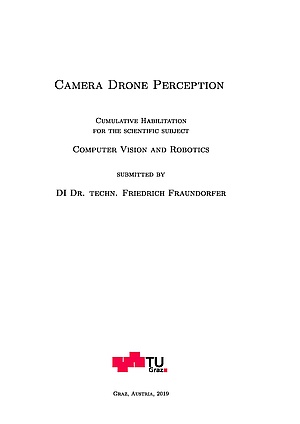
Friedrich Fraundorfer is a Professor at Graz University of Technology, specializing in 3D Computer Vision and Autonomous Systems at the Institute of Computer Graphics and Vision (ICG). He has held academic positions at institutions including ETH Zurich, University of North Carolina at Chapel Hill, and Technische Universität München, where he served as Deputy Director of the Chair of Remote Sensing Technology. Research : Focuses on Micro Aerial Vehicle (MAV) autonomy, Visual-Inertial Fusion, and Multi-View Geometry. Projects : Led EU-funded SFly (autonomous MAVs for search-and-rescue), SNF MAV (camera-only 3D mapping), and VCharge (vision-based self-driving cars). Teaching : Offers courses like 'Camera Drones' and 'Mathematical Principles in Vision.' His Pixhawk project created open-source MAV platforms adopted globally. Key Collaborations : With NVIDIA, Volkswagen AG, University of Zurich, and German Space and Aerospace Center (DLR). His students (e.g., Dominik Hirner, Rafael Weilharter) have published on lightweight CNNs for stereo vision and self-supervised 3D reconstruction.
Roland Perko is a university lecturer, project manager, and key researcher at the Institute of Geodesy at Graz University of Technology. His work focuses on remote sensing, photogrammetry, and computer vision, with specific expertise in stereo matching, SAR and optical imagery analysis, and vision-based localization. R&D areas include multiple view geometry for SAR and optical imagery Specializations: subpixel techniques, digital aerial cameras, image registration
Andreas Uhl is a University Professor in Artificial Intelligence and Human Interfaces at the Department of Computer Science, University of Salzburg. With a prolific research career spanning from 1996 to present, he has authored or co-authored 534 publications and led or participated in 59 research projects. His work demonstrates sustained academic productivity with recent publications and projects extending through 2025. Professor Uhl's research interests span multiple domains at the intersection of artificial intelligence and practical applications. His primary focus areas include computer vision, biometrics, biomedical imaging, and digital forensics, with significant contributions to pattern recognition and image analysis. His work bridges theoretical computer science with practical applications in cultural heritage preservation, medical diagnostics, and security systems, demonstrating a versatile research portfolio that addresses both fundamental challenges and real-world problems. His recent publications reveal a strong emphasis on temporal image forensics, biomedical image analysis, and biometric security. The research shows a clear trajectory toward increasingly sophisticated applications of AI in specialized domains, with particular attention to validation methodologies and limitations of current approaches. His work on cultural heritage applications demonstrates an innovative application of computer vision techniques to historical artifacts. Best paper award @ 25th ACM Symposium on Applied Computing (Applications Track), 2010 Best Paper award @ 2nd European Workshop on Visual Information Processing (EUVIP'10), 2010 IEEE Biometrics Council Best Paper Award (TBIOM), 2022 Kurt Zopf Preis, 2023 Professor Uhl actively leads multiple significant research initiatives, including the CDL-POSA project on People and Object Surface Authentication (2025-2032), Artificial Intelligence driven Biomedical Imaging Innovation (2025-2029), and the AIBIA Research and Transfer Junior Lab (2023-2025). His research group maintains active collaborations with institutions like Carnegie Mellon University, as evidenced by his recent research stay there in September 2024. The scope and duration of his current projects indicate substantial grant funding and institutional support for his research agenda. His laboratory activities focus on AI applications in biomedical imaging, border security through vehicle-integrated technologies (AutoBorder project), and cultural heritage analysis. The research environment appears to integrate academic inquiry with practical transfer through initiatives like the FFG Student Internships program, suggesting a strong commitment to both fundamental research and real-world implementation.
Emanuele Rodolà is a Full Professor of Computer Science at Sapienza University of Rome , leading the GLADIA group (Geometry, Learning and Applied AI) funded by an ERC Grant and a Google Research Award. Former Assistant (2017-2020) and Associate Professor at Sapienza Postdoc at USI Lugano (2016-2017), TU Munich (Alexander von Humboldt Fellow, 2013-2016), and University of Tokyo (JSPS Research Fellow, 2013) His research spans geometry processing , graph/geometric deep learning , computer vision , and language/sound processing , with over 100 publications. He has served on program/organizing committees of top conferences and founded successful workshops in machine learning and graphics. Ellis Fellow ERC Grant recipient Google Research Award Alexander von Humboldt Fellow JSPS Research Fellow