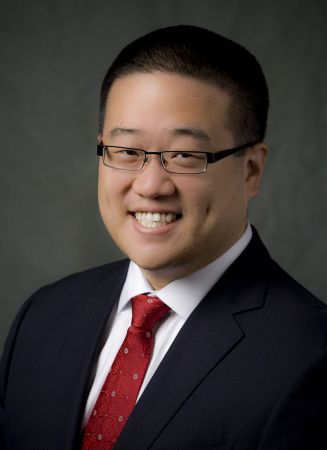
Dr. Brian Y. Chen is an Associate Professor and Doctoral Program Director in the Department of Computer Science & Engineering at Lehigh University. His research focuses on bioinformatics, structural biology, and machine learning applications in computational biology. He holds a Ph.D. in Computer Science from Rice University and B.A. degrees in Mathematics and Computer Science from Rutgers University. Dr. Chen's work emphasizes developing algorithms to analyze protein structures, protein-protein interactions, and ligand binding mechanisms. He has contributed to tools like DeepVASP-S and MechPPI, which explain molecular interactions and predict binding specificity. His recent projects include Alzheimer’s disease diagnosis using multimodal data and containerization frameworks for bioinformatics software. He previously served as a postdoctoral researcher in Barry Honig's Lab at Columbia University, where he contributed to the Center for Computational Biology and Bioinformatics. His research spans structural bioinformatics, computational methods for protein function prediction, and interdisciplinary applications in medicine and materials science. Key achievements include a nomination for Outstanding Mentorship (2017) and collaborative projects funded by the Army Research Lab and Lehigh University. His lab explores cutting-edge AI techniques for biomedical problems, including interpretable machine learning models and scalable bioinformatics pipelines.
Dr. Manoj Karkee is the Norman R. and Sharon R. Scott Professor of Agriculture and Life Sciences at Cornell University's Department of Biological and Environmental Engineering. He leads the #AgRobotics Lab, focusing on AI, robotics, and automation for precision agriculture. His research includes robotic systems for crop monitoring, harvesting, and sustainable farming practices. Education: PhD in Agricultural Engineering and Human-Computer Interaction, Iowa State University (2009) ME in Remote Sensing and GIS, Asian Institute of Technology (2005) BE in Computer Engineering, Tribhuvan University (2002) Associate Degree in Civil Engineering, Tribhuvan University (1997) Research Interests: AI-driven robotic solutions for fruit harvesting and crop management Soft robotics for orchard operations Autonomous crop monitoring with sensor integration Modular robotic systems for small-scale and urban farming Awards: 2020 Rain Bird Engineering Concept of the Year 2019 Pioneer in AI and IoT (Connected World) CIGR Next Generation Leader (2015) Advising & Collaboration: Dr. Karkee leads a multidisciplinary lab collaborating with industry partners and global institutions to translate research into scalable technologies. He previously directed the Washington State University Center for Precision and Automated Agricultural Systems. Labs/Teams: The #AgRobotics Lab at Cornell develops AI and robotics solutions for labor-intensive agricultural tasks, emphasizing precision, sustainability, and economic viability.
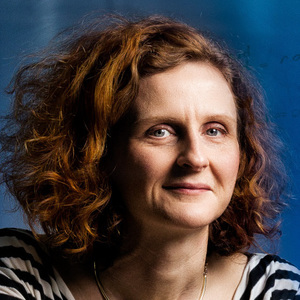
Dr Rita Borgo is a Professor in Data Visualization and Head of the Human Centred Computing Group at King's College London's Department of Informatics. She holds a leadership role within the Faculty of Natural, Mathematical & Engineering Sciences and is affiliated with the Centre for Urban Science and Progress (CUSP) London. Her research focuses on interdisciplinary visualization challenges, including human-computer interaction, AI trust calibration, and epidemiological modeling. Education details are not explicitly stated in the provided text. Her work spans over 58 publications, emphasizing visualization techniques for large datasets, trust in AI systems, and urban science applications. Key projects include RAMPVIS (visual analytics for pandemic response) and Trusted Autonomous Systems Hub (AI ethics and human-machine partnerships). Research interests include data visualization, human factors, generative AI, and policy simulation. Recent articles explore trust calibration in AI, time-series visualization, and ethical clinical decision support systems. She has led grants totaling £multi-million, including EPSRC-funded initiatives. Collaborations with organizations like ContactEngine Limited highlight her industry engagement. Labs/Teams: Leads the Human Centred Computing Group and contributes to CUSP's urban data initiatives. Supervised student work includes a notable BSc thesis by Munkhtulga Battogtokh. Current projects address visualization in nuclear policy, social media mental health correlations, and trustworthy autonomous systems.
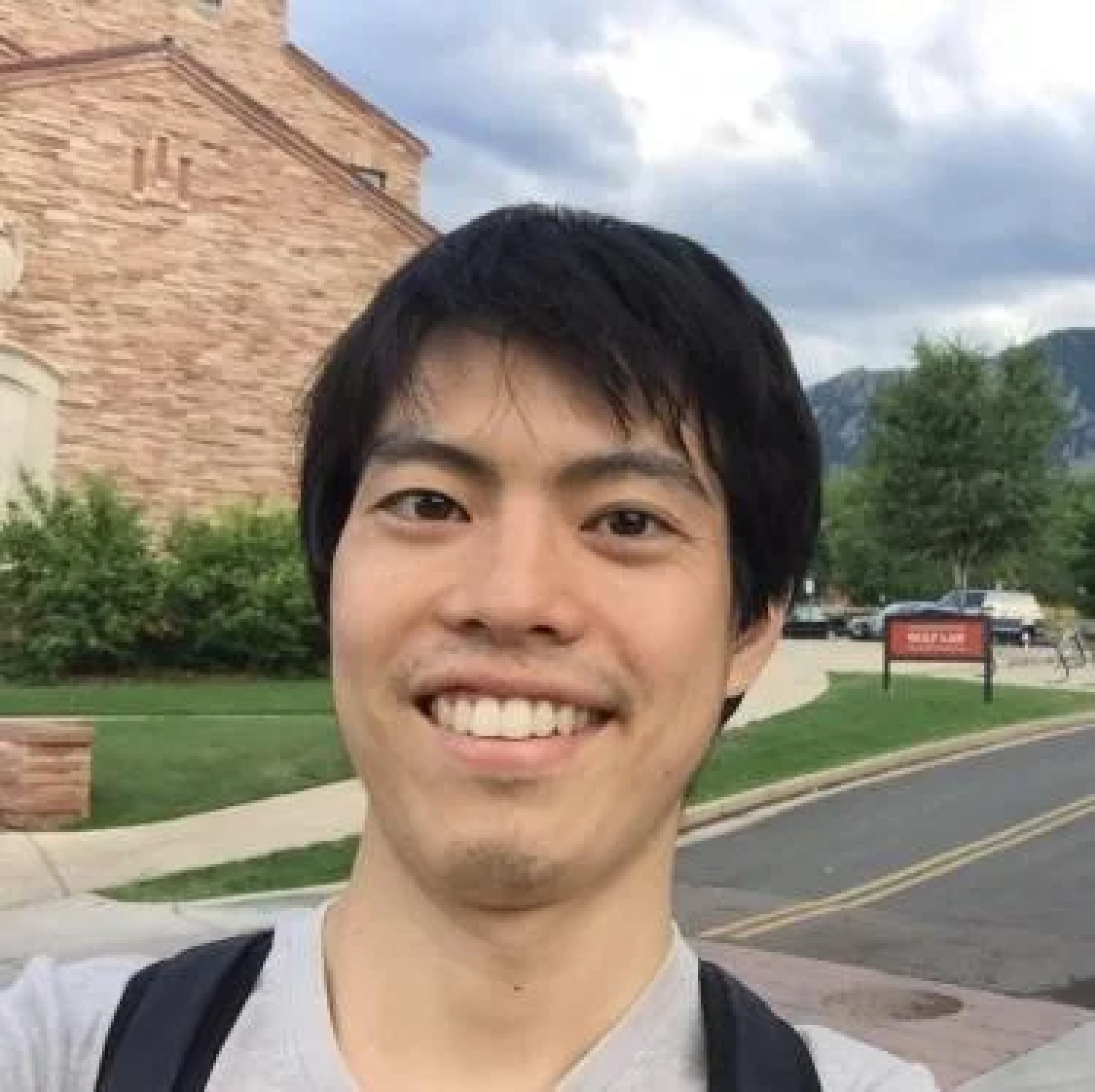
Ryo Suzuki is an Assistant Professor at the ATLAS Institute within the University of Colorado Boulder's Computer Science department. His research focuses on innovative intersections of Human-Computer Interaction (HCI), Augmented Reality (AR), and robotics. He explores systems that blend AI, haptics, and shape-changing interfaces to create enriched user experiences. Key areas of investigation include embedding interactivity into static educational materials (e.g., textbooks), developing AI-driven AR tools for procedural instruction, and creating shape-changing robotics for tactile feedback. His work often emphasizes practical applications in education, remote collaboration, and creative industries. Recent projects include MapStory (LLM-driven map animation), RealityEffects (3D volumetric video augmentation), and HoloDevice (holographic cross-device collaboration).
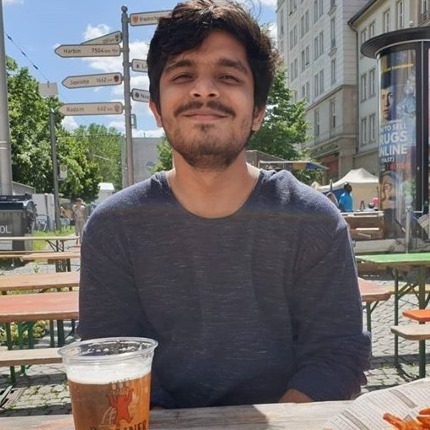
Mohit Mendiratta is a PhD student in Computer Science at the Universität des Saarlandes and a Researcher at the Max-Planck-Institut für Informatik, Germany. He is part of the Visual Computing and Artificial Intelligence department (Department 6) under the Graphics, Vision & Video group led by Prof. Dr. Christian Theobalt. His research focuses on advancing computer vision, machine learning, and computer graphics, particularly in areas like 3D human avatars, text-driven editing, and video semantic segmentation. Education includes a Master's in Visual Computing from Universität des Saarlandes (2018–2021) and an undergraduate degree in Electronics and Electrical Engineering from KIIT, Bhubaneswar, India (2013–2017). He has held roles such as Research Assistant at the Max Planck Institute and Fraunhofer Institute, and industry experience as an Associate Software Engineer at Zentron Labs. His research interests span developing novel techniques for photorealistic 3D avatars, text-based editing systems, and zero-shot semantic segmentation using diffusion models. He collaborates on projects like AvatarStudio and TEDRA, advancing applications in virtual reality and human-computer interaction. Mohit contributes to the Saarbrücken Research Center for Visual Computing and is affiliated with the International Max Planck Research School on Trustworthy Computing. His work bridges theory and practical applications in AI-driven visual computing.
Hedvig Kjellströmeröm is Professor at KTH Royal Institute of Technology and affiliated with the Max Planck Institute for Intelligent Systems. Her research develops methods for interpreting human and animal behavior through computer vision, with applications in computational aesthetics, communicative behavior analysis, and embodied AI. She serves as Editor-in-Chief for CVIU and was Program Chair for CVPR 2025.
Gerard Pons-Moll is an Affiliated Researcher with Perceiving Systems at the Max Planck Institute and Professor at the University of Tübingen. His research focuses on computer vision, particularly 3D human modeling and motion capture using machine learning approaches. He develops methods to perceive and model humans in 3D from images and video. His work bridges computer graphics and computer vision to create virtual humans that move and interact realistically. Current projects involve learning-based approaches for human pose estimation and developing datasets/simulators for human motion understanding.
Dr. Michael Tissenbaum is an Associate Professor at the University of Illinois, Urbana-Champaign, holding appointments in the College of Education’s departments of Curriculum & Instruction, Educational Psychology, and the Siebel School of Computing and Data Science. His research focuses on collaborative learning environments, technology-enhanced STEM education, and computational literacies. He previously worked at MIT's App Inventor lab, developing the 'computational action' framework to empower youth through computing. Key roles include affiliations with the National Center for Supercomputing Applications (NCSA) and the Siebel Center for Design. His work emphasizes designing transformative learning spaces combining physical and digital tools. Notable projects include the REACH Projector for remote collaboration and studies on maker identity development. Tissenbaum has contributed to journals like Computers and Education and International Journal of Computer-Supported Collaborative Learning , with a focus on real-time classroom orchestration and sociomaterial theories in education.
Lu Su is an Associate Professor at the School of Electrical and Computer Engineering , Purdue University , with prior appointments at SUNY Buffalo . His research spans Internet of Things , cyber-physical systems , mmWave sensing , and crowd-sourced data validation , focusing on quality-of-information aware distributed sensing and security in autonomous systems . Ph.D. in Computer Science (2013) and M.S. in Statistics (2012) from University of Illinois at Urbana-Champaign M.E. and B.E. from Harbin Institute of Technology Research Interests: IoT , cyber-physical systems , crowd sensing , security and privacy , and machine learning for sensor networks. His work addresses quality-aware information integration , adversarial attacks in autonomous vehicles , and privacy-preserving crowd-sourced systems . Recent publications focus on mmWave-based sensing (e.g., 3D pose reconstruction), federated learning (driver monitoring), and data poisoning attacks in crowd-sourced systems. His research also extends to traffic optimization and human activity recognition using wireless networks. Professional Roles: Workshop Chair (INFOCOM 2023, 2022) TPC Vice Chair (INFOCOM 2021) Program Committee Member for top conferences Editorial Board, ACM Transactions on Sensor Networks Teaching: Courses on Embedded Systems , Internet of Things , and Network Concepts at both undergraduate and graduate levels.
Yuntian Deng is an Assistant Professor at the University of Waterloo and a Visiting Professor at NVIDIA. He holds affiliations with Harvard SEAS as an Associate and the Vector Institute as a Faculty Affiliate. He completed his PhD in Computer Science at Harvard under Professors Alexander Rush and Stuart Shieber, followed by a postdoc under Yejin Choi. His research focuses on Natural Language Processing and Machine Learning, with notable contributions in chatbot interaction analysis (WildChat), implicit reasoning models, and markup-to-image generation. He has developed influential tools like OpenNMT and WildVis, and his work has been featured in outlets like the Washington Post and used by OpenAI and Anthropic. Education: PhD in CS (Harvard), Postdoctoral Research (University of Washington). Key achievements include the ACM Gordon Bell Prize for GenSLMs, Best Demo Runner-up at ACL 2017, and Best Paper at DAC 2020. His research emphasizes scalable datasets, efficient reasoning techniques, and real-world applications of AI models. Research interests span NLP, machine learning algorithms, and their applications in areas like dialogue systems, generative models, and ethical AI evaluation. Notable projects include WildChat (1M ChatGPT interactions), implicit chain-of-thought reasoning, and neural steganography for text-based information hiding. His articles explore topics ranging from knowledge distillation to diffusion models, with a focus on bridging theoretical advancements and practical implementations. He actively collaborates with industry partners like NVIDIA and maintains open-source tools to advance AI research accessibility.
Elena Celledoni is a Professor in the Department of Mathematical Sciences at the Norwegian University of Science and Technology (NTNU). She has been employed at NTNU since 2004 and has held the position of professor since 2009. She is a member of the Differential Equations and Numerical Analysis Group at the Department of Mathematical Sciences and serves as its leader. Her educational background includes: Master's degree in Mathematics from the University of Trieste (1993) Ph.D. in Computational Mathematics from the University of Padua, Italy (1997) Elena Celledoni's research focuses on numerical analysis, particularly structure preserving algorithms for differential equations and geometric numerical integration. Her work bridges theoretical mathematics with practical computational methods, developing algorithms that maintain the geometric properties of the systems they approximate. She has made significant contributions to Lie group integrators, energy-preserving methods, and the application of these techniques to mechanical systems and shape analysis. In recent years, her research has expanded to include the intersection of numerical methods with machine learning, exploring how structure-preserving approaches can enhance neural networks and data-driven modeling. Her publications demonstrate a clear trend toward integrating traditional numerical analysis with modern machine learning techniques while maintaining a strong foundation in geometric integration and structure preservation. This interdisciplinary approach has led to innovations in neural ODEs, structure-preserving neural networks, and physics-informed machine learning models that respect the underlying mathematical structures of the systems they model. Elena Celledoni has received recognition for her work through the following honors: Member of the Royal Norwegian Society of Sciences and Letters Member of the European Consortium of Mathematics in Industry Council Member of the board of the International Council of Mathematics in Industry and Applications Editorial board member for SIAM Review, Journal of Computational Dynamics, Journal of Geometric Mechanics, Calcolo, and Networks and Heterogeneous Media As an advisor, she has mentored several students including Torbjørn Ringholm who completed his doctoral dissertation on 'Discrete gradient methods in image processing and partial differential equations on moving meshes.' Her research has been supported by various grants enabling her to lead projects on geometric numerical integration, collaborate internationally, and organize significant academic events such as the special semester at Isaac Newton Institute of MS in 2019 on 'Geometry, compatibility and structure preservation.' She leads the Differential Equations and Numerical Analysis Group at NTNU, which focuses on developing and analyzing numerical methods that preserve the geometric structure of differential equations. The group maintains active collaborations with researchers worldwide and has made substantial contributions to advancing the field of geometric numerical integration and its applications to real-world problems.
Prof. George Magoulas is a Professor of Computer Science at the University of London's School of Computing and Mathematical Sciences and Director of the Birkbeck Knowledge Lab. He specializes in machine intelligence, machine learning algorithms, and AI system architectures, with applications in healthcare (e.g., neurodegenerative disease diagnosis) and educational technologies. His research has received awards from IEEE, ACM, and others. He holds a PhD in Nonlinear Optimization for Neural Networks and a PGCE in Higher Education. Education: BEng/MEng (Integrated Master's in Systems & Control Engineering), University of Patras, Greece PhD in Nonlinear Optimization for Neural Networks Learning, University of Patras, Greece PGCE in Teaching and Learning (Higher Education) Research & Leadership: He leads the Birkbeck Knowledge Lab, focusing on AI's impact on learning and communication. His work includes designing learning algorithms for psychophysiological data modeling and developing the cloudUPDRS app for Parkinson's disease assessment. He has supervised over 12 PhD students and contributed to 200+ publications. Awards & Recognition: Stanford’s “World’s top 2% of Scientists” (2024) Best Paper Awards at IEEE, ACM, and EUNITE Keynote speaker at major AI and e-learning conferences Honorary membership in the Hellenic Artificial Intelligence Society Administrative Roles: Director of Teaching & Learning Quality (2016–2023) Chair of Postgraduate Programmes Exam Board (2010–2022) Editor-in-Chief, International Journal on Artificial Intelligence Tools Teaching: He teaches courses on Artificial Intelligence, Neural Networks, and Project Management at both undergraduate and postgraduate levels. Labs & Collaborations: He directs the Birkbeck Knowledge Lab and is a member of the Data Science and AI Research Group. His projects include analyzing violent cycles using AI and collaborating on EU-funded initiatives.
Professor Donald Wlodkowic is a faculty member at RMIT University's School of Science (Biosciences), leading the Neurotox Laboratory. His research focuses on aquatic ecotoxicology, behavioral ecotoxicology, and eco-neurotoxicology, with expertise in neurotoxins, industrial pollutants, and neuroactive drugs' effects on central nervous systems. He innovates biomicrofluidic technologies and digital video-based analysis for high-throughput behavioral studies in toxicology. Research Interests: Aquatic toxicology, neurotoxicology, water quality, and eco-neurotoxicology. His lab develops real-time biomonitoring systems and early-warning tools for water quality assessment. Current projects include neurotoxicity studies of pollutants, high-throughput behavioral assays, and embryo-based risk assessment. Teaching: Coordinates courses in cell biology, biochemistry (BIOL2146/2333/2420, PROC2048) and supervises honors projects (ONPS2313). He integrates digital tools into bioscience curricula for innovative teaching. Advising & Leadership: Supervises Masters and PhD students in projects such as 'Emerging Pollutants on Aquatic Animal Behavior' and 'Nanotoxicology.' He has led international academic-industry collaborations in Australia, New Zealand, and Europe, fostering motivated research teams. Labs & Teams: NeuroTox Lab pioneers interdisciplinary research in ecotoxicology and neurotoxicology, combining microfluidics, digital analytics, and behavioral assays to address environmental and health challenges.
Dr. Edward Johns is an Associate Professor in the Department of Computing at Imperial College London and Director of the Robot Learning Lab. He specializes in robot learning, focusing on enabling robots to learn tasks through imitation and language-based reasoning. His expertise spans robotics, machine learning, and computer vision, with a particular emphasis on manipulation tasks requiring physical interaction with objects. He holds a BA and MEng from the University of Cambridge and a PhD from Imperial College London. Prior to his current role, he was a postdoc at UCL, a founding member of the Dyson Robotics Lab, and led the robot manipulation team there. He also served as Head of Robot Learning at Dyson (part-time, 2021–2022). His research has produced state-of-the-art capabilities such as one-shot imitation learning and language-driven task execution. Key areas of interest include sim-to-real transfer, self-supervised learning, and adaptive robotic systems. His work bridges foundational AI research with practical robotics applications, emphasizing real-world deployment and human-robot collaboration. Dr. Johns has published over 60 peer-reviewed papers, with over 4,000 citations, and has received prestigious awards including the UK-RAS Early Career Award (2023) and the Best Conference Paper Award at ICRA (2024). He is also actively involved in industry through advisory roles for robotics and AI startups. His teaching includes graduate courses on reinforcement learning and robot learning, and he collaborates extensively with labs such as the Robotics Forum and the Artificial Intelligence Network at Imperial College.
Prof. Constantin A. Rothkopf is a W3 Professor at the Department of Psychology, Technische Universität Darmstadt, and a secondary member of the Department of Computer Science. He serves as Founding Director of the Centre for Cognitive Science and founding member of the Hessisches Zentrum für Künstliche Intelligenz (hessian.ai). He is also part of the European Laboratory for Learning and Intelligent Systems (ELLIS) and the DAAD Konrad Zuse Schools of Excellence in Artificial Intelligence (ELIZA). His research focuses on the interplay between perception and action, using computational models and experimental studies in humans. Current work includes eye-tracking studies in naturalistic environments, inverse optimal control models, and developing algorithms for virtual agents. Education: Ph.D. in Neuroscience and Informatics from the University of Rochester, followed by postdoctoral research at Frankfurt Institute for Advanced Studies (FIAS). He has held visiting professorships at Central European University (2017) and Columbia University (2023). Awards include an ERC Consolidator Grant (2022) and SCENE Project Funding (2025). Research Interests: Active vision, decision-making under uncertainty, sensorimotor control, and computational modeling. Key themes include how humans use sensory input to form beliefs, make decisions, and act in dynamic environments. Grants/Awards: ERC Consolidator Grant (2022), SCENE Funding (2025) Labs/Teams: Centre for Cognitive Science, hessian.ai, ELLIS Unit Darmstadt