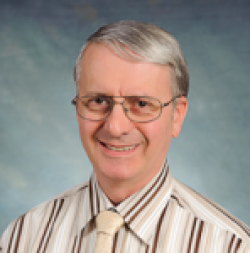
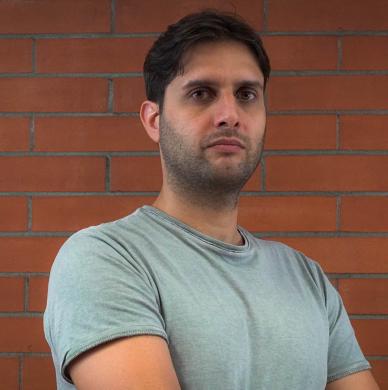
Edward Delp is the Charles William Harrison Distinguished Professor of Electrical and Computer Engineering at Purdue University's College of Engineering. He holds affiliations with both the Department of Electrical and Computer Engineering and the Department of Biomedical Engineering. His research spans computer vision, medical imaging, and data forensics with a focus on synthetic media detection, deep learning applications, and healthcare technologies. Education: Not explicitly listed in the provided text. His work includes developing algorithms for speech forensics, microscopy image analysis, and food/nutrition assessment systems. He leads projects on synthetic speech detection, medical image segmentation, and automated crop disease measurement using RGB imaging. Delp collaborates across disciplines, integrating machine learning with healthcare and agricultural challenges. Recent work emphasizes ethical AI through fairness in synthetic media detection and explainable artifacts in biomedical imaging. He contributes to large-scale datasets like MetaFood3D and 3D nuclear segmentation frameworks for microscopy analysis. His grants and advising focus on interdisciplinary applications, though specific grant details are not provided. Delp is affiliated with the Purdue School of Biomedical Engineering and maintains active collaborations in medical imaging, computer vision, and aerospace anomaly detection.
Thijs Defraeye is a Senior Scientist at Empa (Swiss Federal Laboratories for Materials Science and Technology) and Adjunct Professor at Dalhousie University. He holds a PhD in Building Physics from KU Leuven (2011) and a Master's in Civil Engineering (2006). His work focuses on optimizing food supply chains through multiphysics simulations and digital twins, addressing challenges in refrigerated transport, postharvest quality preservation, and energy-efficient food processing. He leads the SimBioSys group, developing solutions for perishable goods logistics and electrohydrodynamic technologies. Research interests include: Biophysics of food systems Digital twin applications in agriculture Electrohydrodynamic drying Thermal management in cold chains Sustainable food technologies Recent work emphasizes reducing food loss through physics-based modeling of refrigerated containers, ventilated packaging optimization, and scalable evaporative cooling systems. His studies bridge engineering principles with biological processes, aiming to enhance global food security and environmental sustainability.
Dr. Richard Segall is a Professor in the Department of Information Systems and Business Analytics at Arkansas State University , affiliated with the Beck College of Sciences & Mathematics . He is also affiliated faculty in the Master of Engineering Management (MEM) Program , the Environmental Sciences Program , and serves on thesis committees at the University of Arkansas at Little Rock (UALR) . Education: Ph.D. in Operations Research, University of Massachusetts at Amherst (1984) M.S. in Operations Research and Statistics, Rensselaer Polytechnic Institute (1975) M.S. in Mathematics, Rensselaer Polytechnic Institute (1973) B.S. in Mathematics, Rensselaer Polytechnic Institute (1971) Dr. Segall's research spans data mining, text mining, web mining, big data analytics, bioinformatics, supercomputing applications, and mathematical modeling . His work bridges business analytics and computational biology , with a focus on transdisciplinary applications in agriculture, healthcare, and space systems. His recent publications emphasize genomic data analysis , plant disease diagnostics , AI-driven healthcare solutions , and space technology forecasting . The integration of machine learning , data visualization , and open-source tools is a recurring theme across domains. Scientific Awards & Grants: Three research awards from the National Research Council (NRC) Software grants from Oracle Corporation and SAS Institute, Inc. Dr. Segall has served on the editorial boards of the International Journal of Data Science , International Journal of Data Mining, Modelling and Management , and International Journal of Fog Computing . He previously contributed to the Arkansas Center for Plant-Powered Production (P3) and currently participates in the Center for No-Boundary Thinking (CNBT) .
Bo Markussen is a Professor at the University of Copenhagen within the Department of Mathematical Sciences . He is also a member of the Data Science Laboratory , where he contributes to statistical methodology and interdisciplinary collaborations. His academic journey began with a Cand.Scient (MSc) and PhD in Statistics from the University of Copenhagen, awarded in 1998 and 2002 respectively. 2012–present: Professor, Department of Mathematical Sciences, University of Copenhagen 2009–2012: Associate Professor, Department of Basic Sciences and Environment, University of Copenhagen 2006–2009: Assistant Professor, Department of Basic Sciences and Environment, University of Copenhagen Bo Markussen's research focuses on applied statistics , particularly in functional data analysis and multiple testing corrections in genetics . His work spans diverse domains including environmental science, agriculture, and public health. Recent research output highlights applications in Arctic climate data analysis, fire risk modeling, plant stress phenotyping, and nutritional biomarker prediction. His recent publications demonstrate a strong trend toward machine learning integration with statistical modeling , addressing challenges in high-dimensional data analysis and environmental risk assessment. Collaborations span institutions in Denmark and internationally, reflecting his engagement in pan-Arctic climate studies and tropical agricultural research. 2018–present: Associate Editor, Scandinavian Journal of Statistics 2017–2019: Chair, Danish Society for Theoretical Statistics 2015–2017: Board Member, Danish Society for Theoretical Statistics As a central figure in the Data Science Laboratory , Markussen leads statistical consultancy initiatives and contributes to methodological advancements. His expertise bridges theoretical statistics with real-world applications, particularly in handling complex datasets across biological and environmental domains.
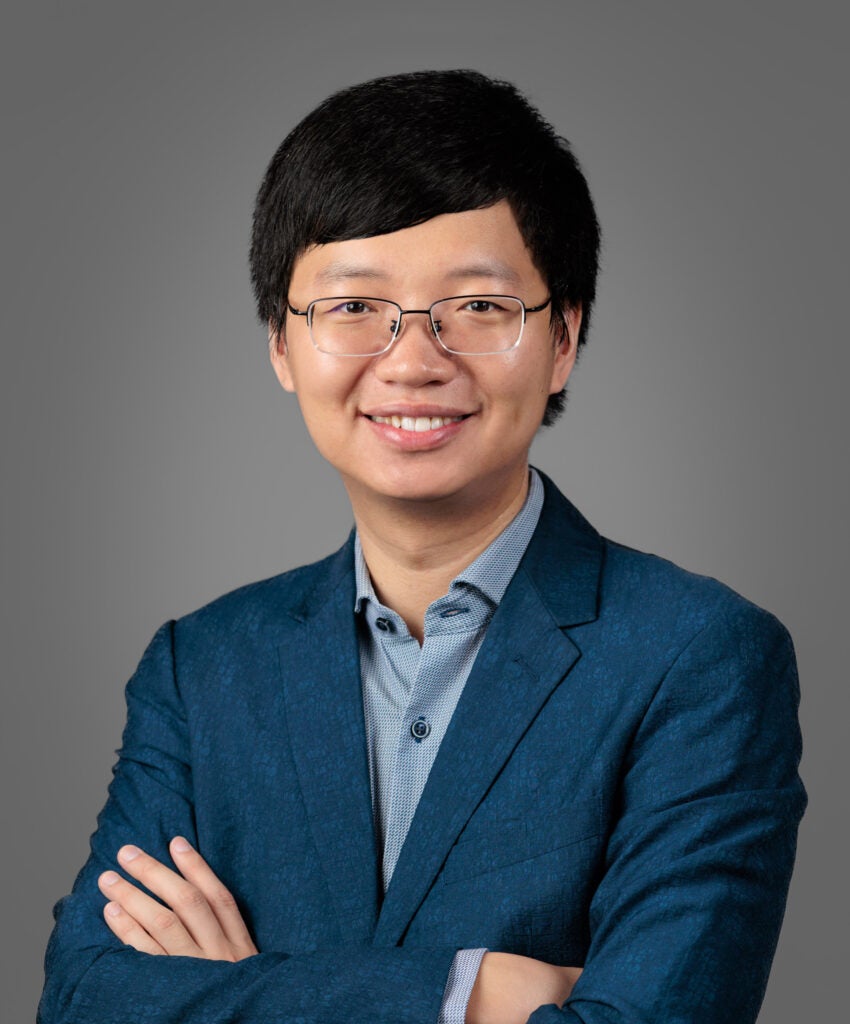
Dr. Changsheng Wu is a Professor at the National University of Singapore (NUS), leading the Lab for Intelligent Sensing, Harvesting and Actuation (LISHA). He holds a Bachelor's from NUS and a PhD from Georgia Tech, with postdoctoral research at Northwestern University. His work focuses on wireless wearables, bioelectronics, energy harvesting, and advanced manufacturing for sustainable solutions. Education: Bachelor in Engineering Science (First Class Honours), NUS PhD in Materials Science and Engineering, Georgia Institute of Technology Postdoctoral Research, Querrey Simpson Institute for Bioelectronics, Northwestern University Research Interests: Wireless bioelectronics for clinical health monitoring Energy harvesting via nanogenerators Soft skin-electronics interfaces using metastructures Programmable materials for adaptive systems Advanced manufacturing techniques for wearable devices Key Achievements: Over 50 publications and 5 patents Recipient of TechConnect 2018 Innovation Award and 56th R&D 100 Award Developed wireless implantable sensors for tissue monitoring and bioresorbable medical devices Teaching: MLE5220: Finite Element Method in Materials MLE5238: Bioelectronics Laboratory: His LISHA lab pioneers innovations in self-powered systems, wearable health monitoring, and biohybrid robots. Current projects include metamaterial-based sensors and sustainable energy conversion materials.
Dr. Chunyuan Diao is an Associate Professor in the Department of Geography & Geographic Information Science at the University of Illinois at Urbana-Champaign (UIUC), part of the College of Liberal Arts & Sciences. He serves as Director of Graduate Studies and leads the Remote Sensing Space-Time Innovation (RSSI) Lab. His research focuses on computational remote sensing, ecosystem dynamics, and geospatial data science, integrating satellite imagery, AI, and high-performance computing to study climate change impacts, agriculture, and biodiversity. Dr. Diao has received prestigious awards including the 2024 AAG Fellowship and the NSF CAREER Award. He teaches courses such as GGIS 477 (Intro to Remote Sensing) and GGIS 489 (Programming for GIS). His lab actively mentors students in advanced remote sensing techniques, with notable alumni like Zijun (now a tenure-track professor at UNC Wilmington) and Chishan (Frontera Computational Science Fellow). Key research themes include multi-scale land surface phenology, intelligent agriculture, and invasive species monitoring. The RSSI Lab collaborates on large-scale projects like CropSight, leveraging street view and satellite data for crop monitoring. Dr. Diao’s work bridges remote sensing with field observations to address global environmental challenges.
Dr. Alison McCarthy is an Associate Professor in Irrigation and Cropping Systems at the Centre for Agricultural Engineering , University of Southern Queensland . With a background in mechatronic engineering, she specializes in developing automated irrigation systems and machine vision technologies for cotton and dairy pasture management. Education: BEng (2006) and PhD (2010) from University of Southern Queensland Research Interests: Irrigation control systems Machine vision for soil and plant sensing Automation in agriculture Recent Publications highlight her work in nitrogen management, autonomous irrigation frameworks, and pest detection systems. These contributions align with her expertise in AI-driven agricultural solutions and sensor integration. Scientific Awards: 2024 Australian Future Cotton Leader 2021 WatSave Young Professionals Award 2018 Cotton Seed Distributors Researcher of the Year 2015 Queensland Young Tall Poppy Science Award 2014 Science and Innovation Award for Young Professionals Research Affiliations: Centre for Agricultural Engineering (CAE) Association of Australian Cotton Scientists (Full Member)
Shafaq Khan is an Assistant Professor in the School of Computer Science at the University of Windsor. She holds a PhD in Computer Science from the University of Salford (2017). Her research spans machine learning, deep learning, data analytics, and database systems with applications in healthcare informatics, agricultural technology, educational systems, and blockchain. Recent work focuses on AI-driven healthcare transformation, privacy-preserving data methods, federated learning for disease prediction, and computer vision applications in agriculture. Additional interests include educational technology for addressing disparities, blockchain implementations in government services, and open-source search engine development. Her work demonstrates consistent integration of cutting-edge computing techniques with practical domain applications.
Dr. Farhad Maleki is an Assistant Professor in the Department of Computer Science at the University of Calgary, Faculty of Science. He holds a PhD in Computer Science from the University of Saskatchewan (2019). His postdoctoral research at McGill University’s Augmented Intelligence & Precision Health Laboratory focused on machine learning for medical image analysis. He has held leadership roles, including President of the Association of Postdoctoral Fellows at McGill and President of the Computer Science Graduate Council at the University of Saskatchewan. Currently, he serves on the Machine Learning Education Sub-Committee of the Society for Imaging Informatics in Medicine and as a guest editor for journals in medical data analysis. Dr. Maleki’s research spans Artificial Intelligence , Machine Learning , Biomedical Data Analysis , and Computer Vision . His work emphasizes medical applications, including tumor segmentation, clinical outcome prediction, and AI-driven diagnostics in oncology and cardiology. He also explores agricultural challenges, such as wheat head segmentation using generative models and domain adaptation. Key contributions include developing robust medical imaging tools (e.g., Rel-UNet for tumor segmentation) and frameworks for evaluating AI model reliability ( RIDGE ). His work bridges clinical needs with computational innovation, addressing issues like reproducibility, generalizability, and low-annotation learning across healthcare and agriculture domains. Dr. Maleki’s articles focus on advancing AI methods for precision health and agriculture. His recent work highlights interdisciplinary applications, such as integrating clinical and pathology data for cancer survival prediction, optimizing radiation therapy using Bayesian methods, and leveraging synthetic data for crop phenotyping. These studies emphasize practical deployment and ethical considerations in AI adoption.
Arnab Nandi is a Professor of Computer Science and Engineering at The Ohio State University, with a courtesy appointment in Biomedical Informatics. He holds leadership roles including Steering Committee Member for the Human-in-the-Loop Data Analytics (HILDA) Workshop and has served as Workshops co-chair for SIGMOD 2025-26 and Demonstrations co-chair for SIGMOD 2024. His research focuses on bridging human interaction and data infrastructure, spanning database systems, human-in-the-loop data analytics, and next-generation query interfaces. Nandi's work emphasizes interactive data exploration through projects like DICE (Distributed Interactive Cube Exploration), GestureDB (Querying Beyond Keyboards), and Omni (Multimodal Data Exploration). His recent research explores integrating LLMs into database education, augmented reality interfaces for data analytics, and multimodal approaches to video querying. Nandi has received numerous honors including the NSF CAREER Award, Google Faculty Research Award, IEEE TCDE Early Career Award, and the University's Alumni Award for Distinguished Teaching. He was also named to Columbus Business First's '40 under 40' and became an ACM Distinguished Member in 2024. As an educator, he teaches courses including CSE 3241 (Introduction to Database Systems), CSE 5242 (Advanced Database Systems), and CSE 5251 (Introduction to Software Startups). His educational innovations include DBTutor, which integrates LLMs into database systems education. At Ohio State, Nandi co-founded the OHI/O Program, which fosters tech culture through hackathons, and The STEAM Factory, an interdisciplinary research collaboration network. Prior to academia, he was founder and CEO of Mobikit, a connected vehicles data analytics startup acquired by Azuga Inc. (a Bridgestone company). His research has been supported by the NSF and industry partnerships, with applications spanning precision agriculture (CropFusion), clinical data pipelines (ICARUS), and interactive visualization systems (Perceptvis).
Kavita Bala is the 17th Provost of Cornell University and a Professor of Computer Science. She previously served as the inaugural Dean of the Cornell Ann S. Bowers College of Computing and Information Science, leading its transition to a degree-granting college by 2025, and as Chair of Cornell’s Department of Computer Science. Her academic leadership includes expanding faculty, establishing research programs like the Bowers CIS Undergraduate Research Experience (BURE), and securing a new research facility for computing and information science. Education: B.Tech (IIT Bombay), M.S. and Ph.D. (MIT, Computer Science) Bala’s research focuses on computer vision, artificial intelligence, and computer graphics , with groundbreaking work in material and style recognition using deep learning. Her innovations in crowdsourced training data and differentiable rendering have advanced visual search technologies and translucent material modeling, powering her startup GrokStyle. She pioneered AI techniques applied to environmental monitoring through projects like MONITRS and AllClear , addressing Earth observation challenges. Her scientific awards include: American Academy of Arts and Sciences (2025) SIGGRAPH Computer Graphics Achievement Award (2020) IIT Bombay Distinguished Alumnus Award (2021) ACM Fellow (2019) SIGGRAPH Academy Fellow (2020) As Provost, Bala drives strategic initiatives like the Cornell AI Initiative , creating interdisciplinary minors in AI and AI in Society, and establishing the Schmidt AI in Science postdoctoral program. She co-chaired a task force for generative AI guidelines in education.
Dr. Marcell K. Peters is a Senior Academic Councillor at the Chair of Animal Ecology and Tropical Biology (Zoology III) at the University of Bremen. His research focuses on biodiversity patterns, ecosystem functioning, and climate-land use interactions in tropical and montane environments, with extensive fieldwork in East Africa and the Amazon. He leads projects under DFG and EU funding, including the UPSCALE initiative. Habilitation in Zoology (University of Würzburg, 2018) PhD in Biology (University of Bonn, 2008) Diploma in Biology (RWTH Aachen & University of Bonn, 2003) Research spans multi-taxa community ecology, army ants and ant-following birds, DNA barcoding applications, and climate change impacts on pollination networks. Google Scholar highlights recent work on climate-agriculture interactions in sub-Saharan Africa, trait-based community assembly, and network resilience in biodiversity hotspots. His publications emphasize elevational gradients, disturbance ecology, and functional diversity across Mount Kilimanjaro studies. Current affiliations include the DFG Research Unit Kilimanjaro and EU-funded UPSCALE project. He employs advanced methods like airborne LiDAR for biodiversity prediction and investigates nutrient use by ant communities across continents.
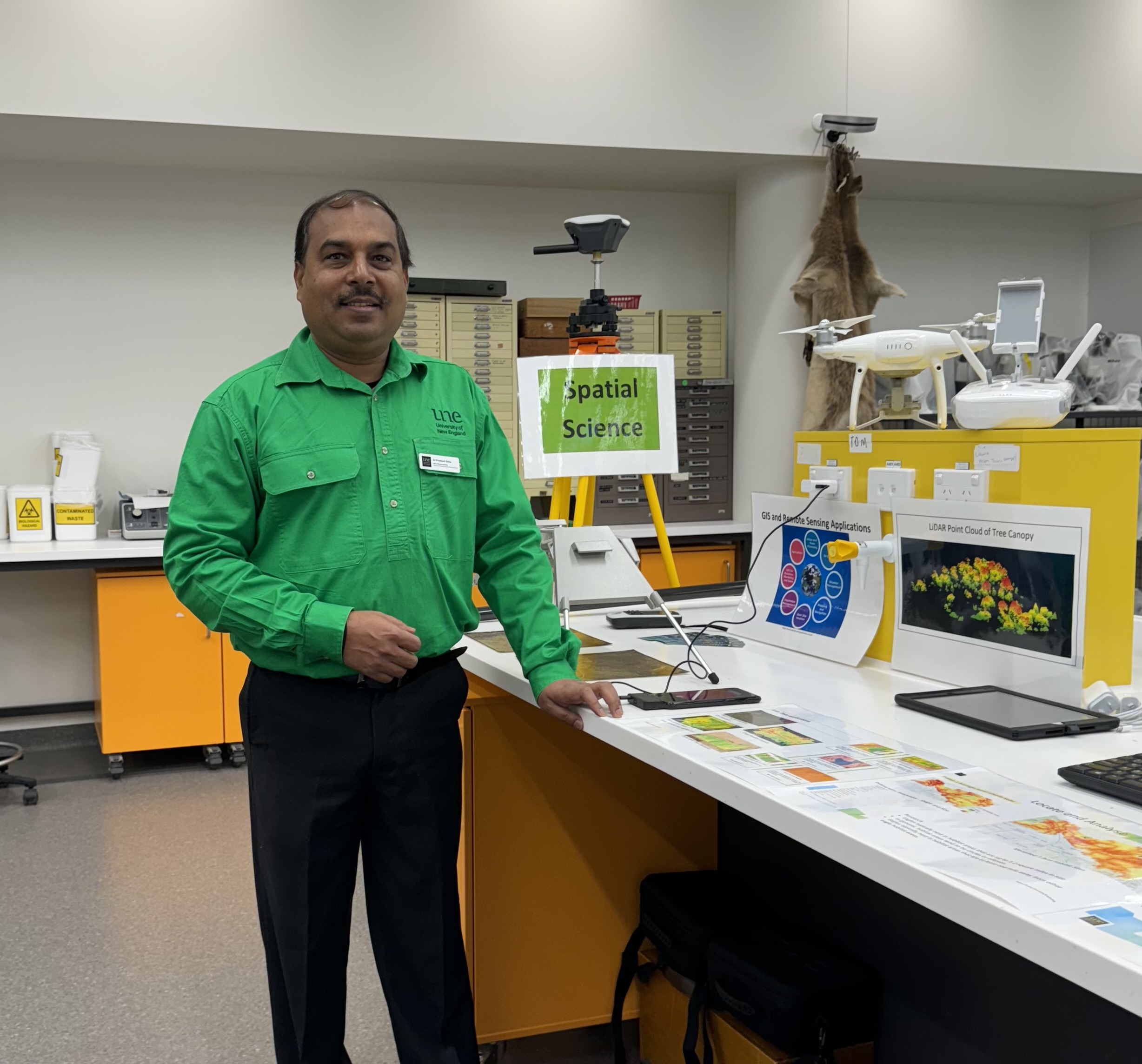
Dr. Priyakant Sinha is a Senior Lecturer in Spatial Science at the University of New England's School of Environmental and Rural Science, with over 20 years of research experience in remote sensing and geospatial science. He specializes in applying remote sensing technologies to agriculture, environmental monitoring, and natural resource management. His research focuses on: Advanced agricultural remote sensing and precision agriculture Time-series crop monitoring and yield prediction UAV/Drone-based 3D imaging for farm management Vegetation species mapping and change detection Hyperspectral and LiDAR data analysis Dr. Sinha teaches courses in GIS, spatial analysis, precision agriculture, and remote sensing applications. He has successfully supervised multiple PhD students in areas ranging from flood hazard mapping to drought monitoring using earth observation data. Technical expertise includes advanced digital image processing, GIS analysis and modeling, and specialized software including ENVI, ArcGIS, QGIS, and Pix4D. He develops innovative methods for temporal change analysis using machine learning and Google Earth Engine.
Donato Romano serves as Associate Professor at The BioRobotics Institute of Scuola Superiore Sant'Anna, Italy, where he coordinates the Bio-Robotic Ecosystems Lab and co-founded the spin-off company HUBILIFE srl. His interdisciplinary work bridges robotics, biology, and AI to develop biohybrid systems for biodiversity preservation, sustainable environmental management, and life support in extreme scenarios including space exploration. With over 90 publications and an H-index of 27 (Scopus, March 2025), he has established significant academic leadership through editorial roles across 12+ international journals. Romano's educational foundation includes advanced degrees with honors: an M.Sc. in Agriculture Science and Technologies (2014) and a PhD in BioRobotics (2018), both from Scuola Superiore Sant'Anna. His academic journey includes visiting scholar positions at Khalifa University and substantial industry-academia collaboration through HUBILIFE srl, which commercializes bioinspired devices for human daily life improvement. His research program focuses on bioinspired and biomimetic robotics with particular emphasis on animal-robot interaction, biohybrid systems, and natural intelligence. Key projects address critical global challenges: SENSORBEES develops biohybrid environmental surveillance for ecological monitoring; REGOLIFE investigates lunar soil-terrestrial organism interactions for space agriculture; and OCEAN ROBOCTO explores marine ecosystem solutions. This work demonstrates a strategic progression from fundamental behavioral studies toward applied ecological and extraterrestrial systems. Analysis of his recent publications reveals strong trends in AI-driven behavioral analysis, with deep learning increasingly applied to entomological studies and pest management. The research spans agricultural applications (precision monitoring traps, larval detection systems), ecological conservation (biodiversity surveillance), and extreme-environment adaptation (lunar regolith studies). A distinctive feature is the consistent integration of biohybrid approaches where living organisms and robotic systems create synergistic capabilities exceeding either component alone. Romano's scientific recognition includes election as Junior Fellow of the Italian Academy of Engineering and Technology (2025), the Lucani fuori dal Comune award (2024), and multiple best-thesis prizes. His editorial leadership spans high-impact journals including IEEE Transactions on Medical Robotics and Bionics and Pest Management Science, where he serves as Associate Editor. As principal investigator, Romano coordinates major international projects totaling over €15M in funding: HORIZON-EIC's SENSORBEES (2024-2029), ASI's REGOLIFE (2024-2027), National Geographic's OCEAN ROBOCTO (2024-2026), and PRIN's COSMIC (2023-2025). His teaching portfolio includes PhD courses in Biosystems for Biorobotics and M.Sc. instruction in Bionics Engineering at Scuola Superiore Sant'Anna and University of Pisa. The Bio-Robotic Ecosystems Lab under Romano's direction pioneers biohybrid technologies where living organisms and robotic systems create integrated solutions. Current initiatives include SENSORBEES' environmental monitoring swarms, REGOLIFE's moonworm colonization systems, and HUBILIFE's commercial vector-control devices. The lab maintains active collaborations with space agencies, agricultural institutes, and conservation organizations, positioning biohybrid systems as next-generation tools for planetary-scale challenges.
Dr. Jose Manuel Sánchez Peña is a Full Professor at Universidad Carlos III de Madrid (UC3M), affiliated with the Grupo Universitario de Tecnologías de Identificación (GUTI). His research focuses on precision agriculture technologies, optoelectronics, and neuroscientific interfaces. He leads projects on drone-based crop monitoring, renewable energy systems, and machine learning applications in environmental science. Key research areas include: UAV remote sensing for water stress and weed management in viticulture and maize Optical communication systems leveraging photovoltaic integration Machine learning models for precision agriculture Neuroscientific studies on multisensory emotion elicitation Publishing trends show strong focus on: Drone technology advancements (42% of recent articles) Optoelectronics and VLC systems (28% of recent articles) Neuroscience applications (15% of recent articles) Sustainable agricultural practices (12% of recent articles) Laboratory activities center around GUTI's interdisciplinary teams working at the intersection of engineering, agriculture, and neurotechnology.