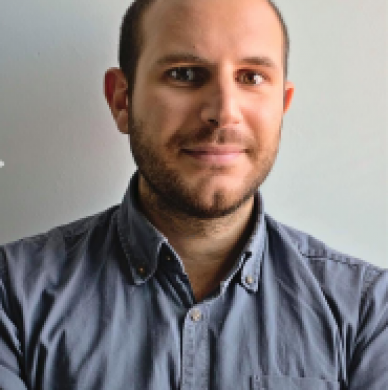
Muhammad Sajjad is an Associate Professor at the Department of Computer Science, Islamia College University Peshawar, Pakistan, and an ERCIM Research Fellow at the Norwegian University of Science and Technology (NTNU), Norway. His academic career spans teaching, research leadership, and editorial contributions to international journals. Education: Master’s in Computer Science (2012) from the College of Signals, National University of Sciences and Technology (NUST), Pakistan; Ph.D. in Digital Contents (2015) from Sejong University, South Korea. His research focuses on computer vision , image processing , and deep learning , with applications in medical imaging , fog computing , and autonomous navigation . He leads the Digital Image Processing Laboratory, mentoring students in areas like multi-modal data mining and video analytics . He has authored over 65 peer-reviewed publications and serves as an Associate Editor for IEEE Access and a Guest Editor for IEEE Transactions on Intelligent Transportation Systems .
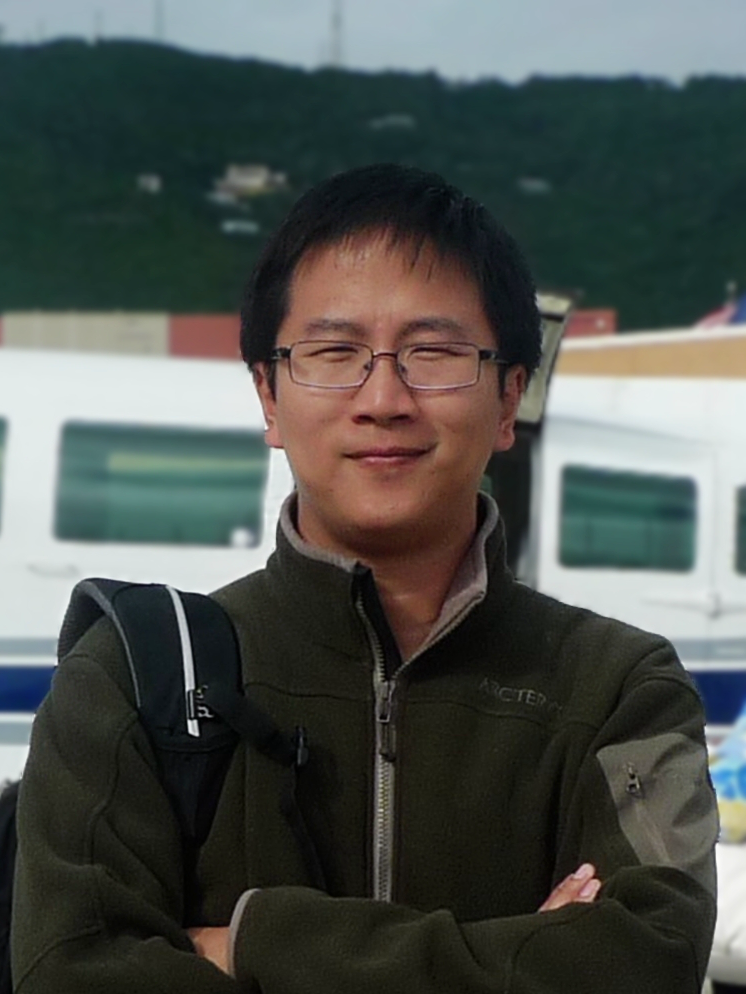
Gierad Laput is an Associate Professor in the Human-Computer Interaction Institute within Carnegie Mellon University's School of Computer Science. His research spans the intersection of human-computer interaction, ubiquitous computing, and sensing technologies with a strong focus on practical applications for real-world problems. Laput has established himself as a leading researcher in wearable computing, gesture recognition, and accessibility technologies through consistent publication in top-tier venues including CHI, UIST, and other premier HCI conferences. Laput's research interests center on creating novel sensing techniques that enable more natural and accessible human-computer interactions. His work spans wearable computing systems, activity recognition, touch and gesture interfaces, and accessibility technologies. He has made significant contributions to sparse sensor constellations, acoustic activity recognition, and vision-based gesture systems that push the boundaries of what's possible with current hardware limitations. His research often bridges theoretical innovation with practical implementation, demonstrating real-world applicability of his sensing techniques. Analysis of Laput's recent publications reveals a strong trajectory toward more sophisticated interaction techniques that leverage AI and machine learning. His work has evolved from foundational sensing techniques (like Electrick and Vibrosight) to more complex systems integrating multiple modalities (vision, audio, and wearable sensors). Recent work shows increasing focus on accessibility applications, particularly sign language recognition and generation, and more personalized interaction techniques that adapt to individual users' movement patterns. The research demonstrates consistent innovation in making interaction more natural, accessible, and context-aware. Laput has been actively involved in mentoring and advising students, as evidenced by his role as first author on many papers with student collaborators. His work has received significant attention in the HCI community, with multiple papers appearing in top venues and influencing subsequent research directions in sensing and interaction techniques. While specific grant information isn't visible in the provided data, his consistent publication record suggests successful funding from major sources supporting HCI and computing research. Through his XRDS magazine columns ('Opening the black box,' 'Play ball,' 'The power of two'), Laput has also contributed to science communication and public understanding of technology. These writings demonstrate his commitment to making complex technical concepts accessible to broader audiences and exploring the social implications of emerging technologies.
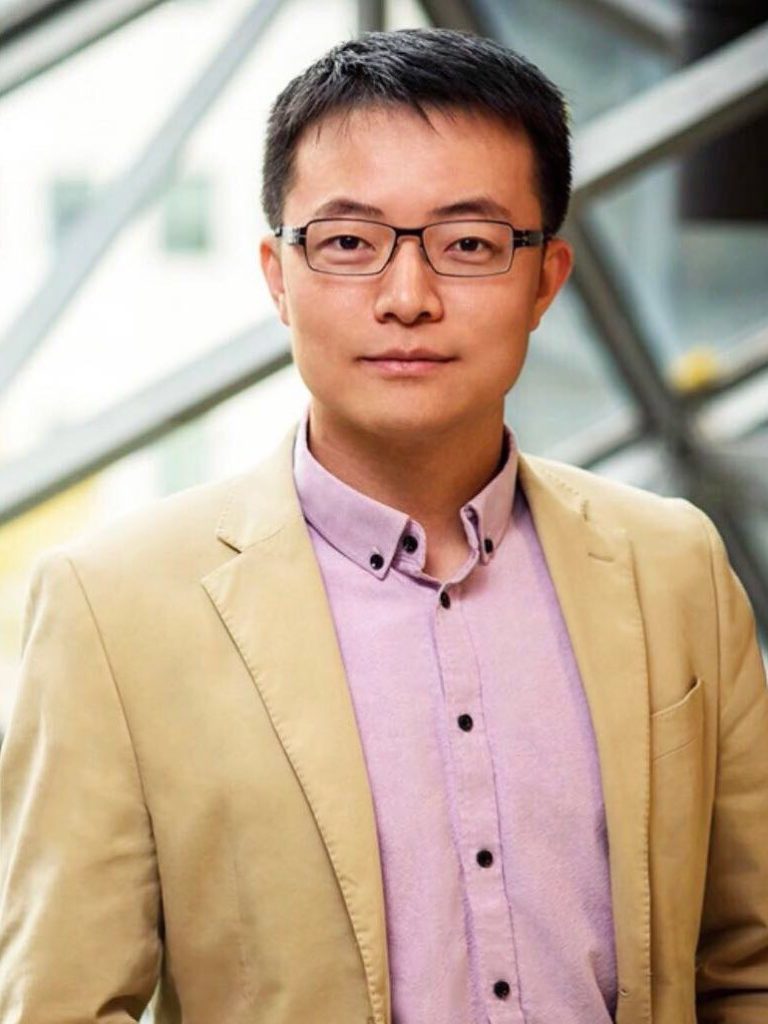
Dr. Ravin Balakrishnan is a leading figure in Human-Computer Interaction at the University of Toronto, Canada. With over 163 publications from 1994-2023, his work spans 3D interfaces , gesture recognition , mobile computing , and collaborative systems . He received the CHCCS 2020 Achievement Award for his contributions. Key research areas: Human-Computer Interaction, 3D User Interfaces, Tactile Displays, Mobile Computing Major awards: CHCCS 2020 Achievement Award Collaborators: Tovi Grossman, Daniel Wigdor, Karan Singh Publication Trends (2023-2006): 2023: Interactive camera robots for video capture 2022: Swarm robotics for physical demonstrations 2021: Drone tour interfaces and VR navigation 2020: Telepresence drones and volumetric displays 2019: Multimedia education tools 2016: Dual-screen interaction and tactile feedback 2011: Curve sketching and children's interfaces 2008: Spherical displays and tactile widgets 2006: Volumetric display techniques His work bridges academic research with real-world applications in education, accessibility, and collaborative environments. Publications in top venues like CHI, UIST, and ACM Transactions demonstrate sustained impact in interaction design.
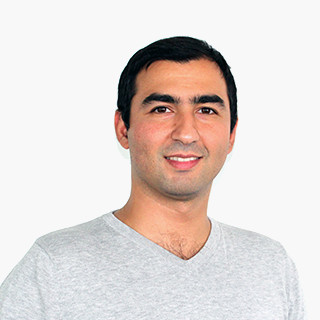
Alessandro Biondi serves as Associate Professor of Computer Engineering at the Scuola Superiore Sant'Anna in Pisa, Italy, where he conducts research at the Real-Time Systems (ReTiS) Laboratory. His expertise centers on real-time, safe, and secure cyber-physical systems with critical applications in automotive and railway domains. His academic credentials include: Computer Engineering degree, cum laude , University of Pisa (within excellence program) PhD in Emerging Digital Technologies (Embedded Systems curriculum), cum laude , Scuola Superiore Sant'Anna (2017) Biondi's research spans real-time systems design, operating systems, hypervisors, synchronization protocols, embedded optimization, and formal scheduling analysis. His work bridges theoretical foundations with industrial implementation, emphasizing safety and security for mission-critical infrastructure through rigorous mathematical modeling and practical system development. Recent publications (2023-2025) demonstrate concentrated advancements in real-time scheduling optimization, memory management for safety-critical systems, and adversarial defense mechanisms in vision applications. Key trends include deterministic communication protocols for AUTOSAR, end-to-end latency minimization in distributed systems, and hardware-aware security solutions for heterogeneous SoCs, reflecting strong industry-academia collaboration. His scientific contributions have earned significant recognition: ACM SIGBED Early Career Award (2019) IEEE TCCPS Early Career Award (2023) Six Best Paper Awards Best Journal Paper Award (IEEE Transactions on Industrial Informatics) EDAA Outstanding Dissertation Award (2017) Additional honors: Outstanding Paper Award, Best Presentation Award, Best Paper Nomination Biondi leads industrial research projects for automotive and railway safety-critical systems while participating in European Commission-funded initiatives. He co-founded spin-offs Accelerat (specializing in predictable cyber-physical systems) and Wriggle Solutions (acquired IP for real-time tire monitoring), demonstrating his commitment to translating research into commercial solutions. His editorial service includes Associate Editor roles for IEEE TETC, Journal of Real-Time Systems, and LITES. As a core member of the ReTiS Laboratory, Biondi collaborates within a high-impact research ecosystem focused on advancing real-time computing theory and practice. The lab maintains deep industry partnerships and drives innovation in scheduling algorithms, security protocols, and optimization techniques for next-generation embedded platforms.
Professor Vladimir Risojević is a full professor at the Department of General Electrical Engineering, Faculty of Electrical Engineering, University of Banja Luka, Republic of Srpska, Bosnia and Herzegovina. With a prolific research career spanning over two decades, he has established himself as a leading expert in remote sensing, machine learning, and biohybrid systems. His work bridges theoretical advancements with practical applications in environmental monitoring, energy systems, and security technologies, with numerous publications in high-impact journals and conferences. Professor Risojević's research focuses primarily on remote sensing image classification , where he has made significant contributions to understanding the role of pre-training in specialized applications. His work in machine learning spans self-supervised learning, contrastive multiview coding, and efficient neural network architectures. Most notably, his pioneering research in biohybrid systems has developed innovative methods using honeybees as biosensors for landmine and explosive detection, creating a unique intersection between biology and engineering that has received international recognition. His research consistently demonstrates a commitment to solving real-world problems with practical engineering solutions. Analysis of his recent publications reveals a strategic expansion from his core expertise in remote sensing into complementary domains including energy systems (solar irradiance modeling and Li-ion battery monitoring), 3D human body modeling, and novel neural network architectures. A unifying theme throughout his work is the pursuit of computational efficiency, with multiple publications focusing on approximate computing techniques to make AI systems more energy-efficient for deployment in resource-constrained environments. His research demonstrates both depth in specialized areas and breadth across multiple engineering disciplines. Professor Risojević is actively involved in numerous significant research projects including: NATO Science for Peace and Security project valued at €300,415 on 'Biological Methods (Bees) for Explosive Detection' 'Obrada signala primjenom ugradjenih racunarskih sistema i masinskog ucenja' (Signal Processing using Embedded Computer Systems and Machine Learning) 'Masinsko ucenje u rubnom racunarstvu' (Machine Learning in Edge Computing) 'Elektronski sistem za daljinsko pracenje i analizu uticaja parametara zivotne sredine na aktivnost pcela' (Electronic System for Remote Monitoring of Environmental Parameters on Bee Activity) His laboratory has developed specialized video analysis systems for bee monitoring, with multiple publications detailing techniques for tracking bee activity, detecting pollen-bearing bees, and creating integrated sensor platforms for remote bee yard monitoring. This work has positioned him as a leader in applying computer vision techniques to biological monitoring systems with applications in both environmental science and security technologies.
Muttukrishnan Rajarajan is a Professor at City University of London specializing in cutting-edge cybersecurity research with applications across critical infrastructure sectors. His work bridges theoretical innovation and practical implementation in decentralized systems, with verified institutional affiliation through r.muttukrishnan@city.ac.uk . His research program focuses on: Hardware-based authentication mechanisms exploiting physical device characteristics Privacy-preserving frameworks for healthcare, finance, and IoT ecosystems Blockchain integration for transparent data marketplaces and identity management Security solutions for smart grids, connected vehicles, and agricultural technology Advanced persistent threat mitigation using explainable AI techniques Analysis of his 2023-2025 publications reveals a strategic shift toward real-world deployment challenges, particularly in agriculture 4.0/5.0 security, BritCoin privacy implications, and federated learning for connected vehicles. His work consistently integrates cryptographic primitives with system-level design to address the tension between usability and security in decentralized environments. Professional Recognition: IEEE Senior Member for significant contributions to cybersecurity Professor Rajarajan actively shapes his field through peer review for Computers & Security and development of standardized security frameworks like the Unified Signature API Library. His research demonstrates strong industry relevance with direct applications in open banking security, drone privacy regulations, and smart grid resilience. Current investigations into crystal oscillator impurities for authentication and blockchain-enabled ML model evaluation indicate forward-looking research directions addressing emerging hardware and AI security challenges.
Bo Luo is a Professor in the Department of Electrical Engineering and Computer Science at the University of Kansas . He serves as Director of the High Assurance and Secure Systems (HASS) Research Center within the Institute for Information Sciences (I2S) , a National Center of Academic Excellence in Cyber Defense and Research by the National Security Agency. Education: Ph.D. in Information Sciences and Technology, Pennsylvania State University (2008) M.Phil. in Information Engineering, Chinese University of Hong Kong (2003) B.E. in Electronic and Information Engineering, University of Science and Technology of China (2001) His research focuses on security and privacy at the intersection of data science, AI/ML, IoT/CPS, and network security . Current projects include adversarial machine learning, privacy compliance in smart devices, and hardware-enabled security solutions. He leads the InfoSec Research Group , mentoring students in areas like IoT security, deep learning vulnerabilities, and cryptographic systems. Recent article trends highlight IoT device vulnerabilities (2025), privacy compliance in automotive apps (2024), adversarial AI-art detection (2024), and secure computation frameworks (2024). His work appears in top venues like ACM CCS , USENIX Security , and IEEE TDSC . Scientific Recognition: ACSAC 2021 Distinguished Paper Award ACSAC 2017 Best Paper Award CCS 2022 Best Paper Honorable Mention ICPC 2024 Distinguished Paper As Principal Investigator for the Jayhawk SFS CyberCorps Scholarship , he trains future cybersecurity professionals. His lab collaborates on cyber-physical security and AI safety , with alumni placed at institutions like Beloit College, Apple, and Amazon.
Dr. Ridvan Sert is a Research Assistant at Gazi University’s Faculty of Technology, Department of Computer Engineering, where he has worked since 2023. His research focuses on artificial intelligence, computer hardware, and pattern recognition. Education: PhD in Computer Engineering (Gazi University, ongoing since 2025) MSc in Computer Engineering (Gazi University, 2021–2024) BSc in Computer Engineering (Selcuk University, 2015–2020) Research Interests Ridvan Sert’s work lies at the intersection of artificial intelligence and engineering applications, particularly in equipment development, computer learning, pattern recognition, and hardware architecture. His recent publication demonstrates the application of deep learning to materials science, predicting mechanical properties using microstructure image analysis. Publications In 2024, Sert co-authored a peer-reviewed paper on deep learning-driven predictive modeling for steel microstructure characterization, highlighting his interdisciplinary approach to AI in materials engineering. Contact Email: ridvansert@gazi.edu.tr Office Phone: +90 312 202 8905
Eric Müller is a Researcher affiliated with the Kirchhoff Institute for Physics at Heidelberg University. He received his diploma in Physics in 2009 and a Ph.D. in 2014 under Prof. Karlheinz Meier's Electronic Vision(s) group. Since 2007, he has focused on accelerated neuromorphic hardware architectures, contributing to the BrainScaleS software ecosystem as its architect and lead developer. In 2021, he joined the EINC (Electronic Intelligence) initiative at Heidelberg University, integrating electronic, photonic, and atomic systems for physical computing. His research centers on neuromorphic modeling concepts, sustainable system development via research software engineering, and platform reliability in federated computing environments. He explores interactions between physical and conventional computing systems to enable beyond-von-Neumann architectures, emphasizing scalable computing, closed-loop information processing, and novel computing paradigms.
Song Han is an Associate Professor in the Department of Electrical Engineering and Computer Science (EECS) at the Massachusetts Institute of Technology (MIT). His research focuses on efficient deep learning computing, bridging algorithm and hardware design to enable scalable AI systems. PhD in Electrical Engineering from Stanford University Research Interests Efficient Deep Learning Neural Network Compression Hardware-Aware Transformers Sparse Attention Mechanisms Quantization Techniques Edge and IoT Computing Recent Publication Trends highlight advances in LLM optimization, diffusion model quantization, and quantum-classical co-design. His work emphasizes reducing computational costs while maintaining model fidelity. Scientific Awards Best Paper, ICLR and FPGA Symposium NSF CAREER Award MIT Technology Review 35 Innovators Under 35 Collaborations include the MIT-IBM Watson AI Lab, focusing on AI hardware and system co-design. Many of his techniques are integrated into commercial AI chips.
Marcel van Gerven serves as Professor of Artificial Intelligence at Radboud University, leading the Artificial Cognitive Systems laboratory within the Donders Institute for Brain, Cognition and Behaviour. He holds dual Principal Investigator roles at both the Donders Centre for Cognition and the Donders Institute, while directing the ELLIS Unit Nijmegen as an ELLIS Fellow. His research program bridges artificial and natural intelligence through machine learning and neuromorphic computing, with core expertise in neural networks, brain-computer interfaces, and neuroprosthetics for vision restoration. Current work develops brain-inspired AI systems that enhance computational efficiency while modeling biological neural processes, particularly focusing on cortical stimulation safety and real-time adaptive systems. Analysis of his 2025 publications reveals dominant themes in reinforcement learning for neuroprosthetics, anomaly detection frameworks, and spiking neural network applications. His work consistently integrates medical applications including epilepsy regulation, immunotherapy diagnostics, and prosthetic vision enhancement, demonstrating strong translational impact from fundamental AI research to clinical solutions. Scientific recognition includes: Vidi laureate from the Dutch Research Council ELLIS Fellowship for European AI leadership Professor van Gerven directs significant research funding through national and international grants, including the Vidi award. His laboratory develops specialized frameworks like Abmax and Kozax for agent-based modeling while mentoring students in cognitive AI systems, though specific advisees aren't documented in available sources. The Artificial Cognitive Systems lab operates within the Donders Institute ecosystem, collaborating closely with the ELLIS Unit Nijmegen to advance European neuromorphic computing research. Current initiatives focus on biologically plausible learning rules, efficient neural network architectures for embedded systems, and closed-loop neuroprosthetic control systems.
Paul Rosen is an Associate Professor at the University of South Florida within the Department of Computer Science and Engineering. His research focuses on computer graphics, visualization, and geometric modeling, with significant contributions in camera models, 3D rendering, and interactive visualization techniques. Academic Rank: Associate Professor Affiliation: University of South Florida, Department of Computer Science and Engineering Research Areas: Computer Graphics, 3D Visualization, Geometric Modeling, Image Processing, Human-Computer Interaction. His publications span topics including Bézier curves, nonpinhole camera approximations, and volumetric display perception studies. While he collaborates with institutions like Purdue University (CGVLab), he is currently an active faculty member at USF, not part-time, retired, or former staff.
Mohammad Rastegari serves as a senior technical manager in Apple's AI/ML organization and holds an affiliate assistant professor position in the Computer Science and Engineering Department at the University of Washington. Previously, he was a research scientist at the Allen Institute for AI (AI2) where he contributed to the PRIOR team, and co-founded XNOR.ai as Chief Technology Officer. He completed his Ph.D. at the University of Maryland under the supervision of Professor Larry S. Davis, focusing on computer vision and machine learning. His research centers on efficient deep learning with major contributions in binary neural networks (notably XNOR-Networks for resource-constrained devices) and model compression . Current work extends to large language model efficiency through weight clustering, token pruning, and memory optimization while maintaining strong foundations in computer vision. Analysis of his recent publications reveals a strategic shift toward optimizing transformer-based architectures across vision and language domains, with consistent emphasis on deployable solutions for edge computing and real-world applications. He co-founded XNOR.ai (acquired by Apple) and contributed to AI2's PRIOR initiative, demonstrating a career trajectory bridging academic innovation and industrial implementation in efficient AI systems.
Y Charlie Hu is the Michael and Katherine Birck Professor of Electrical and Computer Engineering at Purdue University's College of Engineering. His research focuses on optimizing wireless networks, edge computing, and energy-efficient systems. He has contributed extensively to 5G network analysis, AR/VR systems, and mobile hardware optimization. Key projects include studies on 5G uplink performance, edge-assisted AR frameworks, and power modeling for mobile GPUs. His technical expertise spans cellular network traffic modeling, real-time video analytics, and privacy mechanisms in mixed reality. He has pioneered methods for proactive resource scheduling in edge environments and developed tools for characterizing modem energy drain. Recent work explores the predictability of cellular network throughput using machine learning and the impact of multi-carrier access in 5G deployments. Dr. Hu's research also addresses practical challenges like bystander privacy in AR systems and energy accounting in software applications. His work bridges theoretical network analysis with practical system implementations, emphasizing performance evaluation and optimization across heterogeneous computing environments.
John Evans is an Assistant Professor in Agricultural & Biological Engineering at Purdue University, specializing in Machine Systems and Automation. His research focuses on precision agriculture technologies, autonomous systems design, and digital twin applications. He holds degrees from the University of Kentucky and University of Nebraska-Lincoln. Evans advises Purdue's Quarter Scale Tractor Team and collaborates on projects like autonomous roadside mowing simulators and robotic crop sampling systems. His work integrates robotics, computer vision, and machine learning to optimize agricultural machinery and field operations. Key themes include autonomous vehicle development, sensor fusion for real-time perception, and economic analysis of autonomous farming technologies. Education: PhD Biological Systems Engineering (UNL), MS/BS Biosystems & Agricultural Engineering (UK) Research Labs: Autonomous Systems Lab, Agricultural Robotics Group Recent projects include digital twin environments for testing autonomous mowers and developing physics-based driveline control strategies. His work appears in journals like Transactions of the ASABE and IEEE Robotics. Evans contributes to open-source initiatives like OSCAR rover hardware and LATTICE data frameworks for scalable agriculture.