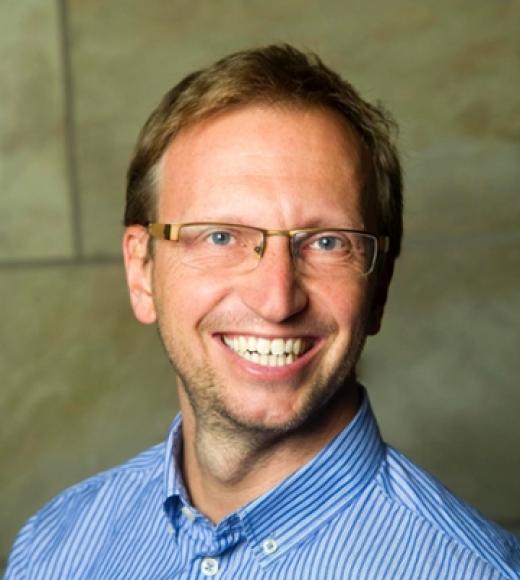
Michael Wright is a Senior Lecturer in the Department of Computer Science at the University of Bath. His research focuses on haptic feedback systems, educational technology, and user interaction design. He is affiliated with the Institute of Coding and has collaborated on projects involving mid-air haptics, wearable technology, and inquiry-based learning environments. His work spans interdisciplinary areas such as thermal technology for social interaction (e.g., WarmConnect), perceptual studies in haptics, and educational platforms like nQuire. Recent projects emphasize the integration of visual and tactile feedback systems to enhance user experiences. Wright's publications highlight trends in mid-air haptics research, exploring thresholds of tactile perception and multimodal feedback systems. His educational research addresses challenges in professional development through degree apprenticeships and online learning. He has supervised a doctoral thesis on gesture recognition and contributed to projects like 'Day of the Figurines,' a narrative-driven mobile game. His work bridges computational methods with human-centered design principles.
Sylvain Barbot is an Associate Professor of Earth Sciences at the University of Southern California (USC) Dornsife College of Letters, Arts and Sciences. His research focuses on understanding the physics of fault systems, earthquake mechanics, and tectonic processes. He holds a Ph.D. in Earth Sciences from Scripps Institution of Oceanography, University of California San Diego (2009), followed by postdoctoral training. His work integrates field observations, geodetic data analysis, and numerical modeling to study fault dynamics, frictional processes, and deformation in Earth's crust and upper mantle. Research interests include: Fault slip stability and earthquake nucleation Thermomechanical behavior of fault zones Seismic cycle modeling in subduction zones and continental margins Interactions between tectonic deformation and climate Remote sensing applications in geohazard assessment Recent studies analyze rupture segmentation, asthenosphere flow modulation during earthquake cycles, and the structural controls on seismic hazards. His computational tools, such as the Motorcycle numerical method, advance simulations of multi-fault systems. He has contributed to understanding the 2014 Iquique, 2023 Kahramanmaraş, and 2022 Kaikōura earthquakes through geodetic and mechanical analyses. No scientific awards were explicitly mentioned in the provided texts. He advises no listed students but collaborates on large-scale geodynamic projects. His work interfaces with international initiatives like the SEAS community code verification exercises for earthquake simulations.
Davide Donadio is a Professor of Chemistry at the University of California, Davis. His research focuses on molecular modeling and simulations of materials, particularly in non-equilibrium processes, thermal transport, and nanostructure assembly. He leads the Naotheory Group, which develops predictive multiscale models for energy-related materials. Education : Habilitation in Materials Science, Italian Ministry for University and Research (2013) Ph.D. in Materials Science, University of Milano (2003) M.S. in Physics, University of Milano (1998) Research Interests : His work spans molecular-level understanding of energy conversion, thermal management, and nanostructure formation. Key areas include phononics, thermoelectrics, and interfacial phenomena in materials like ice surfaces, semiconductors, and clathrates. He employs machine learning and first-principles methods to bridge simulation and experiment. Awards : UC Davis Hellman Fellow (2017–2018) Young Scientist Award, Italian Institute for the Physics of Matter (1998) Grants & Labs : His funding and collaborations drive advancements in nanostructured materials and computational tools like PLUMED tutorials. The Naotheory Group actively publishes in high-impact journals and collaborates internationally on thermal transport and materials design.
Paul Carini is an Associate Professor in the Department of Environmental Science at the University of Arizona. His research focuses on microbial genomics, environmental microbiology, and microbial diversity in extreme environments. He is affiliated with the School of Animal and Comparative Biomedical Sciences through a joint Micro Graduate Program. His work emphasizes genomic sequencing of understudied microbes, particularly those from arid soils and subseafloor sediments. He explores microbial adaptation strategies to nutrient-poor and extreme conditions, including anaerobic respiration and toxic gas utilization. Recent studies highlight culturomics advancements, such as high-throughput cultivation and predictive modeling of microbial growth. Key contributions include genome-based taxonomic frameworks for uncultivated archaea and bacteria, and insights into microbial roles in climate change mitigation. His research bridges traditional cultivation methods with modern genomic tools, addressing challenges in capturing Earth's microbial biodiversity.
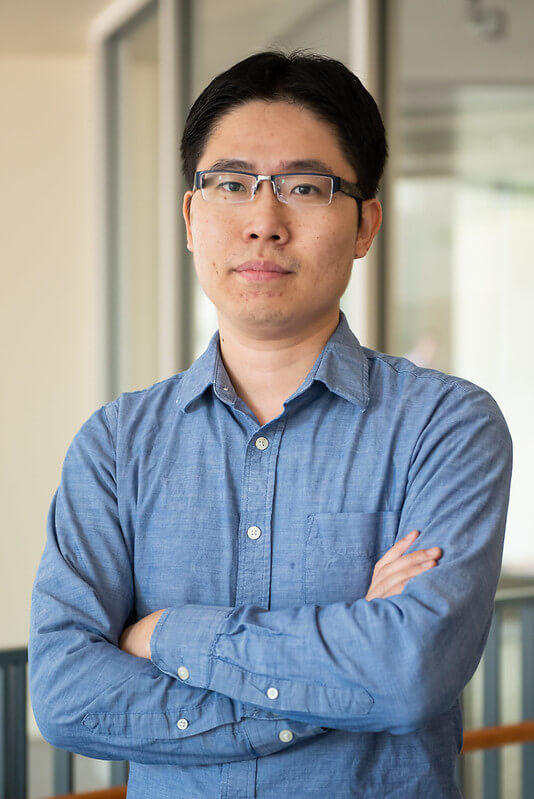
Jiaxiang Zhang is Professor of Artificial Intelligence in the Department of Computer Science at Swansea University's Faculty of Science and Engineering. He holds a PhD in Computational Neuroscience from the University of Bristol and previously held positions at the University of Birmingham, MRC Cognition and Brain Sciences Unit (Cambridge), and Cardiff University where he founded the Cognition and Computational Brain Lab. Zhang's research integrates computational modeling, machine learning, brain imaging (MEG/EEG/fMRI), and experimental approaches to study human cognition, aging, and neurological disorders. Key focus areas include: Neural mechanisms of decision-making and problem-solving Computational models of cognitive processes AI applications in healthcare diagnostics and neuroimaging Brain network dynamics in neurological conditions Recent publications emphasize deep learning models for neural data, multimodal brain connectivity, decision-making impairments in Parkinson's disease, and neuroinformatics tools. His work shows strong clinical translation through epilepsy biomarker development and emergency department outcome prediction. Zhang has led research grants from ERC, MRC, BBSRC, and Wellcome Trust. As primary investigator for multiple projects, he oversees significant computational neuroscience initiatives. He is available for postgraduate supervision.
Xianyang Zhang is a Professor in the Department of Statistics at Texas A&M University, affiliated with the College of Arts & Sciences. He holds a Ph.D. from the University of Illinois at Urbana-Champaign (2013) and a B.S. from the University of Science & Technology of China (2008). His research focuses on high-dimensional statistics, functional data analysis, kernel methods, and genomics, supported by grants from NIH, NSF, and Texas A&M. Education: Ph.D., Statistics, University of Illinois at Urbana-Champaign, 2013 B.S., Statistics, University of Science & Technology of China, 2008 Research Interests: Xianyang Zhang develops statistical theories and methodologies for complex data structures, including high-dimensional inference, kernel-based testing, change-point detection, and microbiome analysis. His work bridges computational and theoretical statistics, addressing challenges in genomics, omics-wide studies, and spatial statistics. Key Contributions: Developed KDist , a package for kernel and distance-based statistical inference Authored fastcpd for efficient change-point detection Advanced covariate-adaptive FDR control methods for omics studies Contributed to microbiome analysis tools like MicrobiomeStat and LinDA Advising & Grants: Advises multiple Ph.D. students in statistics and interdisciplinary projects Recipient of NIH and NSF grants for high-dimensional statistical research Collaborates with institutions like Mayo Clinic and Chinese University of Hong Kong Labs/Teams: Leads research groups focused on statistical methodology development, software implementation, and applications in computational biology and genomics.
Luis Emilio Bruni is an Associate Professor at Aalborg University’s Department of Architecture, Design and Media Technology, within The Technical Faculty of IT and Design. He leads the Media Cognition and Interactive Systems (MeCIS) research group and coordinates the Master of Science in Medialogy. Bruni is also the founder and director of the Augmented Cognition Lab, focusing on perception, cognition, and immersive technologies. His academic roles include PI on multiple interdisciplinary projects and board memberships in international associations like the Nordic Association for Semiotic Studies (2011–2017) and the International Society for Biosemiotic Studies (founding member, 2005). Academically, Bruni holds a Ph.D. in Molecular Biology and Theory of Science (University of Copenhagen), M.Sc. in International and Global Relations (Universidad Central de Venezuela), and B.Sc. in Environmental Engineering (Pennsylvania State University). His research spans narrative cognition, extended reality, biosemiotics, and the interplay between technology, cognition, and culture. He has conducted projects on neurocinematic analysis, interactive storytelling, and the psychological impact of digital media. Key research contributions include studies on EEG responses to branded advertising, functional connectivity in psychiatric disorders, and the role of narrative in immersive technologies. Bruni’s work bridges cognitive science, computer science, and semiotics, with applications in healthcare (e.g., pediatric counseling tools) and cultural engagement (e.g., citizen curation systems). Over 80+ publications and active participation in conferences and media discussions highlight his interdisciplinary impact.
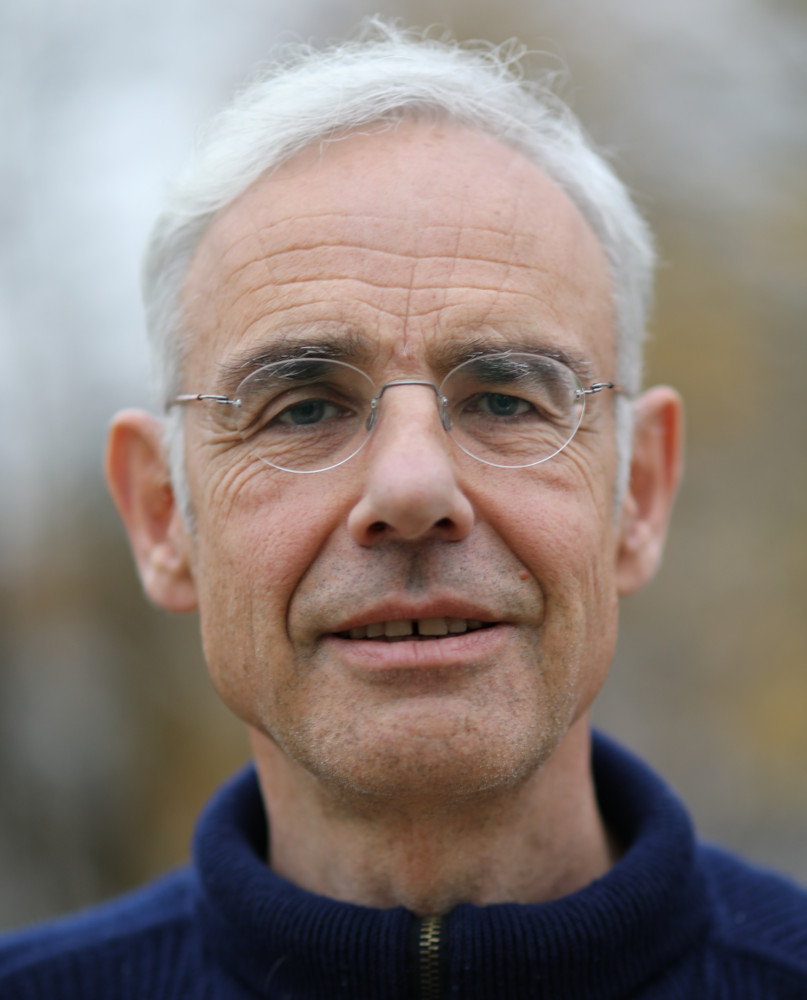
Professor Tobias Nipkow is a leading researcher in formal methods and interactive theorem proving at the Technical University of Munich (TUM), affiliated with the School of Computation, Information and Technology and the Department of Computer Science. He is a core developer of the Isabelle proof assistant and leads the Theorem Proving Group. His work has profoundly influenced program verification, semantics, and formalized mathematics. University: Technical University of Munich School: School of Computation, Information and Technology Department: Department of Computer Science Research Group: Theorem Proving Group Key Projects: Isabelle, Archive of Formal Proofs, Concrete Semantics His research focuses on formal verification, higher-order logic, semantics of programming languages, and verified algorithms. He has pioneered the formalization of textbook algorithms, data structures like B+-trees and quadtrees, and logical systems. His work bridges theoretical foundations with practical tools for software correctness. The most recent publications show a strong trend in verifying classical algorithms (e.g., Gale-Shapley, Earley parser), data structures (B+-trees, deques), and decision procedures, primarily using Isabelle/HOL. His contributions span foundational logic, program analysis, and educational approaches to formal methods. Best Paper Award at CADE 28 (2021) Tobias Nipkow has made extensive contributions to advising and collaborative research, co-authoring with numerous researchers and students. He has secured support for large-scale formalization efforts and contributed to major projects like the Flyspeck proof of the Kepler conjecture. His work is supported by ongoing development of the Isabelle framework and the Archive of Formal Proofs. He leads the Theorem Proving Group at TUM, which is central to the development and application of Isabelle. The group fosters international collaboration, contributes to the Archive of Formal Proofs, and advances research in automated reasoning, semantics, and verified systems.
Marcus Bellamy is an Associate Professor of Operations and Technology Management at the Questrom School of Business, Boston University . His research focuses on innovation , environmental sustainability , and performance dynamics in supply networks, using empirical models to analyze spatial resource proximity and interdependence. Education : PhD in Operations & Technology Management from Georgia Tech (2015), MS in Industrial Engineering (2010), BS in Aerospace Engineering from University of New Mexico (2006). His research bridges supply chain structure with outcomes like CSR practices , resilience , and economic welfare . He employs visual analytics and computational tools to study industries ranging from automotive to electronics , addressing policy impacts and platform economies like Uber . Recent work trends include analyzing two-sided sharing platforms , environmental disclosure in supply chains, and network resilience under risks. His empirical studies often integrate spatial spillovers and collaborative ecosystems . Scientific Awards : Isabel Anderson Career Development Professorship 2019 AOM Best Paper in Supply Chains 2013 AOM Operations Management Division Best Student Paper Fulbright Scholar (Madrid, Spain) NSF STEP Fellow Bellamy has served as a founder of the PhD Project Committee under the White House Initiative on Hispanic Education and collaborated with corporations like Lockheed Martin and General Motors on supply chain risk & resilience. His methodological contributions include interactive visual analytics systems for network evaluation.
Christof Weiß is a Professor for Computational Humanities at the CAIDAS / Institute of Computer Science, Julius-Maximilians-Universität Würzburg (JMU), Germany. He serves as Head of the DFG-funded Emmy Noether group on Computational Analysis of Music Audio Recordings: A Cross-Version Approach. His academic journey includes previous positions as Visiting Researcher at University Télécom Paris (2021), Visiting Lecturer at Karlsruhe University of Music (2020, 2021), and Research Assistant at International Audio Laboratories Erlangen (2015-2022) and Fraunhofer Institute for Digital Media Technology (2012-2015). His educational background encompasses a PhD in Media Technology from University of Technology Ilmenau (2017), Concert Diploma in Composition from Würzburg University of Music (2012), Physics Diploma from University of Würzburg (2012), and Music Diploma in Composition from Würzburg University of Music (2011). This unique combination of technical and artistic training forms the foundation of his interdisciplinary research approach. Weiß's research operates at the critical intersection of computer science and musicology, developing novel computational methods for analyzing musical structures in audio recordings. His work bridges technical audio processing with musicological insights, creating methodologies for tonal analysis, key estimation, and cross-version comparison of musical performances. His approach combines deep learning techniques with music theory to extract meaningful patterns from large music corpora, enabling new forms of musicological corpus studies that were previously impossible. His recent publications reveal a clear research trajectory toward integrating advanced machine learning with fundamental musicological questions. The consistent theme across his work involves analyzing classical music structures through computational lenses, with particular emphasis on cross-version consistency in performances, tonal complexity measurement, and developing datasets that support computational musicology. His publications span both highly technical audio processing journals and musicology-focused venues, demonstrating his commitment to bridging these disciplines. Best paper award at the 4th conference on Computational Humanities Research (CHR), 2023 KlarText award for science communication of the Klaus Tschira Foundation, 2018 2nd prize at Festival Pablo Casals composition competition, Prades (France), 2013 Youth Cultural Advancement Award (Kulturförderpreis) of the city of Amberg, Germany, 2011 As principal investigator of the DFG Emmy Noether group, Weiß leads a multidisciplinary research team investigating computational analysis of music audio recordings through a cross-version approach. His research has secured significant funding including the prestigious Emmy Noether program, supporting doctoral and postdoctoral researchers working on various aspects of music information retrieval and computational humanities. His collaborative network spans institutions across Europe, including University Télécom Paris, Queen Mary University of London, and multiple German research centers. Weiß leads the Computational Humanities research group at CAIDAS, which focuses on developing computational methodologies for music analysis with particular emphasis on classical repertoire. The lab creates specialized datasets (including the Wagner Ring Dataset and Schubert Winterreise Dataset), develops algorithms for structural music analysis, and applies these tools to address musicological questions that require computational scale and precision. Their work bridges the gap between technical audio processing capabilities and humanities research questions, creating new pathways for understanding musical structure and evolution.
Ana Sokolova is a Professor in the Department of Computer Science at the University of Salzburg. She is affiliated with the Faculty of Digital and Analytical Sciences and actively contributes to research in theoretical computer science. University: University of Salzburg Faculty: Faculty of Digital and Analytical Sciences Department: Computer Science Email: ana.sokolova@plus.ac.at Her research focuses on probabilistic systems , concurrency theory , convex algebras , and formal verification . This work bridges theoretical foundations with practical applications in distributed computing and programming semantics. Recent publications highlight advancements in trace semantics , determinization , probabilistic anonymity , and coalgebraic modeling . Key trends include the integration of Markov chains , nondeterministic systems , and algebraic structures for formal verification.
Dr. Marta Zlatic is a Principal Research Associate at the Department of Zoology , part of the School of Biological Sciences at the University of Cambridge. She leads the Zlatic Lab, focusing on the structural and functional relationships within neural circuits. Her research explores how nervous systems integrate sensory information and prior experiences to enable decision-making, emphasizing learning and memory , sensorimotor transformations , and connectomics . Using Drosophila melanogaster larvae as a model organism, her work combines optogenetics , electron microscopy , and functional imaging to decode circuit principles. Recent publications highlight trends in connectome analysis and behavioural neuroscience , with subfields spanning synaptic architecture , neural network modeling , and genetic manipulation techniques . She collaborates with interdisciplinary teams and maintains active research partnerships at the MRC Laboratory of Molecular Biology. Group members include Bernd Breuer, Nicolo Ceffa, Michael Clayton, and other researchers advancing understanding of Drosophila neurobiology. The lab contributes to Cambridge's Athena Swan Bronze Award initiatives for equality and inclusion in research environments.
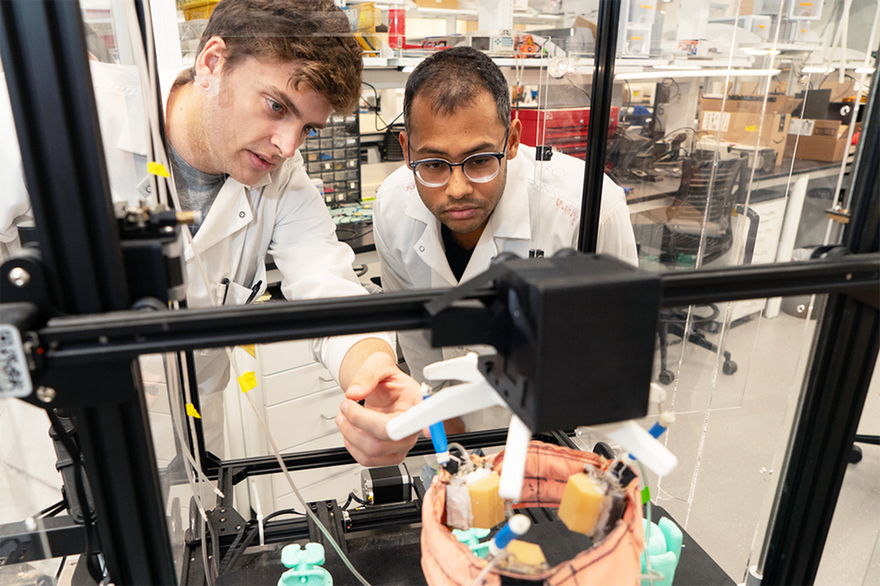
Victoria Webster-Wood is an Associate Professor at the College of Engineering , Carnegie Mellon University , where she leads the Biohybrid and Organic Robotics Group (B.O.R.G) . Her research integrates organic materials into robotics as structures, actuators, sensors, and controllers for biohybrid robots and prosthetics. Education: Ph.D., Mechanical Engineering, Case Western Reserve University (2017) M.S., Mechanical Engineering, Case Western Reserve University (2013) B.S., Mechanical Engineering, Case Western Reserve University (2012) Research Interests focus on biohybrid robotics , biologically inspired systems , soft robotics , additive manufacturing , biomechanics , and computational modeling . Her work spans applications in medical robotics , micro/nano manufacturing , and environmental monitoring . Scientific Awards include being named to ASME’s 2025 MechE Watch List and awarded MIT Technology Review’s 35 Innovators Under 35 (2023) . Collaborations involve projects like neurodegenerative disease therapy tools and soft robotic tactile sensors for manufacturing , supported by the Manufacturing Futures Institute and NextManufacturing Center .
Prof. Bernd Domer is an Associate Professor at the Geneva School of Landscape, Engineering and Architecture (HES-SO) specializing in Building Information Modeling (BIM) , Geographic Information Systems (GIS) , and digital transformation of civil engineering . He leads multiple ongoing research projects including CU_OFROU_PAB (CHF278,844) focused on BIM-GIS workflows for noise barriers, and SousEtoile (CHF50,000) developing subsurface prediction models for urban planning. His work addresses critical challenges in software interoperability and point cloud processing for infrastructure digital twins. BA HES-SO in Architecture (HEPIA) BSc Civil Engineering (EPFL) BSc HES-SO in Civil Engineering (HEPIA) MSc HES-SO in Engineering (HES-SO Master) His research explores digital workflows for infrastructure projects, with over 15 recent publications examining topics like: Semantic segmentation of point clouds (2024) IFC standard optimization (2023) Underground confidence level modeling (2021) Swiss BIM implementation frameworks (2020) Construction waste management platforms (2018) He serves as Head of the MIC Group and co-directs the CAS in BIM Coordination . Active in international committees like EG-ICE and Bauen digital Schweiz , his work bridges academic research with practical implementation through collaborations with HEPIA , HEIG-VD , and institutions like the Swiss Federal Roads Office (OFROU) .
Thomas S. Gruca serves as the George Daly Professor in Marketing and Director of the Iowa Electronic Markets at the University of Iowa's Tippie College of Business. His interdisciplinary work bridges marketing, finance, and healthcare through innovative prediction market applications. Education PhD in Decision and Information Sciences, University of Illinois Urbana-Champaign MBA in Management Information Systems, University of Illinois Urbana-Champaign BS in Mathematics and Computer Science, University of Illinois-Chicago His research centers on prediction markets for political and healthcare forecasting, with recent work analyzing geopolitical biases , anti-incumbency effects , and rural healthcare access disparities . This intersects with his expertise in marketing/finance interface phenomena like brand equity measurement and consumer behavior modeling in casino gaming. Analysis of his 15 most recent publications reveals three dominant research streams: (1) Election forecasting through Iowa Electronic Markets (35% of output), (2) Rural healthcare access modeling (27%), and (3) Marketing analytics including brand equity and consumer behavior (38%). His work consistently appears in top journals like Journal of Marketing , International Journal of Forecasting , and PS: Political Science & Politics . Scientific Awards 9-time recipient of MBA Marketing Professor of the Year (2006-2019) President & Provost Award for Teaching Excellence (2018) Iowa MBA Instructor of the Year - Core (2014) Gruca has secured significant external funding including an NSF grant ($300,000) for Active Learning in Undergraduate Education Using Iowa Electronic Markets (2000-2003) and a US Department of Education grant for Enhancing Economic Literacy (1997-2000). His leadership roles include Faculty Director of the MBA Marketing Career Academy (2008-2019) and PhD Program Director for Marketing (2008-2014). He directs the Iowa Electronic Markets (IEM), a real-money prediction market used globally for election and economic forecasting research, which serves as both a research platform and teaching tool for over 10,000 students annually.