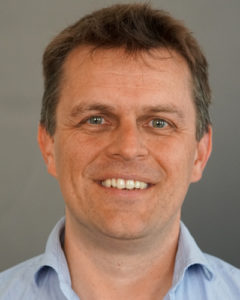
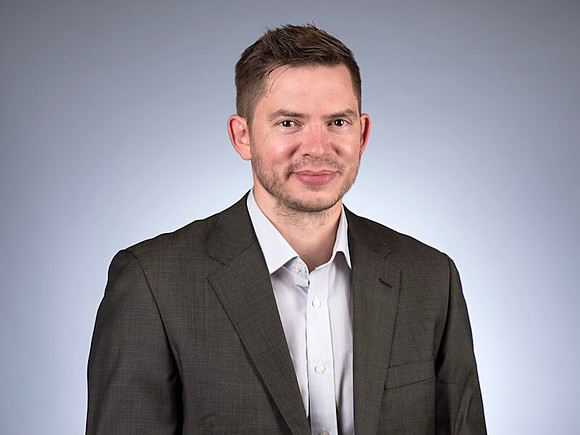
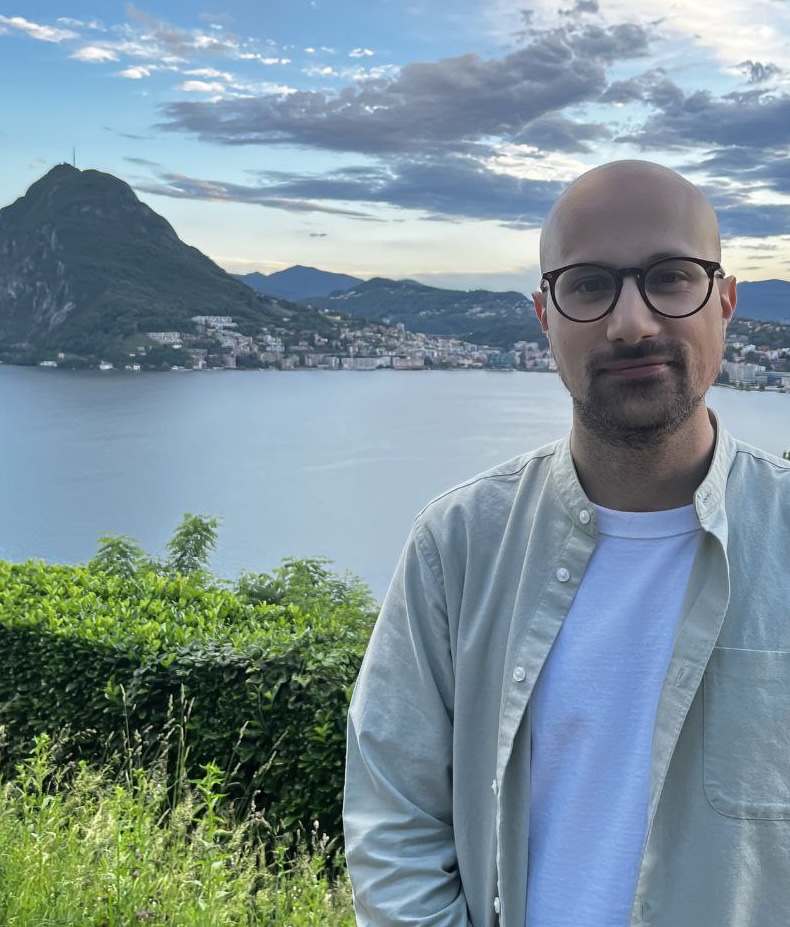
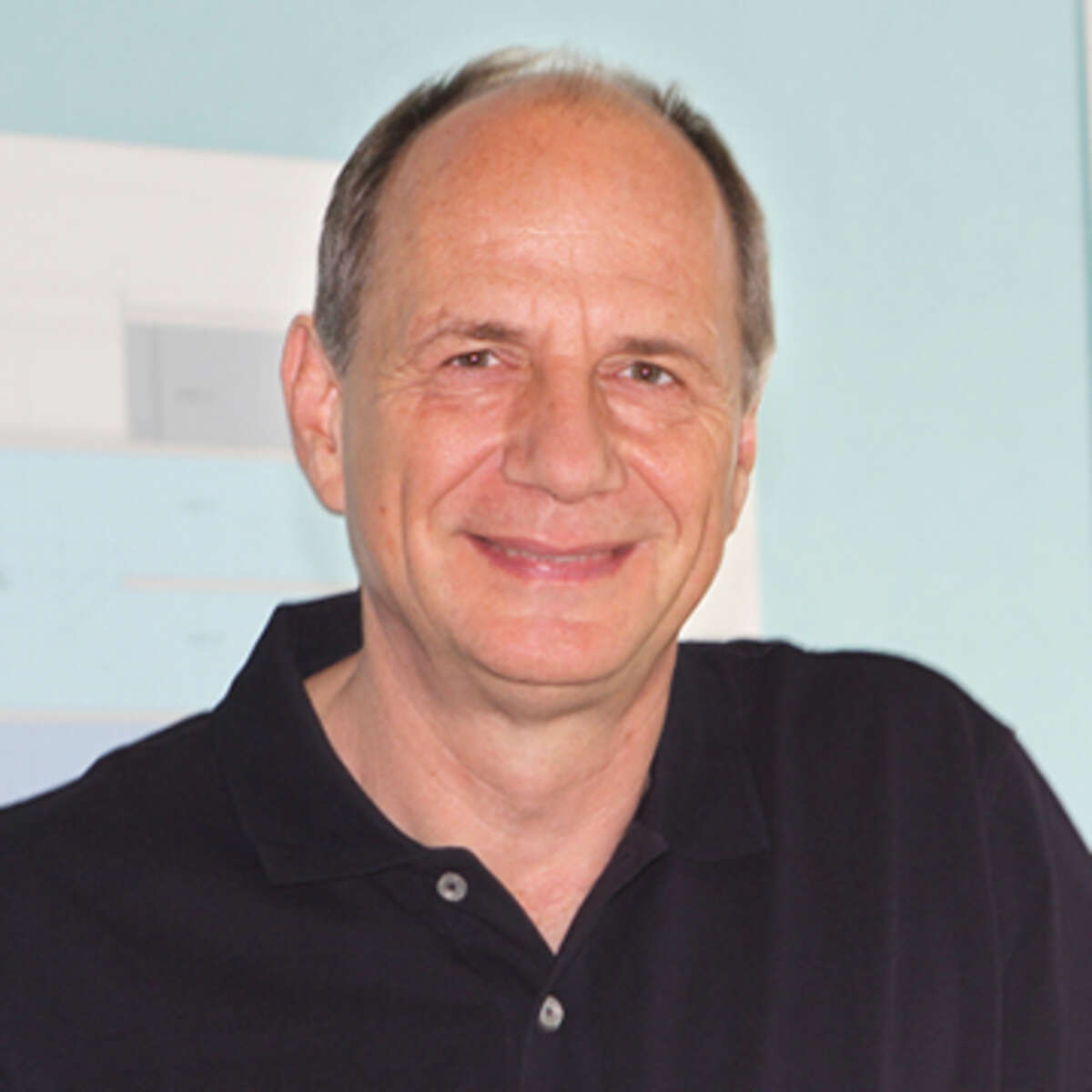
Alessandro Giusti is a Lecturer and Researcher at the Faculty of Informatics of the Università della Svizzera italiana (USI). He is affiliated with the Dalle Molle Institute for Artificial Intelligence (IDSIA USI-SUPSI). His research competencies include Computer Vision, Data Science, Geometric and Visual Computing, Informatics, and Intelligent Systems. He holds a position combining academic teaching and research activities within these interdisciplinary fields. No scientific awards or funded projects are explicitly mentioned in the provided data. His professional profile emphasizes technical expertise in computational and AI-related domains, as reflected by his affiliation with IDSIA, a leading research institute in artificial intelligence. No specific advising details, grants, or lab affiliations are detailed in the text. His work likely contributes to both educational programs and advanced research initiatives at USI.
Quentin Gallot is affiliated with the Neuroinformatics Professorship at ETH Zürich (Eidgenössische Technische Hochschule Zürich), located at Y55 G72 Winterthurerstrasse 190 in Zurich, Switzerland. His role involves supporting research activities within the Neuroinformatics domain. While specific research interests are not explicitly detailed in the provided text, his department's focus suggests engagement with computational models of neural systems, neuroimaging analysis, and interdisciplinary approaches to understanding brain function. Professional activities likely include laboratory support, data management, and technical collaboration within the neuroscientific community. No formal academic awards or student advisement records are mentioned in the text. His institutional contact information reflects active participation in the institute's operational structure.
Thilo Spinner is a Researcher affiliated with the Department of Computer Science at ETH Zürich, contributing to the Professorship for Computer Science. His work focuses on visual analytics, explainable AI, and machine learning interpretability. He has developed tools like iNNspector for deep model debugging and explAIner for interactive machine learning frameworks. His research spans topics such as uncertainty-aware dimensionality reduction, language model explainability, and pandemic data visualization (e.g., Coronavis for Covid-19 tracking). Key contributions include frameworks for model interpretability, real-time parameter optimization, and emergency response analysis tools like NEAT. His articles highlight innovations in visualizing complex AI systems and addressing challenges in model transparency and pandemic management. Education details are not explicitly provided in the text. His research trends emphasize bridging technical AI systems with human-understandable insights through visualization and interactive tools. He has explored diverse applications from healthcare crisis analysis to neural network debugging.
Mehdi Ali Gadiri is a Researcher and Doctoral Assistant at the École Polytechnique Fédérale de Lausanne (EPFL) , affiliated with the MicroBioRobotic Systems Laboratory within the Institute of Microtechnology (IGM) under the School of Engineering (STI). He also serves as the PhD Student Representative for the Doctoral Program in Microsystems and Microelectronics (EDMI). His research focuses on biomedical robotics, medical device innovation, and microtechnology applications in healthcare. Gadiri holds a doctoral position in Microsystems and Microelectronics, contributing to interdisciplinary projects at the intersection of engineering and medicine. His work includes developing advanced medical instruments, AI-driven clinical tools, and diagnostic technologies such as SARS-CoV-2 antigen testing and NT-proBNP detection systems. Gadiri’s contributions span from microactuator design to clinical decision-making frameworks, reflecting a strong emphasis on translating engineering solutions into practical medical applications. He is based at the MED 3 2815 office in Lausanne, Switzerland.
Andreas Baumgartner is a leading researcher in quantum electronics and nanoelectronics at the University of Basel. He currently serves as a Group Leader and Head of the SNI PhD School, with prior roles as Senior Scientist (since 2014) and Postdoctoral Fellow. His work focuses on quantum transport, superconductivity, spintronics, and topological materials, leveraging advanced nanofabrication and cryogenic techniques. Key projects include Cooper pair splitting, Majorana bound states, and quantum dot-based qubits. Education: PhD in Physics (ETH Zurich, 2005), Diploma in Interdisciplinary Science (ETH Zurich, 2000). Awards include EPSRC and Swiss National Science Foundation support. His lab develops ultra-clean carbon nanotube and semiconductor nanowire devices, with contributions to quantum computing hardware and graphene spintronics. Research emphasizes experimental probes of quantum phenomena: high-resolution electrical measurements, cryogenics down to 10 mK, and strain engineering. Recent advancements include long-distance qubit coupling, twisted trilayer graphene superlattices, and photon-mediated qubit interactions. Collaborative efforts with institutions like Kavli Institute and CERN highlight his interdisciplinary impact.
Yannick Rochat is an Assistant Professor of Software and Hardware Studies of Video Games and their Digital Traces in the Section of Language and Information Sciences at the University of Lausanne (UNIL). He joined UNIL on August 1, 2021, and holds a Master’s in Mathematics (EPFL, 2007) and a PhD in Mathematics applied to Human and Social Sciences (UNIL, 2014). His work emphasizes interdisciplinary approaches, particularly in digital humanities and media archaeology. Rochat co-founded the UNIL-EPFL GameLab in 2016, focusing on video game studies, preservation projects like Pixelvetica, and research-creation initiatives such as Four Apartments and a Confinement . He collaborates with institutions like the Swiss National Museum and the Canton of Vaud, serving on juries for cultural funding and interactive media grants. His research spans video game heritage, platform studies, and the interplay between gaming and cultural history. Rochat has secured SNSF funding for projects integrating video games into post-compulsory education and co-leads initiatives to document Swiss video game history, particularly through analysis of Smaky microcomputing platforms and 1980s gaming archives. His work bridges academic research with public engagement through exhibitions, conferences, and cross-institutional partnerships.
Andrea Cini is a postdoc researcher affiliated with the Graph Machine Learning Group and the Dalle Molle Institute for Artificial Intelligence (IDSIA USI-SUPSI) at the University of Lugano (USI). He also holds a position as a SNSF postdoc fellow at the University of Oxford under Prof. Michael Bronstein, focusing on machine learning for time series forecasting and graph processing. His research integrates graph deep learning methodologies with spatiotemporal dynamics, emphasizing applications in healthcare, energy systems, and intelligent systems. Education: PhD in Computer Science and Engineering (USI, 2020), supervised by Prof. Cesare Alippi MSc and BSc in Computer Science and Engineering (Politecnico di Milano) Visiting researcher at Imperial College London (Prof. Danilo Mandic) Research interests span graph neural networks , time series forecasting , and spatiotemporal data processing . His work has introduced influential methods such as the Torch Spatiotemporal library, and has been recognized with a best paper award. Recent publications emphasize applications in relational conformal prediction, hierarchical forecasting, and energy grid optimization. Awards include the Best Paper Award for contributions to graph-based forecasting methodologies. Current projects are funded by the Swiss National Science Foundation, exploring graph-based reinforcement learning and spatiotemporal modeling at the University of Oxford. Collaborations include affiliations with the Northernmost Graph Machine Learning group at UiT the Arctic University of Norway. His research bridges theoretical advancements and industrial applications in fields like healthcare dynamics prediction and smart grid optimization.
Sebastian Obermeier is a Professor and Co-Head of the Applied Cyber Security Research Lab at the Lucerne School of Computer Science and Information Technology, Lucerne University of Applied Sciences and Arts. He holds a Dr. rer. nat. (Computer Science) from Universität Paderborn (2008) and has over 15 years of academic and industry experience. His research focuses on cybersecurity in critical infrastructures, quantum-safe cryptography, and industrial control systems. Education: Dr. rer. nat. in Computer Science, Universität Paderborn (2005–2008) Diplom-Informatiker, Universität Paderborn (2004–2005) Bachelor in Computer Science, Universität Paderborn (2000–2004) Research Projects: Development of a cybersecurity testbench for building automation (multiple phases) Quantum-Safe Cryptography integration in OT/IT systems Cybersecurity for Substation Automation forensics Hardening power grid systems against domain-specific cyberattacks Key Contributions: HydroLab: Security research platform for hydroelectric systems Automation recovery frameworks for critical infrastructure His work bridges academic research with industry applications, emphasizing real-world cybersecurity challenges in energy and industrial systems. Notable collaborations include projects on forensic readiness via honeypots and resilience center conceptualization.
Stijn Ossevoort is a Lecturer at the Lucerne School of Design, Film and Art (HSLU DFK), specializing in Design Management and Sustainability. He holds an MSc from Delft University of Technology and an MA from the Royal College of Art. His research explores design's impact on worldview, integrating theoretical biology and environmental psychology. He advises clients like Prada, Nike, and Philips on future-focused design strategies and collaborates on projects like the OPEN FACTORY initiative. His work includes exhibitions, peer-reviewed articles, and reports on topics ranging from agile production processes to participatory art installations. Research interests include sustainability, system thinking, and the philosophical implications of technology. Key projects involve rethinking material innovation, cross-disciplinary collaboration in manufacturing, and the ethical dimensions of durable product design. His doctoral thesis examines design's role in shaping human perception of the environment through a multidisciplinary lens. Publications span interactive art, wearable technology, and sustainable design methodologies. Notable works include contributions to Mixed and Augmented Reality and Pervasive Computing , alongside exhibitions addressing materialization in innovation processes. Teaching focuses on design management, creative problem-solving, and the integration of sustainability into design practices.
Axel Vogelsang is a Professor and Head of the Research Group Visual Narrative at Lucerne University of Applied Sciences and Arts' Lucerne School of Design, Film and Art. His academic career spans over two decades, combining practical experience in advertising and web design with academic leadership roles. He holds an MA and PhD in Art & Design from Central Saint Martins College/University of the Arts London. His research focuses on digital communication, museum narratives, and the intersection of technology with cultural heritage. Notable projects include the Audience+ initiative exploring social media's role in museums, and the ALE project using mobile devices to enhance cultural site experiences. He has led research groups since 2011 and currently oversees the Visual Narrative group investigating complex information visualization in digital/social media contexts. Vogelsang has authored/co-authored influential publications such as "Social Media und Museen II" (2016) and contributed to international conferences on topics like transmedia storytelling and participatory museum practices. His awards include a nomination for the Design Preis Schweiz (2017) and a Best of Swiss App Award (2016). He teaches Service Design at the MA Design program and manages modules like Data Visualisation and Narration in the MSc Applied Information and Data Science. Professional activities include founding roles in the stARTcamp Switzerland network and the Center for Storytelling, alongside board memberships in the DGTF (Design Theory & Research Society). His work bridges academic research with real-world applications, emphasizing participatory design approaches and innovative storytelling techniques across digital platforms.
Gianluca Rizzo is an Adjunct Professor at HES-SO Valais-Wallis, affiliated with the Higher School of Management (Haute Ecole de Gestion) and the Internet of Things (IoT) department linked to EPFL. He holds a Computer Science Bachelor's degree from UC3M University in Madrid. His research focuses on IoT, vehicular communications, AI-driven network optimization, and disaster-resilient systems. Education: Computer Science BSc (UC3M University, Madrid) Affiliations: HES-SO Valais-Wallis, EPFL IoT Group, RECODIS (Post-Disaster Communications Lab) His work spans energy-efficient networking, opportunistic content dissemination (Floating Content), and distributed learning techniques. Key contributions include optimizing multi-agent systems in dynamic environments, developing gossip learning frameworks for urban trajectory prediction, and analyzing SWIPT (Simultaneous Wireless Information and Power Transfer) in vehicular networks. He also explores emergency networks for post-disaster scenarios, leveraging technologies like UAVs and floating content for situational awareness. Recent publications emphasize AI-native vehicular communications, edge computing orchestration, and infrastructure savings via moving base stations. Collaborative projects include V-Edge (virtual edge computing) and the NOSE nomadic sensing ecosystem. His work bridges theoretical models (e.g., stochastic geometry) with practical implementations, addressing challenges in 5G/6G, smart cities, and industrial IoT.
Jean Decaix is a Senior academic associate at HES-SO Valais-Wallis, School of Engineering, specializing in hydraulic systems and computational fluid dynamics (CFD). He leads the Hydroelectricity research team and teaches numerical methods at the bachelor level in the Energie et techniques environnementales program. His research focuses on CFD modeling of hydraulic turbines, cavitation dynamics, and pumped storage hydropower flexibility. Education: BSc in Energy and Production (INP Grenoble, 2009), PhD in Fluid Mechanics (University of Grenoble, 2012). Postdoctoral research at HES-SO Valais (2012–2016). Key projects include SCCER-SoE (2017–2020) for geothermal and hydropower innovation, and 'SOLUTION DE TRANSFERT D'ENERGIE' (2015–2017) exploring small-scale pumped storage systems. He collaborates with industry partners like EDF and SIG. His work addresses grid stability, turbine flexibility, and numerical methods for hydraulic systems. Publications span CFD validation, cavitation modeling, and turbine optimization. He participates in interdisciplinary projects like the Indo-Swiss Building Energy Efficiency Project, applying CFD to urban airflow simulations.
Anna Ferrari is a Researcher at the Research Institute for Statistics and Information Science, University of Geneva. She holds a Ph.D. from the University of Milano-Bicocca and specializes in human activity recognition through sensor-based systems, particularly using inertial data and deep learning techniques. Her work focuses on model personalization and the development of adaptive classification systems for diverse datasets. Her research interests include machine learning applications in sensor technology, data science methodologies for human activity analysis, and the integration of wearable devices. She has contributed to frameworks for collecting and unifying inertial signals to improve activity recognition accuracy. Anna Ferrari's publications span trends in smartphone-based activity recognition, personalized deep learning models, and sensor data homogenization. She actively maintains professional profiles on ResearchGate, LinkedIn, and Google Scholar, reflecting her commitment to academic collaboration and innovation.
Stephan Grzesiek is a Professor of Biological NMR Spectroscopy at the Biozentrum, University of Basel, Switzerland. He leads a research group focused on the structural and dynamic characterization of biomolecules using nuclear magnetic resonance (NMR) spectroscopy. His work bridges physics, chemistry, and biology, with a strong emphasis on disease-relevant proteins such as GPCRs, kinases, and HIV-related receptors. Research Interests: His research centers on understanding biomolecular function through atomic-level insights into protein structure, dynamics, and interactions. He focuses on G-protein coupled receptors (e.g., β1-adrenergic receptor, CCR5), tyrosine kinases (e.g., Abl kinase), and membrane-associated signaling complexes. His group develops advanced NMR methodologies for studying unfolded states, hydrogen bonding, and allosteric regulation. Recent Research Trends: Analysis of his recent publications (2021–2025) reveals a strong focus on GPCR-arrestin interactions, kinase regulation mechanisms, and the structural basis of drug action. His work employs high-resolution NMR, often combined with Cryo-EM and biochemical assays, to dissect conformational dynamics, allosteric networks, and signal transduction pathways. Key themes include biased agonism, cholesterol modulation, and the molecular basis of drug inhibition in cancer and infectious disease. Scientific Awards & Recognitions: Laukien Prize (ENC) Fellow, International Society of Magnetic Resonance Honorary Member, National Magnetic Resonance Society of India Chair, Gordon Conference on Computational Aspects of Biomolecular NMR Member, Swiss National Research Council VP, International Society of Magnetic Resonance Advising and Grants: While specific students are not listed, his frequent co-authorship with junior researchers (e.g., Iva Petrovic, Luca Abiko, Sanjana Desai) suggests active mentorship. His research is likely supported by major Swiss and international grants, given the scale and impact of his work. He has led long-term projects on NMR method development and structural biology of signaling proteins. Labs and Teams: He leads a research group at the Biozentrum, University of Basel, integrating NMR spectroscopy, protein engineering, and biophysical analysis. His team collaborates widely with structural biologists and biochemists, contributing to high-impact studies on GPCRs and kinase regulation.
Emiel Krahmer is a Professor in the Department of Communication and Cognition at Tilburg University's School of Humanities in the Netherlands. With over 368 publications and more than 7,000 citations, he is a leading researcher in Natural Language Generation (NLG) and Computational Linguistics. His work spans multiple subfields including Referring Expression Generation, Data-to-Text systems, human evaluation methodologies, and more recently, the application of Large Language Models in therapeutic contexts. Professor Krahmer's research interests focus on the computational aspects of language generation, with particular emphasis on how machines can produce human-like referring expressions, generate text from structured data, and evaluate the quality of automatically generated language. His work combines theoretical linguistics with practical applications, bridging the gap between computational models and human language production. He has made significant contributions to understanding the psychological aspects of language generation and how these can inform computational models. His recent publications demonstrate a clear evolution in his research trajectory, moving from foundational work in referring expression generation to exploring the capabilities of modern Large Language Models in specialized contexts like motivational interviewing. The analysis of his 15 most recent articles reveals a strong focus on reproducibility in human evaluation studies, the application of NLG techniques in healthcare contexts, and the development of robust evaluation frameworks for NLG systems. His work increasingly intersects with clinical psychology and therapeutic applications, showing how language generation technology can be adapted for sensitive communication contexts. Professor Krahmer has been instrumental in organizing key events in the NLG community, including serving as co-editor for the Proceedings of the First Workshop on Natural Language Generation in Healthcare (2021). His work on human evaluation best practices has helped establish standards in the field, while his research on reproducibility addresses critical methodological challenges in NLP research. His collaborations span multiple institutions and disciplines, reflecting the interdisciplinary nature of his work. He has mentored numerous researchers who have gone on to make their own contributions in computational linguistics, as evidenced by his extensive co-authorship network. While specific lab affiliations aren't detailed in the provided information, his work is clearly embedded within Tilburg University's research ecosystem focused on language technology and human communication.