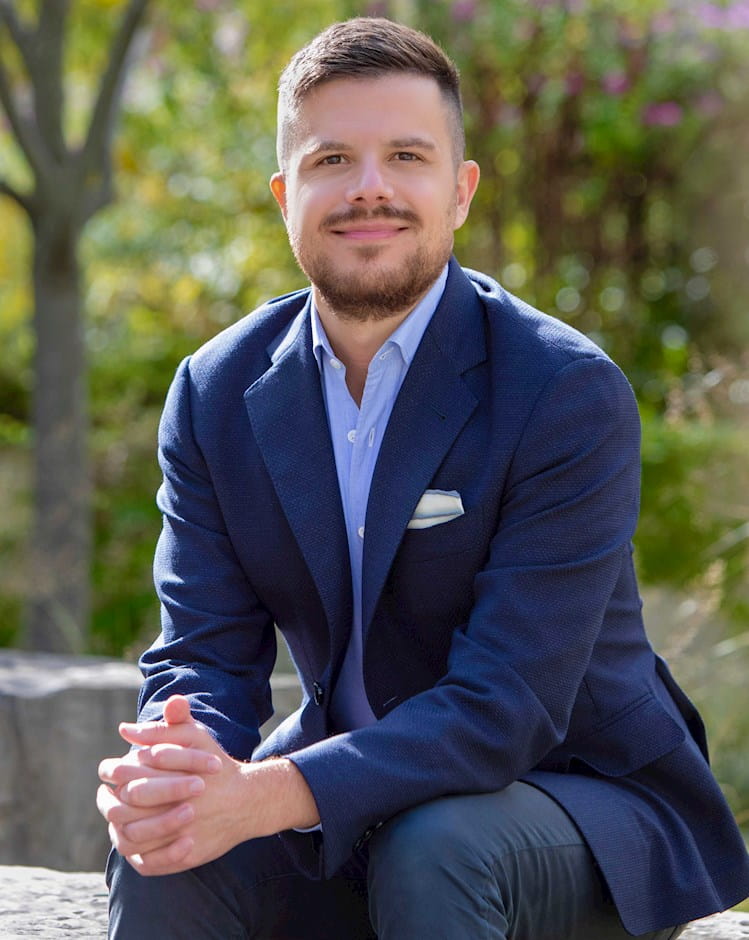
Pablo Aragón is a Research Scientist at the Wikimedia Foundation and an Adjunct Professor at Universitat Pompeu Fabra. His work bridges computational social science, civic technology, and technopolitics, with a focus on Wikipedia's governance, digital democracy tools, and participatory systems. He co-founded the Democratic Innovation Lab in Barcelona and the DatAnalysis15M research network. Key research interests include analyzing knowledge integrity in Wikipedia, configuring digital participatory budgeting systems, and studying platform effects in civic technologies. He has led projects like DECODE (decentralized citizen engagement) and contributed to platforms like Decidim, which empower participatory democracy in cities like Barcelona. Recent conference engagements include KDD 2024 (data mining), ICWSM 2024 (social media analysis), and Wikimedia CEE Meeting 2024. His work emphasizes cross-cultural collaboration, with studies published in ACM Transactions on Computer-Human Interaction and peer-reviewed conferences like CIKM and ACM SIGKDD. Professional affiliations include the Decidim association, Amnistía Internacional España, and the open knowledge advocacy group Civio. His research often intersects with open science, free culture movements, and gender equity in urban mobility.
Luo Mai is an Assistant Professor at the University of Edinburgh's School of Informatics , with an upcoming promotion to Associate Professor (UK Reader) in August 2025. He leads the Large-Scale Machine Learning Systems Group and co-leads the UK EPSRC Centre for Doctoral Training in Machine Learning Systems and an ARIA Project on Scaling AI Compute by 1000X . PhD in Computer Science (Imperial College London, 2018) MRes in Advanced Computing (Imperial College London, 2012) His research focuses on the intersection of computer systems , machine learning , and data management . Key contributions include award-winning systems like WaferLLM (wafer-scale LLM inference), Tenplex (elastic ML), and ServerlessLLM (serverless LLM serving), published at top venues (OSDI, SOSP, ICML, NeurIPS, JMLR). Recent publications demonstrate trends in GPU-based distributed systems , LLM optimization , and adaptive machine learning . His team has developed groundbreaking open-source projects including TensorLayer , TorchOpt , and ServerlessLLM . Awarded Microsoft Research StarTrack Scholar (2024) , secured ARIA grant (2024) with Imperial College & Cambridge University, and received Google Fellowship during PhD (2012-2016). As an educator, he designed Edinburgh's popular Machine Learning Systems course (150+ students). His group supervises multiple PhD students including Yao Fu (recognized as 2024 Rising Star in ML & Systems) and Leyang Xue .
Borjan Geshkovski is a Researcher affiliated with the Universidad Autónoma de Madrid (UAM) under a Marie Skłodowska-Curie fellowship at the Conflex Project. He has been associated with institutions such as FAU Erlangen-Nürnberg, University of Deusto, and the DyCon team during his academic journey. PhD in Control Theory (2021, UAM) MSc in Applied Mathematics (2016–2018, University of Bordeaux) BSc in Applied Mathematics and Computer Science (2012–2016, University of Bordeaux) His research focuses on the intersection of Control Theory and Free Boundary Problems in fluid mechanics, with recent explorations into Deep Learning from a mathematical control perspective. Key contributions include work on turnpike properties, optimal actuator design, and controllability of nonlinear PDEs. Scientific awards include the Best Review and Presentation Prize at the 2nd ConFlex workshop (2019). His publications span topics like neural ODEs, porous medium flows, and obstacle problems, reflecting collaborations with the DyCon team and ConFlex consortium.
Irem Boybat is a Researcher in the In-Memory Computing Group at IBM Research - Zurich, Switzerland, focusing on advanced AI hardware solutions. She holds a Ph.D. in Electrical Engineering from EPFL (2020) and prior degrees from EPFL and Sabanci University. Ph.D., Electrical Engineering, EPFL (2020) M.Sc., Electrical Engineering, EPFL (2015) B.Sc., Electronics Engineering, Sabanci University (2013) Her research bridges in-memory computing and AI, targeting energy-efficient hardware for deep learning and neuromorphic systems. Recent work explores analog AI accelerators, heterogeneous architectures, and scalable models for edge computing. Publications highlight cross-disciplinary innovation in materials, circuits, and system design. She has received the IBM Pat Goldberg Memorial Best Paper Award and EPFL PhD Thesis Distinction. Her invited talks span prestigious venues including the European Phase-Change Symposium, IEEE CICC, and HiPEAC. Collaborations include EU H2020 projects like MANIC and WiPLASH.
Gonzalo Manzano Paule is a Ramón y Cajal tenure-track researcher at IFISC (Instituto de Física Interdisciplinar y Sistemas Complejos), a joint research institute of CSIC (Consejo Superior de Investigaciones Científicas) and UIB (University of the Balearic Islands), where he has been working since January 2023. He previously held a Juan de la Cierva Incorporation fellowship (2021-2023), was an ESQ Postdoc at IQOQI Vienna (2020-2021), and a Postdoc at ICTP Trieste (2018-2020) funded by Scuola Normale Superiore. He obtained his PhD in Physics from Universidad Complutense de Madrid in July 2017, followed by a short Postdoc at IFISC (2017-2018). His research interests focus on quantum and stochastic thermodynamics, open quantum systems, information theory, and the foundations of nonequilibrium statistical physics and quantum mechanics. He is particularly interested in applying concepts from nonequilibrium thermodynamics to understand classical and quantum complex systems. While his work is primarily theoretical, he actively seeks collaborations with experimentalists. His research has been featured in popular science journals including Physics, Quanta Magazine, and Diario de Mallorca. He has also collaborated with artist Evarist Torres to merge art and science and has written a popular science article for Investigación y Ciencia (Scientific American). Manzano Paule's recent publications demonstrate a strong focus on quantum thermodynamics, fluctuation theorems, and quantum information processing. His work spans theoretical foundations of quantum thermodynamics to applications in quantum heat engines and molecular motors. A notable pattern in his research is the exploration of how quantum effects can enhance thermodynamic processes and the relationship between information theory and thermodynamics. His scientific achievements have been recognized through prestigious fellowships including the Ramón y Cajal program, Juan de la Cierva Incorporation fellowship, and ESQ Postdoc fellowship. His work has also garnered attention in popular science media, indicating its broader impact beyond academic circles. As an educator, Manzano Paule supervises Master's students and teaches advanced courses including Open Quantum Systems for the Master's Degree in Advanced Physics and Applied Mathematics and the Master's Degree in Physics of Complex Systems. His teaching portfolio also includes Quantum Collective Phenomena, Quantum and Nonlinear Optics, Thermodynamics, and Atomic and Molecular Physics. He currently leads the research project 'QTD-InFlexity Quantum thermodynamics: information, fluctuations and complexity' and participates in the 'CoQuSy Complex Quantum Systems' project. He is also part of the María de Maeztu Unit of Excellence at IFISC, which has received continuous funding since 2008.
Jesus Escudero-Sahuquillo is a Full Professor at the Computing Systems Department (DSI) of the Faculty of Computer Science Engineering at the University of Castilla-La Mancha (UCLM), Spain. His academic journey began at UCLM where he completed his Degree in Computer Science in 2006, followed by a Master of Science in 2008, and a PhD in Advanced Computing Technologies in 2011. His professional experience includes: Full Professor at UCLM (current position) PostDoc at Technical University of Valencia (2015) PhD Senior Engineer at Oracle Norway (2013-2015) 5-year PostDoc position at UCLM funded by UCLM and European Commission (2016) Dr. Escudero-Sahuquillo's research focuses on high-performance computing and Big Data, with particular emphasis on interconnection networks and related optimization strategies. His work spans congestion management, routing algorithms, network topologies, and power saving techniques. He has extensive experience with InfiniBand technology and has contributed significantly to congestion control mechanisms in high-performance interconnects. His publication record demonstrates a strong focus on advancing network performance in high-performance computing environments. Over the past decade, his research has evolved from foundational work on routing algorithms and network topologies to more sophisticated congestion management techniques applicable to modern data centers and exascale computing architectures. His most recent work addresses cutting-edge challenges in packet identification, hybrid congestion control, and adaptive routing for next-generation interconnection networks. Dr. Escudero-Sahuquillo has served as a program committee member and reviewer for numerous prestigious conferences and journals including IEEE Micro, IEEE Transactions on Parallel and Distributed Systems, and Journal of Parallel and Distributed Computing. He was the co-organizer for five editions of the IEEE International Workshop on High-Performance Interconnection Networks in the Exascale and Big-Data Era (HiPINEB). His research has been supported through participation in multiple projects funded by the European Commission and the Spanish Government. He has collaborated extensively with researchers across Europe and has been instrumental in advancing the state of the art in high-performance interconnection networks.
Alexandre Thomas Guillaume Quesney is an Assistant Professor in the Mathematics Applied to Information and Communication Technologies department at the Technical University of Madrid's School of Computer Engineering. He is actively affiliated with the Geometry and its Applications research group and maintains academic operations at the Montegancedo Campus in Boadilla del Monte, Madrid. His research focuses on advanced mathematical structures with primary expertise in homotopy theory, particularly operad theory. His work extends into combinatorial algebras and non-commutative geometry, exploring foundational connections between algebraic systems and topological spaces. Key research themes include: Algebraic structures in homotopy theory Operadic compositions and deformations Non-commutative geometric models Combinatorial methods in algebra Quesney contributes to academic discourse through the UPM seminar series and collaborates within the Geometry and its Applications research framework. His scholarly presence is marked by consistent engagement in mathematical publications as evidenced by Mendeley readership metrics across multiple works. Professional activities include: Active research group membership since November 2022 Faculty appointment since March 2022 Regular seminar participation
Diego Guillermo Manzanal Milano is an Associate Professor in the Department of Continuum Mechanics and Structural Theory at the Technical University of Madrid. His current institutional affiliations include: Computational Mechanics Research Group (member since October 2020; Adjunto de Dirección General since September 2020) University Research Institute for Intelligent and Sustainable Civil Infrastructures (CIVILis) (member since November 2024) His research spans highly interdisciplinary domains at the intersection of engineering and computational sciences: Core mechanics: Computational Mechanics, Mechanics of Materials, Structural Theory Civil infrastructure systems: Building and Construction, Construction & Building Technology, Geotechnical Engineering Materials science: Multidisciplinary and Miscellaneous Materials Science applications Cross-cutting domains: Applied Mathematics, Computer Science Applications, Energy & Fuels, and Geological Engineering Emerging areas: Sustainable Civil Infrastructures, Interdisciplinary Computer Science in Engineering No scientific awards were documented in the provided information. Details regarding student supervision, research grants, or advising activities were not specified in the source text.
Silverio Juan Martinez Fernandez is a Professor at the Universitat Politècnica de Catalunya (UPC) , affiliated with the Barcelona School of Informatics (FIB) and the Department of Service and Information Systems Engineering . He is a core member of the inSSIDE and GESSI research groups. His expertise spans Empirical Software Engineering , Green AI , MLOps , and Software Analytics . Education: Bachelor's in Computer Engineering PhD from UPC in Software Engineering Master's in Computing Research Interests: Focuses on sustainable AI practices, energy-efficient ML systems, and MLOps education. He investigates architectural design for green AI, energy labeling tools for ML models, and agile software development methodologies. His work bridges theoretical research and industrial applications, emphasizing data-driven decision-making. Grants & Collaborations: Leads projects like Green AI-Based Systems Architecture and Q-Rapids , funded by national and EU programs. Collaborates with institutions like Softeam and industry partners to apply software analytics in real-world scenarios. Labs & Teams: Coordinates the inSSIDE group, focusing on integrated software and data engineering. Active in organizing conferences like GREENS and ESEM , and co-develops tools like Skuld for technical debt management.
Albert Gibert Bosch serves as an Assistant Professor in the Department of Organic and Pharmaceutical Chemistry at IQS School of Engineering, Universitat Ramon Llull. He is an active member of the Pharmaceutical Chemistry Group (GQF) and has been involved in significant research projects spanning from 2014 to 2025. His research spans multiple areas of pharmaceutical chemistry with a focus on drug discovery and development. Key research interests include molecular modeling for drug design, CXCR4 inhibitors for cancer treatment, HIV therapeutics, nanoparticle drug delivery systems, and tyrosine kinase inhibitors. His work demonstrates strong interdisciplinary connections between computational chemistry, medicinal chemistry, and cancer biology. Recent publication trends show a consistent focus on CXCR4 targeting compounds with applications in both oncology (particularly B-cell lymphoma) and HIV treatment. His research utilizes advanced molecular modeling techniques to design novel compounds with therapeutic potential. Dr. Bosch has participated in multiple research projects including DisX4lymph: Design and synthesis of CXCR4 allosteric inhibitors and IRAK4 degraders as potential treatments of B-cell lymphoma (2022-2025), and has been part of the Pharmaceutical Chemistry Group funded by Agència de Gestió d'Ajuts Universitaris i de Recerca (AGAUR) from 2022-2025.
Maria Dolores Blanco Rojas is a Full Professor and Deputy Director of the Systems and Automatic Engineering Department at Universidad Carlos III de Madrid (UC3M). Her research focuses on robotics and biomedical engineering, particularly in the development of soft robotic exoskeletons, shape memory alloy (SMA) actuators, and rehabilitation technologies. She leads the Robotics Lab and has contributed to over 100 peer-reviewed articles. Affiliations : UC3M, Robotics Lab, Systems Engineering and Automation Department Education : Not explicitly stated in text Her research interests include: Soft Robotics : Design of wearable exoskeletons for pediatric and post-stroke patients Materials Science : SMA-based actuators for medical and robotic applications Control Systems : Adaptive control algorithms for rehabilitation devices Biomedical Engineering : Integration of sEMG signals for gesture classification in assistive technologies Recent articles explore topics like hyperparameter optimization for machine learning models, SMA actuator efficiency, and eye-hand coordination assessment systems. Projects include the development of pediatric rehabilitation robots (Discover2Walk) and soft exoskeletons for ankle and wrist mobility. Grants/Projects : SRAR (2024–2027): Soft robotics for ankle rehabilitation STRIDE-UC3M (2022–2024): Pediatric exoskeleton validation Advising : Supervised theses on SMA actuators, soft exoskeletons, and rehabilitation systems Her lab develops novel sensors and actuators, including a silver-coated polyamide sensor and multi-wire SMA actuators for high-displacement applications. Collaborations include Airbus and TechnoFusión facilities.
Prof. Valerio Pruneri is an ICREA Professor and Group Leader at the Institute of Photonic Sciences (ICFO), holding the Corning Inc. Chair in Optoelectronics. He leads a research group focused on quantum optics, nanophotonics, and biomedical imaging. His academic background includes a PhD in Laser Physics from the University of Southampton (UK). Research interests span quantum communication technologies, plasmonic sensors, and nanomaterials for optical applications. Recent advancements include work on quantum key distribution systems, graphene-based devices, and super-sensitive phase imaging techniques. Articles highlight innovations in quantum-enhanced imaging, integrated photonic circuits, and hyperbolic metamaterials. His team collaborates on EU projects like NANO-GLASS ITN and FLIGHT, with a strong emphasis on translational research. Over 50 students and researchers are advised, many funded by national and international grants (e.g., Agencia Estatal de Investigación, CELLEX Foundation). Key lab facilities include state-of-the-art cleanrooms and optical characterization tools.
Fernando Sánchez-Figueroa is a Full Professor at the University of Extremadura's Department of Computer Systems Engineering and Telematics. He is a co-founder of Homeria Open Solutions, a spin-off engaged in R&D projects under EU frameworks. His research focuses on Software Engineering, Machine Learning, Data Visualization, and Ambient Intelligence. He has authored over 50 scientific articles and led numerous R&D contracts with public and private entities. Key roles include: Academic: Full Professor at University of Extremadura Entrepreneur: Co-founder of Homeria Open Solutions Research: Participation in EU-funded projects and development of AI-driven solutions for healthcare, smart cities, and education Research Interests: Machine Learning applications in healthcare, predictive analytics for education, and sustainable smart city technologies. His work bridges theoretical advancements with practical implementations, such as medical image segmentation using SAM models and cost-efficient UAV systems. Publications: Recent works include decision support systems for employability analysis, zero-shot learning in medical imaging, and recommender systems for education. He emphasizes data-driven approaches and model-driven engineering in software development. Impact: Developed tools like CompareML for preliminary data analysis and LiveSankey for advanced web visualization. His contributions span academia and industry, addressing challenges in healthcare, urban sustainability, and educational technology.
Pablo Parra Espada is an Associate Professor at the Department of Automática, University of Alcalá (Spain), affiliated with the Space Research Group (SRG-UAH). He holds a PhD from the University of Alcalá (2012) titled Integración de tecnologías de desarrollo y análisis basadas en componentes bajo un enfoque multi-plataforma , supervised by Dr. Sebastián Sánchez Prieto and Dr. Óscar Rodríguez Polo. His research focuses on space systems engineering , particularly in RISC-V processor design , embedded systems , and model-driven engineering . Key areas include hardware-software co-design for satellite systems, real-time computing, and fault-tolerant architectures. He has contributed to the Solar Orbiter mission through work on the Energetic Particle Detector (EPD) and its on-board software validation. His recent work emphasizes virtualization techniques for LEON processors, FPGA-based digital beamforming , and spaceborne phased array systems . He also explores model-driven approaches for automated configuration of ground support equipment. His interdisciplinary contributions bridge computer architecture with aerospace applications. Prof. Parra Espada has published extensively on topics such as hardware performance monitoring, memory management units for satellites, and system-level verification of space software. His work combines rigorous engineering methodologies with cutting-edge technologies to address challenges in space instrumentation and embedded systems.
Giovanni Compiani is an Associate Professor at the University of Chicago Booth School of Business, specializing in Marketing. His research bridges industrial organization and quantitative marketing, focusing on advanced econometric methods. PhD, MPhil, MA in Economics from Yale University BSc, MSc in Economics from Bocconi University Previous Assistant Professor at Haas School of Business His work explores unstructured data integration in demand estimation, consumer search behavior on online platforms, risk preferences in cryptocurrency markets, and time perception in behavioral economics. He has published in top journals including Journal of Political Economy , Marketing Science , and Review of Economic Studies . Recent publications emphasize machine learning applications in econometrics, equilibrium modeling of lotteries, and crypto mining's economic impact. His research portfolio spans demand analysis, structural modeling, and behavioral insights. Editor's Choice Award, The Review of Asset Pricing Studies (2024) Developed nonparametric demand estimation frameworks Advances dynamic model identification with instrumental variables Compiani teaches Data Science for Marketing Decision Making at Booth and maintains active collaborations with researchers across econometrics, computer science, and behavioral disciplines.