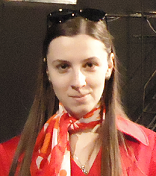
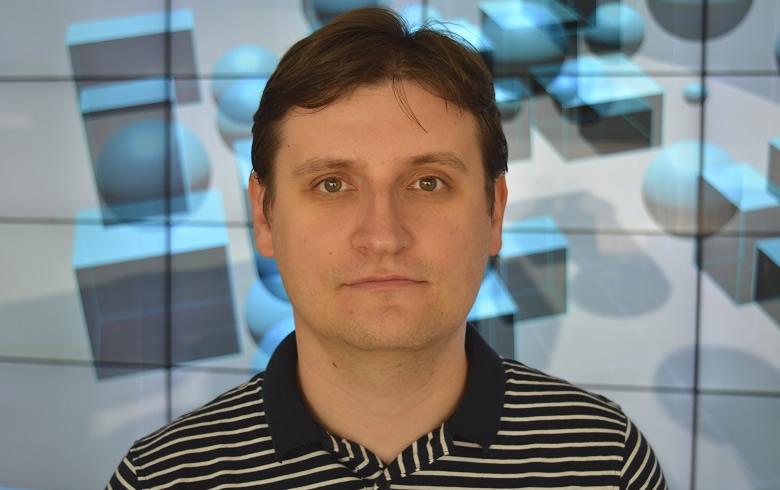
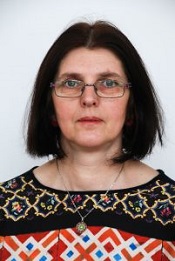
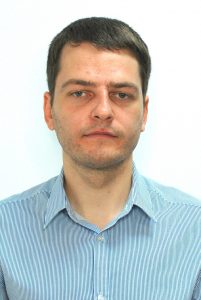
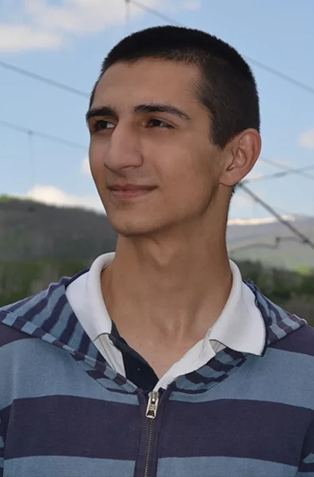
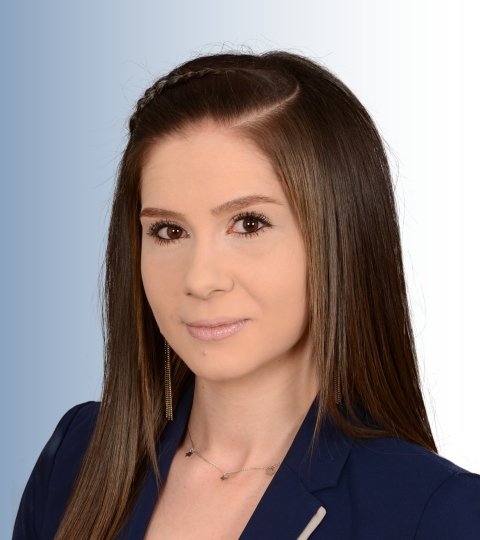
Dr. Onet-Marian Zsuzsanna is a Lecturer in the Department of Computer Science at Babes-Bolyai University in Cluj-Napoca, Romania. Her research focuses on applying machine learning techniques to software engineering challenges, particularly software defect prediction and restructuring. Academic Rank: Lecturer Affiliation: Babes-Bolyai University Department: Computer Science Email: zsuzsanna.onet@ubbcluj.ro Research Interests : Dr. Marian specializes in developing machine learning models (clustering, association rules, reinforcement learning) for software defect detection, package-level restructuring, and test order optimization. She also explores applications of Formal Concept Analysis in text summarization and music pattern discovery. Recent Publications highlight her work in source-code embeddings, unsupervised learning for software analysis, and comparative studies of online/traditional learning environments. Her methods often integrate domain-specific metrics and AI-driven optimization. Contact : zsuzsanna.onet@ubbcluj.ro | Office: Teodor Mihaly street, Room 440
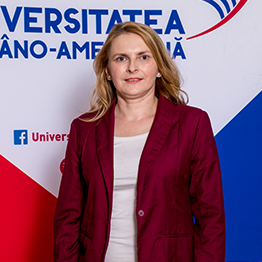
Lavinia Stănică Justina is a university lecturer at the Faculty of Managerial Informatics, Romanian-American University (URA), with 18 years of teaching experience in software programming and e-learning domains. Holding a PhD in Cybernetics and Economic Statistics since 2011, she teaches courses in Romanian and English at both bachelor's and master's degree programs. Her research focuses on ICT's role in innovation, educational technologies, and data analysis for energy consumption, with over 30 publications and multiple coordinated research projects. Faculty: Managerial Informatics University: Romanian-American University Academic Rank: Lecturer Teaching Experience: 18 years PhD: Cybernetics and Economic Statistics (2011) Her research interests include: e-Learning systems and technology integration Artificial Intelligence applications in education ICT's impact on innovation performance Mathematical content modeling Energy consumption data analysis Internet of Things implementations Fractal techniques in imaging Recent publications highlight trends in: Comparative innovation-ICT readiness analysis AI education accessibility Smart energy systems Competitive programming metrics Neural network energy forecasting IoT cloud solutions Modular educational software As Erasmus coordinator since 2013 and Institutional Erasmus Coordinator since 2020, she actively promotes internationalization efforts and academic collaboration with partner universities across Europe.
Professor Hakim Al-Samoui is a distinguished faculty member in the Department of Civil Engineering at the Faculty of Engineering, University of Tripoli. He has served at the university since 2003, obtaining the rank of Professor in 2005 and receiving a promotion to job grade 16 in 2022 (effective from January 1, 2017). His academic career spans over three decades with significant contributions to concrete technology research and education. Bachelor's degree from University of Tripoli (1988) Master's degree from University of Gdansk, Poland (1990) PhD from University of Gdansk, Poland (1996) Worked at University of Gdansk (1996-2002) Professor Al-Samoui specializes in concrete technology with particular expertise in two-stage concrete pouring, concrete durability, fabric formwork, concrete recycling, pozzolanic materials, and concrete mix design. His research bridges theoretical advancements with practical applications in construction engineering. He has published over eighty research papers in distinguished journals and presented at numerous international conferences worldwide, establishing himself as a leading expert in specialized concrete technologies. His recent publications demonstrate a clear trajectory toward sustainable construction materials, advanced concrete technologies, and computational approaches to material science. The research spans traditional concrete innovations while increasingly focusing on eco-friendly alternatives, waste material utilization, and cutting-edge technologies like 3D printing and machine learning applications in construction materials. Scientific Recognition: Fellowship from American Concrete Institute (2020) - first Libyan to receive this honor Active member of American Concrete Institute committees since approximately 1999 External evaluator for leading journals including Construction and Building Materials, American Concrete Institute publications, and American Society of Civil Engineering journals Professor Al-Samoui has supervised six Master's theses at University of Tripoli and served as advisor for graduate students from Gdansk Technical University (Poland), Tehran University (Iran), and Dublin Institute of Technology (Ireland). He has also acted as an external examiner for numerous Master's and PhD theses across multiple universities in Libya, Lebanon, Iraq, and India. His extensive international collaborations include research visits to Columbia University, University of South Carolina, Munich University, and Gdansk University of Technology. Through his active participation in international conferences across more than 20 countries and his role on scientific committees, Professor Al-Samoui maintains a robust research network that spans the global concrete technology community. His recent activities in 2023-2024 demonstrate continued research productivity and academic engagement.
Natalia Alekseevna Evseeva serves as an Associate Professor at the Department of Automobiles, Heat Engines and Hybrid Power Plants within the Faculty of Transport at Zaporizhzhia Polytechnic National University. She has been active at the institution since 2001 and holds the academic title of Candidate of Technical Sciences. She also holds the prestigious position of Vice-Academician of the Academy of Technical Sciences of Ukraine. Her educational foundation includes a degree from Zaporizhia Industrial Institute (1993) with a specialty in 'Metallurgy of non-ferrous metals' and qualification as a 'metallurgical engineer'. She further solidified her academic credentials by defending her Candidate's thesis in 2015 titled 'Improving the mechanical and operational properties of special-purpose chromium-nickel-manganese steel'. Dr. Evseeva's research portfolio demonstrates significant expertise in internal combustion engines, heat engineering, and automotive systems. Her work particularly emphasizes engine cooling systems, thermal management, fuel injection technology, and alternative fuel systems. She has published 22 scientific papers, including a textbook and a patent, with her most recent publications appearing in 2025. Her scholarly contributions show a consistent progression toward more sophisticated modeling techniques and innovative solutions for engine performance optimization, particularly in the areas of electric pump integration for cooling systems and advanced fuel injection technologies. Certificate from the Department of Education and Science of Zaporizhzhia City Council (November 2023) Certificate from Oleksandrivska District Administration of Zaporizhzhia City Council (December 2019) Honorary Certificate from ZNTU (May 2016) Honorary Certificate from the Department of Education and Science of Zaporizhzhia Regional State Administration (2015) Honorary Certificate from Zhovtneva District Administration (2006) Dr. Evseeva actively contributes to academic governance as a member of the scientific and methodological council of the Faculty of Transport and the labor conference. She serves as the guarantor of the bachelor's educational program 'Internal Combustion Engines'. Her professional development includes internships at PJSC 'Zaporizhabraziv' (2020) and recent training in academic integrity (2025) and educational leadership (2025), reflecting her commitment to both research excellence and educational innovation.
Luminita Roxana Clotea is an Associate Professor at the Department of Electrical Engineering and Applied Physics, Faculty of Electrical Engineering and Computer Science, Transilvania University of Brasov, Romania. Her research focuses on power electronics systems and renewable energy technologies, particularly analyzing energy efficiency in electrical conversion systems. Focus on evaluating power losses in multilevel inverters Applications in wind energy and photovoltaic systems Investigations into soft-switching converter technologies Her publications demonstrate expertise in electrical engineering domains, particularly in optimizing semiconductor-based energy conversion systems. While no specific awards are mentioned in the available information, her work appears in international conference proceedings and technical publications.
Călin-Adrian POPA is a Full Professor at the Department of Computer and Software Engineering, Politehnica University of Timişoara. He holds a Ph.D. in Computer Science and Information Technology (2015) from Politehnica University Timişoara, and additional degrees in Mathematics from West University of Timişoara (B.Sc. 2013, M.Sc. 2015). His research focuses on artificial intelligence, machine learning, and neural networks, with specializations in complex-valued systems (octonion, quaternion, Clifford algebra), stability analysis, and synchronization of neural networks. He has been awarded the 'Profesor Bologna' Distinction (2017). Research interests include: Advanced neural network architectures Deep learning for computer vision Fractional-order systems Nonlinear dynamics and control Applications in robotics and astrophysics His publications span 2014–2025, emphasizing theoretical contributions to neural networks and practical applications in computer vision and robotics. He supervises a large cohort of PhD students in AI-related fields.
Radu-Daniel Vatavu is Professor of Computer Science at Ștefan cel Mare University of Suceava, Romania, where he directs the Machine Intelligence and Information Visualization Lab (MintViz). His research focuses on human-computer interaction, gesture recognition, ambient intelligence, and accessible computing. Education includes PhD in Computer Science. He develops gesture recognition algorithms including $P and $Q recognizers used widely in HCI research. Awards include Mihai Draganescu Award of the Romanian Academy (2019), Ten-Year Technical Impact Award from ACM ICMI (2022), and multiple ACM CHI Best Paper Awards (2023, 2016, 2015). Research develops new interaction techniques for touchscreens, wearables, and smart environments. Creates open-source tools like Agreement Analysis Toolkit (AGATe) and Gesture Heatmaps Toolkit (GHoST).
Toșa Nicoleta Ioana is a senior researcher at the National Institute for Research and Development of Isotopic and Molecular Technologies (INCDTIM) in Cluj-Napoca, Romania, where she is affiliated with the Department of Isotopic and Molecular Technologies and the Laser Induced Processes research team. She obtained her PhD in Chemistry from Babeș-Bolyai University in 2009 and has been actively contributing to advanced materials and laser-based technologies research since 2006. Education: MSc in Heterocyclic Chemistry, Babeș-Bolyai University, Cluj-Napoca (1995) PhD in Chemistry, Babeș-Bolyai University, Cluj-Napoca (2009) Her research focuses on laser nanofabrication, plasmonics, spectroscopy, and functional materials , with applications spanning biosensing, environmental monitoring, and biomedical technologies. She specializes in photochemical synthesis of noble metal nanoparticles, direct laser writing, surface-enhanced Raman spectroscopy (SERS), and structural characterization in solid and solution phases. Her work bridges chemistry, physics, and engineering to develop innovative sensing platforms and nanomaterials. The recent articles highlight a strong trend in advanced optical sensing and nanofabrication , particularly in dual-mode biosensors (SERS/electrochemical), ultrafast photonics, high-density data storage, and supramolecular systems. Her projects often integrate simulation, nanofabrication, and spectroscopic validation to address challenges in healthcare and environmental science. Scientific Awards: No specific awards listed in the provided text. Dr. Toșa has played a key role in numerous national and international research projects, serving as a key expert in areas such as plasmonic biosensing, EUV photonics, and environmental pollutant detection, and as a partner team leader in projects on optical nanofabrication and petabyte-scale optical storage. She has secured significant research funding and collaborated with institutions across Romania and Europe. Her laboratory and research team focus on laser-induced processes and nanostructured materials , utilizing advanced facilities for optical characterization and nanofabrication within INCDTIM.
Dr. Levente Máthé is a researcher at the National Institute for Research and Development of Isotopic and Molecular Technologies (INCDTIM) in Romania, specializing in quantum physics and low-dimensional systems. He earned his BSc (2014), MSc (2016), and PhD (2023) in Physics from Babes-Bolyai University of Cluj-Napoca. Education: BSc (2014), MSc (2016), PhD (2023) His research focuses on quantum transport phenomena, electron-phonon interactions, and topological systems in graphene-based quantum dots and Majorana bound states. His expertise encompasses quantum mechanics, statistical physics, and analytical methods in solid-state physics. Analysis of his recent publications reveals trends in quantum dot systems, topological materials, and graphene applications. Key areas include Circuit-QED for multi-loop qubits, Friedel oscillations, and phonon-assisted tunneling. Dr. Máthé has participated in research grants as a project coordinator or partner team leader and is affiliated with both INCDTIM and Babes-Bolyai University. His work bridges theoretical physics with experimental quantum device modeling.
Alexandra Cristina Blaga is an Associate Professor at the Faculty of Chemical Engineering and Environmental Protection 'Cristofor Simionescu' of Gheorghe Asachi Technical University of Iași, Romania. Her academic career spans over two decades, with roles including Assistant Professor (2008-2013) and Head of Works (2013-2022) before her current appointment in 2022. Education: PhD in Chemical Engineering (2012), Master in Bioprocesses in Agri-Food (2014), Biochemical Engineering BSc (2004) Her research focuses on unconventional separation processes for biosynthetic products, particularly reactive extraction and liquid membrane transport. She has contributed significantly to improving organic acid biosynthesis using microorganisms and developing biosorbents for environmental applications. Recent publications (2022-2025) highlight her expertise in: Reactive extraction of carboxylic acids using ionic liquids Biosorption of dyes using microbial biomass Green chemistry approaches for natural dye applications Modeling and optimization of separation processes She has directed multiple research projects, including grant TD47/2007 on unconventional extraction processes, and participated in 6 national and 3 international projects. Her editorial contributions include guest editing the Catalysts journal special issue on enzyme engineering.
Adrian Spătaru serves as a Lecturer at the Faculty of Mathematics and Computer Science, West University of Timisoara, Romania, with his office located in room 058. He maintains active academic engagement through direct contact channels including email (adrian.spataru@e-uvt.ro) and phone ((0256) 592 157), reflecting ongoing institutional affiliation and research activities within computer science. His research centers on the integration of edge, cloud, and high-performance computing resources within the cloud continuum framework. Key focus areas include service orchestration, resource management, blockchain applications for decentralized systems, and AI-driven optimization of cloud infrastructures. His work addresses critical challenges in heterogeneous platform integration, fault tolerance, and predictive maintenance across large-scale distributed environments, with notable contributions to container deployment and accelerator-aware application specification. Analysis of his publication trends reveals sustained emphasis on the edge-cloud-HPC continuum since 2018, evolving toward intent-based AI orchestration and heterogeneous hardware integration in recent works. His research bridges theoretical distributed systems concepts with practical applications in environmental monitoring (solar forecasting, freshwater quality assessment) and industrial cloud reliability, demonstrating both academic rigor and real-world impact. No scientific awards are documented in the provided institutional information. Details regarding student supervision, research grants, or laboratory affiliations are not specified in the available materials. Current research directions appear focused on advancing the edge-cloud-HPC continuum through heterogeneous platform integration, with 2025 publications indicating active development in this domain.
Dr. Bogdana Borca serves as a Scientific Researcher I at the National Institute of Materials Physics (NIMP) in Romania, where she has conducted research since 2015 in the Laboratory of Magnetism and Superconductivity. Her work focuses on the fundamental properties of nanoscale systems with applications in next-generation electronic and spintronic devices. She earned her PhD in Physics in 2007 through a binational program between Joseph Fourier University in Grenoble, France and Babeș-Bolyai University in Cluj-Napoca, Romania, with research conducted at the Institut Néel in France. Prior to joining NIMP, she held postdoctoral positions at Universidad Autónoma de Madrid, Spain (2007-2011) and Max Planck Institute for Solid State Research in Stuttgart, Germany (2011-2015). Dr. Borca's research spans nanomagnetism, surface science, 2D materials, molecular electronics, and spintronics. Her expertise includes ultra-high-vacuum techniques, cryogenics, physical and chemical vapor deposition, scanning probe microscopy, and magnetometry. She specializes in characterizing and controlling electronic and magnetic properties at the nanoscale, with particular focus on nanostructures, heterostructures, thin films, and organic-inorganic interfaces. Her recent publications demonstrate significant contributions across multiple subfields, with strong emphasis on organic multiferroic junctions, image potential states of 2D materials, molecular recognition techniques, and electric-field-driven chemical reactions. These works reflect her interdisciplinary approach combining physics, chemistry, and materials science to address fundamental questions with practical applications in electronics, spintronics, and biocompatible devices. Dr. Borca leads the 'Memristive multiferroic junctions' project (2022-2024) and maintains active international collaborations through visiting positions at Technische Universität Braunschweig (Germany), University of Twente (Netherlands), Forschungszentrum Jülich (Germany), and Max Planck Institute for Solid State Research (Germany). Her research methodology integrates advanced experimental techniques with theoretical understanding, particularly using scanning tunneling microscopy for atomic-scale manipulation and characterization. This approach has yielded insights into molecular conductance switching, chiral molecular adsorption, and the electronic properties of novel materials systems.
Sebastian Fuicu is a researcher at the Department of Computers and Information Technology, Politehnica University Timisoara. He holds a Dr. Eng. degree and is associated with the university's technical and administrative staff. Research Areas: Networks and communications, cloud computing, cross-border internet infrastructure, mobile applications, green mobile systems, and energy management. Projects: Key contributions to initiatives like CloudPUTing, JCBICS-UDPUT, and GEMSCLAIM, focusing on high-performance cloud platforms, cross-border educational access, and energy-efficient mobile systems. Events: Organized a 2024 workshop on secure real-time data transmission and monitoring, and participated in the 2025 IEEE Symposium on Applied Computational Intelligence and Informatics.
Răzvan-Virgil Bogdan is an Assistant Professor at the Faculty of Automation and Computer Science, Politehnica University of Timisoara (PUT), with expertise in Embedded Systems , Automotive Software Testing , and Dependability of Computer Systems . His research bridges Internet-of-Things and e-Learning , focusing on reliability, testing, and intelligent environments. University: Politehnica University of Timisoara School: Faculty of Automation and Computer Science Contact: razvan.bogdan@cs.upt.ro | Room B413A Research Focus: Bogdan's work emphasizes system reliability , embedded software quality , and automotive electronics , with projects like GEMSCLAIM (energy-efficient mobile systems) and HURO JCBICS (cross-border educational infrastructure). He also drives industrial collaborations (e.g., AC_G_xBU_Academy with Continental Automotive Romania). Teaching Career: Bogdan has taught courses such as Embedded Systems , Microprocessor Systems , and Advanced Embedded Systems at PUT, blending theoretical rigor with hands-on lab work in the Vector Lab . His pedagogical approach integrates software testing methodologies and energy-aware system design . Scientific Contributions: He has contributed to embedded systems validation, security frameworks for distributed systems (e.g., TD/54 project ), and automotive software tools. His publications span ACTA POLYTECHNICA HUNGARICA , BRAIN: Broad Research in Artificial Intelligence and Neuroscience , and conference proceedings like IEEE Sustainability and SACI. Awards: Mercy Diplomas 2021 Mercy Diplomas 2020 Memberships: IEEE ACM Prospective Students: Bogdan actively seeks undergrad, Masters, and PhD candidates, emphasizing practical research in automotive embedded systems and IoT . His lab provides direct access for project collaboration and discussions.
IOANA ANDREEA BOGOSLOV is a Lecturer at the Faculty of Economic Sciences, Finance and Accounting Department. Her contact address is Dumbravii Street, no. 17, Sibiu, 550324, Romania. She can be reached via email at andreea.bogoslov@ulbsibiu.ro . She is affiliated with the following research center: Center for Global Studies Her research spans multiple domains, with primary interests in: Business Informatics : Integration of IT solutions in business processes. Computer Science : Foundational computing principles and applications. E-business & E-learning : Digital commerce and technology-enhanced education methodologies. ICT & Web-based Learning : Innovative educational technologies and online pedagogical frameworks. She contributes to the following academic programs: Business Administration (English) Accounting and Management Informatics Finance and Banking Economic Informatics (English) Management and Marketing programs Her teaching portfolio includes courses such as: Informatics Algorithms and Data Structures Databases Management Information Systems