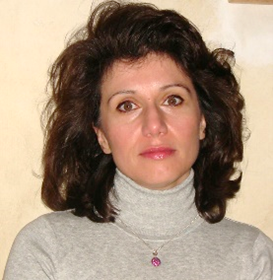
Ioannis Theodoridis is a Professor at the Department of Informatics, University of Piraeus, and Director of the Data Science Laboratory under the School of Information and Communication Technologies. His research focuses on data science, particularly large-scale data management and analysis, with applications in maritime informatics, spatiotemporal data, and mobility patterns. He holds editorial roles at ACM Computing Surveys and has contributed to numerous international conferences and journals. As a project leader in Horizon 2020 initiatives, he has coordinated research on data-driven solutions for maritime safety and urban mobility. He earned his Diploma (1990) and PhD (1996) in Electrical and Computer Engineering from the National Technical University of Athens (NTUA). His work includes developing scalable systems for maritime route forecasting (e.g., GMSA), frameworks for vessel trajectory prediction (e.g., VesselVision), and platforms like i4sea for fisheries monitoring. Contact: ytheod@unipi.gr .
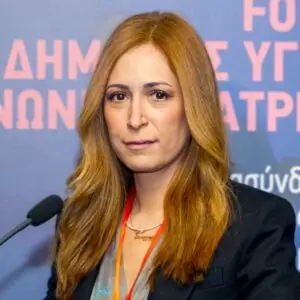
Professor Alexiou Aggeliki is a faculty member at the Department of Digital Systems, University of Piraeus, specializing in 'Wireless Communication Systems.' She holds a Diploma in Electrical & Computer Engineering from the National Technical University of Athens (1994) and a PhD in Electrical Engineering from Imperial College, University of London (2000). Previously, she worked at Bell Laboratories (now Nokia Bell Labs) from 1999 to 2009, first as a Researcher and later as Technical Manager. Her research focuses on advanced wireless systems, including smart antennas, MIMO, 5G/6G networks, and machine learning applications. She leads the H2020 projects TERRANOVA (Coordinator) and ARIADNE (Technical Coordinator), and chairs the Wireless World Research Forum's Radio Communication Technologies and High Frequencies Radio Communication Technologies working groups. She is a member of IEEE, IET, and the Greek Engineers Association.
Nikos Pleros serves as a Professor in the Department of Informatics at Aristotle University of Thessaloniki (AUTH), where he leads the Wireless and Photonic Systems and Networks (WinPhoS) research group established in 2016 at AUTH’s Center for Interdisciplinary Research and Innovation (C.I.R.I.). This interdisciplinary initiative bridges the Departments of Physics, Informatics, and Electrical and Computer Engineering, focusing on advanced research in communication systems and networks. His research spans critical domains in photonics and optical networking, including Optical Packet Switching, High-Speed Optical Signal Processing, Wireless Optical Access Networks, and High-Speed Optical Telephony Switching Systems. Additional expertise encompasses Integrated Photonics, Plasmonics, Optical Interconnects for Data Centers, Optical Computing architectures, Neuromorphic Photonics, and 5G mmWave fiber-wireless integration, addressing next-generation computing and telecommunications challenges. WinPhoS operates world-class laboratories featuring high-speed optical interconnect testbeds, 5G mmWave platforms, and Photonic Integrated Circuit characterization facilities. With over 30 FP7 and Horizon EU research projects coordinated in the past 15 years, the group maintains global collaborations across Greece, Europe, the USA, and Japan. Current initiatives include two active PhD openings in Photonic Neural Networks and Photonic AI processors, reflecting ongoing innovation in neuromorphic computing hardware.
Jovan Stojkovic is an incoming Assistant Professor at the Department of Computer Science at the University of Texas at Austin, set to join in Fall 2026. Prior to his appointment at UT Austin, he will spend a year at Meta working with the AI and Systems Co-design group. His research focuses on cloud computing and datacenters, with particular emphasis on cloud-native workloads and machine learning inference. Education: PhD in Computer Science from the University of Illinois at Urbana-Champaign, advised by Professor Josep Torrellas Undergraduate studies at the School of Electrical Engineering, University of Belgrade, Serbia, where he was recognized as the best student of the Computer Engineering and Information Theory Department every year from 2017-2020 Research Interests: Jovan's research focuses on cloud computing and datacenters , with two primary domains: Cloud-native workloads , such as microservices and serverless computing. He investigates how to co-design novel hardware platforms and software systems that deliver orders-of-magnitude improvements in performance, energy efficiency, and resource utilization for these emerging workloads. Machine Learning (ML) inference , particularly large language models (LLMs). His work addresses the challenges of ML inference through smart scheduling, workload placement, and system-level configuration tuning to reduce energy, power, and thermal overheads while maintaining performance and accuracy guarantees. Publication Trends: Jovan's publications demonstrate a strong focus on optimizing cloud infrastructure for emerging workloads. His research spans across serverless computing, microservices, and large language model inference. A clear trend emerges in his work: addressing the performance, energy efficiency, and resource utilization challenges of modern cloud workloads through innovative hardware-software co-design approaches. His most recent work shows increasing focus on LLM inference optimization, particularly in the areas of thermal management, power efficiency, and scheduling for many-adapter environments. Awards and Honors: HPCA Best Paper Award (2025) IEEE MICRO Top Picks Honorable Mention (2024) 6 patents with IBM and Microsoft on: Serverless systems, Processor overclocking in the cloud, and Energy-efficient LLM inference W. J. Poppelbaum Memorial Award (2025) for hardware and architecture innovation Mavis Future Faculty Fellowship (2024–2025) Invited to present at 11th Heidelberg Laureate Forum (2024) Kenichi Miura Award (2022) for excellence in High Performance Computing Multiple student travel grants to ISCA, MICRO, ASPLOS, and HPCA Advising and Grants: Jovan is actively seeking prospective PhD students for his research group at UT Austin. His research has been supported through collaborations with major tech companies including IBM, Microsoft, and Meta. His six patents with IBM and Microsoft demonstrate the practical impact of his research in serverless systems, processor overclocking, and energy-efficient LLM inference. His work on serverless computing (MXFaaS, EcoFaaS) and LLM inference optimization has received significant recognition in top-tier computer architecture conferences. Research Groups: During his PhD at UIUC, Jovan worked with Professor Josep Torrellas on cloud infrastructure research. He has collaborated extensively with researchers at IBM Research (particularly Hubertus Franke) and Microsoft (particularly Íñigo Goiri and Ricardo Bianchini). His upcoming position at UT Austin will establish his independent research group focused on cloud computing and datacenter systems. His year at Meta working with the AI and Systems Co-design group will further strengthen his expertise in AI infrastructure.
Professor Gregoris Mentzas is a faculty member at the National Technical University of Athens, School of Electrical and Computer Engineering, where he directs the Division of Industrial Electric Devices and Decision Systems. His research focuses on AI-enabled decision systems, knowledge management, and semantic technologies applied to digital enterprises and e-government. With over 350 publications, he ranks among the top 2% most cited scientists globally. Research Interests: Artificial intelligence for decision augmentation, big data analytics in personalized health and smart mobility, semantic web technologies, and industrial internet of things. Current projects investigate trustworthy AI frameworks and hybrid intelligence systems for Industry 5.0. Teaching: Leads courses in Digital Enterprise Management, Strategic Information Systems, and Project Management at undergraduate and postgraduate levels, incorporating industry case studies and experiential learning approaches. Awards & Leadership: Top 2% Highly Cited Scientist (PLOS Biology 2021) 5 Best Paper Awards in international conferences Director of Information Management Unit (1997-present) Board Member of Institute of Communication and Computer Systems (2006-2009) Projects & Funding: Secured over €18 million in research grants through 60+ European projects with industry partners including SAP, IBM, and Siemens. Research outcomes led to three technology spin-offs.
Chr. Kavousianos is an Assistant Professor in the Department of Informatics at the University of Ioannina, Greece. He is actively engaged in research and teaching in the fields of VLSI design, testability, and low-power testing. He has been involved in major national and international research programs such as Heracleitus II, Pythagoras, and NSF-SRC (USA). Research Interests: His research focuses on advanced techniques in built-in self-test (BIST), test data compression, scan-based testing, fault tolerance, and embedded control architectures. He explores methods to reduce test data volume, power consumption during testing, and improve defect coverage in integrated circuits. Publication Trends: His recent publications (2004–2011) show a strong trend toward defect-aware testing, power-efficient test compression, and multicore SoC testing. He frequently collaborates with leading researchers, including Prof. Krishnendu Chakrabarty (Duke University). His work on multilevel Huffman coding and reseeding techniques has been highly influential, with one paper among the most accessed in 2004. Special Distinction for Excellent Academic Performance from TEE, 1996 Doctoral Scholarship 'In Memory of Professor Maritsa', 1999 Postdoctoral Scholarship from IKY, 2002 Advising and Grants: He has supervised multiple postdoctoral researchers, PhD candidates (e.g., Vasilis Tenentes, Emmanouil Kalligeros), and master’s students. He has led research projects such as 'Embedded Control Architectures' (Heracleitus II) and 'Design Techniques for Embedded Self-Control Circuits' (Pythagoras II). His international collaboration with Duke University included a postdoctoral research role in 2009. Labs and Teams: He leads a research group at the University of Ioannina with postdocs, PhD students, and visiting professors, including Prof. Krishnendu Chakrabarty. His team works on cutting-edge VLSI testing and design methodologies.
Kostas Magoutis is Professor and Chair of the Computer Science Department at the University of Crete , and a collaborating researcher at FORTH-ICS . His research focuses on scalable distributed systems, cloud computing, IoT, and quantum-enhanced control. Education and Career: Ph.D. in Computer Science, Harvard University (2003) Research Staff Member, IBM T. J. Watson Research Center (2003-2009) Assistant Professor (2014-2019, tenured 2017) and Associate Professor (2020-2024), University of Crete Professor and Chair, University of Crete (2024-present) Research Interests: His work spans distributed computer systems , cloud computing , scalable data stores and stream-processing engines , Internet of Things , and the emerging area of quantum-enhanced control . Representative projects include the H.F.R.I.-funded QUADS (2025-2028) on quantum-enhanced adaptive systems, STREAMSTORE (2020-2023) on elastic stream processing, SmartCityBus on IoT-driven public transport, and the EU FP7 PaaSage project on model-based cloud lifecycle management. Awards and Honors: Best Paper Awards: USENIX ATC 2002, USENIX BSDCon 2002, IEEE SRDS 2014 (Best Student Paper), IoT 2024 (Runner-up) Grand Challenge Audience Award, ACM DEBS 2022 Best Poster Award, ACM EuroSys 2022 EU Marie Curie IEF Fellow (2009-2011) Alexander S. Onassis Fellow (1994-1995) and J. William Fulbright Scholar (1993-1994) Students and Mentoring: He has supervised or co-supervised more than 30 Ph.D., M.Sc. and undergraduate students, including Antonis Papaioannou (Ph.D. 2021), Efthimios Papageorgiou (current Ph.D.), and numerous M.Sc. graduates now in industry and academia. Labs and Teams: At FORTH-ICS he leads activities within the Distributed Systems and Storage Laboratory, coordinating research on scalable storage, stream processing, and IoT data management. The lab collaborates closely with European and national initiatives, hosting visiting researchers and industry partners.
Ioannis Iglezakis is an Associate Professor at the School of Law, Aristotle University of Thessaloniki (AUTH), specializing in the intersection of law and technology. His academic career spans over three decades with continuous contributions to informatics law, cyber law, data protection, and privacy law. At AUTH, he teaches courses including Law of Informatics, Computers and Law I (Cyberlaw I), Computers and Law II (Privacy and Security in the Information Society), Legal Aspects of Cybercrime, Internet-Law, and Law and Information Technology. Dr. Iglezakis earned his undergraduate degree in Law from AUTH in 1987, followed by a Magister Legum Europae from Hannover University in 1993. He completed his postgraduate studies in History, Philosophy and Sociology of Law at AUTH in 1990 and earned his PhD in Law from AUTH in 1999. His educational background combines Greek legal training with European legal perspectives. His research interests focus on the legal challenges posed by digital technologies, with particular emphasis on data protection, privacy law, cybercrime regulation, digital rights, and the application of GDPR in various contexts. He has published extensively on topics including the right to be forgotten, digital identity management, workplace surveillance in the digital age, hate speech online, and the legal implications of emerging technologies like blockchain and artificial intelligence. His work bridges theoretical legal analysis with practical applications in the rapidly evolving digital landscape. The trends in his publications reveal a consistent focus on the evolving relationship between law and technology, with increasing attention to GDPR implementation, health data protection, and the challenges of algorithmic decision-making. His work spans multiple disciplines including legal theory, privacy studies, cyber security, and digital governance, reflecting the interdisciplinary nature of modern informatics law. Dr. Iglezakis has supervised over 50 master's theses at AUTH, mentoring the next generation of legal scholars in areas including cloud computing contracts, personal data protection, social media law, intellectual property in digital environments, and cybercrime. His administrative roles have included membership on the European Educational Programs Committee (2011-2012) and the Legal Committee of AUTH (2013-2014). His research projects include the 2018-2019 study on 'Legal Issues of Mobile Applications Development, Distribution and Use,' the 2014 '6th International Conference on Informatics Law,' and the 2013-2015 Center of Excellence for Cybercrime for Education, Research and Training in Greece. These projects highlight his commitment to addressing practical legal challenges in the digital domain while contributing to academic discourse.
Nikitas Karanikolas serves as Professor in the Department of Informatics and Computer Engineering at the University of West Attica since March 2018, following a distinguished career progression from Assistant Professor (2004) to Associate Professor (2010) and Professor (2014) at the Technological Educational Institute of Athens. His professional trajectory includes significant roles as Systems Head of TEI Athens Library (1996-1997) and Chief of Informatics at Aretaieio University Hospital (1997-2004), alongside leadership positions in the Greek Computer Society as Board Member (2004-2006) and Secretary General (2006-2008). His academic foundation includes: Bachelor's in Statistics and Informatics from Athens University of Economics and Business (1988) PhD in Applied Informatics from Athens University of Economics and Business (1994) with thesis "Technological and Linguistic approaches in Natural Language Understanding" Dr. Karanikolas maintains an exceptionally broad research portfolio spanning Natural Language Processing , Computational Linguistics , Medical Informatics , and Green Energy systems. His work consistently bridges theoretical computational frameworks with practical healthcare applications, particularly evident in recent dementia care technologies and Greek language processing systems. The interdisciplinary nature of his research connects computational phonology with medical diagnostics and e-government applications. Analysis of his 15 most recent publications reveals a pronounced shift toward AI-driven healthcare solutions (particularly dementia patient monitoring), multilingual NLP systems (Greek and Polish), and urban safety applications . His work demonstrates consistent methodology development in ontological representations and multimodal fusion techniques, with increasing emphasis on real-world clinical and governmental implementations since 2023. No scientific awards were documented in the source materials. With 16 journal papers, 68 conference publications, and six authoritative Greek university textbooks, Dr. Karanikolas maintains an active research trajectory. His advising capacity is evidenced through extensive publication mentorship, particularly in medical informatics and NLP projects. While specific grant details are unavailable, his hospital information system implementations and textbook authorship suggest successful research funding acquisition. Current research activities focus on multimodal aggression prediction systems for dementia care, Greek language ontological frameworks, and urban navigation safety applications, primarily conducted through the University of West Attica's informatics infrastructure.
Michael Mühlebach is a Lecturer at the Department of Information Technology and Electrical Engineering at ETH Zurich, affiliated with the Max Planck Institute for Intelligent Systems in Tübingen, Germany. He received Bachelor (2010) and Master (2013) degrees from ETH Zurich, awarded the Outstanding D-MAVT Bachelor Award and Willi-Studer Prize for top performance. His research specializes in multibody dynamics , control of nonlinear systems , and model predictive control , with applications in robotics and aerospace systems. Publications demonstrate consistent focus on theoretical control frameworks validated through experimental platforms like ducted fans and reaction-wheel systems. Awards: Outstanding D-MAVT Bachelor Award Willi-Studer Prize (Best Master in Robotics, Systems, and Control)
Elias N. Glytsis is a Professor at the National Technical University of Athens (NTUA), affiliated with the Department of Electromagnetic Applications, Electro-Optics and Electronic Materials. He previously held a Professorship at the Georgia Institute of Technology (USA) from 1988 to 2003. His research focuses on electromagnetic theory, diffractive devices, optical interconnects, quantum heteromaterials, and numerical methods for electromagnetic problems. Glytsis has published over 115 journal articles, 95 conference papers, and holds 17 U.S. patents with an h-index of 31 (as of 2017). Education: Diploma in Electrical Engineering (NTUA, 1982), M.S. and Ph.D. (Georgia Tech, 1984–1987). Professional memberships include IEEE (Senior Member), Optical Society of America (Fellow), and EURATOM-Hellenic Republic. Research highlights include work on holographic gratings, optical fiber gratings, and plasma-edge RF scattering. He has developed optimization methods for photonic devices and contributed to stochastic modeling via polynomial chaos expansions. Glytsis teaches courses on electromagnetic fields, optical science, and integrated optics at both undergraduate and postgraduate levels. Key technical contributions span microwave interconnects, quantum device modeling, and fusion plasma physics. His methodologies address challenges in material variability, waveguide design, and electromagnetic compatibility.
Evangelia Georgia Kostaki is a Biostatistician and Epidemiologist serving as a Lecturer in the Department of Hygiene, Epidemiology, and Medical Statistics at the School of Medicine, National and Kapodistrian University of Athens (NKUA). She holds a PhD in Molecular Epidemiology from NKUA and has extensive teaching experience in medical statistics, epidemiology, and public health at the undergraduate and postgraduate levels. Her research focuses on molecular epidemiology of infectious diseases (HIV, HCV, HBV, and SARS-CoV-2), with emphasis on public health applications such as outbreak response and transmission network analysis. Education: Bachelor’s degree (NKUA) MSc in Biostatistics (NKUA) PhD in Molecular Epidemiology (NKUA) Research interests include HIV transmission dynamics, antiretroviral resistance surveillance, and pandemic response strategies. She has contributed to over 50 peer-reviewed articles and 2 book chapters, with active participation in global initiatives like the European AIDS Clinical Society (EACS) YING network and the Greek National Action Plan for HIV. Notable achievements include a New Investigator Scholarship (NSRF 2014-2020) and over 160 conference presentations internationally. Advisory roles include supervising 25+ MSc theses and supporting PhD candidates. Grants include co-investigator roles in national/international projects. She actively contributes to scientific societies, editorial boards, and guideline development for HIV testing protocols in Europe. Labs/Teams: Collaborates with the European Virus Bioinformatics Center (EVBC) and global networks addressing HIV and viral hepatitis epidemiology.
Gerhard Weikum is a renowned computer scientist and Director at the Max Planck Institute for Informatics in Saarbrücken, Germany. He holds the title of Scientific Member of the Max Planck Society. Previously, he served as a Professor at ETH Zurich (1990–1994) and Saarland University (1994–2003). His career includes roles as a Research Associate and Postdoc at TU Darmstadt, MCC in Austin, and ETH Zurich. Born in 1957, he earned his doctoral degree in computer science from TU Darmstadt in 1986. Education: Bachelor/Master studies in Computer Science at TU Darmstadt Doctoral Dissertation: TU Darmstadt (1986) His research interests span foundational areas of computer science, including database systems, information retrieval, and distributed computing. While specific publications are not listed here, his work aligns with the institute’s focus on cutting-edge informatics research. Grants and Advising: Details on grants, advising, or lab affiliations are not explicitly mentioned in the provided text. Labs/Teams: As a Director at the Max Planck Institute for Informatics, he likely contributes to interdisciplinary teams and research groups within the institute’s computational science initiatives.
Efthymios N. Karatzas serves as an Assistant Professor in the Department of Mathematics at Aristotle University of Thessaloniki, Faculty of Sciences, within the Computer Science and Numerical Analysis Section. He maintains an active research profile in computational mathematics with strong institutional affiliations including collaborations with SISSA mathLab and FORTH Institute of Applied and Computational Mathematics. His academic credentials include: PhD in Mathematics, National Technical University of Athens (2015) Master's in Applied Mathematical Sciences – Computational Mathematics, NTUA (2009) Master's in Applied Mathematics, University of Patras (2001) Bachelor's in Mathematics (Computational Mathematics), University of Patras (1999) Dr. Karatzas' research program centers on advanced numerical techniques for partial differential equations , with pioneering work in reduced order modeling , embedded boundary methods , and optimal control systems . His expertise spans computational fluid dynamics, uncertainty quantification, and biomechanical applications, characterized by methodological innovation in handling geometrically complex domains through cut finite element approaches and shifted boundary formulations. Analysis of his 15 most recent publications reveals a cohesive research trajectory focused on developing efficient numerical frameworks for parametrized PDE systems. His work consistently bridges theoretical rigor with practical implementation, particularly in advancing reduced basis methods for fluid-structure interaction and biological modeling, demonstrating significant contributions to computational mathematics through high-impact journal publications. No major scientific awards are documented in the available sources. Dr. Karatzas demonstrates research leadership through project management roles including Scientific Manager for the ELIDEK project at NTUA (2019-2021) and Project Manager for the European Social Fund HEaD initiative at SISSA (2017-2019). His grant administration experience encompasses coordinating interdisciplinary teams and securing external funding for computational mathematics research. He maintains active collaborations with the SISSA mathLab in Trieste (particularly with Prof. Gianluigi Rozza's group) and the FORTH Institute in Crete, participating in international workshops including the Reduced Order Methods in CFD Summer School (2019) and SIAM UQ conferences. His research network spans computational mathematics groups across Europe with emphasis on advancing numerical methodologies for real-world engineering and biological applications.
Constantine Dovrolis is a Professor at the School of Computer Science, Georgia Institute of Technology, and Director of the Center for Computational Science and Technology (CaSToRC) at The Cyprus Institute. He holds a BEng from the Technical University of Crete (1995), M.S. from the University of Rochester (1996), and Ph.D. from the University of Wisconsin-Madison (2000). His research bridges Network Theory, Machine Learning, and Neuroscience, focusing on neuro-inspired architectures and structural adaptation in AI systems. His work includes pioneering contributions to sparse neural networks, continual learning through structural adaptation, and hierarchical modularity in neural networks. His research has been supported by NSF, NIH, DOE, DARPA, Google, Microsoft, and Cisco, resulting in over 15,000 citations and an h-index of 56. Affiliations: Georgia Tech (Primary), Cyprus Institute (Director of CaSToRC) Research Themes: Neuro-inspired AI, Network Science, Machine Learning Theory, Computational Neuroscience Grants: Over $10M in funding from U.S. agencies and industry partners