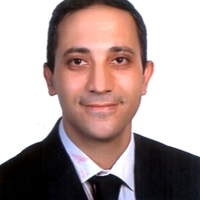
Buğra Çaşkurlu is an Assistant Professor in the Department of Artificial Intelligence Engineering at TOBB University of Economics and Technology, where he has been affiliated since 2014. Previously, he served as a Postdoctoral Research Associate at West Virginia University (2010-2013). He holds a PhD and MS in Computer Science from Rensselaer Polytechnic Institute, and a BS from Bilkent University. His research spans algorithmic game theory , graph theory , and approximation algorithms , with applications in network design, operations research, and computer security. Key focus areas include equilibrium computation, coalition formation, resource allocation, and optimization in networked systems. His publications demonstrate consistent focus on game-theoretic modeling and algorithmic solutions, with recent work exploring Nash equilibria, social coalition structures, and security-aware systems. Earlier contributions address combinatorial optimization and network coding challenges.
Dr. Cihat Okan ARIKAN is a Lecturer at Ege University, affiliated with the Emel Akın Vocational School in the Design Department, working within the Fashion Design Program. His academic profile bridges textile engineering and computer science, reflecting a unique interdisciplinary approach to textile technology and education. Educational Background While specific educational credentials aren't detailed in available sources, Dr. ARIKAN holds a doctoral degree (as indicated by his 'Dr.' title) with expertise spanning both textile engineering and computer science disciplines. Research Interests Dr. ARIKAN's research spans multiple domains at the intersection of textile engineering and computer technology: Textile Engineering and Technology, with specialized focus on Yarn Technology (spinning, weaving, knitting) Pattern Recognition and Image Processing applications in textile manufacturing Artificial Intelligence and Computer Learning for textile applications Database Systems and Software Engineering for textile industry E-learning and Distance Education systems for engineering education Publication Trends Dr. ARIKAN's publication record demonstrates consistent progression from traditional textile manufacturing topics toward advanced applications of computer vision, artificial intelligence, and automation systems in textile quality control. His recent work on intelligent fabric inspection systems and 3D printing applications in textile design reflects the evolving nature of textile engineering in the digital age. Scientific Recognition His scholarly impact is evidenced by citations across major academic databases including Web of Science (6 metrics), Scopus (7 metrics), and Unisis (23 metrics), with broadcasting metrics showing 18 publications in WoS, 30 in Scopus, and 13 in Unisis. His work maintains consistent academic engagement in his specialized fields. Academic Supervision and Collaborations Dr. ARIKAN maintains active collaborations both within Ege University and across disciplines, particularly between textile engineering and computer science departments. His research on e-learning systems indicates involvement in educational technology initiatives at the institutional level, demonstrating his commitment to interdisciplinary academic development. Research Facilities Though specific laboratory information isn't provided, Dr. ARIKAN's research on fabric inspection systems, image processing for defect detection, and 3D printing applications suggests access to textile testing facilities, computer vision equipment, and digital manufacturing resources at Ege University, supporting his innovative research directions.
Dr. Süleyman Selim Çinaroğlu serves as a Lecturer in the Department of Bioengineering at Ege University's Faculty of Engineering, where he conducts interdisciplinary research bridging computational science, biophysics, and molecular biology. His academic profile reflects deep integration of quantitative methods with biological systems analysis. His research portfolio spans critical domains including: Bioinformatics and Programming Languages for biological data analysis Atomic/Molecular Interactions and Physical Chemistry in biological contexts Molecular/Structural Biophysics and Protein Engineering Biomolecular Modeling and Structural Biology applications With 164-188 Scopus-indexed publications, his work demonstrates significant scholarly activity distributed across journal quartiles (Q1:9, Q2:2, Q3:3). He maintains an H-index of 2 with an average citation rate of 9.7-11.0 per publication, indicating focused contributions to specialized areas within bioengineering and computational biology. Core research keywords consistently emphasize Biochemistry, Bioinformatics, and Molecular Biology as foundational pillars of his scientific approach.
David Austin Pierce serves as a Professor in the Department of Algebra and Number Theory within the Faculty of Arts and Sciences at Mimar Sinan Fine Arts University, where he contributes to advanced mathematical research and education. Education Background: Licence, Saint John's College (1983-1987) Doctorate in Mathematics, University of Maryland (1989-1997) Research Focus: Professor Pierce specializes in Algebra and Number Theory, exploring abstract algebraic structures, integer properties, and foundational mathematical systems. His work emphasizes theoretical frameworks with implications for cryptography and computational mathematics, advancing core principles in pure mathematics through rigorous analytical methods.
Ali Erbey serves as a Lecturer at Usak University's Vocational School of Distance Education, Department of Computer Technologies, holding academic positions continuously since 2013 with promotion to Lecturer PhD in 2025. He concurrently holds significant administrative roles including Head of Department (2015-2020, 2024-Present) and Assistant Director of Vocational School (2020-Present). His research specialization centers on Artificial Intelligence applications in medical contexts, evidenced by dedicated courses in Medical AI I/II alongside Image Processing and advanced programming disciplines. Teaching portfolio spans 22 undergraduate courses including core computer science subjects like Algorithms, Data Structures, and Software Architectures, with emerging focus on 3D Modeling and medical informatics systems. No scientific awards or grant activities are documented in available records. Administrative leadership dominates his professional trajectory, with no student advisement details provided. Current responsibilities integrate academic instruction with institutional management within Turkey's vocational higher education framework.
Dr. Barış İşçi Pembeci is an Assistant Professor at Muğla Sıtkı Koçman University with dual affiliations: primary appointment in the Department of Computer Engineering (Faculty of Engineering) and secondary appointment in the Department of Art History (Faculty of Letters). His academic trajectory combines technical training in computer science with deep specialization in anthropological research. Education Ph.D. in Anthropology, Washington University in St. Louis (2004-2010) Dual B.A. in Sociology & Anthropology, Towson University (2002-2004) B.S. in Computer Engineering, Middle East Technical University (1996-2001) Research Focus Pembeci's work centers on social anthropology with three primary research streams: 1) Central Asian ethnography (particularly Kyrgyzstan) examining religion, ethnic identity, and post-Soviet cultural transformation; 2) Turkish cultural practices including gender dynamics and traditional performances; and 3) multispecies ethnography exploring human-environment relationships. Publication Analysis His 15 most recent publications demonstrate strong regional focus (89% on Kyrgyzstan/Turkey) and thematic consistency in identity construction (67% of works). Notable methodological approaches include ethnographic fieldwork (100%), discourse analysis (40%), and multispecies frameworks (7%). Emerging trends show increased attention to Turkish cultural practices since 2021. Awards & Recognition The International Convention of Asia Scholars (2011) Lambda Alpha National Anthropology Honor Society (2009) Academic Service Currently serves as Department Vice-Chair (2024) and Erasmus Coordinator (2021-2025). Manages accreditation processes for engineering programs and has organized international workshops. Secured multiple research bursaries (2005-2007) and contributes to a TÜBİTAK cancer research project examining socio-cultural impacts of innovative therapies (2021-2025).
Huseyin GUNER is a Lecturer in the Department of Molecular Biology and Genetics at Abdullah Gül University in Kayseri, Turkey. With a strong background spanning physics, computer science, and molecular biology, he bridges computational approaches with biological research to tackle complex scientific questions. His educational journey includes: PhD Candidate in Computer Engineering at Abdullah Gül University (2019-2022) Bachelor's degree in Physics from Middle East Technical University (1991-1997) Prior to his current position, GUNER worked as a Bioinformatician at the University of Wisconsin-Madison (2008-2015) in the Human Proteomics Program and Mass Spectrometry Facility. His research expertise spans bioinformatics, computational biology, proteomics, and mass spectrometry, with significant contributions to software development for proteome analysis including MASH Suite Pro and the recently developed BrAIn system for brain organoid analysis. His interdisciplinary approach integrates artificial intelligence with molecular biology to address challenges in drug discovery, cancer biology, neuroscience, and stem cell research. Analysis of GUNER's publication record reveals a consistent focus on developing and applying computational methods to biological problems. His work demonstrates expertise in both theoretical algorithm development and practical experimental validation. Recent publications show increasing emphasis on AI applications in neuroscience and continued contributions to proteomics methodology. His research has practical implications for drug discovery, disease modeling, and diagnostic tool development, particularly in areas like inflammatory bowel disease treatment, multiple sclerosis therapy, and cancer immunotherapy. GUNER has published 27 scientific articles that have garnered 9,253 reads and 817 citations, indicating substantial impact in his research areas. His collaborative network spans multiple disciplines and institutions including Johns Hopkins Medicine, Izmir International Biomedicine and Genome Institute, and University of Wisconsin-Madison. As a lecturer, GUNER contributes to academic training in molecular biology and genetics while maintaining an active research program. His unique background in physics, computer science, and molecular biology enables him to approach complex biological problems from multiple perspectives, fostering innovative solutions at the intersection of computational and experimental biology.