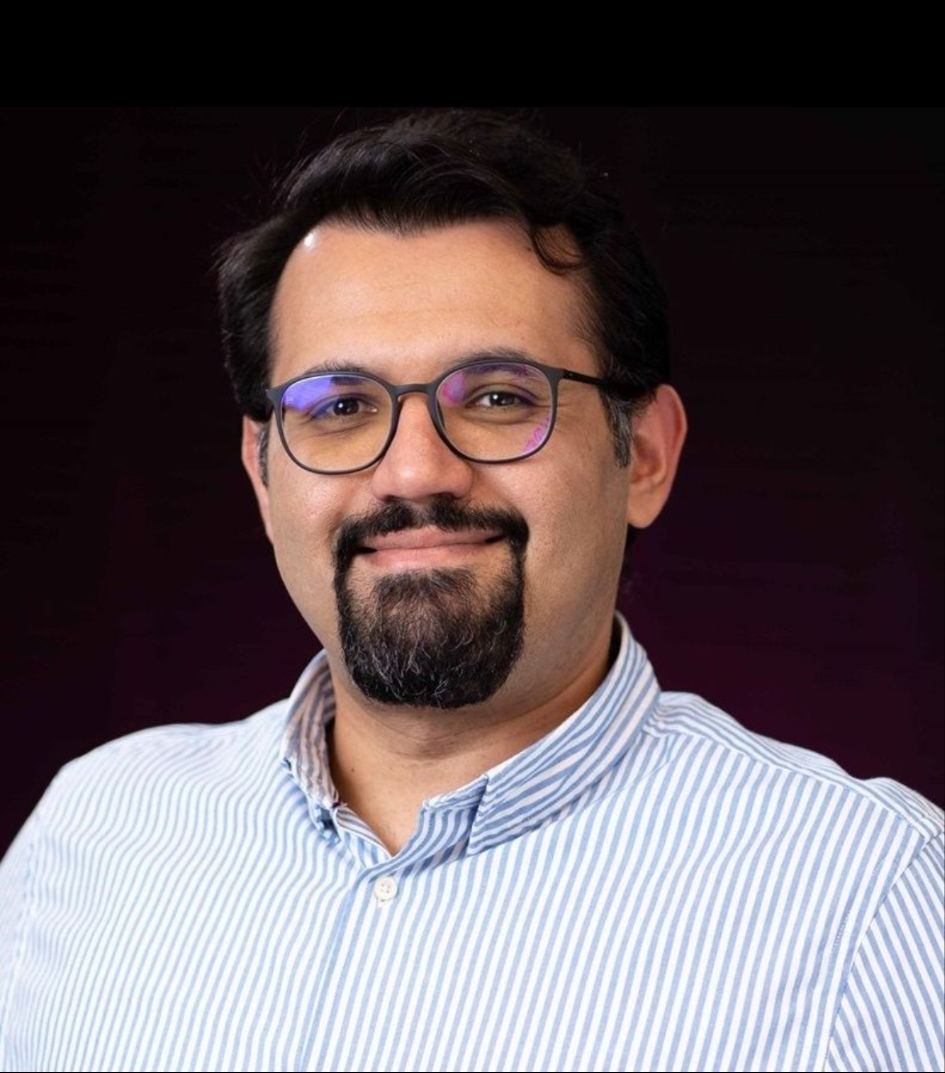
Dr. Ehsan Abbasnejad is an Associate Professor at Monash University's Department of Data Science and Artificial Intelligence, and holds adjunct positions at the Australian Institute for Machine Learning (AIML, University of Adelaide) and the Centre for Augmented Reasoning (CAR). He specializes in foundational AI, focusing on vision-language tasks, adversarial machine learning, and reinforcement learning. His work bridges theory with real-world applications in agriculture, energy, healthcare, and sports. Education: PhD in Computer Science from Australian National University (ANU). Research Interests: Machine Learning Theory and Adversarial Defenses Neural Network Robustness and Generalization Multimodal Learning (Vision-Language) Continual and Transfer Learning Applications in Energy, Healthcare, and Robotics Awards: Finalist for Australian AI Academic/Researcher of the Year (2024) Multidisciplinary competition wins (e.g., OzMineral Explorer Challenge) Advising & Grants: Australian Research Council (ARC) Discovery Project on Reinforcement Learning CSIRO's Next Generation Graduate Fund Accepting PhD students in foundational AI and applications Labs & Teams: Director of Foundational Machine Learning & Reasoning at Monash, leading global teams in AI competitions and industry collaborations (Microsoft Research, NEC Labs America).
Floyd Mueller is a Full Professor of Future Interfaces in the Department of Human Centred Computing at Monash University, where he also directs the award-winning Exertion Games Lab. His work bridges human-computer interaction, interaction design, and game and play design, with a focus on bodily engagement and physical activity through technology. He has held prior academic and research positions at RMIT University, the University of Melbourne, and CSIRO, and has been affiliated with elite institutions such as Stanford University, MIT Media Lab, and Microsoft Research Asia. PhD in Interaction Design – University of Melbourne (2011) MS in Media Arts and Sciences – Massachusetts Institute of Technology (2002) Diplom-Informatiker (Medieninformatik) – Hochschule Furtwangen (2000) BSc in Multimedia – Griffith University (1999) Floyd Mueller’s research centers on human-computer interaction with a strong emphasis on bodily interactions, exertion interfaces, and playful technologies. His work explores how digital systems can support physical activity, human values, and novel forms of expression through games, wearables, augmented reality, and immersive experiences. He employs methodologies such as design ethnography, autoethnography, and Research Through Design to investigate the phenomenology of human-computer integration. His recent publications (2024–2025) reflect a continued focus on the future of bodily interfaces, including lucid dream mediation, extended reality for fear reduction in water, sonic gastronomy, and shared bodily control in augmented human systems. These works are published in top-tier venues like CHI and Human-Computer Interaction journal, highlighting trends toward immersive, sensory-rich, and human-centered computing that challenge traditional boundaries between body and machine. His scientific awards include being an inaugural honouree of the Australian Design Honours, receiving 9 Best Paper Honorable Mentions and 2 Best Papers at CHI and CHI PLAY, and being recognized as a Fulbright Visiting Scholar and Microsoft Research Asia Fellow. His games have been featured by BBC, ABC, Discovery Science Channel, and New Scientist, and won a Media Star Award. Floyd Mueller actively supervises PhD students through the Exertion Games Lab and Supervisor Connect platform. He has secured major research grants, including Australian Research Council Discovery and Linkage Projects. His current projects include Advancing Australia’s hospitality industry through interactive food and Designing digital aquatic play to foster Australians' engagement with water . He also serves as associate editor for IMWUT and IJHCS, co-founded the CHI PLAY conference series, and was general co-chair for CHI PLAY’18 and CHI’20. He leads the Exertion Games Lab, an interdisciplinary research team focused on inventing the future of bodily play. The lab investigates how technology can support active lifestyles through exertion games, wearables, drones, and immersive environments. The lab’s work spans design, prototyping, user studies, and real-world deployment, often in collaboration with chefs, athletes, and underwater explorers.
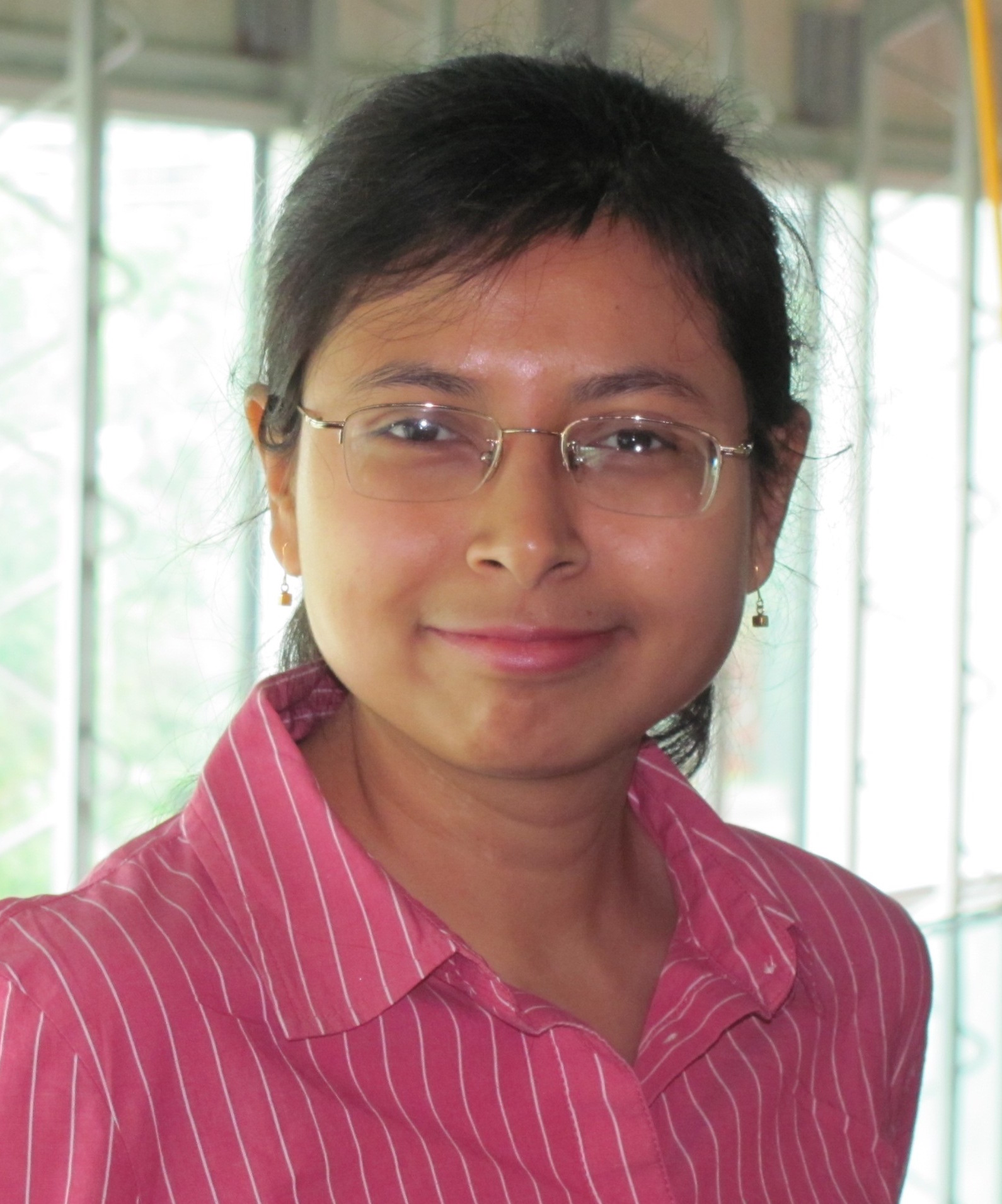
Professor Khin Than Win is a leading academic in health informatics and digital health at the University of Wollongong (UOW), holding appointments as Professor in the School of Computing and Information Technology, Head of Postgraduate Studies, and Deputy Head (Research). She also serves as Academic Program Director for UOW's Master of Health Informatics and Graduate Certificate in Health Analytics programs. Her research focuses on applying information technology to healthcare, particularly in behavior change support systems, persuasive technology, and ethical AI applications. She has supervised over 20 PhD students and holds leadership roles including Deputy Chair of UOW's Health and Medical Research Ethics Committee, and membership in international committees like the Persuasive Technology Steering Committee. Education: MBBS from Rangoon University, Master's and PhD in IT from Assumption University (Bangkok) and UOW (Australia) Research Interests: Health data analytics, AI in healthcare, privacy/security of health systems Leadership: Program/General Chair roles at ACIS and Persuasive Technology conferences Awards: Best Paper Awards (2023, 2018) Her extensive funding portfolio includes ARC grants and NHMRC projects, totaling over 24 funded initiatives. Current research explores blockchain in medical passports, AI ethics, and culturally tailored health interventions.
Professor Ben Goldys is a distinguished academic at The University of Sydney's School of Mathematics and Statistics, where he conducts research at the intersection of pure mathematics and applied sciences. His work spans multiple disciplines including stochastic analysis, partial differential equations, and financial mathematics, with significant contributions to both theoretical frameworks and practical applications in science and finance. Goldys' research interests center on stochastic (ordinary and partial) differential equations and their applications. His specific focus areas include stochastic partial differential equations, stochastic geometric PDEs, stochastic boundary value problems, stochastic fluid dynamics, ergodic theory of infinite-dimensional diffusions, and applications in financial mathematics such as interest rate derivatives, credit risk, and stochastic volatility. His work bridges pure mathematical theory (Functional Analysis, PDEs, Ergodic Theory) with complex real-world problems across multiple domains. His research aligns with the University of Sydney Faculty of Science Research Strengths including Understanding the Universe, Fundamental Laws of Nature, Complex Systems, and Next Generation Materials. Professor Goldys has secured multiple significant research grants from the Australian Research Council, including recent projects such as 'Mathematics for future magnetic devices' (2024), 'Mathematics for breaking limits of speed and density in magnetic memories' (2019), and 'Novel Approaches for Problems with Uncertainties' (2015). His current research projects focus on geometric stochastic partial differential equations and applications in micromagnetism, mean field games in finance, stochastic boundary value problems, and stochastic Navier-Stokes equations on the rotating sphere. He maintains extensive international collaborations with institutions in Germany (University of Tuebingen), Italy (LUISS University), Poland (Institute of Mathematics Polish Academy of Sciences), and the United Kingdom (University of York), working on projects involving optimal control, stochastic systems with memory, and geometric stochastic PDEs. Goldys is an active member of the Applied Mathematics Research Group and The University of Sydney Nano Institute, contributing to interdisciplinary research initiatives that connect mathematical theory with cutting-edge technological applications.
Dr. Amin Sakzad is an Associate Professor in the Department of Software Systems & Cybersecurity at Monash University's Faculty of Information Technology. His research focuses on lattice-based cryptography, wireless communications, and post-quantum security protocols. He holds a PhD in Applied Mathematics from Amirkabir University of Technology (2011) and has held academic roles at Carleton University and Monash since 2012. Dr. Sakzad’s expertise spans lattice coding theory, MIMO systems, and privacy-preserving technologies for genomic databases and blockchain applications. He leads multiple ARC-funded projects, including work on secure databases (SRDBMS) and post-quantum cryptographic primitives for FinTech and energy sectors. His research has been recognized through awards such as the FIT Dean’s Award for Teaching Excellence (2021). Key collaborations include projects on blockchain security (CollinStar Lab), genomic data privacy, and energy market cybersecurity. His work addresses UN SDGs through contributions to quality education (SDG 4) and industry innovation (SDG 9). Recent publications highlight advancements in lattice-based cryptography (e.g., CRYSTALS-Kyber variants), privacy-preserving energy trading, and secure blockchain protocols like FPPW watchtower systems. His research bridges theoretical cryptography with practical implementations in embedded systems and 5G telecommunications. Grants: 16 active/completed projects including $1.2M in ARC funding Advising: Supervising PhD projects on lattice applications in post-quantum crypto and blockchain Labs: Core member of Monash’s Software Defined Telecommunications (SDT) Lab and CollinStar Lab
Associate Professor Wenhua Zhao is a globally recognized expert in offshore hydrodynamics and renewable energy technologies at The University of Queensland , School of Civil Engineering. With over 110 publications and 30 million AUD in secured research funding, his work bridges theoretical and practical advancements in marine engineering. Research focuses on Clean Energy , Artificial Intelligence , and Climate Change , specifically floating wind energy, floating solar, offshore aquaculture, and green hydrogen production. His 15 most recent articles (2024-2025) emphasize wave-structure interactions, gap resonance dynamics, and AI-driven wave prediction, published in top journals like Journal of Fluid Mechanics and Ocean Engineering . Scientific awards include the prestigious ARC Future Fellowship (2024-2028) and DECRA Fellowship (2019-2022) , recognizing his contributions to academia and industry. He teaches the 'Design of Offshore Energy Systems' course , training hundreds of students in coastal and ocean engineering, and serves as Deputy Editor for Ocean Engineering and Associate Editor for ASME's Journal of OMAE . Available for research supervision, Zhao actively collaborates with editorial boards of Applied Ocean Research and other Q1 journals.
Aggelos Kiayias FRSE is Chair in Cyber Security and Privacy and Director of the Blockchain Technology Laboratory at the University of Edinburgh. He is also Chief Scientist at blockchain technology company Input Output. His academic work spans over two decades with more than 200 publications in cryptography, blockchain, and security. Dr. Kiayias received his Ph.D. from the City University of New York and was an undergraduate at the University of Athens Mathematics department. His research focuses on computer security, privacy, applied cryptography, and foundations of cryptography with particular emphasis on blockchain technologies, distributed systems, e-voting, secure multiparty protocols, and identity management. His recent work demonstrates continued innovation across multiple dimensions of blockchain technology, with publications spanning theoretical foundations, practical implementations, economic modeling, and privacy-preserving techniques. The research output shows strong emphasis on security analysis, consensus protocols, transaction processing, and economic incentives within decentralized systems. His work bridges theoretical cryptography with real-world blockchain applications. Among his notable recognitions are an ERC Starting Grant, Marie Curie fellowship, NSF Career Award, Fulbright Fellowship, election as Fellow of the Royal Society of Edinburgh in 2021, and the BCS Lovelace Medal in 2024. He has served as program chair for major conferences including the Cryptographers' Track of RSA (2011), Financial Cryptography (2017), Real World Crypto Symposium (2020), and Public-Key Cryptography Conference (2020), and as general chair of Eurocrypt 2013. Professor Kiayias has supervised over 20 PhD students, many of whom have gone on to academic positions at institutions including Imperial College, Stanford University, Royal Holloway University London, University of Glasgow, University of Sydney, and Virginia Commonwealth University. His current advisees include Yu Shen, Amirreza Sarencheh, and Christina Ovezik with expected graduations between 2025-2026. He leads the Blockchain Technology Laboratory at the University of Edinburgh and is involved in several major blockchain research projects including Panoramix and Fentec. His research has received significant funding from the European Union (Horizon 2020, ERC), UK research councils (EPSRC), US agencies (NSF, DHS, NIST), and Greek research bodies.
Sushmita Ruj is an Associate Professor in the School of Computer Science and Engineering at the University of New South Wales (UNSW), Sydney. She serves as the Faculty of Engineering Lead for the UNSW Institute for Cybersecurity (IfCyber) and as the Taste of Research (ToR) Coordinator within the School of Computer Science and Engineering. Her academic journey includes previous positions as a Senior Research Scientist at CSIRO's Data61 (2019-2022), Associate Professor at the Indian Statistical Institute, Kolkata, and Assistant Professor at the Indian Institute of Technology (IIT), Indore. Dr. Ruj's primary research interests focus on applied cryptography, post-quantum cryptography, cybersecurity, blockchains, and data privacy. She designs practical, efficient, and provably secure protocols for real-life applications, with particular emphasis on critical infrastructure including smart grids, cloud computing, ad hoc networks, and data sharing frameworks. As quantum technology advances, her work increasingly focuses on developing quantum-safe algorithms to ensure a more secure Internet infrastructure. Her research spans multiple domains including cryptographic key management, proofs of storage, verifiable computation, vector commitments, and privacy-enhancing technologies for cloud and IoT environments. Her recent publications demonstrate a strong trend toward post-quantum cryptography solutions, with particular emphasis on blockchain applications, DNS security, and privacy-preserving protocols for industrial IoT. The research shows increasing focus on practical implementations of theoretical cryptographic concepts, with applications across multiple sectors including finance, healthcare, and critical infrastructure. Her work bridges the gap between theoretical cryptography and real-world security challenges, with growing emphasis on the transition from classical to quantum-resistant systems. Best Paper Award at ACISP 2024 JNCA Best Survey Award (2023) NSW Innovation Award (iAward) Merit Winner (2022) Women in Science Award from CSIRO (2020) ACM Senior Member (2016) IEEE Senior Member (2015) Samsung GRO award (2014) Dr. Ruj has successfully mentored numerous PhD and Master's students, with many of her former students now holding academic positions at institutions like IIT Indore, TU Wien, and CISPA Helmholtz Center. She has secured significant competitive funding including multiple Australian Research Council (ARC) grants, Samsung GRO Award, NetApp Faculty Fellowship, Cisco Academic Grant, and IBM Research grant. Her current research portfolio includes projects on blockchain-based quantum-safe digital medical passports, embedding trust in digital IDs, and resilience of supply chain unstructured data. As Faculty of Engineering Lead for IfCyber, Dr. Ruj plays a key role in UNSW's cybersecurity research initiatives. She has served on editorial boards for prestigious journals including IEEE Transactions on Information Forensics and Security and has held leadership positions in major conferences such as ACISP 2021 and Indocrypt 2020. She was also a member of the working group on "Blockchain For Cybersecurity" for the National Blockchain Roadmap of Australia and the first Blockchain Working group set up by the Reserve Bank of India.
Professor Will Bateman is a distinguished academic at the Australian National University (ANU) College of Law, where he serves as a Professor and recently completed his term as Associate Dean (Research) from 2021 to 2024. He is also a Chief Investigator for the ANU Grand Challenge project "Humanising Machine Intelligence" and a Fellow at the Gradient Institute, a leading ethical AI research organization based in Sydney. Professor Bateman's educational background is impressive, having earned a PhD and LLM (Hons) from the University of Cambridge and a BA/LLB (Hons) from the Australian National University. Prior to his academic career, he worked in appellate litigation, commercial disputes, and banking as a solicitor at Herbert Smith Freehills, and served as an associate to Justice Stephen Gageler AC of the High Court of Australia and Justice Steven Rares of the Federal Court of Australia. Professor Bateman's research spans two major interdisciplinary domains that sit at the intersection of law with finance and technology. His work on financial regulation focuses on the legal aspects of central banking, sovereign debt markets, digital currencies, and sustainable investing. He has provided expert evidence to the UK Parliament's House of Lords Inquiry into Quantitative Easing, and has collaborated with major financial institutions including the Federal Reserve Bank of New York and the Bank of England. His research on artificial intelligence examines regulatory frameworks for AI in the public sector, with collaborations including the Minderoo Foundation and the Gradient Institute. His recent publications demonstrate a remarkable breadth across legal theory, financial regulation, and AI governance. The articles reveal a consistent theme of examining how traditional legal frameworks adapt to new financial technologies and monetary policy challenges. His work bridges theoretical legal scholarship with practical policy implications, as evidenced by his numerous government consultations and collaborations with central banks worldwide. 2020 Yorke Prize by the University of Cambridge for his work on public finance and constitutionalism Top 10 all-time most downloaded SSRN paper on central banking ("Central Bank Money: Liability, Asset, or Equity of the Nation?") Professor Bateman actively supervises research students, currently mentoring Benjamin Ettinger who is pursuing a PhD on "Legal Method, Cartels and Public Monopolies: A View From the High Court 1908 - 1948." He has secured significant research funding, including projects funded by the Economic and Social Research Council (UK), the German Research Foundation (Deutsche Forschungsgemeinschaft), and The Minderoo Foundation. His "Rebuilding Macroeconomics Initiative: Legal and Economic Conceptions of Money" received £245,000, while the "FA Mann" project was funded with €620,000 (approximately A$1,012,500). He leads the "Humanising Machine Intelligence" project, an ambitious interdisciplinary initiative involving computer scientists, mathematicians, philosophers, sociologists, psychologists, and lawyers aimed at developing democratically legitimate machine intelligence. He also co-led a major project with the University of Western Australia to formulate model legal frameworks for AI regulation in the public sector, funded by The Minderoo Foundation.
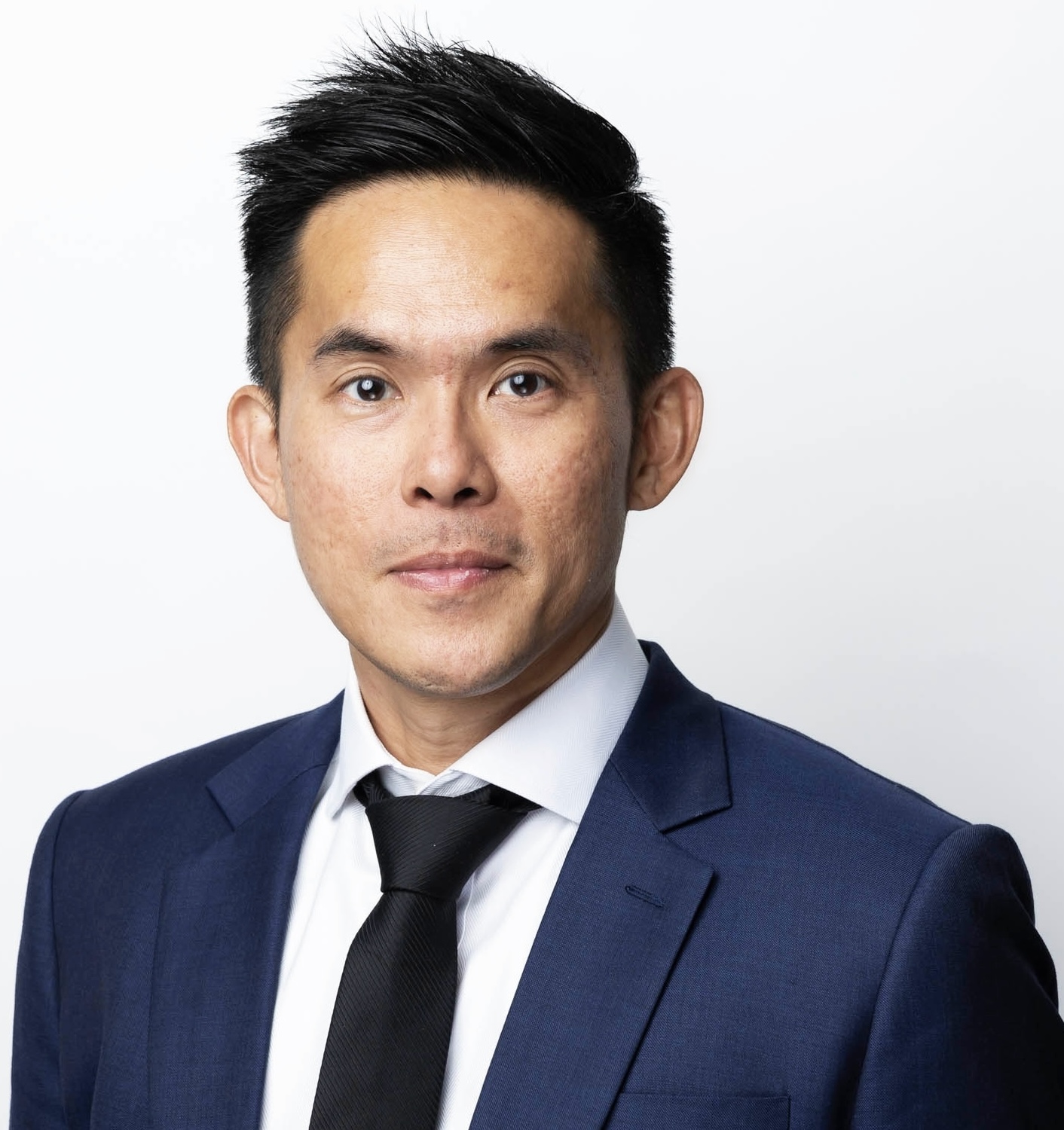
Ningning Hou is a Lecturer in Computing (IoT/Networking) at Macquarie University's School of Computing. They are affiliated with the Future Communications Research Centre and Data Horizons Research Centre. Previously, they served as a Postdoctoral Fellow at The Hong Kong Polytechnic University (PolyU) and earned their PhD in Computer Science from PolyU in 2021, followed by a B.Eng. in Telecommunication Engineering from Beijing University of Posts and Telecommunications (2017). Research Interests: Low Power Wide Area Networks (LPWANs) Internet-of-Things (IoT) Wireless Sensing and Networking Wireless Security Recent research focuses on enhancing LoRa communication through innovations like full-duplex gateways (FDLoRa) and scalable logical channels (XGate), addressing challenges in network scalability, signal interference, and security threats. Their work spans topics such as data aggregation efficiency, antenna diversity, and covert channel mitigation. Advising: Actively seeking self-motivated PhD students and researchers for projects in LPWANs, edge computing, and wireless security. Labs/Teams: Involved with Future Communications Research Centre and Data Horizons Research Centre.
Professor Jun Zhang is a leading academic in cybersecurity at Swinburne University, Australia, where he directs the Cybersecurity Lab. He has been honored as Australia's top cybersecurity researcher and instrumental in establishing Swinburne as a globally recognized cybersecurity research institution. His work includes high-impact papers and multi-million-dollar R&D projects, culminating in awards like the 2021 'Top Cybersecurity Research Institution' accolade. As course director of the Bachelor of Cyber Security, he pioneered an industry-driven teaching model with Deloitte and CSIRO, significantly boosting course enrollment. His collaborations extend to Adobe's Curriculum Innovation Program and the Australian P-TECH initiative, promoting STEM education and cybersecurity awareness. He supervises doctoral candidates and leads grants focused on AI-driven cybersecurity, smart home security, and blockchain-based edge computing. His research spans vulnerability detection, GAN forensics, IoT security, and privacy preservation in OSNs. Research interests include cybersecurity fundamentals, data science applications, and distributed systems. Notable achievements include the PTFix framework for Java vulnerabilities, the IoTFuzz smart home testing system, and CTI mining methodologies. Awards reflect his mid-career research excellence and industry partnerships. His grants with CSIRO and defense organizations emphasize real-world impact, addressing challenges from malware detection to adversarial machine learning. The Cybersecurity Lab and collaborative projects like Artchain demonstrate his commitment to bridging academia and industry. Professional activities include supervising over 20 HDR students and securing grants totaling millions. His work on blockchain-based edge storage (CSEdge) and SDCCP congestion control highlights innovation in networking. Future directions include advancing AI for design collaboration with CSIRO and enhancing privacy in smart energy technologies. His contributions span technical, educational, and community outreach domains, positioning him as a pivotal figure in cybersecurity's evolution.
Dr. Kanchana Thilakarathna is a Senior Lecturer in Distributed Computing at the University of Sydney's School of Computer Science, and a member of the Centre for Distributed and High Performance Computing. They hold a PhD from the University of New South Wales (UNSW) and a B.Sc. Eng (Hons) from the University of Moratuwa, Sri Lanka. Prior to academia, they worked as a Research Scientist at CSIRO/Data61 and had industry experience as a Mobile Radio Network Engineer. Research Interests : Dr. Thilakarathna focuses on cybersecurity, privacy in mobile and IoT systems, mixed reality privacy, and distributed computing platforms. Their work emphasizes user-centric solutions like the Yalut social media app, which enables decentralized data sharing. Key themes include privacy-preserving techniques, edge computing, and secure federated learning frameworks. Recent Work : Recent articles (2023–2025) explore machine unlearning for large language models, federated learning security, and IoT network slicing using P4 programmability. Their work on synthetic video traffic generation (VideoTrain++) and drone detection (DronePrint) demonstrates cross-disciplinary innovation. Awards : Malcolm Chaikin Prize (2015), Meta Research Awards (2020/2022), and Heidelberg Laureate Fellowship (2019). Grants : ARC Research Hub for Future Digital Manufacturing (2024), NSW Defence Innovation Network Projects (2024/2021), and Facebook Research Awards (2022/2020). Students : Advising 4 current PhD students on topics like wireless trust establishment and machine unlearning. Labs/Teams : Part of the Centre for Distributed and High Performance Computing and Sydney Nano Institute.
Dr. Alireza Nili is a Senior Lecturer in Service Science at QUT's School of Information Systems within the Faculty of Science. His expertise spans digitization of customer-centric services, AI/chatbots, IoT/IIoT, and sustainable technologies. He holds a PhD from Victoria University of Wellington and has coordinated large-scale courses like IT Systems Design (IFB103), achieving top teaching scores. Nili's research focuses on service ecosystems, trust in digital services, and public/retail sector innovations. He has secured over $1.4M in industry grants for projects involving Cisco, Amazon, and Services Australia. His awards include the 2023 Educator of the Year and multiple top conference paper recognitions. Nili supervises PhD students at Level 3 mentoring status and contributes to major conferences as track chair/associate editor. Research highlights include frameworks for chatbot governance, IOT in agriculture, and AI ethics. His work appears in IEEE Software , Communications of the ACM , and MIT Sloan Management Review . Current projects address consumer trust in AI technologies and spatial data systems. Nili's interdisciplinary approach combines design science with empirical methodologies to bridge theory and practice in digital service innovation.
Professor Barney Tan serves as Professor of Information Systems and Senior Deputy Dean (Impact and Partnerships) at UNSW Business School. Previously, he held the position of Head of School (Information Systems and Technology Management) and was formerly Professor of Strategic Information Systems at The University of Sydney. Professor Tan completed his PhD in Information Systems at the National University of Singapore in 2012, following a Bachelor of Computing (Honors) in Information Systems from the same institution in 2004. His research focuses on strategic information systems, AI management and implementation, digital platforms and ecosystems, fintech, and information systems for sustainable development with particular emphasis on IT trends in the Asia-Pacific region including China and ASEAN countries. As an engaged researcher, Professor Tan is deeply passionate about translational research that contributes toward sustainable development and frequently provides advisory support to organizations he has studied, including national governments through his work with the United Nations International Think Tank for Landlocked Developing Countries. His research has been published in top-tier journals including MIS Quarterly, Information Systems Research, Journal of Association of Information Systems, Information Systems Journal, and The Journal of Strategic Information Systems. Senior Editor, Information Systems Journal (2022-Present) Senior Editor, Information Technology and People (2019-Present) Associate Editor, Internet Research (2020-Present) Associate Editor, Information and Management (2016-Present) Editorial Board Member, Information Systems Research (2022-Present) Editorial Board Member, IEEE Transactions on Engineering Management (2017-Present) Professor Tan has received numerous prestigious teaching and research awards throughout his distinguished career: 22 awards in 11 years at The University of Sydney SUPRA Teacher of the Year award for 2019 and 2020 SUPRA Supervisor of the Year award for 2019, 2020 and 2021 The University of Sydney Business School Dean's Award for Teaching in 2019 Multiple Dean's Citations for Teaching across various courses and semesters Professor Tan has successfully secured multiple competitive research grants: Hong Kong University Grants Committee General Research Fund (2020-2022): 'The Impact of Social Media on Digital Guanxi Formation in the Chinese Workplace', Co-Investigator, HKD$475,617 (A$88,286) The University of Sydney Business School Industry Partnership Grant (2017): 'International Think Tank for Landlocked Developing Countries Research Development Project', Chief Investigator, A$27,238 Zhejiang Gongshang University Strategic Research Grant (2016-2019): 'Emerging Digital Commerce Platforms: Development Patterns and Usage Behavior', Principal Investigator, CNY$300,000 (A$60,535) Multiple University of Sydney Bridging Support Grants (2015-2016) focused on digital commerce and Australian-China trade Professor Tan is frequently featured in mainstream media outlets including ABC News, Business Insider, Sydney Morning Herald, The Australian, News.com.au, The Australian Financial Review, CIO, and Bloomberg Businessweek, where he provides expert commentary on technology-related topics such as cryptocurrency, digital platforms, and China's tech landscape.
Professor Michael Milford is a robotics and computer vision expert at Queensland University of Technology (QUT), serving as Joint Director of QUT's Centre for Robotics. His research bridges robotics, neuroscience, and computer vision, focusing on biologically inspired navigation systems for autonomous vehicles and drones. He has pioneered projects like SeqSLAM and RatSLAM, emphasizing the synergy between biological intelligence and robotic systems. Research Interests: Milford explores navigation algorithms inspired by animal behavior, energy-efficient neural networks, and autonomous systems. His work aims to create robots capable of operating in dynamic environments through interdisciplinary collaboration with institutions like MIT, Harvard, and NASA's Jet Propulsion Laboratory. Awards & Recognition: Awarded the 2019 Batterham Medal and a $2.7M Australian Laureate Fellowship for his project on GPS-independent positioning systems. His work has produced highly cited papers in robotics and computer vision, including breakthroughs in visual SLAM and place recognition under varying conditions. Teaching & Collaboration: Milford mentors students in robotics and AI, launching initiatives like the STEM Storybook to inspire youth. He collaborates globally, emphasizing cross-disciplinary research to bridge gaps between fundamental and applied sciences. Labs & Projects: Leads QUT's Centre for Robotics, advancing technologies for autonomous systems. His projects explore neuromorphic computing, SLAM systems, and bio-inspired navigation, with applications in defense, transport, and environmental monitoring.