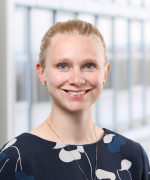
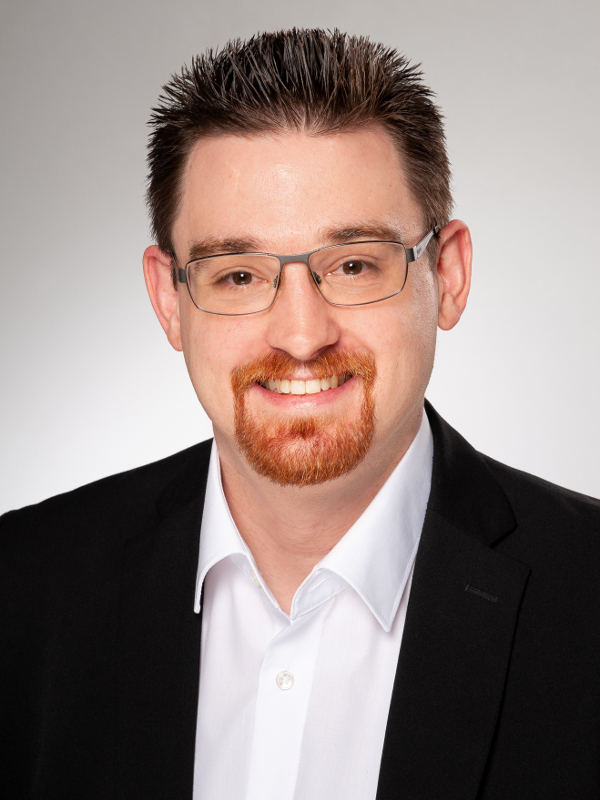
Dr. Nathalie Bick is a Researcher at the FernUniversität Hagen , working within the Stereotype Threat research group in the CATALPA cluster. Her work focuses on stereotypes affecting student groups in digital higher education contexts and interventions to mitigate their negative impacts. PhD in Psychology (2025), University of Cologne Master of Science in Psychology (2021), University of Cologne Bachelor of Science in Psychology (2017), University of Cologne Her research explores social identity threat , belongingness , and performance disparities in distance learning environments, particularly for migrant youth. Recent publications examine stereotype facets, virtual collaboration barriers, and trustworthiness signaling during the pandemic. Key trends in her work include: Quantitative analysis of stereotype content in digital education Impact of negative stereotypes on social integration Interventions for equitable learning conditions
Kamila Misiejuk is a Postdoctoral Researcher at the Center of Advanced Technology for Assisted Learning and Predictive Analytics (CATALPA) within FernUniversität Hagen since October 2024. She previously served as a Senior Researcher and PhD Fellow at the Centre for the Science of Learning and Technology (SLATE) , University of Bergen (2017-2024), where she developed expertise in learning analytics and network modeling. Her research focuses on Interdisciplinary applications of Epistemic Network Analysis (ENA) and Transition Network Analysis (TNA) Designing data-driven educational tools for assessment and feedback Evaluating generative AI in academic writing and peer assessment Studying ethical implications of learning analytics dashboards Key trends in her 15 most recent publications (2024-2025) include Systematic reviews of generative AI and dashboard effectiveness Development of network analysis frameworks for collaborative learning Investigations into human-AI interaction dynamics and idiographic analytics Methodological tutorials in educational data visualization and R programming She contributes to professional networks as: Board Member , International Society for Quantitative Ethnography (ISQET, since 2021) Committee Chair , ISQET Resources Committee (2021-2023) Member , Society for Learning Analytics Research (SoLAR, since 2018)
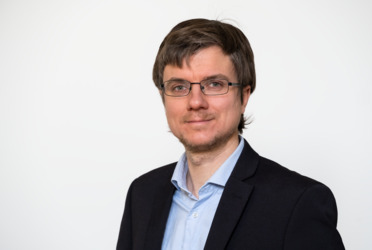
Niels Seidel is a computer scientist and researcher at FernUniversität in Hagen, where he serves as the Lead of project APLE II at the CATALPA research center and as an alternate/deputy member of the CATALPA executive board. He works within the Faculty of Mathematics and Computer Science, focusing on the development of adaptive personalized learning environments for higher education. His work bridges computer science and educational technology, with particular emphasis on supporting self-regulated learning, reading comprehension, and assessment activities across diverse student populations. Seidel's research interests span multiple interconnected domains in educational technology. His primary focus is on Adaptive Learning Environments , where he designs, develops, and evaluates systems that support learners in self-regulated learning, reading, and assessment. His work in Learning Analytics involves analyzing and visualizing learning behavior at individual, group, and organizational levels while accounting for learner diversity. He has made significant contributions to Video-Based Learning , examining how video content can be structured and presented to optimize learning outcomes. His research increasingly incorporates Artificial Intelligence to create more responsive and personalized educational experiences, as evidenced by his recent work on generative AI applications for evaluating self-regulated learning skills. His publication record shows a clear trajectory toward increasingly sophisticated adaptive learning systems. Early work focused on foundational aspects of video-based learning and interaction design patterns, while recent publications demonstrate sophisticated integration of AI, learning analytics, and adaptive techniques. His research consistently addresses practical challenges in distance education while contributing to theoretical frameworks in educational technology. The 2024-2025 publications reveal particular emphasis on self-regulated learning assessment, reading comprehension support, and the application of generative AI in educational contexts. As an academic advisor, Seidel has supervised numerous bachelor's, master's, and diploma theses since 2018, mentoring students working on diverse projects related to educational technology. His current leadership roles include serving as spokesman for the Working Group Learning Analytics within the SIG Educational Technology of the German Informatics Society since 2021. He has secured funding for multiple projects, including the Google.org-funded Theresienstadt explained project and the BMBF-funded Life Long Learning Open Operating Platform (L³OOP). Seidel leads the APLE II project at CATALPA research center, which aims to develop domain-independent adaptive personalized learning environments for higher education. His work leverages the research infrastructure at FernUniversität in Hagen, particularly the Moodle-based learning management system, to implement and test innovative educational technologies with large student cohorts in real-world settings.
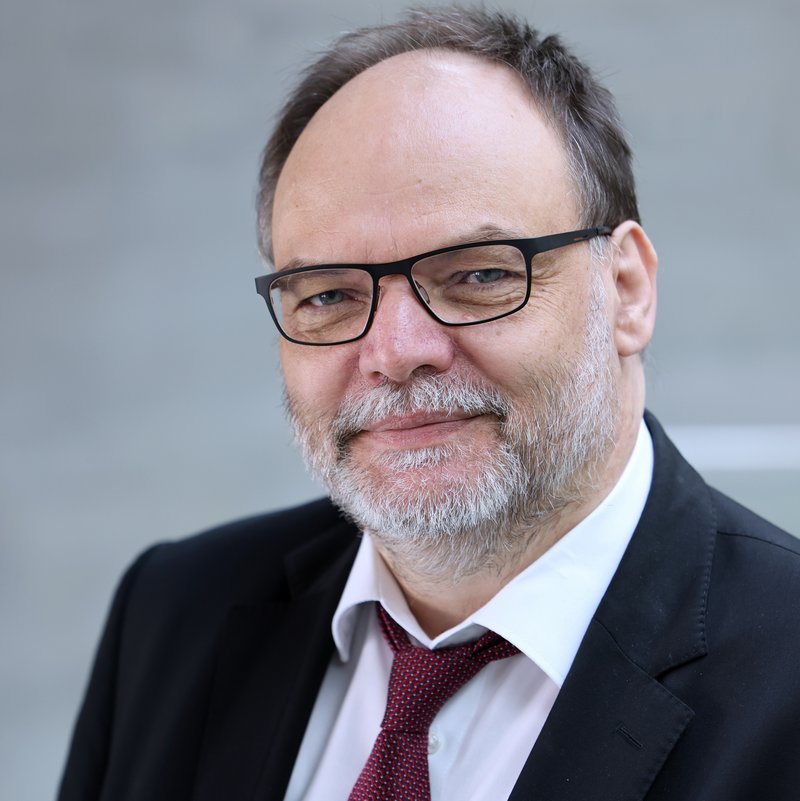
Dr. Jens Lausen is a Researcher at the Department of Business Information Systems within the Faculty of Economics and Business at Goethe University Frankfurt. Affiliated with the Chair of e-Finance under Prof. Dr. Peter Gomber since February 2017, he completed his doctorate in October 2021 on digital financial markets and investor protection. His research bridges finance, information systems, and regulatory technology with a focus on empirical market analysis. His academic credentials include: Master's degree in Economics and Management with Finance specialization from Johannes Gutenberg University Mainz (January 2017), graduating as top student in his cohort Doctorate (Dr. rer. pol.) from Goethe University Frankfurt (October 2021) on "Market Organization and Investor Protection in Digital Financial Markets" Lausen's research centers on Market Microstructure, Financial Regulation, and Decision Support Systems, employing computational methods like agent-based modeling and machine learning. His work analyzes market fragmentation, crowdfunding dynamics, and misconduct detection in financial intermediation, frequently published in leading finance and information systems journals. Analysis of his 15 most recent publications (2018-2024) reveals three dominant research trajectories: (1) Regulatory impact assessment using textual analysis and machine learning, (2) Market microstructure evolution in fragmented securities markets, and (3) Behavioral dynamics in crowdfunding platforms. His work consistently applies computational techniques to regulatory challenges in digital finance. As core member of Prof. Gomber's e-Finance research group, Lausen contributes to Frankfurt's financial technology research ecosystem. The team maintains strong industry connections with European financial institutions and regulatory bodies, focusing on practical applications of market microstructure theory and regulatory technology solutions.
Keywan Sohrabi is a Professor at Technische Hochschule Mittelhessen (THM) , specializing in Biomedical Engineering and Medical Informatics . His work bridges Pulmonology , Sleep Medicine , and Digital Health through innovative applications of 3D Imaging , Acoustic Analysis , and Machine Learning . Contact: keywan.sohrabi@ges.thm.de
Prof. Dr. Axel Kröner is a Professor of Optimization at the Institute of Mathematics, Martin-Luther-Universität Halle-Wittenberg, within the Faculty of Natural Sciences II. His research focuses on optimal control and numerical methods for partial differential equations (PDEs), stochastic control, and feedback mechanisms in complex systems. Academic Background: Ph.D. in Mathematics, Technische Universität München (2011) Diploma in Mathematics, Ruprecht-Karls-Universität Heidelberg (2007) Axel Kröner's research spans PDE-constrained optimization, numerical analysis, and control theory. Key areas include feedback control for hyperbolic and parabolic equations, stochastic optimal control for infinite horizon problems, and adaptive finite element methods for PDE discretization. His work bridges theoretical and computational aspects, with applications in elasticity, fluid dynamics, and quantum mechanics. Recent publications highlight advancements in Hamilton-Jacobi-Bellman equations for feedback control, bilevel optimization for parameter learning, and Runge-Kutta-based neural networks . Methodologies often integrate dynamic programming , Galerkin approximations , and error estimation for efficient solutions. Advising and Projects: He has supervised numerous Master's and Bachelor's theses on topics like wave equation control, inverse problems, and neural network optimization. Funding includes support from the German Academic Exchange Service (DAAD) and the Gaspard Monge Program for Optimization and Operations Research (2015-2018). Professional Activities: Kröner has organized major conferences such as the International Workshop on PDE Constrained Optimization and contributed to teaching at institutions including Humboldt-Universität zu Berlin and University Paris-Saclay.
Prof. Dr. Ralf Peters is the acting director of the Institute of Energy and Climate Research - Electrochemical Process Engineering (IEK-14) at Forschungszentrum Jülich and Professor for Process Engineering for Synthetic Fuels at Ruhr University Bochum. Previously, he held professorships at Aachen University of Applied Sciences (2006-2023) and taught in the Master's program 'Energy Systems' at Aachen University of Applied Sciences since 2001. His career spans over three decades in energy research, with significant contributions to fuel cell technology and synthetic fuel production. Dr. Peters received his Dipl.-Ing. in Mechanical Engineering with specialization in Chemical Engineering from RWTH Aachen University in 1990 and completed his doctorate (Dr.-Ing.) at the University of Siegen in 1995 with research on 'Vapor-liquid phase equilibria in the ammonia-water-lithium bromide material system.' His academic journey includes positions as scientific staff member at the Institute for Fluid and Thermal Engineering at the University of Siegen (1990-1995) and at Forschungszentrum Jülich since 1996. Prof. Peters' research focuses on electrochemical process engineering , particularly in the areas of fuel cell technologies for mobile applications , synthetic fuel production , and power-to-fuel systems . His work bridges fundamental thermodynamic modeling with practical reactor development and system integration. The research group under his leadership has made significant advances in catalyst development for carbon-neutral fuel synthesis, particularly for iso-butanol production, and in the optimization of electrolysis systems for hydrogen production. His team has also contributed extensively to the understanding of CO 2 utilization pathways and the life cycle assessment of alternative fuel production processes. Analysis of Prof. Peters' recent publications reveals a strong focus on catalyst development for carbon-neutral fuel synthesis, particularly using bimetallic systems and dilute alloys. His work spans multiple technical domains including electrochemical systems (electrolyzers and fuel cells), thermodynamic process modeling, and life cycle assessment of alternative fuel pathways. The research demonstrates a clear progression from fundamental catalyst characterization to system-level integration of power-to-fuel technologies, with increasing emphasis on renewable energy integration and carbon-neutral fuel production. Prof. Peters has supervised more than 75 student theses throughout his career and has been actively involved in numerous collaborative research initiatives. He has served on advisory boards including Hydrogen Europe Research Association, Processnet, and Springer Vieweg Verlag. His leadership extends to organizing international forums such as the 'TRENDS: Transition to Renewable Energy Devices and Systems' discussion forum. At Forschungszentrum Jülich, Prof. Peters leads the Electrochemical Process Engineering department (IET-4), which focuses on low-temperature electrolysis, fuel synthesis, and related competencies in modeling and simulation. The department works closely with both academic and industrial partners to advance technologies for sustainable energy systems.
Prof. Dr. Günter Bitsch is a faculty member at ESB Business School of Reutlingen University, Germany. He serves as Deputy Dean of the Faculty NXT Sustainability and Technology and Pro-Dean of Finance. His academic expertise lies in digital transformation in industrial contexts, particularly focusing on hybrid decision support systems, cyber-physical production systems, and digital shopfloor management. PhD in Business Intelligence and Manufacturing Execution Systems from University of Siegen (2010) His research integrates artificial intelligence, machine learning, and Industry 4.0 technologies into production systems. He leads projects like accelerateKI and FTSsharing, and his work emphasizes explainable AI applications in manufacturing, human-robot collaboration, and adaptive control systems. Recent publications address: Explainable AI frameworks for root cause analysis Image segmentation for gear tooth alignment Economic evaluation of AI projects in CNC manufacturing Human-centric workforce dispatching models Dynamic adaptation in cyber-physical systems Prof. Bitsch's work bridges academic research with industrial practice through his co-founded company becos GmbH, where he applies his expertise in smart manufacturing solutions.
Daniel Gritzner is a researcher at the Institute for Information Processing (Leibniz Universität Hannover) , specializing in computer vision, remote sensing, and scenario-based software engineering. His work bridges academic research with real-world applications in renewable energy, geospatial analysis, and automated code generation. Studied Computer Science (B.Sc. 2010, Diploma 2014) at the University of Mannheim Focus areas: Deep Learning, Semantic Segmentation, Remote Sensing, Formal Specifications His research integrates computer vision with remote sensing , applying techniques like transfer learning and domain adaptation to aerial/satellite imagery. Key projects include SegForestNet for segmentation and WindGISKI for wind turbine site selection. Recent publications highlight advancements in semantic segmentation, hyperspectral band optimization, and scenario-based controller synthesis. Collaborative work with Jörn Ostermann and others demonstrates interdisciplinary approaches across IEEE, Springer, and arXiv platforms. Technical contributions include the open-source SegForestNet framework, implementing binary space partitioning trees for geospatial analysis. This toolchain combines Python/Rust with PyTorch, emphasizing reproducibility and practical deployment in industrial/energy domains.
PD Dr. rer. nat. Patrick Bruns serves as Lab Manager at the Biological Psychology and Neuropsychology Department within the School of Psychology at the University of Hamburg. Holding a habilitation in Psychology (2020) and a doctorate summa cum laude (2010), he maintains an active research profile while overseeing laboratory operations. His academic trajectory includes a visiting scholar position at Brown University (2016-2018) and postdoctoral work on the EU-Project NOMS. Dr. Bruns' research centers on multisensory integration and perceptual learning , with particular focus on audiovisual spatial processing, crossmodal recalibration, and neuroplasticity mechanisms. His work spans diverse populations including congenitally blind individuals and examines how sensory experience shapes neural adaptation. Key methodologies involve psychophysical testing, EEG, and computational modeling of perceptual phenomena. Analysis of his recent publications (2020-2025) reveals consistent investigation into how multisensory experiences recalibrate spatial perception , with growing emphasis on conscious awareness in learning consolidation and cross-species conservation of sensory mechanisms . His work bridges fundamental cognitive neuroscience with clinical applications in psychosis research and sensory rehabilitation. While no formal awards are documented in available materials, his publication record demonstrates sustained productivity in high-impact journals including Trends in Cognitive Sciences , Current Biology , and European Journal of Neuroscience . As Lab Manager, he supports research infrastructure while maintaining his independent scholarly contributions. Dr. Bruns' laboratory work focuses on experimental paradigms examining spatial recalibration through audiovisual interactions, with particular attention to methodological innovations in measuring perceptual precision. His team investigates how sensory deprivation (e.g., congenital blindness) and training protocols alter fundamental perceptual mechanisms across the lifespan.
Prof. Dr. Sascha Koch is a Professor of Computer Science at Jade University of Applied Sciences, specializing in geoinformatics, machine learning, and thermal energy planning. He leads the Institute Board of the IAPG (Institute for Applied Photogrammetry and Geoinformatics) and directs key projects like DiViAS (Digitization, Visualization, and Analysis of Collection Items) and ReStEP (Regional Strategic Energy Planning). His work focuses on AI-driven geospatial analysis for sustainable energy systems, including heat network suitability, geothermal potential modeling, and participatory urban planning. Projects: DiViAS (2023–2026), ReStEP (2024–2026), Comprehensive Desealing Cadastre Funding: Federal Ministry of Education and Research, Zukunft.Niedersachsen Research Themes: AI for energy transition, GeoVisual Analytics, heat management in smart cities He supervises master’s and bachelor’s theses on topics like geothermal planning, AI in municipal heat systems, and data pipelines for thermal analysis. His collaborations include the Lower Saxony State Office for Geoinformation and Surveying (LGLN) and regional museums. While his email isn’t publicly listed, his publications reflect his expertise in geospatial data science and sustainable energy applications.
Natascha S. Neudorfer serves as Professor of Political Economy at Heinrich Heine University Düsseldorf within the Department of Political Science (Faculty of Philosophy), holding a chaired professorship focused on political economy and conflict analysis. Previously, she held positions as Associate Professor and Birmingham Fellow in International Security at the University of Birmingham, and served as postdoctoral researcher and lecturer at Ludwig Maximilian University of Munich and Amsterdam University College. Her academic foundation includes a PhD in Political Economy from the University of Essex, complemented by research and teaching experience across diverse institutions including Berkeley, Duke, Konstanz, and Limerick. This multinational trajectory has cultivated expertise in navigating interdisciplinary research environments. Neudorfer specializes in the intersection of corruption and civil conflict, employing advanced quantitative methods (machine learning, inferential statistics) alongside qualitative and mixed-methods approaches. Her work spans political economy, comparative politics, and international relations with geographic focus on both developing regions (particularly Africa) and developed nations. Current investigations examine gendered corruption pathways, institutional design in post-conflict settings, and machine learning applications for conflict prediction. Recent publications reveal methodological innovation through machine learning integration in political science, with sustained emphasis on corruption dynamics in electoral processes and peace agreements. Her research demonstrates consistent cross-regional applicability from Eastern European elections to African conflict resolution. Key recognition includes the Birmingham Fellowship in International Security. She contributes significantly to scholarly discourse as associate editor of the Journal of Global Security Studies. Birmingham Fellow in International Security Neudorfer actively mentors emerging scholars and leads collaborative projects including the Dataset of Political Agreements in Internal Conflicts (PAIC), which has become a critical resource for conflict researchers. Her work receives support from academic research frameworks enabling cross-continental data collection and methodological innovation. She operates within globally distributed research networks, leveraging experience from multicultural teams formed during her tenure at institutions across Europe and North America. Current projects emphasize computational approaches to analyze power-sharing mechanisms and corruption networks in transitional societies.
Mohammad Sharif is a Researcher at the Institute for Mobility and Urban Planning within the Department of Building Sciences at the University of Duisburg-Essen. His work integrates transportation engineering, climate science, and computational methods to address urban mobility challenges under climate change scenarios, with particular focus on infrastructure resilience and sustainable transport systems. His research spans urban mobility modeling, climate-resilient transport infrastructure, trajectory analytics, and AI-driven environmental prediction systems. Key interests include first/last-mile connectivity solutions, dust storm pathway forecasting, tropical cyclone trajectory prediction, and context-aware movement analysis. He develops hybrid machine learning frameworks that incorporate spatiotemporal data, geographic context, and fuzzy logic to solve complex transportation and environmental problems. Recent publications demonstrate a strong interdisciplinary trend, combining transportation engineering with atmospheric science and health informatics. His work frequently employs convolutional neural networks, ensemble learning, and context-aware systems to model phenomena ranging from urban road network resilience to asthma exposure risks. Collaborations with Ali Asghar Alesheikh and Dirk Wittowsky highlight his focus on practical climate adaptation tools. Dr. Sharif contributes to the "R2K-Klim+" project developing strategic decision support tools for climate change adaptation in the Rhine river basin. His office is located at Berliner Platz 6-8, Room WST-A.09.06 in Essen, with office hours by email arrangement.
Alhassan Abdelhalim is a Research Associate in the Distributed Operating Systems (DOS) Research Group at the Department of Informatics, University of Hamburg. He joined in December 2024 and is actively contributing to research in foundation models, machine learning optimization, and Edge AI. His work is aligned with real-world applications such as drone-based data collection in industrial environments through the InteGreatDrones project. Education: Bachelor of Mathematics and Computer Science, University of Aswan, Egypt Master of Intelligent Adaptive Systems, University of Hamburg, Germany His research interests center on Foundation Models , Machine Learning Optimization , Edge AI , and Pervasive AI , with a strong emphasis on explainability and application in humanities and industrial automation. During his Master’s, he worked in the Machine Learning Research Group focusing on Transformers and model interpretability. The recent publications (2020–2025) demonstrate a trajectory from nature-inspired optimization in data mining to advanced NLP tasks using LLMs. His work now focuses on detecting conceptual abstraction and automating violence categorization in ancient texts, showing interdisciplinary reach into digital humanities and computational linguistics. Scientific Contributions: Co-developed methods for detecting hypernymy in LLMs using attention analysis Proposed LLM-based pipeline for scalable violence analysis in historical literature Contributed to drone swarm middleware for industrial data capture He has no listed advisees or teaching roles. His research is supported by institutional affiliations and aligns with UN Sustainable Development Goal 16 (Peace, Justice, and Strong Institutions). He collaborates with researchers such as Michaela Regneri and Sören Laue. Laboratories & Teams: He is a member of the Distributed Operating Systems (DOS) Research Group led by Prof. Dr. Janick Edinger and contributes to interdisciplinary projects involving machine learning and autonomous systems.
Mohammad Lataifeh serves as an Assistant Professor in the Department of Computer Science at the University of Sharjah. He earned his transdisciplinary Ph.D. in Design and Information Technology from De Montfort University, UK, in 2015, and brings industry experience as a solution consultant specializing in ERP systems, e-commerce, and digital transformation initiatives. Education Ph.D. in Design and Information Technology, De Montfort University, UK (2015) Research Interests Dr. Lataifeh's work centers on AI-driven innovation across multiple domains: Generative AI for creative augmentation (particularly GANs in character design) Digital transformation in public sector governance Robust biometric systems for speech processing under emotional stress His research uniquely bridges cognitive science with machine learning to enhance human-AI collaboration in practical applications. Publication Trends His 2022-2024 publications reveal three converging research threads: (1) Human-AI co-creation frameworks using GANs for character design, (2) UAE government digital transformation initiatives analyzing IT competence and identity platforms, and (3) Hybrid neural architectures for speaker verification in challenging environments. This demonstrates consistent interdisciplinary work connecting theoretical AI advancements with real-world implementation challenges. Scientific Awards No awards documented in source material Advising and Grants While specific student supervision details are unavailable, his collaborative publications with UAE government entities and international researchers (Carrasco, Elnagar, Ahmed) suggest active participation in publicly funded digital transformation projects. His industry background indicates strong applied research orientation. Laboratory and Team Affiliations Based at the University of Sharjah's Department of Computer Science, Dr. Lataifeh collaborates with cross-institutional teams including De Montfort University's Institute of Creative Technologies and UAE government digital initiatives, though specific lab affiliations aren't detailed in the source.