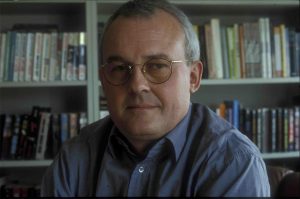
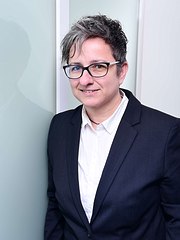
Prof. Dr. Lena Wessel is a Mathematics Education faculty member at the Department of Mathematics Didactics, Faculty of Electrical Engineering, Computer Science and Mathematics, University of Paderborn. She leads teacher training programs and participates in university governance as elected Faculty Council member. Research Focus: Her work centers on comprehension-oriented mathematics instruction at secondary/vocational levels, emphasizing language development, continuity in curriculum design (spiral principle), and digital mathematics tools. As DZLM network partner, she develops professional development programs for secondary educators. LiaNMU project (scalar products, plane reflections) VioLa project (digital discussion formats) LLV.HD project (cross-university learning networks) Key Contributions: She has coordinated major projects like MESUT (language-supported fraction understanding) and LaMaVoC (language in vocational mathematics). Her 2024 publications analyze language-integrated pedagogy and algebraic concept unification in teacher training.
Nikol Rummel is a Professor at Ruhr-Universität Bochum , specializing in Computer-Supported Collaborative Learning (CSCL) , Artificial Intelligence in Education , and Human-Computer Interaction . Her work bridges educational technology with hardware reverse engineering , focusing on AI-orchestrated learning environments and adaptive tools for collaboration. Her research spans AI-orchestration tools ( Pair-Up , Co-Designing Orchestration Support ), collaborative problem-solving ( Learning Alone or Together ), and hardware reverse engineering education ( Promoting Skill Acquisition ). She investigates how multimodal data and adaptive feedback enhance learning outcomes, teacher practices, and emotional regulation. Her publications highlight trends in generative AI for academic writing , collaboration scripts , and cognitive obfuscation in cybersecurity education. Collaborations with researchers like Vincent Aleven, Christof Paar, and Steffen Becker underscore her interdisciplinary approach. Nikol Rummel’s work emphasizes teacher dashboards ( What Information Should CSCL Dashboards Provide? ), dynamic student pairing ( Combining Dialog Acts and Skill Modeling ), and emotional engagement in learning ( How to Enjoy Writing Papers ).
Dr. Christian Hartmann serves as an Academic Councillor and Research Assistant at the Chair of Teaching and Learning with Digital Media within the TUM School of Education since 2020. With a PhD in Educational Science from Ruhr University Bochum (2020) and prior research assistant experience at Ruhr University's Educational Psychology Chair (2015-2020), he brings extensive expertise in digital learning environments. Bachelor's & Master's in Education and History from Ruhr University Bochum Visiting scholar at Carnegie Mellon University's HCI Institute (2016) His research focuses on immersive learning technologies , including: Vicarious failure mechanisms in education Computer-supported cooperative learning (CSCL) Adaptive learning systems with VR/AR Coherence formation in multimedia environments Key publication trends show significant contributions to: Productive failure analysis (2018-2025) Social VR collaboration tools (2023) Immersive technology's impact on special education (2023) AI integration in science education (2025) As a program committee member for DELFI 2022 VR/AR Learning workshop and reviewer for journals like Learning & Instruction , he actively shapes educational technology research. His work has been presented at major conferences including EARLI (Austria 2025, Germany 2024), DGPs Congress (Austria 2025), and AERA Annual Meeting (USA 2025). Current affiliations include the European Association for Research on Learning and Instruction (EARLI) , International Society of the Learning Sciences (ISLS) , and German Society for Psychology (DGPs) . The Immersive Virtual Reality Lab at TUM School of Education serves as his primary research environment.
Dr. Sebastian Strauss is an Interim Professor of Educational Psychology and Educational Technology at the Ruhr University Bochum within the Faculty of Philosophy and Education. His work focuses on leveraging digital tools to enhance collaborative learning experiences and metacognitive regulation in educational contexts. Education : Dr. Phil. in Educational Psychology (2021), MA in Educational Science (2016), BA in Educational Science and Culture (2014), all from Ruhr University Bochum. Research Interests revolve around Computer-Supported Collaborative Learning , with a focus on group metacognition, learning analytics, and technology-enhanced learning. His studies aim to optimize structured group work and digital interaction in higher education. Selected Publications highlight advancements in collaboration scripts, group awareness tools, and adaptive prompts to foster effective online learning. His work addresses challenges in digital pedagogy, including equitable participation and interactive design. Scientific Contributions include leading projects like ALICE , KoLiB , INTERACT! , and IKARion , which explore innovative approaches to digital education. He also contributes to the Fellowships for Innovations in Digital Higher Education NRW . Award : Nominated for best paper award at the 14th International Conference on Computer-Supported Collaborative Learning (CSCL 2021).
Dr. Pavan Laxmipathy Veluvali is a Computational Materials Scientist currently working as a Postdoctoral Researcher at the Max Planck Institute for Dynamics of Complex Technical Systems in Magdeburg, Germany. He is a member of Prof. Dr. Peter Benner's group focused on Computational Methods in Systems and Control Theory. His work integrates numerical mathematics and materials science to advance computational workflows. His educational background includes: Ph.D in Computational Materials Science, Karlsruhe Institute of Technology, 2021 Master of Science (M.Sc) in Materials Science and Simulation, Ruhr Universitaet Bochum, 2016 Bachelor of Technology (B.Tech) in Metallurgical and Materials Engineering, Jawaharlal Nehru Technological University, 2013 Dr. Veluvali's research focuses on computational materials science, particularly phase-field modeling of solidification microstructures. His work investigates the role of diffusive-convective regimes on solidification phenomena including grain boundary grooves, dendritic growth, tip splitting, and poly-phase microstructures in binary alloys. He has expanded his expertise to include alloy solidification, electrochemistry, thin-film coatings, multiphase flows, and additive manufacturing. Recently, he has been working on computational workflows that integrate numerical mathematics and materials science, with a focus on FAIR (Findable, Accessible, Interoperable, Reusable) data principles. His publication record demonstrates a strong focus on phase-field modeling applications in materials science, with recent work shifting toward computational workflows and data infrastructure. The earlier publications (2018-2021) primarily address fundamental materials science questions using phase-field methods, while more recent work (2022-2025) shows increasing emphasis on computational frameworks, metadata abstraction, and FAIR data principles in computational science. Dr. Veluvali serves as a peer reviewer for several prestigious journals including Journal of Applied Physics, Journal of Phase Equilibria, and Journal of Physics: Condensed Matter. Currently, he is a Teaching Assistant for the Scientific Computing-I course at Otto-von-Guericke-Universität Magdeburg, where he guides students through practical implementation of numerical algorithms, shell scripting, and memory management. He is an active participant in the research community, regularly presenting his work at conferences including SIAM CSE, DMV Annual Meeting, and MaRDI workshops. His research is supported by the Max Planck Institute and likely through collaborative projects with academic and industry partners.
Dr. Başak Aydemir is an Assistant Professor at the Department of Information and Computing Sciences , Faculty of Science, Utrecht University. She works in the Software Production Group , focusing on applying Natural Language Processing , Machine Learning , and Artificial Intelligence to Requirements Engineering problems. She obtained her Ph.D. from the University of Trento in 2016 and previously worked at Bogaziçi University (2018-2024) before rejoining Utrecht University. Software Development Requirements Engineering Conceptual Modeling Natural Language Processing Life Sciences Her research explores Requirements Engineering through NLP and AI, with recent work on Large Language Models for domain model generation, Robotic Tutors for interview training, and Creativity Techniques in requirements workshops. She investigates ethics-aware systems and multi-agent planning , emphasizing software quality and empirical validation. Recent publications span IEEE RE , REFSQ , and Empirical Software Engineering journals. Key trends include NLP-driven requirement analysis , interactive training systems , and gamified platforms for change management. She co-organized the AIRE 2024 and NLP4RE 2021 workshops. She teaches courses in Method and Model-Driven Engineering , contributes to Business Informatics programs, and is available at Room 5.82, Buys Ballot Building, Utrecht.
Cédric Hammou Fadili is a researcher at the Conservatoire National des Arts et Métiers (CNAM) with a focus on Artificial Intelligence , Natural Language Processing , and Digital Humanities . His work bridges computational methods with sociocultural challenges, particularly in Amazigh/Berber language preservation and low-resource language processing . Active in chatbot development for education and language learning (2022-2024) Pioneering semantic wiktionaries for social sciences (2017-2022) Key contributions to blockchain-AI integration for model transparency (2020-2021) Research Trends : His 15 most recent publications (2019-2024) emphasize chatbot personalization , Arabic/Berber language normalization , and semantic knowledge organization . Technical approaches frequently combine deep learning (Bi-LSTM), ontological modeling , and linked open data frameworks. Collaborative Networks : Worked with institutions in Morocco (Rabat), Tunisia (Tunis), Egypt (Cairo), and France (CNAM, Inalco). Key collaborators include M. Chakiri (Berber ontologies), C. Jouis (contextual data exploration), and J-G. Ganascia (semantic mining). Long-Term Impact : His career spans from 1997 (SemioNet project) to 2024, consistently focusing on cultural preservation through digital methods , including semantic web applications (1998-2016), collaborative portals (2003-2008), and multilingual knowledge systems for Francophone regions.
Professor Armin Weinberger is the founder and head of the Department of Educational Technology at Saarland University. He previously held roles including Associate Professor at the University of Twente and lecturer/research fellow positions at the University of Munich, University of Tübingen, and Knowledge Media Research Center. His expertise spans educational technology, technology-enhanced learning, and collaborative learning strategies. He teaches courses such as 'EduTech,' 'The Design Challenge,' and 'Empirical Research Methods III' at the EduTech M.Sc. program. His research focuses on knowledge construction in small groups, computer-supported collaboration scripts, and cross-cultural education. He coordinates the EARLI SIG Argumentation, Dialogue, and Reasoning and serves on editorial boards for journals like the Journal of the Learning Sciences . Notable awards include recognition for top-cited articles (2007-2011) and frequent authorship (2010-2014) in key journals. His work emphasizes ethical AI integration in education, virtual patient environments for medical training, and motivational factors in hybrid learning. Professional services include reviewing for funding agencies (DFG, ISF) and conferences (CSCL, EC-TEL). His office is located at Saarland University's C5 4 building, room 1.12.
Prof. Dr. Kjeld Schmidt is a Senior Professor at the Universität Siegen, affiliated with Fakultät III (Wirtschaftsinformatik und Neue Medien). He holds a sociology degree from Lund University (1975), with habilitation in Computer Science (Aarhus University, 1998) and Organizational IT (IT University of Copenhagen, 2006). His research focuses on foundational theories of Computer-Supported Cooperative Work (CSCW), cooperative work practices, and system design for distributed organizations. He has been Editor-in-Chief of the Computer Supported Cooperative Work (CSCW) journal since 1992 and has organized major CSCW conferences globally. Education: Bachelor’s in Sociology, Lund University (1975) Habilitation in Distributed Systems (University of Aarhus, 1998) Habilitation in Organizational IT (IT University of Copenhagen, 2006) Research Interests: Schmidt’s work bridges sociology and computer science, emphasizing articulation work , coordination mechanisms , and awareness in collaborative systems . His theories on CSCW system design have influenced both academic and industrial practices. Current focus includes complexity in cooperative work and mediating coordination through digital artifacts. Projects & Labs: He contributes to initiatives like the PRAXLABS , come_IN , and Fab Lab Siegen , advancing applied CSCW research. His involvement in interdisciplinary projects addresses challenges in collaborative design, distributed work, and organizational transformation. Grants & Advising: While specific student names are not listed, Schmidt has supervised numerous doctoral researchers in CSCW and cooperative systems. He has led major grants including the SFB 1187: Medien der Kooperation and EDIH – European Digital Innovation Hub Südwestfalen .
Evgenii Churiulin is a Scientific Programmer at the Max Planck Institute for Biogeochemistry (2022–present). He holds a Ph.D. (2019) and M.Sc./B.Sc. (2016/2014) in hydrology from Lomonosov Moscow State University and Russian State Hydrometeorological University. His research focuses on hydrometeorology, improving numerical parameterization schemes for snow cover, vegetation, and fires in climate models, and developing scripts for data analysis from models like COSMO and OCN. He has held roles including Postdoctoral Fellow at the University of Kassel (2020–2022), Researcher at the Hydrometcenter of Russia (2017–2020), and Junior Researcher at the Arctic and Antarctic Research Institute (2014–2017). He lectured at Lomonosov Moscow State University (2017–2019) on hydrology and snow hydrology. His work emphasizes climate modeling innovations, snow dynamics, and interdisciplinary collaborations. Education: Ph.D. in Geographical Science (Hydrology), Lomonosov Moscow State University (2016–2019) M.Sc. in Hydrometeorology, Russian State Hydrometeorological University (2014–2016) B.Sc. in Hydrometeorology, Russian State Hydrometeorological University (2010–2014) Research Interests: Climate modeling, snow cover parameterization, vegetation-fire interactions, numerical weather prediction, and data analysis frameworks for climate models. His work bridges hydrometeorological processes with computational tools like COSMO-CLM and SnoWE models to enhance predictive accuracy in regional climate systems. Publications & Contributions: Over 15 peer-reviewed articles and technical reports, including key contributions to COSMO-Ru and SnoWE models. His work on snow water equivalent estimation and flood modeling has advanced hydrological forecasting. He also co-authored a comprehensive Arctic atlas and holds software certificates for SnoWE model development. Awards & Recognition: None explicitly listed, though his contributions to climate modeling are recognized through active participation in workshops like COST HarmoSnow. Grants & Labs: Part of the SnoWE model development team and collaborates with institutions like the Hydrometcentre of Russia. His work is supported by projects in numerical weather prediction and climate model refinement.
Prof. Dr. Klaus Stiller is a researcher and lecturer at the Institute of Educational Science within the Faculty of Humanities at the University of Regensburg, Germany. He has been affiliated with the Chair of Pedagogy I since 2013, following previous positions at the University of Regensburg's Chair of Psychology IV (1996-2013) and the Dortmund Technical University's Chair of Educational Psychology (2007-2010). His academic career spans over 25 years in educational science and psychology, with a focus on instructional design, technology-enhanced learning, and educational research methodology. Dr. Stiller completed his academic journey at the University of Regensburg, where he earned his diploma in psychology from the Department of Experimental Psychology. He continued his studies at the same institution, completing his Ph.D. (Dr. phil.) research on pictures and texts in multimedia learning environments, followed by his Habilitation (postdoctoral qualification) on modes of text presentation and access to text in computerized learning environments. Dr. Stiller's research primarily focuses on the intersection of educational psychology and technology. His work explores how learners interact with various forms of instructional media, particularly examining cognitive, motivational, and affective processes in multimedia learning environments. He investigates how illustrations, text design, and interactive elements impact learning outcomes, with special attention to distance education contexts and game-based learning approaches. His research integrates theoretical frameworks like Cognitive Load Theory and the Cognitive Theory of Multimedia Learning with practical applications in educational settings. His scholarly contributions reveal consistent engagement with critical issues in educational technology, particularly examining learner characteristics that influence success in online and distance education. A significant thread throughout his work involves understanding how to reduce dropout rates in online training while enhancing learning outcomes through thoughtful instructional design. His recent publications show an increasing focus on the integration of social and emotional dimensions into multimedia learning theory, moving beyond purely cognitive approaches to create more holistic models of learning. Dr. Stiller serves on the editorial board of the Journal of Computer Assisted Learning (JCAL), a high-impact international journal with a Web of Science impact factor of 5.1. He has conducted over 170 verified peer reviews for prominent journals including JCAL (51 reviews), Sustainability (21), Instructional Science (20), Education Sciences (9), BMC Medical Education (8), and Educational Research Review (8), demonstrating his significant contribution to scholarly discourse in educational technology. Throughout his career, Dr. Stiller has mentored numerous students through various teaching roles across multiple academic programs. His teaching portfolio spans bachelor's and master's programs in Educational Science, teacher training programs, and specialized courses in media education. He has developed innovative approaches to instruction, integrating traditional methods with modern e-learning techniques to enhance educational experiences. His collaborative work extends to research partnerships with colleagues including Prof. Dr. Mike Altieri, Prof. Dr. Leo Riedl, Prof. Dr. Silke Schworm, and Stefanie Stiller. Dr. Stiller leads research activities focused on distance education and online learning environments, examining persistent challenges such as high dropout rates while exploring innovative solutions through learning analytics and data mining approaches. His work on game-based learning investigates how educational games can effectively support cognitive, motivational, and social learning processes. The integration of technology acceptance models into educational contexts represents another key dimension of his research program, helping to understand factors that influence successful implementation of e-learning solutions.
Prof. Dr. Guido Mensching holds a Professorship for Romance Linguistics at the University of Göttingen's Department of Romance Philology, specializing in generative grammar and medieval textual studies. His research spans minimalist syntax of Romance languages, medieval medical-botanical texts in Romance languages (particularly in Hebrew script), and comprehensive Sardinian linguistics including historical documentation and multimedia representation. Research interests focus on generative grammar frameworks applied to Romance syntactic structures, with significant contributions to medieval glossary studies examining Hebrew-script manuscripts containing Ibero-Romance, Arabic, and Latin elements. His Sardinian research encompasses historical linguistics, morphosyntactic analysis, and digital documentation initiatives. Current methodological approaches integrate minimalist program theory with digital humanities tools for textual analysis. Research output demonstrates consistent focus on three interconnected domains: (1) syntactic analysis of Romance languages through minimalist frameworks; (2) philological examination of medieval multilingual medical-botanical texts; (3) comprehensive documentation of Sardinian language structures. Publication trends show increasing integration of computational methods for lexical database development, particularly in the DiTMAO (Dictionnaire des Termes Médico-botaniques de l'Ancien Occitan) project. Research funding has been consistently secured through the German Research Foundation (DFG), supporting multiple long-term collaborative projects examining Hebrew-script medical manuscripts across European collections. These projects demonstrate sustained interdisciplinary collaboration between Romance linguistics, Judaic studies, and computational philology. Professional activities include editorial responsibilities for linguistic journals and organization of international research colloquia. Current work continues the critical edition of medieval medical texts while expanding digital infrastructure for Romance linguistic research.
Prof. Dr. Freydis Vogel is a Professor at the University of Hamburg's Faculty of Education, specifically within the Department of General, Intercultural and International Comparative Education as well as Educational Psychology (EW1). Her research focuses on computer-supported collaborative learning (CSCL), collaboration scripts, and their impact on educational outcomes. She investigates how socio-cognitive scaffolding, group awareness tools, and self-regulation strategies enhance learning processes in digital and collaborative environments. Her work emphasizes the design and evaluation of CSCL systems for fostering mathematical argumentation skills, collaborative problem-solving, and teacher education. Vogel also explores the role of emergency remote teaching methodologies and evidence-based practices in higher education. Her contributions bridge theoretical frameworks with practical implementations, addressing challenges in both synchronous online learning and traditional classroom settings. Key areas of interest include the interplay between collaboration scripts and cognitive processes, the effectiveness of heuristic worked examples, and the adaptation of scaffolding techniques for diverse learner populations. She has authored numerous publications on these topics and actively engages with international educational research communities through initiatives like the NAPLeS project.
Prof. Dr. Ruth Ayaß is a Professor in the Department of Methods of Empirical Social Research at the Faculty of Sociology, University of Bielefeld. She has held this position since September 2016, following a professorship at the University of Klagenfurt (2004–2016). Her academic work is deeply rooted in qualitative methodologies, particularly conversation analysis, ethnomethodology, and visual sociology. She leads the research group AG Ayaß and contributes to the Methods Laboratory within her department. Her research focuses on social interaction in public spaces, examining how individuals manage co-presence, use media as social shields, and navigate waiting situations. Her methodological expertise extends to visual and ethnographic analysis, contributing significantly to the understanding of mediated and face-to-face interactions. The trends in her recent publications reveal a consistent engagement with foundational sociological theory, particularly the work of Harold Garfinkel, alongside empirical studies on disaster photography, waiting practices, and digital writing. Her work bridges classical ethnomethodology with contemporary social phenomena shaped by technology and urban life. Editor-in-Chief, Zeitschrift für Soziologie (2010–2013) Research Fellow, Center for Interdisciplinary Research (ZiF), Bielefeld (2011) Member, Scientific Advisory Board, Finnish Centre of Excellence 'Intersubjectivity in Interaction' (2012–2017) Spokesperson, Section 'Methods of Qualitative Social Research', German Sociological Association (2014–2016) Ruth Ayaß actively supervises students and contributes to academic governance through roles in the Faculty Conference, Commission for Structure, Budget and Personnel, and the Bielefeld Graduate School in History and Sociology. She is involved in curriculum development for advanced methods courses and serves as a module responsible for several key programs. Her academic leadership and methodological rigor have established her as a central figure in German qualitative sociology. She leads the AG Ayaß research group, which fosters collaborative inquiry into interaction and methodology, and contributes to the Methods Laboratory, supporting methodological training and innovation within the Faculty of Sociology.
N. Samsudin is a researcher with significant contributions to Computer Science and interdisciplinary applications in Medicine, Environmental Science, and Education. Active in publication from 2011 to 2021, their work spans pattern recognition, machine learning, medical diagnostics, and social behavior analysis. Key Research Areas: Pattern recognition, machine learning algorithms, medical image analysis, and data classification. Collaborations: Frequently collaborates with A. Mustapha, Riswan Efendi, M. M. Deris, and others across diverse fields. Notable Applications: Developed innovative systems for Arabic handwriting recognition, flu diagnosis, flood risk prediction, and restaurant technology. While no specific awards or formal academic rank are explicitly stated in the provided texts, their extensive publication record indicates active engagement in research and interdisciplinary innovation.