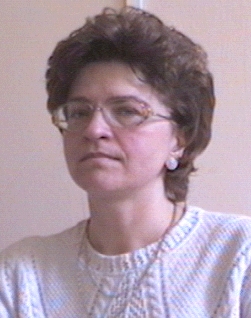
Prof. Dr. Grosan Teodor Silviu is a Professor at the Department of Mathematics, Faculty of Mathematics and Informatics, Babeș-Bolyai University Cluj-Napoca. His research focuses on heat transfer in nanofluids and porous media, with significant contributions to boundary layer analysis and convective flow dynamics. He led major grants including PN-II-RU-TE-3-0013 (2011-2014) investigating nanofluid applications in industrial heat transfer processes. Key collaborators include Dr. Radu Trimbitas, Dr. Alin Rosca, and Dr. Flavius Patrulescu. Over 15+ peer-reviewed articles were published during this period, addressing topics like thermal dispersion effects, mixed convection in vertical channels, and stagnation-point flow dynamics. He also developed a minicluster for computational experiments, enhancing numerical simulations of complex fluid dynamics problems. Research interests explicitly include nanofluid behavior in porous media, boundary layer phenomena, and heat transfer optimization. Teaching responsibilities include courses in theoretical mechanics, computational fluid dynamics (CFD), and numerical methods in mechanics. His work bridges applied mathematics and engineering, with applications in energy systems and material science.
Dana Petcu is a Professor at the Computer Science Department of the Faculty of Mathematics and Computer Science at West University of Timisoara. She serves as Director of both the Institute for Advanced Environmental Research and Institute e-Austria Timisoara. With expertise in distributed and parallel computing, she has published over two hundred papers on Cloud, Grid, Cluster, and HPC computing. She is also the chief editor of the open-access journal Scalable Computing: Practice and Experience (SCPE) and has coordinated multiple European Commission-funded projects. Education: Ms. Degree in Computer Science Ph.D. in Numerical Analysis Dana Petcu's research focuses on distributed and parallel computing systems. Her current interests include Cloud & Grid computing, and HPC & Cluster computing. Previously, she worked on Mathematical software, Numerical methods, and Computer graphics. Her work bridges theoretical foundations with practical implementations, particularly in resource management, scheduling algorithms, and scalable computing architectures. She has developed significant expertise in applying these technologies to scientific computing, data-intensive applications, and multi-cloud environments. Her scholarly output demonstrates consistent focus on cloud and distributed computing evolution. Over the past decade, her research has shifted from foundational grid computing to modern cloud technologies, edge computing, and exascale systems. Key themes include resource management across heterogeneous environments, autonomic systems, security SLAs, and multi-cloud portability. Her work shows increasing interdisciplinary connections, particularly with AI/ML techniques applied to resource optimization and anomaly detection in large-scale systems. Scientific Awards: Maria Sibylla Merian-Award (2005) IBM Faculty Award (2009) MLNR Award "Spiru Haret" (2015) Romanian Academy Award "Gheorghe Cartianu" (2015) Dana Petcu has advised numerous graduate students through various master's programs in Distributed and Parallel Computing. She has secured substantial research funding as coordinator of FP7 projects HOST and SPRERS, and as scientific coordinator of mOSAIC. Her grant portfolio includes multiple European Commission-funded initiatives focused on cloud computing infrastructure, resource management, and multi-cloud environments. She has also contributed to EU Research Activities in Cloud Computing as an editor, demonstrating her leadership in shaping European research agendas in this field. She leads the Computer Science Research Center (CCI) and High Performance Computing Service Center (HPC-UVT) at West University of Timisoara. Her teams develop and maintain significant infrastructure for distributed computing research, including simulation environments like CloudSim and iFogSim. She has established strong connections between academic research and practical applications through Institute e-Austria Timisoara, fostering technology transfer and innovation in cloud computing solutions.
Lőrinc Márton is a Professor of Control Systems at the Sapientia Hungarian University of Transylvania, where he serves as deputy head of the Department of Electrical Engineering and leads the Networked and Autonomous Control Systems research group. He also acts as a PhD supervisor at the Doctoral School of Information Science and Technology, University of Pannonia. Research Interests: Control-oriented modeling of dynamic systems Fault diagnosis in interconnected networks Delay compensation in communication systems Population dynamics and migration modeling Robot swarm coordination Key Contributions: Developed control strategies for chemical reaction networks Created delay-robust algorithms for computer networks Formulated migration cost-based population stabilization methods Contact: martonl@ms.sapientia.ro | Office: 1C Calea Sighisoarei, Corunca, Mures 94305, RO
Catalina Gabriela MIHALCEA serves as an Assistant Researcher at the Laboratory of Atomic Structures and Defects in Advanced Materials (LASDAM) within the National Institute of Materials Physics. Her work focuses on advanced nanomaterials for gas sensing and photocatalytic applications, with particular expertise in metal oxide semiconductors including TiO 2 , SnO 2 , NiO, and WO 3 . Her research interests span gas sensing mechanisms (particularly for CO 2 , methane, acetone, and hydrogen), defect engineering in nanomaterials , and photocatalytic performance optimization . Key methodologies include hydrothermal synthesis, co-precipitation, and advanced characterization techniques such as EPR spectroscopy, TEM, and XRD. She investigates how morpho-structural properties, synthesis parameters, and environmental conditions (humidity, temperature) affect material performance. Analysis of her 15 most recent publications reveals a strong emphasis on in-field condition testing using computer-controlled Gas Mixing Systems, with significant contributions to understanding charge carrier trapping in phase-transforming TiO 2 , electrode geometry effects in SnO 2 sensors, and humidity-resistant sensing platforms. Her work demonstrates consistent innovation in sensor design and fundamental material behavior under operational conditions. She actively collaborates with researchers across multiple institutions, evidenced by co-authorship on publications spanning materials synthesis, characterization, and application testing. Her technical contributions include developing synthesis protocols for black TiO 2 with enhanced visible-light photocatalysis and optimizing WO 3 sensors for low-concentration acetone detection in high-humidity environments.
Yuriy Alekseevich Krysan is an Associate Professor at the Department of Electrical Drive and Automation of Industrial Installations at Zaporizhia Polytechnic University. With over 20 years of experience since joining the university in 2002, he has established himself as a specialist in electrical engineering with a focus on electric drive systems and steelmaking furnace regulation. Zaporizhia State Technical University, 1998: Electrical Engineer in "Electrical drive and automation of industrial installations" Zaporizhia State Technical University, 1999: Master of Electromechanics in "Electromechanical automation systems and electric drive" Dr. Krysan's research primarily focuses on the regulation of powerful steelmaking furnaces and electromagnetic processes in electrical equipment. His work spans theoretical modeling, practical implementation, and educational applications in electric drive systems. He has made significant contributions to understanding variable load impacts on synchronous electric drives, optimization of technological processes, and development of monitoring systems for energy converters. His recent publications (2017-2022) demonstrate a consistent focus on electromagnetic processes, electric drive stability, and optimization of steel production systems. The research shows progression from theoretical modeling to practical implementation of control systems, with increasing emphasis on computerized solutions and energy efficiency. Honorary certificate of the October District Administration, Zaporizhzhia, 2008 Dr. Krysan teaches Electric Drive Theory, Computerized Electric Drive Systems, and Electronics and Microprocessor Technology. His educational contributions include developing laboratory stands for asynchronous electric drive research and universal remote control systems for MICROMASTER 440 drives. He has also integrated software tools like Trace Mode into the educational process. His laboratory work focuses on electrical drive systems, particularly for industrial applications including steel production. He has developed specialized test stands for research and educational purposes, contributing to both theoretical understanding and practical implementation of electric drive technologies.
Vitaliy Igorovich Reva serves as an Associate Professor in the Department of Information Security and Nano-electronics at Zaporizhia Polytechnic National University's Faculty of Information Security and Electronic Communications. With a Candidate of Physical and Mathematical Sciences degree, his academic career at the university began in 2014 following his 2012 graduation with honors from Zaporizhia National Technical University where he earned a Master's degree in Micro- and nanoelectronic devices and devices. Dr. Reva's research spans multiple domains within nanotechnology and solid-state physics, with particular expertise in plasmonics, cluster physics, and positron behavior in solids. His work demonstrates a strong theoretical foundation combined with practical applications in nanoelectronics and materials science. His publications reveal a consistent research trajectory focusing on nanoscale phenomena, particularly the energy characteristics of metal clusters and plasmonic effects in nanostructures. Analysis of his 15 most recent publications shows a clear progression from fundamental studies of metal clusters and vacancies toward more applied research in plasmonics and nanoelectronics. His work bridges theoretical physics with practical applications in solar cell technology, catalysis, and biomedical applications. The research demonstrates strong international collaboration, with publications appearing in journals covering physics, materials science, and nanotechnology. Dr. Reva teaches courses including Process management in quality assurance, Metrological quality assurance of products, Computer Engineering and Programming, Microprocessor technology, and Programming technologies, reflecting his expertise in both theoretical and applied aspects of micro- and nanoelectronics.
Răzvan UDROIU is an Associate Professor in the Department of Manufacturing Engineering at the University of Transilvania of Brașov, Faculty of Technological Engineering and Industrial Management. His research focuses on additive manufacturing, composite materials, and aerospace engineering applications. Academic affiliation: University of Transilvania of Brașov Department: Manufacturing Engineering Faculty: Technological Engineering and Industrial Management His work primarily investigates additive manufacturing technologies , particularly 3D printing and Polyjet , with applications in aerospace engineering and composite material fabrication. Research themes include quality control in polymer jetting, surface performance analysis, and mold manufacturing optimization. Publication trends show consistent contributions to additive manufacturing since 2011, with recent Q1 journal articles in Polymers and Materials focusing on aerospace applications and composite manufacturing. Key methodologies involve statistical process capability analysis, tooling optimization, and CFRP production.
Gheorghe-Dan SOREA is a Lecturer in Electrical Engineering at the Department of Electrical Engineering and Applied Physics, Transilvania University of Brașov , under the Faculty of Electrical Engineering and Computer Science . His work bridges information technology with electrical engineering, focusing on sustainable energy systems. Research Interests Integration of renewable energy into power grids Monitoring and improving electrical power quality Optimizing energy efficiency in residential and industrial systems Application of IT tools in electrical engineering education Recent publications highlight his contributions to hybrid renewable energy systems and numerical modeling for electrical engineering challenges. His work spans both theoretical and applied domains, emphasizing practical solutions for standalone energy systems and educational software tools. His professional activities include collaborations on energy management strategies and the development of computational methods for electrical machine analysis. Contact Building N, Room NII 9 Phone: + 40 711 928 609 Email: gheorghe.sorea@unitbv.ro
Ana Maria Chirosca is a Lecturer at the University of Galati, focusing on maritime engineering, climate risk assessment, and computational fluid dynamics (CFD). Her work bridges hydrodynamics, renewable energy, and maritime transport analysis, with a strong emphasis on European seas. Her research explores: Climate Impact on Navigation: Assessing hydrological and meteorological risks on the Danube and Mediterranean/Black Seas. Maritime Engineering: Studying ship behavior (e.g., container ships, DTC hulls) and propulsion systems. Renewable Energy: Analyzing offshore wind/wave potential and green hydrogen technologies for sustainable shipping. Recent publications highlight trends in maritime climate modeling, CFD validation, and adaptive strategies for shipping under climate change. While no awards are listed, her work demonstrates technical expertise in integrating engineering and climate science for maritime solutions.
Marin MARIN is a Professor at the Department of Mathematics and Computer Science , part of the Faculty of Mathematics and Computer Science at the Technical University of Banat. His research focuses on advanced mathematical modeling in thermoelasticity, optimal control, and microstructure analysis, with a particular emphasis on fractional calculus and nonlocal effects in materials. He has contributed extensively to topics such as Cosserat bodies, porous media, and viscoelastic systems. Key research interests include the development of novel mathematical frameworks for analyzing thermal and mechanical interactions in complex materials, including functionally graded materials, nanobeams, and porous structures. His work often integrates advanced numerical methods and fractional-order models to address challenges in heat transfer, wave propagation, and structural stability. Marin’s publications span high-impact journals such as Continuum Mechanics and Thermodynamics and Acta Mechanica , with a focus on boundary value problems, variational principles, and the application of multi-phase-lag models. His research bridges theoretical mechanics with practical engineering applications, particularly in semiconductor materials and composite systems. Despite his prolific output, no specific academic awards or student advisement details are explicitly mentioned in the provided text. His work continues to explore interdisciplinary challenges at the intersection of mathematics, materials science, and mechanical engineering.
Prof. Donciu Codrin is a full professor at the Department of Electric Power Engineering, Technical University of Iasi. His research spans interdisciplinary fields including signal processing, image processing, earthquake early warning systems, and textile engineering. He leads projects on seismic response analysis using uniaxial shaking tables, non-invasive eye safety systems (e.g., Opto-Guard), and ESD-protective textiles. His work integrates hardware design (e.g., electrodynamic actuators) with advanced algorithm development for applications like video-based distance measurement and apparel sizing estimation. Research projects include: Signal Processing : OFDM modulation, DFT/FFT algorithms, and seismic waveform analysis Computer Vision : Pattern recognition, 3D reconstruction, and human-centric interface design Structural Engineering : Earthquake simulation platforms and early warning system validation Textile Innovation : Conductive fabric development for ESD protection and functional garments Recent publications focus on seismic wave analysis (2023–2025), optoelectronic safety systems (2022), and ultrasonic sensing technologies (2020–2021). His work bridges theoretical signal processing with real-world applications in disaster preparedness and ergonomic design.
Adrian SOICA is a Professor at the Department of Automotive and Transport Engineering, Faculty of Mechanical Engineering, Transilvania University of Brașov, Romania. His academic and research activities focus on vehicle dynamics, safety systems, and transportation-related environmental impact, with a particular emphasis on traffic accident reconstruction and emission reduction strategies. Research Focus: Vehicle-Pedestrian Collisions Research Focus: Automotive Composite Materials Research Focus: Traffic Emission Modeling Research Focus: Smart Transportation Systems His publications span accident reconstruction methodologies, composite material design, and sustainable mobility solutions, including studies on seatbelt mechanics, pretensioner systems, and biodiesel efficiency. Recent work explores AI-driven adaptive traffic control (2025) and metaverse integration for autonomous driving (2022). Scientific awards are not explicitly listed in the available data. Contact: Building N, Room NP12, Politehnicii street, no. 1, Brașov, Romania
Ilarion Mihăilă is a Scientific Researcher III at the Department of Exact Sciences and Natural Sciences, CERNESIM Center, Alexandru Ioan Cuza University of Iasi. He specializes in plasma physics, with expertise in plasma diagnostics, laser ablation, and thin film deposition. His work spans environmental, biomedical, and materials science applications. PhD in Physics (Plasma Physics), Faculty of Science and Engineering, Saga University, Japan Master’s and Bachelor’s in Physics (Plasma Physics), Faculty of Physics, Alexandru Ioan Cuza University of Iasi Research interests: Production and diagnosis of DC, AC, and RF plasmas (low pressure/atmospheric pressure), laser ablation for thin film deposition, mass spectrometry, and applications in pollutant destruction, biomedical treatments, and astrophysical carbon dust analogues. His studies explore plasma-seed interactions, flexible electronics substrates, and plasma-activated media in cancer therapy. Prominent article trends: Recent works focus on non-thermal plasma applications in agriculture (quinoa seed germination under saline stress), biomedical innovations (plasma-assisted chemotherapy), and materials science (surface relief gratings for flexible electronics). His plasma jet diagnostics and computational modeling address industrial and environmental challenges, while earlier studies emphasize magnetron sputtering, laser ablation, and fundamental plasma physics.
Adriana Sirbu is a Professor at the Department of Telecommunications, Technical University of Iasi. She holds a Doctorate in Engineering (Electronics) and has conducted research at institutions in Italy (Politecnico di Torino), the UK (Southampton Institute), and France (Université de Lille). Her expertise spans power electronics, coding theory, and hybrid systems modeling. Key research areas include power converter design, error-correcting codes, and MATLAB/Simulink-based simulation tools. She has authored over 50 scientific articles and three books, including Proiectarea asistata de calculator a convertoarelor electronice de putere . Her work emphasizes energy-efficient control systems and robust Fourier analysis in dynamic systems. She is affiliated with the I.C.S.I.T.E. research institute in Bucharest. Research interests include computer-aided design of electronic circuits, hybrid system theory, and optimizing power converter performance. Her publications span journals like European Transactions on Electrical Power Engineering and conferences such as IMACS and EPE. Notable contributions include hybrid rectifier designs and genetic algorithm applications in sensor networks and robotics. She has collaborated internationally on projects involving bond graph frameworks and nonlinear control systems.
Mircea Neagoe is a Professor at the Department of Product Design, Mechatronics and Environment , part of the Faculty of Product Design and Environment at Transilvania University of Brașov. His work focuses on renewable energy systems, robotics, and product design innovation. He holds a patent for a counter-rotating wind system and has authored books on robotics kinematics and mechanical mechanisms. Research interests include Tracking systems for solar converters Wind energy systems and turbine dynamics Mechanism design and robotics Integrated product development Artificial intelligence in engineering Recent work emphasizes counter-rotating systems for wind and solar energy, planetary gear transmissions, and parallel robots. His studies bridge mechanical engineering with sustainable energy solutions for built environments. Professional contributions include over 100 peer-reviewed articles and collaborations on energy conversion technologies. No scientific awards explicitly listed, but his patents and publications reflect significant technical contributions. Advising focuses on graduate research in renewable systems and mechatronics. No specific grants cited, though his work aligns with EU sustainability initiatives.