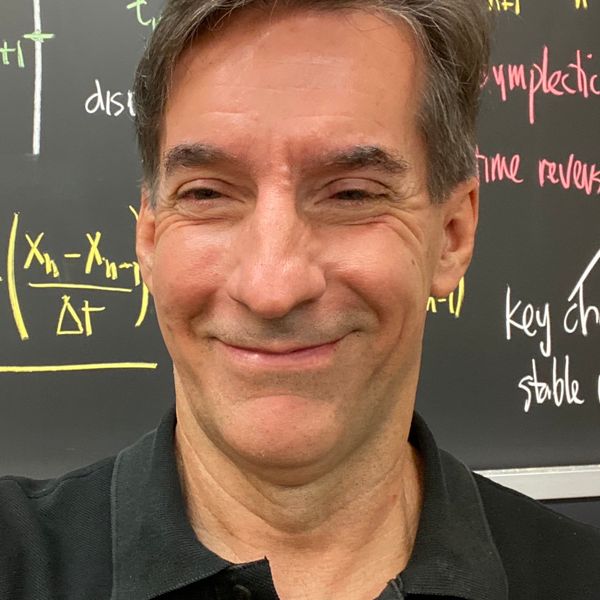
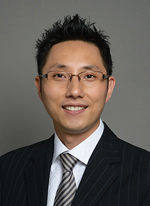
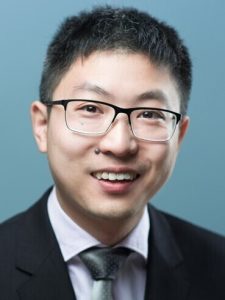
Jonathan Huggins is an Assistant Professor at Boston University, affiliated with the Department of Mathematics & Statistics and the Faculty of Computing & Data Sciences. He holds a Ph.D. in Computer Science from MIT (2018) and a B.A. in Mathematics from Columbia University (2012). His research focuses on developing fast, trustworthy machine learning and Bayesian methods that balance computational efficiency and statistical optimality, with applications in ecological forecasting and genomic data analysis. Education: Ph.D. in Computer Science, Massachusetts Institute of Technology (2018) B.A. in Mathematics, Columbia University (2012) Research Interests: Large-scale machine learning and Bayesian computation Robust statistical inference Applications in genomics and ecological modeling Algorithmic development for scalable inference Key Projects: Stochastic Methods for Data Science: A book on stochastic processes and algorithms VIABEL: A Python package for variational inference and diagnostics ShorTeX: A LaTeX package for mathematical writing Recent Articles: Focus on scalable Bayesian methods, error bounds for iterative algorithms, and mutational signature discovery. His work emphasizes reproducibility and robustness in statistical inference. Awards: Blackwell–Rosenbluth Award (Outstanding Junior Bayesian Researcher) Grants & Funding: Supported by NIH, NSF, and the Department of Defense. Active in advising students across multiple BU programs. Labs/Teams: Affiliated with the BU URBAN Program, Program in Bioinformatics, and Department of Computer Science.
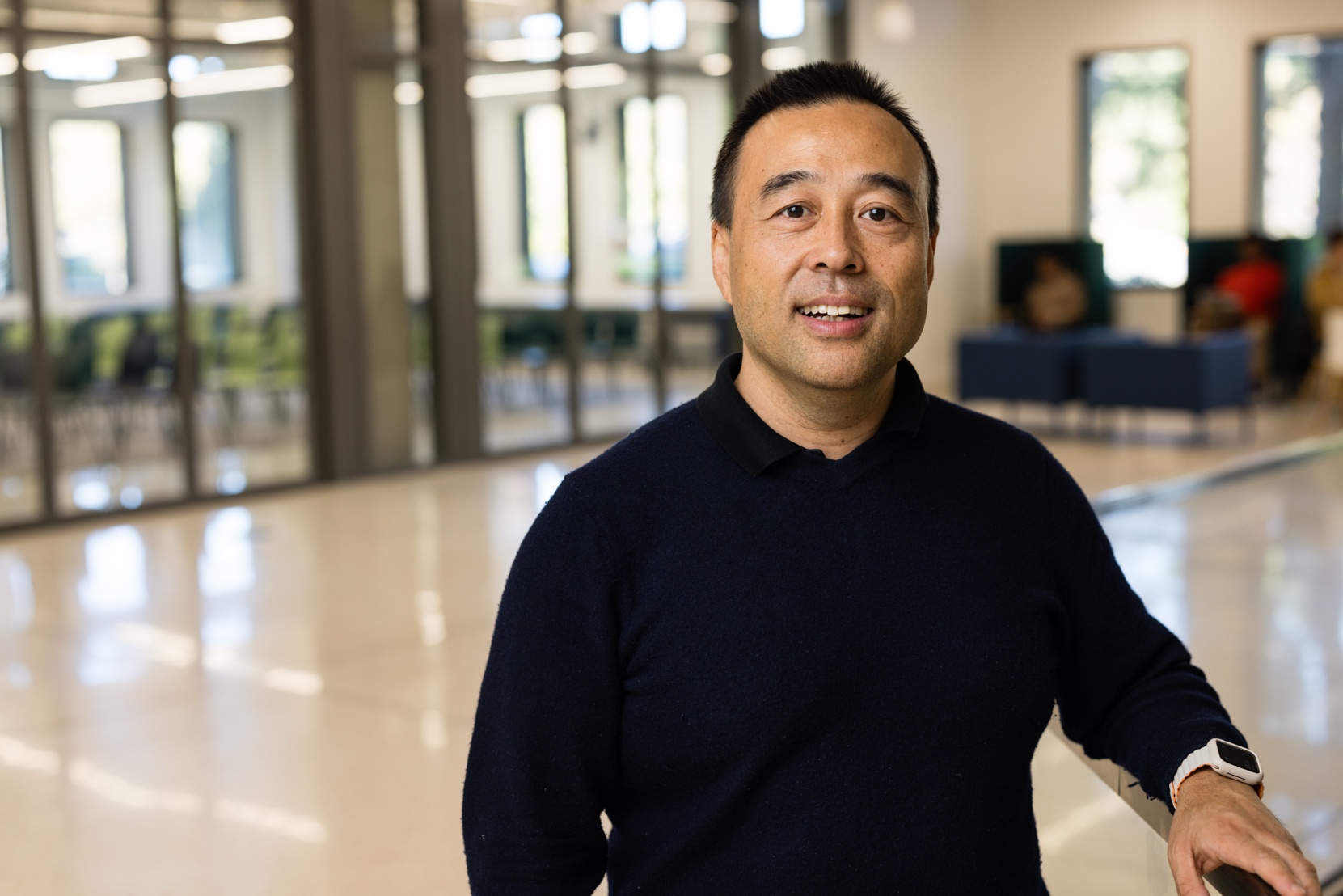
John E. Straub is a Professor in the Department of Chemistry at Boston University (BU), where he leads the Straub Lab. His work focuses on molecular dynamics and thermodynamics of complex biomolecular systems, particularly protein aggregation and amyloid formation. He has authored influential books, including Proteins: Energy, Heat and Signal Flow and Mathematical Methods for Molecular Science , and has held leadership roles such as Chair of the Department of Chemistry at BU (2007-2012) and President of the Telluride Science Research Center (2006-2008). Education: BS in Chemistry (University of Maryland, 1982, advisor: Millard Alexander) MA (Columbia University, 1984) MPhil (Columbia University, 1986) PhD in Chemical Physics (Columbia University, 1987, advisor: Bruce Berne) NIH Postdoctoral Fellow in Chemistry (Harvard University, 1987-1990, advisor: Martin Karplus) His research interests span computational methods for enhanced sampling, reaction dynamics, and the interplay between protein structure and aggregation. He has pioneered studies on amyloid precursor proteins and cholesterol interactions in lipid bilayers, emphasizing the role of monomer structural ensembles in aggregation mechanisms. Articles from his lab highlight advancements in understanding lipid phase separation, amyloid fibril formation, and computational techniques like machine learning-derived variables and replica exchange methods. His work bridges theory and experiment, with collaborations across institutions globally. Scientific Awards: NIH Postdoctoral Fellowship (Harvard University, 1987-1990). Professor Straub has advised numerous students, many of whom hold academic positions at leading institutions, including Jianpeng Ma (Rice University) and Nicolae-Viorel Buchete (University College Dublin). His lab actively explores projects in computational biophysics, with ongoing work on lipid mixtures, sterol-derived Raman tags, and membrane protein interactions.
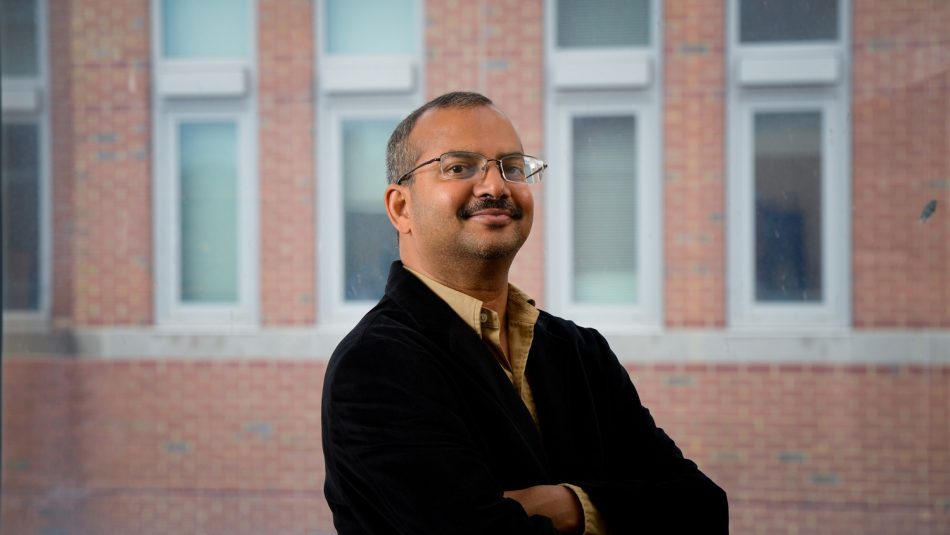
Nan (Nancy) Ma is a Tenure-Track Assistant Professor of Architectural Engineering and Director of the Laboratory for Healthy, Environmental, and Resilient Buildings (HERB-Lab) at Worcester Polytechnic Institute (WPI). Her research focuses on integrating architectural and computational methods to advance sustainable, occupant-centric buildings. She holds a PhD in Architecture (Building Technology Track) from the University of Pennsylvania, a Master of Architecture, and a Bachelor of Environments from the University of Melbourne. Her interdisciplinary work spans collaborations with public health, biostatistics, computer science, mechanical engineering, and pediatric psychology. Key research areas include building decarbonization, indoor environmental quality (IEQ) modeling, IoT-enabled smart buildings, and machine learning applications in architecture. Ma has been awarded the 2021 Best Paper Award from Building and Environment and secured grants from institutions like the Kleinman Center for Energy Policy and WPI’s GAPSA Fellowship. Her lab, HERB-Lab, emphasizes innovative solutions for healthy and resilient building systems. Ma’s contributions include pioneering studies on occupant behavior analysis via text-mining and blockchain-based energy management systems. She is actively involved in field studies assessing building envelope impacts on urban health risks and thermal comfort prediction using Bayesian neural networks.
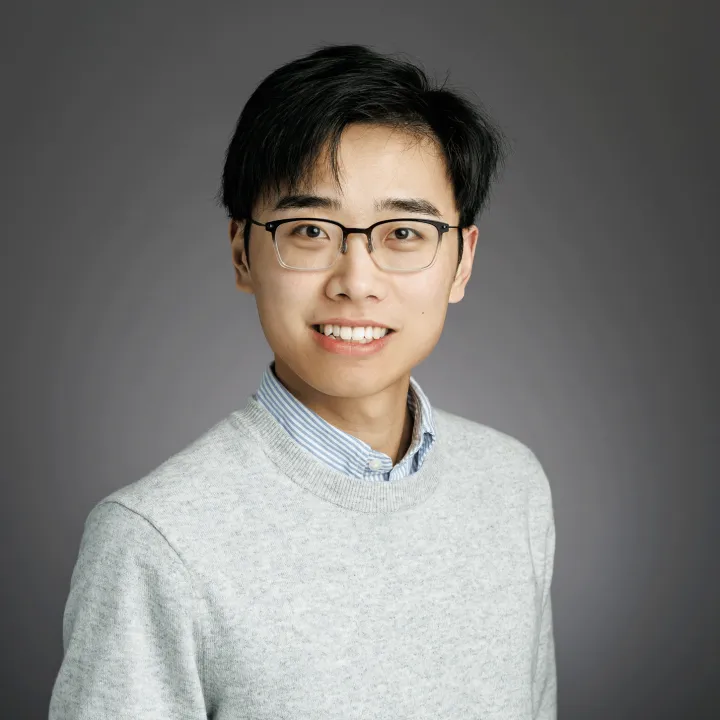
Thomas Cohen is a Professor and Associate Chair in the Department of Physics at the University of Maryland. He holds a B.A. from Harvard College (1980) and a Ph.D. from the University of Pennsylvania (1985). A Fellow of the American Physical Society, he was also an NSF Presidential Young Investigator from 1990 to 1995. His teaching accolades include the Celebrating Teaching Award, Dean's Award for Excellence in Teaching, and Distinguished Scholar-Teacher Award. Cohen's research focuses on quarks, hadrons, and nuclei, with affiliations to the Maryland Center for Fundamental Physics. His work explores QCD dynamics, exotic hadrons, and quantum algorithms for particle physics. Recent contributions include studies on gauge invariance, heavy-ion collisions, and adiabatic quantum computing. His research spans theoretical particle physics, nuclear physics, and computational methods, with notable publications on QCD phase diagrams, tetraquark states, and adiabatic state preparation. Cohen actively collaborates on projects involving quantum simulations and high-energy physics phenomena. His awards reflect both scholarly and pedagogical excellence.
Jay D. Sau is a Professor of Physics at the University of Maryland, College Park, and Co-Director of the Joint Quantum Institute (JQI). His research focuses on theoretical condensed matter physics, particularly topological quantum computing, quantum many-body systems, and Majorana fermions. He holds affiliations with the Condensed Matter Theory Center (CMTC) and JQI. Sau received his Ph.D. from UC Berkeley in 2008. His work bridges theoretical concepts in topological materials, superconductivity, and quantum information processing. Research Interests: Sau's primary interests include applying topological principles to solid-state and cold-atomic systems for quantum computation. Key areas include topological superconductivity, Majorana fermions, quantum Hall effects, and spin-orbit coupled systems. His group explores phenomena like topological degeneracy, Weyl semimetals, and cold atomic gases. Awards: He has been recognized with the National Science Foundation CAREER Award (2016) and the Sloan Research Fellowship (2016). His work has been published extensively in high-impact journals and covers topics ranging from Majorana physics to quantum phase transitions. Advising & Labs: Sau mentors graduate students including Tamoghna Barik, Stuart Thomas, Huan-Kuang Wu, and Shuyang Wang. His research group collaborates on projects at JQI and CMTC, focusing on experimental realizations of topological qubits and quantum devices.
Jeffrey C. Suhling is the Quina Distinguished Professor and Department Chair of Mechanical Engineering at Auburn University . His research focuses on the mechanical and thermal behavior of lead-free solder alloys , particularly in automotive electronics and high strain rate applications . He has extensively studied the reliability of hybrid SAC-LTS solder joints under thermal cycling, vibration, and shock. Scientific awards : Quina Distinguished Professor His work integrates finite element modeling , microstructural analysis , and machine learning to predict solder joint failure and optimize material performance. Key areas include creep behavior , damage accumulation , and interfacial reliability in extreme environments.
Guang Lin is the Associate Dean for Research and Innovation in the College of Science and a Full Professor in the School of Mechanical Engineering and Department of Mathematics at Purdue University. He leads the Data Science Consulting Services and has dual appointments in Statistics and Earth, Atmospheric, and Planetary Sciences. His research focuses on AI, machine learning, uncertainty quantification, and computational science, with applications in fluid mechanics, materials science, and healthcare. Lin holds a Ph.D. from Brown University (2007) and has received numerous awards, including the NSF CAREER Award and Purdue’s University Faculty Scholar distinction. He has authored over 250 publications and secured grants totaling millions, including DOE and NIH funding. His interdisciplinary work bridges academia and industry, emphasizing AI-driven solutions for complex systems. Education: Ph.D. Applied Mathematics (Brown, 2007), M.S. Applied Mathematics (Brown, 2004), M.S. Mechanics (Peking University, 2000), B.S. Mechanics (Zhejiang University, 1997). Research Grants: Includes DOE-funded projects on machine learning for plasma-wall interactions and NSF grants for multiscale modeling. Service: Editorships in SIAM MMS, ASME Journal, and leadership in Purdue’s AI initiatives. Teaching: Courses on Uncertainty Quantification, Fluid Mechanics, and Data Science.
Raju Vatsavai is an Associate Professor in the Department of Computer Science at North Carolina State University, affiliated with the Center for Geospatial Analytics. He joined NC State in 2014 as part of the Chancellor’s Faculty Excellence Program cluster hire in Geospatial Analytics. Education: PhD and MS in Computer Science from University of Minnesota Prior Roles: Lead Data Scientist at Oak Ridge National Lab, roles at University of Minnesota, IBM Research, AT&T Labs, and C-DAC (India) His research in geospatial analytics spans big data management , spatiotemporal data mining , deep learning for remote sensing , and high-performance computing , with applications in national security, climate change, and crop monitoring. Recent work includes deep learning frameworks for cloud imputation , multi-sensor satellite data harmonization , and transfer learning applications in crop classification . He has been a leading investigator on grants from the National Geospatial-Intelligence Agency, Department of Energy, and Department of Homeland Security. Labs: Associate Director of the Center for Geospatial Analytics Expertise: Spatial computing, Earth observation, nuclear proliferation detection via remote sensing
Yongshan Ding is an Assistant Professor of Computer Science and Applied Physics at Yale University. He leads the Quantum Systems Lab (QSL) and directs Yale's Quantum Science and Engineering Certificate program. Affiliated with the Yale Quantum Institute (YQI) and Computer Systems Lab (CSL), his research focuses on quantum computing systems spanning algorithms, architecture, and hardware/software co-design. Dr. Ding earned his Ph.D. from the University of Chicago and a B.Sc. from Carnegie Mellon University. He has received prestigious awards including the Siebel Scholarship (2020) and William Rainey Harper Dissertation Fellowship (2020). Research Interests: Quantum computing architectures, noise-resilient quantum algorithms, error correction methods, quantum compilation, hardware-software co-design, and NISQ system optimization. Editorial Roles: Editor at Quantum journal and Associate Editor at ACM Transactions on Quantum Computing . Labs: Founder of Yale's Quantum Systems Lab (QSL) and contributor to the Computer Systems Lab (CSL). Awards: Siebel Scholarship (2020) William Rainey Harper Dissertation Fellowship (2020) QCE Best Paper Award (2024) IEEE Micro Top Picks Honorable Mention (2023, 2020) IBM Q Best Paper Award, First Prize (2020) Mathematics Competition Runner Up (2016)
Karthik Dantu is an Associate Professor in the Department of Computer Science and Engineering at the University at Buffalo, State University of New York, within the School of Engineering and Applied Sciences. His research focuses on mobile sensor networks, robot networks, networked embedded systems, mobile computing, wireless networks, and embedded operating systems. He leads the Distributed Robotics and Networked Embedded Sensing (DRONES) Lab and has received significant funding including an NSF CAREER Award. Dr. Dantu's educational background includes: PhD in Computer Science from University of Southern California (2009) BE in Computer Science from Sri Jayachamarajendra College of Engineering (1999) His research interests center on algorithmic and systems challenges in Edge Computing Systems, with particular focus on enabling seamless vision sensing in cloud-edge environments. Dantu's work bridges mobile systems and robotics, developing novel approaches for UAV software, visual SLAM, and distributed sensing. His research addresses critical challenges in resource-constrained environments, security, and real-time performance for mobile and robotic systems, with emphasis on practical implementations that solve real-world problems in autonomous systems. Dr. Dantu's publication record shows a strong trajectory in mobile systems and robotics research, with increasing focus on edge computing applications for visual sensing. His recent work demonstrates expertise in adapting visual SLAM to edge environments, securing mobile systems through technologies like Rushmore, and developing novel approaches for UAV software reliability and depth sensing. The research spans theoretical algorithms and practical system implementations, with particular strength in bringing academic research to practical applications in robotics and mobile computing. Dr. Dantu has received several scientific honors: NSF CAREER Award on Enabling Seamless Vision Sensing in Cloud-Edge Systems Outstanding service award from the Office of International Services NSF Travel Grant for SenSys 2005 Conference Travel Grant for SIGCOMM 2002 As an advisor, Dr. Dantu has mentored numerous PhD students to completion, with graduates now working at companies like Samsung Research and Zoox Inc., or continuing academic careers as Assistant Professors. His research is supported by substantial grants including a DARPA OFFSET Sprint 4 award ($470k), an NSF CAREER award ($550k), and multiple NSF collaborative grants totaling over $1.5 million. He serves on numerous conference committees including Mobicom, MobiSys, and ICRA, demonstrating leadership in the mobile systems and robotics research communities. Dr. Dantu leads the Distributed Robotics and Networked Embedded Sensing (DRONES) Lab at UB, which focuses on developing algorithms and systems for mobile sensor networks, robot networks, and embedded sensing applications. The lab's work spans theoretical foundations to practical implementations, with particular expertise in UAV systems, visual SLAM, and edge computing for robotics, maintaining strong collaborations with industry partners and other academic institutions to advance the state of the art in mobile and robotic systems.
Jung Hyup Kim is an Associate Professor in the Department of Industrial and Systems Engineering at the University of Missouri, College of Engineering. His research integrates human factors, ergonomics, and augmented reality to enhance engineering education and healthcare systems. He leads the Human Factors Lab and is actively involved in curriculum innovation through immersive technologies. Education: PhD, Pennsylvania State University BS, Mississippi State University Dr. Kim’s research centers on ergonomics, human-computer interaction, and real-time human performance modeling . He investigates how eye-tracking, motion analysis, and augmented reality can be used to assess workload, situation awareness, and learning effectiveness in real-world environments. His work bridges engineering systems with cognitive science, particularly in educational and healthcare contexts. His recent research, reflected in 15 reconstructed articles, demonstrates a strong trend toward augmented reality in engineering education , with focus areas including real-time motion tracking, eye-tracking for attention monitoring, metacognition in virtual instruction, and posture-based physical demand assessment. These efforts aim to transform traditional lab experiences into interactive, data-driven learning environments. Scientific Awards: No awards explicitly mentioned in the text. Dr. Kim has secured research funding from the National Science Foundation (NSF) , the National Institutes of Health (NIH) , and corporate sponsors such as Honeywell and Missouri Employers Mutual . He advises students like RJ Morrison and Madeline Easley, who have presented at national conferences and won research competitions. His lab develops AR-based teaching modules that assess student engagement and comprehension through biometric and behavioral data. His lab, the Human Factors Lab ( humanfactorslab.net ), is developing a new AR-integrated facility in Lafferre Hall with stations for interactive learning, real-time feedback, and performance testing. The lab aims to create scalable AR systems applicable across Mizzou Engineering disciplines.
Dr. John W. McClory is a Professor of Nuclear Engineering at the Air Force Institute of Technology (AFIT) , where he has been affiliated since 2008. He serves as the Director of Nuclear Expertise for the Advancing Technology (NEAT) Center, Director of the Nuclear Weapons Effects Graduate Certificate Program, and holds the AFTAC Endowed Term Chair for Materials. His academic career spans military service as a former Army officer and teaching at the United States Military Academy. Education : Ph.D. in Nuclear Engineering (AFIT, 2008), M.S. in Physics (Texas A&M, 1993), B.S. in Physics (Rensselaer Polytechnic Institute, 1984) Dr. McClory’s research focuses on radiation effects on military electronics , nuclear forensics , and nuclear weapon proliferation . His work includes neutron detection , scintillator development , and radiation transport modeling , with applications in nuclear security and materials science . His recent publications emphasize radiation-hardened materials , computational modeling of nuclear effects , and machine learning applications in nuclear forensics . Collaborative projects span neutron spectroscopy , high-power microwave detection , and radiation-induced defect analysis in semiconductors. Scientific Awards : MOAA AFIT Outstanding Military Professor (2010) Dr. Leslie M. Thornton Teaching Excellence Award (2011) Military Legion of Merit (2012) Dean's Distinguished Teaching Professor Award (2019) Ohio Magazine Excellence in Education Honoree (2013) Dr. McClory has advised 22 PhD and 41 MS students and secured 25 research grants . He leads the NEAT Center and contributes to nuclear weapons effects curriculum and AFTAC materials research .
Svetlana Kotochigova is a Research Professor in the Department of Physics at Temple University. Her research focuses on theoretical atomic, molecular, and optical physics, with an emphasis on ultracold atoms and molecules, particularly lanthanide systems and precision measurements. She holds a PhD and MS from Saint Petersburg University (1986 and 1982). Her work integrates quantum-mechanical modeling of collisions and interactions among ultracold particles, including studies of magnetic lanthanide dimers, nonadiabatic effects in heavy atom molecules, and development of molecular sensors to detect CP-violating forces. Key projects include simulating Feshbach resonances in erbium and dysprosium gases, exploring quantum control via conical intersections, and designing magic traps for ultracold molecules. Notable contributions include theoretical frameworks for understanding chaotic dynamics in lanthanide dimers and advancing methods for trapping and manipulating ultracold species. She is a Fellow of the American Physical Society (since 2012) and collaborates closely with experimental groups to bridge theory and application in quantum systems.
Andrea J. Liu is the Hepburn Professor of Physics and Professor of Chemistry at the University of Pennsylvania, within the School of Arts & Sciences. She is based in the Department of Physics and conducts interdisciplinary research at the intersection of theoretical physics, soft matter, and biophysics. Her education includes a Ph.D. from Cornell University (1989) and a B.A. from the University of California, Berkeley (1984). Dr. Liu's research focuses on soft matter physics and biophysical self-assembly . She investigates the universal framework of jamming in disordered systems such as glass-forming liquids, foams, and granular materials. Her work explores how these systems develop yield stress or long relaxation times under varying conditions. On the biological side, she studies the mechanical reorganization of actin networks in the cytoskeleton during cell crawling, modeling polymerization, branching, crosslinking, and force generation at the leading edge of cells. Her research combines analytical theory and numerical simulations to uncover the dynamical principles governing morphology and mechanical properties in complex soft and biological materials. Scientific Awards: Hepburn Professor of Physics Dr. Liu leads an active research group focused on theoretical and computational modeling in soft condensed matter and biophysics. Although specific grants are not listed, her position and named professorship imply sustained funding and academic leadership. She advises graduate students and contributes to advanced research training in physics and interdisciplinary sciences. The research group maintains a website, though access to the '/liugroup/' directory is currently restricted (403 Forbidden). However, her curriculum vitae is publicly accessible, indicating ongoing scholarly activity.
Jun Xiao is an Assistant Professor in the Department of Materials Science and Engineering at the University of Wisconsin-Madison since August 2021. He holds additional affiliations with the Physics and Electrical & Computer Engineering departments. His research focuses on quantum materials, light-matter interactions, and terahertz optoelectronics. Ph.D. in Applied Science and Technology from UC Berkeley (2018) Postdoctoral scholar at Stanford University and SLAC National Accelerator Laboratory Bachelor's degree in Physics from Nanjing University Research interests include structure-property relationships in quantum materials, ultrafast optical engineering, and THz device development. His lab explores non-equilibrium phase transitions, quantum collective excitations, and photocarrier dynamics for energy and computing applications. Recent publications emphasize topological semimetals for THz sensing, stacking order engineering in 2D materials, and spin-mechanical coupling in antiferromagnets. His group integrates ultrafast lasers, quantum transport measurements, and in-situ strain control to study ferroelectricity, magnetism, and electron correlations. Scientific awards include Nature Communications Editor's Suggestion (2018) Nature Nanotechnology publication (2015) Jun Xiao's lab operates 2D material preparation and multimodal characterization facilities, including ultrafast laser systems, CW light sources, and cryogenic strain cells. He teaches courses on quantum materials and device physics, including MS&E 803 and MS&E 456.