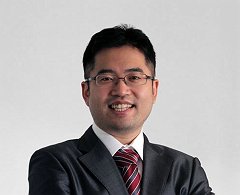
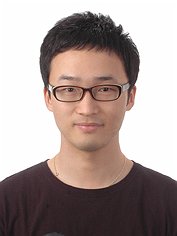
John Regehr is a Professor at the School of Computing, University of Utah, specializing in compilers, software testing, and formal verification. His research develops tools to improve software correctness and efficiency, including Csmith (random C program generator) and C-Reduce (test-case reducer). His group focuses on compiler validation, fuzzing techniques, and superoptimization, primarily targeting the LLVM infrastructure. Research interests span compilers, testing methodologies, formal verification, embedded systems, and program analysis. Recent work emphasizes practical tools backed by formal methods to detect and prevent software errors. Publications demonstrate strong trends in compiler verification and testing, with consistent focus on LLVM optimization correctness, translation validation, and automated bug detection through fuzzing and synthesis techniques. Scientific awards include: PLDI 2015 Distinguished Paper Award ICST 2014 Best Paper Award ACM SIGSOFT Distinguished Paper Award Leads a research group developing tools like Souper (superoptimizer) and Alive2 (translation validator). Maintains active academic service through program committees (PLDI, CGO, OOPSLA) and contributes to open-source compiler infrastructure.
Tim Kraska is an Associate Professor in the Department of Electrical Engineering and Computer Science at the Massachusetts Institute of Technology (MIT), affiliated with the Computer Science and Artificial Intelligence Laboratory (CSAIL) within the School of Engineering. His research spans foundational areas in modern data systems: Database Systems Distributed Systems Machine Learning Systems Learned Indexes Cloud Databases Dr. Kraska pioneers the integration of machine learning into core database components, developing "learned systems" that replace traditional algorithms with ML models for significant performance gains. His work on learned indexes redefined indexing paradigms, while recent research extends this approach to garbage collection, query optimization, and concurrency control. His publication trends reveal a strategic shift toward applying ML to low-level systems problems, particularly in memory management and runtime optimization as demonstrated by his PLDI 2020 paper on Learned Garbage Collection. Award highlights include: ACM SIGMOD Jim Gray Doctoral Dissertation Award VLDB Early Career Research Contribution Award Marie Curie Fellowship At MIT, he leads a research group focused on next-generation data systems, securing grants from NSF and industry partners to explore the theoretical and practical boundaries of learned components in database engines. His team collaborates extensively with industry research labs on real-world deployment challenges. As a core member of CSAIL's distributed systems group, he contributes to MIT's leadership in reimagining data infrastructure for the AI era through cross-lab initiatives on scalable machine learning systems.
Brandon Lucia is a Full Professor in the Department of Electrical and Computer Engineering at Carnegie Mellon University's College of Engineering. He leads the abstract research group focusing on the intersection of computer architecture, systems, and programming languages. His work bridges theoretical foundations with practical implementations in energy-constrained environments. Lucia's research centers on intermittent computing systems and edge computing in extreme environments. His work on energy-harvesting systems has established fundamental principles for batteryless computing, while his orbital edge computing research pioneers computational intelligence for nanosatellite constellations. These research thrusts address critical challenges in reliability, efficiency, and programmability for systems operating under severe power constraints. His publication record shows a clear evolution from foundational work on intermittent computing models to sophisticated applications in space computing and edge intelligence. Recent publications demonstrate increasing integration of dataflow architectures with energy-harvesting constraints, particularly in satellite constellations where computational resources must be managed across distributed, power-constrained platforms operating in extreme environments. NSF CAREER Award (2017) IEEE TCCA Young Computer Architect Award (2019) Sloan Foundation Fellowship (2021) ASPLOS Best Paper Awards (2018, 2020) OOPSLA Distinguished Paper and Artifact Awards (2015) Lucia actively mentors numerous PhD students including Brad Denby, Zhuo Cheng, and Emily Ruppel, many of whom contribute significantly to his research program. His abstract research group maintains strong industry connections while pursuing fundamental advances in computing systems. The group has developed multiple open-source tools including Legerdemain for program analysis and MultiCacheSim for cache coherence simulation. His laboratory work spans from theoretical foundations of intermittent computing to practical implementations in space systems. Current projects include computational nanosatellite constellations, energy-minimal dataflow architectures, and secure edge computing systems that operate reliably despite frequent power failures.
Stavrakakis Ioannis is a Professor at the Department of Informatics and Telecommunications, School of Science, University of Athens, where he has served since 2002. He previously held academic positions at Northeastern University (1994-1999) and University of Vermont (1988-1994). Ph.D., Electrical Engineering (1988), University of Virginia Diploma, Electrical Engineering (1983), Aristotle University of Thessaloniki His research focuses on network resource allocation algorithms , cooperative content dissemination , mobile ad hoc networks , and privacy-aware protocols . He leads the Advanced Networking Research (ANR) Group. Recent publications highlight trends in AI-driven network optimization , edge computing for VR , drone-assisted sensor networks , and privacy in vehicular systems . Key themes include game theory applications, energy-efficient protocols, and distributed learning frameworks. Contact: ioannis@di.uoa.gr
Aggelos Bletsas is a Professor at the School of Electrical and Computer Engineering, Technical University of Crete. He holds a PhD from MIT (2005) and has expertise in wireless communication, backscatter networks, and RFID systems. His research focuses on scalable wireless networks, ultra-low-cost sensor technologies, and signal processing. Education: PhD, MIT Media Lab (2005) MSc, MIT Media Lab (2001) Diploma in Electrical & Computer Engineering, Aristotle University of Thessaloniki (1998) Research Interests: His work spans wireless transmission techniques, backscatter sensor networks, and RFID systems. Key areas include: Ultra-low-cost sensor deployment RFID localization and multi-static systems Energy-efficient hardware implementations Probabilistic inference in distributed networks Awards: IEEE Marconi Prize Paper Award (2008) Technical University of Crete Research Excellence Award (2012-2013) Multiple best paper awards at RFID-TA, ISWCS, and SENSORS Academic Contributions: He advises students who have won IEEE best thesis awards and leads projects funded by ERC grants. His laboratory focuses on practical implementations of wireless sensor networks and backscatter systems. Labs & Affiliations: Director of the Telecommunications Laboratory and affiliated with the Telecommunication Systems Institute (TSI).
Evangelos Papapetrou is an Associate Professor in the Department of Computer Science and Engineering at the University of Ioannina, Greece. He holds a Diploma (1998) and PhD (2003) in Electrical and Computer Engineering from Aristotle University of Thessaloniki. His research focuses on wireless and mobile networks, including mobile ad-hoc networks, opportunistic networks, satellite networks, quality of service (QoS), and network coding. He has contributed to over 50 peer-reviewed publications and actively participates in EU/nationally funded projects. Research interests include: Wireless/Mobile Network Architectures Opportunistic and Social Mobile Networks Satellite Communication Systems Network Coding Techniques Routing Protocol Design His work emphasizes practical implementations of network protocols, with recent trends focusing on ultra-reliable low-latency communication, energy-efficient broadcasting, and protocol optimizations for 5G/IoT environments. He has developed simulation tools like Adyton for opportunistic networks and contributed to privacy-preserving routing solutions. Teaching responsibilities include courses on Computer Networks I and Wireless Networks (2024/25). He maintains active IEEE/ACM memberships and serves on conference review committees.
Kostas Magoutis is Professor and Chair of the Computer Science Department at the University of Crete and collaborating researcher with FORTH-ICS. His research focuses on distributed systems, scalable data processing, IoT, and cloud computing, with projects including GreenInCities for urban regeneration and STREAMSTORE for stateful stream processing systems. Research interests include: Distributed computer systems architecture Elastic stream processing platforms Quantum-enhanced computing applications Multi-cloud application lifecycle management Recent publications demonstrate strong focus on federated data systems, quantum computing applications, and IoT-enhanced infrastructure, with consistent output in high-impact conferences and journals. Awards and distinctions: Multiple best paper awards from USENIX conferences Grand Challenge Audience Award at DEBS 2022 Marie Curie Fellowship and IBM Research awards Advises over 20 PhD and MSc students in distributed systems research. Leads multiple EU-funded projects and serves on program committees for top conferences including SOSP, EuroSys, and IEEE BigData. Directs research groups in distributed systems and cloud computing at FORTH-ICS.
Sotirios K. Goudos is a Professor at the Department of Physics, Aristotle University of Thessaloniki (AUTH), Greece, and Director of the ELEDIA@AUTH lab within the ELEDIA Research Center Network. His research focuses on antenna design, evolutionary algorithms, wireless communications, machine learning, and IoT applications. He holds a B.Sc. in Physics (1991), M.Sc. in Electronics (1994), Ph.D. in Physics (2001), and additional qualifications in Information Systems and Electrical Engineering. Prof. Goudos is a Senior Member of IEEE and serves as Editor-in-Chief of the Telecom open access journal (MDPI) and Associate Editor for IEEE Transactions on Antennas and Propagation, IEEE Access, and IEEE Open Journal of the Communication Society. He has organized multiple special issues in journals like EURASIP Journal on Wireless Communications and Networking and has authored/edited books on antennas and AI in networks. His awards include multiple IEEE Access Outstanding Associate Editor recognitions (2019–2023) and inclusion in Stanford University's top 2% scientists list (2020–2024). He teaches courses on telecommunications, Java programming, and microwave systems, and has supervised over two dozen master's students since 2009. His work spans antenna optimization, AI-driven communications, and IoT security, with contributions to 5G/6G, RIS systems, and smart agriculture. Prof. Goudos actively contributes to IEEE Greece Section leadership roles, including Secretary (2022) and Vice-Chair (2023–2024). His labs and teams focus on ELEDIA's research in electromagnetics, optimization, and AI applications.
George N. Karystinos is currently a Professor and Dean of the School of Electrical and Computer Engineering at the Technical University of Crete , Greece. He joined TUC in 2005 and was promoted to full Professor in 2019. His academic journey began with a Ph.D. in Electrical Engineering from SUNY Buffalo (2003) and a Diploma in Computer Engineering and Science from the University of Patras (1997). Specialty: Communication theory, coding theory, adaptive signal processing Key research areas: Wireless communications, signal waveform design, L1-norm principal component analysis Leadership: Dean of School of ECE (2021–present) His work focuses on noncoherent detection for RFID/IoT systems and L1-norm PCA for robust signal processing. Recent publications explore power line communication and low-complexity sequence detection . Scientific Awards: 2003 IEEE Transactions on Neural Networks Outstanding Paper Award 2001 IEEE ICT Best Paper Award 2018 IEEE MOCAST Best Student Paper Award 2015 IEEE ICASSP Best Student Paper Award 2013 IEEE ISWCS Best Paper Award 2011 IEEE RFID-TA Second Best Student Paper Award He is affiliated with the Telecommunications Laboratory at TUC and has supervised award-winning research in wireless systems and signal processing.
Nectarios Koziris is a Professor at the Department of Computer Science , National Technical University of Athens (NTUA) , and former Dean of the School of Electrical and Computer Engineering . His research focuses on Parallel and Distributed Systems , Computer Architecture , and Cloud Computing . Key Research Themes: Compiler-OS-Architecture Interaction, Datacenter Hyperconvergence, Sparse Matrix Optimization, Quantum Computing, FPGA Virtualization Leadership: Founder of ~okeanos (Europe's largest public Cloud IaaS), Co-founder of GFOSS , Member of IEEE Computer Society Greece, Advisor to Arrikto Inc. His work has led to over 180 publications with 5800+ citations (h-index 33) , including two Best Paper Awards (IPDPS 2001, CCGRID 2013) and Intel Recognition (2015). He has supervised 12 PhD students and participated in 15+ EU projects as coordinator or consortium partner. Scientific Leadership: Program Co-Chair for Europar 2012 , Organizer for IPDPS , ICPP , SC conferences, and active member in Cloud Computing Expert Groups for the European Commission.
Gérard Berry (born December 25, 1948) is a distinguished French computer scientist currently serving as Professor at the Collège de France, holding the permanent chair Algorithmes, machines et langages (Algorithms, Machines, and Languages) since 2012. He previously held the Informatique et sciences numériques chair (2009-2010) and the Technological Innovation Liliane Bettencourt chair (2007-2008) at the same institution. Before joining Collège de France full-time, he served as Director of Research at INRIA Sophia Antipolis (2009-2012) and at École des Mines de Paris (1977-2001). His research spans over 30 years in three main fields: lambda calculus and functional programming, parallel and real-time programming languages, and design automation for synchronous digital circuits. He is particularly renowned for developing the Esterel programming language. His work bridges theoretical computer science with practical industrial applications. Berry's research has evolved to include current work in Hop and HipHop for Web programming, formal verification of compilers, and languages for computer music. His publications demonstrate consistent contributions to programming language theory, formal methods, and their applications in hardware and software systems. Gold Medal of CNRS (2014) Chevalier de l'Ordre de la Légion d'Honneur (2012) Member of French Academy of Sciences (2002) Member of Academia Europaea (1993) Monpetit Prize of Académie des sciences (1990) Berry has advised 17 PhD students and reviewed numerous theses. His industrial experience includes serving as Chief Scientist Officer of Esterel Technologies (2000-2009), where he directed the implementation of the Esterel v7 compiler. He has also held significant leadership roles including President of the Scientific Council of IRCAM and membership on the Scientific Council of the National Education. His teaching at Collège de France has covered topics ranging from the foundations of computation to the societal impact of digital technology, with courses including The Informatics of Time and Events and Proving Programs: Why? When? How? His laboratory work has focused on developing practical applications of theoretical computer science concepts.
Professor Saman Amarasinghe is a faculty member in the Department of Electrical Engineering and Computer Science at the Massachusetts Institute of Technology (MIT), where he leads the Commit compiler research group at MIT's Computer Science and Artificial Intelligence Laboratory (CSAIL). His research focuses on programming languages and compilers that maximize application performance on modern computing platforms, with a particular emphasis on high-performance domain-specific languages. Professor Amarasinghe received his bachelor's degree in electrical engineering and computer science from Cornell University in 1988, followed by master's and PhD degrees in electrical engineering from Stanford University in 1990 and 1997, respectively. He joined the MIT faculty as an assistant professor in 1997 and has since become a world leader in his field. Professor Amarasinghe's research interests span programming languages, compiler design, and high-performance computing, with a particular focus on domain-specific languages. His group has developed numerous influential languages and compilers including Halide, TACO, Simit, StreamIt, StreamJIT, PetaBricks, MILK, Cimple, and GraphIt, which deliver unprecedented performance for application domains such as image processing, stream computations, and graph analytics. He has also pioneered the application of machine learning for compiler optimizations, from Meta optimization in 2003 to the OpenTuner autotuner framework. Professor Amarasinghe's publication history reveals a consistent research trajectory toward creating specialized language and compiler solutions that address performance challenges in specific domains while hiding complexity from application developers. His recent work focuses heavily on sparse computing, tensor algebra, graph processing, and the integration of machine learning techniques into compiler technology, demonstrating his ability to identify and address emerging computational challenges. ACM Fellow (2019) As an educator, Professor Amarasinghe has developed the popular Performance Engineering of Software Systems (6.172) class with Professor Charles Leiserson and created innovative project-based courses including the Open Source Software Project Lab, the Open Source Entrepreneurship Lab, and the Bring Your Own Software Project Lab. He also serves as the faculty director of MIT Global Startup Labs, which has helped create more than 20 startups across 17 countries. His research has translated into practical applications through startups like Determina, Inc. (acquired by VMware), demonstrating the real-world impact of his academic work. Professor Amarasinghe co-led the Raw architecture project with Professor Anant Agarwal, which did pioneering work on scalable multicores. His entrepreneurial activities include founding Determina, Inc. based on computer security research from his MIT lab and co-founding Lanka Internet Services, Ltd., the first Internet Service Provider in Sri Lanka, showcasing his ability to bridge academic research with commercial applications.
David I. August is a Professor at Princeton University specializing in programming languages and compiler systems. His research bridges theoretical compiler techniques with practical systems implementation, focusing on memory safety, speculative execution, and compiler optimization. His primary research interests include Compiler Design , Rust Programming Language safety mechanisms , and LLVM infrastructure extensions . His work emphasizes practical implementations that enhance both performance and security in modern programming systems. Recent publications demonstrate consistent contributions to memory profiling frameworks (PROMPT), Rust safety enhancements, and speculative dependence analysis. His research shows strong focus on making low-level systems programming safer without sacrificing performance. August serves regularly on program committees for major conferences including PLDI and CGO, indicating his standing in the programming languages research community. He has mentored students in compiler construction and programming language design, with research projects often involving practical implementations integrated into production-quality compiler frameworks.
Sang Kil Cha is an Associate Professor at KAIST's Graduate School of Information Security and School of Computing, where he also serves as Director of the Cyber Security Research Center (CSRC). His research focuses at the intersection of computer security and software engineering, with emphasis on building and evaluating systems that analyze programs. Dr. Cha received his B.S. from Korea University, and both his M.S. and Ph.D. from Carnegie Mellon University (CMU). His educational background forms the foundation for his experimental approach to computer science research. His primary research interests include software security, software engineering, program analysis, binary code analysis, and fuzzing. Dr. Cha's work centers on developing practical security tools and methodologies that bridge theoretical concepts with real-world applications, particularly in program analysis and vulnerability detection. His research has significant implications for improving software reliability and security through advanced analysis techniques. Dr. Cha's publication record shows a strong focus on fuzzing techniques, binary analysis, and program understanding, with recent work expanding into blockchain security and decompilation. His research consistently appears in top-tier security and software engineering conferences including IEEE S&P, USENIX Security, and CCS. ACM Distinguished Paper Award (2024, 2022, 2014) USENIX Distinguished Paper Award (2023) IEEE Best Paper Award (2021) NDSS Best Paper Award (2019) As Director of CSRC and leader of SoftSec Lab at KAIST, Dr. Cha oversees multiple research projects focused on practical security solutions. His lab develops tools like B2R2 (a binary analysis framework) and OFuzz (a fuzzing platform), which have gained recognition in the security community. Dr. Cha actively contributes to the research community through program committee roles at major conferences including PLDI, ICSE, and ISSTA.
Changhee Jung is the Samuel D. Conte Associate Professor in the Department of Computer Science at Purdue University. His research focuses on compilers and computer architecture with an emphasis on performance, reliability, and security. His educational background includes a Ph.D. from Georgia Tech (2013) under the supervision of Prof. Santosh Pande. Professor Jung's research spans compilers and computer architecture with a focus on performance, reliability, and security. He has developed program analysis and microarchitecture optimization techniques for soft error resilience, concurrency bug detection, and system security such as memory safety and Linux kernel permission check. Currently, he is working on energy-efficient intermittent computation and nonvolatile memory crash consistency. He often leverages compiler-architecture codesign and repurposes existing hardware features to develop cost-effective solutions for complex computing challenges. His recent publications demonstrate a clear trajectory toward intermittent computing systems, nonvolatile memory architectures, and security mechanisms for energy-constrained environments. His work shows innovative approaches to power failure recovery, capacitor vulnerability exploitation, and EMI attack defense in intermittent systems, with significant contributions to whole-system persistence, cache design, and prefetching techniques for low-power computing. His notable scientific achievements include: NSF CAREER Award (2018) Inducted into MICRO Hall of Fame (2021) Best Paper Honorable Mention in ISCA 2025 Memorable Paper Award Finalist in NVMW 2024 Dissertation Advisor of 2023 ACM SIGBED Paul Caspi Memorial Dissertation Award winner Jongouk Choi 2017 AMD Faculty Research Award Professor Jung has successfully advised numerous graduate students, many of whom have secured prominent positions at leading technology companies including Google, Intel, and Samsung Electronics. His lab, the CompArch (Compiler and Architecture) research group, was formed in 2013 at Virginia Tech and continues at Purdue, focusing on compiler-architecture cooperation to address cross-cutting concerns involving performance, reliability, and security. The lab has received significant research funding, including an NSF CAREER Award in 2018 and an AMD Faculty Research Award in 2017.