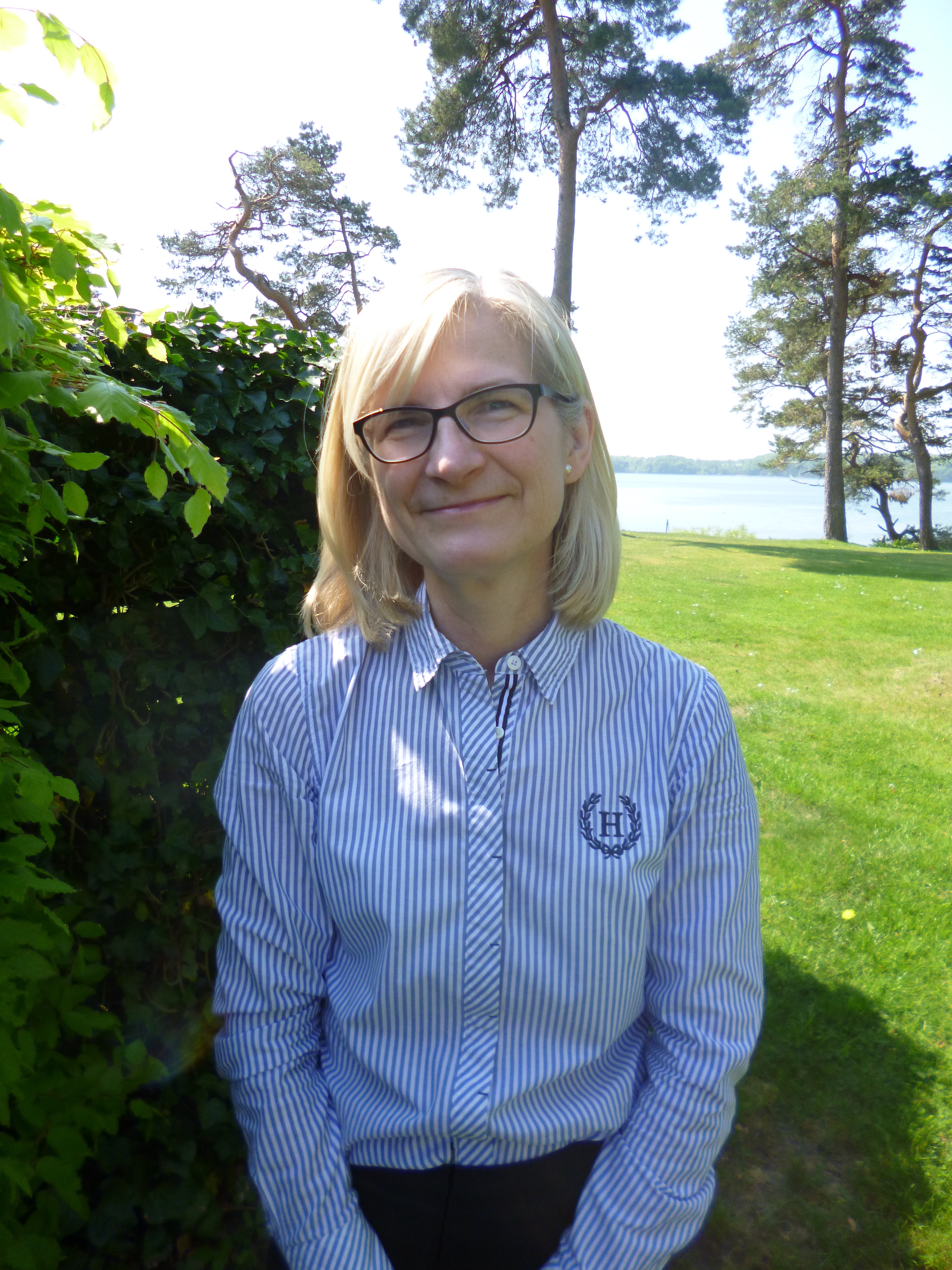
Sneha Das is an Assistant Professor at the Department of Applied Mathematics and Computer Science, Technical University of Denmark (DTU), specializing in Speech and Language Technology, Machine Learning, and Privacy-Preserving AI. Her research bridges technical innovation with applications in mental health and physiological signal analysis. Her work focuses on Speech Emotion Recognition , Distributed Speech Processing , and Explainable AI , with recent publications exploring model interpretability, speaker anonymization, and physiological data analysis for emotion detection. She actively supervises PhD students in projects involving AI for mental health and hydroacoustic modeling of fish behavior. Key Research Areas: Speech Emotion Recognition (SER) Privacy and Fairness in Speech Processing Transfer Learning with Physiological Time Series AI Applications in Health and Aquaculture Notable achievements include earning a DSc (Tech) degree for her thesis on robust distributed speech processing. She also contributes to educational activities, including teaching applied statistics and R programming to PhD students.
Anne Elisabeth Haxthausen is an Associate Professor at the Software Systems Engineering section within DTU Compute , Technical University of Denmark . Her work focuses on formal methods, railway control systems, and safety-critical software engineering. Founder and leader of the DTU Railway Verification Group Member of European Technical Working Group on Formal Methods in Railway Control Editorial board member for Springer Formal Aspects of Computing Journal Active in the Overture Language Board Her research emphasizes formal verification of railway interlocking systems, particularly through compositional approaches and automated tools. She has contributed to projects like RobustRailS, Overture, and RAISE, focusing on model-based development and verification. She serves as a tutor for bachelor students and contributes to the advisory committee for DTU's Computer Science and Engineering MSc program. Her recent publications explore challenges in verifying autonomous and AI-driven railway technologies.
Rasmus Pagh is a Professor at the Department of Computer Science, University of Copenhagen, specializing in algorithms and complexity. His career includes a 2002 PhD from Aarhus University under Peter Bro Miltersen and a tenure at IT University of Copenhagen until 2020. He leads theoretical research with practical applications in big data, databases, and modern computer architecture parallelism. His research interests span algorithms, data structures, and privacy-preserving computing. Recent work includes the ERC-funded project on Scalable Similarity Search and contributions to the BARC center for basic algorithms research. He has collaborated with Google Research (2019-2020) and focuses on theoretical foundations with real-world impact. Key research trends in his 2023-2024 publications include privacy-preserving data analysis probabilistic data structures distributed secure computation noise-robust coding hashing efficiency continual privacy mechanisms Scientific recognition includes 2024 ACM Fellowship ERC grant leadership multiple top-tier conference publications
Elena Irene Zavala serves as an Assistant Professor in the Section of Forensic Genetics and Guest Researcher at the Globe Institute, Section for Geogenetics at the University of Copenhagen's Faculty of Health and Medical Sciences. Her work bridges forensic science with paleogenetic research, focusing on ancient human DNA analysis and population genetics. Dr. Zavala's research interests span ancient DNA analysis, paleogenetics, forensic genetics, human evolution, population genetics, archaeogenetics, and anthropological genetics. Her work demonstrates a consistent focus on understanding human evolutionary history through genetic analysis, with particular emphasis on migration patterns, adaptation to diverse environments, and the development of methodological approaches for analyzing degraded DNA samples. She has made significant contributions to understanding Neanderthal admixture timing and early human dispersal into Europe. Her publication record shows a strong trend toward high-impact interdisciplinary research, with numerous publications in Nature and other top-tier journals. Her work frequently involves international collaborations across multiple institutions, reflecting the global nature of paleogenetic research. A notable pattern in her recent publications is the integration of multiple analytical approaches (genomic, isotopic, archaeological) to reconstruct human history. Young Investigator Award (2019) Miller Postdoctoral Fellowship (2022) Peter M. Schneider ISFG Fellowship (2023) Novo Nordisk Hallas-Møller Emerging Investigator Grant (2024) Dr. Zavala has secured significant research funding including the prestigious Novo Nordisk Hallas-Møller Emerging Investigator Grant in 2024, indicating strong institutional support for her research program. Her work has garnered substantial attention with multiple publications being picked up by hundreds of news outlets and referenced across social media platforms and academic networks. As a Guest Researcher at the Globe Institute's Section for Geogenetics, Dr. Zavala collaborates with interdisciplinary teams focused on ancient DNA and human evolutionary history. Her research often involves large international collaborations, as evidenced by the extensive author lists on her publications, suggesting she works within substantial research networks dedicated to paleogenetic investigations.
Filippo Menczer is a Professor of Informatics and Computer Science and Director of the Center for Complex Networks and Systems Research at Indiana University School of Informatics and Computing. He maintains courtesy appointments in Cognitive Science and Physics, and is affiliated with the Center for Data and Search Informatics and the Biocomplexity Institute. Additionally, he holds a Fellowship at the ISI Foundation in Torino, Italy. His research spans computational analysis of digital ecosystems with emphasis on: Web Science: structural and behavioral analysis of internet-scale systems Social Media Dynamics: information diffusion, meme competition, and attention economy modeling Complex Networks: traffic pattern analysis, popularity dynamics, and social link prediction Publications from 2009-2012 reveal consistent focus on social network analytics and information diffusion mechanisms. Key trends include modeling attention-limited meme competition, bursty popularity patterns in social media, and social link prediction through metadata analysis. His work integrates network science, computational social science, and data mining to decode online behavior. His scientific recognition includes: Fellow of ISI Foundation (2013) He leads the NaN research group within the Center for Complex Networks and Systems Research, focusing on interdisciplinary approaches to complex information networks and social media analytics.
Isabelle Augenstein is a Professor at the University of Copenhagen, Department of Computer Science (DIKU), where she heads the Copenhagen Natural Language Understanding (CopeNLU) research group and the Natural Language Processing section. She is also a co-lead of the Danish Pioneer Centre for Artificial Intelligence, Denmark's largest research center initiated by the Danish Ministry of Higher Education and Science. In October 2022, she became Denmark's youngest ever female full professor. Dr. Augenstein earned her undergraduate degree in Computational Linguistics and Psychology from Heidelberg University, followed by a Master's in Computational Linguistics. She completed her PhD in Computer Science at the University of Sheffield under the supervision of Dr. Diana Maynard and Prof. Fabio Ciravegna. In 2021, she earned a Habilitation at the University of Copenhagen in Explainable Fact-checking. Professor Augenstein's primary research focuses on fair and accountable Natural Language Processing, with particular emphasis on explainability, factuality, and bias detection. Her work spans multiple subfields including automated fact-checking, stance detection, gender bias analysis, and cultural bias in language models. She has pioneered research in explainable fact-checking, developing methods that not only predict claim veracity but also provide meaningful explanations of the decision-making process. Her research group has produced numerous influential papers on measuring model fragility, quantifying gender biases, and developing robust fact-checking systems that account for distribution shifts. Her significant contributions have been recognized with several prestigious awards: ERC Starting Grant on 'Explainable and Robust Automatic Fact Checking' DFF Sapere Aude Research Leader fellowship on 'Learning to Explain Attitudes on Social Media' Karen Spärck Jones Award from the British Computing Society and Bloomberg Hartmann Diploma Prize from the Hartmann Foundation Member of the Royal Danish Academy of Sciences and Letters since 2024 Professor Augenstein has secured significant research funding including her ERC Starting Grant supporting five years of blue-sky research. She actively mentors PhD students and postdoctoral researchers through her 'ExplainYourself' project. She served as President of SIGDAT (which organizes the EMNLP conference series), having previously held leadership roles as Vice President and Vice President-Elect. She is a co-founder of Widening NLP (WiNLP), an initiative to increase diversity in the NLP community, and maintains the BIG Directory of underrepresented groups in NLP. She leads the Copenhagen Natural Language Understanding (CopeNLU) research group, which relocated to the historic Østervold Observatory in Copenhagen's Botanical Gardens in 2023. The group focuses on developing methods for explainable and robust natural language understanding, with applications in fact-checking, bias detection, and social media analysis. Professor Augenstein also co-leads the Speech and Language collaboratory at the Pioneer Centre for Artificial Intelligence, where her team investigates how language models can better serve diverse populations while maintaining accountability and transparency.
Jesper Liniger is an Associate Professor at AAU Energy within the Faculty of Engineering and Science at Aalborg University. He works in the Esbjerg Energy Section focusing on Offshore Renewable Energy Systems and is affiliated with AAU BLUE – Marine & Maritime Research. His office is located at Niels Bohr Street 8, 6700 Esbjerg, Denmark. Research Interests Marine Growth Engineering and automated cleaning solutions for offshore structures Underwater robotics including Remotely Operated Vehicles (ROVs) and autonomous inspection systems Wind turbine engineering with emphasis on hydraulic pitch systems and fault detection Fluid power engineering applications in marine environments Development of robotic solutions for offshore renewable energy infrastructure Research Trends Dr. Liniger's recent publications demonstrate a strong focus on developing robotic solutions for offshore renewable energy infrastructure. His work bridges theoretical control systems with practical marine applications, particularly addressing marine growth (biofouling) challenges on offshore structures. The research shows increasing interdisciplinary collaboration, combining robotics, fluid mechanics, and wind energy systems to create integrated solutions that improve operational efficiency and reduce maintenance costs in offshore environments. Scientific Awards Innovation Project of the Year (2024) - For underwater robotics development Esbjerg Universitetspris (2018) - University award recognizing research excellence Advising and Research Leadership Dr. Liniger actively supervises PhD students and serves as principal investigator or supervisor on multiple major projects including "NextGen Robotics" for offshore wind farms and "Towards Enhancing Perception and Navigation for Autonomous Underwater Inspection Drone." His research portfolio includes collaborations with industry partners like Vattenfall and Business Center Funen, demonstrating strong industry-academia connections focused on practical applications with economic impact. Research Teams and Facilities Liniger is part of AAU BLUE – Marine & Maritime Research, which provides specialized facilities for marine robotics testing and development. His work involves close collaboration with researchers in control systems, fluid mechanics, and renewable energy. The research group has developed experimental frameworks for testing underwater and surface vehicle operations, with recent media coverage highlighting their innovative approaches to solving marine growth challenges on offshore structures.
Nicola Dragoni is a Professor in Cybersecurity Engineering at the Department of Applied Mathematics and Computer Science, Technical University of Denmark (DTU). As Deputy Director and Head of Section, he leads research initiatives focused on securing emerging technologies. Key Research Areas : Internet of Things (IoT) security, machine learning for intrusion detection, cyber-deception techniques, fog computing, malware analysis, blockchain applications, and wireless sensor network security. Supervision : Actively supervising multiple PhD students in projects related to cyber-deception, moving target defense, and bio-inspired security mechanisms. Recent Publications : Contributions to IoT honeypots, drone identification via RF signals, passkey adoption challenges, and cyber range taxonomies.
Gregory Eady is an Associate Professor at the Department of Political Science, University of Copenhagen (Denmark), affiliated with the Faculty of Social Sciences. His research bridges political behavior, public opinion dynamics, social media's role in politics, and advanced statistical methodology. He examines how digital platforms influence political attitudes and representation, with a focus on electoral processes, foreign interference, and crisis impacts on governance. Key research foci include analyzing the ideological landscape via social media interactions, assessing post-pandemic political representation gaps, and exploring gender dynamics in political toxicity. His methodological contributions address challenges like measuring voter uncertainty and detecting misreporting in sensitive surveys. Eady's work spans cross-national studies and employs experimental designs to uncover causal mechanisms in political behavior. Notable projects include examining Russian disinformation campaigns in the 2016 U.S. election and the psychological effects of violent protests on party loyalty. His interdisciplinary approach integrates computational social science with traditional political theory, contributing to debates on democratic resilience in the digital age.
Juan C. Vasquez is a Professor at Aalborg University's Faculty of Engineering and Science, Department of Energy Technology, and Co-Director of the Center for Research on Microgrids (CROM). He holds a PhD in Automatic Control from the Technical University of Catalonia and has held academic positions at Aalborg University since 2011. His research focuses on microgrid control, renewable energy integration, power electronics, and smart grids. He has supervised numerous PhD and master’s students and leads projects funded by EU and national grants. Education: BS in Electronics Engineering (Autonomous University of Manizales, Colombia, 2004); PhD in Automatic Control (Technical University of Catalonia, Spain, 2009). Research interests include operation and control strategies for AC/DC microgrids, maritime microgrids, energy management systems, and IoT integration in smart grids. He has authored 648+ publications, including highly cited works, and received awards like the Young Investigator Award (2019) and Clarivate’s Highly Cited Researcher status since 2017. Key projects: EU-DREAM (Digital Services for Energy Transition), NEST (National Research Infrastructure), and ActRes (Resilience in Energy Systems). Collaborations include Virginia Tech and Ritsumeikan University.
Emmanouil Vasilomanolakis is an Associate Professor in the Department of Applied Mathematics and Computer Science at the Technical University of Denmark (DTU). He specializes in Cybersecurity Engineering, focusing on areas such as honeypot technology, cyber deception, IoT/OT security, and network security. His research contributes to the UN Sustainable Development Goals related to innovation and infrastructure. His research interests include: Cyber deception techniques and honeypot design for detecting and mitigating cyber attacks Security of Internet of Things (IoT) and Operational Technology (OT) devices, particularly their exposure to cyber threats Analysis of botnets and cybercrime activities on darkweb markets Social engineering attacks and human aspects of cybersecurity Development of tools for vulnerability analysis and network traffic monitoring His recent publications explore advanced cyber-deception strategies, the security of exposed IoT/OT devices, and the analysis of cybercrime activities. Key areas include device identification, vulnerability detection in industrial systems, and the impact of social engineering in cybersecurity. He currently supervises several PhD students including Kasper Elzer, António Cordeiro Urbano, Aigerim Safargalieva, Davide Maddaloni, and collaborates on projects like "Advanced cyber-deception techniques" and "Defending legacy and modern networks with cyber-deception". His research is supported by grants focused on collaborative security and deception-based defenses. He is part of research teams developing honeypot technologies and cyber deception frameworks, contributing to datasets like the hybrid IoT/OT honeypot collection.
Ken Pfeuffer is an Associate Professor in the Department of Computer Science at Aarhus University, affiliated with the Faculty of Science. His research focuses on Human-Computer Interaction (HCI) , particularly in Virtual Reality (VR) , Augmented Reality (AR) , and Extended Reality (XR) systems. He leads projects like the Interdisciplinary Center for Extended Reality (ICXR) and the XCB Lab , exploring multimodal interaction techniques, eye tracking, and user authentication in immersive environments. His work emphasizes gaze-based interaction , multimodal input fusion , and user interface design for AR/VR applications. Recent studies investigate consumer behavior in virtual retail environments and the integration of touch, gaze, and gesture inputs for natural user experiences. Pfeuffer collaborates on adaptive UI toolkits and practical methods for mobile eye-tracking systems, prioritizing real-world usability and accessibility. Key contributions include Depth3DSketch for VR sketching, PinchCatcher for multi-selection, and EyeGuide for gaze-assisted 3D sketching. His research bridges theoretical HCI principles with industry applications, addressing challenges in immersion , accuracy , and user safety in XR systems.
Johannes Bjerva is a Full Professor at Aalborg University's Department of Computer Science (Campus Copenhagen), leading the Copenhagen branch and conducting interdisciplinary NLP research integrating linguistic typology. His work focuses on low-resource languages, language model security, and societal AI impact. PhD (University of Groningen, 2017): Thesis on multitask/multilingual lexical modeling M.A. & B.A. in Computational Linguistics (Stockholm University) Research interests span linguistically-informed NLP , language model security , and low-resource language technology . Current projects include the DFF Sapere Aude grant (2025) for language model detection security and the LM2-SEC project (2025–2030). His 2024 ACL paper on embedding inversion security and 2024 EMNLP paper on typological diversity exemplify recent work. Scientific awards include: 2021: Teacher of the Year (AAU Computer Science) 2019: Google Cloud research credits 2022: Carlsberg Semper Ardens (5M DKK) 2024: Novo Nordisk Data Science grant (~10M DKK) Supervision includes 8 PhD students across projects like CreoleVal and HiFi-KPI . He serves on the Industrial Researcher Committee at Innovation Fund Denmark and is a member of Det Unge Akademi (2023–2028).
Wusheng Yu is a full-time Professor in the Department of Food and Resource Economics at the Faculty of Science, University of Copenhagen, holding this position since March 2018 after serving as Associate Professor from 2005-2018. His academic foundation includes a PhD in Agricultural Economics from Purdue University (2000) and an MSc in Economics from Renmin University of China (1995). Educational background: PhD in Agricultural Economics, Purdue University, West Lafayette, IN, USA (2000) MSc in Economics, Renmin University of China, Beijing, China (1995) Professor Yu's research centers on international trade, agricultural policy, computable general equilibrium modeling, and climate-food security intersections. He employs advanced quantitative methods to analyze global trade dynamics and environmental policy impacts, with recent work emphasizing geopolitical dimensions of food systems under climate stress. His methodological approach combines empirical analysis with scenario-based modeling to address real-world policy challenges. Analysis of his 2023-2025 publications reveals three dominant trends: (1) Geostrategic assessments of food security amid global tensions, (2) Climate-agriculture policy integration through emission modeling, and (3) Trade mechanism innovations like carbon border adjustments. His work bridges theoretical economics with actionable policy insights, particularly for EU and developing economies. Professor Yu coordinates graduate courses in Advanced International Trade and Applied Trade and Climate Policy Models. His research is funded by the European Union, Danish governmental bodies, and international organizations, operating under an advisory committee with private sector representatives as specified by departmental Terms of Reference. He maintains strict institutional alignment as a full-time permanent employee without external remuneration. His collaborative network spans seven countries with significant engagement in Danish animal food sectors and public authorities. The Section for Production, Markets and Policy at IFRO serves as his primary research hub, facilitating cross-border studies on trade-displacement effects and food demand elasticity modeling under socioeconomic pathways.
Arijit Khan is an Associate Professor in the Department of Computer Science at Aalborg University, Denmark. He leads the Data Engineering, Science and Systems group and is affiliated with the Technical Faculty of IT and Design. His research focuses on Graph Neural Networks , Blockchain , Data Management , and AI interpretability . He is the Principal Investigator (PI) of a major project on Data Management, Fundamental Algorithms, and Machine Learning for Emerging Problems in Large Networks (2022–2027). Research Interests : Graph Data Management & Machine Learning Blockchain Transaction Analysis Large Language Model + Knowledge Graph Synergies Healthcare AI (e.g., ICU glucose prediction) Explainable AI for Graph Neural Networks Research Trends : His publications emphasize neuro-symbolic systems , uncertain graph analysis , and AI-driven blockchain insights . Recent work bridges large language models with knowledge graphs and explores GPU performance optimization via shader code analysis. Awards & Grants : No explicit awards listed, but his active research grants include a 5-year project on large network analysis with interdisciplinary applications in life and health sciences. Funding emphasizes algorithmic innovation and data science integration. Labs/Teams : Head of the Data Engineering, Science and Systems research group, focusing on AI for societal impact ('AI for the People') and scalable graph data systems. Collaborations span blockchain analytics, healthcare informatics, and GPU architecture design.